
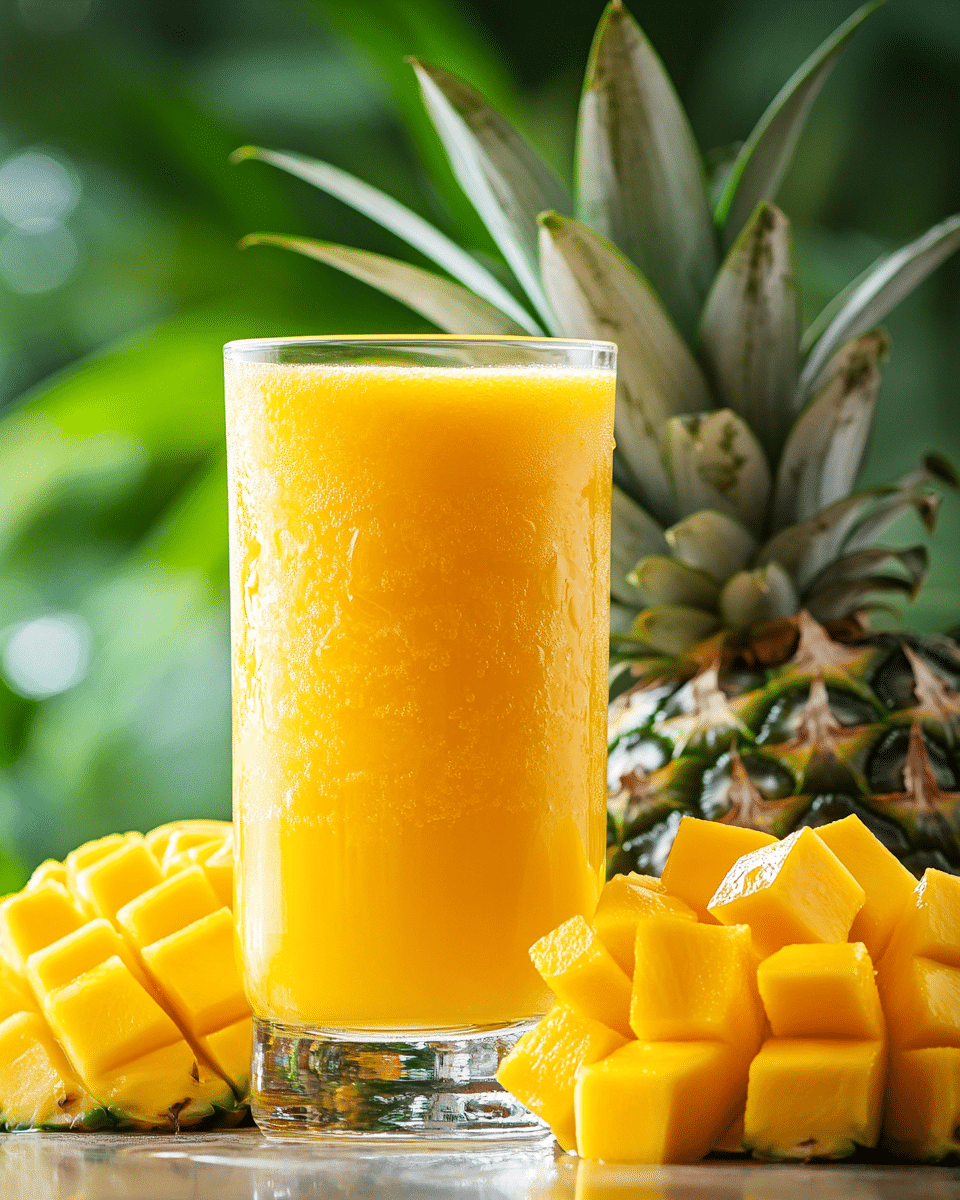
Pineapple Mango Juice Bliss: Tropical Flavor, Fresh and Easy
Pineapple mango juice is the ultimate tropical refresher that tastes like a beach vacation in a glass. This bright, sweet, and tangy drink brings together ripe mango and juicy pineapple for a naturally vibrant juice that wakes up your taste buds and hydrates your body. Whether you enjoy it as a morning energy boost, a mid-day pick‑me‑up, or a party drink, homemade pineapple mango juice is far better than anything you can buy in a bottle. You control the sweetness, the texture, and all the ingredients, so there are no hidden sugars, preservatives, or artificial flavors.
Because this juice pairs so well with light and fresh dishes, you can easily turn it into part of a beautiful brunch spread. For instance, serve it with a colorful Greek salad or a chilled seafood salad for a complete Mediterranean‑meets‑tropics meal. In this guide, you will learn how to make pineapple mango juice with and without a juicer, how to customize it, and how to turn it into smoothies, mocktails, and even frozen treats. You will also see how this juice supports digestion, immunity, and hydration, along with storage tips, make‑ahead strategies, and expert tricks that guarantee a consistently delicious drink every time.
Table of Contents
Pineapple Mango Juice Basics: Flavor, Texture, and Ingredients
Understanding the Flavor of Pineapple Mango Juice
Pineapple mango juice has a unique flavor profile that makes it stand out from simple one‑fruit juices. Pineapple brings bright acidity and a refreshing tang, while mango contributes creamy sweetness and a silky mouthfeel. When you blend these two tropical fruits, you get a well‑balanced drink that feels both rich and refreshing. The sweetness from mango naturally softens the sharper notes of pineapple, which means you usually need less added sugar than with plain pineapple juice. Because of that balance, this juice appeals to both kids and adults, and it works well as a versatile base for smoothies, mocktails, and fruit punch recipes.
Another key aspect of pineapple mango juice is its texture. If you use a blender, the pulp from both fruits creates a thicker, smoothie‑like consistency that you can adjust by adding water, coconut water, or even sparkling water.
If you prefer a thinner drink, you simply strain it through a fine mesh sieve or cheesecloth. Mango varieties also matter: Ataulfo (champagne mango) creates a very creamy, dessert‑like texture, while Tommy Atkins or Haden mangos produce a more fibrous juice that benefits from straining. Pineapple ripeness affects flavor as well. Very ripe pineapples are sweeter and less acidic, making the juice smoother and less sharp. Slightly underripe pineapples taste more tart, which you can balance with extra mango or a touch of honey.
Print
Best Pineapple Mango Juice Recipe: Refreshing Tropical Drink to Try Today!
- Total Time: 10 min
- Yield: 2–3 servings 1x
Description
A bright tropical juice made from ripe pineapple and sweet mango — naturally refreshing, hydrating, and perfect for mornings, brunch, or hot summer days.
Ingredients
2 cups fresh pineapple chunks
2 ripe mangoes (peeled and chopped)
1/2–1 cup cold water or coconut water
Juice of 1/2 lime
Small pinch of salt (optional)
1–2 tsp honey or agave (optional)
Instructions
1. Peel and chop the fresh pineapple into chunks.
2. Peel mangoes, remove the pit, and scoop out the flesh.
3. Add pineapple, mango, lime juice, and water to a blender.
4. Blend on high until perfectly smooth.
5. Strain through a fine sieve for a smooth drink (optional).
6. Adjust sweetness with honey or agave if needed.
7. Serve immediately over ice or chill before serving.
Notes
Store in airtight glass jars up to 48 hours.
Add lime to slow oxidation.
Freeze into ice cubes for smoothies.
Use coconut water for extra electrolytes.
- Prep Time: 10 min
- Cook Time: 0 min
- Category: Fresh Juices
- Method: Blender / Juicer
- Cuisine: Tropical / American
Nutrition
- Serving Size: 1 glass (8–10 oz)
- Calories: 120–160
- Sugar: 18g
- Sodium: 15mg
- Fat: 0g
- Saturated Fat: 0g
- Unsaturated Fat: 0g
- Trans Fat: 0g
- Carbohydrates: 30g
- Fiber: 1g
- Protein: 1g
- Cholesterol: 0mg
Essential Ingredients for the Best Pineapple Mango Juice
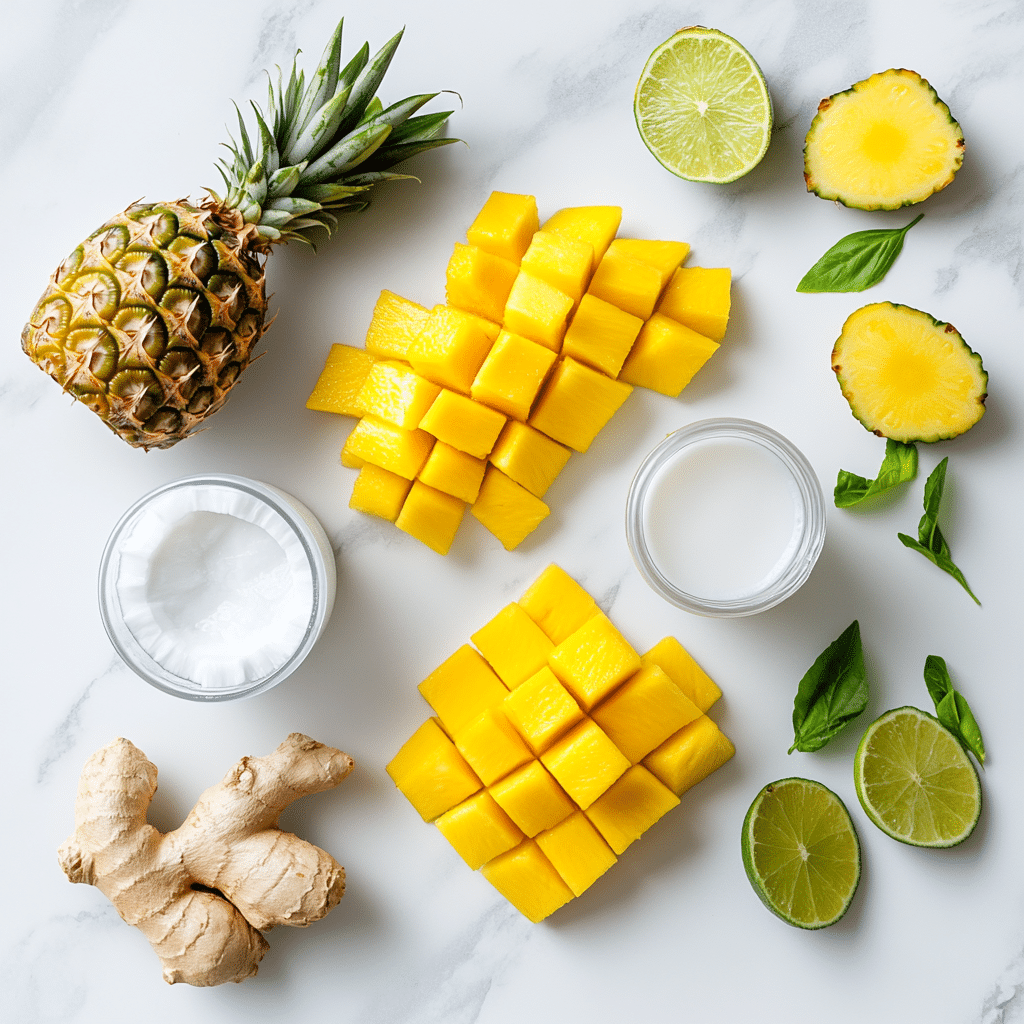
For truly outstanding pineapple mango juice, the ingredients matter as much as the method. Start with a fully ripe pineapple. Look for one that smells sweet at the base, has a bit of give when you press gently, and has leaves that pull out with mild resistance. Avoid pineapples with fermented or vinegar‑like odors. For mangoes, choose fruits that feel slightly soft but not mushy, and that have a deep color and rich aroma. Riper mangoes deliver a sweeter juice, so they reduce the need for added sugar. Since both fruits grow in tropical climates, they often travel long distances, so it helps to buy them a few days in advance and let them ripen at home on the counter.
Beyond the main fruits, you can enhance pineapple mango juice with a few simple additions. A squeeze of fresh lime brightens the flavor and adds a crisp finish that keeps the drink from tasting flat. A small piece of fresh ginger offers a warm, spicy note and supports digestion, making the juice feel even more refreshing.
If you like a floral touch, you can substitute regular sugar with honey or agave syrup, but always taste before sweetening because ripe fruits usually provide enough natural sugar. For extra hydration and a lighter body, coconut water works beautifully instead of plain water. It keeps the tropical character while lowering the overall intensity of sweetness and thickness. Finally, a pinch of sea salt might seem unusual, yet it subtly enhances all the fruit flavors, similar to how a pinch of salt improves baked goods.
Step‑by‑Step: How to Make Pineapple Mango Juice (With or Without a Juicer)
Blender Method for Pineapple Mango Juice (No Juicer Needed)
You do not need a fancy juicer to enjoy fresh pineapple mango juice at home. A standard blender can handle this recipe easily. First, prepare the fruits. Slice off the top and bottom of the pineapple, stand it upright, and cut away the peel from top to bottom. Remove any remaining “eyes” with the tip of your knife, then cut the pineapple into quarters. You can remove the tough core if your blender struggles, but a strong blender will usually process it into fine fiber. Next, peel your mangoes by slicing off the sides (the “cheeks”) around the pit, then scoring and scooping out the flesh with a spoon.
Place the pineapple chunks and mango pieces into the blender jar. For each cup of mixed fruit, add about ½ to ¾ cup of cold water or coconut water, depending on how thick you want your juice. Add a squeeze of fresh lime and a tiny pinch of salt. Blend on high until the mixture looks completely smooth, usually 45–60 seconds.
Taste and decide if you want extra sweetness; if so, add a teaspoon or two of honey or sugar at a time and blend again. At this point, you can choose your preferred texture. For a thick, smoothie‑like pineapple mango juice, serve it as is over ice. For a lighter, smoother juice, pour the blended mixture through a fine mesh strainer, gently pressing with a spoon to extract as much liquid as possible, and then chill before serving.
Juicer Method and Using Frozen Fruit
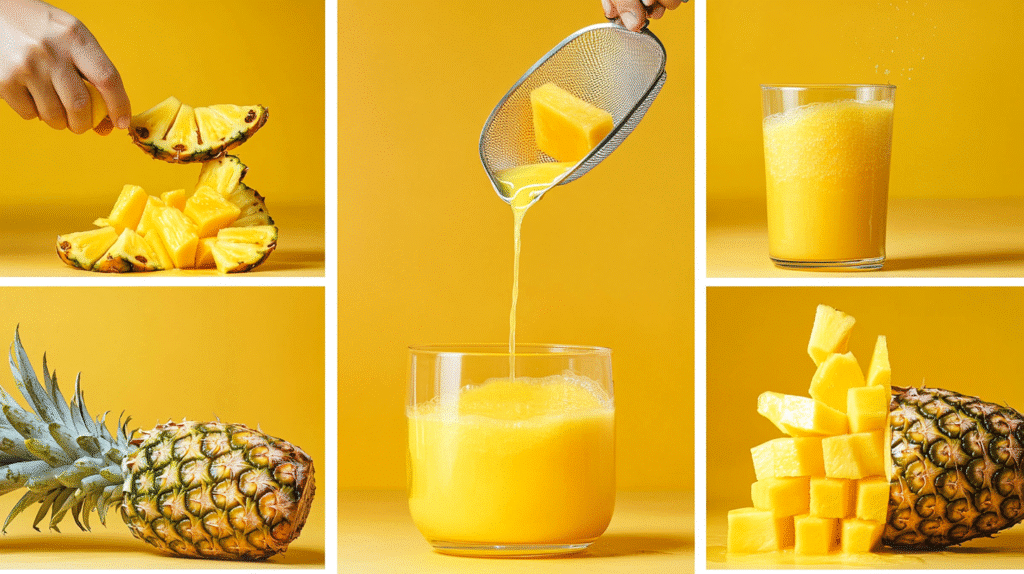
If you own a juicer, making pineapple mango juice becomes even more straightforward, though the texture will differ. Begin with the same method of peeling and cutting the pineapple into manageable pieces. For the mangoes, peel and separate the flesh from the seed; then, cut it into strips that fit your juicer’s chute. Some juicers process soft fruits like mango better when alternated with harder pieces like pineapple, so feed a few chunks of pineapple, then mango, and continue alternating. This helps push the softer pulp through and yields more juice. If your juicer has multiple speed settings, use a lower speed for soft mango and a higher speed for the firmer pineapple.
Frozen fruit offers another convenient option, especially when mangoes or pineapples are out of season. You can use pre‑cut frozen pineapple chunks and mango slices. If you use a blender, let the fruit thaw slightly at room temperature for 10–15 minutes so it does not overload the motor. Then blend as described earlier, possibly with a little extra liquid to thin the mixture.
Frozen fruit actually creates a frosty, slushy texture that feels like a tropical smoothie, perfect for hot days. When using a juicer, follow the manufacturer’s guidance; many juicers do best when the fruit is largely thawed. In both cases, the taste of the pineapple mango juice remains vibrant, and you gain the bonus of a chilled drink without needing a lot of ice that would dilute the flavor.
Nutritional Benefits of Pineapple Mango Juice
Vitamins, Antioxidants, and Immune Support
Pineapple mango juice is not only delicious; it also brings a powerful dose of vitamins and antioxidants. Pineapple is famously rich in vitamin C, which supports immune function, collagen formation, and helps your body combat oxidative stress. A single cup of fresh pineapple pieces can deliver more than half of your daily vitamin C needs. Mango also contributes vitamin C along with vitamin A in the form of beta‑carotene, which helps maintain healthy skin and eyesight. When you combine both fruits in one glass, you create a bright yellow‑orange juice loaded with natural antioxidants that help neutralize free radicals. That vibrant color directly reflects the presence of carotenoids and other phytochemicals.
Beyond vitamins, pineapple contains bromelain, a group of digestive enzymes that can help your body break down proteins more efficiently. Some studies suggest bromelain may help reduce inflammation and support muscle recovery, which makes pineapple mango juice a smart choice after a workout. Mango brings its own benefits with dietary fiber in the whole fruit and polyphenols that may help support heart health. Although blending reduces some of the whole‑fruit fiber if you strain the juice, you still get small amounts, especially if you keep a bit of the pulp.
By choosing this homemade juice over store‑bought versions, you also avoid many of the added sugars and corn syrups that can spike blood sugar without adding nutrients. Drink it as a complement to a balanced diet rather than a replacement for whole fruits, and you enjoy a refreshing way to boost your daily intake of protective plant compounds.
Hydration, Electrolytes, and Energy
Another benefit of pineapple mango juice lies in its ability to hydrate and energize you. Both pineapple and mango have a high water content, so when you blend them with added water or coconut water, you create a fluid‑rich beverage that supports daily hydration. If you swap some of the water with coconut water, you add natural electrolytes like potassium and small amounts of magnesium, which help maintain fluid balance and muscle function. This makes pineapple mango juice a great option after exercising, during hot weather, or any time you feel slightly dehydrated. Because the sweetness comes mainly from natural fruit sugars, it offers a gentle energy lift without the crash of heavily processed drinks.
You can also combine pineapple mango juice with other nutrient‑dense ingredients to tailor its benefits. For instance, blending in a small piece of fresh ginger can support digestion and circulation. A few spinach leaves or carrots will deepen the color and quietly increase the vitamin and mineral profile while the strong pineapple‑mango flavor keeps the drink tasting fruity. If you want more sustained energy, you can pair your juice with a high‑fiber meal like a vegetable‑rich salad or a whole‑grain dish.
Recipes such as light pasta salads or fresh cucumber salad balance the natural sugars with fiber and protein, creating a more stable blood sugar response. Overall, when you make pineapple mango juice at home and enjoy it mindfully, you gain a refreshing drink that supports hydration, offers quick energy, and fits well into a health‑conscious lifestyle.
Customizing Pineapple Mango Juice: Flavor Variations and Add‑Ins
Citrus, Herbs, and Spices to Elevate the Taste
One of the best things about pineapple mango juice is how easily you can customize it with simple ingredients you already have. Citrus fruits pair especially well with tropical flavors. Lime is a classic choice that sharpens the sweetness and adds a cooling edge, but lemon and even orange juice can work beautifully. A splash of freshly squeezed orange juice softens the tang and makes the drink taste almost like a tropical sunrise blend. You can also use grapefruit for a more sophisticated, slightly bitter note, though you may need to adjust sweetness to balance it. Each citrus addition changes the aroma and brightness of the juice, giving you several twists from one basic recipe.
Herbs and spices also bring depth. Fresh mint leaves add a cooling, refreshing quality that makes the drink perfect for summer gatherings; simply blend a few leaves with the fruit or bruise them and stir them into the pitcher before serving. Basil, especially Thai basil with its subtle anise flavor, gives the juice a gourmet, aromatic touch. For spices, a small piece of fresh ginger root (about ½ inch) blended with the fruits adds warmth and a little heat, which contrasts beautifully with the juicy sweetness.
You can also experiment with a pinch of ground turmeric for color and potential anti‑inflammatory benefits, though you should start very small to avoid overpowering the drink. Even a tiny dash of cayenne can turn your pineapple mango juice into a spicy‑sweet treat that feels like something from a high‑end juice bar.
Turning the Base Juice into Smoothies, Mocktails, and Frozen Treats
Once you master the basic pineapple mango juice, you can transform it into a variety of drinks and desserts. For a smoothie, simply reduce the water in the base recipe and add yogurt or a frozen banana for creaminess. Greek yogurt increases protein and gives a tangy contrast that tastes almost like a tropical lassi. For extra nutrition, throw in a handful of spinach or kale; the fruit flavors mask most of the bitterness while adding fiber, iron, and more antioxidants. If you enjoy layered smoothies, blend pineapple mango juice separately from a strawberry or beet juice layer, then pour carefully to create a sunrise effect in your glass.
Pineapple mango juice also makes a perfect mocktail base. Mix it with sparkling water or club soda for a light, bubbly drink, and garnish with lime wedges and mint. You can create a non‑alcoholic “tropical spritz” by adding a splash of tart berry juice on top for color contrast. Inspired by classic mocktails like a Shirley Temple or a nonalcoholic margarita, you can rim the glass with sugar or salt and add decorative fruit skewers for a party‑ready presentation.
For frozen treats, pour the juice into popsicle molds and freeze; kids and adults both enjoy these naturally sweet pops, and you can swirl in a little coconut milk for a creamy marbled effect. You can even freeze pineapple mango juice in ice cube trays and use the cubes to chill and flavor plain water, iced tea, or other juices without diluting them. With a single base recipe, you gain countless ways to enjoy the same sunny tropical taste.
Pairing Pineapple Mango Juice with Meals and Snacks
Light Meals, Salads, and Brunch Pairings
Pineapple mango juice pairs especially well with light, fresh meals because its sweetness and acidity balance savory and salty flavors. For brunch, you can serve this juice alongside a crisp cucumber salad or a colorful fruit salad to create a bright and healthy spread. Dishes like chilled pasta salads, such as a tortellini salad loaded with vegetables, also work beautifully because the juice cuts through the richness of cheese and dressing. In warm weather, enjoy a simple meal of mixed greens, grilled chicken, and a glass of pineapple mango juice; the drink functions almost like a fruity palate cleanser between bites.
Seafood partners very well with tropical juices. A frutti di mare seafood salad or shrimp cocktail gains extra flair when you pour chilled pineapple mango juice on the side. The sweet‑tart fruit flavors complement briny shellfish and fish, much like citrus does in ceviche.
For vegetarian options, a vibrant spinach strawberry salad or a Greek salad with feta and olives provides savory contrast that makes each sip of juice feel even more refreshing. When you build a brunch or lunch menu, think in terms of contrasts: salty cheeses, grilled proteins, and crunchy vegetables balance the natural sugars in the juice, so the entire meal feels satisfying instead of overly sweet.
Snack Ideas and Dessert Pairings
Pineapple mango juice also shines as part of a smart snacking strategy. When the afternoon slump hits, many people reach for heavy sweets or processed snacks that leave them feeling sluggish.
Instead, pour a small glass of pineapple mango juice and pair it with a handful of nuts, such as almonds or cashews, to add protein and healthy fats. This combination satisfies your sweet tooth while helping you stay energized. You can also serve the juice with whole‑grain crackers and cheese for a quick, well‑rounded mini‑meal. If you want something lighter, enjoy it with slices of fresh cucumber or carrot sticks; the crunchy, neutral vegetables allow the tropical flavors to stand out.
For dessert, pineapple mango juice pairs wonderfully with fruit‑forward sweets. A simple bowl of fresh berries or a strawberry spinach salad becomes even more special alongside a chilled glass of juice. You can also use it as a lighter alternative to rich desserts after a heavy dinner.
Instead of cake or ice cream, offer pineapple mango juice with a few squares of dark chocolate; the bitterness of the chocolate offsets the fruity sweetness, creating an elegant balance. If you enjoy baking, you can even use the juice as a soaking liquid for sponge cakes or to flavor homemade sorbets and granitas. By thinking creatively about pairings, you turn this simple juice into a flexible companion for many snacks and desserts.
Pineapple Mango Juice for Parties, Kids, and Special Occasions
Hosting with Pineapple Mango Juice: Pitchers, Bars, and Punch Bowls
Pineapple mango juice makes an impressive centerpiece for parties without requiring much effort. You can prepare large batches in advance and chill them in the refrigerator. For a casual gathering, fill a large glass pitcher with the juice, add slices of fresh mango and pineapple along with lime wheels, and place it on the table with a bucket of ice. Guests can serve themselves, and the floating fruit turns the pitcher into a visually appealing decoration.
If you want to create a more interactive setup, consider a DIY juice bar. Set out a base pitcher of pineapple mango juice, plus small carafes of sparkling water, coconut water, and simple add‑ins like ginger syrup or mint leaves. Guests can customize their own tropical drinks based on their tastes.
For larger events, pineapple mango juice works beautifully in a punch bowl. Combine your fresh juice with chilled sparkling water or club soda (about a 1:1 ratio) and add thin citrus slices and berries for color. You can float a ring of frozen juice or ice cubes made from pineapple mango juice to keep the punch cold without diluting the flavor.
This setup resembles classic party drinks like nonalcoholic cosmopolitan or Shirley Temple variations but with a tropical twist. Since the base is alcohol‑free, everyone can enjoy it, and those who want an adult version can customize their glasses separately. With a little planning, your pineapple mango punch becomes a signature house drink that guests remember.
Kid‑Friendly and Non‑Alcoholic Versions
Children usually love the sweet, sunny taste of pineapple mango juice, and parents appreciate that it offers nutrients instead of dyes and high‑fructose corn syrup. For kids, you can blend the juice slightly thicker and serve it in fun cups with colorful straws and fruit garnishes.
Turning the juice into popsicles is another kid‑approved idea. Simply pour the blended mixture into molds, insert sticks, and freeze. You can layer the pineapple mango blend with another fruit juice like strawberry or apple for striped pops that look impressive but require very little work. These frozen treats feel like dessert yet depend mainly on the natural sweetness of ripe fruit.
For non‑alcoholic cocktail lovers, pineapple mango juice provides a versatile base that can mimic the experience of a fancy drink without the alcohol. Use it to create your own mocktail recipes similar to a nonalcoholic strawberry margarita or Shirley Temple drink. Rim glasses with sugar, salt, or a mixture of the two, then pour the juice over ice and top with a splash of club soda.
Garnish with lime, pineapple spears, or cherries to add a festive touch. Because the base drink is so flavorful, you do not need sugary syrups; light additions like ginger, mint, or berry juice are enough to create variety. This approach keeps your drinks refreshing and family‑friendly while still feeling special for birthdays, baby showers, or weeknight celebrations.
Storage, Make‑Ahead Tips, and Food Safety
How to Store Fresh Pineapple Mango Juice
Fresh pineapple mango juice tastes best right after you make it, when the aromas are vibrant, and the texture is at its peak. However, you can store it safely for later. After blending or juicing, transfer the juice to a clean, airtight glass container, such as a jar or bottle with a tight lid.
Fill it as close to the top as possible to reduce exposure to air, which can cause oxidation and flavor changes. Refrigerate the juice immediately, and aim to use it within 2–3 days. Over time, you may notice separation, with a thicker layer settling at the bottom. This is normal with fresh, unfiltered juices; just shake or stir before serving to re‑combine the layers.
If you plan to store the juice longer, freezing works very well. Pour pineapple mango juice into ice cube trays or small freezer‑safe containers, leaving a little space for expansion. Once frozen, transfer the cubes to a resealable freezer bag and label it with the date. Frozen juice cubes keep good quality for about 3 months.
You can thaw them overnight in the refrigerator or add them directly to smoothies and blended drinks as flavorful ice. Because freezing can slightly change texture, especially if you left some pulp in the juice, you might want to stir or blend the thawed juice briefly to restore a smooth consistency. Overall, with proper storage, you can enjoy homemade pineapple mango juice even on busy days when you do not have time to cut and blend fresh fruit.
Food Safety, Acidity, and Sugar Considerations
Pineapple mango juice is naturally acidic thanks to pineapple and citrus add‑ins like lime. That acidity helps slow bacterial growth, but it does not make the juice shelf‑stable. You still need to refrigerate it and treat it like any other fresh food.
Always use clean utensils, cutting boards, and containers to reduce the risk of contamination. Avoid leaving the juice at room temperature for more than two hours; in hot conditions, keep that window even shorter. If the juice smells off, looks fizzy, or shows any mold, discard it immediately. It is better to make smaller batches more often than to risk drinking spoiled juice.
Another aspect to consider is sugar. Even though pineapple mango juice contains mostly natural sugars, those still count toward your overall sugar intake. If you or family members manage blood sugar levels, watch portion sizes and consider diluting the juice with water or club soda.
You can also pair it with fiber‑rich meals and snacks to help slow down sugar absorption. Do not assume that “natural” means unlimited; instead, enjoy pineapple mango juice as a treat or as part of a balanced diet that includes whole fruits, vegetables, proteins, and healthy fats. When you respect its sweetness and store it properly, this juice becomes a safe, satisfying part of your weekly rotation rather than an everyday sugar bomb.
Comparing Pineapple Mango Juice with Other Fresh Juices
Pineapple Mango Juice vs. Single‑Fruit Juices
Single‑fruit juices like orange, apple, or mango are common, but pineapple mango juice offers a more layered flavor and mouthfeel. While orange juice tends to taste straightforwardly tangy and apple juice leans pure sweet, pineapple mango juice merges tropical acidity with creamy sweetness.
This balance means you usually need fewer added sweeteners, even when you add lime or other citrus. In contrast, plain pineapple juice can taste too sharp for some people, and pure mango juice can feel overly thick and sweet. Together, they harmonize into a vibrant yet smooth drink that appeals to many palates.
From a nutritional standpoint, pineapple mango juice also stacks up well against other fruit juices. It delivers a strong dose of vitamin C like orange juice, but it also contains provitamin A from mango and digestive enzymes from pineapple.
Compared with apple juice, which tends to be high in sugar and lower in certain vitamins, pineapple mango juice feels more nutrient‑dense, especially when made at home and served with some pulp. That said, all juices share one trait: they condense the sugars of multiple fruits into a small volume. So while pineapple mango juice may offer a more complex nutritional profile and taste, it should still sit beside, not replace, whole fruits and vegetables in your diet.
Blending with Other Juice Recipes and Flavor Families
Another advantage of pineapple mango juice is how well it blends with other fresh juices. For example, you can mix it with carrot juice for a sweeter, earthier beverage that still tastes distinctly tropical. Carrot adds beta‑carotene and a vegetal sweetness that pairs beautifully with pineapple’s acidity.
Similarly, beet juice can join the blend to create a striking pink‑orange color and deepen the flavor, though you may want more mango to balance beet’s earthiness. If you enjoy fruit‑only combinations, stir in a little apple juice for extra sweetness and volume. The apple softens the tartness and stretches a smaller batch of pineapple mango juice into more servings.
You can also use pineapple mango juice as a component in layered drinks and mocktails. A bright red strawberry juice or berry purée can sit on top of or underneath the golden pineapple mango layer for a visually striking presentation.
This approach is similar to how bartenders build non‑alcoholic cosmopolitan‑style drinks or fruity spritzers; they rely on density differences to keep colors mostly separate. When you explore these combinations, think in terms of color wheels and flavor families. Warm‑colored juices like carrot, orange, and beet often blend smoothly with pineapple mango, while green juices like cucumber or celery provide contrast and extra freshness. By experimenting with small test glasses first, you can design your own signature blends that go far beyond a simple single‑fruit drink.
Troubleshooting, Pro Tips, and Serving Presentation
Fixing Common Problems: Too Sour, Too Thick, or Not Sweet Enough
Even with a simple recipe like pineapple mango juice, small issues can appear, especially if your fruits vary in ripeness. If your juice tastes too sour or sharp, your pineapple was likely underripe, or you added a bit too much lime.
To fix this, blend in more ripe mango or stir in a small amount of sweetener like honey, agave, or simple syrup. Start with a teaspoon at a time, mix, and taste again until you reach a pleasant balance. You can also dilute the juice with a little water or coconut water, which softens both acidity and sweetness while keeping the tropical flavor.
If the juice seems too thick, you may have used very ripe mangoes or too little liquid. Add more cold water, coconut water, or even a splash of orange juice and blend again. Remember that the drink will thicken slightly as it chills, so aim for a texture just a bit thinner than your final desired consistency.
On the other hand, if your juice tastes flat or not sweet enough, your fruits may not have been fully ripe. In that case, adding a bit of natural sweetener helps, but so does a squeeze of citrus; paradoxically, a small amount of acid can make existing sweetness more noticeable, similar to salt in desserts. By adjusting liquid, sweetener, and acid levels step by step, you can rescue almost any batch of pineapple mango juice.
Pro Tips for Beautiful Presentation and Serving Temperatures
Presentation can turn pineapple mango juice from a simple drink into an experience. Start with very cold juice; chill it in the refrigerator for at least one hour before serving, or briefly shake it with ice and strain into glasses.
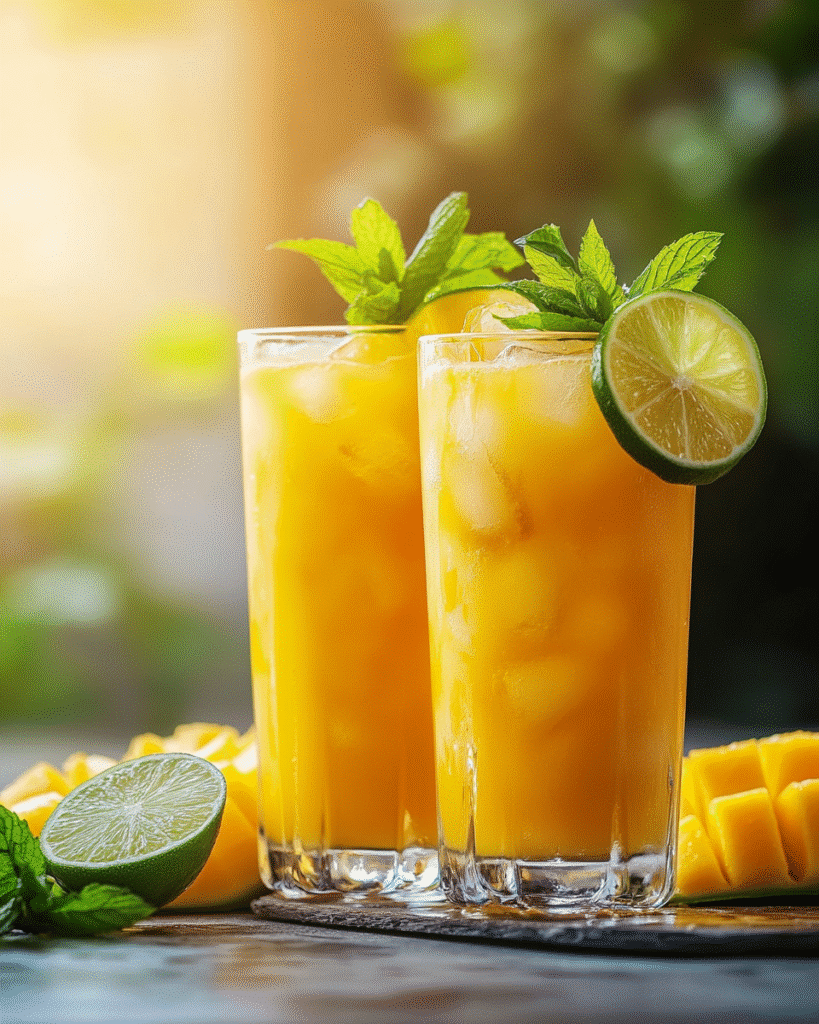
Very cold temperatures highlight the refreshing qualities and tone down any excessive sweetness. For visual appeal, use clear glasses to showcase the juice’s golden‑orange color. Garnish the rim with a thin pineapple wedge, mango slice, or lime wheel. You can also add a few small cubes of fresh fruit directly to the glass for extra color and texture.
If you serve pineapple mango juice at a brunch or party, consider using a clear pitcher or beverage dispenser filled with fruit slices and herbs like mint. The herbs add gentle aroma as guests pour their drinks. For a restaurant‑style look, create sugar or salt rims by rubbing the glass edges with lime and dipping them into a small plate of sugar or a sugar‑salt mix.
When pairing the juice with other items on the table, keep colors in mind; green salads, red berry dishes, and white plates help the bright juice stand out. You can even design a juice flight by offering small tasting glasses of pineapple mango juice, cucumber juice, and berry‑based drinks so guests can sample different flavors. With these small touches, your homemade pineapple mango juice will look as impressive as it tastes.
To try another fruit-forward drink base soon, Check out my Pinterest .
FAQ About Pineapple Mango Juice
How do I pick the best pineapple and mango for juice?
Choose a pineapple that smells sweet and fragrant at the base, with a firm but slightly yielding feel when you press gently. The skin should be mostly golden with some green; avoid fruits that smell fermented, have soft, moldy spots, or completely dry leaves.
For mangoes, look for fruits that give slightly when squeezed and release a fruity aroma near the stem. Color varies by variety, so focus more on softness and smell than on specific shades. Buying them a bit firm and letting them ripen at room temperature for a few days often produces great flavor. Once ripe, move them to the fridge until you are ready to juice.
Can I make pineapple mango juice without any added sugar?
Yes, you can absolutely prepare pineapple mango juice without added sugar, especially if your fruits are fully ripe. Ripe mangoes, in particular, offer plenty of natural sweetness that softens pineapple’s acidity. To maximize flavor without sugar, start with very ripe fruit at room temperature, then chill the juice after blending.
Add a splash of lime to brighten the existing sweetness and a tiny pinch of salt to enhance flavor, just like in desserts. If you still want a slightly sweeter taste, consider diluting the juice with a bit of apple juice or orange juice instead of straight sugar. Adjusting ripeness, citrus, and dilution usually makes extra sweeteners unnecessary.
How long does fresh pineapple mango juice last in the refrigerator?
Frozen pineapple and mango work very well for pineapple mango juice and offer a convenient, year‑round option. Allow the fruit to thaw slightly for 10–15 minutes so it blends more easily and does not stress your blender motor.
Then proceed with the usual method, adding water or coconut water to reach your desired texture. Frozen fruit often creates a naturally frosty, slushy drink, which is perfect for hot days. You might not need as much ice since the fruit is already cold. The flavor remains bright, and using frozen fruit can sometimes taste even better than off‑season fresh fruit because many brands freeze produce at peak ripeness.
Can I use frozen pineapple and mango for this juice?
Frozen pineapple and mango work very well for pineapple mango juice and offer a convenient, year‑round option. Allow the fruit to thaw slightly for 10–15 minutes so it blends more easily and does not stress your blender motor. Then proceed with the usual method, adding water or coconut water to reach your desired texture.
Frozen fruit often creates a naturally frosty, slushy drink, which is perfect for hot days. You might not need as much ice since the fruit is already cold. The flavor remains bright, and using frozen fruit can sometimes taste even better than off‑season fresh fruit because many brands freeze produce at peak ripeness.
Is pineapple mango juice good for digestion?
Pineapple mango juice can support digestion when enjoyed as part of a balanced diet. Pineapple contains bromelain, a group of enzymes that help break down proteins in your food, potentially easing the digestive process. Mango offers small amounts of fiber if you keep some pulp in the juice, along with water and natural sugars that help keep things moving.
Adding a bit of fresh ginger can enhance this benefit, as ginger is widely used to soothe the stomach and reduce feelings of nausea or bloating. However, because juice concentrates sugars, drinking very large amounts on an empty stomach may cause discomfort for some people. Moderation and pairing juice with fiber‑rich meals work best.
How can I make a thicker smoothie‑style pineapple mango drink?
To create a thicker, smoothie‑style pineapple mango drink, start by reducing the amount of water or coconut water in the basic recipe. Use chilled or frozen pineapple and mango chunks, and blend them with just enough liquid to keep the blender moving.
Add creamy ingredients like yogurt, coconut milk, or a ripe banana to increase body and make the drink more filling. You can also toss in a handful of oats or chia seeds; they thicken the texture further and add fiber. If the mixture still feels too thin, add more frozen fruit and blend again. Aim for a consistency that pours slowly but smoothly from the blender.
What can I serve with pineapple mango juice for a complete meal?
Pair pineapple mango juice with meals that balance its sweetness and acidity. Salads work extremely well, especially those with salty cheeses, olives, or grilled chicken. A tortellini salad with vegetables or a crisp Greek salad offers a satisfying mix of carbohydrates, protein, and healthy fats to complement the juice.
Seafood dishes such as chilled seafood salad or grilled fish also pair beautifully because the tropical flavors brighten the natural brininess. For lighter meals, serve the juice with cucumber salad, fresh fruit, or whole‑grain toast with avocado. Combining the juice with fiber‑rich and protein‑rich foods helps create a more balanced, filling meal.
Can I turn pineapple mango juice into popsicles or sorbet?
Pineapple mango juice makes excellent popsicles and sorbet. To create popsicles, blend your juice as usual, taste for sweetness, and pour it into molds. You can add small fruit pieces or swirl in a bit of coconut milk for marbled effects.
Freeze for at least 4–6 hours until solid. For sorbet, prepare a slightly more concentrated juice with less added water, chill it, and freeze in an ice cream maker according to the manufacturer’s instructions. If you do not have a machine, pour the juice into a shallow pan, freeze, and scrape with a fork every 30–45 minutes to create a granita‑style dessert. Both options give you a refreshing, lower‑fat alternative to ice cream.
Conclusion: Enjoying Pineapple Mango Juice Year‑Round
Pineapple mango juice delivers a rare combination of bright tropical flavor, refreshing hydration, and nutritional benefits, all in one sunny glass. By using ripe fruits and simple add‑ins like lime, mint, or ginger, you can create a drink that outshines store‑bought juices and easily adapts to your needs.
It works as a quick breakfast companion, a smart afternoon pick‑me‑up, or a party‑worthy mocktail base that pairs beautifully with fresh salads, seafood, and light snacks. Whether you prefer it strained and silky or thick and smoothie‑like, this versatile recipe always feels like a small escape to the tropics.
If you enjoy exploring more refreshing drinks and pairings, you might also like experimenting with homemade strawberry juice or other fruit blends that complement pineapple mango juice on your table. With a bit of practice, you will soon have an entire menu of colorful, nutrient‑rich beverages ready for any season.
Simple Pineapple Mango Juice Recipe (Reference Table)
| Ingredient | Quantity | Notes |
|---|---|---|
| Ripe pineapple | 2 cups, chopped | Peeled, cored, cut into chunks |
| Ripe mango | 2 cups, chopped | Peel and remove pit |
| Water or coconut water | 1–1.5 cups | Adjust for thickness |
| Fresh lime juice | 1–2 tbsp | Optional but recommended |
| Honey or sugar | To taste | Only if needed |
| Ice | As desired | For serving |
Quick Nutrient Snapshot (Per Approx. 8 oz Serving)
| Nutrient | Approximate Amount | Benefit |
|---|---|---|
| Calories | 120–150 kcal | Light energy boost |
| Vitamin C | 60–90% DV | Immune support |
| Vitamin A (from mango) | 15–25% DV | Eye & skin health |
| Potassium | 8–12% DV | Electrolyte balance |
| Natural sugars | 25–30 g | Quick energy |
Flavor Variation Ideas at a Glance
| Add‑In | Effect on Flavor | Tip |
|---|---|---|
| Lime or lemon juice | Brighter, tangier | Start with 1 tbsp, adjust |
| Fresh ginger | Warm, slightly spicy | Blend ½ inch piece |
| Mint leaves | Cool, refreshing | Blend or muddle in pitcher |
| Coconut milk | Creamy, dessert‑like | Swap part of the water |
| Sparkling water | Light, bubbly | Mix 1:1 for mocktails |