

Citrus Juice (Orange + Grapefruit + Lemon): Bright, Fresh & Naturally Energizing
Citrus Juice (Orange + Grapefruit + Lemon) is one of the simplest ways to bring a burst of sunshine to your glass. This vibrant blend delivers a powerful hit of vitamin C, refreshing acidity, and natural sweetness, all in one beautiful drink. Because you combine three different fruits, you also layer flavors: sweet, tart, and slightly bitter.
As a result, this citrus juice tastes more complex and satisfying than juice made from just one fruit. Better yet, you can serve it with breakfast, as a mid-afternoon pick-me-up, or even as the base for non-alcoholic cocktails and party punches. Just like a colorful salad or a glass of fresh strawberry juice, this citrus blend can become a daily ritual that supports your health and brightens your mood. If you enjoy fresh, homemade drinks, you might also love this refreshing strawberry juice recipe, which pairs beautifully with citrus-based breakfasts.
Table of Contents
Understanding Citrus Juice (Orange + Grapefruit + Lemon)
What Makes Citrus Juice (Orange + Grapefruit + Lemon) So Special?
Citrus Juice (Orange + Grapefruit + Lemon) stands out because each fruit adds its own personality. Oranges bring natural sweetness and a classic breakfast-juice flavor most people already love. Grapefruit adds a gentle, grown-up bitterness that balances the sweetness and makes the drink more interesting.
Lemon provides bright acidity and a clean, zesty finish that keeps every sip feeling light and refreshing. When you combine all three, you create a layered, complex flavor that feels almost like something from a juice bar, but you can easily make it at home. This combination also lets you fine-tune the taste. If you prefer sweeter drinks, you can lean heavier on the oranges.
For more tang, you can add extra lemon, and for a sophisticated, slightly bitter profile, you can boost the grapefruit. Because the base is simply fresh fruit, this juice is naturally gluten-free, dairy-free, vegan, and free of artificial flavors and preservatives when you make it from scratch. It also works well for weight-conscious diets because, unlike sugary sodas, this juice contains natural fruit sugars balanced with fiber (if you keep a bit of pulp) and plenty of micronutrients.
Nutritional Powerhouse: Vitamins, Antioxidants, and Hydration
Besides flavor, Citrus Juice (Orange + Grapefruit + Lemon) delivers impressive nutritional benefits. Oranges are famously rich in vitamin C, which supports immune health, collagen production, and overall skin vibrancy. Grapefruit adds more vitamin C, plus lycopene (especially in pink or red varieties), which acts as a powerful antioxidant that helps protect cells from oxidative stress. Lemon contributes additional vitamin C, as well as small amounts of B vitamins and minerals like potassium and magnesium.
When you juice these together, you end up with a drink that hydrates you while providing a concentrated dose of antioxidants and electrolytes. Many people reach for a glass in the morning to “wake up” their digestion and gently rehydrate after sleep. Because citrus fruits have a high water content, this juice also supports daily hydration goals, especially for those who struggle to drink plain water. You can think of it as a flavorful, functional alternative to sugary sports drinks.
While juice lacks the full fiber content of whole fruits, you can keep some pulp in your Citrus Juice (Orange + Grapefruit + Lemon) to gain a bit more fiber and a satisfying mouthfeel, making the drink more filling and supportive of balanced blood sugar levels when enjoyed in moderation.
Print
Best Citrus Juice Recipe: How to Make Orange + Grapefruit + Lemon Juice at Home
- Total Time: 10 minutes
- Yield: 2–3 servings 1x
Description
This Citrus Juice (Orange + Grapefruit + Lemon) is a bright, refreshing blend layered with sweetness, tartness, and a gentle bitterness. It’s rich in vitamin C, antioxidants, and hydration—perfect for breakfast, afternoon energy, or mocktail bases.
Ingredients
3–4 oranges (juicy, heavy)
1 large grapefruit (pink or red preferred)
1–2 lemons
Optional: 1–2 tsp honey or agave
Optional: ice cubes
Optional: mint for garnish
Instructions
1. Wash all citrus fruits thoroughly
2. Roll each fruit on the counter to release juices
3. Cut oranges, grapefruit, and lemons in half
4. Juice oranges first, then grapefruit, then lemons
5. Combine juices: 2 parts orange, 1 part grapefruit, 1/2 part lemon
6. Taste and adjust balance: add more orange for sweetness, more lemon for tang
7. Add honey or agave if desired
8. Chill for 30 minutes for best flavor or serve over ice
Notes
Use pink/red grapefruit for sweeter, less bitter notes
Chill fruits before juicing for naturally colder juice
Strain if you prefer pulp-free
Store in fridge 2–3 days or freeze in cubes for later use
- Prep Time: 10 minutes
- Cook Time: 0 minutes
- Category: Drinks / Juice
- Method: No-cook
- Cuisine: American / Mediterranean
Nutrition
- Serving Size: 1 glass
- Calories: approx. 110
- Sugar: 17g
- Sodium: 2mg
- Fat: 0g
- Saturated Fat: 0g
- Unsaturated Fat: 0g
- Trans Fat: 0g
- Carbohydrates: 27g
- Fiber: 0.3g (if strained)
- Protein: 1g
- Cholesterol: 0mg
Ingredients & Equipment for the Best Citrus Juice Blend
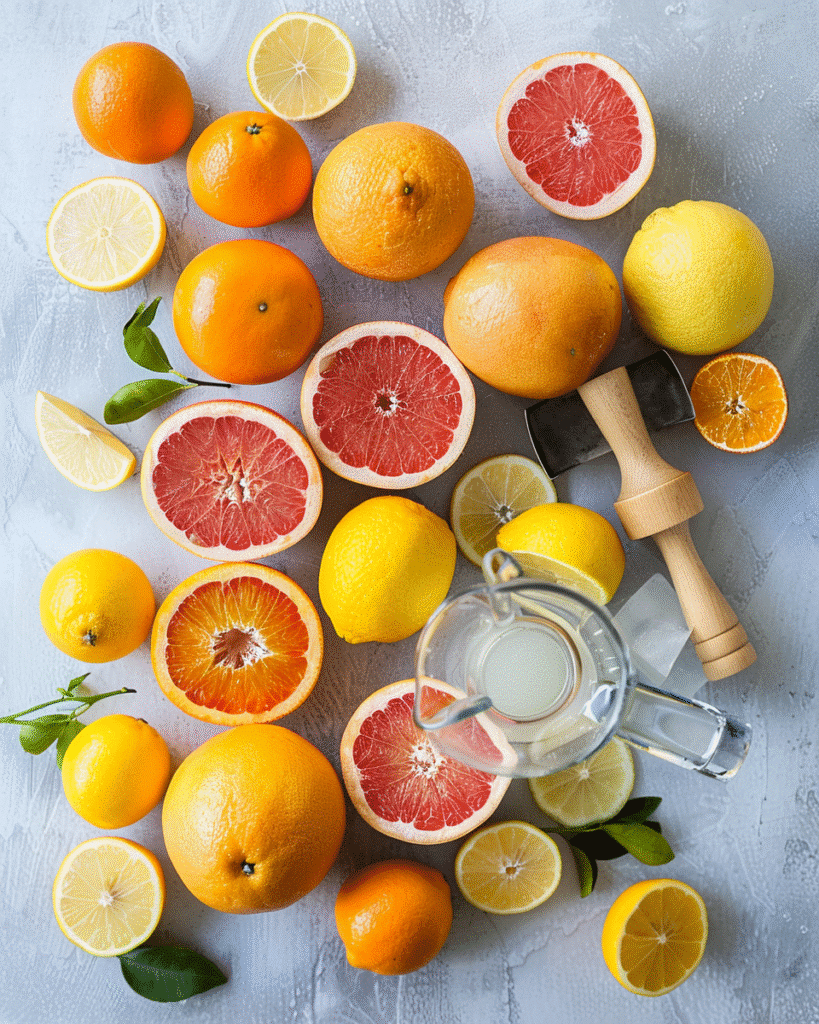
Choosing the Best Oranges, Grapefruits, and Lemons
To make exceptional Citrus Juice (Orange + Grapefruit + Lemon), the quality of your fruit matters more than anything else. Look for oranges that feel heavy for their size, since weight usually means more juice inside. Navel oranges work well for a classic flavor, while Valencia oranges are naturally sweeter and great for juicing. When it comes to grapefruit, pink or red varieties are ideal because they tend to be less bitter and more fragrant than white grapefruit. Again, choose fruits that feel heavy, with smooth skin and no soft spots.
For lemons, aim for bright yellow, thin-skinned fruits that yield slightly when you press them. These typically have more juice and a more aromatic zest. Whenever you can, buy organic citrus for juicing, especially if you plan to use the zest or keep a bit of peel for garnish. Organic fruits usually contain fewer pesticide residues and often have more intense fragrance. In season, local citrus can be sweeter and juicier, which means you might not need any added sweeteners. If your fruit tastes very tart or bitter, you can always balance your Citrus Juice (Orange + Grapefruit + Lemon) with a touch of honey or agave syrup.
Essential Tools: From Manual Juicers to High-Speed Machines
You do not need expensive equipment to make great Citrus Juice (Orange + Grapefruit + Lemon), but the right tools can save time and effort. A simple handheld citrus reamer works if you only make one or two servings, although you will need some strength to extract all the juice.
A clamp-style hand press, commonly used in bars, applies more pressure with less effort and is perfect for squeezing lemons and oranges quickly. For larger batches, a countertop electric citrus juicer is very convenient; it spins the reamer automatically as you press the fruit halves, which speeds things up. If you own a high-speed blender, you can also peel the fruits, remove most of the seeds, and blend everything together, then strain through a fine-mesh sieve or cheesecloth.
This method captures more of the natural oils from the membranes and can give a slightly richer body. No matter which method you use, always strain out the seeds and any large pieces of pith because they can add harsh bitterness. For serving, chilled glasses help keep the juice cold without relying on lots of ice, which would dilute the flavor. A small funnel and glass bottles or jars with tight lids are also helpful for storing your homemade Citrus Juice (Orange + Grapefruit + Lemon) safely in the refrigerator.
Step-by-Step: How to Make Citrus Juice (Orange + Grapefruit + Lemon)

Preparing the Fruit Properly for Maximum Flavor
Preparation is the key to getting the best flavor from your Citrus Juice (Orange + Grapefruit + Lemon). Start by washing all your citrus fruits under cool running water, even if you plan to cut them open and discard the peel. This step removes dirt, wax, and surface residues that could transfer to the flesh when you slice them.
Next, roll each fruit firmly on the countertop with the palm of your hand. This simple trick loosens the membranes inside and makes juicing easier. Using a sharp knife, slice each fruit crosswise. If you see any visible seeds near the surface, you can pick them out now to reduce bitterness. For an average batch that serves two to three people, you might use 3–4 oranges, 1 large grapefruit, and 1–2 lemons.
This ratio provides a good balance of sweetness, tang, and mild bitterness for most palates. However, feel free to adjust based on taste or the sweetness level of your specific fruits. Some home cooks like to zest one lemon or orange before juicing and set the zest aside to use as garnish or in other recipes, such as salads and baked goods. Since zest holds much of the aromatic oils, it adds a powerful citrus aroma without extra acidity.
Juicing, Mixing Ratios, and Simple Sweetening Options
Once your fruits are halved and ready, begin juicing. If you use a manual reamer or press, work systematically: juice all the oranges first, then the grapefruit, and finally the lemons. This helps you control the ratios more easily. Pour each type of juice into a measuring cup or directly into a large pitcher.
A typical starting ratio for Citrus Juice (Orange + Grapefruit + Lemon) is about 2 parts orange juice, 1 part grapefruit juice, and ½ part lemon juice. For example, you might use 2 cups of orange juice, 1 cup of grapefruit juice, and ½ cup of lemon juice. Stir gently and taste. If the drink feels too tart or bitter, add more orange juice. If it tastes too sweet, increase the lemon or grapefruit slightly. When you are satisfied with the balance, decide whether you need sweetener.
Many people enjoy this juice without any added sugar, especially if the oranges are very ripe. If you prefer a softer profile, stir in 1–2 teaspoons of honey, agave syrup, or simple syrup per cup of juice, tasting as you go. Always dissolve sweetener fully before serving. Chill the finished Citrus Juice (Orange + Grapefruit + Lemon) for at least 30 minutes whenever possible. Serving it well-chilled smooths the acidity and makes the flavors meld beautifully, creating a refreshing drink you will want to make again and again.
Here is a simple ratio guide you can reference:
| Servings | Orange Juice | Grapefruit Juice | Lemon Juice |
|---|---|---|---|
| 1 | 1 cup | 1/2 cup | 1/4 cup |
| 2–3 | 2 cups | 1 cup | 1/2 cup |
| 4–5 | 4 cups | 2 cups | 1 cup |
Health Benefits of Citrus Juice (Orange + Grapefruit + Lemon)
Immune Support, Skin Health, and Antioxidant Protection
The most obvious benefit of Citrus Juice (Orange + Grapefruit + Lemon) is its vitamin C content, but the health story goes deeper. Vitamin C plays several roles in the body: it supports immune function by helping your white blood cells work effectively, and it also helps your body produce collagen, which keeps skin, joints, and connective tissues strong. When you drink a glass of this citrus blend, you are not just quenching thirst; you are also giving your body tools to repair tissues and fight everyday oxidative damage.
Antioxidants in citrus, such as flavonoids, carotenoids, and hesperidin, help protect cells from free radicals created by stress, pollution, and normal metabolism. Over time, this protective effect may support healthy aging and reduce the risk of certain chronic issues. The natural acidity of lemons and grapefruits also stimulates saliva and gastric juices, which can support digestion when consumed in moderation.
Many people feel that a small glass in the morning “wakes up” their system more gently than coffee alone. While citrus juice should not replace any treatment or professional advice, it can be part of a generally healthy diet that emphasizes whole foods, colorful fruits, and vegetables.
Heart Health, Hydration, and Weight Management Support
Citrus Juice (Orange + Grapefruit + Lemon) can also support heart health and weight management when used wisely. Grapefruits, in particular, contain compounds that may help support healthy cholesterol levels, though research continues and results vary by person.
The potassium found in oranges and lemons helps balance sodium in the body, which can positively impact blood pressure when combined with an overall heart-healthy lifestyle. Because this juice has high water content, it helps keep you hydrated, which is vital for circulation, temperature regulation, and energy levels. If you drink a glass of citrus juice with breakfast instead of a sugary soda or high-calorie specialty coffee, you might naturally reduce your daily sugar and calorie intake. However, remember that even natural fruit juice contains sugar, so portion control matters. Enjoying a small to moderate serving, paired with fiber-rich foods like whole grains or leafy salads, can help keep blood sugar more stable.
For example, you might pair Citrus Juice (Orange + Grapefruit + Lemon) with a fresh, vegetable-packed dish such as this colorful Greek salad to create a balanced meal. When you think of your citrus drink as a flavorful side, rather than a bottomless beverage, you can gain the benefits of vitamins and antioxidants without overdoing natural sugars.
Flavor Variations and Creative Twists
Adding Herbs, Spices, and Other Fruits
One of the most enjoyable parts of making Citrus Juice (Orange + Grapefruit + Lemon) at home is customizing it. You can layer in herbs, spices, and other fruits to create unique blends tailored to your tastes. Fresh mint leaves muddled lightly at the bottom of the glass add a cooling note that pairs beautifully with the brightness of lemon.
Basil leaves create a more savory, aromatic drink that feels like something you might find at a high-end café. Ginger is another popular addition. You can grate a small piece of fresh ginger root and steep it in warm citrus juice for a few minutes, then chill the mixture. This gives your Citrus Juice (Orange + Grapefruit + Lemon) a gentle, spicy warmth that some people find soothing for digestion.
For a floral element, you can add a splash of orange blossom water, but use it sparingly because it is quite strong. If you like to experiment with layered flavors, try adding a small amount of freshly juiced carrot or beet to your citrus base. Just a few tablespoons of carrot juice will deepen the color and add natural sweetness and beta-carotene, creating a more complex, sunset-hued drink.
Turning Citrus Juice into Mocktails, Spritzers, and Party Punch
Citrus Juice (Orange + Grapefruit + Lemon) also makes an excellent base for non-alcoholic cocktails and sparkly drinks. To create a simple spritzer, mix equal parts citrus juice and chilled sparkling water over ice, then garnish with a slice of orange and a sprig of mint. This gives you a lighter, bubbly version that feels festive but still hydrating.
For brunch or special occasions, you can build mocktail-style drinks by combining citrus juice with flavored syrups or muddled fruits. For instance, you could pair it with a splash of strawberry puree for a bright, pink citrus-strawberry mocktail, inspired by drinks like a non-alcoholic strawberry margarita. Another idea is to mix your citrus blend with cranberry juice and a bit of sparkling water to create a refreshing, ruby-colored punch.
If you want a more sophisticated evening drink, you can build a zero-proof cocktail with citrus juice, a dash of bitters (alcohol-free if needed), and tonic water, garnished with a lemon twist. For parties, prepare a large pitcher of Citrus Juice (Orange + Grapefruit + Lemon), chill it thoroughly, and let guests customize their glasses with add-ins such as sliced berries, cucumber rounds, or herbs. This interactive approach turns a simple juice into a centerpiece of your gathering.
Serving Ideas, Food Pairings, and Meal Planning

Breakfast, Brunch, and Everyday Pairings
Citrus Juice (Orange + Grapefruit + Lemon) naturally fits into breakfast, but it can go far beyond toast and eggs. The bright acidity balances rich, creamy dishes like yogurt parfaits, chia pudding, or scrambled eggs with cheese.
If you serve pancakes or waffles with maple syrup, a glass of this juice can cut through the sweetness and keep the meal from feeling too heavy. At brunch, Citrus Juice (Orange + Grapefruit + Lemon) pairs nicely with savory, protein-rich dishes such as omelets with vegetables, smoked salmon on whole-grain bread, or avocado toast.
If you enjoy cold salads for lunch, try pairing your citrus drink with something crisp and refreshing, like this light cucumber salad. The herbal notes and cool crunch of cucumbers work beautifully against the bright, acidic citrus flavors. You can also serve this juice as an afternoon pick-me-up with nuts, seeds, or a small cheese plate. The combination of healthy fats and protein with the natural sugars in the juice helps keep you satisfied and energized without reaching for processed snacks.
Balancing Citrus Juice with Savory Dishes and Special Menus
Beyond breakfast, Citrus Juice (Orange + Grapefruit + Lemon) can play a role in more elaborate meals and themed menus. For example, if you plan a Mediterranean-inspired dinner with seafood, olives, and fresh herbs, this citrus blend can serve as an aperitif or as a base for a non-alcoholic welcome drink.
You might serve it alongside a seafood salad similar to a Frutti di Mare, where the bright citrus notes complement the briny, delicate flavors of shrimp, calamari, or mussels. For vegetarian menus, citrus juice lifts hearty dishes such as grain bowls with roasted vegetables, lentil salads, or pasta salads like tortellini with vegetables.
The acidity helps cleanse the palate between bites, making every mouthful feel fresh. If you enjoy planning weekly menus, you can rotate Citrus Juice (Orange + Grapefruit + Lemon) with other homemade juices, like apple or beet, to create variety.
Just remember to consider sugar content collectively, especially if you serve juice with multiple meals. Pairing it with salads, lean proteins, and fiber-rich sides will help keep your overall nutrition balanced while still allowing you to enjoy the bright, sunshiny flavors that make this drink so appealing.
Storage, Make-Ahead Tips, and Food Safety
How to Store Citrus Juice (Orange + Grapefruit + Lemon) Properly
Fresh Citrus Juice (Orange + Grapefruit + Lemon) tastes best right after you make it, but you can safely store it for short periods with the right approach. As soon as you finish juicing and adjusting your flavors, pour the drink into clean, airtight glass containers. Mason jars, swing-top bottles, or reusable juice bottles all work well.
Fill them as close to the top as possible to reduce air exposure, which can cause oxidation and vitamin C loss. Always refrigerate the juice promptly, keeping it at a safe temperature (ideally around 35–40°F or 1–4°C). Under these conditions, your citrus juice usually stays fresh for about 2–3 days. Over time, you might notice separation, with heavier pulp settling at the bottom. This is normal and does not indicate spoilage.
Simply shake or stir before serving to recombine everything. However, if you see any signs of fermentation, off odors, or unusual cloudiness, it is best to discard the juice. Because citrus fruits are acidic, they naturally resist bacterial growth more than low-acid juices, but proper food safety practices still matter. Clean your equipment thoroughly after each use, and avoid touching the inside of the bottles or lids with your hands.
Freezing, Meal Prep Strategies, and Reducing Waste
If you want to extend the life of your Citrus Juice (Orange + Grapefruit + Lemon), freezing is a practical option. Pour the juice into ice cube trays, leaving a little room at the top for expansion. Once frozen solid, transfer the cubes to a freezer-safe bag or container. These citrus cubes can last for about 2–3 months and offer many uses. You can drop them into sparkling water, smoothies, or cocktails for a burst of flavor without diluting your drink.
Larger containers of juice can also be frozen, but they take longer to thaw and may separate more. When meal prepping, you can schedule one “citrus juicing day” each week, then store a fresh batch for the next two mornings and freeze the rest as cubes. This way, you always have citrus juice ready without daily effort. Freezing also helps reduce food waste. If you buy a large bag of oranges and grapefruits and worry you cannot eat them all before they soften, juicing and freezing is a smart solution.
You can even freeze zest separately in small portions to add bright flavor to cakes, salad dressings, or marinades. Using the whole fruit in different ways, including the juice, zest, and even the peel for infused water, makes your Citrus Juice (Orange + Grapefruit + Lemon) routine both economical and environmentally friendly.
Common Mistakes and Troubleshooting Your Citrus Juice
Over-Bitter, Over-Sour, or Too Sweet? Fixing Flavor Balance
When you first start making Citrus Juice (Orange + Grapefruit + Lemon), it is easy to end up with a glass that feels too bitter, too sour, or unexpectedly sweet. Often, extra bitterness comes from including too much pith or leaving seeds in the juicer. The white pith under the peel and the seeds of grapefruit and lemons contain bitter compounds.
To fix this, always cut away any thick pith when using a blender method, and strain the finished juice through a fine-mesh sieve to catch seeds. If the juice already tastes bitter, you can soften it by adding more orange juice or a small amount of natural sweetener. Over-sour juice usually means your lemons are very acidic, or your ratio leans too heavily toward lemon. In that case, dilute with orange juice or even a splash of cold water, then stir in a teaspoon of honey.
On the other hand, if you find your Citrus Juice (Orange + Grapefruit + Lemon) too sweet, you might have used very ripe oranges and not enough grapefruit or lemon. To re-balance, add more grapefruit juice first, then adjust with lemon, tasting after each addition. Writing down your ratios and tasting notes can help you dial in your perfect blend for future batches.
Texture, Pulp, and Temperature Issues (and How to Solve Them)
Texture and temperature also influence your enjoyment of Citrus Juice (Orange + Grapefruit + Lemon). Some people dislike heavy pulp, while others find pulp makes the juice feel more natural and satisfying. If you prefer a smooth drink, strain your juice through a fine sieve or cheesecloth, pressing gently with the back of a spoon.
For a medium-pulp option, use a standard strainer and leave some of the smaller particles. Another common issue is serving the juice at room temperature when people expect it to be very cold. Warm citrus juice can taste harsher and more acidic. To avoid this, chill your fruit before juicing and refrigerate the finished blend for at least 30 minutes. If you must serve immediately, pour it over a few ice cubes, but do not overfill with ice or you will dilute the flavors.
Some home cooks also find that their juice tastes “flat.” This can happen when the blend lacks enough lemon to lift the other flavors. In that case, a small splash of fresh lemon juice added just before serving can restore brightness. Remember that even small tweaks, like a pinch of sea salt, a touch of honey, or a few drops of vanilla extract, can shift the flavor profile and make your Citrus Juice (Orange + Grapefruit + Lemon) feel more balanced and enjoyable.
Using Citrus Juice (Orange + Grapefruit + Lemon) in Recipes
Marinades, Dressings, and Savory Dishes
Citrus Juice (Orange + Grapefruit + Lemon) is not only for drinking; it also makes a fantastic ingredient in savory cooking. The natural acidity tenderizes proteins like chicken, fish, and tofu, while the citrus oils add complex aroma. To create a simple marinade, combine your citrus blend with olive oil, minced garlic, salt, pepper, and herbs such as thyme or oregano. Soak chicken pieces for 1–2 hours in the refrigerator before grilling or baking. For seafood, a shorter marinating time of 30 minutes is usually enough.
You can also use this juice as a base for salad dressings. Whisk together equal parts citrus juice and extra-virgin olive oil, then season with Dijon mustard, honey, salt, and pepper. This bright vinaigrette pairs beautifully with leafy greens and fruit-forward salads, especially those that include segments of orange or grapefruit.
It works nicely over spinach salads, or even alongside something like a strawberry spinach salad, where the mixture of berries and greens harmonizes with the citrus notes. In grain bowls, a drizzle of citrus dressing can tie together quinoa, roasted vegetables, nuts, and beans, turning simple components into a cohesive meal.
Desserts, Frozen Treats, and Sweet Inspirations
On the sweet side, Citrus Juice (Orange + Grapefruit + Lemon) shines in desserts and frozen treats. You can turn the juice into simple popsicles by pouring it into molds and freezing. For a creamier texture, mix with a little yogurt or coconut milk before freezing. Sorbets are another excellent use; simmer equal parts citrus juice and a light sugar syrup, chill thoroughly, then churn in an ice cream maker.
The result is a bright, palate-cleansing dessert that feels indulgent yet refreshing. Bakers can also use citrus juice in cake glazes. After baking a loaf cake or simple sponge, poke small holes across the top and pour a mixture of powdered sugar and your citrus blend over it. The cake absorbs the syrup and takes on a moist, tangy-sweet character.
You can also combine Citrus Juice (Orange + Grapefruit + Lemon) with gelatin or agar-agar to create lightly set citrus jellies, which make elegant, low-fat desserts. Pair them with fresh fruit segments or a spoonful of whipped cream.
If you enjoy layered drinks, you can blend citrus juice with other homemade juices such as apple or beet to create colorful, Instagram-worthy glasses, similar in spirit to vibrant mocktails like a Shirley Temple or non-alcoholic cosmopolitan. In this way, your Citrus Juice (Orange + Grapefruit + Lemon) becomes a flexible ingredient, not just a single-purpose beverage.
Here is a quick overview of how you can use this juice:
| Use | How to Incorporate | Notes |
|---|---|---|
| Marinades | Mix with oil, garlic, herbs | Ideal for chicken and seafood |
| Dressings | Whisk with olive oil, mustard | Great on salads and grain bowls |
| Popsicles | Freeze sweetened juice in molds | Optionally add yogurt |
| Sorbets | Churn with sugar syrup | Serve as light dessert |
FAQ About Citrus Juice (Orange + Grapefruit + Lemon)
Is Citrus Juice (Orange + Grapefruit + Lemon) good for daily drinking?
Citrus Juice (Orange + Grapefruit + Lemon) can be part of a healthy daily routine when enjoyed in moderation. It offers vitamin C, antioxidants, and hydration, which support immune health and overall wellness.
However, like all fruit juices, it contains natural sugars and lacks the full fiber content of whole fruit. For most people, a small glass, about 4–8 ounces, once a day works well, especially when paired with a meal that includes protein and fiber.
This combination helps slow the absorption of sugars and keep energy levels stable. If you have specific health conditions, such as acid reflux, diabetes, or citrus allergies, speak with a health professional to determine the right portion or frequency for your needs.
Can I make Citrus Juice (Orange + Grapefruit + Lemon) without a juicer?
Yes, you can absolutely make Citrus Juice (Orange + Grapefruit + Lemon) without a dedicated juicer. The simplest method uses a manual citrus reamer or a fork.
Cut your fruits in half, hold one half over a bowl, and twist the reamer or fork into the flesh to extract the juice. Strain the liquid through a fine-mesh sieve to remove pulp and seeds. If you have a blender, you can peel the fruits, remove the seeds, and blend the segments until smooth, then strain.
This approach captures more aromatic oils from the fruit and can create a fuller flavor. It may take a bit more time and effort than using an electric juicer, but the results are still fresh and delicious, and you gain full control over the pulp level.
How long does Citrus Juice (Orange + Grapefruit + Lemon) stay fresh?
Fresh Citrus Juice (Orange + Grapefruit + Lemon) usually stays at its best for 2–3 days when stored correctly in the refrigerator. Always pour the juice into clean, airtight glass containers and keep them chilled at food-safe temperatures.
Over time, you may see some separation, with pulp settling at the bottom, which is normal. Shake or stir before serving to mix the layers. After about three days, the flavor and vitamin C content begin to decline, even if the juice still appears safe.
If you notice any off smell, strange fizzing, or unusual cloudiness, discard the batch. For longer storage, freeze the juice in ice cube trays and transfer the cubes to freezer bags, where they keep for a couple of months.
Can I use bottled citrus juice instead of fresh?
You can use bottled citrus juice in place of fresh, but the flavor and nutritional profile may not be as vibrant. Many bottled juices undergo pasteurization, which extends shelf life but can slightly alter taste and reduce some heat-sensitive nutrients like vitamin C.
Additionally, some commercial products contain added sugars, preservatives, or flavorings that change the natural character of the drink. If you choose bottled juice, look for varieties labeled “100% juice,” with no added sugar or artificial ingredients.
For the best results, you can blend bottled orange or grapefruit juice with freshly squeezed lemon juice to restore brightness. Ultimately, fresh-squeezed Citrus Juice (Orange + Grapefruit + Lemon) will almost always offer a more aromatic, lively experience than shelf-stable alternatives.
Are there any health precautions when drinking Citrus Juice (Orange + Grapefruit + Lemon)?
Yes, there are a few precautions to consider. First, grapefruit can interact with certain medications by affecting how they are metabolized in the body. If you take prescription drugs, check with your doctor or pharmacist before consuming grapefruit-containing juices regularly.
Second, the natural acids in Citrus Juice (Orange + Grapefruit + Lemon) can irritate sensitive stomachs or worsen symptoms in people with acid reflux or ulcers. Drinking smaller amounts, diluting with water, or enjoying the juice with food may help.
Third, because citrus juice contains natural sugars, people managing blood sugar levels should monitor their portions and pair the drink with high-fiber foods. Lastly, the acidity can weaken tooth enamel over time, so sipping through a straw and rinsing your mouth with plain water afterward can protect dental health.
Can kids drink Citrus Juice (Orange + Grapefruit + Lemon)?
Most children can enjoy Citrus Juice (Orange + Grapefruit + Lemon) in small amounts, but you should consider a few factors. The acidity can be intense for young palates, so diluting the juice with water or adding more orange than grapefruit and lemon often makes it more child-friendly.
Because of grapefruit’s potential medication interactions, check with your pediatrician if your child takes regular medicine. Also, limit portions to avoid excessive sugar intake; a small glass alongside a balanced meal is generally better than allowing kids to sip juice throughout the day.
Serving the juice as an occasional treat rather than a constant beverage encourages healthier habits and leaves room for whole fruits, which provide fiber and additional nutrients.
Conclusion: Making Citrus Juice (Orange + Grapefruit + Lemon) Part of Your Routine
Citrus Juice (Orange + Grapefruit + Lemon) offers a bright, versatile way to refresh your body and elevate everyday meals. With its layered flavors, sweet from oranges, tangy from lemons, and gently bitter from grapefruit, it delivers far more character than a single-fruit juice.
When you prepare it at home, you control every detail: sweetness, pulp level, and creative additions like herbs, ginger, or sparkling water. You can enjoy it in the morning to start your day, serve it as a base for mocktails, or incorporate it into marinades and dressings. It pairs seamlessly with fresh salads, seafood, and even festive non-alcoholic drinks, much like a sparkling Shirley Temple or cosmo-style mocktail.
For more inspiration on refreshing beverages to enjoy alongside your citrus creations, you might like this bright apple juice recipe, which complements citrus perfectly on a juice bar menu at home. With a little planning and a few simple tools, Citrus Juice (Orange + Grapefruit + Lemon) can become a delicious, energizing staple in your kitchen.
For more seasonal salad inspirations, check out my Pinterest.