
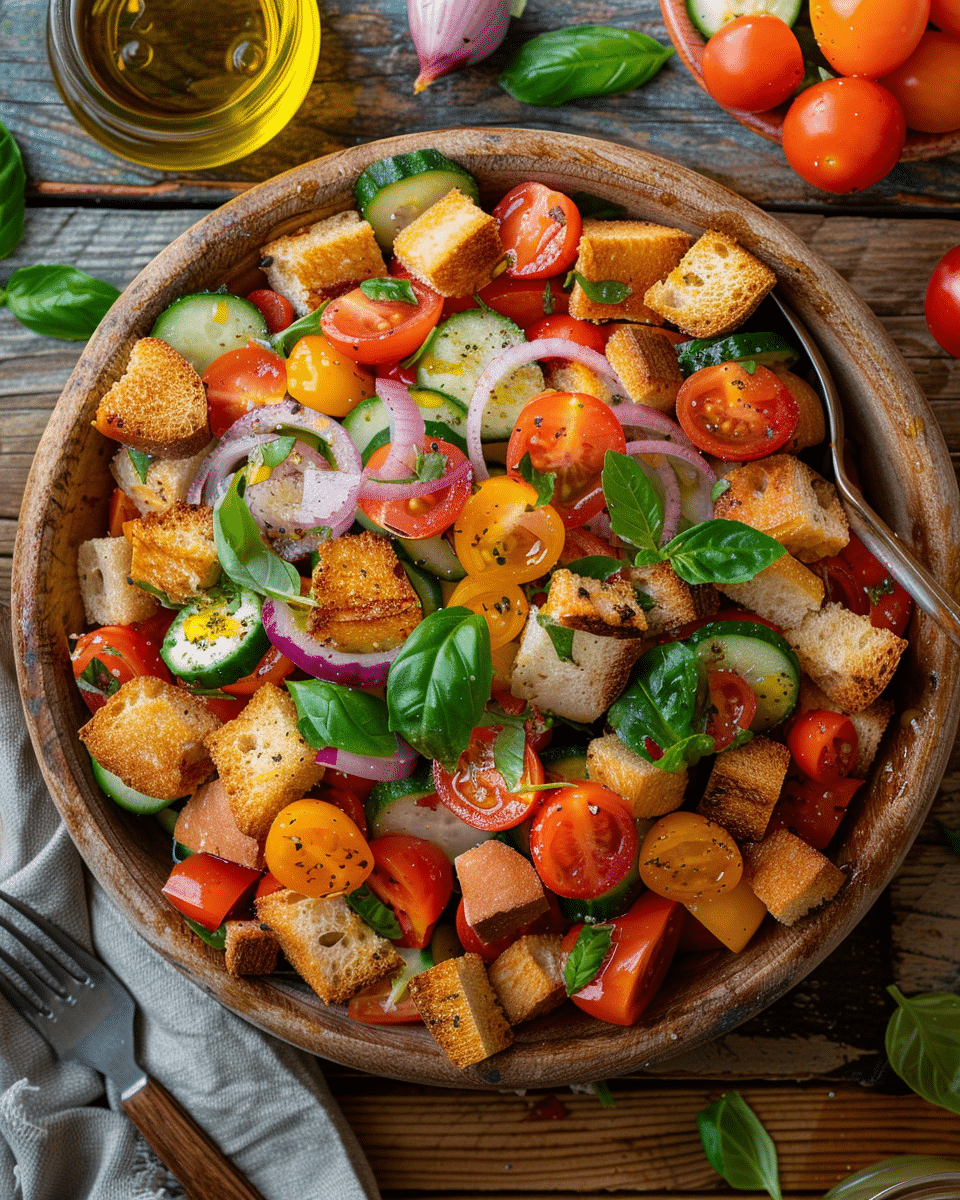
Panzanella Salad Bliss: Fresh, Flavorful & Perfect for Summer
Panzanella salad is one of those dishes that proves simple ingredients can taste absolutely incredible. This rustic Italian bread and tomato salad turns day‑old bread, ripe tomatoes, and a few pantry staples into a bright, juicy, and satisfying meal. Because the bread soaks up all the tomato juices, olive oil, and vinegar, every bite bursts with flavor while still feeling light and refreshing.
If you love vibrant salads like a classic Greek salad or a colorful seafood salad, this is the perfect Mediterranean recipe to add to your routine. For anyone looking to eat more vegetables without giving up comfort food, panzanella salad delivers the best of both worlds. It works beautifully as a main dish on hot days or as a side for grilled meats, fish, or even a big Italian feast.
As you’ll see, it’s incredibly versatile, easy to customize with seasonal produce, and surprisingly budget‑friendly. Once you master a basic panzanella, you can start playing with endless variations, from adding mozzarella or beans to pairing it with refreshing drinks like fresh juices and mocktails.
You can find more bright, summery salad inspiration on Olivia Maze Recipes, such as this refreshing Frutti di Mare Seafood Salad, which pairs beautifully with panzanella on a Mediterranean-style table.
Table of Contents
What Is Panzanella Salad?
Classic Tuscan Roots of Panzanella
Panzanella salad comes from the central Italian region of Tuscany, an area famous for turning humble ingredients into unforgettable dishes. Traditionally, panzanella used stale, country-style bread and whatever vegetables the garden offered, especially tomatoes and onions. Italian cooks hated wasting food, so they softened hard bread with water and let it soak up the juices from ripe tomatoes and vinegar.
Over time, olive oil, basil, and other vegetables joined the bowl, transforming a frugal recipe into a beloved classic. Today, a typical panzanella salad still respects these Tuscan roots, but you can find modern versions in restaurants and home kitchens around the world. Many people now toast the bread instead of soaking it in plain water, which gives the salad more texture and a deeper flavor.
No matter how you prepare it, the spirit of panzanella remains the same: fresh, seasonal produce; good olive oil; crusty bread; and bold, sunny flavors that taste like summer in every bite.
Key Characteristics of a Great Panzanella Salad
A great panzanella salad balances textures and flavors in a way that feels both rustic and refined. The bread is the star: it should be dry or toasted, sturdy enough to soak up dressing and tomato juices without turning to mush.
Tomatoes must be ripe, juicy, and flavorful because they create much of the “sauce” for the salad. Red onion adds a sharp bite, while cucumbers bring crunch and freshness, similar to what you might enjoy in a simple cucumber salad. High-quality extra-virgin olive oil and red wine vinegar (or white wine vinegar) form a bright, tangy dressing that naturally blends with the tomato juices.
Fresh herbs, especially basil, lift the entire salad with aroma and color. While the base is simple, the magic lies in letting the bread sit long enough to absorb flavors but not so long that the salad loses its structure. When you take a forkful, you should taste soft, flavorful bread, juicy tomatoes, crisp vegetables, and a vibrant vinaigrette all at once.
Print
Best Panzanella Salad Recipe: How to Make this Refreshing Italian Dish at Home
- Total Time: 30 minutes
- Yield: 4 servings 1x
- Diet: Vegetarian
Description
A bright, juicy, and rustic Tuscan Panzanella Salad made with toasted bread cubes, ripe tomatoes, cucumbers, red onions, basil, and a tangy olive oil vinaigrette. A refreshing Mediterranean dish perfect as a light meal or summer side.
Ingredients
4 cups rustic bread (ciabatta or country loaf), cubed
4 large ripe tomatoes, chopped
1 large cucumber, sliced
1/2 red onion, thinly sliced
1 red or yellow bell pepper, chopped (optional)
1 cup fresh basil leaves, torn
1/3 cup extra virgin olive oil
3–4 tbsp red wine vinegar
1 garlic clove, minced
1 tsp sugar or honey (optional)
Salt and black pepper to taste
Optional add-ins: mozzarella, olives, capers, chickpeas
Instructions
1. Preheat oven to 375°F (190°C)
2. Toss bread cubes with olive oil and salt, then toast 10–15 minutes until lightly golden
3. Chop tomatoes, cucumbers, onion, and peppers into bite-size pieces
4. Place vegetables in a large bowl and season with salt and pepper
5. Whisk olive oil, vinegar, garlic, and sugar/honey into a vinaigrette
6. Add toasted bread to the bowl and pour dressing on top
7. Toss gently until bread absorbs tomato juices and dressing
8. Fold in fresh basil leaves
9. Let salad rest 20–30 minutes before serving for best flavor
Notes
Use stale bread or toast fresh bread for ideal texture
Adjust vinegar or oil based on tomato sweetness
Add mozzarella or beans for a hearty main dish
Best served at room temperature
Great for summer potlucks and Mediterranean meals
- Prep Time: 15 minutes
- Cook Time: 15 minutes
- Category: Salad / Mediterranean
- Method: No-cook / Toasted
- Cuisine: Italian / Tuscan
Nutrition
- Serving Size: 1 bowl
- Calories: approx. 320
- Sugar: 9g
- Sodium: 300mg
- Fat: 18g
- Saturated Fat: 3g
- Unsaturated Fat: 13g
- Trans Fat: 0g
- Carbohydrates: 34g
- Fiber: 4g
- Protein: 7g
- Cholesterol: 0mg
Essential Ingredients for Authentic Panzanella Salad
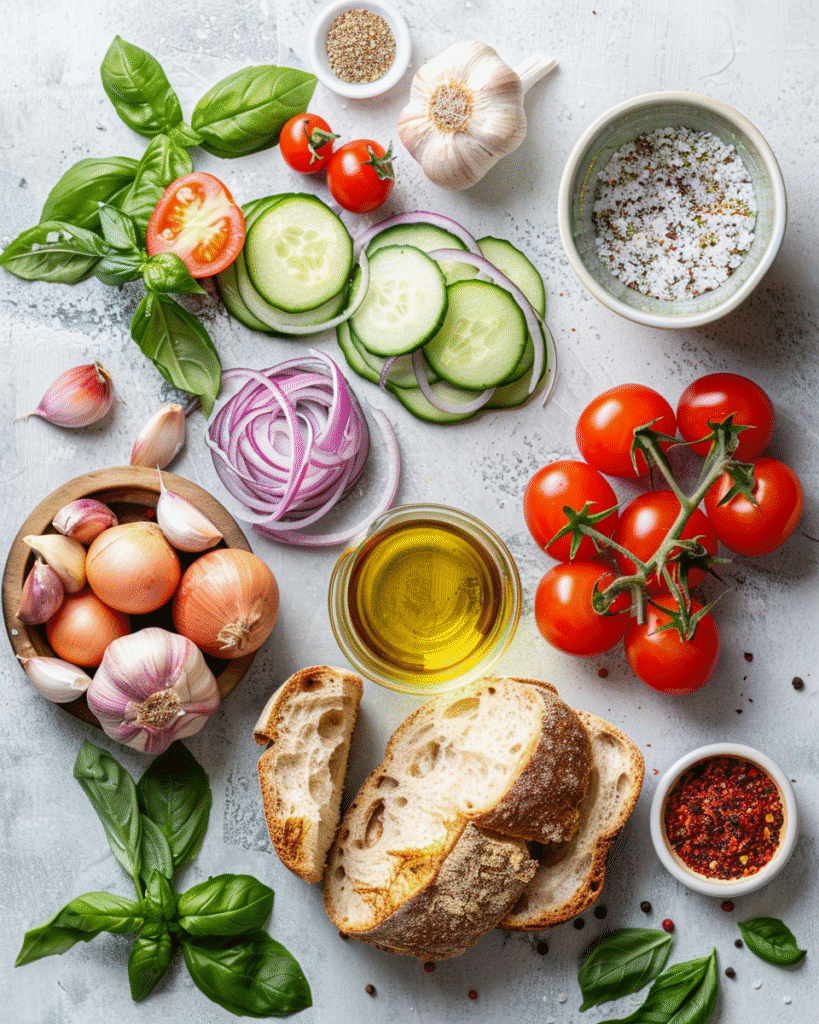
Choosing the Best Bread, Tomatoes, and Veggies
The most important ingredient in panzanella salad is the bread, so choosing the right type makes a huge difference. Ideally, use a crusty, rustic loaf like Italian country bread, ciabatta, or even a French baguette.
Avoid soft sandwich bread because it turns gummy quickly and doesn’t hold up in the dressing. Day‑old or slightly stale bread works best since it dries out enough to absorb plenty of flavor. Next, focus on tomatoes. Opt for ripe, in-season varieties like vine-ripened, heirloom, or Roma tomatoes.
They should feel heavy for their size and smell fragrant at the stem; pale, firm tomatoes lack the sweetness and juiciness you need. For extra texture, add crunchy cucumbers, colorful bell peppers, and thinly sliced red onion. These vegetables echo the crisp freshness you might enjoy in a Mediterranean cucumber or Greek salad, giving contrast to the soft bread and juicy tomatoes.
Oils, Vinegars, Herbs, and Optional Add‑Ins
Once you’ve selected the main vegetables and bread, the next step is flavor-building ingredients. Extra-virgin olive oil is non-negotiable for a truly flavorful panzanella salad. It brings richness, fruity notes, and helps carry the flavors of garlic and herbs. Use a good-quality olive oil that you’d enjoy drizzling over bread.
For acidity, red wine vinegar is traditional, but white wine or sherry vinegar also work well. The vinegar should be bright but not harsh, so taste and adjust until you find a pleasant tang. Fresh basil is the classic herb and should be added generously; its sweet aroma ties the salad to its Italian roots.
You can also add parsley or oregano for variety. For optional add‑ins, think about cheese, protein, and briny elements: fresh mozzarella pearls, feta, or shaved Parmesan; canned tuna or grilled chicken; or olives and capers for a salty kick. These additions change the feel of the salad from a simple side to a flavorful main course while still staying true to the spirit of panzanella.
Step-by-Step: How to Make Panzanella Salad
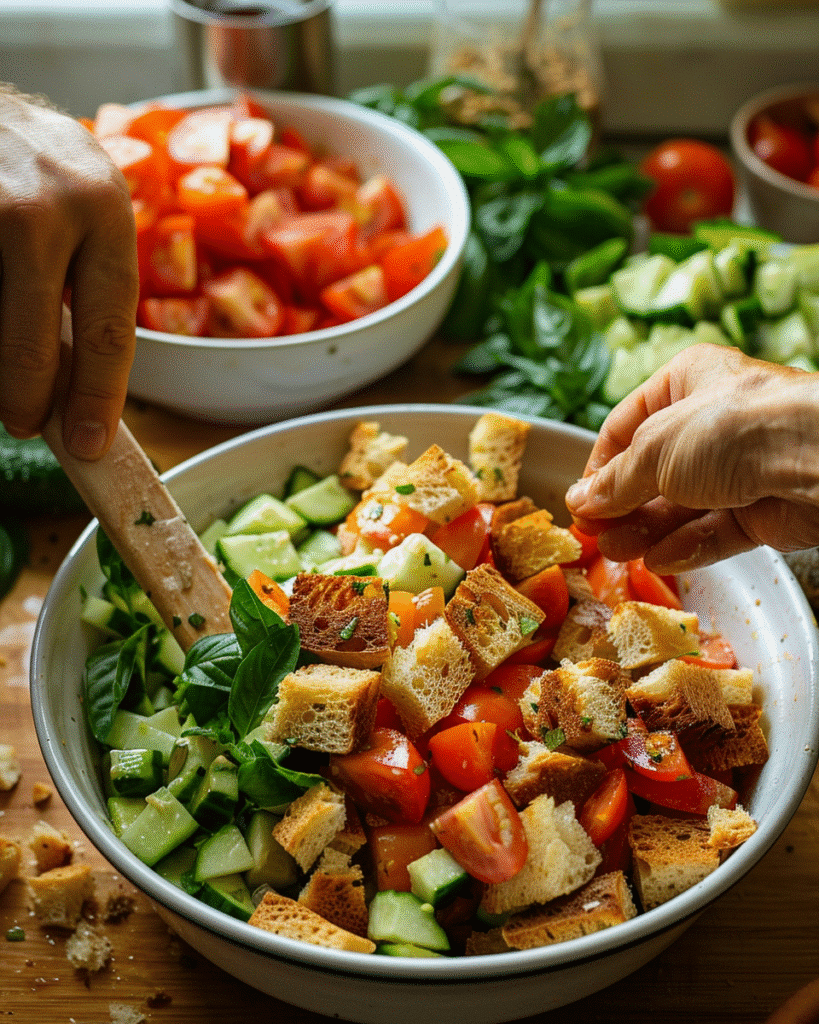
Preparing and Toasting the Bread for Perfect Texture
Toasting the bread correctly is key to a successful panzanella salad, because it determines how the bread behaves once it meets the juicy tomatoes and dressing. Start by cutting your bread into bite-sized cubes, about 1-inch pieces. If the bread is very fresh, consider leaving the cubes out on a sheet pan for 30–60 minutes to dry slightly. Preheat your oven to around 375°F (190°C).
Toss the bread cubes with a drizzle of olive oil, a pinch of salt, and, if you like, a light dusting of garlic powder. Spread them in a single layer on a baking sheet. Toast for 10–15 minutes, stirring once or twice, until the cubes are golden on the edges and feel dry but still have a little give in the center.
Avoid over-browning, which can make the bread too hard and prevent it from soaking up the dressing. Alternatively, you can grill thick bread slices, then cube them for a slightly smoky flavor.
Building the Salad and Letting Flavors Marinate
Once your bread is ready, focus on assembling the panzanella salad in a large bowl to give room for gentle tossing. Chop the tomatoes into chunks close in size to the bread cubes, so each bite feels balanced.
Slice cucumbers, red onions, and bell peppers into thin pieces or half-moons. Add the vegetables to the bowl along with the toasted bread. Sprinkle with salt and freshly ground black pepper to draw out the tomato juices. In a small jar or bowl, whisk together extra-virgin olive oil, red wine vinegar, minced garlic, and a pinch of sugar or honey if your tomatoes need a little sweetness.
Pour the dressing over the salad and toss gently but thoroughly so that every piece of bread gets a coat. Finally, tear fresh basil leaves and fold them in. Let the salad sit for at least 20–30 minutes at room temperature. During this time, the bread will absorb the flavorful juices and soften slightly. Taste before serving and adjust seasoning or add a little more oil or vinegar if needed.
Variations: Modern Twists on Classic Panzanella Salad
Protein-Packed and Hearty Panzanella Ideas
While classic panzanella salad is naturally vegetarian, you can easily turn it into a protein-rich main dish. One popular approach is to add grilled chicken or shrimp.
Marinate your protein in olive oil, garlic, lemon, and herbs, then grill until nicely charred and slice into bite-sized pieces before tossing with the salad. For a more coastal twist, pair panzanella with seafood like grilled calamari or serve it alongside a tangy Frutti di Mare seafood salad for a full Mediterranean spread.
Beans also make a wonderful plant-based protein addition; cannellini beans, chickpeas, or butter beans integrate smoothly and absorb flavors. If you prefer a creamy element, add torn pieces of fresh mozzarella or burrata just before serving. These cheeses soften into the salad and create a luxurious texture that still feels light and summery. Each of these add-ins turns panzanella into a complete, satisfying meal.
Seasonal and Regional Ingredient Variations
Panzanella salad thrives on seasonal creativity, so feel free to adapt it based on what is freshest in your market or garden. In late spring, add blanched asparagus, peas, or radishes for peppery crunch. During peak summer, expand beyond basic tomatoes with colorful heirloom varieties, sweet corn kernels, or even juicy peaches and nectarines for a sweet-savory twist. Early fall invites roasted vegetables like zucchini, eggplant, and red peppers, which add a smoky, deeper flavor.
You can also explore regional accents. For a Greek-inspired panzanella, add Kalamata olives, feta cheese, and a sprinkle of dried oregano, similar to components in a Greek salad.
A more Italian-American style might include salami slices, artichoke hearts, and pepperoncini. You can even create a Tuscan‑meets‑American fusion with cherry tomatoes, grilled corn, and fresh basil. The bread and dressing remain the backbone, but the vegetables can change with the seasons and your cravings.
Nutritional Benefits of Panzanella Salad
Health Profile: Carbs, Fiber, Vitamins, and Healthy Fats
Panzanella salad may look indulgent, but it actually offers a balanced combination of macronutrients and micronutrients when prepared thoughtfully. The bread does provide carbohydrates, yet when you use whole-grain or high-fiber loaves, you gain more fiber and longer-lasting energy.
The large volume of fresh vegetables, especially tomatoes, cucumbers, onions, and peppers, adds hydration, vitamins A and C, and important antioxidants. Tomatoes are particularly rich in lycopene, a compound linked with heart health and reduced inflammation.
Olive oil, a core ingredient in the dressing, provides monounsaturated fats that support cardiovascular health and help your body absorb fat-soluble vitamins from the vegetables. Because the dressing is oil-based rather than cream-based, the salad stays lighter in saturated fat than many traditional creamy salads.
To illustrate how panzanella can fit into a balanced diet, here is an approximate nutrition snapshot for a 1½-cup serving (values vary by recipe):
| Nutrient | Approx. Amount |
|---|---|
| Calories | 250–320 kcal |
| Carbohydrates | 28–35 g |
| Protein | 6–10 g |
| Fat | 12–18 g |
| Fiber | 3–6 g |
| Vitamin C | 25–40% DV |
| Vitamin A | 15–25% DV |
Making Panzanella Lighter or More Filling
You can easily adjust panzanella salad to match your nutrition goals without sacrificing flavor. To make it lighter, increase the proportion of vegetables to bread. For example, use equal parts bread and vegetables by volume or even a 1:2 ratio in favor of vegetables.
Choose a whole-grain, seeded, or sourdough loaf to add more fiber and nutrients, which can improve digestion and help keep you full longer. If you want to lower calories, slightly reduce the olive oil in the dressing and add a splash more vinegar or lemon juice for brightness.
On the other hand, if you need a more filling meal, include lean proteins like grilled chicken, canned tuna, beans, or chickpeas. A scattering of nuts or seeds like toasted pine nuts or sunflower seeds will introduce healthy fats and extra crunch. Pairing your panzanella with a fresh vegetable juice, like carrot or beet juice, can also increase the nutrient density of your meal and keep you hydrated.
Serving Panzanella Salad: Meals, Menus, and Pairings
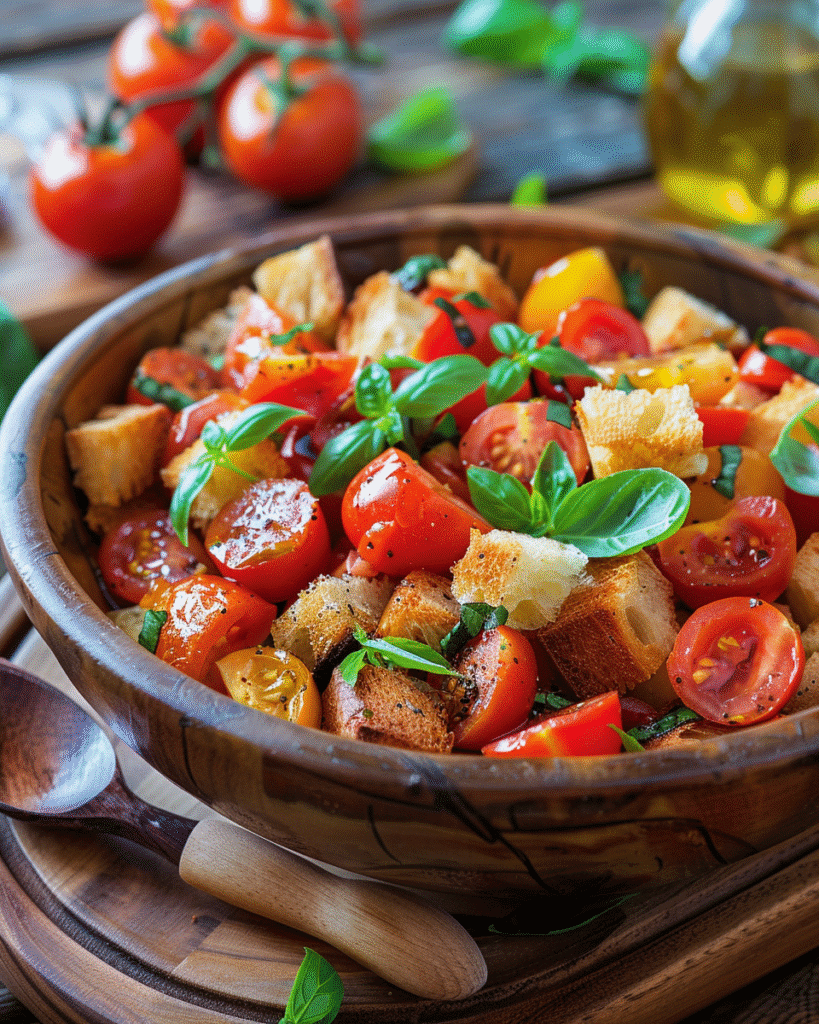
How to Serve Panzanella as a Side or Main Dish
Panzanella salad is incredibly flexible, so you can serve it in many ways depending on the occasion. As a side dish, it fits naturally alongside grilled meats like steak, chicken, or sausages, where the acidity of the tomatoes and vinegar helps cut through richness.
It also pairs well with simple baked or grilled fish, since the salad adds flavor and color without overwhelming delicate seafood. When you want panzanella to be the main event, build it up with extra vegetables and some form of protein: white beans, chickpeas, mozzarella, or grilled shrimp are all excellent.
Serve it with a bowl of chilled soup or a small plate of antipasto to round out the meal. Because panzanella tastes best at room temperature, it works beautifully for potlucks, picnics, and make-ahead lunches. Just remember to give it a gentle toss before serving to refresh the dressing and redistribute any juices that have settled.
Drink Pairings: Juices, Mocktails, and Light Beverages
The fresh, tangy nature of panzanella salad makes it a fantastic partner for bright, refreshing drinks. If you prefer non-alcoholic options, consider pairing your salad with homemade juices or mocktails that echo its summery character.
A cold glass of strawberry juice or apple juice brings natural sweetness to balance the acidity of the vinegar and tomatoes. Vegetable-based drinks like carrot or beet juice provide earthy undertones that complement the salad’s rustic bread and olive oil notes. Light, citrusy mocktails such as a nonalcoholic cosmopolitan or a Shirley Temple also make lively companions without feeling heavy.
For something especially cooling on a hot day, a chilled cucumber-based beverage offers the same refreshing qualities as a cucumber salad in drink form. In every case, aim for drinks that are not overly sweet or creamy; you want them to support the salad’s freshness rather than compete with it.
Make-Ahead, Storage, and Leftover Ideas
How Far in Advance You Can Make Panzanella
Because panzanella salad relies on the bread soaking up juices, it actually benefits from a short rest before serving. For the best texture, assemble the salad 20–60 minutes in advance and let it sit at room temperature, which allows flavors to meld and the bread to soften slightly while staying structured.
If you want to prepare components earlier, chop the vegetables and store them separately in the refrigerator for up to a day. Toast the bread cubes ahead of time and keep them in an airtight container at room temperature. Wait to combine the bread, vegetables, and dressing until closer to serving time.
If you are planning a party or picnic, you can mix the salad up to 4 hours ahead and hold it in the fridge, but remember to bring it back to room temperature before serving so the olive oil in the dressing doesn’t firm up and the flavors stay vibrant.
Storing Leftovers and Turning Them into New Meals
Leftover panzanella salad can still taste delicious the next day if you store it properly and adjust your expectations on texture. Transfer the salad to an airtight container and refrigerate for up to 24 hours. The bread will soften more over time, creating a texture closer to a cold bread-and-vegetable stew, which some people find very comforting.
To revive it, you can add a handful of fresh greens like arugula or baby spinach, along with a drizzle of extra-virgin olive oil and vinegar to brighten the flavors. Leftover panzanella also makes a great base for a quick lunch: top it with a fried or poached egg, some flaked tuna, or leftover grilled chicken for a complete meal. You can even warm leftovers lightly in a skillet with a bit of olive oil to create a rustic, sautéed bread-vegetable dish that pairs nicely with a side salad or soup.
Common Mistakes and Troubleshooting Panzanella Salad
Avoiding Soggy Bread and Bland Flavors
Two major mistakes can ruin a panzanella salad: soggy bread and bland dressing. Soggy bread usually happens when you use very soft sandwich bread, skip toasting, or add too much liquid too early. To avoid this, always start with a sturdy, crusty loaf and toast the cubes until they feel dry and golden at the edges.
Add the dressing gradually and toss, then let the salad rest for 20–30 minutes. If it still feels dry, you can splash in a bit more dressing. Bland flavors often result from underripe tomatoes, low-quality olive oil, or not enough seasoning. Always season with salt and pepper in layers, on the tomatoes, on the bread, and in the dressing, so every element tastes good on its own.
Fixes for Too Much Salt, Acid, or Oil
Sometimes, even experienced cooks misjudge seasoning and end up with a panzanella salad that is too salty, too sour, or too oily. If your salad tastes too salty, add more unsalted bread cubes and fresh vegetables, especially cucumbers or lettuce, to dilute the salt. A small splash of water can also help if the dressing has concentrated.
When the salad is too acidic, stir in a bit more olive oil and add a pinch of sugar or honey to balance the vinegar. Very ripe, sweet tomatoes also help mellow sharp acidity. If the salad feels too oily, add extra tomatoes or crunchy vegetables and a bit more vinegar or lemon juice to cut through the richness. You can also serve the panzanella over a bed of greens, which absorb some of the extra dressing.
With these adjustments, you rarely have to throw away a batch, and you’ll get better at building balanced flavors over time.
Panzanella Salad in a Mediterranean Lifestyle
Panzanella and the Mediterranean Diet
Panzanella salad fits naturally into the Mediterranean diet, which emphasizes vegetables, whole grains, legumes, olive oil, and moderate portions of protein. This way of eating is associated with heart health, better blood sugar control, and longevity.
In panzanella, bread supplies energy, vegetables load the bowl with vitamins and antioxidants, and olive oil adds healthy fats. When you choose whole-grain or sourdough bread and toss in beans or lean proteins, you create a dish that aligns with research-backed, balanced eating.
The salad’s reliance on seasonal produce also reflects the Mediterranean habit of eating what’s fresh and local. It is easy to adjust the recipe to plant-forward or vegetarian preferences, using beans, chickpeas, or lentils for protein and leaving out cheese if needed.
Building a Complete Mediterranean-Inspired Menu
You can build a gorgeous Mediterranean-inspired menu around panzanella salad by pairing it with complementary salads, small plates, and drinks.
For example, serve panzanella alongside a colorful tortellini salad, or contrast it with a simple cucumber salad to highlight different textures. For a sweet-savory twist, a strawberry spinach salad offers a fruity counterpart that still feels light and nutritious.
To complete the experience, pour bright, refreshing drinks like fruit juices or elegant mocktails. Non-alcoholic cocktails such as a Shirley Temple or nonalcoholic cosmopolitan match the summery, social feel of a Mediterranean table without adding heaviness. Finish the meal with fresh fruit or a small scoop of sorbet, and you have an easy, vibrant feast that reflects the pleasures of Mediterranean eating—simple ingredients, bold flavors, and relaxed sharing around the table.
FAQ About Panzanella Salad
What is panzanella salad made of?
Panzanella salad is primarily made of bread and tomatoes, plus a few supporting ingredients that build flavor and texture. The base starts with day‑old or toasted crusty bread cut into cubes. Ripe tomatoes provide juiciness and natural sweetness, mixing with olive oil and vinegar to form a rich dressing.
Common vegetables include cucumbers, red onions, and bell peppers, which add crunch and freshness. Extra-virgin olive oil, red or white wine vinegar, salt, and black pepper create a simple yet vibrant vinaigrette. Fresh basil is the classic herb, torn and folded through the salad for aroma. Optional additions like olives, capers, mozzarella, beans, or grilled chicken can enrich the dish and turn it into a full meal while keeping the core identity of a rustic bread and tomato salad.
Why is my panzanella soggy?
Panzanella often turns soggy when the bread is too soft, the cubes are too small, or the salad sits too long in excessive liquid. Soft sandwich bread lacks structure and absorbs dressing like a sponge, quickly breaking down. To prevent this, use sturdy, crusty bread like ciabatta or country-style loaves, and toast the cubes until dry and lightly golden.
Another cause is adding too much dressing at once. Instead, drizzle gradually, toss, and let the salad rest 20–30 minutes, then check the texture before adding more. Also, avoid chilling for many hours, since the bread continues to take in moisture. If your panzanella already feels soggy, you can revive it slightly by adding a few fresh toasted bread cubes and extra crunchy vegetables to restore balance.
Can I make panzanella salad in advance?
You can absolutely prepare elements of panzanella salad ahead, but timing matters for the best texture. The ideal make-ahead strategy is to chop your tomatoes, cucumbers, onions, and peppers several hours, or even a day, in advance and store them separately in the refrigerator. Toast the bread cubes ahead of time and keep them in an airtight container at room temperature so they stay dry.
Combine the bread, vegetables, and dressing about 20–60 minutes before you plan to serve, allowing the salad to rest so the bread absorbs flavors without collapsing. If you must assemble it earlier, you can refrigerate the mixed salad for up to 4 hours, but bring it back to room temperature before eating. Longer storage leads to softer bread; still tasty, but less structured than a freshly rested panzanella.
What type of bread is best for panzanella salad?
The best bread for panzanella salad is a firm, crusty loaf that can handle soaking up dressing without disintegrating. Italian country bread, ciabatta, sourdough, and French boules or baguettes all work very well. Ideally, the bread should be at least one day old, which helps it dry out.
If your bread is fresh, you can cube and toast it in the oven to remove moisture and create crisp edges. Avoid soft sandwich bread, brioche, or other enriched breads with lots of sugar or fat; they become gummy and fall apart quickly once mixed with tomato juices and olive oil. Whole-grain or seeded loaves bring extra fiber and nutty flavor to the salad. Ultimately, choose a bread you enjoy eating plain, since its taste and texture anchor the entire dish.
How long does panzanella salad last in the fridge?
Panzanella salad tastes best within a few hours of assembling, but you can keep leftovers in the refrigerator for up to 24 hours. During this time, the bread continues to absorb moisture from the dressing and vegetables, so the texture becomes softer and more uniform. Some people love this intensely soaked style, while others prefer a little more bite.
To store, transfer the salad to an airtight container and chill promptly. When ready to eat, let it sit at room temperature for 10–15 minutes to take off the chill and loosen the olive oil. To refresh the flavor, add a few leaves of fresh basil, a drizzle of olive oil, and a splash of vinegar. If the salad feels too soft, stir in a handful of crisp vegetables or fresh greens to add back some crunch.
Conclusion: Why Panzanella Salad Deserves a Spot in Your Rotation
Panzanella salad captures everything people love about Mediterranean cooking: bold flavors, simple ingredients, and a relaxed, generous approach to sharing food. With just bread, tomatoes, olive oil, and a few vegetables, you can create a dish that stands proudly as a summer main course or a vibrant side.
Its flexibility allows you to adapt it to the seasons, add proteins or cheeses, and pair it with everything from grilled meats to fresh juices and mocktails. If you already enjoy colorful salads and refreshing beverages, like the ones featured on Olivia Maze Recipes, from Greek-style dishes to fruit-forward drinks, panzanella will feel like a natural, rewarding addition to your kitchen. Once you master the basics, you’ll find yourself returning to this rustic Italian salad whenever ripe tomatoes and good bread meet on your counter, ready to become something much more than the sum of their parts.
For more refreshing drink ideas to serve with panzanella, explore options like this fun Shirley Temple drink to round out your Mediterranean-inspired table.
For more seasonal juice inspirations, check out my Pinterest.