
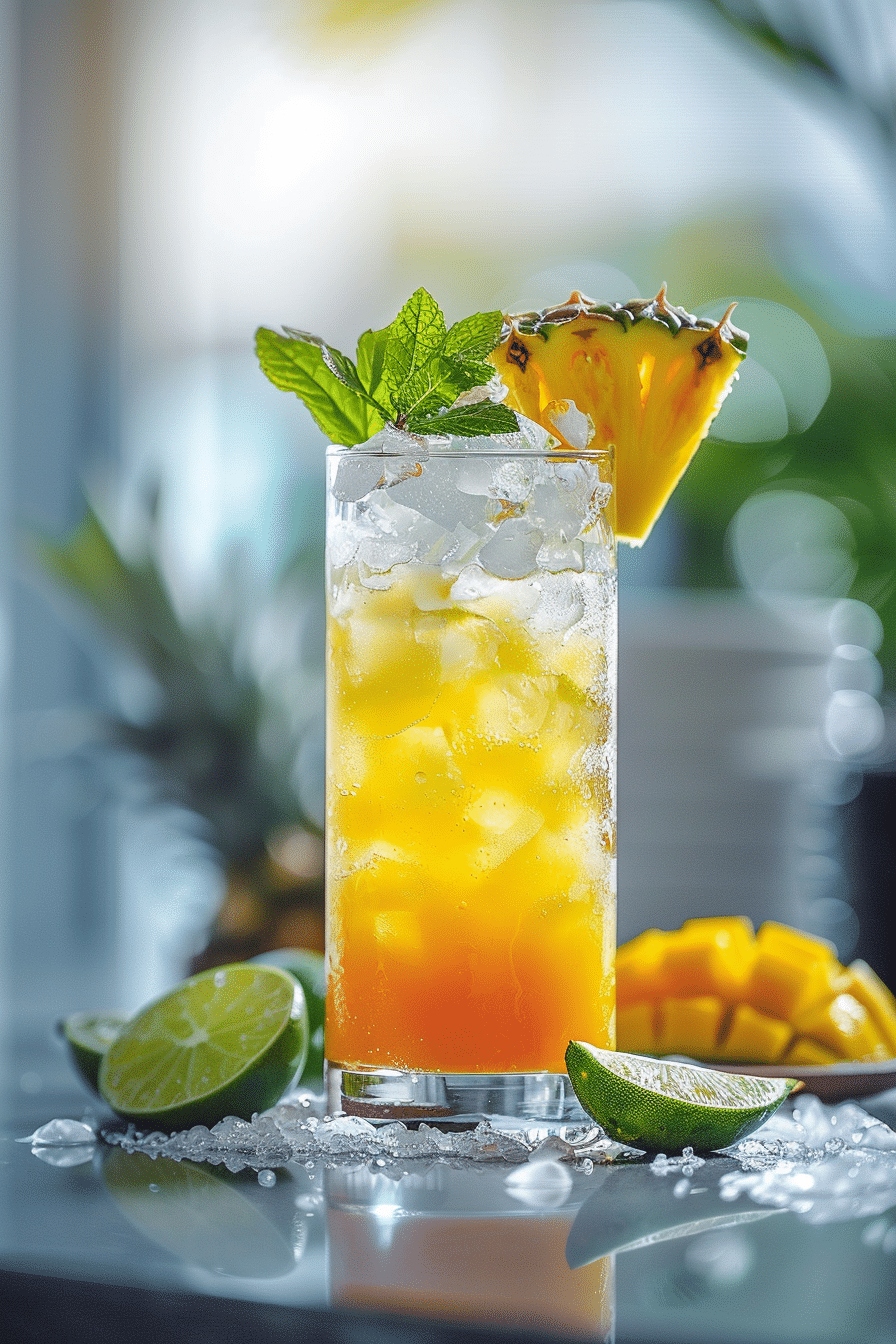
Tropical Mocktail Magic: Refreshing Recipes and Tips for Vibrant Sipping
A tropical mocktail delivers all the sunshine, color, and layered flavor of a beach-bar drink without a single drop of alcohol. When you build a thoughtfully balanced tropical mocktail, you get bright citrus, lush pineapple and mango, cooling coconut, and sparkling fizz in every sip, plus hydration and nutrients instead of a hangover. Because of that, tropical mocktails fit almost every occasion: baby showers, weeknight family dinners, summer cookouts, or solo self-care evenings.
If you already love fruit-forward drinks like smoothies or wellness juices, you’ll find that mixing a tropical mocktail feels like a natural next step. For more drink inspiration, you can also explore this energizing strawberry banana smoothie recipe once you’ve mastered mocktails.
In this guide, you’ll learn how to choose the right juices and fresh fruits, layer flavors like a pro bartender, and adjust sweetness and tartness to suit your taste. You’ll also get ideas for food pairings, make-ahead pitchers for parties, low-sugar swaps, and even wellness-boosting add-ins. By the end, you’ll know how to build your own signature tropical mocktail menu that feels fun, nourishing, and completely customizable for every guest at your table.
Table of Contents
What Makes a Tropical Mocktail Truly “Tropical”?
Understanding the Flavor Profile of a Tropical Mocktail
A tropical mocktail stands out because it captures the essence of warm climates and vibrant fruit without relying on spirits. Instead of rum or tequila, the flavor foundation comes from fruits like pineapple, mango, passionfruit, guava, and citrus, often supported by creamy coconut or sparkling water. These ingredients naturally offer sweetness, bright acidity, and lush texture, which together create the beachy character people crave in a tropical drink. When you think “tropical,” imagine flavors you’d find in Caribbean markets or Southeast Asian fruit stalls, then bring those into your glass.
Another defining trait of a tropical mocktail is its complexity. Rather than simply mixing juice and soda, you aim for layers: a tart top note from lime, deep sweetness from ripe pineapple or mango, and sometimes a hint of spice like ginger. Simple syrup or honey can round sharp edges, while fresh herbs like mint or basil add a refreshing, garden-fresh finish. That depth keeps your mocktail from tasting like plain juice and makes it feel like a crafted, grown-up drink that genuinely satisfies.
Essential Components Every Great Tropical Mocktail Needs
Every successful tropical mocktail includes a few key elements that work in harmony. First, you need a base fruit or juice, such as pineapple, orange, or mango, to provide body and primary flavor. Second, you add an acid component, usually lime or lemon juice, to brighten the drink and keep it from feeling flat or cloyingly sweet. Third, you consider sweetness. Natural fruit sugars may be enough, but often a small amount of agave syrup, honey, or simple syrup helps balance tart tropical fruits.
Next comes the texture and fizz. Coconut milk, coconut cream, or blended fresh fruit deliver a silky mouthfeel, while club soda, ginger beer, or flavored sparkling water bring bubbles and lift. Finally, you add aromatics and garnish: fresh herbs, citrus zest, and colorful fruit slices not only smell enticing but also cue the drinker’s brain to expect a tropical escape. When these components stay in balance, the drink feels refreshing and satisfying instead of heavy. Because of that, even guests who usually prefer cocktails often gravitate to a well-designed tropical mocktail.
Print
Sparkling Mango Lime Spritz (Tropical Mocktail)
Description
This tropical mocktail is bright, fizzy, and refreshing with mango, fresh lime, and sparkling water. A perfect alcohol-free drink for summer parties, brunch, or wellness sipping.
Ingredients
1/2 cup mango puree (fresh or thawed frozen mango blended smooth)
1/2 cup pineapple juice (100% juice, unsweetened)
2 tablespoons fresh lime juice
1 to 2 teaspoons agave or simple syrup (optional, to taste)
1/2 cup sparkling water or club soda (chilled)
Ice (crushed or cubes)
Optional: mint leaves, ginger beer (swap for soda), coconut water (lighter version)
Garnish: lime wheels, mango slices, mint sprig
Instructions
Make mango puree by blending mango until smooth (add a splash of water if needed).
In a glass (or shaker), combine mango puree, pineapple juice, and fresh lime juice.
Taste and add agave/simple syrup if desired.
Fill a tall glass with ice and pour in the mixture.
Top with chilled sparkling water (or club soda) and stir gently.
Garnish with lime wheels, mango slices, and mint. Serve immediately.
Notes
For a ginger twist, top with ginger beer instead of sparkling water.
For a lighter drink, replace pineapple juice with coconut water.
Batch for a party: mix mango puree + pineapple juice + lime in a pitcher; add sparkling water right before serving.
Chill all ingredients first to reduce dilution and keep fizz longer.
Core Ingredients for a Perfect Tropical Mocktail
Best Fruits and Juices for Tropical Depth
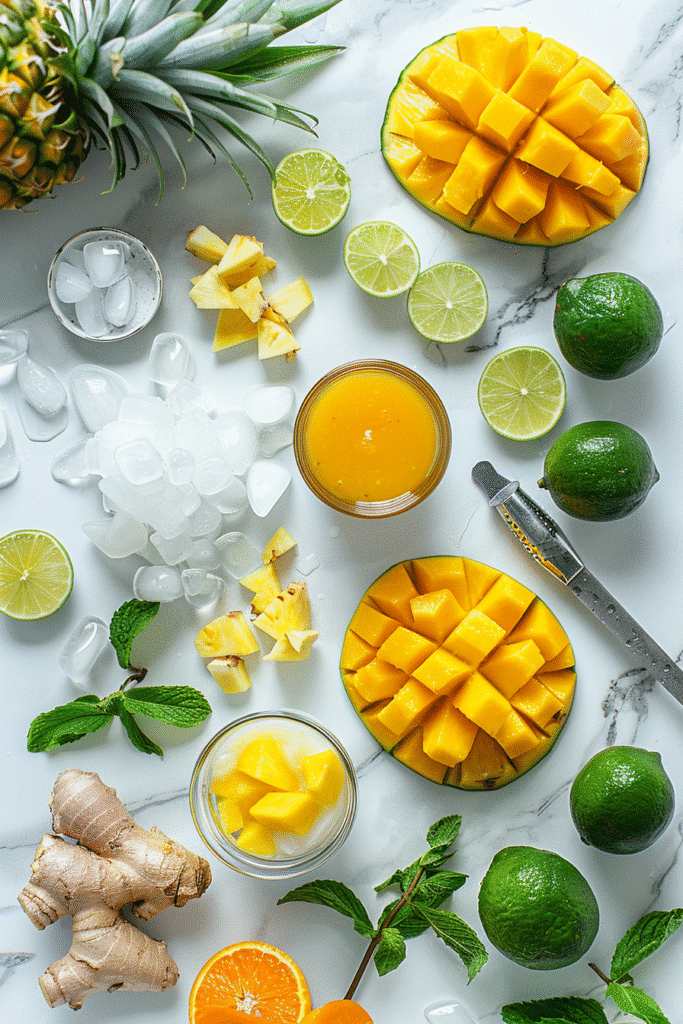
To build a memorable tropical mocktail, you want fruit ingredients that offer both flavor and aroma. Pineapple juice is a classic choice because it brings bold sweetness, tang, and a recognizable “vacation” scent. Mango purée, on the other hand, provides a rich, velvety body and a honeyed flavor that pairs especially well with lime and ginger.
Passionfruit juice or purée adds a fragrant tartness and intense aroma that can transform even a simple soda-based mocktail into something special. While these tropical stars shine, you should also include supporting fruits like orange, tangerine, and grapefruit to round the flavor profile and add subtle complexity.
Whenever possible, choose 100% juice without added sugar, or make your own by blending fresh fruit with a bit of water and straining if needed. Frozen fruit works especially well for mocktails because it chills the drink while contributing flavor and body. For example, blending frozen mango with pineapple juice and coconut water creates a thick, smoothie-like tropical mocktail that tastes indulgent but still feels light. By combining two or three fruit choices in each drink, you can mimic the layered feel of bar-quality mocktails and avoid the one-note character of single-juice beverages.
Coconut, Citrus, and Herbal Accents that Elevate
While fruit juices form the backbone of your tropical mocktail, coconut, citrus, and herbs add finesse. Coconut milk or coconut cream instantly shifts a drink into “tiki” territory, delivering creaminess and a mild sweetness. Coconut water works when you want a lighter body and extra electrolytes, turning your tropical mocktail into a more hydrating option, perfect for hot days. Citrus is non-negotiable. Fresh lime juice especially cuts through the natural fruit sugars and gives your drink a crisp edge; lemon and even yuzu can play similar roles. Combining lime with orange or pineapple juice yields a bright, familiar flavor that still feels sophisticated.
Herbs and spices provide the finishing touch. Fresh mint is the most popular choice for tropical mocktails since it cools the palate and amplifies freshness. Basil offers a more savory, aromatic spin that pairs well with mango and passionfruit. Ginger, either as fresh juice or ginger beer, adds warmth and gentle heat, helping the mocktail mimic the complexity people often associate with rum drinks. When you muddle herbs in the bottom of the glass before adding other ingredients, their essential oils disperse more fully, infusing the entire drink instead of just perfuming the surface.
Tropical Mocktail Recipes for Every Occasion
Classic Pineapple Coconut “No-Rum” Colada
One of the most beloved tropical mocktail recipes is a no-rum version of a piña colada. To build this, you blend pineapple juice, coconut milk or cream, and plenty of ice until the mixture becomes thick and frosty. Because you skip the rum, you can lean into real fruit flavor and even boost nutrition by using fresh pineapple chunks instead of only juice. A dash of lime juice keeps the drink bright, while a small amount of honey or agave lets you control sweetness better than using pre-made, sugary mixes. Pour the mixture into a chilled glass and garnish with a pineapple wedge and a cherry for true beach-bar vibes.
If you want to add nuance, you can include a splash of orange juice or a few pieces of frozen mango into the blender. These additions shape a more complex flavor profile, somewhere between a piña colada and a tropical smoothie. Because this tropical mocktail is creamy and rich, it pairs well with light, crunchy dishes like salads or grilled skewers. You can mix a large batch in a blender for parties, store it in the fridge, and re-blend with ice just before serving so every glass tastes freshly made and perfectly frosty.
Sparkling Mango Lime Spritz Mocktail
For a lighter, more refreshing option, a sparkling mango lime spritz makes a perfect tropical mocktail for warm afternoons or brunch. Start by blending ripe mango (fresh or thawed frozen) with a bit of water or mango juice to form a smooth purée. Add freshly squeezed lime juice and, if needed, a touch of simple syrup or agave to reach your ideal balance of tart and sweet. When you are ready to serve, spoon a few tablespoons of mango mixture into each glass, add ice, and top with chilled sparkling water or club soda. Gently stir to combine while leaving some streaks of color for visual appeal.
To elevate this drink further, you can add a few mint leaves and lightly muddle them with the mango purée at the bottom of the glass before adding ice. That step infuses each sip with brightness and a cool herbal note. For a more ginger-forward twist, use ginger beer instead of club soda; this creates a flavor similar to a tropical mule. Because the base is not too heavy, this tropical mocktail pairs well with hearty yet fresh dishes like a chicken taco salad dinner recipe, balancing spice and richness with refreshing fizz. Serve in tall glasses with lime wheels and mango slices to highlight the drink’s sunny color.
Balancing Sweetness and Acidity in Tropical Mocktails
How to Adjust Sweetness Without Overloading Sugar
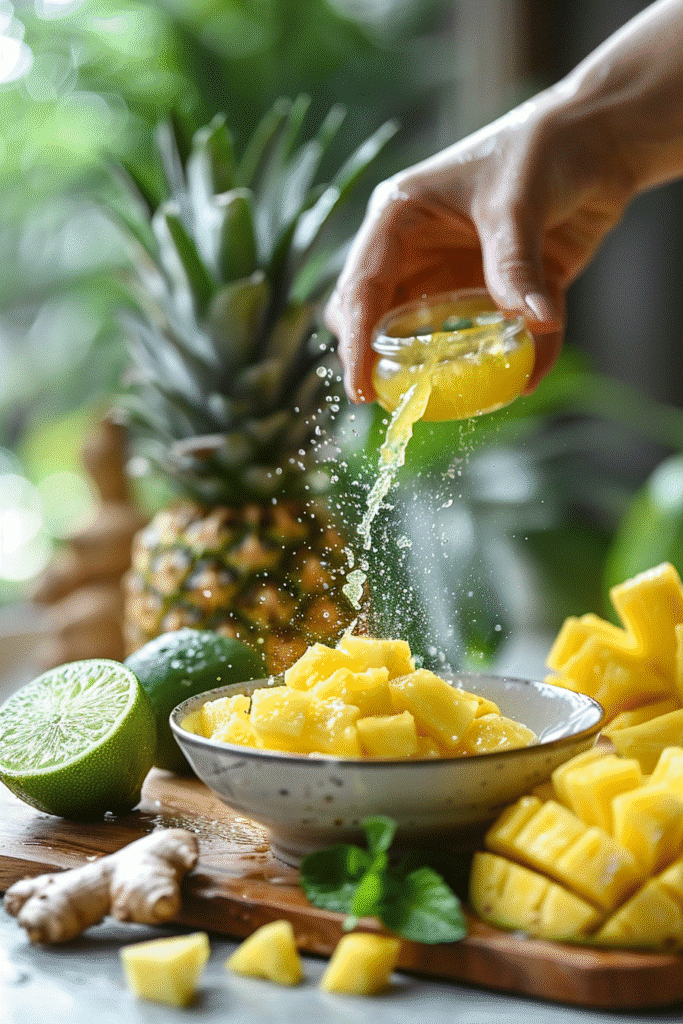
Finding the right sweetness level determines whether a tropical mocktail feels refreshing or cloying. Many tropical fruits, especially pineapple, mango, and orange, already contain naturally high amounts of sugar. Because of that, you should taste your juice or purée before adding any additional sweeteners. If you need more sweetness, start with small amounts, a teaspoon at a time, of liquid sweeteners like agave syrup, honey, or homemade simple syrup. Liquid sweeteners dissolve easily in cold drinks and allow precision adjustments.
For low-sugar or wellness-focused tropical mocktails, you can rely more on ripe fruit and less on added sweeteners. Frozen fruit often tastes sweeter than under-ripe fresh fruit because it’s typically harvested at peak ripeness, so using it gives you better flavor with less sugar. You may also use stevia or monk fruit drops, but add them carefully because their sweetness can intensify quickly. Adding coconut water rather than soda or juice helps dilute sugar while still offering mild sweetness and electrolytes. By adjusting sweetness gradually and tasting frequently, you keep your mocktail balanced, satisfying, and suitable for more guests, including those watching their sugar intake.
Using Citrus and Bitters for Bright, Complex Flavor
While sweetness provides comfort and richness, acidity and subtle bitterness add sophistication to a tropical mocktail. Fresh lime juice is especially important since it cuts through the lush, heavy character of many tropical fruits. When your drink tastes too sweet or flat, a squeeze of lime can fix it immediately. You can also incorporate lemon or even grapefruit juice to add a slightly bitter undertone that imitates some of the complexity alcohol would normally provide.
If you want to deepen flavor further, consider using non-alcoholic bitters or a very small amount of traditional bitters (many contain trace alcohol, so check your audience’s needs). Just a few drops can add notes of spice, herbs, and citrus peel, turning a simple pineapple drink into a grown-up tropical mocktail. You might also experiment with tonic water for a gentle bitter edge, mixing it with fruit juices in place of plain soda. Bitterness helps your taste buds perceive other flavors more clearly, so your mango tastes more mango-like and your pineapple more vibrant. This interplay of sweet, sour, and bitter keeps every sip interesting, encouraging slow, mindful enjoyment rather than quick, sugary gulps.
Tropical Mocktails for Wellness and Nutrition
Boosting Nutrients with Superfood Add-Ins
A tropical mocktail doesn’t just have to taste like a vacation; it can also support your wellness goals. Because fruit-based drinks already supply vitamins, antioxidants, and hydration, they make a natural platform for superfood additions. You can blend in a small amount of turmeric, which pairs beautifully with pineapple and mango while offering anti-inflammatory potential. Fresh ginger not only provides a warm kick but may also aid digestion, making it ideal before or after meals. For a nutrient-dense twist, you could stir in a teaspoon of chia seeds and let them sit for a few minutes to soften, adding fiber and a fun, gel-like texture.
You can also look to green superfoods like spirulina or wheatgrass powder, adding tiny amounts so they don’t overpower the tropical fruits. A handful of spinach or kale blended with pineapple and orange juice creates a vibrant green tropical mocktail that tastes fruity rather than vegetal when balanced correctly. If you enjoy wellness-focused drinks, you might appreciate exploring wellness shot juice recipes and benefits as companions to your mocktail routine. By treating your mocktail as both a treat and a delivery system for beneficial ingredients, you transform it into a daily ritual that feels indulgent and health-supportive at the same time.
Light, Hydrating Tropical Mocktail Ideas
Not every tropical mocktail needs to be thick and decadent. Sometimes you want something ultra-light, especially in hot weather or alongside heavier meals. In those cases, base your drinks on coconut water, infused water, or a mix of sparkling water and a splash of juice. For instance, you can combine coconut water, a small amount of pineapple juice, fresh lime, and crushed ice for a simple, electrolyte-rich tropical refresher. This style of drink tastes clean rather than candy-sweet, so you can sip it throughout the day without fatigue.
Another hydrating option involves fruit-infused water. Add slices of mango, pineapple, orange, and a handful of mint to a large pitcher of filtered water. Chill it for several hours so the flavors meld, then serve over ice with extra citrus wedges. The result is a delicately flavored tropical mocktail-like drink that feels spa-worthy. You can also experiment with herbal teas such as hibiscus or green tea as a base, chilling them and mixing with small amounts of fruit juices. These combinations deliver antioxidants and flavor without relying heavily on sugar, which makes them excellent everyday sippers that still capture a tropical vibe.
Presentation, Garnishes, and Glassware for Tropical Mocktails
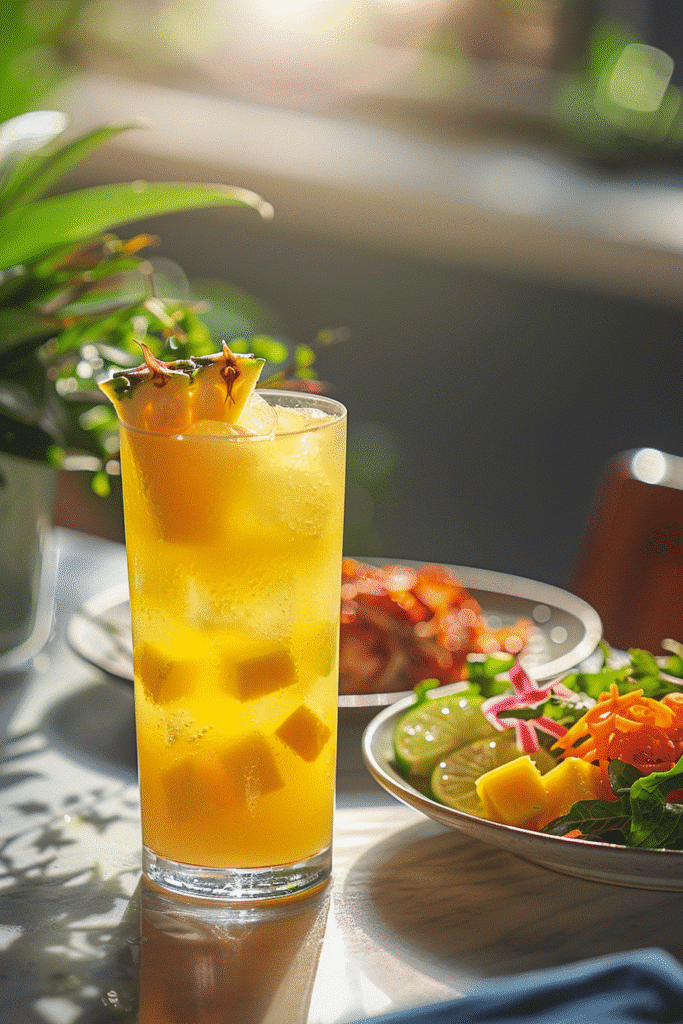
Choosing the Right Glass and Ice for Maximum Impact
The way you serve a tropical mocktail can dramatically change the experience, even if the ingredients remain the same. For creamy, blended drinks like a frozen piña colada-style mocktail, tall hurricane glasses or large stemless wine glasses work beautifully because they showcase layers and garnishes. For spritz-style tropical mocktails, highball glasses highlight the bubbles and colorful fruit slices. When you choose heavier, textured glassware, the drink immediately feels more premium and intentional, which guests notice.
Ice type also matters. Large cubes work best for stirred drinks because they melt slowly and prevent dilution, while crushed ice suits tiki-inspired or swizzled tropical mocktails that you want extra cold and slightly slushy. If you prepare a pitcher for parties, consider partially freezing slices of citrus, berries, or pineapple into ice cubes so they chill the drink and also serve as colorful decoration. Because visual appeal influences perceived flavor, investing time into glassware and ice elevates even simple juice-based mocktails into something special and celebratory.
Garnish and Rim Ideas to Make Drinks Feel Luxurious
Garnishes turn a basic tropical mocktail into a showpiece. Fresh pineapple wedges, orange half-moons, lime wheels, and mango spears all signal “tropical” before the first sip. You can also use edible flowers, such as nasturtiums or pansies, to add delicate visual flair. When you place garnishes both on the rim and floating within the drink, guests experience aroma from multiple angles. Mint sprigs, for example, release scent each time someone raises the glass, heightening the refreshing impression.
Rims add another layer of interest. For a sweet rim, mix coconut flakes with a bit of sugar, dampen the glass edge with lime juice, and dip. You’ll get a textural contrast and subtle coconut flavor with every sip. For something more complex, combine sugar with chili powder and a pinch of sea salt; this style pairs especially well with pineapple and mango, balancing sweetness with gentle heat and saltiness. You can even design themed garnish boards with sliced fruit, herbs, and colorful straws so guests can customize their own tropical mocktail finishes, creating an interactive, memorable experience.
Party-Ready Tropical Mocktails and Food Pairings
Batch Tropical Mocktails for a Crowd
When you host a gathering, making tropical mocktails to order can become overwhelming. Instead, you can prepare pitcher or dispenser versions in advance, then add bubbles and ice just before serving. One simple approach is to mix equal parts pineapple juice and orange juice with a generous amount of lime juice and a small quantity of sweetener if necessary. Keep this concentrated base chilled, then when your guests arrive, pour it into a drink dispenser and top with chilled sparkling water. Because you separate the base and the fizzy component until the last minute, you preserve carbonation and freshness.
For creamy batch mocktails, you can blend coconut milk, pineapple juice, and mango ahead of time and store the mixture in the refrigerator. When it’s time to serve, shake the base with ice in a cocktail shaker or blend again briefly with fresh ice. To help guests navigate options, label each dispenser clearly and provide an assortment of garnishes like lime wedges and mint. You might also include a note about ingredients for guests with dietary needs. Batch tropical mocktails keep everyone included, from kids to designated drivers, and they often become the most popular drink station at the party.
Perfect Food Pairings: From Salads to Comfort Sides
Tropical mocktails match beautifully with a wide variety of dishes because their acidity and freshness cut through richness. For lighter meals, pair a citrus-forward mocktail with vibrant salads like a citrus fennel avocado winter salad, where the juicy fruits and creamy avocado mirror the drink’s brightness. A sparkling mango lime spritz also works well with hearty grain-based salads such as a cranberry apple quinoa winter salad or a kale salad, since it balances dense textures with effervescence.
For comfort foods, tropical mocktails bring contrast. A fruity pineapple mocktail can lighten rich sides like a green bean casserole recipe, refreshing the palate between bites. Grilled meats, fish tacos, and spicy dishes benefit from the cooling effect of coconut-based drinks. When planning menus, think of your tropical mocktail as both a flavor component and a reset button that keeps meals from feeling heavy. The combination of fresh fruit, acidity, and herbs offers a natural bridge between different courses, making your entire dining experience feel cohesive and thoughtfully balanced.
Creative Variations and Flavor Experiments
Fusing Tropical Mocktails with Other Cuisines
Tropical flavors blend easily with ingredients from many culinary traditions, giving you endless room to experiment. For a Southeast Asian-inspired tropical mocktail, you might mix pineapple juice with coconut milk, lime juice, and a splash of lemongrass syrup or kaffir lime leaf-infused water. Add fresh basil or cilantro for a surprising, savory note that still feels refreshing. In a Mexican-inspired variation, combine mango purée, lime juice, and sparkling water, then rim the glass with chili-salt and garnish with a slice of jalapeño for heat. That chile-lime profile echoes popular street snacks and pairs wonderfully with grilled corn or tacos.
You can also take inspiration from Mediterranean flavors by pairing tropical fruits with herbs like rosemary or thyme. For example, shaking passionfruit juice with orange juice, lemon, and a sprig of thyme creates a more aromatic, less sweet mocktail that still nods to the tropics. By intentionally borrowing flavor patterns from different cuisines, you keep your tropical mocktail repertoire exciting and avoid repeating the same combinations. This approach encourages creativity and helps you match drinks to themed dinners or special events with ease.
Seasonal and Zero-Waste Twists on Tropical Mocktails
Even though tropical fruits feel summery, you can adapt your mocktails to every season by using what’s freshest and minimizing waste. In colder months, pair shelf-stable juices like pineapple and orange with seasonal produce such as pomegranate arils or citrus segments. These additions contribute color, texture, and antioxidants. You can also use warming spices like cinnamon, star anise, or clove in small amounts to create tropical mocktails with cozy undertones that suit winter gatherings. For example, a chilled pineapple-orange mocktail infused with cinnamon sticks feels festive yet bright.
To reduce waste, look for ways to use the whole fruit. Citrus peels can become zest for garnishes or infusions. Pineapple cores can simmer in water with a bit of sugar to make a lightly flavored syrup that sweetens future drinks. Overripe mango or banana works well blended into thicker mocktails where appearance matters less than flavor. You can even freeze small leftover amounts of juice or purée in ice cube trays, then drop them into sparkling water whenever you want a quick, low-effort tropical refresher. This zero-waste mindset keeps your kitchen efficient, economical, and eco-conscious while still delivering luxurious, colorful drinks.
Troubleshooting and Common Tropical Mocktail Mistakes
Fixing Mocktails That Are Too Sweet, Flat, or Heavy
When a tropical mocktail doesn’t taste right, you can usually fix it with simple adjustments. If a drink tastes too sweet, increase acidity by adding lime or lemon juice a teaspoon at a time and stir, then reassess. Sometimes diluting with sparkling water also helps, especially if the drink feels syrupy. If your mocktail seems flat or dull, check the temperature; drinks taste livelier when very cold, so add more ice or briefly shake the mixture. You might also incorporate fresh herbs like mint or basil, which inject brightness and aroma without additional sugar.
If a mocktail feels heavy, particularly those with coconut cream or blended fruit, consider reducing the creamy element and replacing part of it with coconut water or soda. You can also strain blended drinks through a fine-mesh sieve to remove excess pulp, yielding a smoother, lighter texture. Because the balance between sweet, sour, and texture defines success, keep your adjustments small and incremental. Taste frequently as you tweak, just like a bartender does. Over time, you’ll develop intuition for how each ingredient shifts the overall profile, making troubleshooting quick and instinctive.
Avoiding Flavor Clashes and Dilution Issues
Another challenge in crafting tropical mocktails involves flavor clashes and watery results. Overloading a drink with too many fruit types or spices can create muddled flavors where nothing stands out. To avoid this, limit yourself to two or three primary fruits and one or two aromatic accents per mocktail.
For example, pineapple and mango with lime and mint feel focused, while pineapple, mango, passionfruit, banana, strawberry, ginger, and basil in one glass might taste chaotic. When you want complexity, achieve it through layering and technique rather than simply adding more ingredients.
Dilution also poses a common problem, especially when drinks sit on ice for a long time. To manage this, chill all components, juice, sparkling water, coconut milk, before mixing, so the mocktail starts cold and requires less ice. Use larger ice cubes that melt more slowly, and avoid preparing fizzy drinks too far ahead of serving. For batch mocktails, keep the main mixture concentrated and add ice directly to glasses rather than the pitcher or dispenser. This general strategy lets each person control their own dilution level. With thoughtful ingredient choices and smart temperature control, your tropical mocktails stay bold, refreshing, and vibrant from first sip to last.
FAQ About Tropical Mocktails
Are tropical mocktails healthy?
Tropical mocktails can be quite healthy when you build them thoughtfully. Because they typically rely on fruit, they naturally contain vitamins, minerals, antioxidants, and hydration. However, sugar content can climb quickly if you use sweetened mixes, syrups, and sodas. To keep your tropical mocktail health-focused, prioritize 100% fruit juices, fresh or frozen fruit, and naturally lower-sugar bases like coconut water or sparkling water. You can also add beneficial ingredients such as ginger, turmeric, or leafy greens for extra nutrients. When you watch portion sizes and balance fruit sugars with plenty of water, these drinks become a refreshing, nutrient-rich alternative to both alcohol and store-bought sugary beverages.
How can I make a tropical mocktail without a blender?
You can absolutely make a delicious tropical mocktail without a blender by focusing on shaken or stirred techniques. Start with bottled or fresh-pressed juices like pineapple, orange, or passionfruit as your base. Add freshly squeezed lime juice, a small amount of liquid sweetener if needed, and optional ingredients such as coconut water or ginger beer. Combine everything in a cocktail shaker or a jar with a tight lid, then add ice and shake vigorously to chill and slightly aerate the drink. Strain into a glass filled with fresh ice, top with sparkling water if desired, and garnish with citrus slices or herbs. This method delivers a smooth, refreshing drink that still captures layered tropical flavor without requiring any specialized equipment.
Can I prepare tropical mocktails ahead of time?
You can prepare many components of a tropical mocktail ahead of time, which actually improves flavor. Fruit bases made from juices and purées often taste better after chilling and resting for a few hours because the flavors meld. You can mix your still ingredients—juices, coconut milk, sweetener, and herbs—in a covered pitcher and refrigerate for up to a day. However, you should wait to add carbonated elements like sparkling water or ginger beer until just before serving to preserve fizz. Likewise, add ice directly to individual glasses, not to the pitcher, to avoid excessive dilution. Garnishes such as cut fruit and herb sprigs can be prepped and stored separately in the fridge, ready to assemble quickly when guests arrive.
What is the best way to sweeten a tropical mocktail naturally?
To sweeten a tropical mocktail naturally, rely first on ripe fruit and 100% juices instead of refined sugar. Fruits like mango, pineapple, banana, and orange offer substantial natural sweetness, especially when very ripe or frozen at peak ripeness. If you need additional sweetness, choose liquid, minimally processed options such as honey, maple syrup, or agave syrup, since they dissolve easily in cold drinks. You might also experiment with date syrup or blending a soaked date directly into thicker mocktails. Another trick involves using coconut water instead of plain water, which subtly boosts sweetness while adding electrolytes. By layering these natural sweeteners carefully and tasting as you go, you achieve a balanced flavor without relying on highly refined sugars.
How do I make a creamy tropical mocktail without dairy?
Creating a creamy tropical mocktail without dairy is straightforward thanks to plant-based options. Coconut milk or coconut cream delivers the richest, most classic tropical creaminess; it pairs beautifully with pineapple, mango, and passionfruit. You can also use other non-dairy milks such as almond, oat, or cashew milk when you want a lighter, more neutral base. For a smoothie-like texture, blend frozen banana or mango with your chosen plant milk and fruit juices; the frozen fruit thickens the drink naturally. If you prefer a silkier feel without heaviness, shake coconut milk with juice and ice rather than blending. These dairy-free methods let you serve luscious, creamy tropical mocktails that work for vegan, lactose-intolerant, and dairy-free guests without sacrificing indulgent texture.
Conclusion: Enjoying Tropical Mocktails as Everyday Escapes
A well-crafted tropical mocktail offers more than a pretty glass; it delivers a mini vacation any time you need one. By understanding how to balance sweet fruit, bright citrus, creamy coconut, herbs, and fizz, you can design drinks that feel exciting, nourishing, and inclusive for everyone at the table. Whether you prefer frosty piña colada-style blends, sparkling mango spritzes, or ultra-light coconut water coolers, there’s a tropical mocktail for every mood and season.
You can also integrate these drinks into a broader menu that celebrates fresh produce, pairing them with colorful salads like a vibrant kale salad recipe or grilled mains. As you experiment with superfood add-ins, creative garnishes, and global flavor fusions, your mocktail game will evolve from simple juice mixes to bar-worthy creations. Keep your ingredients cold, taste often, and don’t be afraid to adjust. With a little practice, your home will feel like its own tropical oasis, one refreshing glass at a time.
For more seasonal Mocktails inspirations like homemade pineapple mojito, check out my Pinterest.