
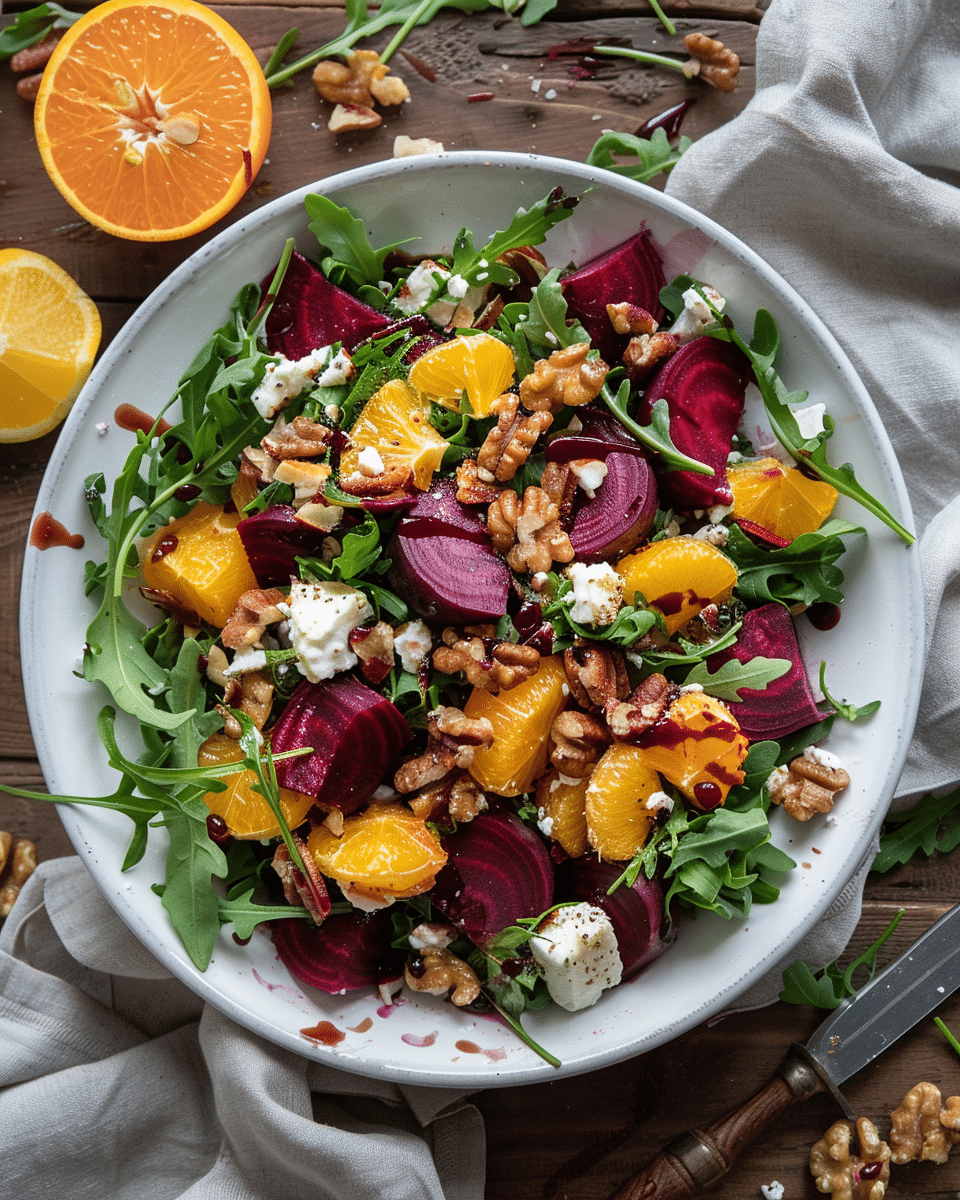
Beet Salad Delight: Fresh, Colorful, and Surprisingly Easy
A vibrant beet salad does far more than add color to your table; it delivers earthy sweetness, bright crunch, and serious nutrition in every bite. Because beets pair beautifully with citrus, tangy cheese, nuts, and greens, a well-made beet salad can easily become the most memorable part of your meal. Whether you roast, boil, or spiralize them raw, you can adapt beet salad to every season and every palate. If you already love hearty veggie dishes like a good warm lentil and roasted vegetable salad, then beet salad deserves a permanent spot in your rotation.
In this guide, you’ll learn exactly how to buy, cook, and combine beets so they shine instead of turning muddy or bland. You’ll also discover the best flavor pairings, storage tricks, make-ahead tips, and plenty of creative variations. From weeknight sides to holiday centerpieces, this complete beet salad guide will show you how to turn a humble root into a restaurant-worthy dish at home.
Table of Contents
Beet Salad Basics: What Makes It So Special?
Why Beet Salad Deserves a Spot in Your Weekly Menu
Beet salad offers the rare combination of bold flavor, visual drama, and impressive health benefits with very little effort. At its core, a classic beet salad balances natural sweetness from the beets with acidity from citrus or vinegar, creaminess from cheese or avocado, and crunch from nuts or crisp vegetables. This contrast keeps each bite exciting. You can serve beet salad warm, room temperature, or chilled, which means it works in every season.
Toss roasted beets with baby greens in summer, or combine them with grains and toasted walnuts in winter for a comforting yet fresh bowl. Nutritionally, beets provide fiber, folate, potassium, and natural plant pigments called betalains, which scientists study for their antioxidant and anti-inflammatory potential. Unlike many “superfood” dishes, though, beet salad feels indulgent and satisfying, not like diet food. When you layer flavors thoughtfully, the salad stands alone as a light main dish or shines as a colorful side dish alongside proteins, soups, or sandwiches.
The Flavor Profile of Beets (and How Salad Enhances It)
Beets have a unique flavor: earthy, slightly floral, and naturally sweet, especially after roasting. Some people describe the taste as “ground-like” when underseasoned, but a well-crafted beet salad eliminates that issue. Acid is the key. Lemon juice, orange segments, balsamic vinegar, or apple cider vinegar cut through the earthiness and highlight the sweetness. Salt also matters; it draws out moisture and sharpens the natural flavors, especially when you roast beets with a generous sprinkle.
Fat rounds everything out, so elements like olive oil, goat cheese, feta, avocado, or toasted nuts help carry the flavor and make the salad feel complete. Texture is another important piece. Because cooked beets can be very tender, pairing them with crunchy elements, like shaved fennel, crisp apple slices, toasted pumpkin seeds, or thinly sliced red onion, keeps the salad from feeling one-note. When you consider all these layers together, beet salad becomes a masterclass in balance: sweet, acidic, salty, crunchy, creamy, and refreshing all at once.
Print
Beet Salad Delight with Goat Cheese and Walnuts
Description
This vibrant roasted beet salad with goat cheese, arugula, and toasted walnuts is fresh, colorful, and perfect for holidays, meal prep, or healthy weeknight dinners.
Ingredients
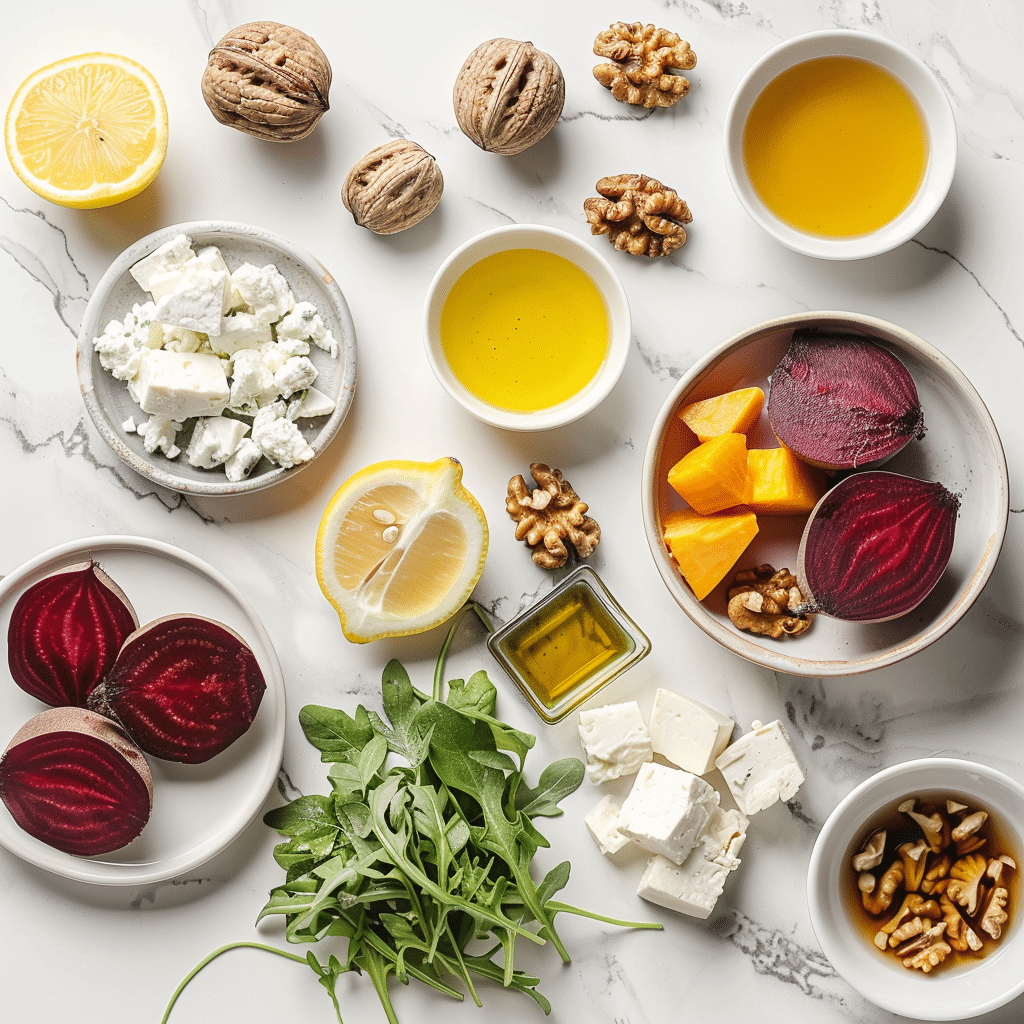
4 medium red or golden beets
2 cups arugula
1/2 cup goat cheese, crumbled
1/3 cup toasted walnuts
2 tablespoons extra-virgin olive oil
1 tablespoon balsamic vinegar
1 tablespoon fresh lemon juice
Salt and freshly ground black pepper, to taste
Optional: orange segments, pistachios, fresh dill
Instructions
Preheat oven to 400°F (200°C).
Trim and scrub beets, then place in baking dish.
Drizzle with olive oil and sprinkle with salt.
Cover tightly with foil and roast 40–60 minutes until fork tender.
Let cool slightly, then rub off skins and slice into wedges.
Whisk olive oil, balsamic vinegar, lemon juice, salt, and pepper.
Toss arugula with half the dressing.
Arrange beets over greens, top with goat cheese and walnuts.
Drizzle remaining dressing and serve.
Notes
Store cooked beets separately up to 4 days refrigerated.
For vegan option, omit cheese or replace with avocado.
Add quinoa or chickpeas for extra protein.
Toast walnuts before serving for best flavor.
Choosing and Preparing Beets for Salad
How to Select the Best Beets at the Market
When you shop for beets, you want firm, heavy roots with smooth skin and no soft spots or deep cuts. Size matters more than you might think. Small to medium beets, roughly golf ball to tennis ball sized, tend to be sweeter and more tender, which makes them ideal for beet salad. Very large beets sometimes taste woody or take much longer to cook. If the greens are still attached, they offer an extra freshness clue. Look for vibrant, unwilted greens that are deep green without yellowing or slime at the stems.
You can use these greens in sautés or even mix a few into the salad for a stronger beet flavor. Beets come in several varieties, including classic red, golden, and Chioggia (candy-striped). Golden beets are slightly milder and less likely to stain, while Chioggia beets offer beautiful rings when sliced raw. Mixing colors in one beet salad creates a stunning presentation that looks impressive with minimal effort. Always store beets in the refrigerator, unwashed, with the greens removed from the root to prevent moisture loss.
Cleaning, Peeling, and Cutting Beets Without the Mess
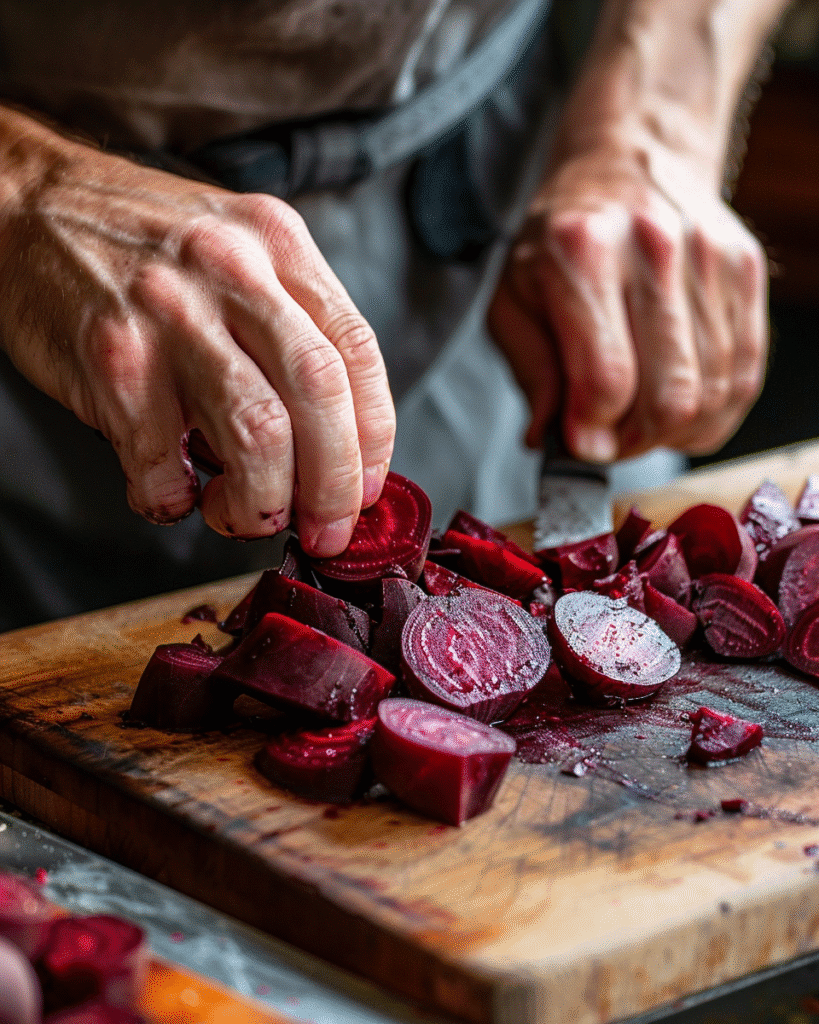
Beets can intimidate home cooks because of their strong color, but simple prep techniques keep the mess under control. First, trim the greens about an inch above the root to avoid bleeding while cooking. Rinse the beets under cool water and scrub with a vegetable brush to remove dirt; they grow underground, so they often need a thorough rinse. You have two main options for peeling.
For roasted or boiled beets, cook them with the skin on, then let them cool slightly and rub the skin off with gloved hands or a paper towel. This method is easier and preserves more moisture and color. If you need raw beets for a crunchy beet salad, use a vegetable peeler over a cutting board you do not mind staining. To reduce staining on your hands, wear disposable gloves or rub a little oil on your skin before handling. Cut beets into uniform wedges, cubes, slices, or matchsticks so they cook evenly and look attractive. Thinner cuts roast faster and caramelize more, while larger chunks hold their shape in hearty salads with grains or beans.
Cooking Methods for Beet Salad: Roasted, Boiled, and Raw
Roasting Beets for Deep, Sweet Flavor
Roasted beets are the backbone of many beloved beet salads because roasting concentrates their natural sugars and produces a deeper, caramelized flavor. To roast, preheat your oven to 400°F (200°C). Place whole beets in a baking dish, drizzle with a bit of olive oil, sprinkle with salt, and cover tightly with foil to trap steam.
Depending on size, beets usually take 40–60 minutes to become fork-tender. When a skewer slides in easily, they’re done. Allow them to cool just enough to handle, then peel as described earlier. After peeling, cut into wedges or cubes and season while still warm with salt, pepper, and a splash of vinegar or citrus juice; warm beets absorb flavors more readily. Roasted beets pair especially well with goat cheese, arugula, toasted walnuts, and citrus segments for a restaurant-style beet salad at home. You can roast a large batch and store the extras in the fridge for salads throughout the week, which simplifies meal prep significantly.
Boiled, Steamed, or Raw: When to Use Each for Beet Salad
While roasting offers rich flavor, boiling or steaming beets works well when you want a cleaner taste and slightly softer texture. To boil, place scrubbed beets in a pot, cover with cold water, add a pinch of salt, and simmer until tender, usually 30–45 minutes. Steaming follows a similar timeline but preserves a bit more flavor and nutrients because the beets do not sit directly in water.
After cooking, cool slightly, peel, and season. Boiled beets shine in simple beet salad recipes with fresh herbs, a light vinaigrette, and maybe a sprinkle of feta. Raw beets, on the other hand, bring crunch and brightness. Use golden or Chioggia beets if you worry about staining. Shred them on a box grater or use a spiralizer for thin ribbons, then toss with lemon juice immediately to prevent oxidation and dull color. Raw beet salad pairs well with crisp apples, carrots, cabbage, and a tangy dressing. Mixing both roasted and raw beets in one salad gives you complex flavor and varied texture in a single bowl.
Building the Perfect Beet Salad Dressing
Classic Vinaigrettes That Love Beets
Because beets naturally taste sweet, they crave acidic dressings to feel balanced. A classic vinaigrette for beet salad usually starts with three basic parts: acid, fat, and seasoning. For acid, options like red wine vinegar, apple cider vinegar, balsamic vinegar, or fresh lemon juice all work beautifully. Balsamic brings a deeper, almost jammy flavor that pairs especially well with roasted beets and goat cheese, while lemon or orange juice keeps things bright and zesty. For fat, extra-virgin olive oil is the go-to choice, adding fruity notes that complement the earthiness of beets.
A typical ratio is one part acid to three parts oil, but you can increase the acid slightly for beet salad to cut through their sweetness. Season with kosher salt, freshly ground pepper, and possibly a touch of Dijon mustard for emulsification. A teaspoon of honey or maple syrup is optional; many people find the beets themselves provide enough sweetness, so taste the salad before adding more sugar.
Creative Flavor Twists: Citrus, Herbs, and Creamy Elements
Once you master a simple vinaigrette, you can build more adventurous dressings that make beet salad unforgettable. Citrus-forward dressings, for example, use a mix of orange juice, lemon juice, and zest to echo the bright flavors in salads similar to a citrus fennel avocado winter salad. Add finely chopped fresh herbs like dill, parsley, tarragon, chives, or mint to infuse the dressing with freshness. Dill and mint pair especially well with beets and yogurt-based dressings.
For a creamy twist, whisk Greek yogurt, tahini, or a bit of mayonnaise into the dressing, then loosen with lemon juice and olive oil. This style of dressing clings beautifully to grated or spiralized raw beets and converts skeptics who prefer creamier salads. You can also include crushed garlic, a pinch of ground cumin, or even a little grated ginger for complexity. The key is balance; always taste your dressing with a small piece of beet before dressing the whole salad, then adjust salt, acid, or sweetness to make the beets pop without overwhelming their natural flavor.
Beet Salad Mix-Ins: Greens, Grains, Cheese, and Nuts
Pairing Beets with Leafy Greens and Whole Grains
Beet salad becomes a full, satisfying meal when you combine the beets with sturdy greens and wholesome grains. Peppery arugula, hearty kale, spinach, and spring mix all work differently with beets. Arugula’s sharp bite contrasts beautifully with sweet roasted beets, while kale stands up to warm beets and thicker dressings. You can massage kale with a bit of olive oil and lemon juice first, similar to a kale salad recipe, to soften the leaves before adding beets and toppings.
Whole grains like quinoa, farro, barley, or bulgur add chewiness and staying power, turning a simple beet salad into a complete lunch. Quinoa, in particular, complements beets in wintery bowls similar to a cranberry apple quinoa winter salad, adding protein and a nutty background note. Toss cooked, cooled grains with a little dressing before mixing with beets so they soak up flavor. The combination of grains, greens, and beets also stores well, making it perfect for meal-prepped lunches that still taste fresh after a couple of days in the fridge.
The Magic of Cheese and Nuts in Beet Salad
Cheese and nuts elevate beet salad from simple to stunning, both in flavor and texture. Soft, tangy goat cheese is the classic pairing, as its creaminess melts slightly against warm roasted beets and adds a luxurious mouthfeel. Feta offers a saltier, firmer option that crumbles nicely over salads, while blue cheese brings bold, pungent notes that stand up to sweet beets and robust greens.
When choosing nuts, think about both taste and crunch. Walnuts, pecans, pistachios, almonds, and hazelnuts all work well, but toasting them first deepens their flavor and keeps them crisp in the salad. Sprinkle them on just before serving to preserve maximum crunch. Seeds like pumpkin, sunflower, or sesame also provide great texture for those who avoid tree nuts. Together, cheese and nuts add protein and healthy fats, which keep you full and satisfied. They also turn beet salad into a dish guests recognize as special, perfect for holidays or dinner parties where you want a colorful side that feels gourmet without requiring complicated cooking techniques.
Seasonal Beet Salad Variations
Bright Summer Beet Salad Ideas
In summer, you can lean into juicy fruits, light greens, and refreshing flavors to create a beet salad that feels cooling and vibrant. Pair roasted or thinly sliced raw beets with ripe strawberries, peaches, or cherries for a sweet-tart contrast. Add cucumber slices, fresh basil or mint, and a light lemon-honey vinaigrette to tie everything together. Because summer produce already has so much flavor, keep the dressing simple to let the ingredients shine. Mixed baby greens or spinach work especially well during warmer months, as they feel delicate and refreshing.
For a brunch or light breakfast spin, serve your beet salad alongside a cold drink such as a strawberry banana smoothie; the color combination looks beautiful on the table. You can also use grilled components, like grilled corn or zucchini, to add a smoky note that matches grilled beets or halloumi. The goal in summer is freshness, so focus on high-water-content ingredients and zesty dressings that highlight the sweet side of beets.
Cozy Fall and Winter Beet Salad Bowls
When the weather turns colder, beet salad easily shifts into a cozier, heartier direction. Instead of delicate greens, reach for kale, shredded Brussels sprouts, or even warm lentils to build substantial bowls similar in spirit to a warm lentil and roasted vegetable salad. Roast your beets alongside carrots, parsnips, or sweet potatoes with thyme and rosemary for earthy depth.
Then, toss them with cooked grains like farro or barley, toasted walnuts, and dried fruits such as cranberries or golden raisins. A maple-Dijon or balsamic vinaigrette brings warmth and sweetness that feel perfect for fall. You can also fold in citrus segments, orange or blood orange, for brightness that cuts through the richness. In winter holiday meals, a jewel-toned beet salad with goat cheese, pomegranate seeds, and pistachios adds color to otherwise beige plates. Because these versions often include richer elements, they pair well with roasted meats, casseroles, or hearty vegetarian mains, bringing both freshness and nutrition to comfort-food-heavy menus.
Nutrition and Health Benefits of Beet Salad
The Science-Backed Benefits of Beets
Beets have earned their place in many wellness-focused kitchens for good reason. They are naturally rich in nitrates, which your body can convert into nitric oxide, a compound that helps relax and widen blood vessels. Research links this process to potential benefits for blood pressure and athletic performance. Beets also provide betalains, the pigments responsible for their red and yellow colors.
These compounds show antioxidant and anti-inflammatory properties in laboratory studies, which may support overall health when part of a balanced diet. In addition, beets are a solid source of folate, manganese, potassium, and vitamin C. When you use beets in salad rather than in heavy, creamy dishes, you retain these advantages without adding excessive calories. The fiber content in beets helps support digestion and contributes to feeling full, especially when paired with other fiber-rich ingredients like leafy greens, quinoa, and legumes. Overall, a regular beet salad habit can fit easily into heart-healthy or plant-forward eating patterns.
Making Beet Salad Even More Nourishing
While beets bring plenty of nutrients on their own, smart ingredient choices can turn beet salad into a powerhouse meal. Start with a variety of colorful vegetables such as carrots, red cabbage, kale, or spinach to diversify vitamins and antioxidants. Add a protein source like chickpeas, lentils, grilled chicken, or tofu to stabilize blood sugar and keep you satisfied longer. Nuts and seeds contribute healthy fats, particularly omega-3s if you use walnuts or hemp seeds. The dressing also matters.
Instead of heavy cream-based dressings, rely on extra-virgin olive oil, yogurt, or tahini, all of which offer beneficial fats and, in the case of yogurt, probiotics. If you enjoy wellness-focused drinks, pairing your beet salad with nutrient-dense beverages like wellness shots or fresh juices similar to those in a wellness shot juice recipes guide can create a balanced, energizing meal. Finally, watch added sugars; beets are naturally sweet, so you can usually reduce or skip honey and syrups in dressings without sacrificing flavor.
Common Beet Salad Mistakes and How to Avoid Them
Overcooking, Underseasoning, and Other Cooking Pitfalls
Several common mistakes prevent beet salad from reaching its full potential. Overcooking tops the list. When beets cook far beyond fork-tender, they become mushy and lose their vibrant color, leading to a flat, unappealing texture in the salad. To avoid this, start checking doneness about 10 minutes before the recipe’s suggested time and remove the beets as soon as a skewer slides in easily.
Underseasoning is another frequent issue. Because beets taste sweet and earthy, they can seem bland without enough salt and acid. Always season cooked beets while warm with salt, pepper, and at least a splash of vinegar or citrus. Cutting beets into uneven pieces also causes problems; smaller pieces cook faster and may dry out while larger ones remain firm. Aim for uniform size and shape, especially when roasting. Finally, skipping rest time can limit flavor. Let your dressed beet salad sit for at least 10–15 minutes before serving so the beets absorb the dressing, much like marinating.
Dressing and Storage Mistakes That Ruin Texture
Dressing beet salad incorrectly can quickly turn a beautiful dish soggy or dull. Adding too much dressing at once is a frequent mistake. Beets absorb flavors well, but excess liquid pools at the bottom of the bowl and drags everything down. Start with a smaller amount of dressing, toss gently, then add more only if needed. If your salad includes delicate greens, dress the beets separately first, then fold in greens just before serving to prevent wilting.
Storage errors also cause problems. Leaving beet salad at room temperature for too long can dull both color and texture, especially with creamy cheeses. For best results, store components separately: keep cooked beets, toasted nuts, and dressing each in their own containers, then assemble right before serving. Cheese and fresh herbs should go on at the very end. This approach keeps everything crisp and vibrant, and it allows you to repurpose leftovers into grain bowls, wraps, or even as a topping for savory toasts without dealing with soggy greens.
Serving, Plating, and Pairing Beet Salad
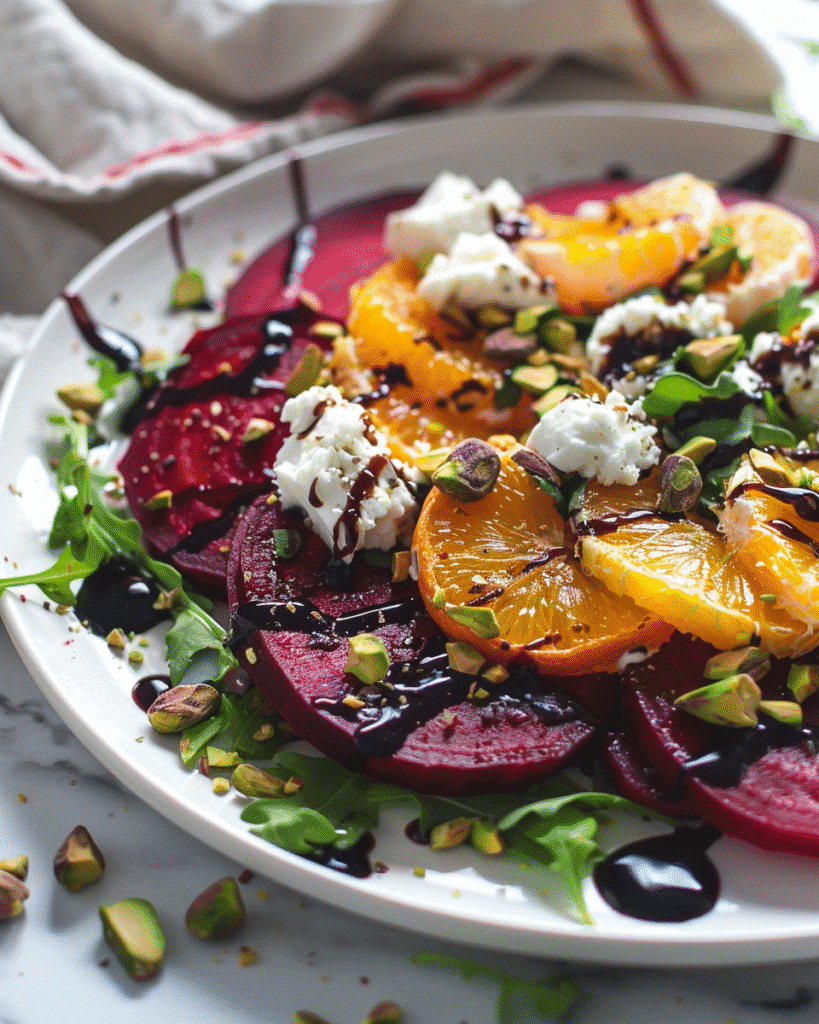
How to Plate Beet Salad for Maximum Visual Impact
Beet salad naturally looks striking because of its intense color, and you can use that to create restaurant-quality presentations at home. Start with a neutral plate or shallow bowl—white, gray, or matte stoneware works best to let the beet color pop. Layer your ingredients instead of mixing everything completely; for example, spread dressed greens as a base, arrange beet wedges on top, then sprinkle cheese, nuts, and herbs.
This method highlights the different textures and prevents the beets from staining everything bright pink. If you use multiple beet colors, group them into small clusters rather than mixing, which showcases their differences. Wipe any dressing smears on the rim of the plate before serving for a clean look. Small details like a final drizzle of olive oil, a few microgreens, or a sprinkle of flaky salt right before serving give the salad a polished finish. Thoughtful plating makes even a simple beet salad feel special enough for guests or holiday meals.
What to Serve with Beet Salad (and Leftover Ideas)
Beet salad pairs beautifully with many main courses and also works as a star in its own right. As a side dish, it complements roasted chicken, grilled fish, seared steak, or plant-based mains like stuffed squash or bean-based casseroles. For a vegetarian-friendly dinner spread, serve beet salad alongside a hearty baked dish such as a green bean casserole or a rustic bread-based salad like a panzanella salad recipe.
The freshness of beets helps cut through rich, cheesy, or creamy dishes. Leftovers transform easily into next-day meals. Spoon beet salad over cooked quinoa or farro for an instant grain bowl, tuck it into wraps with hummus or grilled chicken, or layer it over toasted bread with a smear of ricotta. You can also add extra greens and a fried egg on top for a quick brunch. Because beets hold their texture well, they remain enjoyable for several days in the fridge when stored properly, making beet salad ideal for planned leftovers and meal prep.
Sample Beet Salad Ingredient Comparison Table
| Component | Classic Combo | Summer Version | Winter Version |
|---|---|---|---|
| Base | Roasted red beets | Raw golden & Chioggia beets | Roasted red & golden beets |
| Greens/Grains | Arugula | Spinach & baby kale | Kale & farro |
| Creamy Element | Goat cheese | Fresh mozzarella | Feta or blue cheese |
| Crunch | Toasted walnuts | Pistachios | Pecans & pumpkin seeds |
| Dressing | Balsamic vinaigrette | Lemon-honey vinaigrette | Maple-Dijon vinaigrette |
Basic Beet Cooking Time Guide
| Beet Size | Roasting Time at 400°F | Boiling Time (Simmer) |
|---|---|---|
| Small (1–1.5 in) | 30–40 minutes | 20–30 minutes |
| Medium (2–2.5 in) | 40–60 minutes | 30–45 minutes |
| Large (3+ in) | 60–75 minutes | 45–60 minutes |
FAQ About Beet Salad
How far in advance can I make beet salad?
You can cook the beets themselves 3–4 days in advance and store them in an airtight container in the refrigerator. In fact, chilling cooked beets overnight often improves their texture for salad, making them easier to slice and less likely to crumble. For best results, keep the components separated: store cooked beets, toasted nuts, and dressing individually. Assemble the beet salad within a few hours of serving to keep greens fresh and crunchy. Add delicate ingredients like soft cheese, fresh herbs, and citrus segments at the last minute. This approach lets you enjoy all the flavor benefits of a “marinated” beet salad without sacrificing texture or visual appeal.
How do I keep beet salad from staining everything red?
To reduce staining, start with golden or Chioggia beets, which bleed less color than deep red varieties. When you use red beets, roast or boil them with the skins on, then peel and slice after cooking to contain most of the pigment. Dress the beets separately before mixing them with lighter ingredients, such as apples or goat cheese; this creates a light coating that limits further bleeding. If your salad includes delicate greens, layer beets on top instead of tossing everything vigorously. Using glass or stainless-steel bowls and utensils also helps, as they clean more easily than porous materials. Finally, work on a cutting board you reserve for colorful vegetables, or place parchment on top to prevent long-term stains.
Can I use canned or pre-cooked beets for beet salad?
Yes, canned or vacuum-packed pre-cooked beets can work well for quick beet salad, especially when you need a fast option. Look for plain beets packed in water or their own juices, without added sugar or heavy syrups. Drain them well, then pat dry with paper towels so the dressing adheres properly. Because pre-cooked beets may taste a bit mild, season them generously with salt, pepper, and a splash of vinegar before adding other ingredients. Roasting pre-cooked beets briefly at a high temperature can deepen their flavor and improve texture. While fresh roasted beets usually offer the best taste, good-quality pre-cooked beets are convenient and much better than skipping vegetables altogether on busy days.
What proteins go best with beet salad to make it a full meal?
Many proteins pair beautifully with beet salad. For plant-based options, chickpeas, lentils, and white beans add substance and soak up dressing flavors, turning your beet salad into a hearty bowl. You can also add cubes of baked tofu or tempeh for extra protein. For omnivores, grilled chicken, roasted turkey, and seared salmon are all excellent companions, as their mild flavors let the beets shine. Thinly sliced steak or grilled shrimp give a more indulgent restaurant-style feel. If you prefer to keep the protein within the salad itself, use a generous amount of cheese (like feta or goat cheese) plus nuts and seeds, which together contribute both protein and satisfying healthy fats for a well-rounded meal.
How do I store leftover beet salad without it getting soggy?
To keep leftover beet salad from turning soggy, think in layers. If possible, store components separately from the start: cooked beets in one container, greens in another, cheese and nuts in small containers, and dressing in a jar. When everything is already combined, remove any delicate greens and soft herbs you can easily pick out, as they wilt fastest. Store the remaining beets, grains, and sturdy vegetables in an airtight container and keep in the refrigerator for up to 3 days. Add fresh greens, extra nuts, and a splash of dressing just before serving leftovers. You can also repurpose leftover beet salad as a topping for grain bowls or wraps, where a slightly softer texture still tastes delicious.
Are raw beets safe and tasty to eat in salad?
Raw beets are absolutely safe to eat and can taste delicious when prepared correctly. They provide a crunchy, slightly sweet bite that works well in slaws and shredded salads. To make raw beet salad enjoyable, slice or grate them very thinly so they do not feel tough or fibrous. Toss raw beets immediately with lemon juice or vinegar to soften them slightly and prevent discoloration. Combining raw beets with other crisp vegetables like carrots, cabbage, or apples adds variety, while creamy elements such as avocado or yogurt-based dressing create balance. If you find raw beets a bit intense at first, mix them half-and-half with roasted beets to enjoy both textures and ease into the flavor.
What’s the best way to peel beets for salad without getting stained hands?
The easiest way to reduce staining is to peel beets after cooking, when the skins slip off easily. Roast or boil beets with the skins intact, then let them cool just enough to handle. Put on disposable gloves or rub a thin layer of cooking oil on your hands, then rub the skins away with your fingers or a paper towel. Most of the pigment stays on the outer layer, which you discard. If you need to peel raw beets, work over a lined cutting board and wear gloves. Immediately rinsing your hands and surfaces with soap and warm water also helps prevent stains from setting in, making cleanup much easier.
Conclusion: Bring Beet Salad Into Your Everyday Kitchen
A thoughtfully crafted beet salad delivers far more than a splash of color; it combines deep flavor, satisfying texture, and serious nutrition in a single bowl. By learning how to choose, cook, and pair beets with the right dressings, greens, grains, cheeses, and crunchy toppings, you can turn this humble root vegetable into an impressive side or complete meal.
Experiment with seasonal variations, from light summer combinations to cozy winter bowls, and don’t be afraid to mix roasted and raw beets for extra dimension. If you enjoy exploring fresh, produce-forward dishes like hearty winter salads or veggie-packed mains, you’ll find beet salad fits seamlessly into your cooking style and weekly menu. For more salad inspiration to round out your meals, you might also enjoy exploring a vibrant Brussels sprout salad recipe guide. With a few simple techniques and creative pairings, beet salad can become one of the most versatile, reliable, and beautiful dishes in your home kitchen.
For more amazing salad inspirations, check out my Pinterest.