
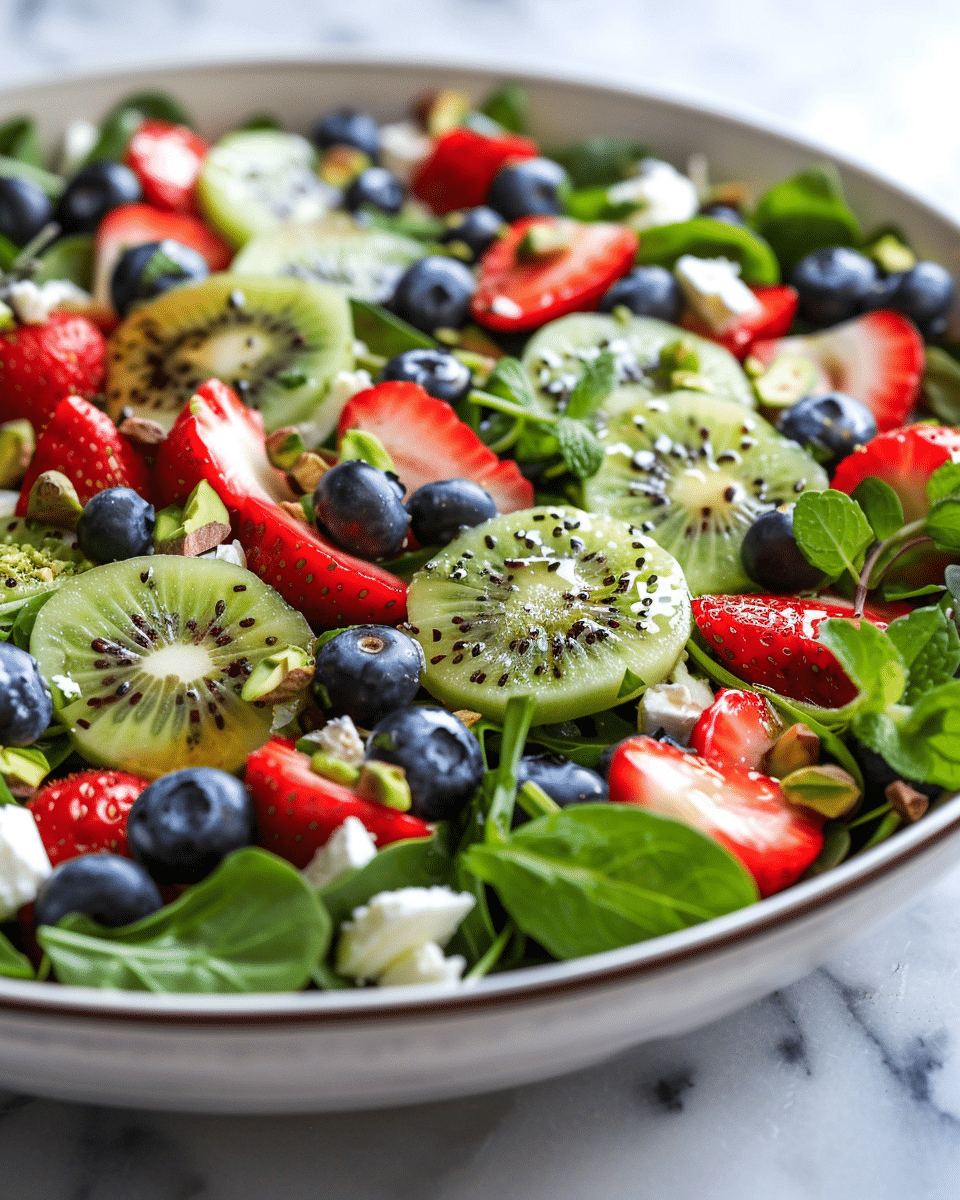
Kiwi Salad Bliss: Fresh, Zesty & Perfect for Every Season
Kiwi salad is one of those dishes that feels instantly bright, fresh, and energizing. Whether you toss it together for a weekday lunch or plate it beautifully for a dinner party, a kiwi salad offers layers of flavor: tart, sweet, juicy, and crunchy all at once. Because kiwi pairs so well with greens, citrus, berries, creamy cheeses, and nuts, you can customize it to match the season and what you already have in your kitchen. And if you love vibrant, wholesome recipes like a good strawberry banana smoothie or a colorful winter salad, a kiwi salad will fit right into your rotation.
For example, you might enjoy pairing this dish with something like the citrus fennel avocado winter salad on a holiday table for a gorgeous contrast. In this guide, you’ll learn how to build the perfect kiwi salad from the ground up, including ingredient tips, dressing ideas, nutrition benefits, meal prep strategies, and creative variations. You will also see how kiwi salad can shift from a light side dish to a substantial main course with just a few smart additions. By the end, you’ll feel confident creating your own signature kiwi salad combinations that are both beautiful and incredibly satisfying.
Table of Contents
Kiwi Salad Bliss (Berry + Honey-Lime Dressing)
Description
This kiwi salad is fresh, zesty, and perfectly balanced—juicy kiwi, leafy greens, berries, crunchy nuts, and a bright honey-lime vinaigrette. Easy for lunch, dinner parties, or meal prep.
Ingredients
Salad:
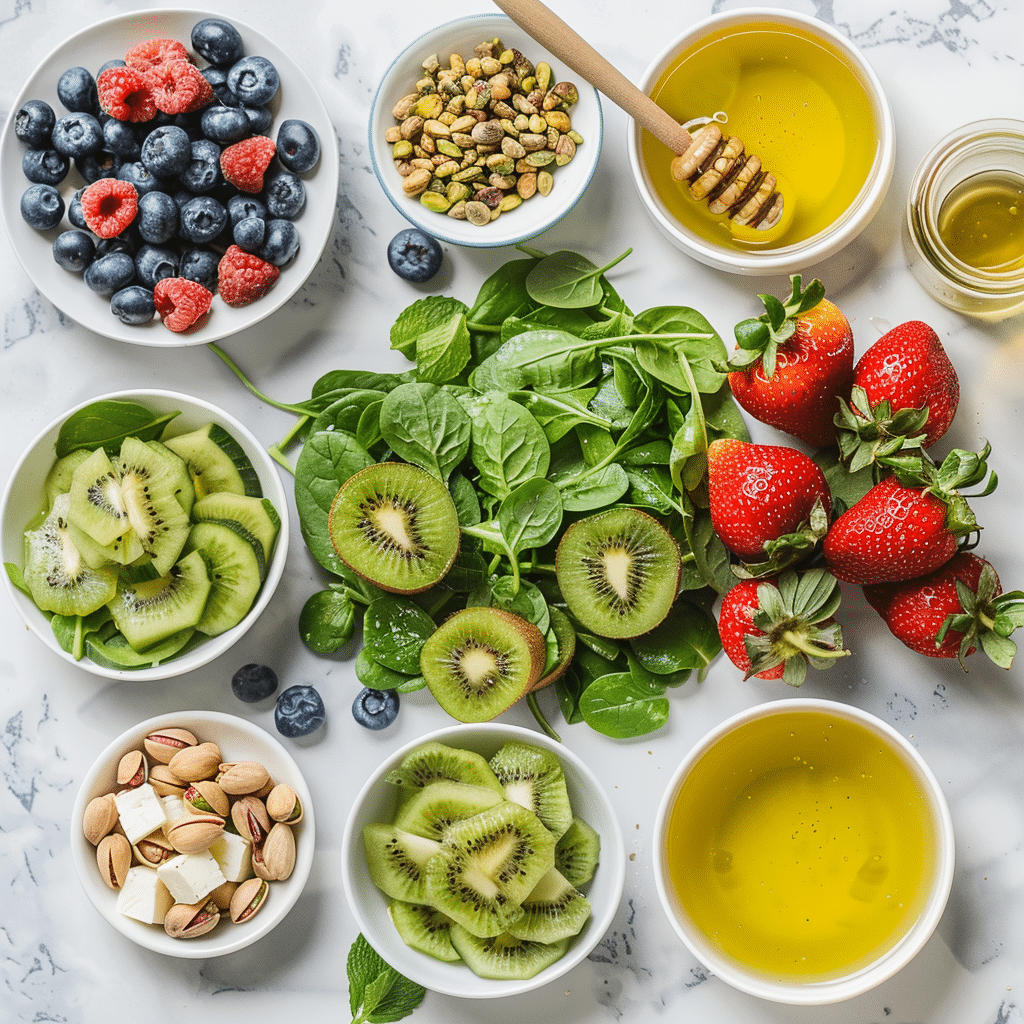
4 cups baby spinach or spring mix (or 50/50 spinach + arugula)
3 ripe kiwis, peeled and sliced
1 cup strawberries, sliced
1/2 cup blueberries
1/2 cup cucumber, thinly sliced (optional crunch)
1/3 cup feta or goat cheese, crumbled (optional)
1/3 cup toasted pistachios or sliced almonds
2 tablespoons fresh mint or basil, chopped (optional)
Honey-Lime Dressing:
3 tablespoons extra-virgin olive oil
1 1/2 tablespoons fresh lime juice (or lemon)
1 teaspoon Dijon mustard
1–2 teaspoons honey (adjust to taste)
1/4 teaspoon salt
Black pepper, to taste
Optional “Make it a Meal”:
1 cup cooked, cooled quinoa OR 1/2 cup chickpeas
Grilled chicken or shrimp (optional)
Instructions
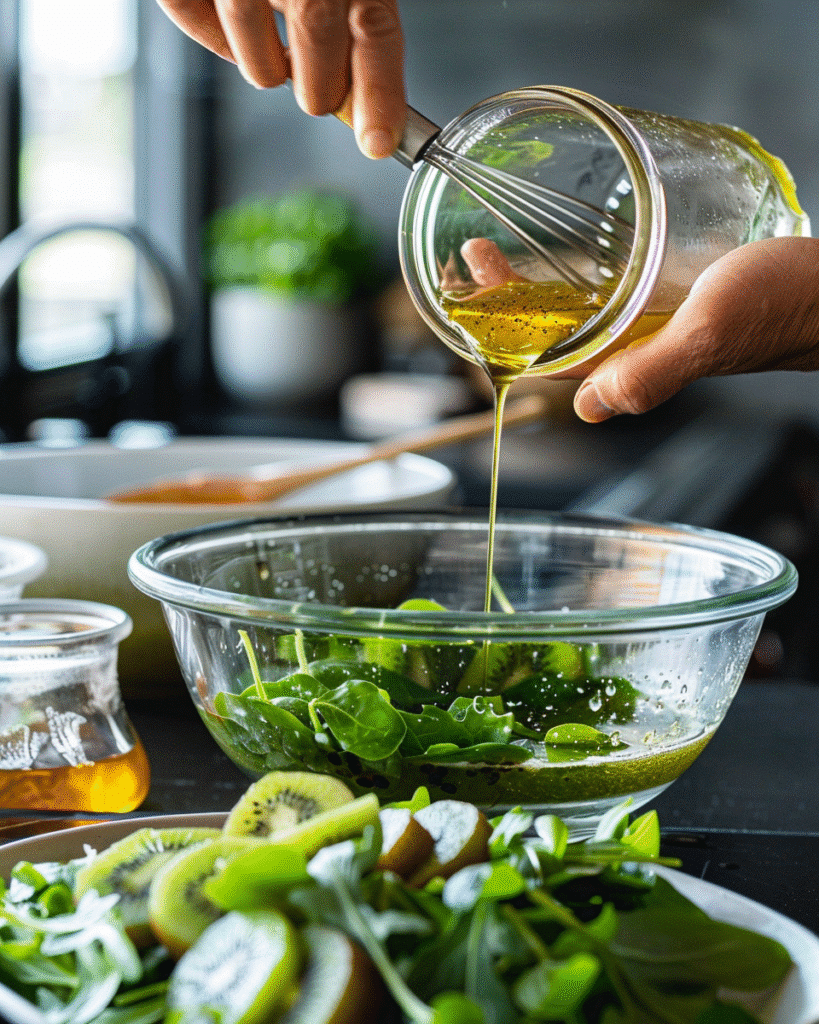
1) Make the dressing: whisk olive oil, lime juice, Dijon, honey, salt, and pepper until emulsified.
2) Prep the fruit and toppings: slice kiwi, slice strawberries, and toast nuts if needed.
3) Build the salad: add greens to a large bowl, then top with kiwi, berries, cucumber, and herbs.
4) Dress lightly: drizzle about 2/3 of the dressing, toss gently, then add more if needed.
5) Finish: sprinkle feta/goat cheese and nuts on top right before serving.
Optional meal version:
Toss quinoa or chickpeas with a spoonful of dressing first, then fold into the salad.
Top with grilled chicken or shrimp if desired.
Notes
Best kiwi for salad: ripe but not mushy (slight give when pressed).
To prevent sogginess: store dressing separately and add right before eating.
Meal prep tip: keep kiwi + berries in a separate container; assemble fresh in 2–3 minutes.
If using kale: massage with a little olive oil + lime first to soften.
Kiwi Salad Basics – Building a Flavorful Foundation
Choosing the Best Kiwis for Salad
The foundation of any great kiwi salad starts with ripe, flavorful fruit. Since kiwi is the star, you want pieces that hold their shape yet burst with sweet-tart juice in every bite. When you shop, look for kiwis with smooth, unwrinkled skin and a slight give when you press them gently with your thumb. If they feel rock hard, they’ll be too sour and starchy for salad; however, overly soft kiwis will mash and turn your salad soggy. You can ripen firm kiwis on the counter for a couple of days, then move them to the refrigerator once they yield slightly to pressure.
Gold kiwis, which are sweeter and less tangy than the classic green variety, also work beautifully and can balance spicy greens like arugula. As you slice, aim for uniform rounds or half-moons so the pieces look attractive and distribute evenly throughout. Because kiwi has tiny edible seeds, you don’t need to do any coring or extra trimming, which keeps prep simple. If the fuzz bothers you, peel with a vegetable peeler or cut off both ends and scoop the interior with a spoon. Clean, ripe kiwi pieces set the tone for a bright, refreshing salad that tastes as good as it looks.
Picking the Right Greens and Base Ingredients
Once your kiwi is ready, the next big decision is your salad base. The greens you choose will dramatically influence the flavor profile and texture. Tender baby spinach creates a mellow, slightly sweet backdrop that allows the kiwi’s acidity to shine without any bitterness. Mixed spring greens add visual variety and a pleasant mix of flavors, from soft butter lettuce to mild red leaf. If you like a peppery kick, arugula pairs wonderfully with kiwi, especially when combined with a touch of honey in the dressing. For a hearty, nutrient-dense base, kale is a smart option.
You can draw inspiration from a classic kale salad recipe by massaging the kale with a bit of olive oil and lemon juice to soften its texture before adding the fruit. Beyond leafy greens, you can also incorporate grains like quinoa, farro, or couscous to turn a kiwi salad into a more filling meal. These grains soak up dressing and balance the juiciness of the fruit. Folding in thinly sliced cucumbers or shaved fennel adds crunch and freshness, while herbs like mint or basil create a fragrant, almost dessert-like quality. With the right base, your kiwi salad becomes a complete, well-structured dish instead of just fruit on a plate.
Balancing Flavors in a Kiwi Salad
Sweet, Tart, and Savory: Getting the Mix Right
The magic of a great kiwi salad lies in balance. Kiwi brings a bold tart-sweet note, so everything else should either support or gently contrast that flavor. Think of your salad in three dimensions: sweetness, acidity, and savoriness. For extra sweetness, you might add berries, orange segments, or even a few chopped dried apricots. On the tart side, lime or lemon in the dressing will echo the kiwi’s natural acidity without overpowering it.
Savory elements like salty cheese, toasted nuts, and even a hint of spice ensure your kiwi salad feels like a proper dish, not just a fruit bowl. Because kiwi is juicy, you want ingredients that can stand up to moisture and maintain texture. This is where toasted almonds, pistachios, or walnuts shine, adding both crunch and rich flavor. You could also crumble feta or goat cheese over the top to add a creamy, salty contrast.
If you’ve ever enjoyed a bright panzanella salad with juicy tomatoes and crusty bread, you know how essential that mix of textures can be. You can bring a similar philosophy to kiwi salad by combining ripe fruit with sturdy greens and savory accents for an experience that feels complete and balanced.
Textures That Make Kiwi Salad Interesting
Even when flavors are spot on, a salad can feel flat if every element has the same texture. Since kiwi is soft and juicy, you need contrasting textures to keep each bite exciting. Start with your greens: crisp romaine, shredded cabbage, or thinly sliced Brussels sprouts add structure and crunch. If you like composed salads, consider borrowing ideas from a slaw or a chopped salad and cut everything into uniform, bite-size pieces, so the kiwi doesn’t feel like an afterthought. Next, think about crunchy toppings.
Toasted pumpkin seeds, sunflower seeds, or sliced almonds bring a nutty bite that also offers healthy fats. Crispy chickpeas, either roasted in the oven or air fryer, are another satisfying option, especially in a more substantial kiwi salad bowl. For a creamy component, avocado cubes introduce a buttery contrast to the kiwi’s tang. This combination is especially good when you want a more luxurious texture without using cheese.
If you enjoy a heartier texture, add cooked grains like quinoa or farro, which absorb dressing and keep well in the fridge. Just as a warm lentil and roasted vegetable salad balances soft and crisp components, your kiwi salad should offer that same interplay. When each bite includes juicy fruit, crunchy greens, and at least one rich element, the salad feels layered, interesting, and very satisfying.
Dressings That Elevate Kiwi Salad
Light Vinaigrettes for a Fresh Kiwi Salad
The dressing you choose can make or break your kiwi salad. Because kiwi has strong, bright notes, a light vinaigrette often works best, allowing the fruit to shine rather than burying it under heavy creaminess. A classic formula of three parts extra-virgin olive oil to one part acid is a good starting point. For kiwi salad, consider using lime juice, lemon juice, or even a splash of rice vinegar for a more delicate tang. Adding a teaspoon or two of honey or maple syrup softens the acidity and harmonizes with the natural sweetness of the kiwi. A small spoonful of Dijon mustard helps emulsify the dressing, so it clings nicely to the greens and fruit.
You can also experiment with citrus zest, grated lime, lemon, or orange peel adds intense aroma without extra liquid. Whisk your vinaigrette until smooth, taste, and adjust salt and pepper as needed. If the kiwi is very ripe and sweet, you might dial back the sweetener in the dressing. Because kiwi also contains an enzyme called actinidin that can tenderize proteins, the vinaigrette can slightly soften raw veggies as it sits, which works in your favor if you like a more cohesive salad. A light, bright citrus vinaigrette keeps everything lively and refreshing.
Creamy and Yogurt-Based Dressings
While vinaigrettes are classic, creamy dressings also have a place in kiwi salad, especially when you want something more indulgent or need to entice kids or picky eaters. Yogurt-based dressings provide creaminess without feeling heavy and pair especially well with kiwi’s tropical character. For example, you can whisk together Greek yogurt, lime juice, a drizzle of honey, and a pinch of sea salt for a tangy, lightly sweet dressing that coats each piece of fruit and green. A bit of finely chopped fresh mint or basil adds herbal brightness.
This style of dressing works beautifully for a kiwi and berry salad or a side dish served alongside grilled chicken or fish. If you prefer a richer angle, you could blend avocado with lime juice, olive oil, and a splash of water to make a silky green dressing that’s both creamy and dairy-free. Because avocado and kiwi share a similar soft texture, the dressing complements the salad without overwhelming it. Just remember that creamy dressings tend to be thicker and can weigh down delicate greens if you use too much. Add them gradually and toss gently.
For heartier salads, such as those including grains, beans, or protein, creamy dressings hold their own, similar to how a more substantial sauce complements a chicken taco salad dinner without making it feel heavy.
Nutritional Benefits of Kiwi Salad
Vitamins, Fiber, and Antioxidants in Kiwi
Kiwi salad doesn’t just taste refreshing; it brings a powerful nutritional punch. Kiwi is especially rich in vitamin C, often outperforming oranges ounce for ounce. This vitamin supports immune function, helps your body absorb iron from plant foods, and acts as a potent antioxidant. Kiwi also contains vitamin K, vitamin E, and small amounts of folate and potassium. When you combine kiwi with leafy greens like spinach, kale, or arugula, you create a nutrient-dense bowl full of fiber, minerals, and phytonutrients.
Fiber from fruits, vegetables, and whole grains in your salad supports digestion and helps keep you fuller longer. The tiny seeds in kiwi contribute a bit of extra fiber as well. Antioxidants from brightly colored ingredients, such as berries, red cabbage, carrots, or pomegranate seeds, help combat oxidative stress and may support long-term heart and brain health. If you’ve ever enjoyed a nutrient-rich dish like a cranberry apple quinoa winter salad, you already understand how satisfying a bowl of bright, fiber-rich foods can feel. Kiwi salads sit firmly in that same category of energizing, whole-food meals.
Kiwi Salad as a Wellness and Detox-Friendly Dish
When people look for wellness-supporting or “detox-friendly” foods, they often turn to light, hydrating, and nutrient-packed dishes. Kiwi salad fits that description naturally. The high water content of kiwi and many salad vegetables helps with hydration, while the fiber supports regular digestion. Vitamin C and various antioxidants contribute to overall cellular health, which is why kiwi often appears in wellness-focused recipes and juices.
If you enjoy occasional wellness shot juice recipes with ginger, lemon, and other superfoods, a kiwi salad can complement those habits by bringing similar nutrients in a more substantial form. Including herbs like parsley, cilantro, or mint adds even more phytonutrients and fresh flavor. Moreover, when you use healthy fats from olive oil, avocado, or nuts, you help your body better absorb fat-soluble vitamins like A, E, and K present in your greens and kiwi.
While no single salad can “detox” the body on its own, your liver and kidneys already do that naturally, regularly eating produce-forward meals like kiwi salad supports those organs and contributes to an overall pattern of balanced, nourishing eating. That’s what truly makes it a wellness-friendly choice.
Creative Kiwi Salad Combinations
Kiwi and Berry Salad Ideas
Kiwi and berries share a natural affinity, and combining them in a salad creates vibrant color and flavor. Start with a base of tender greens such as baby spinach or a spring mix. Add sliced kiwi, then scatter in strawberries, blueberries, raspberries, or blackberries. Each fruit contributes a slightly different texture and sweetness level. Strawberries and kiwi together recall a classic smoothie profile, similar to the flavors you might find in a strawberry banana smoothie recipe, but in a more chewable, salad-friendly form. To prevent the salad from reading like dessert, introduce savory anchors.
Crumbled feta or goat cheese offers tang and creaminess, while toasted sliced almonds or chopped pistachios bring crunch. A honey-lime vinaigrette ties everything together by echoing the fruit’s brightness. Because berries are also rich in antioxidants and fiber, this combination makes a powerful, nutrient-dense lunch or side dish. For added interest, you can sprinkle in fresh mint leaves or basil ribbons, which give a delicate, aromatic twist. Serve this kind of kiwi and berry salad during spring and summer when berries are at their peak for maximum flavor.
Tropical Kiwi Salad with Citrus and Mango
For a more tropical direction, pair kiwi with citrus segments and mango. This combination produces a sunny, almost vacation-like flavor profile that works beautifully on brunch tables, at barbecues, or as a refreshing side with grilled seafood. Use a base of romaine or butter lettuce for a mild, crisp backdrop. Add slices of kiwi, cubes of ripe mango, and peeled orange or grapefruit segments.
The key is to balance the different levels of sweetness and acidity. Mango offers lush sweetness, while citrus and kiwi bring zippy brightness. To enhance texture, sprinkle toasted coconut flakes and cashews or macadamia nuts over the top. A light dressing made with lime juice, a bit of orange juice, olive oil, and honey will complement these fruits without overpowering them. If you want a slightly savory edge, thinly sliced red onion or shaved fennel adds a pleasant bite. This tropical kiwi salad feels like a cousin to other citrus-forward dishes and pairs well with hearty mains, especially those with chili, ginger, or garlic. The result is a colorful platter that feels luxurious yet remains simple and quick to assemble.
Turning Kiwi Salad into a Satisfying Meal
Adding Protein: Chicken, Beans, and More
To move your kiwi salad from side dish to main course, add a solid source of protein. Grilled or roasted chicken breast slices are a natural choice, and their mild flavor allows kiwi to stand out. You can marinate the chicken in a mixture of lime juice, garlic, and olive oil to echo the salad’s citrus notes. For a more plant-based approach, chickpeas, white beans, or lentils integrate well and soak up dressing beautifully.
Drawing inspiration from a warm lentil and roasted vegetable salad, you could roast vegetables like sweet potatoes or carrots and serve them slightly cooled over greens and kiwi, topped with a lemon-tahini dressing. Tofu or tempeh, marinated with ginger and tamari, also pair nicely with kiwi, especially in Asian-inspired salads with sesame seeds and a soy-lime vinaigrette. If you enjoy seafood, grilled shrimp or seared salmon bring richness that contrasts with kiwi’s acidity. The goal is to build a bowl that feels complete: greens, kiwi, other vegetables or fruits, a protein, and a crunchy topping. With this structure, you can riff endlessly using whatever ingredients you have.
Grain and Legume Additions for Heartiness
Grains and legumes offer another path to a meal-worthy kiwi salad. They add bulk, texture, and extra nutrition, especially when you want something that keeps you full for hours. Quinoa is a natural fit because it cooks quickly, has a mild flavor, and contains all nine essential amino acids. Toss cooked, cooled quinoa with chopped greens, kiwi slices, diced cucumber, and herbs like parsley or cilantro.
A citrusy vinaigrette pulls everything together into a dish similar in spirit to a cranberry apple quinoa winter salad, but with kiwi as the starring fruit. Farro and barley add a pleasantly chewy texture and nutty taste that stands up well to juicy fruit and crisp vegetables. Lentils offer earthy depth and extra protein; French green lentils in particular hold their shape nicely in salads. For legumes, black beans pair well with kiwi in more Southwestern-style bowls, especially when combined with corn, bell pepper, and avocado. By incorporating these hearty components, your kiwi salad transforms into an all-in-one lunch or dinner that doesn’t need any side dishes to feel substantial.
Seasonal Kiwi Salad Variations
Summer Kiwi Salad with Fresh Herbs
Summer is prime time for light, refreshing kiwi salads loaded with fresh herbs and peak-season produce. Start with a base of mixed greens, anything from baby arugula to tender leaf lettuce. Add sliced kiwi, cherry tomatoes, cucumbers, and maybe some thinly sliced radishes for peppery crunch. Then, focus on herbs. Fresh mint brings a cooling effect, while basil lends a sweet, slightly floral aroma.
Cilantro works well in more tropical or Mexican-inspired flavors, especially if you add jalapeño slices for a little heat. Dress the salad with a simple lemon or lime vinaigrette enriched with a bit of honey and extra-virgin olive oil. If you want extra richness, crumble in feta cheese or add small mozzarella balls. For grilling season, serve this summer kiwi salad next to grilled chicken, fish, or veggie skewers. Its bright flavors cut through smoky, charred foods and help balance heavier dishes. Because summer produce is naturally juicy and flavorful, this style of kiwi salad requires very little effort to taste impressive.
Winter Kiwi Salad with Hearty Greens
In winter, you can shift your kiwi salad into a cozier, more substantial direction by pairing the fruit with hearty greens and seasonal ingredients. Use chopped kale, shredded Brussels sprouts, or a mix of these with red cabbage as your base. You can draw from ideas in a Brussels sprout salad recipe guide by slicing sprouts thinly so they absorb dressing and soften slightly. Add kiwi slices for brightness, then bring in winter fruit such as apple or pear slices, pomegranate seeds, or dried cranberries for contrast. Toasted pecans or walnuts add crunch and richness that pairs well with these seasonal flavors.
A maple-Dijon vinaigrette works beautifully in this context, bringing gentle sweetness and warmth. Because hearty greens hold up well, this salad keeps better in the refrigerator than a delicate summer version. You can prepare a big bowl for meals over a couple of days, adding fragile toppings like avocado or cheese at the last minute. The result is a winter kiwi salad that feels satisfying and festive, perfect as a holiday side or potluck contribution.
Serving, Storing, and Meal Prep Tips for Kiwi Salad
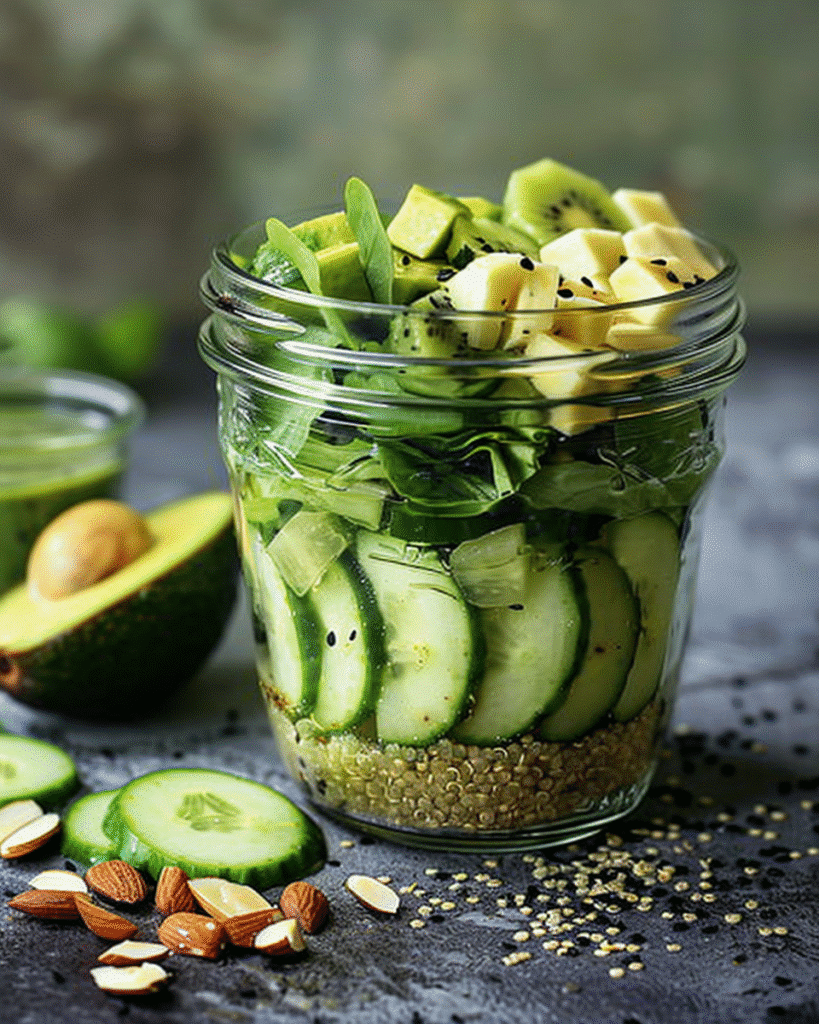
How to Plate and Serve Kiwi Salad
Serving kiwi salad attractively elevates the experience and makes even simple ingredients feel special. For family-style meals, use a wide, shallow bowl or platter. Spread your greens in an even layer, then arrange kiwi slices over the top rather than burying them, so their bright green color stands out. Distribute other colorful ingredients, like berries, tomatoes, or citrus segments, across the surface for a mosaic effect. Sprinkle crunchy elements and cheese last, just before serving, to preserve their texture.
If you’re assembling individual plates, build the salad in layers, starting with greens, then grains or proteins, followed by kiwi and other fruits, and finally toppings and dressing. This approach works especially well for more composed salads similar in spirit to a chicken taco salad dinner recipe, where each component has its own space on the plate. In casual settings like picnics or potlucks, consider transporting components separately and tossing just before serving to keep everything crisp and vivid. A final garnish of chopped herbs or a light drizzle of dressing can make even an everyday kiwi salad look restaurant-ready.
Storage and Make-Ahead Strategies
Kiwi salad lends itself well to meal prep with a few smart strategies. Since kiwi is juicy and can soften greens over time, store components separately when possible. You can wash and dry your greens in advance, then keep them in an airtight container lined with a paper towel to absorb excess moisture. Slice kiwi up to a day ahead and store in a sealed container in the refrigerator.
For grains, beans, or roasted vegetables, cook in bulk and portion them into containers for the week. When packing lunches, place sturdier ingredients, grains, beans, cooked proteins, at the bottom of the container, then layer kiwi and other fruits, and finally add greens on top. Keep dressing in a separate small jar to add right before eating. This prevents sogginess and helps maintain crisp texture. Leftover dressed salad with hearty greens like kale or cabbage can hold up for a day, but delicate arugula or spring mix tastes best when dressed just before serving. With these strategies, you can enjoy kiwi salad multiple times a week without daily prep work.
Kiwi Salad Mistakes to Avoid and Expert Hacks
Common Kiwi Salad Mistakes
Even though kiwi salad is straightforward, a few common mistakes can lead to disappointing results. One frequent error is using unripe or overripe kiwi. Under-ripe fruit tastes overly sour and firm, while overripe kiwi turns mushy and can water down the salad. Another mistake is overdressing the salad, particularly with creamy dressings that quickly weigh down delicate greens.
It’s better to start with a small amount of dressing, toss well, then add more only if needed. Cutting ingredients in mismatched sizes can also throw off the balance, giant kiwi chunks next to finely shredded greens create uneven bites. Take the time to keep pieces relatively uniform. Using too many sweet ingredients without savory anchors can make the salad taste more like dessert than a meal. To avoid this, always include something salty or tangy, such as cheese, olives, or a robust vinaigrette.
Expert Hacks for a Show-Stopping Kiwi Salad
A few expert techniques can elevate your kiwi salad from good to unforgettable. First, lightly salt your greens before dressing them; this subtle step enhances their natural flavor and helps the dressing work more effectively. Second, toast nuts and seeds in a dry pan for a few minutes until fragrant. This simple move deepens their flavor and provides a more satisfying crunch.
Third, use both sliced and diced kiwi for varied texture, thin slices look beautiful on top, while smaller chunks mix more thoroughly into each bite. For a restaurant-style touch, zest your citrus directly over the salad so the aromatic oils fall onto the ingredients. Another hack is to incorporate a small amount of finely chopped fresh chili or red pepper flakes into your dressing for a gentle heat that contrasts with kiwi’s sweetness. Finally, think in terms of complementary dishes: pairing kiwi salad with something hearty like a classic green bean casserole recipe at a holiday meal provides balance and variety on the table, making your kiwi salad stand out even more.
Sample Kiwi Salad Ingredient and Dressing Pairing Table
| Salad Style | Key Ingredients | Best Dressing |
|---|---|---|
| Berry-Kiwi | Kiwi, strawberries, spinach, almonds, feta | Honey-lime vinaigrette |
| Tropical | Kiwi, mango, citrus, romaine, coconut, cashews | Lime-orange vinaigrette |
| Hearty Winter | Kiwi, kale, Brussels sprouts, apples, walnuts | Maple-Dijon vinaigrette |
| Protein-Packed | Kiwi, quinoa, chickpeas, arugula, avocado | Lemon-tahini dressing |
Kiwi Salad Nutrition Snapshot (Approximate per Serving)
| Nutrient | Approximate Amount | Notes |
|---|---|---|
| Calories | 220–300 kcal | Varies with cheese, nuts, and dressing |
| Vitamin C | 100–150% DV | Primarily from kiwi and other fruits |
| Fiber | 6–10 g | From greens, kiwi, and whole grains |
| Protein | 7–15 g | Higher with beans, grains, or chicken |
FAQs About Kiwi Salad
How do I keep kiwi from making my salad soggy?
To keep kiwi from making your salad soggy, manage both timing and structure. First, slice the kiwi shortly before serving, since cut fruit releases juice as it sits. If you’re prepping ahead, store kiwi slices in a separate container and add them at the last minute. Second, choose appropriate greens and components. Hearty greens like kale, cabbage, or Brussels sprouts tolerate moisture much better than delicate spring mixes. You can also place sturdier ingredients, such as grains or beans, at the bottom of the bowl and layer greens and kiwi on top. Finally, dress only the portion you plan to eat immediately, and keep leftover components undressed so they stay crisp for future meals.
Can I prepare kiwi salad the night before?
You can partially prepare kiwi salad the night before, but it’s best to keep certain components separate until serving. Wash and dry your greens thoroughly, then store them in an airtight container with a paper towel to absorb excess moisture. Cook any grains or proteins, cool them, and portion them into containers. You can also mix your dressing in advance and refrigerate it in a jar. Slice kiwi and other fruits up to a day early, but store them separately so their juices don’t wilt the greens. When it’s time to eat, combine everything in a bowl, add crunchy toppings like nuts or seeds, and toss with dressing. This strategy saves time while keeping texture and flavor fresh.
What fruits and vegetables pair best with kiwi in salad?
Kiwi pairs well with a wide range of fruits and vegetables because of its sweet-tart profile. Among fruits, strawberries, blueberries, raspberries, mango, pineapple, oranges, and grapefruit complement kiwi beautifully, adding layered sweetness and acidity. On the vegetable side, tender greens such as spinach, arugula, and mixed lettuces provide a mild base, while heartier options like kale, cabbage, and Brussels sprouts offer crunch and durability. Cucumbers, bell peppers, and shaved fennel bring freshness and texture. For color contrast and extra nutrients, you can add carrots, cherry tomatoes, or even roasted root vegetables. The key is to combine juicy, crisp, and creamy elements so kiwi feels integrated into a balanced mix rather than standing alone.
What kind of cheese works well in a kiwi salad?
Several cheeses pair wonderfully with kiwi by bringing saltiness and creaminess that offset the fruit’s tang. Feta is a popular choice; its briny, crumbly texture contrasts nicely with juicy kiwi and leafy greens. Goat cheese offers a tangy, creamy element that blends well in more delicate salads, especially those with herbs and berries. Fresh mozzarella provides a milder, softer option that works well in tropical or Mediterranean-style bowls. For a bolder flavor, small amounts of blue cheese or gorgonzola can be striking when balanced with nuts and hearty greens. Whichever cheese you choose, crumble or slice it into small pieces so it distributes evenly and doesn’t dominate the salad.
Is kiwi salad good for weight loss or healthy eating plans?
Kiwi salad can be an excellent choice for weight loss or general healthy eating because it’s typically low in calories but high in nutrients and fiber. Kiwi provides vitamin C, antioxidants, and natural sweetness without added sugar. When you combine it with leafy greens, non-starchy vegetables, and lean protein, you create a meal that’s filling yet relatively light. Fiber from fruits, vegetables, and whole grains helps keep you satisfied longer, which can support appetite control. To keep your kiwi salad weight-loss-friendly, watch portion sizes of calorie-dense ingredients like cheese, nuts, and heavy dressings. Use modest amounts of healthy fats, such as olive oil or avocado, so you still feel satisfied while staying within your calorie goals.
Conclusion: Bringing Kiwi Salad Into Your Everyday Cooking
Kiwi salad offers an easy path to fresher, more colorful meals, whether you’re assembling a quick lunch or designing a special-occasion spread. With just a few ripe kiwis, some greens, and a light, citrusy dressing, you can build an endlessly adaptable dish that feels vibrant and nourishing. By playing with seasonal produce, proteins, grains, and dressings, you can customize kiwi salad to match your tastes and nutritional needs.
If you enjoy bright, wellness-focused recipes and seasonal salads like a hearty panzanella or a robust kale bowl, you’ll find kiwi salad fits seamlessly into that same family of dishes. For more inspiration on balancing produce-forward meals with drinks and sides, you might also explore ideas like these wellness shot juice recipes and benefits. Over time, you’ll likely develop your own signature kiwi combinations, ones you can rely on for quick weeknight dinners, make-ahead lunches, or beautiful platters that impress your guests with minimal effort.
For more seasonal fruit salad inspirations, check out my Pinterest.