
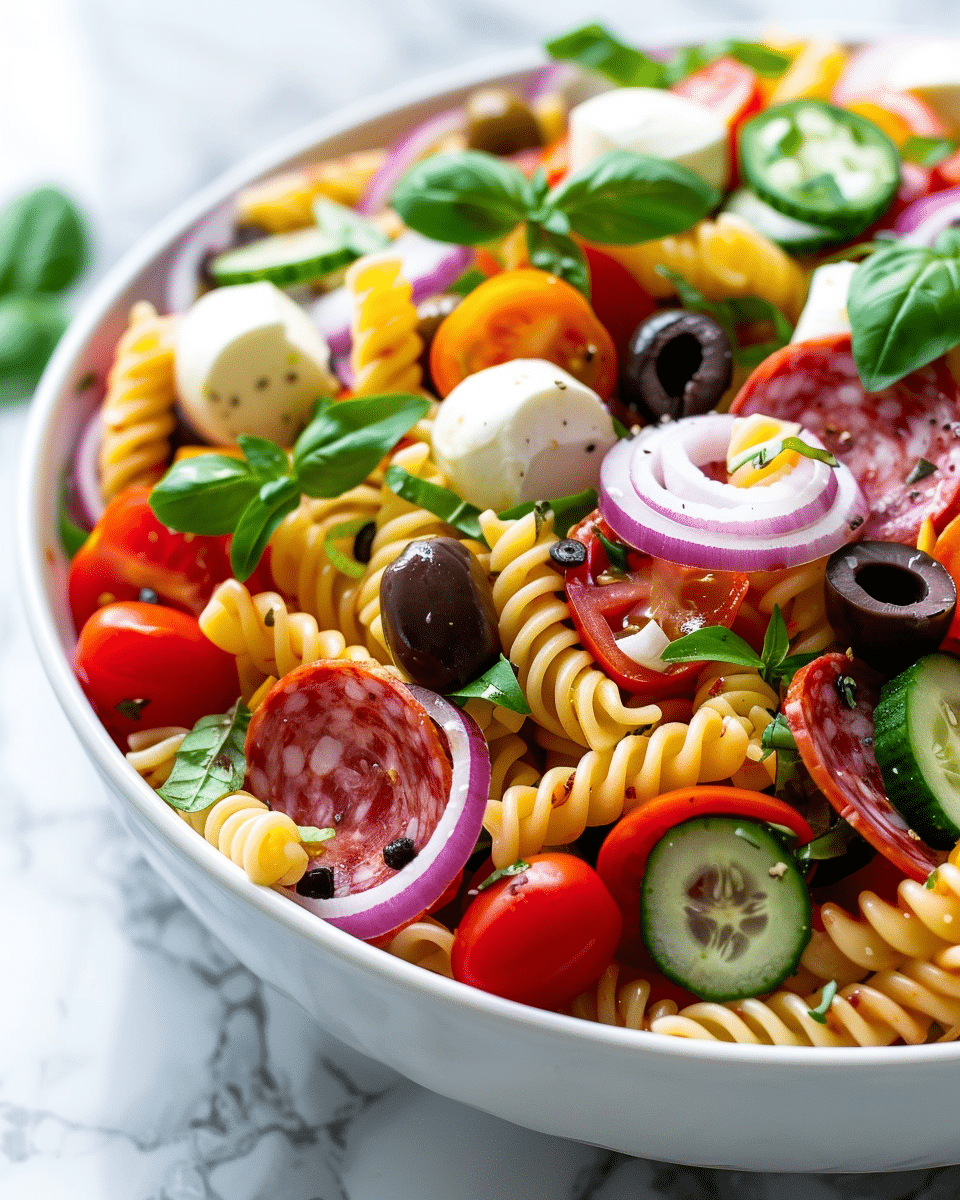
Italian Pasta Salad Bliss: Fresh, Flavorful & Foolproof
Italian pasta salad is the kind of recipe that feels like summer in a bowl. Whether you serve it at a backyard barbecue, pack it for a work lunch, or bring it to a potluck, Italian pasta salad delivers bright flavors, vibrant colors, and satisfying textures in every bite. Because it holds so well in the fridge, it’s also an ideal make-ahead dish that actually tastes better the next day. With a few smart techniques, simple pantry ingredients, and fresh vegetables, you can build an Italian pasta salad that never turns soggy or bland.
This guide walks you step-by-step through choosing the right pasta, building a zesty Italian dressing, balancing add-ins, and safely storing leftovers so you can enjoy it all week long. If you love fresh, colorful dishes like a good panzanella or hearty grain bowl, you’ll find that Italian pasta salad fits perfectly into the same lineup of versatile, crowd-pleasing recipes. For even more salad inspiration, you might also enjoy this vibrant panzanella salad recipe that uses many of the same Italian pantry staples.
Table of Contents
What Makes a Great Italian Pasta Salad?
Understanding the Heart of Italian Pasta Salad
A great Italian pasta salad starts with balance. At its core, Italian pasta salad combines cooked pasta with crisp vegetables, salty cheese, cured meats, and a bright vinaigrette. However, what makes it truly memorable is how each component complements the others. You want a mix of textures, tender pasta, crunchy veggies, and creamy or chewy elements like mozzarella or olives. At the same time, flavors should span tangy, salty, savory, and fresh.
The best versions lean heavily on Mediterranean ingredients: extra-virgin olive oil, red wine vinegar, garlic, oregano, basil, ripe tomatoes, and briny additions like olives or pepperoncini. You can think of Italian pasta salad as a deconstructed antipasto platter tossed with pasta. It’s flexible enough to adapt to what you have on hand yet structured enough that a few basic rules ensure success every time. Because it serves well cold or at room temperature, it also fits beautifully into a weekly meal prep routine.
Why Italian Pasta Salad Belongs in Your Recipe Rotation
Italian pasta salad deserves a permanent home in your recipe rotation because it checks nearly every box for convenience, nutrition, and versatility. You can make a large batch over the weekend and portion it into containers for quick lunches. The mix of pasta, vegetables, and protein turns it into a complete meal rather than just a side dish. If you follow a vegetarian or flexitarian lifestyle, you can easily skip the salami and focus on chickpeas, white beans, or extra veggies to keep it filling.
For omnivores, small amounts of cured meats or grilled chicken add satisfying protein and flavor without a lot of effort. Unlike creamy mayo-based salads, a vinaigrette-based Italian pasta salad holds better in the heat, which makes it ideal for picnics and outdoor events. It also pairs effortlessly with other salads such as a light kale salad recipe or a hearty warm lentil and roasted vegetable salad when you want a spread of colorful, seasonal dishes.
Choosing the Best Pasta for Italian Pasta Salad
Shapes, Sizes, and Textures That Work Best
The pasta you pick can make or break your Italian pasta salad. While you can technically use any short pasta, some shapes cling to dressing and mix-ins far better than others. Rotini, fusilli, farfalle (bow ties), penne rigate, and cavatappi are classic choices because their ridges and twists capture dressing and tiny bits of herbs or cheese. Smooth pasta shapes often let the dressing slide right off, which leads to a bland salad.
Size matters too: medium short shapes are ideal because they’re easy to spear with a fork and can share space with chopped vegetables. You also want pasta made from quality durum wheat semolina so it stays firm and doesn’t fall apart after sitting in the dressing. Whole-wheat or legume-based pastas can work if you prefer more fiber or plant-based protein, but make sure you cook them just shy of al dente so they hold their shape after chilling.
Cooking Pasta Perfectly for Cold Salads
Cooking pasta for Italian pasta salad requires a slightly different approach than hot pasta dishes. Because the pasta will continue to absorb dressing and soften in the fridge, you should cook it just to al dente or even a minute less. Use plenty of salted water so the pasta is well-seasoned from the inside out, which supports the overall flavor of the dish. Once the pasta reaches the right texture, drain it and rinse briefly under cool water.
While rinsing is usually discouraged for hot pasta, here it serves two purposes: it stops the cooking and removes some surface starch that can make the salad gummy. After rinsing, let the pasta drain very well so you don’t dilute the dressing. Toss the slightly warm pasta with part of the Italian dressing right away, then chill before adding delicate ingredients like fresh herbs or soft cheese. This layering technique locks flavor into every piece and prevents a dry-tasting salad later.
Print
Italian Pasta Salad Bliss
Description
This Italian pasta salad is fresh, flavorful, and foolproof. Made with rotini pasta, crisp vegetables, mozzarella, olives, salami, and a zesty Italian dressing, it’s the perfect make-ahead dish for potlucks, lunches, and summer dinners.
Ingredients
1 lb rotini or other short pasta
2 cups cherry tomatoes, halved
1 medium cucumber, chopped
1 large red bell pepper, diced
1/2 medium red onion, thinly sliced
1/2 cup sliced black olives or Kalamata olives
1 cup cubed salami or pepperoni
1 1/2 cups mozzarella balls, halved
1/3 cup fresh basil, chopped
For the dressing:
1/2 cup extra-virgin olive oil
1/4 cup red wine vinegar
1 tablespoon Dijon mustard
1 garlic clove, minced
1 teaspoon dried oregano
1/2 teaspoon dried basil
1/2 teaspoon salt
1/4 teaspoon black pepper
1/2 teaspoon honey or sugar (optional)
Instructions
Bring a large pot of salted water to a boil.
Cook pasta until just al dente, according to package directions.
Drain and rinse briefly under cool water, then let it drain well.
In a jar or bowl, whisk together olive oil, red wine vinegar, Dijon mustard, garlic, oregano, basil, salt, pepper, and honey if using.
Place cooled pasta in a large bowl and toss with about two-thirds of the dressing.
Add cherry tomatoes, cucumber, bell pepper, red onion, olives, salami, and mozzarella.
Toss gently to combine.
Add chopped basil and the remaining dressing as needed.
Chill for 1 to 2 hours before serving for the best flavor.
Toss again before serving and garnish with extra basil if desired.
Notes
Use short ridged pasta like rotini, fusilli, or penne for best texture.
Cook pasta slightly firm so it holds up well after chilling.
Reserve a little extra dressing to refresh leftovers.
For a vegetarian version, skip the salami and add chickpeas or white beans.
Store in the fridge for up to 3 to 4 days.
Building a Flavor-Packed Italian Dressing
Core Ingredients of Classic Italian Dressing
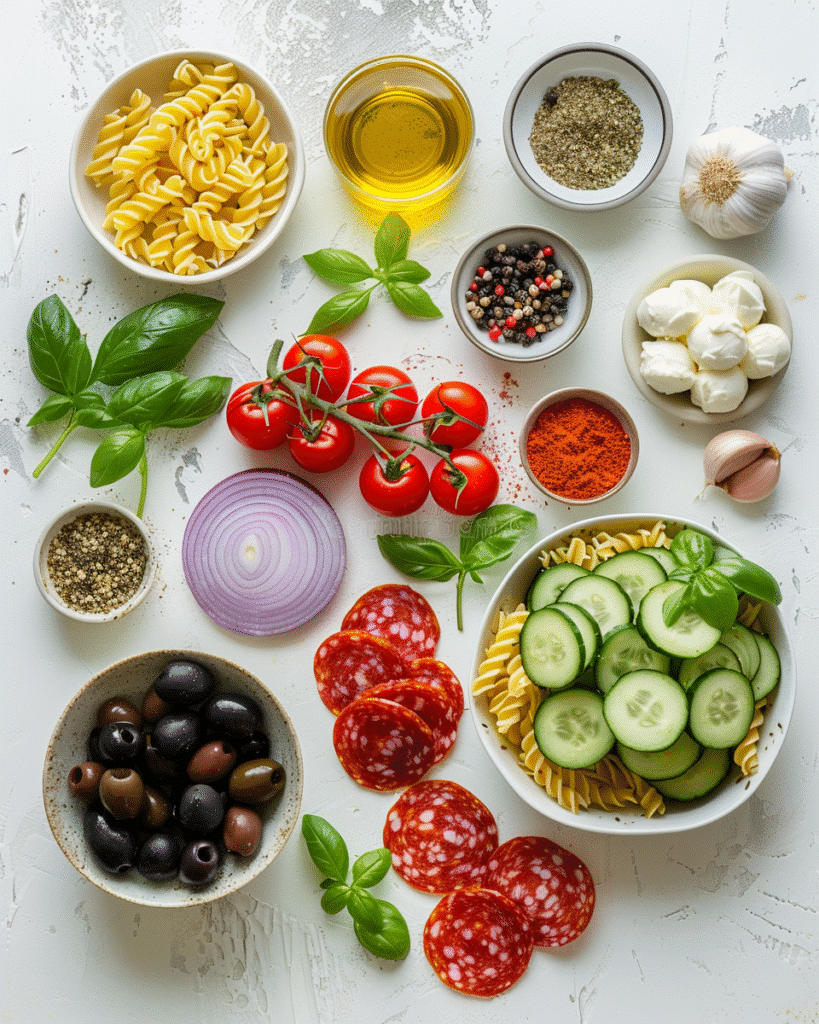
The dressing is the backbone of any Italian pasta salad recipe. A classic Italian dressing relies on a few staples: extra-virgin olive oil, vinegar (typically red wine or white wine vinegar), garlic, Dijon mustard, dried oregano, and salt and pepper. Some recipes add a squeeze of lemon juice for extra brightness, a pinch of sugar or honey to balance acidity, and a sprinkle of red pepper flakes for gentle heat.
The olive oil should be fruity but not overwhelmingly bitter since it plays a big role in the final flavor. Vinegar supplies the tang that keeps each bite lively. Dijon mustard helps emulsify the dressing so it clings to pasta instead of separating. Dried Italian seasoning blends work well in a pinch, but combining your own oregano, basil, and thyme gives you more control. Fresh herbs like parsley and basil are best added at the end to keep their flavor and color vibrant.
How to Emulsify and Season for Maximum Impact
To build a robust Italian dressing for pasta salad, start by whisking together the acid (vinegar and optional lemon juice), minced garlic, Dijon mustard, salt, and pepper. The salt dissolves better in the acidic base rather than in oil. Then slowly stream in the olive oil while whisking vigorously to form a smooth emulsion. This process suspends tiny droplets of oil within the vinegar, creating a thick, clingy dressing that coats pasta and vegetables evenly.
Taste and adjust: if the dressing feels too sharp, add a bit more olive oil or a small pinch of sugar. If it tastes flat, an extra splash of vinegar or another pinch of salt often wakes it up. Remember that chilled foods taste less intense, so slightly over-season the dressing while it’s at room temperature. You can make the dressing a day ahead; in fact, allowing the garlic and herbs to infuse the oil yields a deeper, more complex flavor perfect for Italian pasta salad.
Essential Add-Ins for Authentic Italian Pasta Salad
Vegetables That Bring Crunch, Color, and Freshness
A standout Italian pasta salad always features a rainbow of vegetables that add crunch, freshness, and nutrition. Classic choices include cherry tomatoes, cucumbers, red onion, bell peppers, and black or Kalamata olives. Cherry or grape tomatoes hold their shape better than sliced large tomatoes and release less juice, which prevents sogginess. Persian or English cucumbers bring crispness without too many seeds, while bell peppers add sweetness and bright color.
Thinly sliced red onion gives bite and a touch of sharpness; quick-soaking it in cold water or vinegar tones down harshness. You can also add artichoke hearts, roasted red peppers, and marinated mushrooms for a more antipasto-style salad. For extra freshness, sprinkle in chopped fresh basil, parsley, or arugula just before serving. These veggies don’t just taste great, they also increase fiber, vitamins, and antioxidants, which helps balance the carbs from the pasta and makes the salad more nourishing overall.
Proteins, Cheeses, and Cured Meats for Rich Flavor
Beyond vegetables, Italian pasta salad often features a mix of proteins and cheeses to keep each serving satisfying. Small mozzarella balls (bocconcini or ciliegine), cubed provolone, or shaved Parmesan all work well. Mozzarella lends a creamy, mild bite that pairs beautifully with tomatoes and basil, while provolone and Parmesan contribute nuttier, sharper notes.
For meat, sliced or cubed salami, pepperoni, prosciutto, or even grilled chicken add depth and substance, turning the salad into a complete meal. If you want a lighter or vegetarian-friendly version, swap cured meats for chickpeas, cannellini beans, or grilled tofu. The key is to cut everything into bite-size pieces that mirror the size of your pasta. This ensures you get a bit of everything in each forkful. Add delicate proteins and cheeses after the pasta cools slightly to avoid melting or toughening them, then toss gently with the remaining dressing so they stay intact yet fully flavored.
Step-by-Step Italian Pasta Salad Recipe
Ingredient List and Simple Preparation Workflow
To assemble a classic Italian pasta salad, start by organizing all your ingredients so the process feels smooth from start to finish. A typical recipe for 6–8 servings might look like this:
| Ingredient | Amount |
|---|---|
| Short pasta (rotini, penne, etc.) | 1 pound (16 oz) |
| Cherry tomatoes, halved | 2 cups |
| Cucumber, chopped | 1 medium |
| Red bell pepper, diced | 1 large |
| Red onion, thinly sliced | 1/2 medium |
| Olives, sliced | 1/2 cup |
| Salami or pepperoni, cubed | 1 cup |
| Mozzarella balls, halved | 1 1/2 cups |
| Fresh basil, chopped | 1/3 cup |
| Italian dressing | 1 to 1 1/4 cups |
Cook the pasta, chop vegetables and meats, whisk the dressing, then cool and combine everything in a large bowl. This mise en place approach speeds up assembly and ensures nothing gets forgotten.
Assembling and Chilling the Salad for Best Flavor
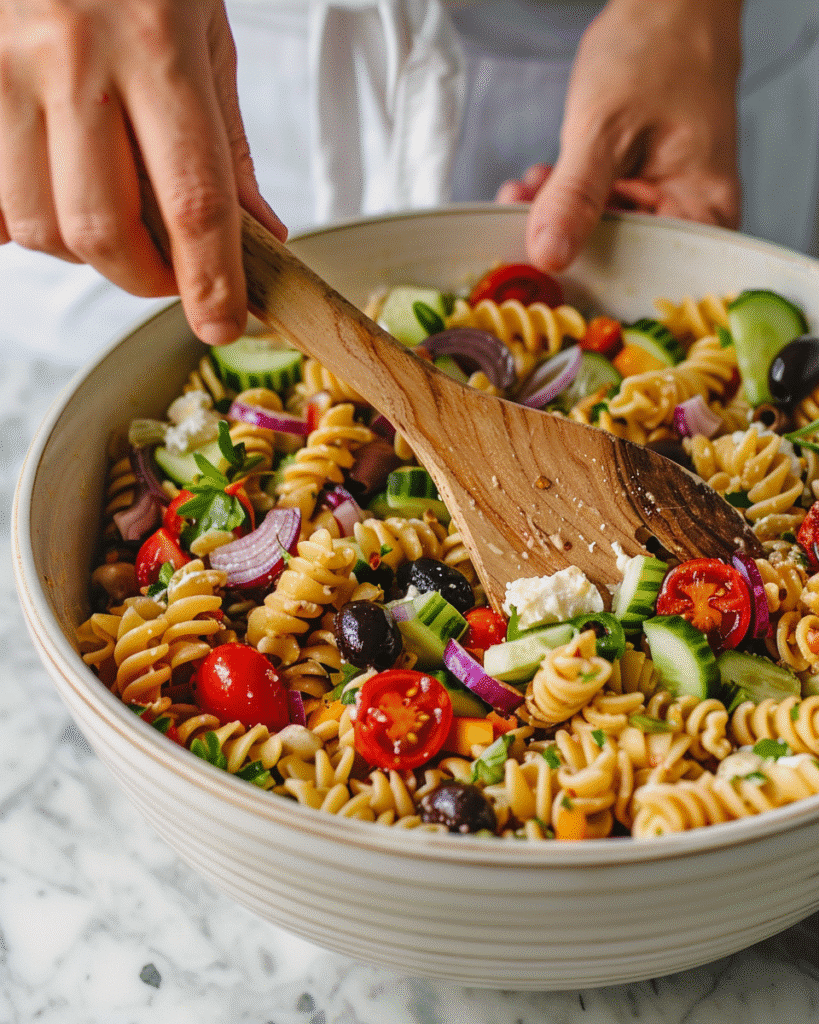
Once you have all components ready, transfer the drained, cooled pasta to a large mixing bowl and pour over about two-thirds of your Italian dressing. Toss until every piece looks lightly coated. Next, add sturdy mix-ins such as bell peppers, cucumber, tomatoes, olives, and salami. Gently fold to distribute. Then fold in mozzarella and any delicate herbs like basil or parsley, adding more dressing as needed so the salad looks glossy but not soupy.
Taste and adjust seasoning with salt, pepper, or a splash of vinegar. At this point, refrigerate the salad for at least one to two hours. This chilling period allows flavors to meld and the pasta to soak up the dressing without becoming mushy. Before serving, toss again and check moisture levels; if the salad appears dry, drizzle with extra dressing or a little olive oil and vinegar. Garnish with more fresh herbs and shaved Parmesan for a polished, restaurant-style presentation.
Healthy Twists and Dietary Variations
Lightening Up Italian Pasta Salad Without Losing Flavor
Italian pasta salad can easily fit into a lighter eating pattern with a few strategic tweaks. You can reduce overall calories and saturated fat by using a higher ratio of vegetables to pasta and by choosing leaner proteins. For example, double the tomatoes, cucumbers, and peppers, and cut the pasta amount down by a third. Swap some or all cured meats for grilled chicken breast, tuna packed in water, or chickpeas.
When making the Italian dressing, use a little less oil and add extra vinegar or lemon juice to keep the flavor bright without relying on fat. Another tactic is using whole-wheat pasta, which adds more fiber and a nuttier taste, helping with satiety. If you enjoy nutrient-dense salads, you may also appreciate recipes like this cranberry apple quinoa winter salad that follow similar principles of balance and whole-food ingredients while delivering plenty of texture and flavor.
Gluten-Free, Vegetarian, and Keto-Friendly Adaptations
Adapting Italian pasta salad to different dietary needs is straightforward. For a gluten-free version, use a high-quality gluten-free pasta made from brown rice, quinoa, or a legume blend. Cook it slightly under the package instructions and rinse well to reduce stickiness. To keep the salad vegetarian, omit cured meats and instead add extra beans, marinated tofu, or more cheese and vegetables.
A vegan take can rely on chickpeas, cannellini beans, and dairy-free cheeses or simply skip the cheese altogether. For lower-carb or keto-style eating, reduce the pasta drastically and replace most of it with spiralized zucchini, cauliflower florets, or extra leafy greens, then pair with a high-protein element similar to those in a keto chicken salad recipe guide. In that case, keep the olive oil generous and watch added sugars in your dressing. Every variation still benefits from the same Italian flavor profile: good olive oil, tangy acid, herbs, garlic, and plenty of fresh vegetables.
Pairing Italian Pasta Salad with Other Dishes
Perfect Main Dishes and Proteins to Serve Alongside
Italian pasta salad shines as both a side and a main, so pairing it with other dishes depends on the occasion. For casual cookouts, grilled meats like chicken, steak, or sausages are natural partners because the salad’s acidity cuts through richness. A perfectly cooked steak served over or next to Italian pasta salad offers a restaurant-worthy plate; if you enjoy exploring steak-and-salad combinations, a detailed steak salad ultimate guide can inspire even more ideas.
At lighter lunches, pair small portions of pasta salad with grilled fish, roasted vegetables, or a simple green salad. For a buffet or holiday spread, Italian pasta salad complements classics like green bean casserole, roasted chicken, or baked salmon. It also travels well, so it’s ideal for potlucks where you don’t know what others will bring; its familiar flavors and bright colors generally appeal to kids and adults alike, filling any gaps in the menu.
Building a Balanced Salad-Centered Menu
If you want to create a salad-focused meal featuring Italian pasta salad as the star, think in terms of contrast and variety. The pasta salad brings starch, savory notes, and some vegetables, so round it out with at least one leafy salad and one protein-rich option. A crisp kale salad or Brussels sprout slaw adds chew and a slightly bitter profile that offsets the richness of cheese and cured meats.
For example, you could pair Italian pasta salad with a shaved Brussels sprout dish similar to the one in this Brussels sprout salad recipe guide to bring crunch and earthy sweetness to the table. Add grilled chicken, baked tofu, or roasted chickpeas on the side for extra protein. Finish the meal with something refreshing like a fruit salad or a light strawberry banana smoothie as a simple dessert drink. This approach turns salad night into a satisfying, crave-worthy event instead of a boring afterthought.
Storage, Meal Prep, and Food Safety Tips
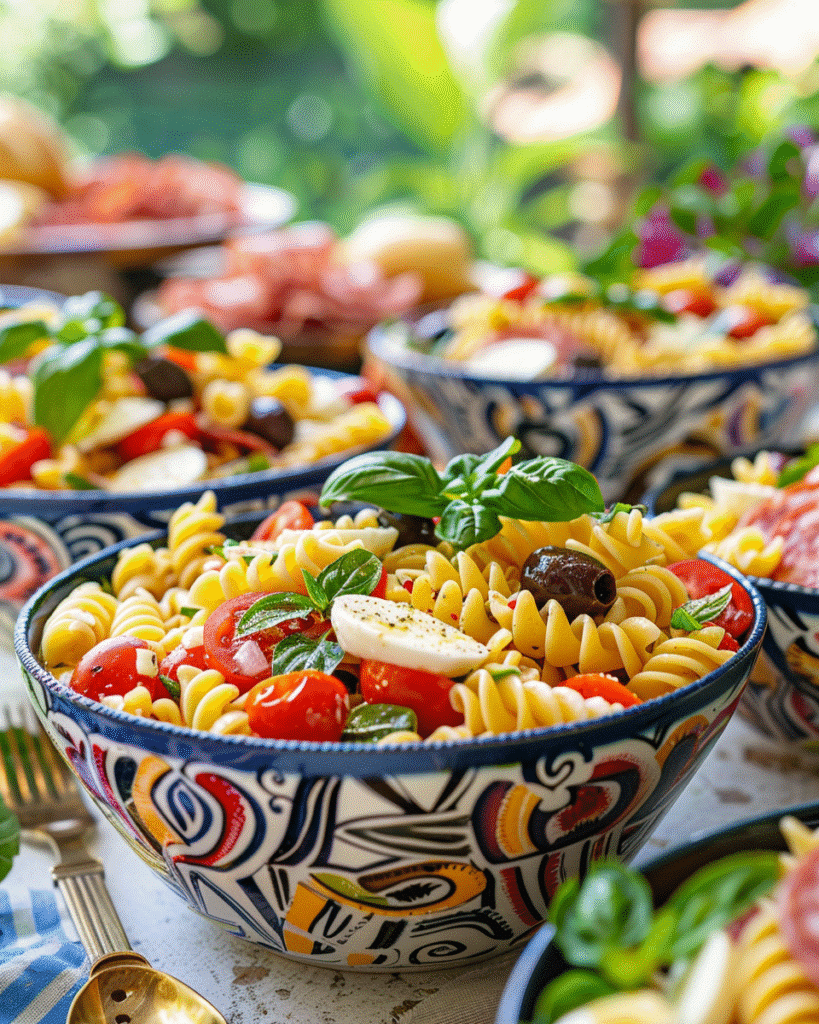
How to Store Italian Pasta Salad for Maximum Freshness
Proper storage keeps Italian pasta salad tasting fresh for several days. Transfer leftovers to an airtight container as soon as the salad returns to room temperature after serving. For best texture, store it in the coldest part of your fridge and aim to eat it within three to four days. Over time, the pasta absorbs more dressing and juices from tomatoes and cucumbers, which can make it dry or slightly soggy.
To refresh the salad, drizzle in a bit more olive oil and vinegar or a spoonful of reserved dressing, then toss thoroughly. If you know you’ll store the salad for multiple days, consider keeping some delicate elements, like fresh herbs or extra cheese, separate and adding them right before serving. This strategy preserves vibrant colors and prevents soft, watery herbs. Avoid freezing Italian pasta salad; the texture of the pasta and vegetables generally turns mushy after thawing.
| Storage Method | Timeframe | Notes |
|---|---|---|
| Fridge (airtight container) | 3–4 days | Refresh with extra dressing |
| Fridge (components separated) | 4–5 days | Best for meal prep |
| Freezer | Not recommended | Texture becomes mushy |
Make-Ahead and Meal Prep Strategies
For meal prep, Italian pasta salad performs especially well when you assemble it in layers or components. Cook and cool the pasta, then toss it with half the dressing and refrigerate in a large container. Store chopped vegetables, olives, and cured meats in separate containers or grouped by sturdiness. Keep delicate elements like fresh basil, arugula, or soft mozzarella separate until the day you plan to eat.
When you’re ready, combine everything and add the remaining dressing, then adjust seasoning. This method prevents over-marinated, limp vegetables and keeps flavors bright. Portion the salad into single-serving containers for portable lunches. If you prefer a fresh, energizing boost alongside your pasta salad, pair pre-portioned bowls with a small jar of juice from a recipe like those in a wellness shot juice recipes & benefits guide. This combination balances hearty carbs with a quick hit of micronutrients, making meal prep feel both practical and health-conscious.
Advanced Tips, Mistakes to Avoid, and Flavor Upgrades
Common Mistakes and How to Fix Them
Even experienced cooks run into a few common pitfalls when making Italian pasta salad. Overcooking the pasta tops the list; when pasta cooks too long, it turns mushy after marinating in dressing. If you accidentally overcook, rinse with very cold water to firm it up slightly and use a lighter hand with dressing. Another frequent issue is blandness. Because the salad is served cold, flavors need to be bold. Under-salting the cooking water or using too little acidic ingredient can result in a flat-tasting dish.
To fix it, season with extra salt, a splash of vinegar or lemon juice, and possibly a small pinch of sugar to balance. Adding more chopped fresh herbs can also brighten a dull salad. Finally, don’t drown your ingredients; too much dressing leads to oily, heavy bites. Instead, aim for a light, glossy coating and hold back a bit of dressing to add just before serving if needed.
Creative Flavor Twists and Regional Variations
After you master a classic Italian pasta salad, you can play with regional influences and extra flavor layers. For a Mediterranean twist, fold in crumbled feta, sun-dried tomatoes, roasted eggplant, and a touch of cumin or smoked paprika. A Southern Italian-inspired version might highlight olives, capers, anchovies, and chili flakes with plenty of oregano. You can also lean into a caprese-style profile by featuring mostly tomatoes, mozzarella, basil, and a balsamic-spiked dressing.
For a heartier, cool-weather version, roast vegetables like Brussels sprouts, carrots, and beets before adding them; this approach echoes the flavors of a roasted beet salad recipe while still delivering the comfort of pasta. You might even experiment with grains such as farro or barley combined with a small amount of pasta for extra chew and nutrition. Each variation keeps the essence of Italian pasta salad, herby, tangy, and vibrant, while giving you fresh ways to enjoy it across seasons and menus.
FAQ About Italian Pasta Salad
How far in advance can I make Italian pasta salad?
You can comfortably make Italian pasta salad 24 hours in advance, and many people find that it actually tastes better the next day. This extra time allows the flavors from the Italian dressing, herbs, and vegetables to fully penetrate the pasta and meld together. If you’re prepping more than a day ahead, consider assembling most components but hold off on very delicate ingredients like fresh basil, arugula, or soft mozzarella until closer to serving. Store the salad in an airtight container in the refrigerator. Before serving, give it a good toss and taste for seasoning; you may want to add a drizzle of olive oil or a splash of vinegar to revive the flavors and restore a lightly glossy texture.
How do I keep Italian pasta salad from drying out?
Italian pasta salad tends to dry out because the pasta slowly absorbs dressing as it sits in the fridge. To prevent this, start by cooking your pasta just to al dente and tossing it with a generous amount of dressing while it’s still slightly warm. This first coating helps lock in moisture and flavor. When storing, keep a small portion of dressing reserved in a jar. Before serving leftovers, drizzle on some of the reserved dressing or a simple mix of olive oil and vinegar, then toss thoroughly. Also, maintain a good ratio of vegetables and juicy ingredients like tomatoes and cucumbers, which release a little moisture over time and help keep the salad from feeling stiff or overly dry.
Can I use bottled Italian dressing instead of homemade?
Bottled Italian dressing works in Italian pasta salad when you need a shortcut, but making your own usually delivers fresher and more customizable flavor. If you choose a store-bought version, look for one with olive oil or at least a decent oil base and minimal added sugars. You can easily boost its flavor by whisking in extra minced garlic, dried oregano, crushed red pepper flakes, or a splash of red wine vinegar. Taste the dressing on a spoon before you commit; it should be punchy, tangy, and well-seasoned. Because bottled dressings sometimes run thinner, you may need slightly more to coat the salad. Keep in mind that homemade dressing takes just a few minutes and often uses pantry staples you already have.
What are the best vegetables to add to Italian pasta salad?
The best vegetables for Italian pasta salad offer a mix of crunch, color, and juiciness while holding up well after marinating. Cherry or grape tomatoes, cucumbers, bell peppers, red onion, and olives are foundational choices. They complement Italian flavors naturally and bring a vibrant appearance. You can also add artichoke hearts, roasted red peppers, and marinated mushrooms for an antipasto-style feel. If you enjoy a bit of spice, sliced pepperoncini or banana peppers work nicely. In warmer months, fresh corn kernels, blanched green beans, or zucchini add seasonal flair. Aim to chop vegetables into pieces similar in size to your pasta so each forkful feels balanced. Always taste a small portion after mixing; if the salad feels heavy, adding a bit more crisp, raw vegetable instantly restores freshness and texture.
How can I make Italian pasta salad more filling as a main dish?
To turn Italian pasta salad into a more filling main dish, focus on boosting protein, fiber, and healthy fats. Start by adding a generous portion of protein such as grilled chicken, chickpeas, white beans, tuna, or cubed mozzarella and provolone. Legumes like chickpeas and cannellini beans are especially effective because they add both protein and fiber, increasing satiety. You can also choose whole-wheat pasta or a legume-based pasta for extra fiber and plant-based protein. Incorporating healthy fats from olives, nuts (like toasted pine nuts), and extra-virgin olive oil keeps you satisfied longer. Finally, increase the quantity and variety of vegetables so the bowl feels substantial without relying solely on pasta. The goal is to create a balanced meal that includes carbs, protein, fat, and plenty of colorful produce.
Conclusion: Bringing Italian Pasta Salad into Your Everyday Cooking
Italian pasta salad offers a perfect blend of simplicity, versatility, and bold flavor. With a handful of pantry staples, fresh vegetables, and a bright Italian dressing, you can build a dish that works for casual weeknights, meal prep, and entertaining. By choosing the right pasta shape, cooking it properly for cold salads, and layering your dressing, you ensure that every bite tastes seasoned and satisfying.
From there, mix and match vegetables, cheeses, and proteins to fit the season and your dietary needs, whether you lean toward classic antipasto flavors or lighter, veggie-forward combinations. As you explore other fresh, colorful recipes like a crisp citrus fennel avocado winter salad, you’ll see how Italian pasta salad fits seamlessly into a broader pattern of vibrant, wholesome cooking. Keep this guide handy, experiment with new twists, and enjoy having a reliable crowd-pleaser in your repertoire all year long.
For more seasonal Salads inspirations, check out my Pinterest.