
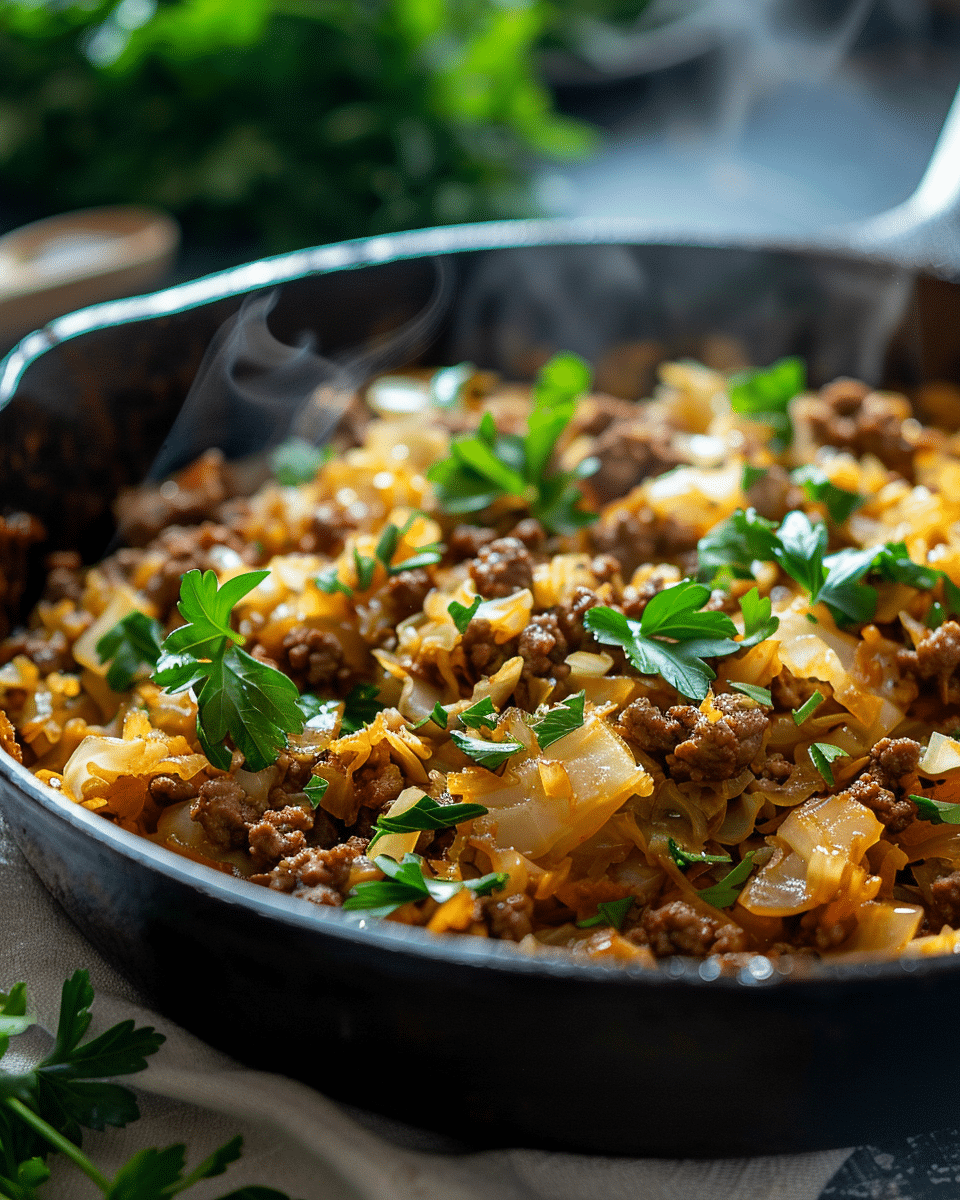
Cabbage and Ground Beef Comfort Skillet (Easy, Hearty & Healthy)
Cabbage and ground beef are one of those timeless combinations that feel both nostalgic and surprisingly modern. This simple duo can turn into a budget-friendly, protein-packed meal that tastes like comfort in a bowl. Whether you grew up eating old-fashioned cabbage rolls or skillet “unstuffed” cabbage, you already know how satisfying this pairing can be. In this guide, you’ll learn how to make a flavorful cabbage and ground beef skillet that works for busy weeknights, meal prep, and even casual entertaining.
You’ll also discover how to customize it for keto, gluten-free, and veggie-loaded diets without sacrificing flavor. Because this dish leans naturally low-carb and high in nutrients, it pairs beautifully with lighter sides and fresh salads, think a bright contrast like this strawberry banana smoothie recipe at breakfast, followed by a hearty cabbage and beef dinner later in the day. From the best kind of cabbage to use, to browning tricks for maximum flavor, to make-ahead tips, you’ll find everything you need below.
By the time you reach the end, you’ll be able to cook this skillet by memory, riff on it with your favorite spices, and serve a dish that tastes like it simmered all day, even though it comes together in under 40 minutes.
Table of Contents
Why Cabbage and Ground Beef Make the Perfect Weeknight Pair
The flavor and nutrition magic of cabbage and ground beef
Cabbage and ground beef might look humble, but together they deliver a powerhouse mix of flavor, nutrition, and affordability. Ground beef offers high-quality protein, iron, zinc, and vitamin B12, all essential for energy and muscle health. Meanwhile, cabbage brings a big dose of vitamin C, vitamin K, and fiber, plus powerful plant compounds called glucosinolates, which scientists link to cellular protection and anti-inflammatory benefits.
When you sauté cabbage until just tender and slightly caramelized, it develops natural sweetness that balances the richness of the meat. That means you can use fewer sugary sauces and still get a deep, comforting flavor profile. This pairing also hits that “stick-to-your-ribs” satisfaction while staying lighter than pasta-heavy casseroles. For anyone watching carbs, a cabbage and beef skillet makes a smart swap for traditional rice or noodle dishes, yet it remains hearty enough that nobody feels deprived.
Because cabbage is inexpensive and stretches a pound of meat into several servings, this combo suits family cooking, batch meal prep, or feeding a crowd without blowing your grocery budget. All these factors make it one of the most practical and versatile bases you can keep in your weeknight rotation.
Old-fashioned comfort with modern, flexible twists
The beauty of a cabbage and ground beef recipe is that it straddles classic comfort food and modern dietary needs with ease. Traditionally, many cultures use cabbage and beef in stuffed rolls, soups, or stews. Think Polish golabki, German cabbage soups, or Irish-style stews. However, those can take hours of simmering and rolling. By cooking everything in one skillet, you capture the same cozy flavors with a fraction of the effort. Plus, the skillet format invites easy customization. Want a low-carb, keto-friendly dinner? Skip the rice and bump up the cabbage and low-carb veggies.
Prefer a more Mediterranean feel? Add tomatoes, garlic, oregano, and finish with a drizzle of olive oil. You can even turn this base into a filling for tacos, wraps, or meal-prep bowls. Because ground beef absorbs spices so well, you can lean into smoky paprika one night, taco seasoning the next, and Italian herbs after that, all while keeping the core method the same. That flexibility means you learn one reliable technique and then tweak textures, seasonings, and toppings depending on what you crave or what’s in your fridge. As a result, cabbage and ground beef become a reliable template rather than a single, rigid recipe.
Print
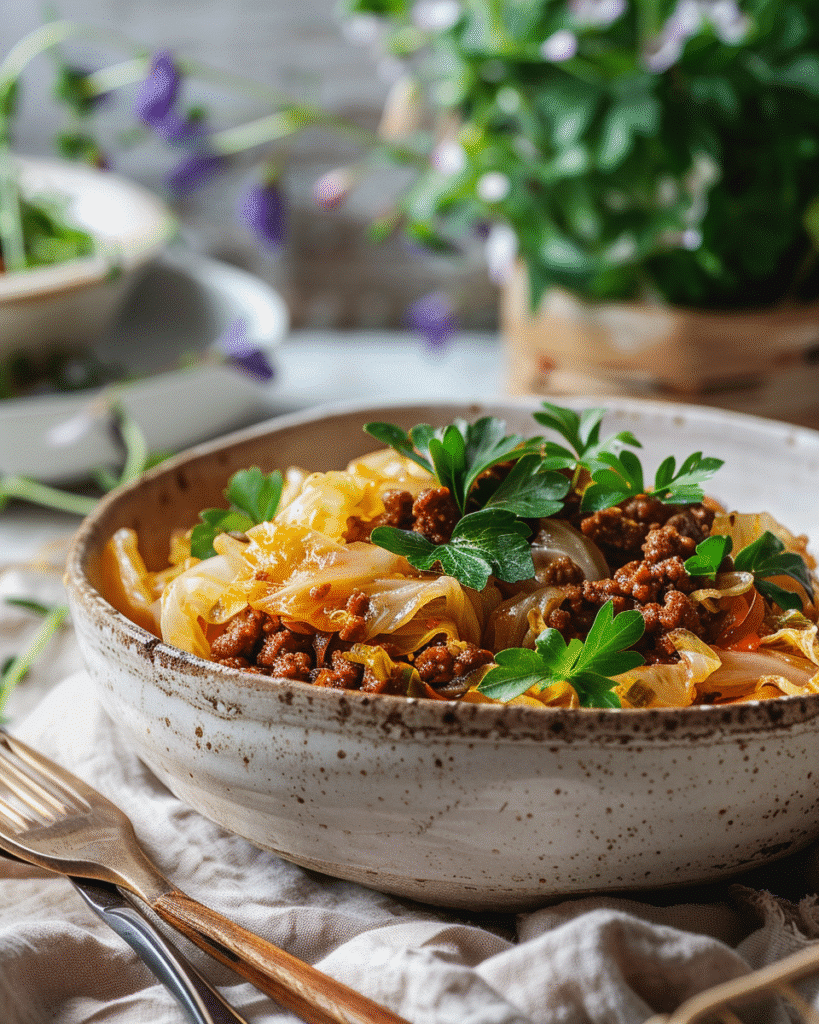
Cabbage and Ground Beef Comfort Skillet
Description
This cabbage and ground beef comfort skillet is easy, hearty, low-carb, and perfect for busy weeknights, meal prep, or a cozy family dinner.
Ingredients
1 medium green cabbage, chopped or thinly sliced
1 lb ground beef (85–90% lean)
1 tablespoon olive oil
1 medium onion, diced
2 cloves garlic, minced
1 teaspoon smoked paprika
1/2 teaspoon black pepper
1 teaspoon salt, or to taste
1 tablespoon tomato paste (optional)
1/2 cup diced tomatoes or tomato sauce (optional)
1 tablespoon soy sauce or tamari (optional)
Fresh parsley, for garnish
Optional add-ins:
1 cup shredded carrots
1 cup bell peppers, sliced
1/2 teaspoon chili flakes
Shredded cheese for topping
Instructions
Heat a large skillet over medium-high heat and add olive oil.
Add ground beef and cook until browned, breaking it apart as it cooks.
Drain excess grease if needed.
Add diced onion and garlic and sauté until fragrant and softened.
Stir in smoked paprika, salt, black pepper, and tomato paste if using.
Add chopped cabbage and toss well with the beef mixture.
Pour in diced tomatoes or tomato sauce if using, plus soy sauce or tamari if desired.
Cover and cook over medium-low heat for 10–15 minutes, stirring occasionally, until cabbage is tender but not mushy.
Remove lid for the last few minutes if you want excess moisture to evaporate.
Taste and adjust seasoning.
Garnish with fresh parsley and serve hot.
Notes
Use green cabbage for the best texture and classic flavor.
For keto, skip starchy add-ins and serve as-is or over cauliflower rice.
For meal prep, store components in airtight containers up to 4 days.
Freeze cooked cabbage and beef skillet up to 2–3 months.
Add shredded cheese at the end for a casserole-style finish.
Essential Ingredients for the Best Cabbage and Ground Beef Skillet
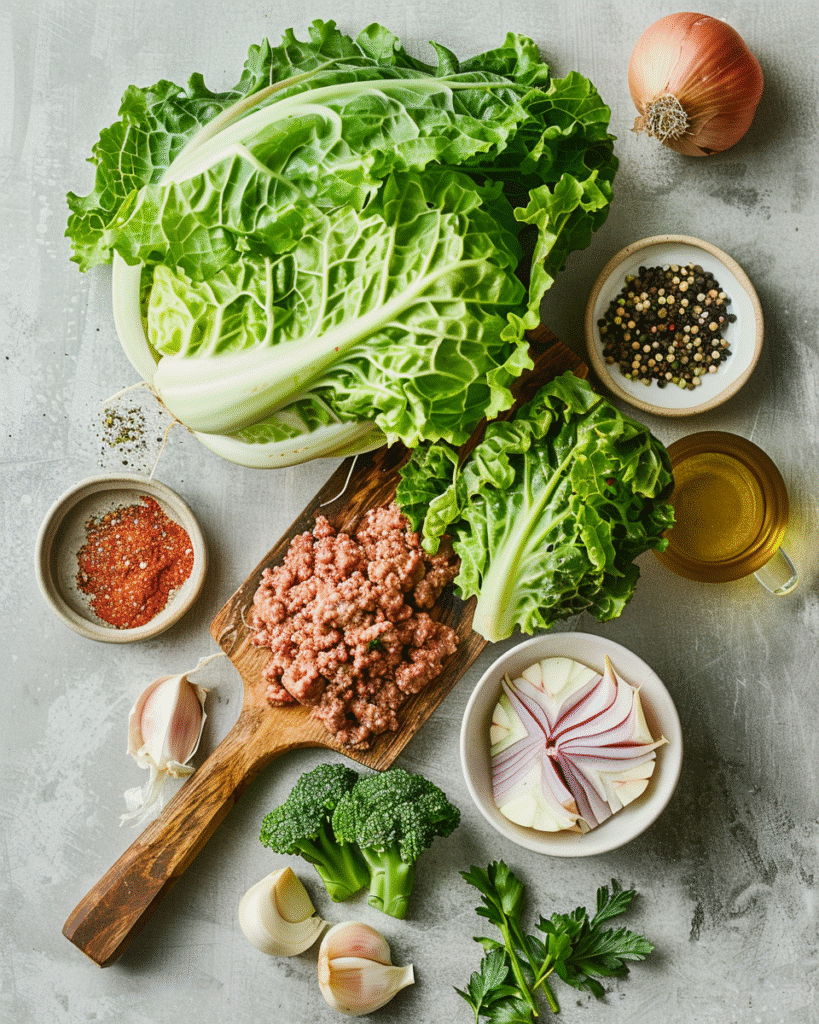
Choosing the right cabbage, beef, and aromatics
To get the most out of a cabbage and ground beef dish, start with a few smart ingredient choices. For cabbage, green cabbage is the classic option: it holds its texture well, cooks evenly, and turns pleasantly sweet when sautéed. Savoy cabbage also works beautifully; its crinkled leaves cook faster and feel a bit more delicate. Red cabbage can be used, but keep in mind it will tint the whole dish purple and may need a slightly longer cook time. When it comes to the beef, 85–90% lean ground beef usually hits the sweet spot between flavor and excess grease.
Extra-lean beef can work, but you may need a bit more oil to help it brown and carry seasonings. Aromatics make or break the overall flavor, so do not skip them. Onion and garlic form the basic flavor foundation, while carrots or celery add subtle sweetness and texture. A bit of tomato paste or crushed tomatoes lends umami depth and a cozy, almost casserole-like vibe. Salt and pepper are indispensable, of course, but adding paprika, dried thyme, or a pinch of red pepper flakes gives the dish a more rounded flavor. With these ingredients in place, you’ll already be halfway to a satisfying skillet.
Pantry seasonings and add-ins that elevate the dish
Once you master the basic cabbage and ground beef combo, a few pantry items can transform it from simple to stunning. Soy sauce or tamari (for gluten-free) deepens savoriness thanks to its natural glutamates, making the beef taste more robust. A splash of Worcestershire sauce does the same with a slightly tangy edge. For a tomato-based version, canned diced tomatoes, tomato sauce, or even leftover marinara add body and mild acidity that cuts through the richness.
Smoked paprika, cumin, and chili powder quickly steer the dish in a Tex-Mex direction, making it perfect to spoon into tortillas or over cauliflower rice. If you enjoy a touch of creaminess, finish the pan with a small splash of heavy cream or top with shredded cheddar, mozzarella, or a blend; the cheese melts into the cabbage and creates a comforting, casserole-like finish.
You can also boost nutrition by stirring in leafy greens like kale , which pairs well with this kale salad recipe or spinach near the end of cooking. These pantry-friendly upgrades mean you can adapt the dish to match what you’re craving without needing a complicated ingredient list.
Step-by-Step Method for a One-Pan Cabbage and Ground Beef Skillet
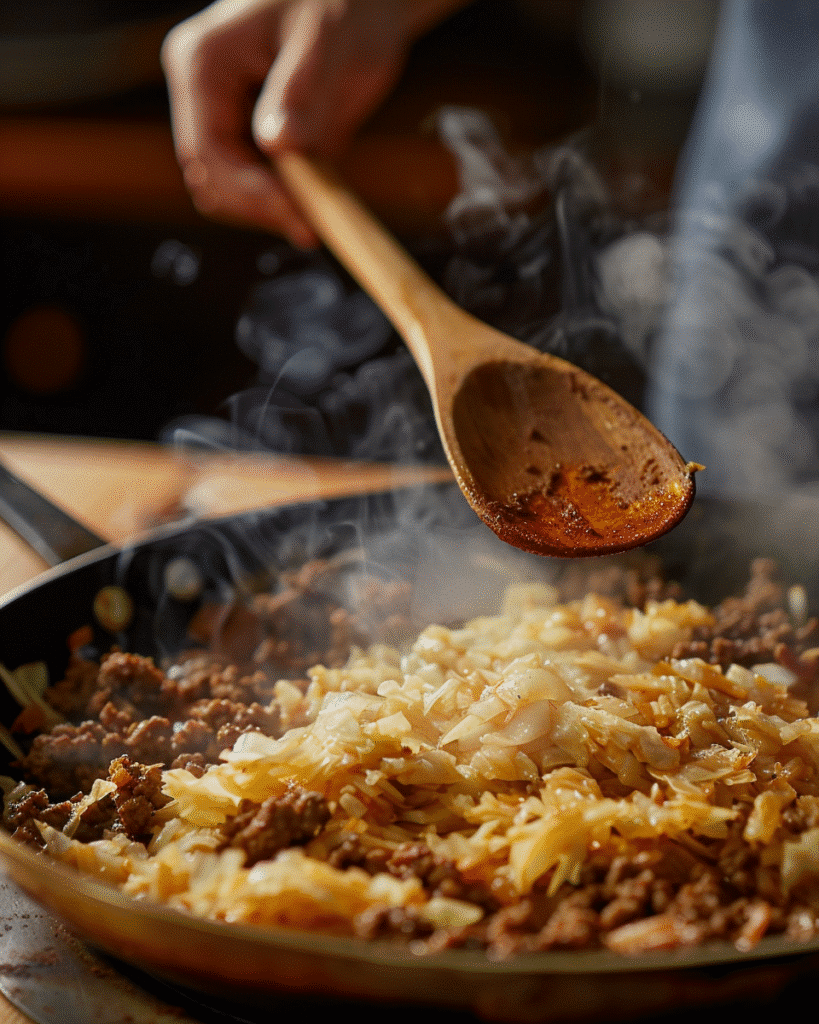
Browning the beef and building flavor in the pan
The first steps of cooking cabbage and ground beef together set the tone for the entire dish, so it pays to slow down and build flavor deliberately. Start by heating a large, heavy skillet—cast iron or stainless steel work best, over medium-high heat. Add a bit of oil if your beef is very lean, then crumble the ground beef into the hot pan, spreading it into an even layer. Resist the urge to stir constantly. Instead, let it sit for a few minutes to develop a browned crust on the bottom. This browning, known as the Maillard reaction, creates complex flavors and helps the finished dish taste like it simmered for hours.
Once the bottom is nicely browned, break the beef into smaller crumbles and continue cooking until no pink remains. At this stage, drain off most of the excess fat if necessary, but leave a thin coating in the pan for flavor. Next, push the beef to the edges and add chopped onions, garlic, and any additional aromatics (such as diced carrots or celery) to the center. Sauté until the onions turn translucent and lightly golden. The browned bits on the bottom of the pan will loosen as the vegetables release moisture, creating a deeply savory base for the cabbage.
Layering in the cabbage and simmering to tender perfection
Once the beef and aromatics are fragrant and well-browned, it’s time to add the sliced cabbage. Cut the cabbage into quarters, remove the core, and then slice it into thin shreds or bite-size pieces. Pile the cabbage into the skillet, it may seem like too much at first, but it wilts significantly. Sprinkle with salt and pepper to help draw out moisture, then gently toss with the beef and vegetables. If you are using tomato paste, diced tomatoes, or broth, add them now, along with your chosen spices: paprika, dried herbs, chili powder, or cumin.
The liquid should be enough to lightly coat the pan but not so much that the mixture becomes soupy; you want a thick, hearty skillet. Cover the pan with a lid and reduce the heat to medium-low. Let the cabbage and ground beef simmer for about 10–15 minutes, stirring occasionally, until the cabbage turns tender but not mushy.
Taste and adjust seasoning, adding more salt, pepper, or spices as needed. If you like a bit of char or caramelization, remove the lid for the last few minutes so any excess liquid can evaporate and the cabbage can sauté more directly in the fat. Finish with fresh herbs or a sprinkle of cheese, and your one-pan meal is ready to serve.
Nutritional Benefits of Cabbage and Ground Beef
How this combo supports a balanced, high-protein meal
A well-prepared cabbage and ground beef skillet can deliver impressive nutrition while still feeling like pure comfort food. Ground beef provides a concentrated source of complete protein, which your body needs for muscle repair, hormone production, and maintaining a healthy metabolism. A four-ounce serving of cooked ground beef typically offers around 20–25 grams of protein, plus easily absorbed iron and vitamin B12, both critical for red blood cell formation and preventing fatigue.
Cabbage, on the other hand, is low in calories but high in fiber, which promotes digestion and helps you feel full and satisfied. It also packs vitamin C, an antioxidant that supports immune health and collagen production, and vitamin K, which plays a role in blood clotting and bone health. Together, cabbage and ground beef form a naturally balanced base of protein, fiber, and micronutrients. When you add a moderate amount of healthy fat from olive oil or the beef itself, you end up with a meal that offers long-lasting energy without a blood sugar crash.
Making the dish work for low-carb, gluten-free, and whole-food diets
Cabbage and ground beef also adapt well to several popular eating patterns, which makes this skillet especially useful if you cook for people with different dietary needs. For a low-carb or keto-friendly version, skip any starchy add-ins like potatoes or rice and instead rely on extra cabbage, mushrooms, bell peppers, or leafy greens to bulk up the dish. Because cabbage is naturally low in carbohydrates and relatively high in fiber, it fits easily into low-carb macros.
To keep the meal gluten-free, use gluten-free tamari instead of soy sauce, double-check your broth and seasoning blends for hidden wheat, and avoid thickening with flour. Those who prefer a whole-foods focus can choose grass-fed beef, extra virgin olive oil, and plenty of colorful vegetables for added phytonutrients. If you want to reduce saturated fat but still keep the flavor, you can use a mix of lean ground beef and ground turkey or chicken.
When you pair this skillet with fresh, vibrant sides such as a citrus-forward salad like the citrus fennel avocado winter salad, you create a nutrient-dense plate that feels indulgent yet still aligns with wellness goals.
Flavor Variations for Your Cabbage and Ground Beef Recipe
Classic tomato, smoky, and cheesy comfort profiles
Once you know the basic cabbage and ground beef technique, adjusting the flavor profile becomes simple and fun. A classic variation uses tomato sauce or crushed tomatoes plus Italian-style herbs such as oregano, basil, and thyme. This version tastes a bit like unstuffed cabbage rolls and pairs wonderfully with a sprinkle of mozzarella or Parmesan cheese on top. For a smoky comfort profile, stir in smoked paprika, garlic powder, and onion powder, then finish with a bit of Worcestershire sauce or soy sauce for depth.
This style works nicely if you serve the dish over mashed potatoes or cauliflower mash. Another crowd-pleasing route is a cheesy skillet: after the cabbage and beef finish simmering, top with shredded cheddar or a cheddar–Monterey jack blend, cover for a few minutes, and let the cheese melt into gooey pockets. This approach turns the dish into a low-carb, deconstructed casserole. Feel free to garnish with green onions or parsley for freshness. All these tweaks rely on pantry staples, but they dramatically shift the character of the dish, keeping it interesting week after week.
Global-inspired twists: Tex-Mex, Asian, and Mediterranean
You can also take cabbage and ground beef on a global flavor tour using a few key spices and sauces. For a Tex-Mex twist, season the beef with chili powder, cumin, smoked paprika, oregano, and a pinch of cayenne. Fold in diced tomatoes and green chilies, then serve the mixture in tortillas, over rice, or on a bed of shredded lettuce. Top with avocado, salsa, and a squeeze of lime for vibrant contrast.
To give the skillet an Asian-inspired spin, brown the beef with garlic and ginger, then add soy sauce or tamari, a drizzle of sesame oil, and maybe a bit of hoisin or chili-garlic sauce. Thinly sliced cabbage, carrots, and bell peppers fit right into this stir-fry style version, which tastes excellent over steamed rice or cauliflower rice. For a Mediterranean approach, flavor the beef with garlic, onion, oregano, and a hint of cinnamon or allspice, then stir in chopped tomatoes and perhaps some olives. Finish with crumbled feta and fresh parsley or dill. Each of these variations retains the core comfort of cabbage and ground beef but brings something new and exciting to your weeknight table.
Side Dishes and Pairings for Cabbage and Ground Beef
Fresh salads, smoothies, and light contrasts
Because cabbage and ground beef make a hearty, savory main, pairing it with bright, fresh sides can create a balanced meal that doesn’t feel heavy. A crisp salad with citrus, crunchy vegetables, or a tangy vinaigrette cuts through the richness beautifully. For example, something like a panzanella-style salad, similar in spirit to this panzanella salad recipe, adds juicy tomatoes, toasted bread, and herbs for a Mediterranean contrast.
In colder months, you might prefer a roasted beet or winter salad with ingredients like fennel, avocado, or citrus to offer both freshness and seasonal flair. Serving a small fruit smoothie at lunch, such as a strawberry-banana blend, helps round out your day’s nutrients and makes the savory skillet at dinner feel even more satisfying. These lighter, vibrant elements bring color and texture diversity to the plate, making the overall meal more appealing and nutritionally complete, without overwhelming the central cabbage and beef dish.
Comforting starches, veggie sides, and low-carb options
If you enjoy classic comfort-food pairings, cabbage and ground beef also taste wonderful with simple starches and vegetable sides. Buttered egg noodles, mashed potatoes, or a side of rice turn the skillet into a cozy, old-fashioned supper. For a slightly lighter yet still comforting option, try roasted root vegetables or a green bean side, especially if you like casserole-style recipes similar to a traditional green bean casserole.
Low-carb eaters can spoon the skillet over mashed cauliflower, roasted spaghetti squash, or simple sautéed greens. A crisp slaw with vinegar-based dressing, pickled onions, or quick pickles can also bring brightness and crunch without extra carbs. Consider adding a small wellness-focused element, such as a shot-style juice or herbal tea, to finish the meal and support digestion. When you mix and match these sides, you can tailor the overall experience from indulgent and cozy to light and restorative, all anchored by the sturdy, flavorful base of cabbage and ground beef.
Meal Prep, Storage, and Freezing Tips
How to prep cabbage and ground beef for the week
Cabbage and ground beef lend themselves well to meal prep, which can save you time and reduce weekday stress. Start by prepping your vegetables in advance. You can shred or chop an entire head of cabbage and store it in an airtight container or zip-top bag in the refrigerator for up to several days. The same goes for diced onions, carrots, or other veggies you plan to use. When you’re ready to cook, half the chopping work is already done.
For batch cooking, double the recipe in a large Dutch oven or deep skillet; the leftovers reheat nicely and even improve in flavor as the ingredients meld. Portion the cooked mixture into individual meal-prep containers and pair each with your chosen side, cauliflower rice, brown rice, or roasted vegetables. Because the dish holds up well in the fridge for 3–4 days, you can rely on it for multiple lunches or dinners. If you like variety, season half the batch one way (say, tomato and Italian herbs) and the other half with spices that lean Tex-Mex or Asian, so you don’t feel like you’re eating the exact same meal every time.
Best practices for refrigerating, freezing, and reheating
Proper storage helps your cabbage and ground beef skillet keep its flavor and texture. Allow the cooked dish to cool slightly at room temperature (no more than 1–2 hours) before transferring it to airtight containers. In the refrigerator, it should stay fresh for up to 4 days. When reheating from the fridge, warm it gently in a skillet over medium heat with a splash of water or broth to loosen it, stirring occasionally until hot.
You can also reheat individual portions in the microwave, pausing to stir halfway for even heating. For longer storage, freezing works well. Portion the cooled mixture into freezer-safe containers or heavy-duty freezer bags, label with the date and flavor variation, and freeze for up to 2–3 months. To reheat from frozen, thaw overnight in the fridge or use your microwave’s defrost setting, then warm it in a skillet.
The cabbage may soften slightly after freezing, but the dish remains flavorful and satisfying. For meals where presentation matters, such as serving guests, use freshly cooked or refrigerated (rather than frozen) portions to keep the cabbage texture at its best.
Common Mistakes and How to Fix Them
Overcooked cabbage, greasy beef, and bland seasoning
Even simple recipes have a few pitfalls, and cabbage and ground beef is no exception. One of the most frequent mistakes is overcooking the cabbage until it turns mushy and gray-green. To avoid this, slice the cabbage evenly and simmer only until it’s tender with a bit of bite left. If you accidentally overcook it, you can revive the dish slightly by stirring in a handful of raw shredded cabbage or thinly sliced greens near the end; they’ll add back some texture and freshness. Another common issue is overly greasy beef.
This usually happens if you use very fatty ground beef and don’t drain off excess fat after browning. Aim for 85–90% lean beef, and don’t hesitate to spoon off some rendered fat before adding your vegetables. If the dish still feels heavy, balance it with more acidic ingredients like tomatoes or a splash of vinegar and serve with a fresh side salad. Blandness also crops up when cooks under-season both the meat and the cabbage. Remember that cabbage can absorb a lot of flavor, so taste as you go and adjust salt, pepper, and spices throughout the cooking process instead of just at the end.
Too much liquid, not enough color, or unbalanced textures
Another challenge some cooks face is ending up with a cabbage and beef dish that’s too wet or soupy. This often stems from adding too much broth or using tomatoes with lots of liquid without allowing enough time for reduction. To fix it, remove the lid near the end of cooking and let the skillet simmer until excess moisture evaporates. You can also increase the heat briefly to help the liquid cook off more quickly, stirring frequently to prevent sticking.
A lack of browning or color is another subtle mistake; if you crowd the pan or stir constantly while browning the beef, you won’t get those flavorful browned bits. Give the meat time and space to sear. For more visual appeal, consider adding colorful vegetables such as carrots, red bell peppers, or a garnish of fresh herbs. Unbalanced texture, either everything too soft or too dense, can make the dish less enjoyable.
Make sure you slice the cabbage into reasonably uniform pieces and add delicate vegetables later so they don’t overcook. These small adjustments ensure that every bite has a good mix of tenderness, juiciness, and gentle crunch.
Turning Cabbage and Ground Beef into Bowls, Wraps, and More
Meal bowls, casseroles, and baked twists
Once you have a basic cabbage and ground beef skillet, you can easily repurpose it into new formats to keep meals interesting. One popular option is to build hearty meal bowls. Start with a base, such as brown rice, quinoa, cauliflower rice, or even roasted sweet potatoes, then spoon the hot cabbage and beef over the top. Finish with fresh garnishes like chopped herbs, shredded cheese, yogurt or sour cream, and a squeeze of lemon or lime.
This approach transforms a simple skillet into a customizable bowl bar where everyone at the table can assemble their own creation. Alternatively, you can turn the mixture into a baked casserole. Transfer the cooked cabbage and ground beef to a casserole dish, top with cheese or a mix of cheese and breadcrumbs, and bake until bubbly and golden. This method works well for feeding a crowd or making a dish that easily goes from oven to table. For an even more complete meal, layer in cooked grains or beans before baking to increase volume and plant-based protein.
Stuffed peppers, lettuce wraps, and lighter serving ideas
For lighter or more portable variations, your cabbage and ground beef mixture adapts beautifully to stuffing and wrapping. Stuffed bell peppers make an attractive, portion-controlled main dish: cut bell peppers in half, remove seeds, and fill with your warm cabbage and beef mixture. Top with cheese if you like, then bake until the peppers soften and everything heats through. This format adds color, crunch, and extra vitamin C.
You can also use the mixture as a filling for lettuce wraps, using sturdy leaves of romaine or butter lettuce. Spoon a small amount of the hot or warm mixture onto each leaf, add a few crunchy toppings such as sliced green onions or shredded carrots, and enjoy a low-carb, finger-food version. For more salad-forward meals, try serving a small portion of the skillet alongside a protein-rich salad like a steak-topped salad or even a chicken taco salad similar in spirit to the one in this chicken taco salad dinner recipe. These creative serving ideas show how a straightforward cabbage and ground beef base can underpin a whole week’s worth of varied, satisfying meals.
FAQ: Cabbage and Ground Beef
Can I use ground turkey or chicken instead of ground beef?
Yes, you can substitute ground turkey or ground chicken for ground beef in most cabbage skillet recipes. Since poultry tends to be leaner and milder in flavor, you may want to add a bit of extra oil at the beginning to help with browning and to carry the seasonings. Additionally, season more assertively: salt, pepper, garlic, onion, and warming spices like paprika or cumin help boost the savory character. Dark meat ground turkey often works better than very lean breast meat because it stays juicier and more flavorful. Keep an eye on cooking time, as poultry can dry out if overcooked. Otherwise, follow the same method and adjust seasonings to taste.
How do I keep Cabbage and ground beef from becoming soggy in the skillet?
Preventing soggy Cabbage and ground beef is mostly about slicing, timing, and moisture control. Slice the cabbage into uniform pieces so it cooks evenly, and add it to the pan after your beef and aromatics have fully browned. Avoid adding too much liquid; use just enough broth, tomato, or sauce to create steam and flavor without submerging the vegetables. Cook the mixture covered only until the cabbage is just tender, then uncover and allow excess moisture to evaporate. Stir occasionally but not constantly, so some pieces can caramelize against the hot pan. If you prefer more bite, add a handful of raw cabbage near the end for extra crunch and brightness. Season toward the end to avoid drawing out too much water early on.
Is cabbage and ground beef a good option for a keto or low-carb diet?
Cabbage and ground beef make an excellent base for keto and low-carb eating. Cabbage is naturally low in carbohydrates and relatively high in fiber, so it can replace higher-carb ingredients like rice or pasta while still providing volume and satisfaction. Ground beef contributes high-quality protein and fat, which help keep you full and support stable energy. To keep the dish keto-friendly, avoid adding starchy vegetables, sugar-heavy sauces, or sweetened tomato products. Instead, enhance flavor with herbs, spices, low-carb condiments like soy sauce or tamari, and healthy fats such as olive oil or butter. Serve your skillet over cauliflower rice, leafy greens, or simply enjoy it on its own, and you have a filling meal that fits most low-carb macro goals.
What kind of cabbage works best with ground beef?
Green cabbage is usually the most reliable choice when cooking with ground beef. It holds its structure well during sautéing and simmering and develops a pleasant sweetness as it cooks. Savoy cabbage is another great option; its crinkly leaves cook a bit faster and have a tender texture, which some people love in skillets and soups. Red cabbage technically works, but it will tint the entire dish purple and can be slightly tougher, so allow a bit more cooking time or slice it more thinly. Napa cabbage cooks very quickly and is better suited to stir-fry, so reduce cooking time if you use it. Overall, standard green cabbage offers the best balance of texture, flavor, and versatility for cabbage and ground beef recipes.
Can I freeze cabbage and ground beef dishes?
You can freeze cabbage and ground beef dishes, and they generally reheat quite well. After cooking, let the mixture cool until it is no longer steaming, then transfer it to freezer-safe containers or heavy-duty freezer bags, leaving a bit of headspace for expansion. Label with the date and any flavor notes (for example, “Tex-Mex” or “tomato-herb”). The dish typically keeps in the freezer for 2–3 months without major loss of quality. When ready to eat, thaw in the refrigerator overnight or use the defrost setting on your microwave. Reheat gently in a skillet with a splash of water or broth to loosen the mixture. The Cabbage and ground beef may soften a little more after freezing, but the flavors remain satisfying, making frozen portions ideal for quick lunches or emergency dinners.
Conclusion: Make Cabbage and Ground Beef a Weeknight Staple
Cabbage and ground beef form one of the most flexible, budget-friendly, and nourishing foundations you can keep in your cooking rotation. With just a single pan and a handful of ingredients, you can create a skillet that feels cozy and satisfying, yet adapts effortlessly to low-carb, gluten-free, or whole-food preferences. From old-fashioned tomato-and-herb profiles to global twists like Tex-Mex or Asian-inspired stir-fries, the same basic method yields countless variations.
Pair Cabbage and ground beef with fresh salads, comforting sides, or even wellness-focused sips like the juices found in this wellness shot juice recipes and benefits guide, and you’ll have a complete, balanced meal. Whether you cook once and eat all week through smart meal prep, or transform leftovers into bowls, wraps, and casseroles, this simple duo deserves a permanent place in your kitchen. The next time you need something hearty, quick, and reliable, reach for cabbage and ground beef, you’ll be amazed by how far they can take you.
For more seasonal Salads inspirations, check out my Pinterest.