
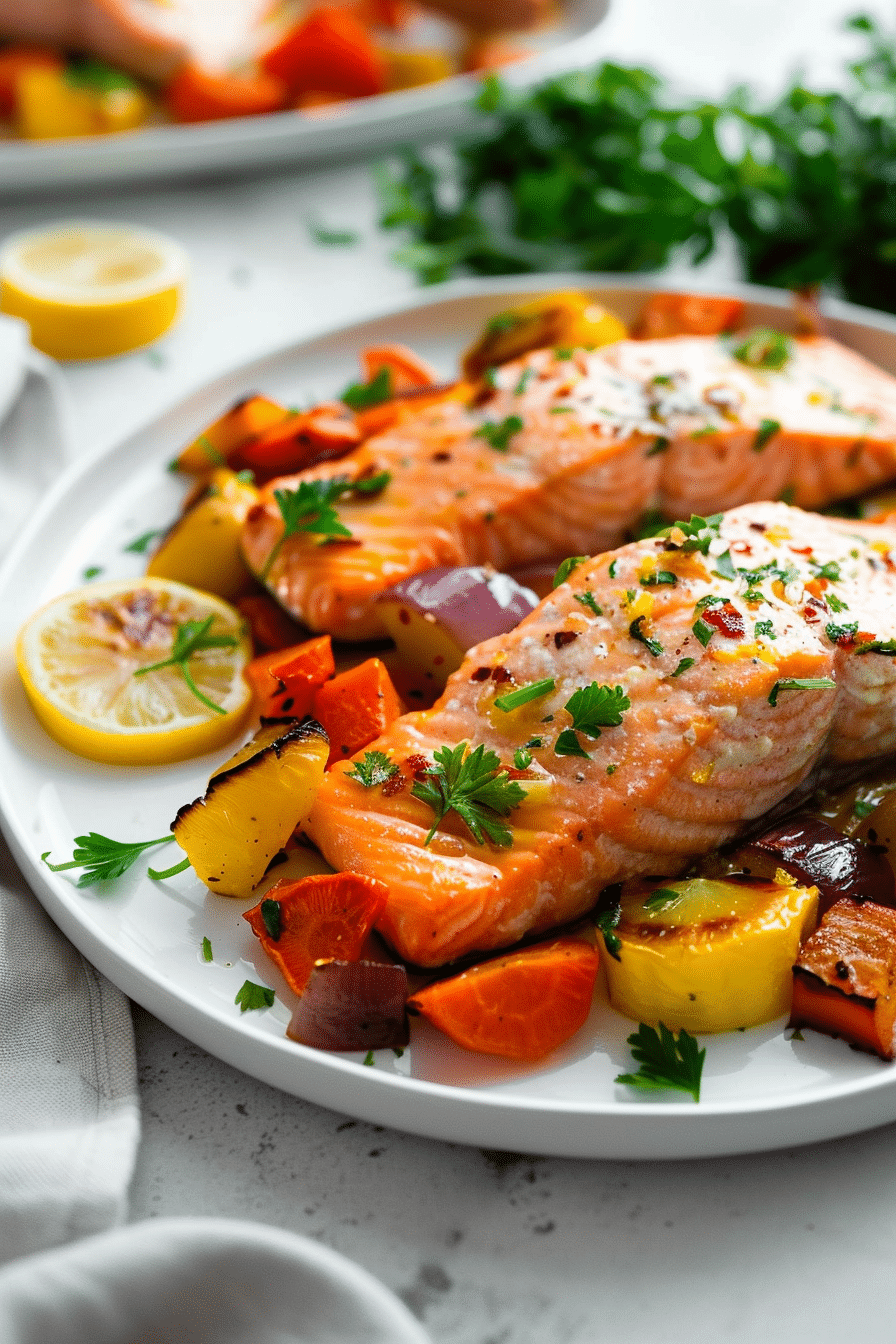
Sheet Pan Salmon with Vegetables: Easy, Healthy, and Flavor-Packed Dinner
Sheet pan salmon with vegetables is one of the easiest ways to get a colorful, nutrient-dense dinner on the table without sacrificing flavor or spending hours in the kitchen. Because everything roasts together on one pan, this meal offers a perfect balance of flaky salmon, caramelized veggies, and a bright, zesty finish. Even better, a sheet pan dinner means less cleanup, fewer dishes, and more time to relax or prep something refreshing on the side, like a light drink or salad.
If you love quick but wholesome recipes, you’ll find this one just as satisfying as a vibrant strawberry banana smoothie or a hearty salad bowl. In this guide, you’ll learn not only how to make a flawless sheet pan salmon with vegetables, but also how to customize it for different diets, flavor profiles, and seasons. We’ll cover everything from choosing your salmon and vegetables, to mastering marinades and timing, to storing leftovers and turning them into completely new meals the next day.
Table of Contents
Why Sheet Pan Salmon with Vegetables Belongs in Your Weekly Rotation
The One-Pan Magic: Convenience Without Compromise
Sheet pan salmon with vegetables delivers a powerful combination of simplicity and nutrition that fits perfectly into busy weeknights. Instead of juggling multiple pots and pans, you toss everything, salmon fillets, chopped vegetables, and a quick marinade, onto a single baking sheet. This not only cuts down on hands-on cooking time but also means you can prep, season, and slide the pan into the oven in under 15 minutes. While it roasts, you are free to tidy up, prepare a fast side like a citrus fennel avocado winter salad, or simply unwind.
Despite the simplicity, roasting intensifies flavors: vegetables become sweeter and more complex, and salmon turns tender with crisp edges. Plus, the even heat of the oven makes it easier to avoid overcooking, something that can be tricky on the stovetop. When a recipe hits that sweet spot of easy, flavorful, and nourishing, it quickly earns a permanent spot in your meal plan.
A Nutritional Powerhouse on a Pan
Beyond convenience, sheet pan salmon with vegetables offers impressive health benefits. Salmon provides high-quality protein and is rich in omega‑3 fatty acids, which support heart, brain, and joint health. When you surround it with colorful vegetables, like broccoli, bell peppers, carrots, Brussels sprouts, and cherry tomatoes, you layer in fiber, antioxidants, vitamins A, C, and K, and minerals such as potassium and magnesium. Roasting at a moderate temperature preserves many of these nutrients while enhancing taste and texture. You can also control the fat quality by using heart-healthy oils like extra-virgin olive oil or avocado oil.
If you’re trying to balance blood sugar or maintain a healthy weight, this meal’s combination of lean protein, fiber, and healthy fats helps keep you satisfied. For an extra nutrition boost, pair it with a whole-grain side or a wholesome salad like a warm lentil and roasted vegetable salad to turn dinner into an even more complete, plant-forward feast.
Print
Sheet Pan Salmon with Vegetables
Description
This sheet pan salmon with vegetables is an easy, healthy one-pan dinner made with flaky salmon, colorful roasted vegetables, and a bright lemon garlic marinade.
Ingredients
4 salmon fillets, about 6 oz each
3 cups broccoli florets
2 cups carrots, thinly sliced
1 red bell pepper, sliced
1 cup cherry tomatoes
3 tablespoons olive oil
2 tablespoons fresh lemon juice
3 garlic cloves, minced
1 tablespoon Dijon mustard
1 tablespoon honey or maple syrup
Salt and black pepper, to taste
Fresh parsley or dill, for garnish
Lemon wedges, for serving
Instructions
Preheat oven to 400°F and line a large sheet pan with parchment paper.
Whisk olive oil, lemon juice, garlic, Dijon mustard, honey, salt, and black pepper.
Toss vegetables with half of the marinade and spread them on the sheet pan.
Roast vegetables for 10 to 12 minutes.
Pat salmon fillets dry and brush with the remaining marinade.
Nestle salmon among the vegetables on the sheet pan.
Roast for 12 to 15 minutes, or until salmon is flaky and cooked through.
Let rest for 5 minutes.
Garnish with fresh herbs and serve with lemon wedges.
Notes
Use salmon fillets of similar thickness for even cooking.
Give dense vegetables like carrots or potatoes a head start before adding salmon.
Do not overcrowd the sheet pan or the vegetables will steam instead of roast.
Store leftovers in an airtight container for up to 3 days.
Reheat gently or enjoy leftover salmon cold over salads or grain bowls.
Choosing the Best Salmon for Sheet Pan Dinners
Fresh vs. Frozen: What Really Matters
When making sheet pan salmon with vegetables, you can use either fresh or frozen salmon with great results as long as you handle it correctly. Fresh salmon should smell clean and mild, never fishy, with firm, moist flesh and vibrant color. If you cannot cook it within a day or two, freezing is better than letting it sit too long. Frozen salmon can be just as nutritious and flavorful because it is often frozen soon after harvest.
To use frozen fillets, thaw them safely in the fridge overnight or in a sealed bag submerged in cold water for about 30–45 minutes, changing the water as needed. Pat the fillets very dry before seasoning to help the surface caramelize and prevent steaming. Thickness matters more than whether the fish was fresh or frozen: try to choose fillets of similar size so they cook at the same rate. That consistency makes timing easier and helps you avoid overcooked or underdone pieces.
Wild-Caught vs. Farmed and Skin-On vs. Skinless
You’ll often see wild-caught and farmed salmon options, and both can work for sheet pan salmon with vegetables. Wild-caught salmon tends to be leaner, with a deeper, more pronounced flavor and a firmer texture. Farmed salmon is usually milder and higher in fat, which can make it more forgiving and juicy, especially for beginner cooks. Choose what fits your taste, budget, and sustainability preferences, but aim for reputable sources. Skin-on fillets have specific advantages for sheet pan recipes.
The skin acts as a protective barrier between the high heat of the pan and the delicate flesh, helping prevent dryness. It also crisps up beautifully if you roast at a slightly higher temperature toward the end. You can always slide a spatula between the skin and flesh after cooking if you prefer not to eat the skin. Skinless fillets are perfectly fine too; just make sure to oil both sides and avoid overcooking, since there is no natural barrier to shield them from direct heat.
Picking and Prepping Vegetables That Roast Perfectly
Best Vegetables for Roasting with Salmon
The key to a successful sheet pan salmon with vegetables is choosing veggies that can handle the same general cooking time as salmon or can be staggered into the oven. Salmon usually cooks in 12–18 minutes at 400–425°F (204–218°C) depending on thickness, so you want vegetables that either roast quickly or can go into the oven a bit earlier. Great options include broccoli florets, green beans, thinly sliced carrots, bell peppers, zucchini, asparagus, cherry tomatoes, and red onion wedges.
Root vegetables like potatoes or sweet potatoes work well too, but they need a head start because they take longer to soften and brown. To keep everything balanced, you can roast sturdier vegetables for 10–15 minutes first, then add the salmon and delicate veggies. Mix colors for visual appeal, orange carrots, green broccoli, red peppers, and purple onions make the tray feel abundant and festive. This approach makes it easy to create a full, restaurant-worthy plate in one pan.
How to Cut and Season Vegetables for Even Cooking
Even cooking starts with even cutting. For sheet pan salmon with vegetables, chop sturdier veggies like carrots, potatoes, and Brussels sprouts into smaller pieces so they finish in roughly the same time as the salmon. For example, slice carrots into thin coins or sticks, cut small potatoes into halves or quarters, and halve Brussels sprouts. Softer vegetables such as zucchini, bell peppers, and asparagus can remain in larger pieces because they cook faster. Toss the vegetables in a bowl with olive oil, salt, pepper, and any herbs or spices before spreading them out on the pan.
Crowding leads to steaming rather than roasting, so give them some breathing room. You can also season different corners of the pan differently, smoky paprika on one side, Italian herbs on another, to create variety in a single meal. Finally, remember that salt draws moisture out and helps caramelization, so don’t be shy, but taste and adjust at the end to prevent oversalting.
Marinades and Seasonings for Maximum Flavor
Simple Everyday Marinade for Sheet Pan Salmon with Vegetables
A quick marinade turns basic sheet pan salmon with vegetables into a crave-worthy dinner. You don’t need anything complicated. A classic, versatile blend includes olive oil, lemon juice, minced garlic, Dijon mustard, salt, pepper, and a touch of honey or maple syrup to balance acidity. This combination highlights the natural richness of salmon while adding a bright, tangy layer of flavor. Whisk the ingredients in a small bowl, then pour half over the salmon and half over the vegetables.
Because fish is delicate, you only need to marinate salmon for 15–30 minutes; any longer and the acids can start to change the texture. If you are short on time, simply brush the marinade on just before roasting and it will still infuse plenty of taste. Use fresh herbs like parsley or dill after cooking to keep their flavor vibrant, while dried herbs such as oregano, thyme, or basil work well in the marinade itself since they stand up to the heat.
Global Flavor Variations to Keep Things Exciting
Once you master a basic sheet pan salmon with vegetables, you can easily explore global flavor profiles without changing the cooking method. For a Mediterranean twist, use olive oil, lemon zest, garlic, oregano, and a sprinkle of feta cheese added after roasting. Pair with vegetables like cherry tomatoes, red onion, zucchini, and bell peppers. For an Asian-inspired version, combine low-sodium soy sauce or tamari, sesame oil, grated ginger, garlic, and a bit of honey, and serve with broccoli, snap peas, and carrots.
A smoky Southwestern version might feature chili powder, cumin, smoked paprika, lime juice, and cilantro, along with sweet potatoes, corn, and red peppers. These variations allow you to enjoy sheet pan salmon with vegetables multiple times a month without it ever feeling repetitive. If you like hearty sides with bold flavors, you can also complement these variations with something vibrant like a healthy Asian carrot salad for a fresh crunch on the table.
Step-by-Step Method for Perfect Sheet Pan Salmon with Vegetables
Preparing the Pan, Salmon, and Vegetables
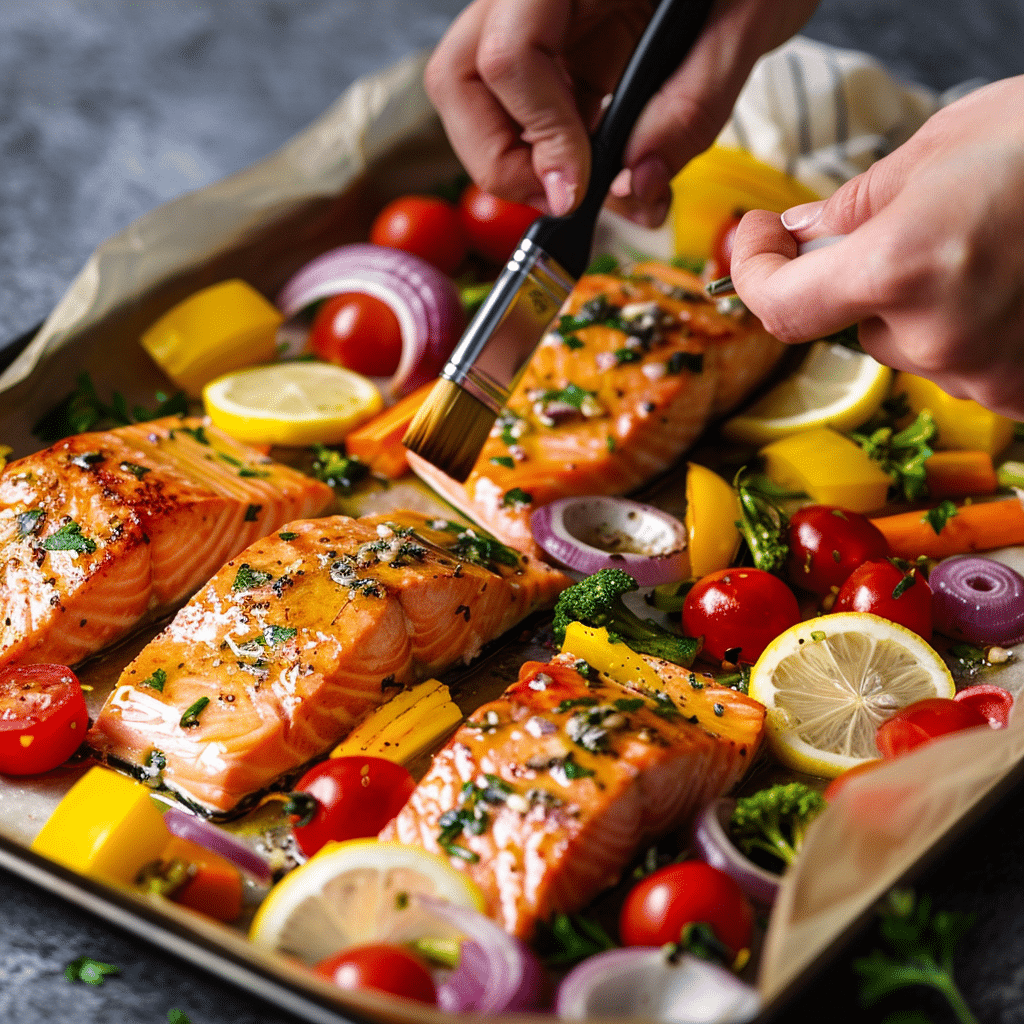
To make restaurant-quality sheet pan salmon with vegetables, start with the right pan. Use a large, heavy-duty rimmed baking sheet so there’s enough space for everything to roast in a single layer. Line it with parchment paper for easier cleanup and to prevent sticking, or lightly oil the surface if you prefer direct contact for extra browning. Preheat your oven to 400–425°F (204–218°C), depending on how quickly you want things to brown. While the oven heats, pat your salmon fillets completely dry with paper towels, then season them with salt, pepper, and perhaps a light drizzle of olive oil or a prepared marinade.
Toss your chopped vegetables in a bowl with oil and seasonings until everything is evenly coated. Spread the vegetables on the sheet pan first in a single layer, leaving space for the salmon, which you’ll add later or place on top if quick-roasting vegetables are used. This simple setup ensures everything roasts rather than steams and helps build those caramelized edges that make the dish so satisfying.
Timing, Doneness, and Avoiding Overcooked Salmon
Cooking time is where many people go wrong with sheet pan salmon with vegetables. Generally, salmon takes about 4–6 minutes per half-inch of thickness at 400–425°F. Most center-cut fillets are 1–1¼ inches thick, so they need roughly 12–16 minutes. If your vegetables are denser, give them a 10–15 minute head start in the oven before adding the salmon. To check doneness, use an instant-read thermometer inserted into the thickest part of a fillet; aim for 125–130°F (52–54°C) for moist, tender salmon that will carryover-cook slightly once removed from the oven.
Alternatively, gently press the fish with a fork; it should just begin to flake but still look slightly translucent in the center. If some fillets are thinner, you can remove them from the pan earlier and let thicker ones cook a couple of minutes longer. Rest the salmon for 5 minutes before serving to let juices redistribute, keeping every bite succulent and flavorful.
Sample Recipe and Ingredient Guide
Basic Sheet Pan Salmon with Vegetables Recipe
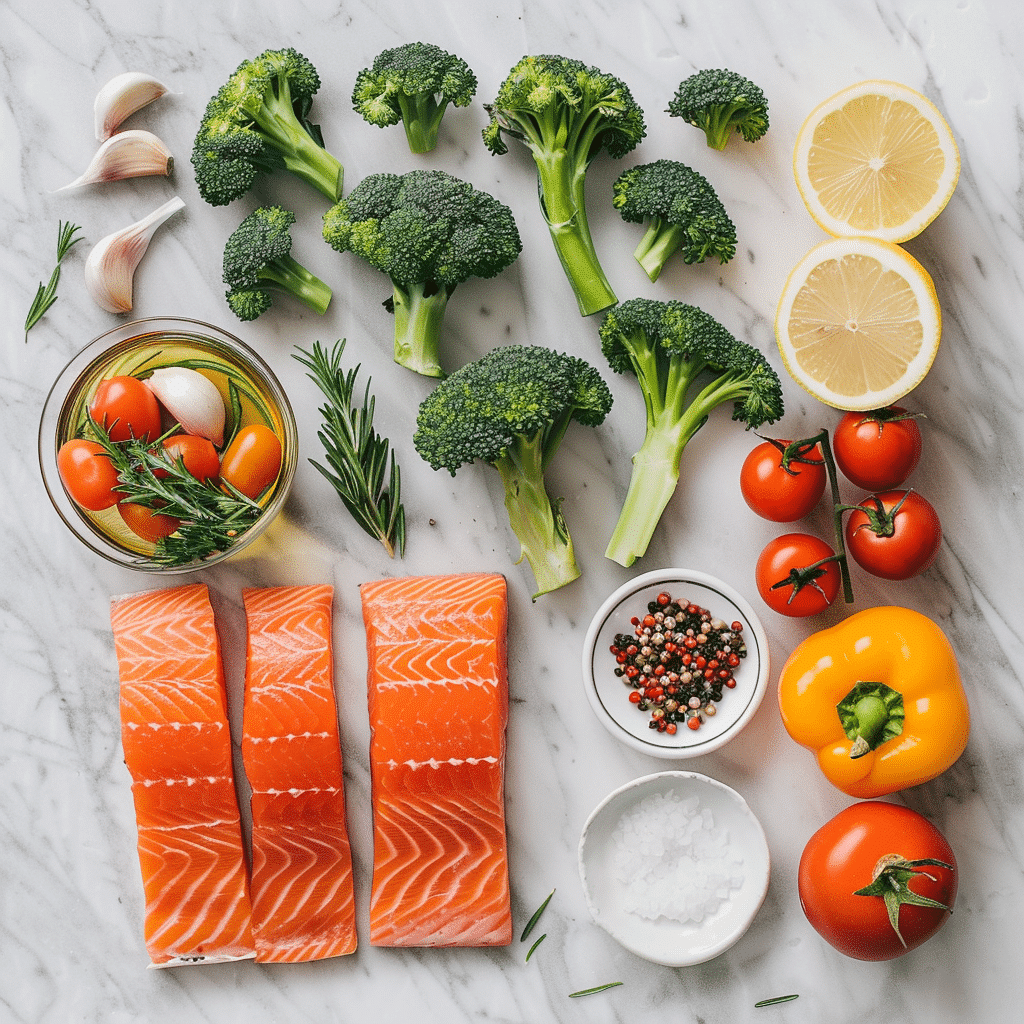
To make a classic sheet pan salmon with vegetables, you can follow this simple ingredient blueprint and adjust to taste. Use it as a base, then customize the seasonings, veggies, and garnishes.
| Ingredient | Amount |
|---|---|
| Salmon fillets (skin-on, 6 oz each) | 4 |
| Broccoli florets | 3 cups |
| Carrots, thinly sliced | 2 cups |
| Red bell pepper, sliced | 1 large |
| Olive oil | 3–4 tbsp |
| Lemon juice | 2 tbsp |
| Garlic, minced | 3 cloves |
| Dijon mustard | 1 tbsp |
| Honey or maple syrup | 1 tbsp |
| Salt and black pepper | To taste |
| Fresh parsley or dill, chopped | 2–3 tbsp |
You can swap in other vegetables like green beans, zucchini, or cherry tomatoes, and adjust amounts to fit your pan. Just keep the total volume similar so the pan doesn’t get overcrowded while roasting.
Stepwise Cooking Instructions
To cook this version of sheet pan salmon with vegetables, first preheat your oven to 400°F (204°C). Line a large baking sheet with parchment paper. In a small bowl, whisk olive oil, lemon juice, garlic, Dijon, honey, salt, and pepper. Place the vegetables in a mixing bowl, pour about half the marinade over them, and toss to coat. Spread them onto the prepared sheet pan in a single layer. Roast for 10–12 minutes to give them a head start. Meanwhile, pat salmon fillets dry, season lightly with salt and pepper, and brush with the remaining marinade.
After the vegetables’ initial roast, remove the pan, make spaces, and nestle the salmon among the veggies. Return the pan to the oven and roast for 12–15 minutes, depending on thickness, until the salmon is just cooked through. Let everything rest for 5 minutes, then sprinkle with fresh parsley or dill and serve with lemon wedges for squeezing over the top.
Nutritional Benefits and Healthy Pairings
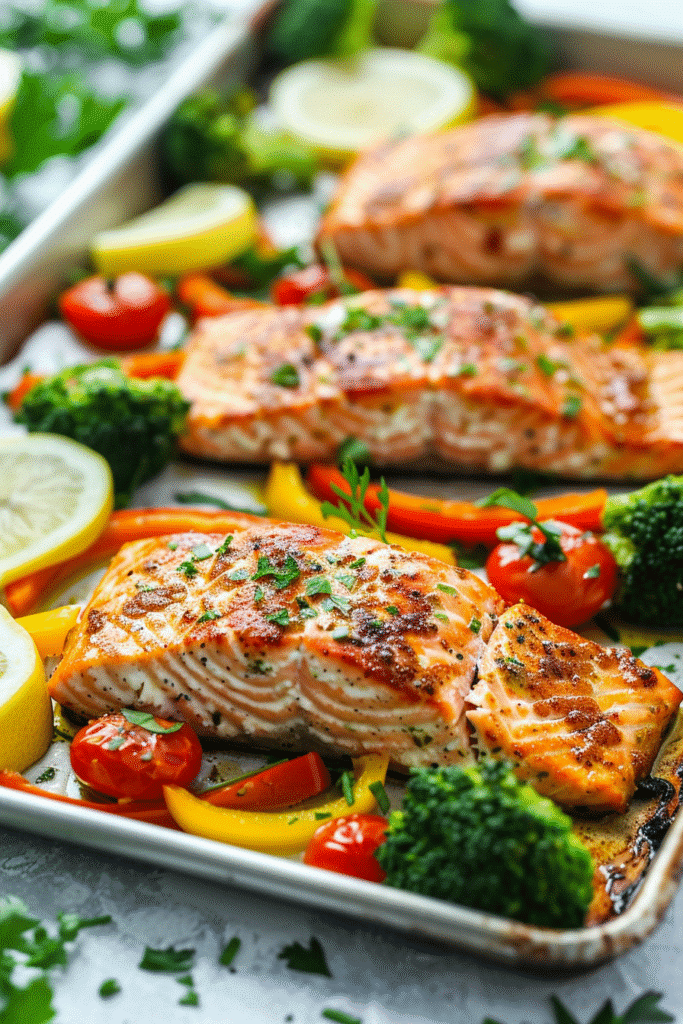
Why Sheet Pan Salmon with Vegetables Fits Many Diets
Sheet pan salmon with vegetables naturally fits into many popular eating patterns because it emphasizes whole foods, lean protein, and plenty of produce. For people following a Mediterranean diet, the combination of fatty fish, olive oil, and colorful vegetables aligns perfectly with heart-healthy guidelines. Those eating low-carb, keto, or paleo can easily skip starchy sides and focus on non-starchy vegetables and salmon, perhaps adding extra olive oil or avocado for more healthy fats.
If you’re prioritizing anti-inflammatory foods, omega‑3-rich salmon, cruciferous vegetables like broccoli and Brussels sprouts, and alliums such as garlic and onion make a powerful combination. You can also adjust sodium by using herbs, spices, citrus, and aromatic ingredients instead of relying on heavy sauces. Compared with battered, fried, or overly creamy dishes, this one-pan meal keeps things light yet deeply satisfying, making it easier to maintain long-term healthy habits without feeling deprived.
Smart Side Dishes and Complementary Recipes
Although sheet pan salmon with vegetables is nearly a complete meal by itself, you can round it out with smart sides that add texture and extra nutrients. For a fresh contrast, pair it with a crisp salad such as a panzanella salad or a tangy kale salad. These salads bring in whole grains or leafy greens, plus acidity to cut through the richness of the salmon. On cooler nights, serve the sheet pan salmon over warm quinoa, brown rice, or wild rice for more fiber and a nutty base that soaks up the pan juices.
A simple yogurt sauce with lemon and herbs also works nicely for a creamy yet light element. If you love variety on the table, complement the roasted flavors with a chilled option like a wellness shot juice to add a spicy ginger or citrus kick. These thoughtful pairings turn a straightforward tray bake into a full, balanced dinner that tastes like far more effort than it actually requires.
Make-Ahead, Meal Prep, and Leftover Ideas
Meal Prepping Sheet Pan Salmon with Vegetables
Sheet pan salmon with vegetables works brilliantly for meal prep as long as you pay attention to storage and reheating. You can prep components ahead by chopping vegetables, mixing your marinade, and portioning salmon fillets. Store each separately in the fridge for up to 24 hours, then assemble and bake when you’re ready. If you want to cook in advance, roast everything, let it cool, and portion into airtight containers with a balance of salmon and vegetables. Refrigerate for up to 3 days.
When reheating, use a low oven—around 275–300°F (135–149°C)—for 10–12 minutes to warm the salmon gently without drying it out. Alternatively, you can flake cold salmon and enjoy it over salads, grain bowls, or tucked into wraps, which avoids reheating fish altogether. This flexibility makes it easy to turn one cooking session into several lunches or quick dinners throughout the week.
Creative Ways to Repurpose Leftovers
Leftover sheet pan salmon with vegetables doesn’t need to feel like a repeat. You can transform it into entirely new meals with minimal effort. Flake the salmon and serve it over greens with extra roasted vegetables to create a satisfying salad similar in spirit to a hearty steak salad, but lighter and seafood-focused. Combine leftover salmon with cooked quinoa, herbs, and a spoonful of yogurt or mayo to make salmon cakes; pan-sear them until crisp and serve with a lemony slaw.
The roasted vegetables can be folded into omelets, added to pasta, or mixed into a warm grain bowl with a drizzle of tahini or pesto. For something comforting yet wholesome, toss the salmon and veggies with whole-grain pasta, olive oil, garlic, and a squeeze of lemon. These repurposing ideas reduce food waste, keep meals interesting, and stretch your budget by giving one sheet pan dinner multiple delicious lives.
Common Mistakes and Advanced Tips
Mistakes to Avoid When Making Sheet Pan Salmon with Vegetables
Even a straightforward recipe like sheet pan salmon with vegetables has a few common pitfalls you can easily avoid. The first is overcrowding the pan; when vegetables are piled on top of each other, they steam instead of roast, leading to soggy textures and dull flavors. Use a large pan or two smaller ones if needed. Another mistake is mismatched cooking times, adding salmon and dense vegetables like potatoes at the same moment can leave you with undercooked roots or overcooked fish.
Instead, give sturdier vegetables a head start. Many cooks also forget to pat salmon dry, which prevents good browning and can create a watery pan. Over-marinating with acidic ingredients is another issue, because it can make the salmon mushy. Finally, people often skip resting time; giving salmon a few minutes off-heat lets juices redistribute and helps maintain a tender, flaky texture when you cut into it.
Pro Tips to Elevate Flavor and Presentation
To take your sheet pan salmon with vegetables from everyday to impressive, use a few advanced tricks. First, consider finishing with a high-heat blast or quick broil for 1–2 minutes at the end of cooking to crisp the salmon edges and caramelize the vegetables. Watch closely so nothing burns. Second, layer flavors by adding fresh elements after roasting, herbs, lemon zest, a drizzle of good-quality olive oil, or a spoonful of pesto can brighten the entire dish. Third, think about color contrast and placement: arrange vegetables in sections or stripes and nestle salmon fillets attractively among them for a tray that looks as good as it tastes.
You can also offer simple sauces on the side, like a garlic yogurt sauce, tahini-lemon drizzle, or salsa verde. For a holiday-ready twist, try pairing roasted salmon and veggies with a jewel-toned side such as a cranberry apple quinoa winter salad to create a stunning, celebratory spread.
Frequently Asked Questions About Sheet Pan Salmon with Vegetables
How long does it take to cook sheet pan salmon with vegetables?
Cooking time for sheet pan salmon with vegetables depends largely on the thickness of your salmon and the type of vegetables you choose. In general, at 400–425°F (204–218°C), most salmon fillets that are about 1–1¼ inches thick cook in 12–16 minutes. However, many vegetables, especially dense ones like potatoes or thick carrot pieces, need longer to become tender and caramelized. The simplest strategy is to roast sturdier vegetables for 10–15 minutes first, then add the salmon and any quick-cooking vegetables like asparagus or bell peppers. Altogether, you’ll often spend around 25–30 minutes of oven time. Always check salmon with a thermometer or by flaking gently to avoid overcooking.
Can I use frozen salmon and vegetables?
You can absolutely use frozen salmon and even frozen vegetables for sheet pan salmon with vegetables, as long as you handle them properly. For the best texture, thaw salmon fully before cooking. Place fillets in the refrigerator overnight or use the cold-water method if you’re short on time, then pat them very dry to remove excess moisture. With vegetables, some frozen options like broccoli, green beans, or mixed veggies can go directly onto the pan, but they release water as they cook. This can lead to more steaming and less browning, so spread them out well and roast at a slightly higher temperature. You might also pre-roast the frozen vegetables alone for a few minutes to evaporate excess moisture before adding salmon. While fresh ingredients usually brown better, frozen ones still offer a practical, budget-friendly route to a healthy one-pan dinner.
What vegetables go best with sheet pan salmon?
Many vegetables pair well with sheet pan salmon with vegetables, and your choice can change with the seasons. For a classic combination, try broccoli florets, thinly sliced carrots, bell peppers, and red onion. Asparagus and green beans also cook quickly and complement salmon’s richness. In cooler months, Brussels sprouts, cauliflower, and cubes of sweet potato or butternut squash bring cozy, caramelized flavors, though they benefit from a head start in the oven. Cherry tomatoes add juiciness and color, especially in Mediterranean-style versions. Aim for a mix of textures—some softer, some crisp-tender—and color contrast for a visually appealing tray. Just keep the pieces relatively uniform in size so they roast evenly, and adjust timing by starting denser vegetables earlier before adding delicate ones and the salmon fillets.
Is sheet pan salmon with vegetables good for meal prep?
To keep salmon moist in sheet pan salmon with vegetables, focus on a few key steps. First, avoid overcooking; use an instant-read thermometer and pull the fish from the oven when it reaches 125–130°F (52–54°C) in the thickest part, allowing for a little carryover cooking. Second, use a light coating of oil or a marinade that includes some fat, such as olive oil, which helps lock in moisture and encourages browning. Cooking at a moderate-to-high temperature, around 400–425°F, allows the outside to brown while the inside cooks quickly, limiting drying. Keeping the skin on can also help protect the delicate flesh from direct heat. Finally, let the salmon rest for 5 minutes once it comes out of the oven so juices redistribute instead of running out when you cut or flake the fillets.
What can I serve with sheet pan salmon to make it a full meal?
Sheet pan salmon with vegetables is nearly a complete meal on its own, but you can add a few sides to make it even more satisfying. For a light, refreshing option, serve it with a crisp salad such as a Brussels sprout salad or a bright Italian-style salad with olives and herbs. If you want more complex carbohydrates, spoon the salmon and roasted vegetables over quinoa, brown rice, or whole-wheat couscous to soak up the juices. A simple lemon-herb yogurt sauce or a dollop of hummus on the side adds creamy contrast without heavy calories. On chilly evenings, complimentary warm sides like whole-grain pasta tossed with olive oil and garlic or a rustic loaf of crusty bread turn the dish into a comforting spread suitable for company or family dinners alike.
Conclusion: Bringing Sheet Pan Salmon with Vegetables Into Your Routine
Sheet pan salmon with vegetables delivers everything most home cooks want from a weeknight dinner: speed, simplicity, and reliable, delicious results. With a single pan, a handful of pantry ingredients, and whatever fresh or frozen vegetables you have on hand, you can build an endlessly adaptable meal that supports heart health, balances macronutrients, and satisfies a wide range of dietary preferences.
By mastering a few basics, like pre-roasting dense vegetables, not overcrowding the pan, and pulling salmon at the right internal temperature, you’ll consistently turn out flaky fish and caramelized vegetables. From there, you can expand into global flavor variations, creative leftover transformations, and smart pairings with salads, grains, or soups. Over time, this flexible recipe can anchor your weekly meal plan alongside other wholesome favorites like a vibrant vegan Caesar salad, helping you build a repertoire of go-to meals that feel both nourishing and exciting.
For more amazing recipes inspirations, check out Pinterest.