
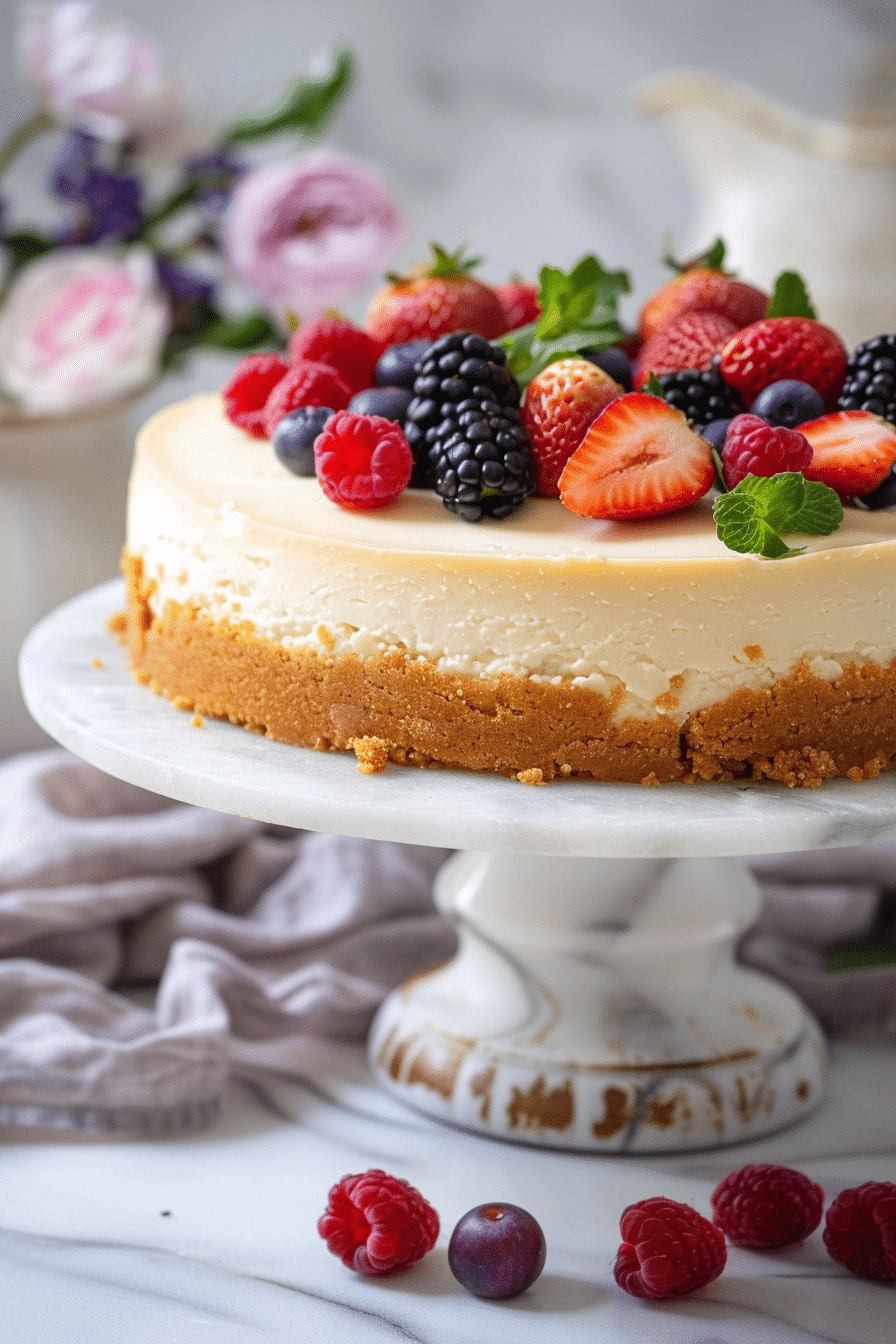
This classic baked cheesecake has a buttery graham cracker crust, a silky smooth filling, and the kind of rich vanilla flavor you’d expect from a bakery dessert. It’s surprisingly simple when you follow a few smart techniques, like a gentle baking temperature and a steam bath that keeps cracks away. Serve it plain, or dress it up with fresh berries or a bright sauce for holidays, birthdays, or any special dinner.
If you love balanced meals before a big dessert, pair this cheesecake with something light like my fresh summer salad for the perfect menu. Get ready for a show-stopping dessert that you can absolutely make at home.
Table of Contents
Why You’ll Love This Recipe
This cheesecake recipe is designed to be nearly foolproof, even if you’re new to baking. The filling is rich but not overly sweet, with a creamy texture that slices cleanly yet melts in your mouth. The crust stays crisp and buttery, offering just the right contrast to the smooth filling. You don’t need special equipment beyond a mixer and a springform pan, and there’s no fancy water bath setup, just a simple pan of hot water in the oven for steam. You can prep the cheesecake a day in advance, which makes entertaining easier.
It also pairs beautifully with lighter mains like sheet pan salmon with vegetables or a vibrant seafood salad.
Print
Classic Baked Cheesecake Recipe
Description
This classic baked cheesecake has a buttery graham cracker crust and a silky smooth creamy filling with rich vanilla flavor. A foolproof homemade dessert perfect for holidays, birthdays, and special dinners.
Ingredients
1 1/2 cups graham cracker crumbs
2 tablespoons granulated sugar
6 tablespoons unsalted butter, melted
32 oz cream cheese, softened
1 cup granulated sugar
1 cup sour cream
1/2 cup heavy cream
4 large eggs
2 teaspoons vanilla extract
1 tablespoon lemon juice
1/4 teaspoon fine sea salt
Fresh berries or fruit sauce for serving
Instructions
Preheat oven to 325°F.
Grease and line a 9-inch springform pan.
Mix graham cracker crumbs, sugar, and melted butter.
Press crust into pan and bake 8–10 minutes.
Place hot water pan in oven for steam.
Beat cream cheese until smooth.
Add sugar, sour cream, heavy cream, vanilla, lemon juice, and salt.
Mix in eggs one at a time on low speed.
Pour filling over cooled crust.
Bake 55–70 minutes until center slightly jiggles.
Turn off oven and cool cheesecake slowly inside oven.
Refrigerate at least 6 hours or overnight before slicing.
Notes
Use room-temperature ingredients for smooth batter.
Do not overmix the cheesecake filling.
Cooling slowly helps prevent cracks.
Best chilled overnight before serving.
Ingredients for Cheesecake
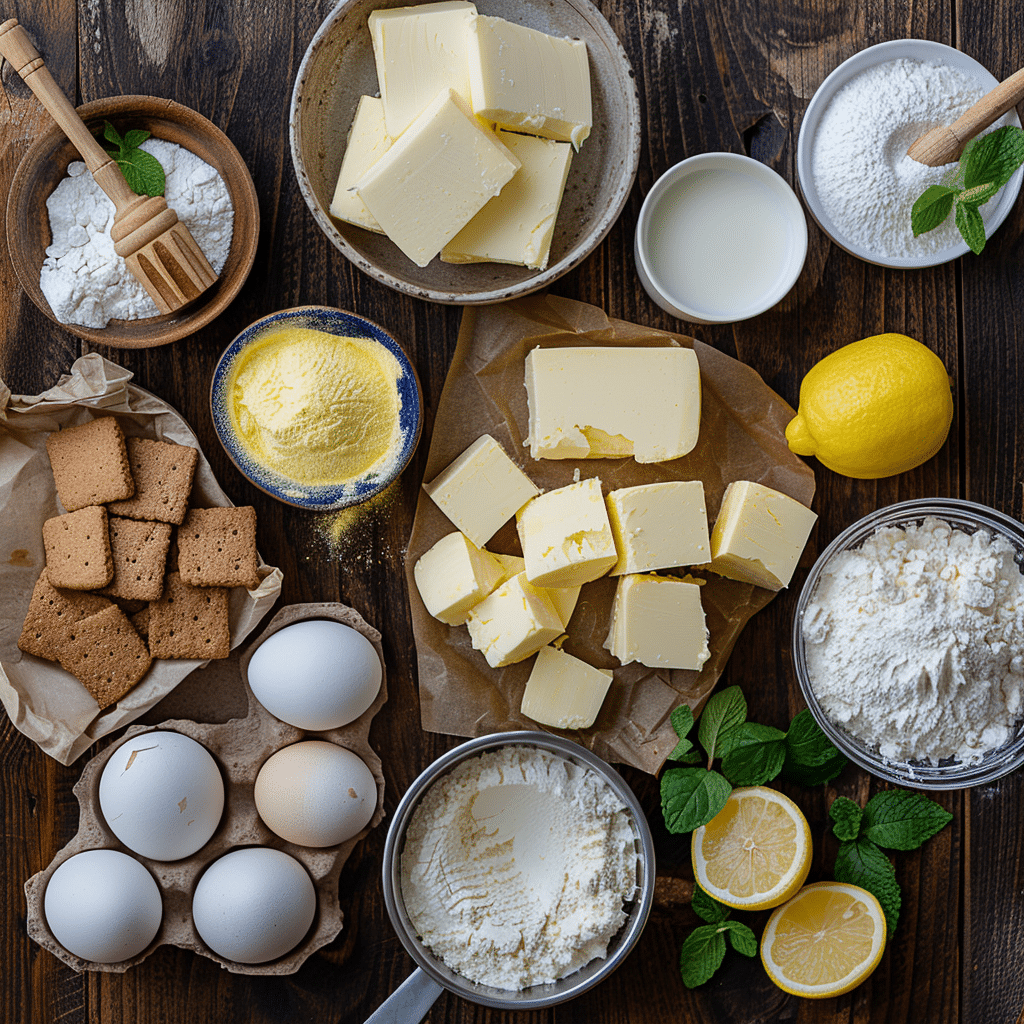
Here’s everything you need to make a classic, New York–style baked cheesecake with a graham cracker crust. Use full-fat ingredients for the best flavor and texture, and make sure the dairy is at room temperature so your batter turns out silky smooth.
| Ingredient | Amount |
|---|---|
| Graham cracker crumbs | 1 1/2 cups (about 12 full sheets) |
| Granulated sugar (for crust) | 2 tablespoons |
| Unsalted butter, melted | 6 tablespoons |
| Cream cheese, full-fat bricks, softened | 32 oz (4 x 8-oz blocks) |
| Granulated sugar (for filling) | 1 cup |
| Sour cream, room temperature | 1 cup |
| Heavy cream, room temperature | 1/2 cup |
| Large eggs, room temperature | 4 |
| Vanilla extract | 2 teaspoons |
| Fresh lemon juice | 1 tablespoon |
| Fine sea salt | 1/4 teaspoon |
| Optional: fresh berries or fruit sauce for serving | As desired |
How to Make Cheesecake Step by Step
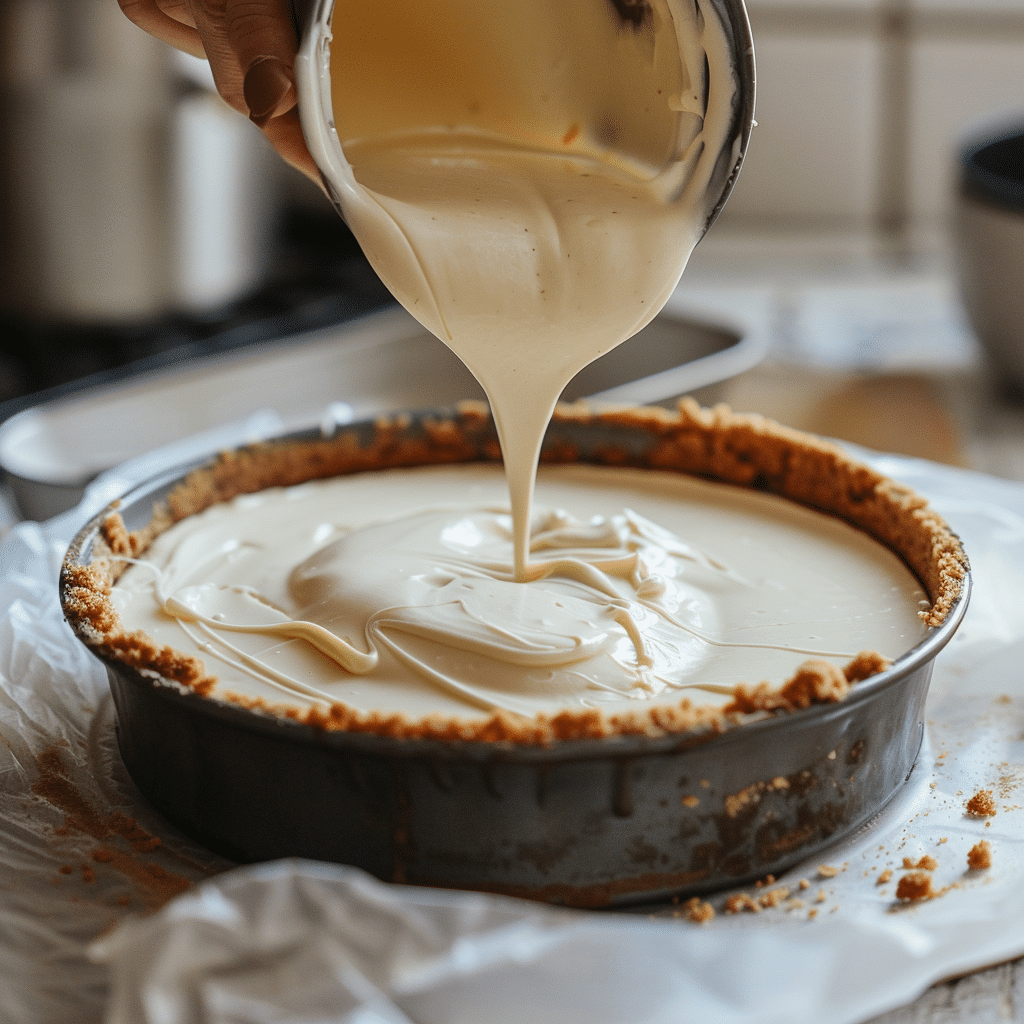
Take your time with each step and avoid rushing the mixing or cooling process. Cheesecake loves a gentle approach, low and slow baking, plus a gradual cool-down, give you a perfectly smooth, crack-free top and a creamy interior.
- Step 1: Prep the pan and crust. Preheat your oven to 325°F (163°C). Lightly grease a 9-inch springform pan and line the bottom with parchment paper. In a bowl, combine the graham cracker crumbs, 2 tablespoons sugar, and melted butter. Stir until the crumbs are evenly moistened and look like wet sand. Press firmly into the bottom of the pan, pushing the crumbs slightly up the sides. Use the bottom of a measuring cup to compact the crust so it bakes up crisp and sturdy.
- Step 2: Bake the crust and set up the oven. Bake the crust for 8–10 minutes, just until lightly golden and fragrant. Remove from the oven and let it cool while you prepare the filling. Place a large, oven-safe pan on the lowest rack of your oven and carefully pour in several cups of hot tap water. This creates steam that helps prevent cracks without fully submerging your cheesecake pan like a traditional water bath.
- Step 3: Make the creamy filling. In a large mixing bowl, beat the softened cream cheese on medium speed for 2–3 minutes until completely smooth, scraping down the sides and bottom. Add 1 cup sugar and beat again until fluffy. Mix in the sour cream, heavy cream, vanilla, lemon juice, and salt on low speed just until combined. Add the eggs one at a time, mixing on low after each addition until just incorporated. Do not overmix, you want a smooth batter without whipping in a lot of air bubbles.
- Step 4: Bake the cheesecake gently. Pour the filling over the cooled crust and smooth the top. Tap the pan gently on the counter to release any large air bubbles. Place the cheesecake on the middle rack, above the pan of water. Bake at 325°F for 55–70 minutes, or until the edges are set and the center still has a slight wobble about 2–3 inches wide. Avoid opening the oven too often; quick temperature changes can encourage cracks.
- Step 5: Cool slowly and chill overnight. When the cheesecake reaches that soft-set stage, turn off the oven, crack the door slightly, and let it sit inside for 45–60 minutes. Then bring the pan to a cooling rack and cool completely at room temperature. Once cool, cover and refrigerate for at least 6 hours, preferably overnight. Before serving, run a thin knife around the edge, release the springform, and slice with a hot, clean knife. Serve plain or with fresh berries, or alongside a bright side like mango slaw for a refreshing contrast.
Expert Tips
Common Mistakes
Most cheesecake problems come from rushing the process or using ingredients that aren’t at the right temperature. Cold cream cheese creates a lumpy batter that never fully smooths out, so always let it soften completely. Overmixing is another big issue; beating in too much air turns your cheesecake fluffy instead of creamy and can cause it to rise and fall, leading to cracks. Avoid baking at a higher temperature to “save time”, the edges will overbake before the center is set. Skipping the steam in the oven or chilling too soon can also create dramatic cracks.
Finally, resist cutting into the cheesecake before it has fully chilled. It needs that long rest in the fridge to firm up and develop its signature texture.
Variations
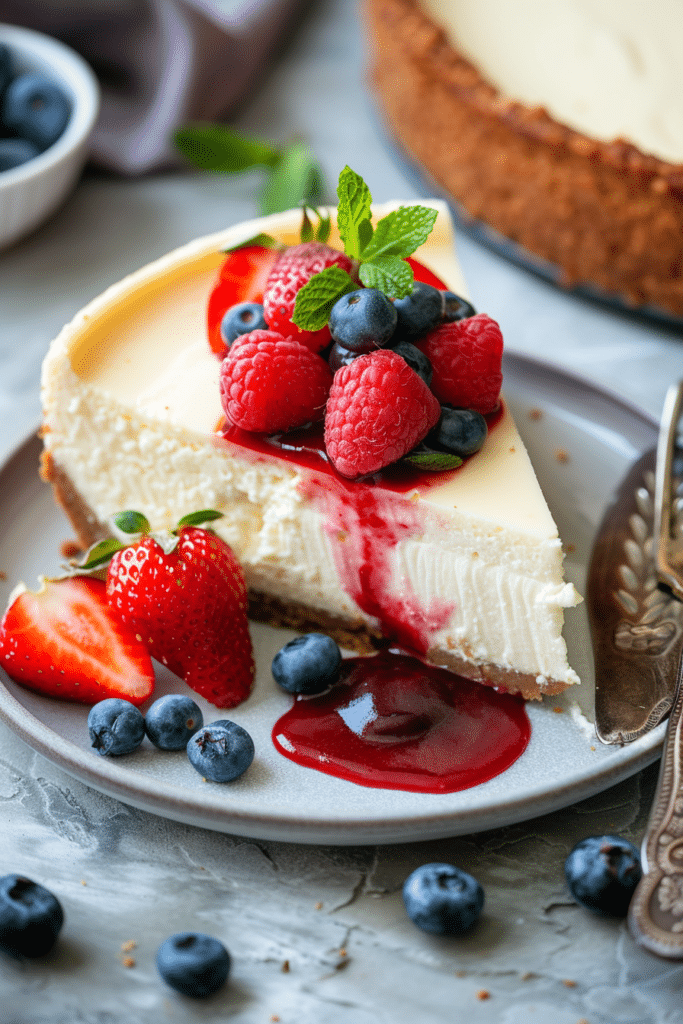
Once you’ve mastered this classic cheesecake, you can have fun with endless variations. Swirl 1/2 cup melted chocolate or fruit puree into the batter before baking for a marble effect. Add finely grated lemon or orange zest for a bright citrus version, or fold in mini chocolate chips for a fun twist. Top slices with macerated berries, salted caramel, or a simple fruit compote. You can also experiment with different crusts, try crushed chocolate cookies, ginger snaps, or even a nut-based crust. For a lighter meal before dessert, pair your cheesecake night with savory recipes like vegetarian spring rolls or a crisp vegan Caesar salad to balance the richness.
Storage Tips
| Storage | Time | Notes |
|---|---|---|
| Room temperature | Up to 2 hours | Only for serving; refrigerate promptly after. Avoid leaving cheesecake out longer for food safety. |
| Refrigerator | 4–5 days | Store covered in the springform pan or in an airtight container to prevent drying out and absorbing fridge odors. |
| Freezer (whole or slices) | Up to 2 months | Wrap tightly in plastic, then foil, or place in a freezer-safe container. Thaw overnight in the fridge before serving. |
FAQ
How do I know when my cheesecake is done?
The edges should look set and slightly puffed, while the center still has a gentle wobble about 2–3 inches wide when you jiggle the pan. It will finish setting as it cools and chills, so don’t wait for the center to look fully firm in the oven.
Why did my cheesecake crack on top?
Cracks usually come from overbaking, rapid temperature changes, or overmixing the batter. Using steam in the oven, cooling the cheesecake slowly inside the turned-off oven, and mixing on low speed until just combined all help prevent cracking.
Can I make cheesecake ahead of time?
Yes, cheesecake is actually better when made in advance. Bake it the day before you plan to serve, then chill overnight. You can also freeze it for up to 2 months and thaw it in the fridge. Add any fresh fruit toppings just before serving.
Can I use low-fat cream cheese?
You can, but the texture and flavor will be different. Full-fat cream cheese gives the richest, creamiest result. Low-fat versions tend to be softer and may not set as firmly, and they can sometimes taste slightly tangy or watery.
Do I really need a springform pan?
A springform pan makes removing and slicing cheesecake much easier because the sides release cleanly. In a pinch, you can use a deep 9-inch round pan lined with parchment, but serving will be trickier and you may need to cut and lift slices more carefully.
Conclusion
This classic baked cheesecake proves that a bakery-worthy dessert is totally doable in your own kitchen. With a crisp buttery crust, a smooth, tangy-sweet filling, and a gentle baking method, you’ll get beautiful slices every time. Take it slow with the mixing, baking, and cooling, and your patience will pay off in a rich, creamy texture that feels special enough for holidays and simple enough for a weekend treat. Serve it after a light dinner like Italian pasta salad or alongside brunch favorites such as fluffy homemade pancakes. Once you master this base recipe, you can play with toppings and flavors to make it your own signature cheesecake.
For more seasonal inspirations, check out my Pinterest.