
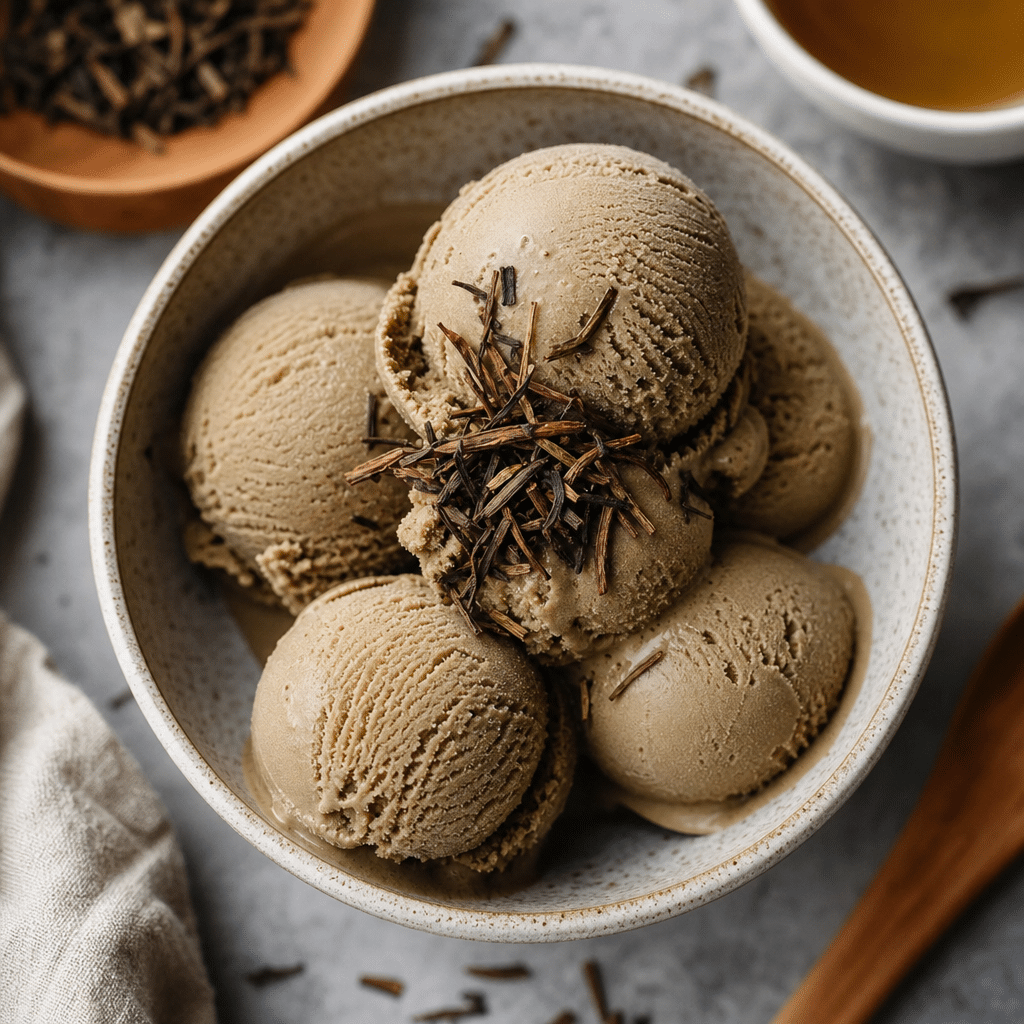
If you’ve never tried hojicha ice cream, you’re in for a treat that’s equal parts cozy and unexpected. Hojicha is a roasted Japanese green tea with a warm, toasty flavor that’s a world away from the grassy sharpness of matcha, and it turns out to be an absolutely stunning base for homemade ice cream. This hojicha ice cream recipe uses a classic French custard method to create a rich, velvety texture that lets the tea’s nutty, caramel-like notes shine through. Whether you’re already a fan of hojicha lattes or you’re simply looking for a new twist on frozen desserts, this recipe is easier than it sounds.
We’ll walk through everything from choosing the right hojicha powder to troubleshooting a custard that won’t thicken, so you can end up with a pint of homemade ice cream that tastes like it came from a specialty tea shop. Grab your ice cream maker (or a loaf pan, if you don’t have one) and let’s get started.
4
servings30
minutes40
minutes300
kcalIngredients
2 cups whole milk
1 cup heavy cream, divided
3/4 cup granulated sugar, divided
4 large egg yolks
3 tablespoons hojicha powder
1 teaspoon vanilla extract
1/4 teaspoon fine sea salt
Directions
- In a heavy-bottomed saucepan, combine the whole milk, half of the heavy cream, half of the sugar, and the hojicha powder. Heat over medium, whisking often, until steaming but not boiling.
- In a separate bowl, whisk the egg yolks with the remaining sugar until pale and slightly thickened.
- Slowly pour about a third of the hot milk mixture into the egg yolks while whisking constantly to temper them.
- Pour the tempered yolk mixture back into the saucepan and cook over low heat, stirring constantly, until the custard thickens enough to coat the back of a spoon, about 5 to 8 minutes.
- Strain the custard through a fine mesh sieve into a clean bowl to remove any bits of cooked egg.
- Stir in the remaining heavy cream, vanilla extract, and salt. Cover and refrigerate for at least 4 hours or overnight.
- Pour the chilled base into an ice cream maker and churn according to the manufacturer’s instructions, about 20 to 25 minutes, until it reaches a soft-serve consistency.
- Transfer to an airtight container, press parchment paper directly onto the surface, and freeze for at least 4 hours until firm before scooping and serving.
What Is Hojicha, And Why Does It Make Great Ice Cream?
Hojicha is a Japanese green tea that has been roasted at high heat over charcoal or in a special roasting pan, which transforms its color from bright green to a deep reddish-brown. This roasting process also changes the flavor dramatically, mellowing out the bitterness and caffeine content found in unroasted green teas like sencha or matcha. Instead, hojicha delivers warm, toasty notes reminiscent of roasted grains, caramel, and even a hint of chocolate.
Hojicha has been enjoyed in Japan since the 1920s, when tea merchants in Kyoto began roasting lower-grade tea leaves and stems as a way to reduce waste while creating something genuinely delicious. It quickly became a household staple, prized for being gentle on the stomach and low in caffeine, making it a popular choice for children and evening drinking alike.
Those same roasted, dessert-like qualities are exactly what make a hojicha ice cream recipe so appealing. The tea’s natural sweetness and toasty depth pair beautifully with a rich dairy custard, creating a flavor that feels both comforting and sophisticated. It’s less polarizing than matcha for people who find green tea desserts too bitter, yet it still delivers that distinct Japanese tea shop experience.
Why You’ll Love This Recipe
This hojicha ice cream recipe strikes a great balance between approachable and impressive. It uses a traditional custard base, which means it churns up incredibly smooth and scoopable, without the icy texture you sometimes get from simpler no-churn recipes.
The flavor is genuinely unique. Most people have never tasted a roasted tea ice cream before, so serving this at a dinner party or family gathering is a guaranteed conversation starter.
It’s also a fantastic make-ahead dessert. Because ice cream needs time to chill and freeze anyway, you can prepare the entire base a day or two in advance and simply churn it when you’re ready to serve.
Ingredients You’ll Need
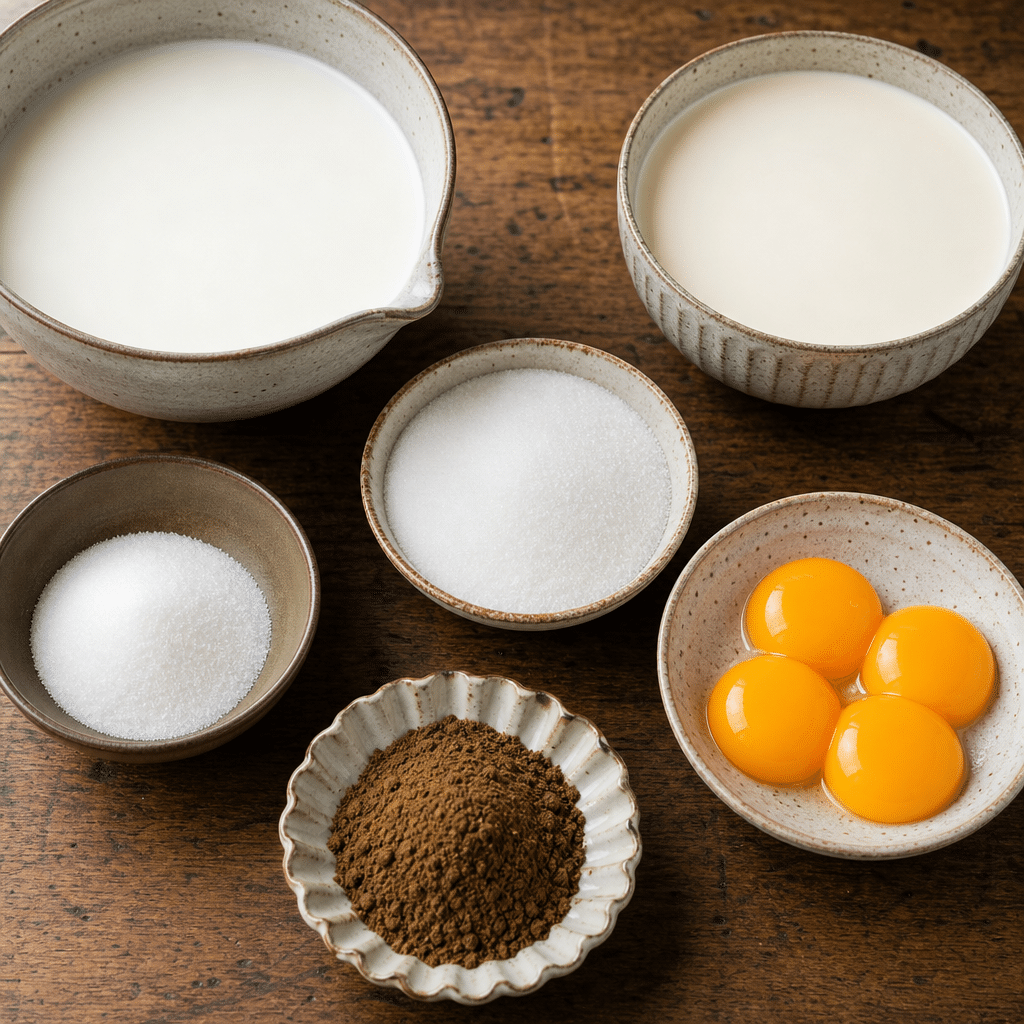
The ingredient list for this hojicha ice cream recipe is short and mostly made up of pantry and refrigerator staples, with the hojicha powder being the one specialty item you’ll need to source. Look for culinary-grade hojicha powder at Asian grocery stores, specialty tea shops, or online retailers that sell Japanese tea products.
Whole milk and heavy cream together create the rich, creamy base that carries the tea flavor without diluting it. Egg yolks are essential here, since they thicken the custard and give the finished ice cream its signature silky mouthfeel. Granulated sugar sweetens the base and also helps keep the ice cream scoopable straight from the freezer, while a touch of vanilla extract and a pinch of salt round out and balance the roasted tea flavor.
Equipment Recommendations
A countertop ice cream maker with a pre-frozen bowl insert is the easiest way to churn this recipe, and most models handle a custard base like this one without any trouble. If you own a compressor-style machine that doesn’t require pre-freezing, even better, since you can make batches back to back.
No ice cream maker? No problem. You can pour the chilled custard into a shallow metal loaf pan, freeze it, and whisk vigorously with a fork every 30 to 45 minutes for about four hours to break up ice crystals as they form. It won’t be quite as smooth as a churned version, but it’s a perfectly good workaround.
Beyond that, you’ll just need a fine mesh strainer for straining the custard, a heavy-bottomed saucepan, and an instant-read thermometer if you want extra precision when cooking the eggs.
How To Make Hojicha Ice Cream
Making this hojicha ice cream recipe comes down to two main stages: cooking a classic custard base infused with roasted tea, and then chilling and churning it until frozen. Neither step is difficult, but a little patience goes a long way toward getting that ultra-creamy final texture.
Making The Custard Base
Start by combining the whole milk, half of the heavy cream, half of the sugar, and the hojicha powder in a saucepan over medium heat. Whisk frequently until the mixture is steaming and the powder is fully dissolved, but don’t let it come to a full boil.
While that heats, whisk the egg yolks with the remaining sugar in a separate bowl until the mixture turns pale and slightly thickened. Slowly pour about a third of the hot milk mixture into the yolks while whisking constantly, which tempers the eggs so they won’t scramble.
Pour the tempered egg mixture back into the saucepan and cook over low heat, stirring constantly with a spatula, until the custard thickens enough to coat the back of a spoon, roughly 170 to 175°F on a thermometer. Immediately strain the custard through a fine mesh sieve into a clean bowl to catch any bits of cooked egg.
Chilling And Churning
Stir the remaining heavy cream, vanilla extract, and salt into the strained custard, then cover and refrigerate for at least four hours, though overnight is even better. This resting period is crucial, since a well-chilled base churns into a much creamier finished ice cream.
Once fully chilled, pour the base into your ice cream maker and churn according to the manufacturer’s instructions, usually about 20 to 25 minutes, until it reaches a soft-serve consistency. Transfer the churned ice cream into an airtight, freezer-safe container and press a piece of parchment paper directly onto the surface before sealing.
Freeze for at least four hours, or until firm enough to scoop. The wait is genuinely the hardest part of this hojicha ice cream recipe.
Success Tips & Tricks
Use good quality hojicha powder specifically milled for baking and drinks, rather than loose leaf tea that hasn’t been finely ground, since coarse tea particles won’t dissolve properly and can leave a gritty texture. A little sifting before adding the powder to the milk also helps prevent clumping.
Don’t rush the chilling step. A warm base placed directly into an ice cream maker will churn too slowly and incorporate less air, resulting in a denser, icier texture rather than the light, creamy scoop you’re after.
Finally, resist the urge to crank up the heat when cooking the custard. Low and slow prevents scrambled eggs and gives you a silkier final product, which matters a lot in any custard-based ice cream, hojicha included.
Troubleshooting Common Ice Cream Problems
If your custard looks curdled or has small lumps after cooking, don’t panic. Straining it through a fine mesh sieve will usually catch the overcooked egg bits, and an immersion blender can smooth out minor curdling before you chill it.
Icy or grainy texture usually points to one of two issues: the base wasn’t cold enough before churning, or the finished ice cream was stored improperly and allowed to partially melt and refreeze. Always use an airtight container and press plastic wrap or parchment directly against the surface to limit air exposure.
If your ice cream turns out too hard to scoop straight from the freezer, that’s often a sign the sugar content is slightly low, since sugar helps lower the freezing point. Letting it sit at room temperature for five to ten minutes before scooping solves this in the short term, and adding a tablespoon or two more sugar next time can help long term.
Hojicha Vs. Matcha And Other Tea-Based Ice Creams
It’s natural to compare a hojicha ice cream recipe to the more familiar matcha ice cream, since both start with Japanese green tea. The key difference comes down to the roasting process: matcha is stone-ground from shade-grown leaves and keeps its vibrant, slightly bitter, vegetal flavor, while hojicha’s roasting mellows everything into something toastier and closer to coffee or roasted nuts.
If you love the earthy, nutty direction hojicha takes, you might also enjoy the Black Sesame Ice Cream: How to Make the Best Dairy-Free Dessert, which leans into similarly toasty, roasted flavors but skips the dairy entirely. And if you’re a fan of Japanese tea flavors in general, the Matcha Horchata Latte: How to Make the Best Recipe at Home is a fun way to explore matcha’s brighter, more traditional profile in drink form before deciding which tea dessert wins your heart.
For newcomers, hojicha tends to be the gentler introduction to Japanese tea-based desserts, since it lacks the grassy sharpness some people find off-putting in matcha treats.
Serving And Storing
Serve this hojicha ice cream simply in a bowl or cone, or dress it up with a drizzle of honey, a sprinkle of toasted black sesame seeds, or crushed graham crackers for added crunch. It also pairs beautifully alongside warm mochi, a slice of pound cake, or even a scoop next to matcha-flavored baked goods for a fun tea-forward dessert plate.
Store leftover ice cream in an airtight container in the back of the freezer, where the temperature stays most consistent, for up to two weeks. Keep that parchment layer pressed against the surface every time you reseal it to prevent ice crystals from forming.
Make-Ahead Strategies
One of the best things about any custard-based ice cream, including this hojicha ice cream recipe, is how well the base holds up in the fridge before churning. You can prepare the custard up to 48 hours ahead of time, which is especially handy if you’re planning a dinner party and want dessert prep out of the way early.
Once churned and frozen, the finished ice cream also freezes well for a couple of weeks, making it easy to have a homemade treat ready to go whenever a craving strikes. Just remember to let it soften slightly at room temperature before scooping for the best texture.
Substitutions And Variations
If hojicha powder is hard to find, you can steep three tablespoons of loose leaf hojicha tea directly in the warm milk mixture for 10 to 15 minutes, then strain it out before adding the yolks. The flavor will be slightly more subtle, but it still works well.
For a lighter version, swap the heavy cream for additional whole milk and reduce the egg yolks to two, keeping in mind the texture will be a bit less rich and slightly more icy. Dairy-free eaters can substitute full-fat coconut milk and coconut cream, which actually complements hojicha’s toasty flavor nicely, though the custard-making method will need to skip the egg tempering step in favor of a cornstarch-thickened base.
Feel free to fold in mix-ins once the ice cream reaches soft-serve consistency, such as white chocolate chips, crushed cookies, or a swirl of sweetened red bean paste for an extra traditional touch.
Nutrition At A Glance
Each serving of this hojicha ice cream recipe comes in at roughly 260 calories, making it a reasonably indulgent but not over-the-top dessert option compared to many store-bought premium ice creams. Most of those calories come from the combination of heavy cream, whole milk, and egg yolks that give the custard its signature richness.
A single serving also provides a modest amount of protein from the eggs and dairy, along with a small dose of antioxidants from the hojicha itself, though roasting does reduce the tea’s catechin content compared to unroasted green teas. As with any homemade ice cream, portion size and mix-ins will shift these numbers, so consider this an approximate guide rather than an exact figure.
FAQ
What Does Hojicha Ice Cream Taste Like?
Hojicha ice cream has a warm, toasty flavor with roasted nut, caramel, and subtle coffee notes. It’s milder and less bitter than matcha, making it perfect for those who find matcha desserts too intense.
Can I Make Hojicha Ice Cream Without An Ice Cream Maker?
Yes. Pour chilled custard into a shallow metal pan and freeze, whisking vigorously every 30-45 minutes for about 4 hours. The texture will be slightly less smooth than churned, but still creamy and delicious.
Where Can I Buy Hojicha Powder?
Find hojicha powder at Japanese and Asian grocery stores, specialty tea shops, and online retailers selling Japanese tea products. Look for culinary-grade powder that’s finely milled and dissolves easily.
How Long Does Homemade Hojicha Ice Cream Last In The Freezer?
Stored in an airtight container with parchment pressed against the surface, it stays fresh for up to two weeks in the freezer’s back. Let it sit at room temperature a few minutes before scooping.
Can I Substitute Matcha For Hojicha In This Recipe?
Yes, use an equal amount of matcha powder. The flavor will be brighter, grassier, and more bitter than hojicha’s toasty profile. Consider adding extra sugar to balance matcha’s natural bitterness.
Loved this recipe? Follow along and save your favorites on Pinterest for more delicious ideas!