
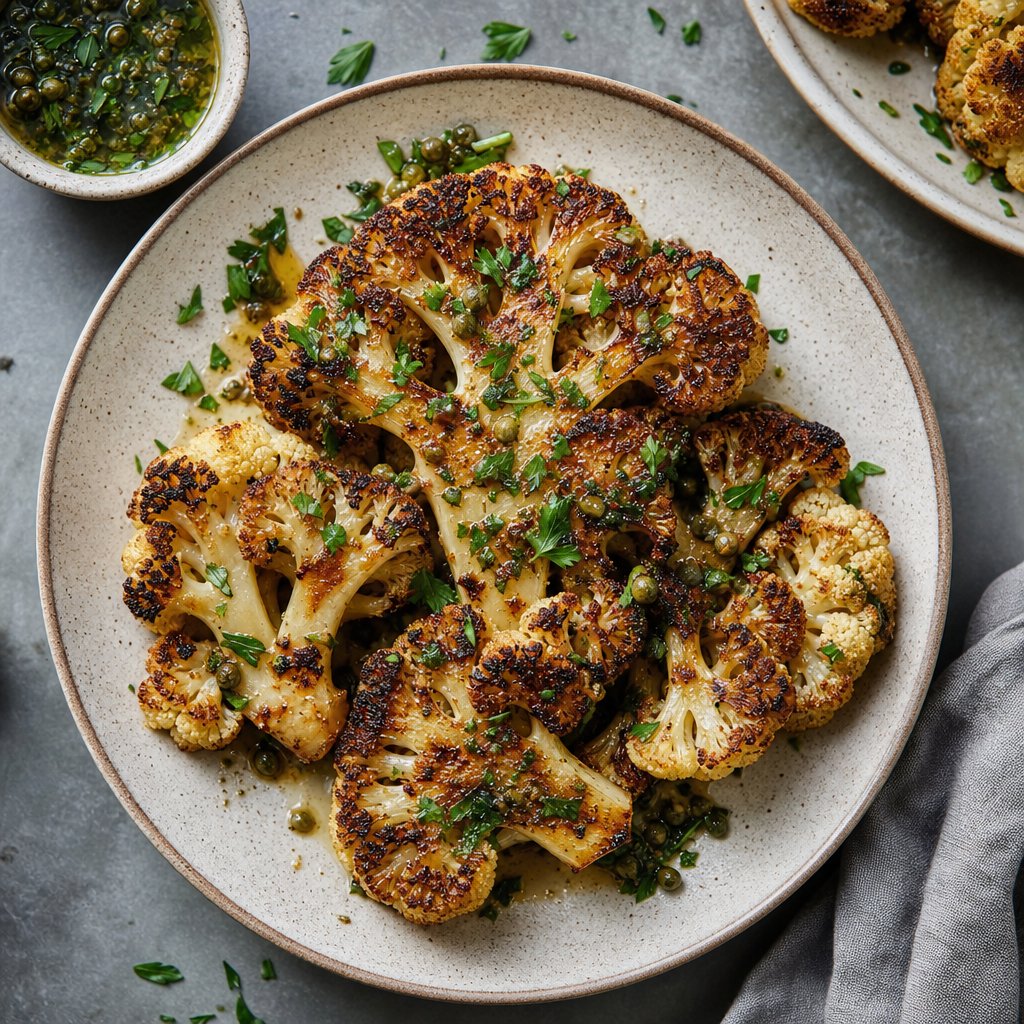
If you have only ever had cauliflower boiled into mush, oven roasted cauliflower recipes are about to change your mind completely. This version goes into a 425°F oven for 20 to 25 minutes, which is exactly what it takes to turn plain white florets into deeply caramelized, golden-edged bites with a tender center. The whole dish comes together with pantry staples: olive oil, garlic powder, smoked paprika, and a finish of Parmesan that melts into every crevice.
It serves 4 as a side, takes about 35 minutes start to finish, and delivers around 120 calories and 4 grams of protein per serving. Whether you are pairing it with a weeknight chicken dinner or looking for a low-carb side that still feels indulgent, this is the method to keep on repeat.
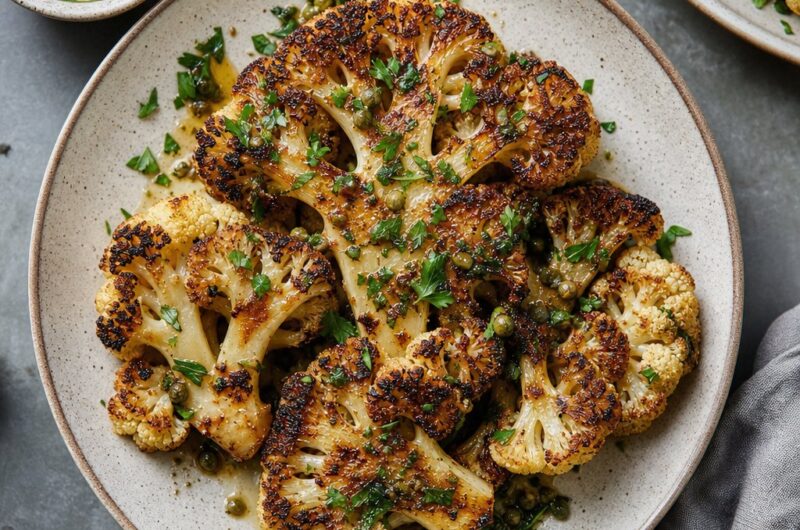
Steakhouse-Style Oven Roasted Cauliflower Recipes for Weeknight Dinners
Course: Side DishCuisine: AmericanDifficulty: Easy4
servings30
minutes40
minutes300
kcal1
hour10
minutesIngredients
1 large head cauliflower (about 2 pounds), cut into 1 1/2-inch florets
3 tablespoons olive oil
1 teaspoon fine sea salt
1/2 teaspoon black pepper
1 teaspoon garlic powder
1 teaspoon smoked paprika
1/4 cup finely grated Parmesan cheese
1 tablespoon fresh parsley, chopped, for garnish
Directions
- Preheat the oven to 425°F and set a rack in the center position. Line a large rimmed baking sheet with parchment paper or foil.
- Cut the cauliflower into 1 1/2-inch florets, keeping the pieces roughly the same size so they cook evenly.
- In a large bowl, toss the florets with the olive oil, salt, pepper, garlic powder, and smoked paprika until every piece is lightly coated.
- Spread the florets in a single layer on the baking sheet, leaving space between pieces so they roast instead of steam.
- Roast for 20 to 25 minutes, flipping the florets with a spatula at the 12-minute mark, until the edges are deeply golden brown and a fork slides in easily.
- Sprinkle the Parmesan cheese over the cauliflower for the last 5 minutes of roasting, so it melts and turns lightly golden without burning.
- Remove from the oven, scatter with fresh parsley, and serve immediately while the edges are still crisp.
Notes
- Pat the florets dry with a paper towel before tossing with oil; excess moisture is the main reason roasted cauliflower turns soggy instead of golden. If your oven runs hot, check at the 18-minute mark since ovens vary by up to 25°F. For extra-crisp edges, use a dark metal baking sheet instead of a light one, since it absorbs more heat.
Why This Oven Roasted Cauliflower Recipe Works
The high, dry heat of a 425°F oven is what makes this recipe work: it drives off surface moisture fast enough for the natural sugars in cauliflower to caramelize before the inside overcooks. Cutting the florets into 1 1/2-inch pieces gives enough surface area for browning while keeping the centers tender by the 20 to 25 minute mark.
The oil-to-vegetable ratio matters more than most people realize. Three tablespoons of olive oil for a 2-pound head is enough to coat every floret in a thin film without pooling on the pan, which is what causes steaming instead of roasting. Flipping halfway through ensures both cut sides get direct contact with the hot metal, so you get golden color on two faces of each piece instead of just one.
Key Ingredients And Smart Swaps
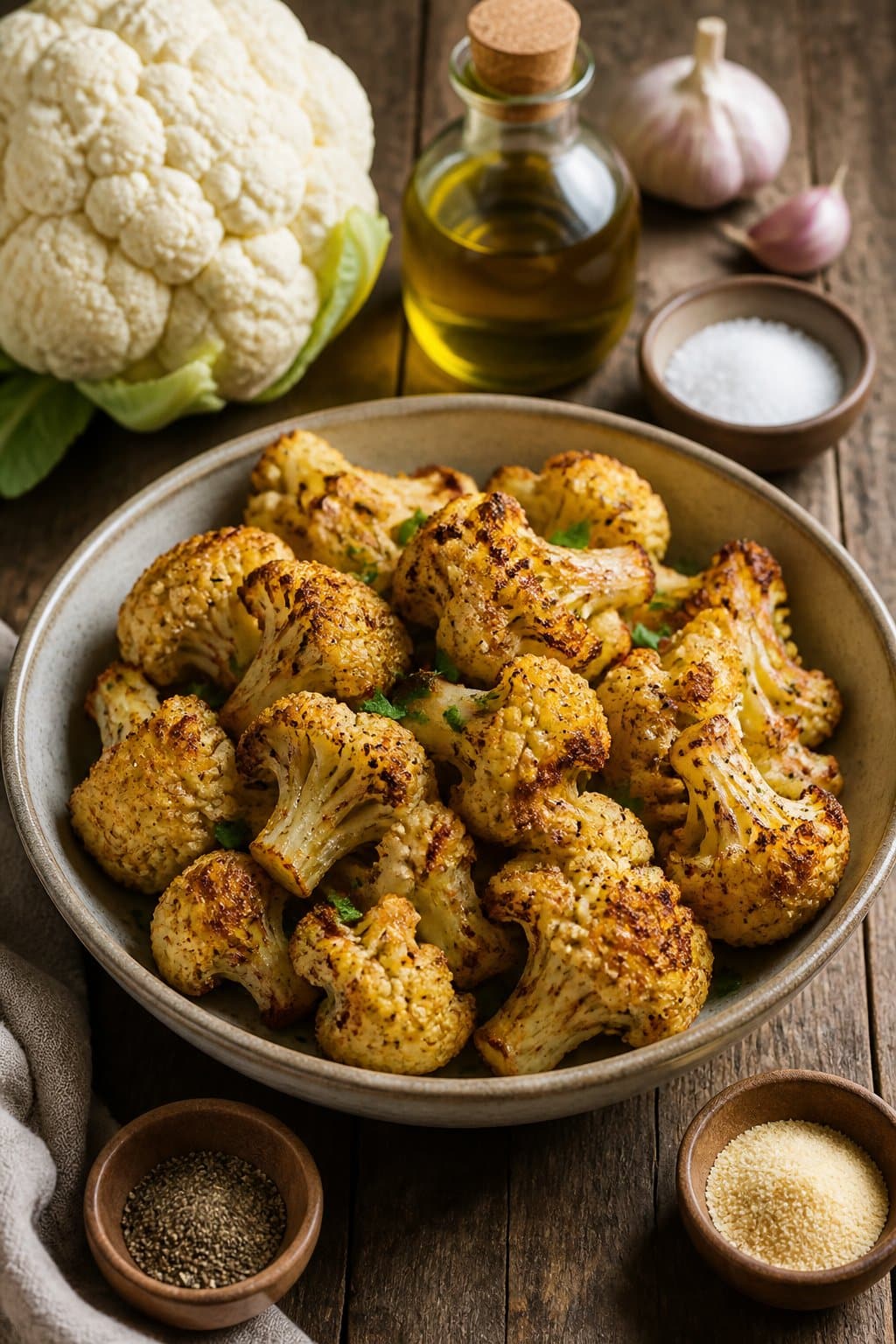
Fresh cauliflower is non-negotiable for real caramelization; frozen florets carry too much internal water and will steam rather than roast, even at 425°F. If fresh is unavailable, thaw frozen florets completely and blot them dry with paper towels before tossing with oil to reduce the moisture problem.
Smoked paprika is what gives this recipe its steakhouse-style depth, mimicking the smoky char you would get from a grill. Regular paprika works in a pinch but tastes noticeably milder, so consider adding a pinch of cumin to compensate. Parmesan adds a salty, nutty crust in the final 5 minutes of roasting; for a dairy-free version, swap in 2 tablespoons of nutritional yeast stirred in at the same point in cooking, since it will not melt the same way but adds a similar umami note.
Step-by-Step, With The Cues That Matter
The single most important cue is visual: florets are done when the edges are deeply golden brown, almost bordering on dark caramel, and a fork slides into the thickest part with just a little resistance. This typically happens between the 20 and 25 minute mark in a fully preheated 425°F oven.
Start by cutting florets to a consistent 1 1/2 inches; uneven sizes mean the smaller pieces burn while the larger ones stay undercooked. Toss with oil and seasoning in a bowl rather than directly on the pan, which distributes the coating more evenly. Spread florets cut-side down where possible, since that flat surface browns fastest against the hot pan.
Flip everything at the 12-minute mark using a thin metal spatula, scraping up any pieces that have started to stick. Add the Parmesan only in the last 5 minutes; adding it earlier causes it to burn into bitter, blackened specks instead of a golden crust.
Oven Roasted Cauliflower Recipes: Variations To Try
This base recipe adapts easily to different flavor profiles and cooking methods without changing the core technique of high heat and a single layer. Below are the swaps worth trying once you have the basic method down.
Buffalo-Style Roasted Cauliflower
Skip the smoked paprika and Parmesan, and toss the roasted florets with 1/4 cup buffalo sauce and 1 tablespoon melted butter right after they come out of the oven. Serve with a side of ranch or blue cheese dressing for dipping.
Garlic-Parmesan Extra-Crisp Version
Double the garlic powder to 2 teaspoons and add 1 tablespoon of grated Parmesan directly into the oil-and-seasoning toss before roasting, in addition to the Parmesan added at the end. This creates a double crust that is noticeably crispier.
Oven Vs. Air Fryer Vs. Stovetop
An oven at 425°F needs 20 to 25 minutes for a full 2-pound head spread on one sheet, while an air fryer at 400°F cooks the same florets in about 12 to 15 minutes in a single basket layer, since the circulating air browns surfaces faster. Stovetop searing in a large skillet over medium-high heat takes roughly 10 minutes but only browns one side well and requires more oil to prevent sticking, so it produces less even caramelization than the other two methods.
Vegan And Dairy-Free Swap
Replace the Parmesan with 2 tablespoons of nutritional yeast added after roasting, and check that your olive oil brand contains no dairy additives, which is standard but worth confirming on flavored oils.
Make-Ahead, Storage And Reheating
Roasted cauliflower keeps well in the refrigerator for up to 4 days when stored in an airtight container. Freezing is possible for up to 2 months, but the texture softens considerably once thawed, so freezing is best reserved for cauliflower you plan to blend into soup rather than serve as a crisp side.
For meal prep, roast the florets through step 5 without the Parmesan, then add the cheese fresh when reheating so it does not turn rubbery in storage. To reheat, spread the cauliflower on a baking sheet and warm in a 400°F oven for 8 to 10 minutes, or in an air fryer at 375°F for about 5 minutes; both methods re-crisp the edges far better than a microwave, which leaves the florets soft and slightly rubbery.
Common Mistakes And How To Fix Them
The most common mistake is overcrowding the baking sheet, which traps steam and prevents browning no matter how hot the oven runs. If your florets are touching in more than one layer, split them across two sheets instead of one.
Another frequent issue is cutting florets unevenly, which leads to burnt tips on small pieces and undercooked centers on large ones; aim for a consistent 1 1/2 inches across the batch. Skipping the flip at the 12-minute mark also results in one-sided browning, since the bottom of the pan is hotter than the air above it. Finally, adding Parmesan too early causes it to blacken and turn bitter well before the cauliflower is done, so always hold it back for the final 5 minutes.
What To Serve With It
This roasted cauliflower pairs naturally with a protein-forward main course, since its smoky, savory flavor does not compete with bold seasonings. Try it alongside the Best Chicken Thighs Recipes: 10 Delicious Ways to Cook Them for a complete weeknight dinner that takes advantage of the same 425°F oven.
For a brighter finish, spoon a little Chimichurri Sauce: The Ultimate Guide to Argentina’s Boldest Green Sauce over the warm florets right before serving; the acidity cuts through the richness of the Parmesan crust. If you would rather use an air fryer for a faster weeknight version, browse 50+ Best Air Fryer Recipes to Make Tonight (Easy, Healthy, and Crispy) for more ideas that use the same basic seasoning blend.
FAQ
How Long Does Oven Roasted Cauliflower Need To Cook?
At 425°F, 1 1/2-inch florets need 20 to 25 minutes, with a flip at the 12-minute mark, until the edges are deeply golden and a fork slides in easily.
Why Did My Roasted Cauliflower Turn Out Soggy Instead Of Crispy?
Soggy cauliflower is almost always caused by overcrowding the pan or not drying the florets before tossing them with oil, both of which trap steam instead of allowing browning.
Can I Make Oven Roasted Cauliflower Recipes Ahead Of Time?
Yes, roast the florets up to 4 days ahead and store them in an airtight container in the fridge, then reheat in a 400°F oven for 8 to 10 minutes to re-crisp the edges.
Can I Use Frozen Cauliflower For This Recipe?
You can, but thaw it completely and blot it very dry first, since frozen florets hold extra water that causes steaming rather than the deep caramelization fresh cauliflower gives.
Is Roasted Cauliflower Good For A Low-carb Diet?
Yes, this recipe has about 120 calories and roughly 5 grams of net carbs per serving, making it a common substitute for starchy sides like potatoes or rice.
What Can I Use Instead Of Parmesan For A Dairy-free Version?
Swap the Parmesan for 2 tablespoons of nutritional yeast stirred in right after roasting; it will not melt but adds a similar savory, cheesy note.
Loved this recipe? Follow along and save your favorites on Pinterest for more delicious ideas!