
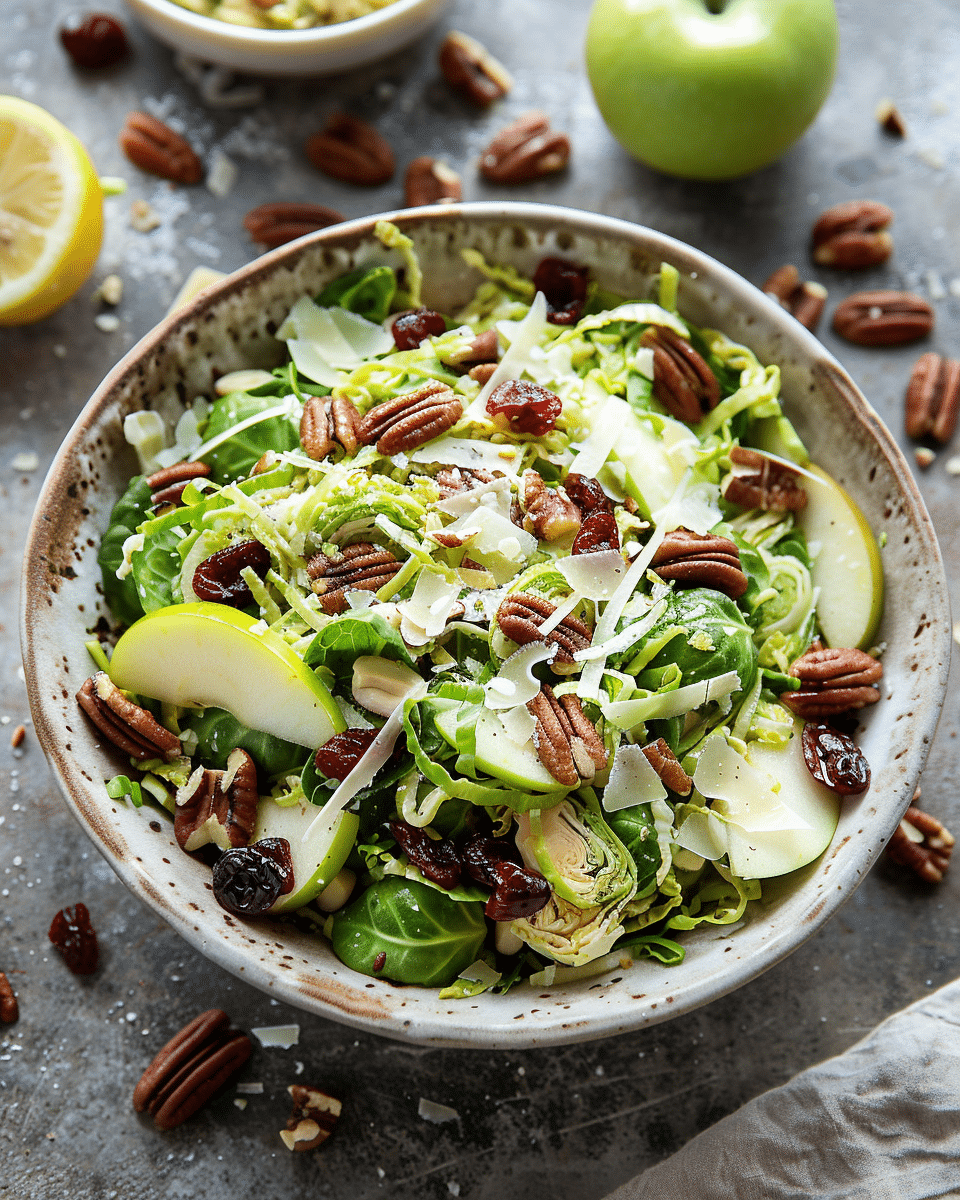
Brussels Sprout Salad: Fresh, Crunchy & Surprisingly Addictive
Brussels sprout salad might not be the first thing that comes to mind when you plan a refreshing side dish, but it absolutely deserves a place on your table. This vibrant salad turns humble Brussels sprouts into a crunchy, flavorful, and highly versatile dish that works for weeknights, meal prep, and even holiday feasts.
Because Brussels sprouts hold up so well, this salad stays crisp for hours, unlike lettuce-based salads that wilt quickly. If you already enjoy hearty salads such as grain bowls, roasted vegetable salads, or even classic coleslaw variations like those you might pair with easy dinners and mains on Olivia Maze Recipes (for example: Easy shrimp fried rice), you will love the texture and flavor packed into this dish.
In this guide, you will learn exactly how to choose, shred, dress, and customize a Brussels sprout salad so it becomes one of your most reliable recipes. We will cover ingredient science, flavor pairings, make-ahead tips, and creative variations so your salad never feels boring. By the end, you will feel confident serving it to picky eaters and food lovers alike, whether as a light lunch, a hearty side, or a colorful star on your holiday table.
Table of Contents
Why Brussels Sprout Salad Deserves a Spot on Your Table
Crunchy, Fresh & Far from Boring
A well-made Brussels sprout salad delivers everything people often wish their salads had: crunch, bright flavors, and enough substance to feel satisfying. Raw or lightly blanched Brussels sprouts bring a texture similar to shredded cabbage, but with a more complex, nutty taste.
Because they are part of the cruciferous vegetable family, like kale and broccoli, they hold up beautifully to bold dressings, think lemony vinaigrette, maple-Dijon, or garlicky tahini. Unlike delicate lettuce, shredded sprouts do not wilt quickly, so you can dress the salad a bit ahead of time and still enjoy a crisp bite later.
This makes it ideal for potlucks, work lunches, and busy evenings. You can think of Brussels sprout salad as a bridge between slaw and a chopped salad. It has the familiar shredded look but feels more elegant and modern, especially when you add toppings like shaved Parmesan, toasted nuts, seeds, and seasonal fruit. It pairs beautifully with grilled chicken, roasted salmon, or plant-based mains, giving you a flexible base that fits many diets and tastes.
Health Benefits That Go Beyond Ordinary Greens
Brussels sprouts are nutritional powerhouses, and when you enjoy them raw in a salad, you keep many of their delicate vitamins and antioxidants intact. They are rich in vitamin C, vitamin K, fiber, and plant compounds like sulforaphane, which scientists study for its potential anti-inflammatory and anticancer properties.
A generous bowl of Brussels sprout salad can deliver a significant portion of your daily fiber needs, which helps with digestion, blood sugar balance, and satiety. While roasted Brussels sprouts taste amazing, the high heat can reduce some heat-sensitive vitamins. By contrast, shredded raw sprouts keep that bright, slightly peppery flavor and retain more of their natural nutrients. Combined with heart-healthy fats from olive oil, nuts, seeds, or avocado, your body can better absorb fat-soluble vitamins like K and E.
If you use ingredients such as apples, dried cranberries, or citrus segments, you introduce more antioxidants, making this salad a true nutrient-dense dish. For anyone trying to boost vegetable intake without feeling like they are “eating diet food,” Brussels sprout salad offers serious flavor and long-lasting satisfaction.
Print
Best Brussels Sprout Salad: How to Make a Healthy and Delicious Dish
- Total Time: 15 minutes
- Yield: 4 servings 1x
Description
This Brussels Sprout Salad is crisp, bright, and packed with texture. With shredded sprouts, apples, dried cranberries, toasted nuts, and shaved Parmesan tossed in a lemon Dijon vinaigrette, it’s a fresh and satisfying side or light meal.
Ingredients
1 lb Brussels sprouts, trimmed and finely shredded
1 crisp apple, thinly sliced or matchsticked
1/4 cup dried cranberries
1/4 cup toasted pecans or walnuts, chopped
1/4 cup shaved Parmesan or crumbled feta
1 small lemon, juiced
1 tbsp Dijon mustard
1–2 tbsp maple syrup or honey
1/3 cup extra-virgin olive oil
Salt and pepper to taste
Instructions
1. Trim Brussels sprouts and shred thinly using knife, mandoline, or food processor
2. Thinly slice apple and chop toasted nuts
3. In a jar, whisk lemon juice, Dijon, maple syrup, salt, pepper, and olive oil
4. Add shredded sprouts, apples, cranberries, nuts, and cheese to a bowl
5. Pour dressing and toss thoroughly
6. Let rest 10–15 minutes to soften sprouts slightly
7. Taste and adjust with more lemon or seasoning before serving
Notes
Use smaller sprouts for sweeter and milder flavor
Massage sprouts with a bit of dressing for a softer texture
Add chickpeas or grilled chicken for a meal-sized bowl
Replace apple with pear or pomegranate in winter
Holds up well for meal prep up to 3 days
- Prep Time: 15 minutes
- Cook Time: 0 minutes
- Category: Salad / Side Dish
- Method: No-cook
- Cuisine: American / Modern
Nutrition
- Serving Size: 1 bowl
- Calories: approx. 280
- Sugar: 12g
- Sodium: 180mg
- Fat: 18g
- Saturated Fat: 4g
- Unsaturated Fat: 12g
- Trans Fat: 0g
- Carbohydrates: 24g
- Fiber: 5g
- Protein: 6g
- Cholesterol: 10mg
Choosing and Prepping Brussels Sprouts for Salad
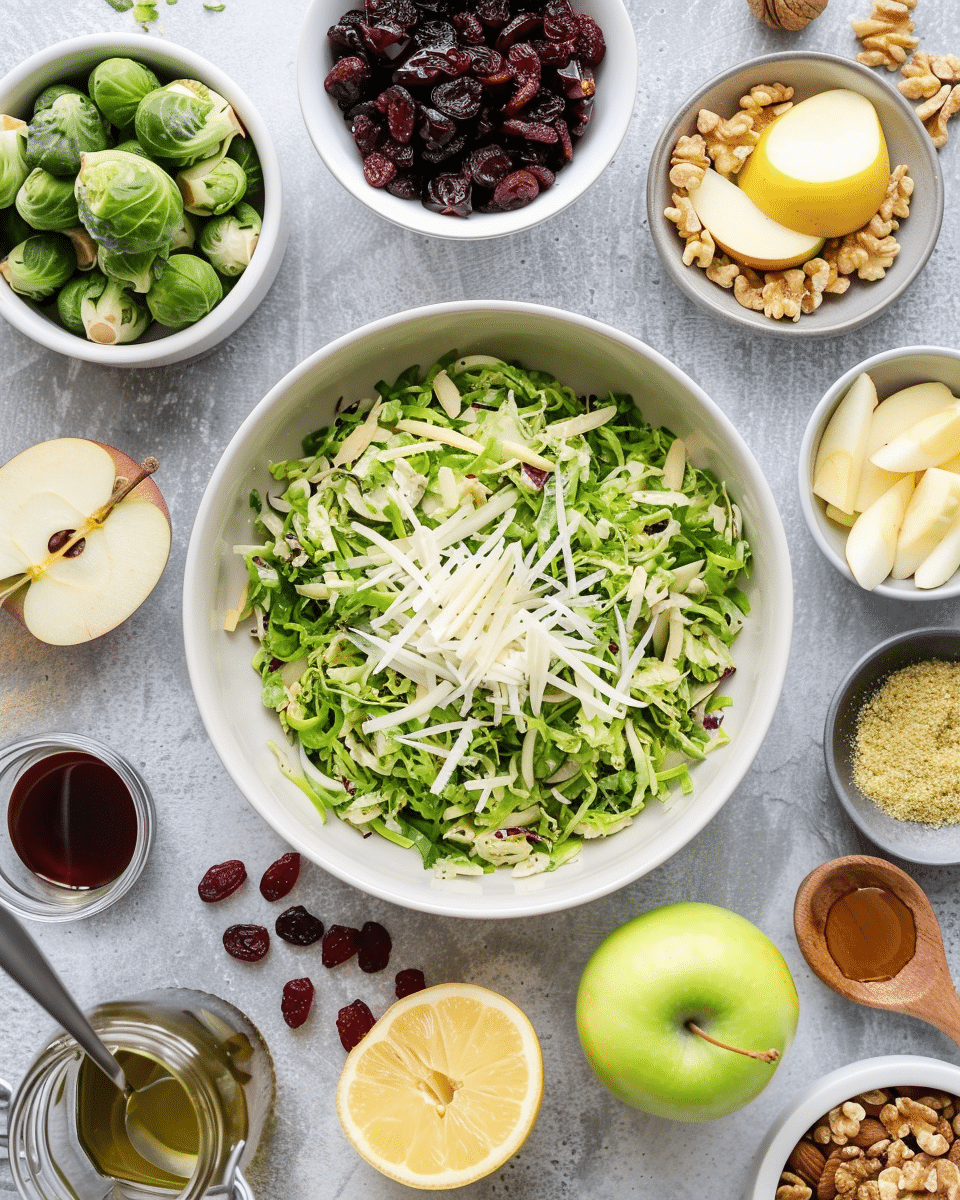
How to Pick the Best Brussels Sprouts
Great Brussels sprout salad starts with fresh, high-quality sprouts. When shopping, look for small to medium sprouts, roughly the size of large marbles or small walnuts. These tend to taste sweeter and milder than very large sprouts, which can lean more bitter and fibrous. The outer leaves should look tightly packed, bright green, and unblemished.
Avoid sprouts that appear yellowish, have black spots, or feel soft when you gently squeeze them; those signs indicate age or potential spoilage. If your store sells sprouts on the stalk, grab those when you can. Brussels sprouts stored on the stalk usually stay fresher longer and have a slightly higher moisture content, which gives them a crisper texture once shredded. Smell also matters: fresh sprouts should have a mild, earthy aroma, not a strong sulfur smell.
At home, store them unwashed in a breathable bag in the crisper drawer of your fridge. They typically keep well for up to a week. Because Brussels sprout salad relies on raw or barely cooked sprouts, freshness directly affects flavor, so it is worth taking a moment to pick the best-looking ones you can find.
Cleaning, Trimming & Shredding Like a Pro
Once you have your Brussels sprouts, proper prep makes all the difference for a tender, enjoyable salad. Start by rinsing them thoroughly under cool running water to remove any dirt or debris caught between the leaves. Next, place them on a cutting board and trim off the tough stem ends, removing any loose or discolored outer leaves.
For shredding, you have a few options, each leading to a slightly different texture. The simplest way is to use a sharp chef’s knife: slice each sprout in half lengthwise, place the flat side down, and then cut crosswise into very thin ribbons, working carefully to keep the slices as even as possible. If you prefer ultra-fine shreds, a mandoline can create paper-thin slices, though you must use a cut-resistant glove or the safety guard to protect your fingers.
A food processor fitted with a slicing disc works well for large batches and meal prep days; just feed the sprouts through the chute and let the machine quickly shred them. After shredding, gently separate any clumps with your hands. Thinner shreds will soften slightly when they absorb the dressing, giving your Brussels sprout salad that perfect combination of crunch and tenderness without tasting raw or tough.
Building the Perfect Brussels Sprout Salad Base
Balancing Texture: Shredded Sprouts, Crunch & Creaminess
The backbone of any memorable Brussels sprout salad is its texture. Shredded sprouts alone can be delicious, but when you layer in contrasting elements—crunchy nuts, chewy dried fruit, crisp apples, or creamy cheese—the salad becomes far more satisfying.
Aim to build a base that feels balanced rather than cluttered. Start with a generous bowl of finely shredded Brussels sprouts. Then consider what kind of crunch you enjoy: toasted almonds, pecans, walnuts, or pumpkin seeds all work beautifully. Chop them coarsely so you get noticeable pieces in each bite. For creaminess, options like crumbled goat cheese, feta, or shaved Parmesan add richness that softens the sprouts’ earthy flavor. You can also use diced avocado for a dairy-free, vegan salad that still tastes lush. To add a fresh, crisp element, thinly sliced apples, pears, or even shaved fennel bring light sweetness and more bite.
The key is to avoid overpacking the salad with heavy add-ins. Each component should serve a purpose: nuts for crunch, cheese for richness, fruit for brightness, and sprouts for sturdy structure. When your base feels balanced, any dressing you add will coat the ingredients evenly, making every forkful interesting and flavorful instead of monotonous.
Flavor Foundations: Sweet, Salty, Bitter, and Acidic
Beyond texture, the best Brussels sprout salads play with all five basic tastes, sweet, salty, bitter, sour, and umami—to create a harmonious flavor profile. Brussels sprouts naturally lean slightly bitter and nutty, which offers a great starting point.
To balance that bitterness, many recipes use a touch of sweetness from honey, maple syrup, or fruit like dried cranberries and chopped dates. Salt, usually from kosher salt, sea salt, or salty cheeses such as Parmesan, sharp cheddar, or feta, heightens the natural flavors and cuts through any heaviness from oil or nuts. Acid also matters; fresh lemon juice, apple cider vinegar, or white wine vinegar brighten the entire dish and help tenderize the shredded sprouts.
Finally, umami-rich ingredients like aged cheese, toasted nuts, or even a bit of miso in the dressing give the salad depth and a savory backbone. When you taste-test your salad, pay attention to these elements: if it feels flat, it likely needs more acid or salt; if it tastes harsh or sharp, a small drizzle of maple syrup or a handful of fruit can round it out. As you get comfortable, you will start adjusting these flavor levers instinctively, creating a Brussels sprout salad that tastes balanced every time.
Dressings That Transform Brussels Sprout Salad
Classic Lemon Dijon Vinaigrette
A lemon Dijon vinaigrette is one of the most reliable dressings for Brussels sprout salad because it hits all the right notes, bright, tangy, and just creamy enough to cling to each shred. At its core, this dressing combines extra-virgin olive oil, fresh lemon juice, Dijon mustard, a touch of honey or maple syrup, minced garlic or shallot, salt, and black pepper.
Dijon mustard acts as an emulsifier, helping the oil and acid blend into a silky consistency that won’t separate quickly. The mustard also brings a light punch that complements the sprouts’ natural earthiness. When whisking the dressing, start by combining the lemon juice, Dijon, sweetener, and seasonings. Then slowly stream in the olive oil while whisking vigorously until the mixture looks glossy and thickened. Taste and adjust: you might need more lemon for brightness or an extra pinch of salt to lift the flavors.
Toss the shredded Brussels sprouts with this vinaigrette at least 10–15 minutes before serving so the acid can slightly tenderize the leaves. This classic dressing pairs well with many add-ins, from crisp apples and toasted almonds to dried cranberries and shaved Parmesan, making it a great default option you can return to again and again.
Creative Dressing Variations: Maple, Tahini, and Yogurt
Once you master a basic vinaigrette, you can transform your Brussels sprout salad by playing with creative dressings that change the whole character of the dish. For a cozy, fall-friendly profile, a maple-Dijon dressing with apple cider vinegar works beautifully.
Replace part of the honey with pure maple syrup, use cider vinegar instead of lemon juice, and add a pinch of cinnamon or smoked paprika if you want a subtle warmth. This version pairs especially well with roasted pecans, apples, and dried cherries. If you prefer a creamy, dairy-free dressing, a tahini-based sauce with lemon juice, garlic, and a splash of water to thin it out gives your salad a rich, nutty flavor reminiscent of Mediterranean grain bowls.
Finally, for a lighter, tangy spin, try a Greek yogurt and lemon dressing. Mix plain yogurt with olive oil, lemon juice, grated garlic, and herbs like dill or parsley. This creates a coleslaw-like vibe but feels fresher and higher in protein. Each of these variations still highlights the Brussels sprouts but offers a different mood: maple for cozy meals, tahini for a modern twist, and yogurt for a bright, creamy crunch. Rotating between these keeps your Brussels sprout salad from ever feeling repetitive.
Protein-Packed Brussels Sprout Salad Ideas
Adding Animal Protein: Chicken, Salmon, and Bacon
Turning your Brussels sprout salad into a complete meal is easy when you introduce well-seasoned protein. Grilled or roasted chicken breast, sliced thinly, makes an excellent lean option. You can season it simply with salt, pepper, garlic powder, and a bit of paprika, or marinate it in lemon and herbs to echo the salad dressing.
Arrange the chicken over the dressed sprouts rather than mixing it in; this keeps the texture distinct and visually appealing. Roasted or pan-seared salmon also pairs beautifully with Brussels sprouts, especially if your salad includes citrus segments, herbs, and a light vinaigrette. Flaky salmon adds healthy omega-3 fats and a luxurious feel while still keeping the meal relatively light. Bacon or pancetta, in small amounts, goes a long way.
Crispy bits offer a salty punch that cuts through the sprouts’ natural bitterness, creating a Brussels sprout salad that mimics the flavors of roasted sprouts with bacon. You do not need much, just a few strips, crumbled over the top, can transform the dish. When you add these animal proteins, consider serving the salad warm or at room temperature; slightly warm chicken or salmon will soften the sprouts a bit and make the salad feel extra satisfying.
Plant-Based Proteins and Vegan Brussels Sprout Salad
For a vegetarian or vegan Brussels sprout salad that still delivers plenty of protein, plant-based ingredients can step easily into the spotlight. Chickpeas, lentils, or white beans provide a hearty, creamy texture that contrasts nicely with the crunchy shredded sprouts. Rinse and drain canned beans well, then toss them with a bit of olive oil, salt, and pepper before adding them to your salad.
You can also roast chickpeas with smoked paprika and garlic powder for extra crunch. Nuts and seeds contribute both protein and healthy fats. Toasted almonds, walnuts, sunflower seeds, or pumpkin seeds boost the salad’s nutritional value while adding deep flavor. If you want a higher-protein vegan option, cube extra-firm tofu, press out excess moisture, and either roast or pan-sear it until golden and crisp.
Toss the tofu in a soy sauce, garlic, and ginger marinade before cooking to echo Asian-inspired Brussels sprout salad flavors. Tempeh works similarly and brings a pleasant nutty taste. Pair these plant-based proteins with bold dressings like tahini-lemon or miso-ginger, and you will have a meal-worthy salad that feels intentional and exciting rather than like an afterthought. Because Brussels sprouts are so sturdy, they can easily support these heftier vegetarian toppings without becoming soggy or overwhelmed.
Seasonal Twists on Brussels Sprout Salad
Fall and Winter: Cranberries, Apples, and Nuts
In cooler months, Brussels sprout salad shines as a fresh yet cozy side dish that pairs perfectly with roasted meats, sheet-pan dinners, and holiday spreads. Seasonal ingredients like apples, pears, and cranberries add color and sweetness that balance the hearty nature of fall and winter menus.
For a classic autumn twist, thinly slice crisp apples, such as Honeycrisp, Pink Lady, or Gala, and toss them with shredded sprouts, toasted pecans, and dried cranberries. Dress the salad with a maple-Dijon vinaigrette using apple cider vinegar for extra seasonal flavor. You can also incorporate pomegranate seeds for jewel-like bursts of tart sweetness; they look beautiful against the green sprouts and bring a dose of vitamin C. For holiday meals like Thanksgiving or Christmas, adding toasted hazelnuts or walnuts, shaved Parmesan, and a drizzle of aged balsamic can elevate a simple Brussels sprout salad into an elegant side that competes with classic dishes.
Because the salad stays crisp for hours, you can prep it earlier in the day, refrigerate it, then bring it closer to room temperature before serving. This make-ahead flexibility helps reduce stress during big gatherings when oven and stovetop space are in high demand.
Spring and Summer: Citrus, Herbs, and Light Dressings
When the weather warms up, your Brussels sprout salad can transform into a bright, refreshing dish that leans on citrus and fresh herbs. Instead of apples and dried fruit, think orange segments, grapefruit, or even slices of juicy strawberries.
These ingredients cut through the sprouts’ earthiness and give each bite a burst of juiciness. For a spring-inspired version, combine shredded sprouts with thinly sliced radishes, chopped fresh dill, parsley, and mint. A lemony vinaigrette with a little honey and Dijon ties everything together. In summer, you might pair Brussels sprouts with sweet corn kernels, cherry tomatoes, and basil, which creates a surprising but delicious twist reminiscent of a garden salad with extra crunch. A lighter dressing, such as a simple mix of olive oil, lemon juice, salt, and pepper, keeps the salad feeling crisp and not heavy.
You can even add grilled shrimp or chicken fresh off the grill to turn it into a complete warm-weather meal, similar in spirit to other satisfying, veggie-forward dinners you might serve with rice or grains on Olivia Maze Recipes (for example: chicken taco salad dinner). Rotating seasonal produce keeps your Brussels sprout salad aligned with what looks best at the market and prevents flavor fatigue throughout the year.
Meal Prep, Storage, and Make-Ahead Strategies
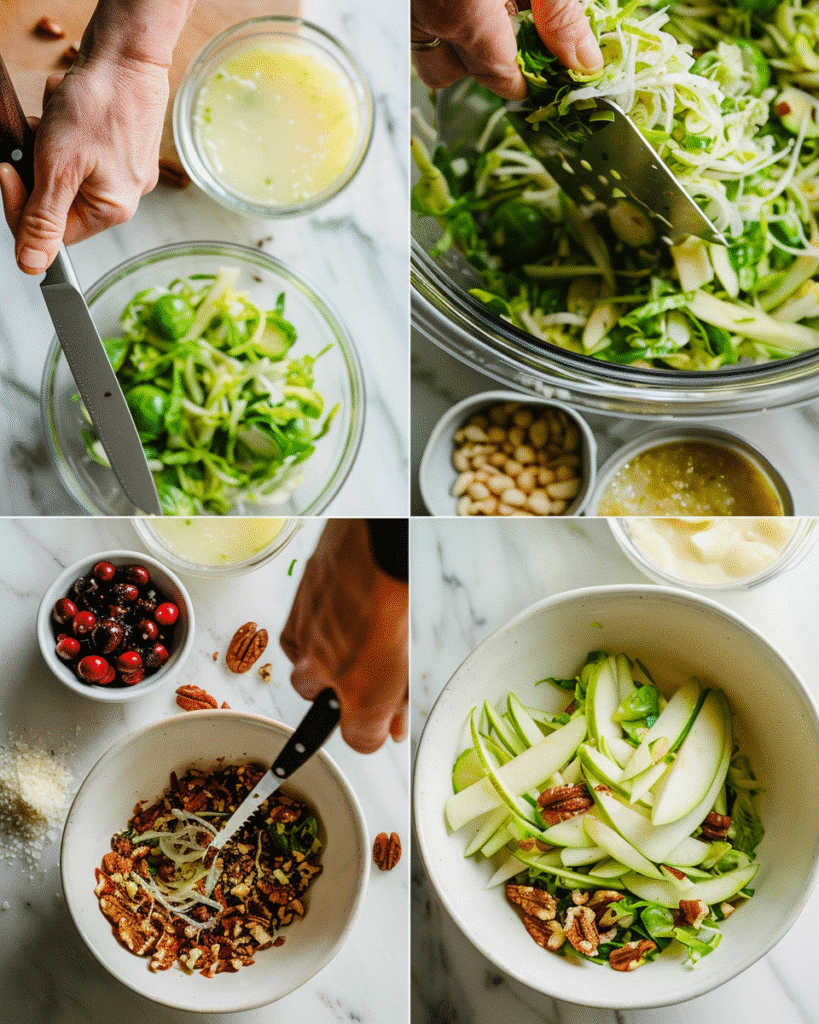
How to Prep Brussels Sprout Salad in Advance
One of the biggest advantages of Brussels sprout salad is how well it works for meal prep. Because the shredded sprouts are sturdier than lettuce, they hold up both in the fridge and under dressing better than many other salad greens. To prepare ahead, start by shredding a large batch of fresh Brussels sprouts and storing them in an airtight container lined with a paper towel.
The towel absorbs excess moisture and helps keep the shreds crisp for 3–4 days. Keep your dressing in a separate jar, and only toss what you plan to eat within the next 24 hours. Toppings like nuts, seeds, and crumbled cheese should be stored individually to maintain their texture. For grab-and-go lunches, assemble salad jars: layer the dressing at the bottom, then add hearty ingredients like beans, grains, and shredded Brussels sprouts, followed by delicate add-ins such as fruit and nuts on top. When ready to eat, shake the jar to coat everything evenly.
This approach mirrors meal prep strategies you may know from make-ahead rice or noodle dishes, including those you might browse alongside stir-fry recipes like kale salad recipe. With a bit of planning, you can enjoy a fresh, nutrient-packed Brussels sprout salad even on your busiest days.
Storing Leftovers and Keeping Crunch
Leftover Brussels sprout salad often tastes even better the next day because the flavors meld and the dressing gently softens the sprouts. However, you still want to preserve some crunch. If you know you will have leftovers, lightly dress the salad at first and reserve part of the dressing, then refresh with a spoonful or two before serving again.
Store leftovers in an airtight container in the refrigerator, ideally eating them within 2–3 days for best taste and texture. If your salad includes delicate ingredients like sliced apples or pears, toss them in lemon juice before adding them to slow browning. Nuts and seeds may soften slightly in the fridge; to maintain crunch, you can keep an extra batch of toasted nuts separately and sprinkle them on right before eating.
Cheeses like goat cheese or feta will blend into the salad over time, making it creamier but less visually distinct; if you prefer visible crumbles, add a fresh pinch when you serve leftovers. While the sprouts themselves handle storage well, avoid freezing Brussels sprout salad, as freezing and thawing changes the texture dramatically. With these simple storage practices, you can keep your salad appealing and crisp, turning it into a reliable part of your weekly routine rather than a side dish that only works fresh.
Common Mistakes and Expert Tips for Brussels Sprout Salad
Mistakes That Make Brussels Sprout Salad Less Enjoyable
Several simple missteps can turn a promising Brussels sprout salad into a dish people push aside. One common mistake is leaving the shreds too thick. Large, chunky slices can feel tough and cabbage-like, making the salad harder to chew. Aim for thin, even ribbons that absorb dressing and tenderize more quickly.
Another issue is under-seasoning. Because Brussels sprouts are robust and slightly bitter, they need enough salt, acid, and sometimes a touch of sweetness to taste balanced. If your salad feels dull, do not hesitate to add a pinch more salt or squeeze more lemon. Overdressing can also cause problems; while sprouts do not wilt as quickly as lettuce, too much oil-heavy dressing can make the salad feel greasy instead of crisp. Add dressing gradually, tossing as you go until the leaves are coated but not dripping.
Finally, mismatched ingredients can throw off the dish. For example, very smoky bacon with an aggressively sweet dressing and lots of dried fruit may feel overwhelming. Think about harmony: every ingredient should have a purpose and work together, not compete for attention.
Pro-Level Tips for Irresistible Flavor and Texture
To take your Brussels sprout salad to the next level, borrow a few tricks that chefs and experienced home cooks rely on. First, consider “massaging” the shredded sprouts with a small amount of dressing or just lemon juice and salt before adding other ingredients. Use your hands to gently rub the dressing into the shreds for a minute or two; this softens the fibers, similar to how you might treat kale, and helps mellow any harsh raw flavor.
Toast all nuts and seeds before adding them; toasting releases natural oils and intensifies flavor, making a smaller amount go a long way. Another tip is to combine fresh and cooked elements. For example, toss raw shredded Brussels sprouts with warm, roasted sweet potatoes or butternut squash for a contrast in temperature and texture. A microplane or vegetable peeler can help you add ultra-thin shavings of Parmesan or other hard cheeses for even distribution without overwhelming the salad.
Additionally, consider building layers of acid: a bright vinaigrette plus a finishing drizzle of aged balsamic or a squeeze of lemon right before serving. For those who enjoy heat, a pinch of red pepper flakes or a sliver of fresh chili can add a subtle kick. Small, thoughtful touches like these ensure your Brussels sprout salad tastes restaurant-worthy every time you serve it.
Sample Brussels Sprout Salad Recipe and Variations
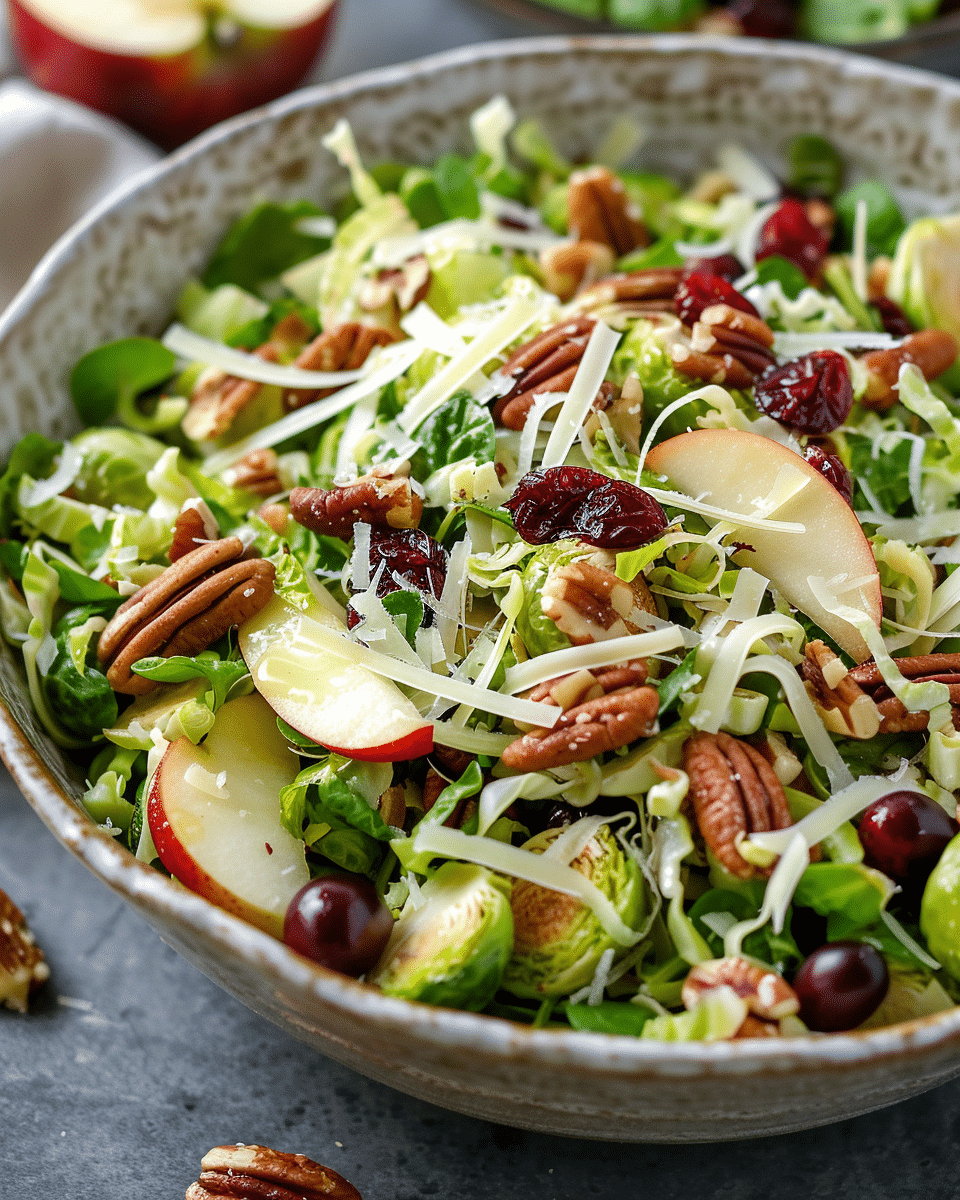
Core Recipe: Simple Brussels Sprout Salad with Apple and Pecans
To put everything together, here is a straightforward, flexible Brussels sprout salad you can adapt to your taste. Start with about 1 pound of Brussels sprouts, trimmed and finely shredded.
Place them in a large bowl. Add one crisp apple, cored and thinly sliced or matchsticked; a handful of toasted pecans, roughly chopped; and ¼ cup of dried cranberries. For extra richness, sprinkle in ¼ cup of crumbled goat cheese or feta, or shave Parmesan with a vegetable peeler. In a separate bowl or jar, whisk together ⅓ cup extra-virgin olive oil, 3 tablespoons apple cider vinegar, 1 tablespoon Dijon mustard, 1–2 tablespoons maple syrup (depending on your sweetness preference), 1 small grated garlic clove, ½ teaspoon salt, and freshly ground black pepper.
Pour most of the dressing over the salad and toss thoroughly until the sprouts are well coated. Let the salad rest for at least 10–15 minutes at room temperature so the flavors combine and the sprouts soften slightly. Taste and adjust seasoning with more salt, pepper, or a squeeze of lemon. Serve it as a side dish or add protein like sliced grilled chicken to make it a full meal. This recipe offers a great baseline: crunchy, tangy, slightly sweet, and easy to pair with everything from weeknight mains to celebratory roasts.
Creative Variations: Mediterranean, Asian-Inspired, and More
Once you master the core recipe, you can reinvent your Brussels sprout salad any time by changing a few ingredients and the dressing. For a Mediterranean twist, swap the apples and cranberries for cherry tomatoes, cucumber, Kalamata olives, and red onion.
Use crumbled feta and dress the salad with a lemon-oregano vinaigrette. Add cooked farro or quinoa for extra heartiness and protein. For an Asian-inspired variation, combine shredded sprouts with sliced green onions, shredded carrots, edamame, and toasted sesame seeds. Dress with a soy sauce, rice vinegar, ginger, and sesame oil mixture, and top with grilled shrimp or tofu.
You can even develop a Tex-Mex style Brussels sprout salad by adding black beans, corn, cherry tomatoes, cilantro, and avocado, then dressing with a lime-cilantro vinaigrette. Serve that version alongside flavorful mains like tacos, burrito bowls, or even fried rice dishes such as Cobb Salad with Chicken. Another fun idea is to mix in roasted vegetables, think roasted Brussels sprouts mixed with raw shreds, or roasted carrots and parsnips, creating a warm-and-cool salad perfect for transitioning seasons.
These variations show how adaptable Brussels sprout salad can be, allowing you to use what you have on hand and align the flavors with whatever else you plan to cook.
Helpful Brussels Sprout Salad Ingredient Reference
| Category | Examples | Notes |
|---|---|---|
| Base | Shredded Brussels sprouts | Finely slice for best texture |
| Crunch | Almonds, pecans, walnuts, pumpkin seeds | Toast for deeper flavor |
| Sweet | Apples, pears, dried cranberries, dates | Balance sprouts’ slight bitterness |
| Creamy | Goat cheese, feta, Parmesan, avocado | Adds richness and contrast |
| Protein | Chicken, salmon, beans, tofu | Turns salad into a full meal |
| Dressing | Lemon-Dijon, maple, tahini, yogurt | Choose profile to match season |
FAQs About Brussels Sprout Salad
Can you eat Brussels sprouts raw in salad?
Yes, you can absolutely eat Brussels sprouts raw in salad, and that is the foundation of a classic Brussels sprout salad. When served raw, sprouts offer a crunchy, slaw-like texture with a mild, nutty flavor. The key is to slice them very thin so they feel tender rather than tough.
A sharp knife, mandoline, or food processor with a slicing disk works best. Pairing the raw sprouts with an acid-forward dressing, like lemon or apple cider vinegar, helps soften the leaves slightly and tame any bitterness. Letting the dressed salad rest for about 10–15 minutes before serving also improves the texture and allows the flavors to meld, giving you a crisp yet pleasant bite.
How do you keep Brussels sprout salad from tasting bitter?
To prevent your Brussels sprout salad from tasting bitter, start with fresh, smaller sprouts, which are naturally sweeter and milder. Then focus on balancing flavors in the dressing and mix-ins. Acidic ingredients like lemon juice or apple cider vinegar brighten the sprouts and cut through any harsh notes.
A small amount of sweetness, such as maple syrup, honey, or dried fruit, helps round out the flavor without turning the salad sugary. Salt also plays a big role; a well-seasoned salad tastes more balanced and less bitter. Thin slicing is crucial because finely shredded sprouts absorb dressing better and soften more evenly. Finally, letting the salad rest briefly after dressing allows the flavors to mellow.
How long does Brussels sprout salad last in the fridge?
Brussels sprout salad stores surprisingly well compared to many leafy salads. If you keep the dressing separate, shredded Brussels sprouts can stay fresh and crisp in an airtight container in the refrigerator for about 3–4 days. Once dressed, the salad still holds up for 2–3 days because the sprouts are sturdy, but some toppings like nuts and fruit may soften slightly.
To maintain the best texture, add crunchy elements such as toasted nuts or seeds just before serving, especially if you plan to keep leftovers. If your salad contains delicate ingredients like apples, toss them in lemon juice to prevent browning. While the flavor often improves overnight, for peak crunch and color, aim to enjoy the salad within a couple of days.
What proteins go best with Brussels sprout salad?
Many proteins complement Brussels sprout salad because its flavor is robust enough to handle both delicate and bold pairings. For animal proteins, grilled or roasted chicken breast, salmon, shrimp, and even thinly sliced steak all work beautifully.
Crisp bacon or pancetta, used sparingly, adds a smoky, salty note that makes the salad feel indulgent. For plant-based options, chickpeas, lentils, white beans, and edamame offer hearty texture and plenty of protein. Tofu and tempeh, especially when marinated and either roasted or pan-seared until golden, integrate well with bold dressings like miso-ginger or tahini-lemon. When you add protein, you effectively transform a side salad into a satisfying, nutrient-dense main dish, suitable for lunch or dinner meal prep.
Is Brussels sprout salad healthy?
Brussels sprout salad is generally very healthy, especially when you use a moderate amount of dressing and nutrient-dense add-ins. Brussels sprouts are high in fiber, vitamin C, and vitamin K, and they contain beneficial plant compounds like glucosinolates and antioxidants. Eating them raw or lightly dressed preserves many of these heat-sensitive nutrients.
When you add ingredients like olive oil, nuts, seeds, and avocado, you introduce heart-healthy fats that help your body absorb fat-soluble vitamins. Including lean protein, such as chicken, salmon, tofu, or beans, turns the salad into a balanced meal that supports steady energy. While extras like cheese, bacon, or sweet dried fruit can raise the calorie count, they are easy to control, allowing you to tailor the salad to your nutritional goals without sacrificing flavor.
Conclusion: Make Brussels Sprout Salad a New Staple
Brussels sprout salad delivers crunch, bright flavor, and impressive nutrition in a package that feels anything but boring. With the right prep technique, a balanced dressing, and thoughtful toppings, it can replace ordinary side salads and even stand proudly as a main dish. You can keep it ultra-simple or dress it up with seasonal fruits, cheeses, and proteins, much like how you customize other versatile dishes on Olivia Maze Recipes such as rice bowls or skillet dinners (similar in spirit to Mediterranean quinoa salad ).
Because shredded Brussels sprouts are sturdy, this salad fits beautifully into meal prep routines and holiday menus alike. The key is to experiment and adjust: try different dressings, play with Mediterranean or Asian-inspired variations, and rotate seasonal ingredients to match what looks best at the market. With a few batches under your belt, you will have a reliable, crowd-pleasing Brussels sprout salad that you can turn to whenever you need a fresh, crunchy, and satisfying dish.
Final Quick-Reference Table: Brussels Sprout Salad Customization
| Style | Key Ingredients | Dressing |
|---|---|---|
| Classic Fall | Apples, dried cranberries, pecans, Parmesan | Maple-Dijon with apple cider vinegar |
| Mediterranean | Tomatoes, cucumber, olives, feta | Lemon-oregano vinaigrette |
| Asian-Inspired | Carrots, edamame, green onions, sesame seeds | Soy-ginger-sesame dressing |
| Protein-Packed | Chicken or tofu, nuts, avocado | Lemon or tahini-based dressing |
Discover more seasonal Salad inspirations, check out Pinterest.