

Table of Contents
Understanding the Classic Caesar Salad
What Makes a Caesar Salad “Classic”?
A classic Caesar salad begins with a simple idea: crisp greens tossed in a rich, creamy dressing that balances tang, salt, and umami. Although many versions exist today, the original Caesar salad has a clear identity shaped by its signature dressing and minimal yet powerful ingredients. When people refer to a true Caesar salad, they’re talking about a dish built around romaine lettuce, Parmesan cheese, crunchy croutons, and a bold dressing made from olive oil, garlic, lemon, Dijon mustard, egg yolk, and anchovies.
Each element plays a purpose, and together they form a salad with strong flavor and satisfying texture. Because the dressing defines the salad, even small changes can shift the entire profile. That’s why many chefs and home cooks stick closely to the traditional version when they want the unmistakable taste of a classic Caesar salad.
The heart of this dish also lies in its careful balance. Romaine brings refreshing crispness, croutons offer crunch, anchovies contribute depth, egg yolk provides richness, and lemon adds brightness. This balance is the reason the Caesar salad remains a staple in homes and restaurants. It feels simple, yet every element works in harmony. Even when people add chicken, shrimp, or tofu, the base stays the same, honoring the original recipe while allowing room for creativity.
Traditional Ingredients and Their Roles
Each ingredient in a Caesar salad serves a specific function. Romaine lettuce works perfectly because it stays sturdy once dressed, resisting wilting longer than softer greens. Parmesan cheese delivers a salty bite and helps thicken the dressing. Fresh garlic adds sharpness, while olive oil smooths everything together. Anchovies provide umami that rounds out the flavor without making the dressing taste overtly fishy.
Lemon juice brings acidity that cuts through the richness, and Dijon mustard helps emulsify the mixture, creating the creamy texture the salad is known for. Croutons, although often overlooked, are essential for adding crunch and structure. They absorb just enough dressing to soften slightly without losing their bite.
Combined, these classic ingredients form a salad that is both hearty and refreshing, bold but balanced. Understanding their roles makes it easier to appreciate why the Caesar salad remains one of the most recognizable salads ever created.
The History Behind the Caesar Salad
Where the Caesar Salad Really Came From
Although many assume the Caesar salad started in Italy or the United States, its true origins trace back to Tijuana, Mexico. The dish was created in 1924 by an Italian-American restaurateur named Caesar Cardini. Cardini operated a popular restaurant in Tijuana to avoid U.S. Prohibition restrictions, which attracted Hollywood actors, travelers, and locals.
According to long-standing accounts, Cardini invented the Caesar salad on a busy Fourth of July weekend when kitchen supplies ran low. To serve his guests something memorable, he combined the ingredients he still had on hand: romaine lettuce, olive oil, Parmesan, lemon, egg, garlic, and croutons. The result became an instant hit, marking the beginning of a culinary classic that soon spread across the United States and the world.
The salad’s story gained attention because Cardini prepared it tableside, tossing the romaine leaves whole so diners could experience the crisp freshness of each bite. This technique helped cement the Caesar salad as an elegant yet accessible dish, blending simple ingredients with thoughtful preparation. Its popularity continued to grow, and by the mid-20th century, it appeared in cookbooks, restaurant menus, and home kitchens across America.
Why the Caesar Salad Was Named “Caesar”
The name “Caesar salad” comes directly from its creator, Caesar Cardini, not from Julius Caesar or ancient Rome. Despite the confusion, the salad has no historical connection to Roman emperors or ancient culinary traditions. The name simply honors the chef who introduced the dish and whose family later trademarked the original dressing. While several variations now exist, the classic version still reflects Cardini’s foundational recipe, and chefs worldwide continue to reference his method when presenting traditional Caesar salad preparations.
Understanding the salad’s history helps explain why certain ingredients remain essential today. Anchovies, for example, were reportedly added later by Caesar’s brother Alex, but the flavor became so characteristic that many modern versions include them by default. The story behind the dish also highlights how creativity born from limitations can lead to timeless recipes.
Print
How to Make the Best Caesar Salad: 5 Easy Steps Revealed
- Total Time: 10 minutes
- Yield: 2 servings 1x
- Diet: Vegetarian
Description
A crisp and flavorful Caesar salad made with fresh romaine, creamy homemade dressing, Parmesan, and crunchy croutons.
Ingredients
Romaine lettuce
Parmesan cheese
Croutons
1 egg yolk
1 garlic clove
2 anchovy fillets or 1 tsp anchovy paste
1 tsp Dijon mustard
1 tbsp lemon juice
1/3 cup olive oil
Black pepper
Salt
Instructions
1. Wash and dry romaine lettuce thoroughly.
2. Whisk egg yolk, garlic, anchovies, mustard, and lemon juice.
3. Slowly drizzle in olive oil until emulsified.
4. Add grated Parmesan and season with pepper.
5. Toss romaine with dressing just before serving.
6. Top with croutons and shaved Parmesan.
Notes
Use chilled romaine for extra crunch.
Store dressing separately for meal prep.
Add grilled chicken or shrimp for more protein.
- Prep Time: 10 minutes
- Cook Time: 0 minutes
- Category: Salad
- Method: No-cook
- Cuisine: American
Nutrition
- Serving Size: 1 bowl
- Calories: 220
- Sugar: 2g
- Sodium: 420mg
- Fat: 18g
- Saturated Fat: 4g
- Unsaturated Fat: 12g
- Trans Fat: 0g
- Carbohydrates: 9g
- Fiber: 2g
- Protein: 7g
- Cholesterol: 40mg
Key Ingredients in a Traditional Caesar Salad
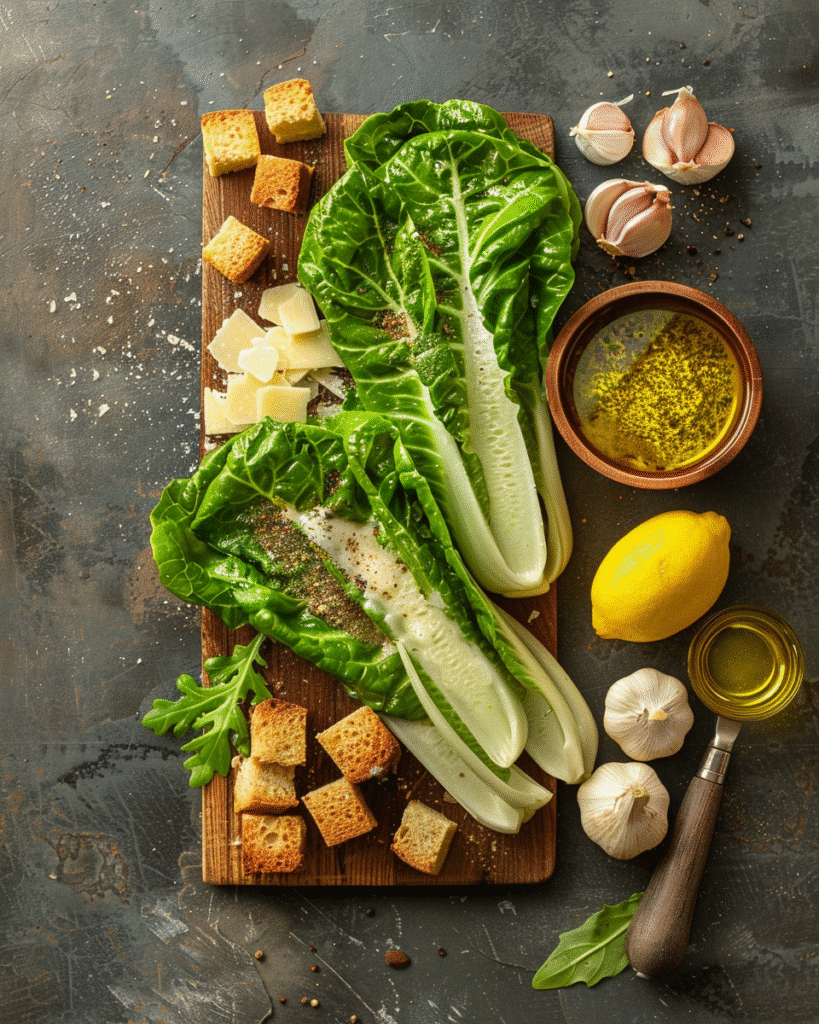
Understanding the essential ingredients in a classic Caesar salad helps you recreate its signature flavor at home while keeping the dish authentic. Although many variations exist today, the traditional version relies on a handful of simple, high-quality components that work together to create its rich, tangy, savory taste.
Romaine Lettuce and Why It’s the Gold Standard
Romaine lettuce is the foundation of a traditional Caesar salad. Its sturdy leaves, crisp texture, and mild flavor allow it to stand up well to creamy dressing without becoming soggy. Because romaine holds its shape, it gives the salad its characteristic crunch and freshness. Most chefs prefer whole leaves or large pieces so diners can enjoy the full structure of the greens, just like in the original recipe.
Freshness matters as well. Bright green leaves without browning, wilting, or soft edges provide the best taste and texture. When washed and dried properly, romaine becomes the perfect base that balances the richness of the dressing and toppings.
The Role of Anchovies in Building Flavor
Anchovies add depth to the Caesar salad, creating a savory umami presence that makes the dressing unforgettable. While the original recipe by Caesar Cardini may not have included anchovies directly, they were soon incorporated and quickly became a defining feature of modern Caesar dressing. Instead of tasting “fishy,” good anchovies dissolve into the dressing and boost its complexity.
Some versions use Worcestershire sauce, which contains anchovies, to achieve a similar effect. Whether blended into the dressing or mashed into a paste, anchovies are responsible for the bold, salty, slightly briny layer that makes Caesar salad taste unique.
The Importance of Parmigiano-Reggiano
Parmigiano-Reggiano contributes a nutty, salty, and savory element that enhances every bite of the salad. Freshly grated cheese melts into the dressing, while shaved pieces create contrast on top of the greens. High-quality Parmesan brings richness without overwhelming the other ingredients, allowing the dressing’s lemon, garlic, and umami tones to stand out.
Because Parmigiano-Reggiano contains strong flavor compounds, even a small amount adds intensity. This cheese is essential in binding the classic Caesar profile together and maintaining its traditional character.
Other Must-Have Ingredients That Define Caesar Salad
A proper Caesar salad relies on several additional ingredients that play specific roles:
- Garlic: Gives sharpness and aroma to the dressing.
- Egg (raw or coddled): Provides creaminess and emulsifies the dressing.
- Olive oil: Adds richness and helps create a silky texture.
- Lemon juice: Supplies acidity to balance the fat and brighten the dish.
- Croutons: Add crunch and structure, making each bite more satisfying.
- Black pepper: Enhances flavor with subtle heat.
Together, these ingredients create the bold, creamy, tangy profile that defines a classic Caesar salad. Whether you stick to the traditional recipe or make small adjustments, understanding these components will help you create an authentic version every time.
How to Make the Perfect Caesar Salad Dressing
A great Caesar salad depends on its dressing. The creamy, tangy, and savory blend is what makes the dish stand out, and preparing it the right way ensures every bite feels balanced and rich. While many store-bought versions exist, homemade Caesar dressing is unmatched in flavor and freshness.
Step-by-Step Guide to Classic Caesar Dressing
To prepare an authentic dressing, start by gathering the essential ingredients: garlic, egg yolk, lemon juice, Dijon mustard, olive oil, Parmigiano-Reggiano, Worcestershire sauce, and anchovies. Each ingredient plays a role in creating the deep umami and silky texture that define a true Caesar salad dressing.
Begin by mincing the garlic and anchovies into a fine paste. This step helps both ingredients blend smoothly into the mixture. Add the egg yolk and mustard, then whisk until the base thickens slightly. Slowly drizzle in olive oil while whisking continuously. This technique allows the mixture to emulsify, turning it from thin and runny to creamy and stable. Finish with lemon juice, Worcestershire sauce, and freshly grated Parmesan.
The key to achieving the perfect consistency is adding the oil gradually and whisking vigorously. If the dressing becomes too thick, a splash of water or lemon juice helps lighten it while preserving its flavor.
Anchovy vs. No-Anchovy Options
While anchovies bring traditional flavor, some people prefer a Caesar salad dressing without them. Fortunately, there are easy alternatives that maintain the dish’s signature taste. Worcestershire sauce, which already contains anchovy essence, provides similar depth with a milder presence. Another option is using capers for briny flavor without fish notes. These alternatives still support the rich and savory nature of the dressing.
For those who enjoy the classic version, whole anchovy fillets create the strongest umami effect. For a softer profile, anchovy paste blends easily and provides balanced saltiness.
Dairy and Egg Variations
Because many home cooks want flexibility, several variations of Caesar dressing can accommodate dietary needs or personal preferences. If you prefer a version without raw egg, replacing the yolk with mayonnaise helps achieve a similar creamy texture and stable emulsion. Mayonnaise-based Caesar dressings are popular because they simplify the process and reduce food safety concerns.
Dairy adjustments are also possible. Some recipes include extra Parmesan to thicken the dressing, while others lighten it with Greek yogurt. Each change slightly alters the flavor, but the core Caesar profile remains intact when garlic, lemon, and umami elements stay in place.
Learning to make the dressing from scratch not only elevates your Caesar salad but also opens the door to easy customization. Whether you choose the traditional method or a modified version, homemade dressing always adds fresh flavor and a personal touch.
Building Your Caesar Salad the Right Way
Creating the perfect Caesar salad is about more than just tossing ingredients together. Technique, timing, and layering affect flavor, texture, and presentation. When you assemble the salad correctly, every bite becomes balanced, crisp, and satisfying.
How to Wash, Dry, and Prep Romaine
Preparing the romaine lettuce is the first essential step. Since romaine provides the crunch and freshness that define a Caesar salad, it must be handled with care. Begin by separating the leaves and rinsing them thoroughly under cold water. This removes any dirt and helps revive the greens. After washing, dry the leaves completely using a salad spinner or clean kitchen towels.
Dry leaves are crucial because moisture prevents the dressing from sticking properly. When the lettuce is crisp and completely dry, it absorbs the flavors of the dressing better and keeps the salad from becoming watery. Once dry, tear or cut the romaine into large pieces so it remains sturdy enough to hold the dressing and toppings.
How to Toast Croutons for the Best Texture
Homemade croutons make a dramatic difference in the final Caesar salad. Start by cutting day-old bread into even cubes. Drizzle them with olive oil, then season lightly with salt, black pepper, and garlic powder. Spread the cubes on a baking sheet and toast them in a hot oven until they become golden and crisp.
Toasting croutons this way ensures a crunchy exterior and a slightly tender center, creating the perfect contrast to the creamy dressing and soft cheese. If you prefer a deeper flavor, add herbs like thyme or parsley, or grate a little Parmesan over the croutons before baking. Their texture is essential because well-made croutons turn a simple salad into a satisfying dish.
When to Add Dressing and Toppings
Proper timing matters when assembling a Caesar salad. Add the dressing just before serving so the lettuce stays crisp. If you coat the lettuce too early, it loses structure and becomes limp. Use enough dressing to lightly cover the leaves without soaking them. Toss gently so each piece receives flavor without breaking the romaine.
Next, add toppings like shaved Parmesan, freshly ground black pepper, and croutons. These elements add layers of flavor and ensure visual appeal. If you’re adding protein—such as chicken, shrimp, or steak—place it on top so it becomes the focal point of the dish.
Each step helps you build a Caesar salad that feels fresh, flavorful, and expertly made. By preparing every component with attention to detail, you can create a dish that stands out whether you’re serving it for lunch, dinner, or a special gathering.
Popular Variations of Caesar Salad

Although the classic Caesar salad remains a favorite, many home cooks and restaurants enjoy adding their own twist. Because its base ingredients are simple and versatile, the salad adapts easily to different proteins, dietary preferences, and modern flavor trends. These variations not only bring more creativity to the table but also make the dish suitable for a wide range of meals and lifestyles.
Chicken, Shrimp, and Steak Caesar Salad Options
One of the easiest ways to customize a Caesar salad is by adding protein. Each option brings a different texture and flavor profile while maintaining the familiar taste of the dressing and greens.
Chicken Caesar Salad
Grilled chicken breast is the most popular topping. Because it’s lean and mild, it pairs beautifully with the creamy dressing without overpowering the romaine. Sliced grilled chicken adds warmth, protein, and balance, making the salad filling enough for lunch or dinner.
Shrimp Caesar Salad
Shrimp brings a lighter, slightly sweet flavor that contrasts well with the salty Parmesan and tangy dressing. Grilled or sautéed shrimp works best since it adds a smoky depth that enriches every bite. This version often feels more elegant and is a great choice for a fresh summer meal.
Steak Caesar Salad
For a heartier twist, steak adds boldness and richness. Because steak has a strong flavor, it creates a satisfying contrast with crisp romaine and sharp Parmesan. Thin slices of medium-rare steak turn the traditional Caesar salad into a complete, restaurant-style entrée.
Vegan and Dairy-Free Versions
Caesar salad naturally includes ingredients like eggs, cheese, and anchovies, but it can be adapted easily for vegan or dairy-free diets. With a few smart substitutions, you can keep the familiar Caesar taste while meeting dietary needs.
A vegan dressing often replaces Parmesan with nutritional yeast, which provides a nutty, cheesy flavor. Instead of anchovies, capers or seaweed flakes offer briny depth. To achieve creaminess without eggs, many recipes use cashews, tahini, or vegan mayonnaise. These modifications maintain the original dressing’s rich, tangy profile.
For dairy-free options, lactose-free Parmesan-style cheeses work well, or you can simply reduce the cheese and emphasize lemon and garlic for a lighter finish. With the right balance, vegan and dairy-free Caesar salads remain flavorful, satisfying, and true to the spirit of the classic version.
Modern Takes on the Classic Recipe
Today’s creative takes on Caesar salad show how flexible the dish can be. Restaurants and home cooks often introduce ingredients that add crunch, color, or new flavor notes.
Some popular modern variations include:
- Kale Caesar Salad: A heartier and more nutrient-dense version that holds up well to creamy dressing.
- Avocado Caesar Salad: Adds creaminess and healthy fats while making the salad more filling.
- Roasted Vegetable Caesar: Includes roasted Brussels sprouts, sweet potatoes, or cauliflower for warmth and depth.
- Grain-Based Caesar: Combines quinoa, farro, or couscous with romaine for added texture and fiber.
- Spicy Caesar Salad: Uses chili flakes or jalapeños to add heat for a bolder flavor.
These adaptations show how easily the Caesar base can evolve. Whether you’re cooking for special diets, adding protein, or experimenting with new ingredients, the Caesar salad remains one of the most flexible and timeless dishes you can prepare. Discover our Carrot Juice , which fits perfectly with these adaptations.
Nutritional Benefits of Caesar Salad
A Caesar salad may feel indulgent because of its creamy dressing and savory toppings, yet it still offers several nutritional benefits when prepared with balance and quality ingredients. Because the dish combines fresh greens, healthy fats, and optional lean proteins, it can fit into many eating styles while keeping meals satisfying and flavorful.
Calories and Macronutrient Breakdown
Although calorie counts vary depending on portion size and added proteins, a typical Caesar salad contains a mix of fat, carbohydrates, and protein. Romaine lettuce provides very few calories, so the dressing and toppings determine most of the nutritional impact. Homemade versions often include olive oil, egg yolk, and Parmesan, which contribute healthy fats and moderate calories.
When you add grilled chicken or shrimp, the protein content increases significantly, turning the salad into a well-rounded meal. Because protein supports muscle maintenance and keeps you full longer, these additions make the Caesar salad a great choice for lunch or dinner.
Homemade dressing also gives you full control over the calorie level. Reducing oil, adjusting cheese amounts, or choosing lighter ingredients—like Greek yogurt—allows you to create a version that matches your health goals without losing the Caesar flavor you love.
How to Make a Healthier Caesar Salad
If you want to lighten your Caesar salad while keeping its classic taste, a few strategic changes can help. For example, using less dressing or thinning it with lemon juice reduces calories and fat. Baking croutons instead of pan-frying them also helps cut unnecessary oil while keeping their crunch.
Adding more vegetables makes the salad more nutrient-dense. Options like cherry tomatoes, cucumbers, or shredded carrots increase fiber and vitamins without altering the dish’s familiar flavor profile. Additionally, choosing lean proteins like grilled chicken or shrimp enhances satiety without adding excessive fat.
Finally, replacing some of the Parmesan with nutritional yeast or dairy-free alternatives can create a lighter version while still giving you a savory, cheesy edge.
How Caesar Salad Fits into Different Diets
Because a Caesar salad is adaptable, it works well for many popular diets when prepared thoughtfully. For low-carb or keto diets, romaine lettuce, protein, Parmesan, and a full-fat dressing fit naturally into daily macros. Reducing croutons or replacing them with toasted almonds or seeds helps maintain the low-carb profile.
For high-protein diets, adding chicken, steak, or tofu increases protein levels without sacrificing flavor. Even plant-based eaters can enjoy the dish by using vegan dressing, nutritional yeast, and dairy-free croutons.
When prepared with intention, a Caesar salad supports several nutrition goals while remaining flavorful, satisfying, and versatile enough for everyday meals.
For more fresh and bright salad ideas to complement your meals. Looking for inspiration? Try this refreshing option: Avocado Salad.
Serving and Storing Caesar Salad
A well-prepared Caesar salad tastes best when served at the right moment and stored properly. Because the dish combines crisp lettuce with creamy dressing, timing and method play a big role in keeping both flavor and texture at their peak. With the right techniques, you can serve it fresh, store leftovers safely, and enjoy meal-prep versions without losing quality.
Best Ways to Serve Caesar Salad for Maximum Freshness
A Caesar salad shines when the ingredients stay crisp and vibrant. To achieve this, always assemble the salad right before serving. Start by chilling your romaine lettuce in the refrigerator so it becomes extra crisp. Cold greens not only taste more refreshing but also hold up better under dressing.
Next, toss the lettuce lightly with the dressing—just enough to coat the leaves without weighing them down. Because too much dressing makes the salad soggy, adding it gradually ensures a balanced texture. After tossing, top the salad with freshly shaved Parmesan, cracked black pepper, and croutons. If you’re adding protein like chicken or shrimp, layer it on top as the final step for a clean, restaurant-style presentation.
Serving the salad immediately after assembling gives you the best combination of crunchy greens, creamy dressing, and flavorful toppings.
How to Store Leftovers Without Losing Texture
Leftover Caesar salad can still taste great when stored correctly. The key is to separate components whenever possible. Romaine and croutons should be stored away from the dressing so they stay crisp longer. If the salad has already been tossed, it will hold for a few hours in the refrigerator, although it won’t be as crunchy as when freshly prepared.
Place leftover lettuce in an airtight container lined with a dry paper towel to absorb moisture. This technique helps maintain crispness and slows wilting. Store dressing, protein, and croutons in their own containers. By keeping everything separate, you can reassemble the salad right before eating and get a texture much closer to the original.
How Long Caesar Salad Lasts in the Fridge
A fully assembled Caesar salad typically lasts up to 24 hours in the refrigerator, though it’s best eaten within the first 6–8 hours for optimal texture. When ingredients are stored separately, the shelf life improves:
- Romaine lettuce: 3–4 days when washed, dried, and stored properly
- Homemade dressing: 3–5 days in an airtight jar
- Croutons: 1–2 weeks at room temperature
- Cooked chicken or shrimp: 3–4 days in the fridge
Although Caesar salad tastes best fresh, these storage guidelines allow you to enjoy it throughout the week without sacrificing flavor or safety. Proper storage ensures crisp greens, flavorful dressing, and toppings that remain enjoyable.
Frequently Asked Questions About Caesar Salad
Because Caesar salad remains one of the most iconic dishes served in restaurants and home kitchens, many people share common questions about its ingredients, preparation, and variations. These answers help you understand the dish more clearly and give you practical guidance for making it at home.
What is in a classic Caesar salad?
A traditional Caesar salad includes romaine lettuce, Caesar dressing, croutons, Parmigiano-Reggiano, black pepper, and sometimes anchovies. The dressing typically contains egg yolk, garlic, olive oil, lemon juice, anchovies or Worcestershire sauce, Dijon mustard, and Parmesan. These ingredients come together to create the creamy, tangy, and savory flavor the salad is known for.
Is Caesar salad healthy or high in calories?
A Caesar salad can be healthy when prepared with balance. Romaine lettuce is low in calories and high in vitamins, but the dressing contains fats from oil, egg, and cheese. Adding lean protein like grilled chicken or shrimp boosts its nutritional value and makes the salad more filling. If you want a lighter version, simply use less dressing, choose baked croutons, or incorporate Greek yogurt in the dressing.
Why is Caesar salad called “Caesar”?
The salad is named after its creator, Caesar Cardini, an Italian-American chef who developed it in Tijuana, Mexico, in 1924. The name has no connection to Julius Caesar or ancient Rome. Cardini’s restaurant became famous among Hollywood visitors, and the dish quickly spread across the United States.
Can you make a vegan Caesar salad dressing?
Yes. A vegan Caesar dressing typically replaces Parmesan with nutritional yeast, anchovies with capers or seaweed, and eggs with cashews, tahini, or vegan mayonnaise. These ingredients still offer the tangy, savory, and creamy flavor that defines a Caesar dressing while keeping it completely plant-based.
What protein tops go best with Caesar salad?
Popular protein options include grilled chicken, shrimp, steak, salmon, and tofu. Grilled chicken remains the most common choice because it balances perfectly with the creamy dressing, while shrimp creates a lighter, fresh variation. For a hearty meal, steak adds rich flavor and satisfying texture.
Does Caesar salad always include anchovies?
Not always, but anchovies are very common in modern recipes. While the original version likely did not include them directly, chefs quickly adopted anchovies for their umami depth. If you prefer a milder flavor, anchovy paste or Worcestershire sauce offers a similar savory profile without the intensity.
How long does Caesar salad last after dressing?
A fully assembled Caesar salad lasts about 6–24 hours in the refrigerator, depending on how much dressing is added. For best texture, toss the salad just before serving. When stored separately, romaine lasts up to 4 days, and homemade dressing stays fresh for 3–5 days.
Conclusion
A Caesar salad remains one of the most timeless dishes you can prepare, thanks to its crisp romaine, creamy dressing, and endless room for customization. Because the salad works well with protein, adapts to different diets, and delivers bold flavor with simple ingredients, it continues to be a favorite for lunches, dinners, and gatherings. When you understand how to choose fresh lettuce, whisk the dressing correctly, and assemble each component at the right moment, you can create a Caesar salad that tastes just as good as any restaurant version.
You can also explore more fresh and bright salad ideas to complement your meals. Looking for inspiration? Try this refreshing option: CUCUMBER SALAD or visit my Pinterest.
Ultimately, the Caesar salad earns its place as a classic because it balances texture, flavor, and versatility in every bite. Whether you enjoy the traditional recipe, add protein, or try a vegan variation, this salad always delivers satisfying results. With the techniques and insights you’ve learned, you can confidently prepare a Caesar salad that feels fresh, flavorful, and perfectly tailored to your taste.