
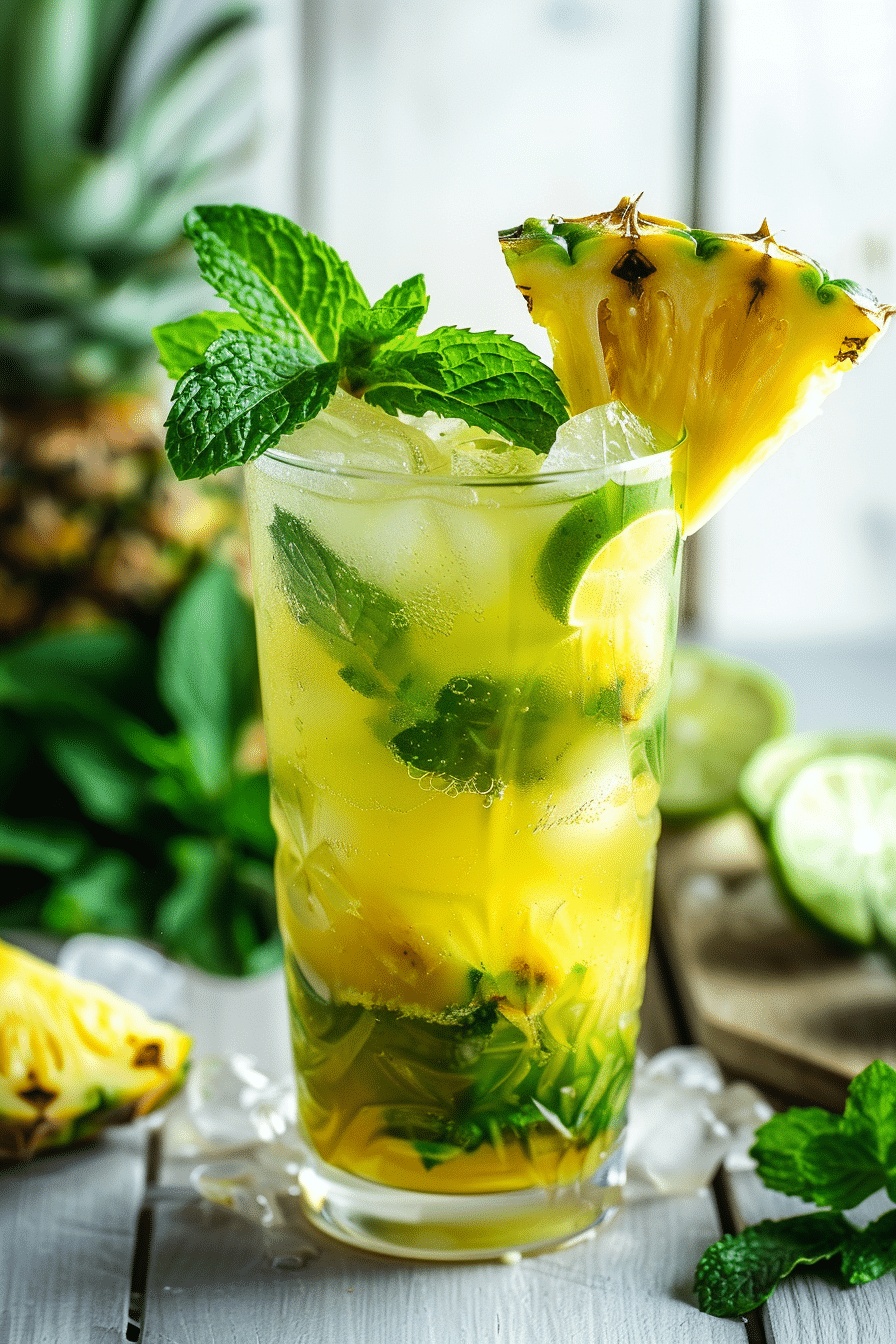
Homemade Pineapple Mojito Bliss: The Ultimate Refreshing Recipe Guide
A homemade pineapple mojito is one of those drinks that instantly turns any ordinary day into a tiny vacation. The bright, tropical sweetness of pineapple mixed with fresh mint, zesty lime, and bubbly club soda creates a cocktail that tastes like sunshine in a glass. When you make a pineapple mojito at home, you also control the sweetness, the strength of the rum, and even the level of fizz, so you can customize every sip.
Whether you’re hosting a summer barbecue, planning a weekend brunch, or just unwinding after work, this drink delivers both flavor and fun. Plus, it pairs beautifully with light salads, fresh fruit, and even hearty grilled dishes. If you enjoy fresh, vibrant recipes, you might also love this refreshing strawberry banana smoothie recipe for a morning pick-me-up. In this guide, you’ll learn everything you need to know about making the perfect homemade pineapple mojito, from the best ingredients to common mistakes, flavor variations, and even how to adapt it for a crowd. By the end, you’ll feel confident enough to mix bar-quality mojitos right in your own kitchen.
Table of Contents
Understanding the Magic of a Homemade Pineapple Mojito
Why Pineapple Mojitos Taste So Refreshing
A homemade pineapple mojito works so well because it layers different kinds of flavor in one glass. First, you have acidity from fresh lime juice. That bright, tangy note wakes up your taste buds and balances the natural sweetness of pineapple. Next comes the sweetness, which usually comes from pineapple juice and optionally a touch of simple syrup or sugar. Pineapple has both sweetness and a slight tartness, which gives the drink more complexity than using plain sugar alone.
Then you add fresh mint leaves, which bring a cooling, herbal quality that keeps the drink from tasting cloying. Mint and lime together are classic mojito flavors, but when you mix them with pineapple, the drink becomes even more tropical and vibrant. On top of that, club soda adds bubbles, which lift the aroma of mint and lime so each sip feels light and lively, not heavy. Rum adds warmth and depth, but the goal is balance, not intensity. In a well-made pineapple mojito, you can taste each component without one overpowering the others, and that harmony is what makes the drink so refreshing.
Classic Mojito vs. Homemade Pineapple Mojito
A traditional mojito combines lime, mint, sugar, white rum, and soda water. It’s crisp, citrus-forward, and relies mostly on lime’s acidity and mint’s freshness. When you turn that classic into a homemade pineapple mojito, the recipe gains a fuller, juicier body and more lush sweetness. Instead of relying solely on sugar, you get natural sweetness from pineapple juice or fresh pineapple chunks.
This subtle change shifts the entire profile from sharp and citrusy to soft, tropical, and aromatic. Additionally, pineapple includes natural enzymes like bromelain, which can add a delicate, almost creamy mouthfeel to the drink. That makes each sip feel smoother and rounder. You still use plenty of lime and mint, but they no longer dominate the glass; instead, they support the pineapple. Another key difference is versatility. A classic mojito fits more strictly into the “cocktail hour” zone, but a pineapple mojito feels equally at home at brunch, on a sunny afternoon, or for a relaxed evening by the grill.
Because of the fruit content, it also pairs better with fruity salads like citrus-based dishes or recipes like a citrus fennel avocado winter salad, especially when you want a bright, refreshing combination.
Print
Homemade Pineapple Mojito
Description
This homemade pineapple mojito is refreshing, tropical, and easy to make with fresh pineapple, mint, lime, and white rum. Perfect for summer parties or relaxing evenings.
Ingredients
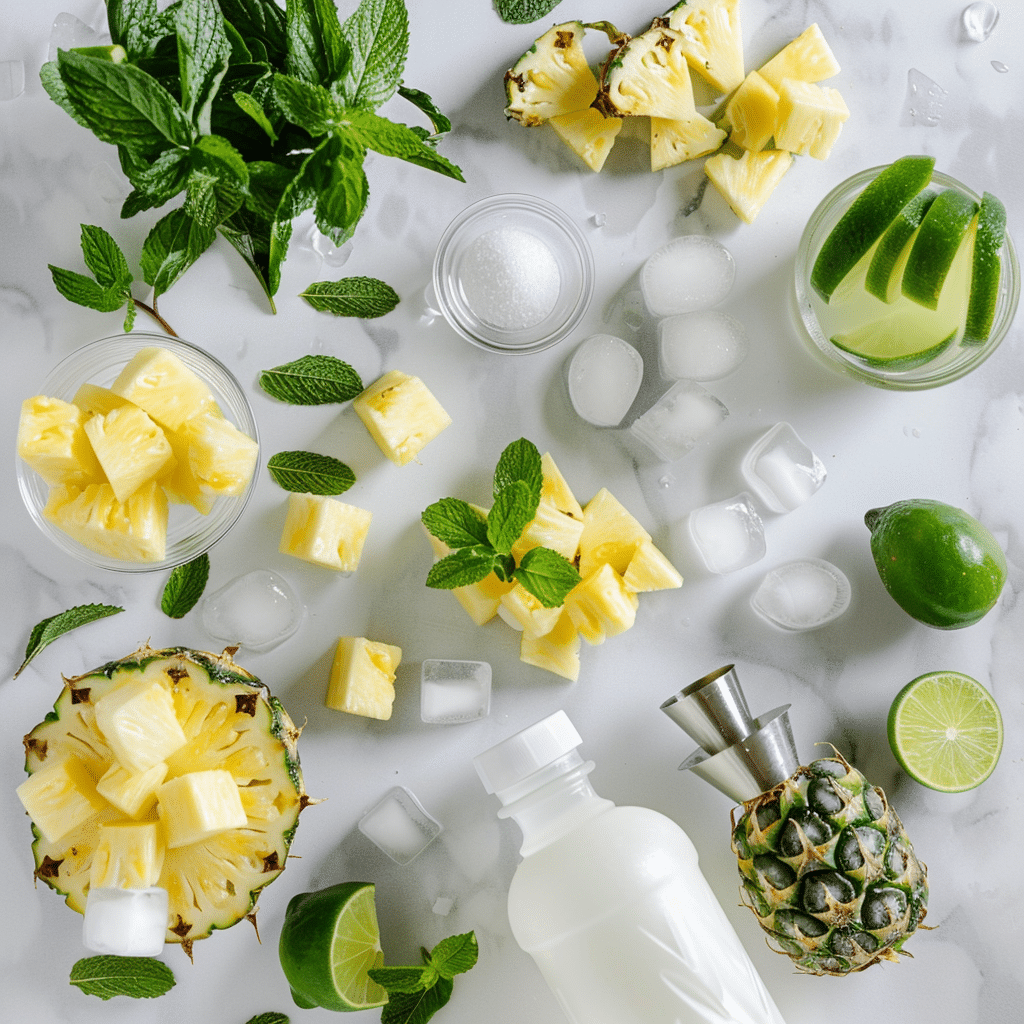
1/2 cup fresh pineapple chunks or pineapple juice
10 fresh mint leaves
1 lime, cut into wedges
2 teaspoons sugar or simple syrup
2 oz white rum
Ice cubes
Club soda
Fresh mint and pineapple slices for garnish
Instructions
Add mint leaves, lime wedges, and sugar to a sturdy glass.
Gently muddle to release mint aroma and lime juice.
Add pineapple chunks or pineapple juice.
Fill the glass with ice cubes.
Pour in white rum and stir well.
Top with club soda to taste.
Garnish with fresh mint and pineapple and serve immediately.
Notes
For a mocktail version, omit the rum and add extra pineapple juice and soda.
Use fresh lime juice for best flavor.
Adjust sweetness based on pineapple ripeness.
Perfect for pitcher batches when hosting.
Essential Ingredients for the Best Homemade Pineapple Mojito
Choosing the Right Pineapple, Mint, and Lime
To make a truly great homemade pineapple mojito, you must start with high-quality ingredients. Fresh pineapple always tastes better than canned, especially when it’s ripe and fragrant. Look for a pineapple with a golden color at the base, a sweet smell, and leaves that pull out with gentle tugging. If you can’t find good fresh pineapple, use 100% pineapple juice with no added sugar or flavorings. Fresh mint is just as important.
The leaves should be vibrant green, not wilted or dark. Spearmint works wonderfully because it’s gentle and fragrant without tasting like toothpaste. For lime, always choose fresh, never bottled juice. Good limes feel heavy for their size and give a little when pressed. Their natural acidity brightens the drink and keeps the pineapple from feeling too sweet. Together, these ingredients create the backbone of your mojito. If even one tastes dull or bland, the entire drink suffers. Since this drink depends more on freshness than technique, investing in the best produce you can find will reward you in every single sip.
Rum, Sweeteners, and Sparkling Components
After you source your fruit and herbs, focus on the liquid components that give your homemade pineapple mojito structure. White rum is the classic choice because it offers a clean, light flavor that doesn’t overshadow the pineapple and mint. Choose a decent mid-range rum; you don’t need a super premium bottle, but avoid the very cheapest options that can taste harsh.
For sweetness, you can use granulated sugar, superfine sugar, or simple syrup. Simple syrup tends to blend more easily into cold drinks, resulting in a smoother texture. Since pineapple already adds natural sweetness, start with a small amount of extra sugar and taste as you go. For the fizz, club soda is standard because it adds bubbles without extra flavor. You could also use sparkling water or even a lightly flavored seltzer if it complements pineapple, like a lime or coconut flavor.
However, avoid sugary sodas, which can overpower the drink and make it taste artificial. Ultimately, each of these ingredients supports the fresh produce. When balanced correctly, the rum adds warmth, the sweetener softens the acidity, and the fizz lifts all the flavors so your mojito feels lively and refreshing instead of heavy.
Step-by-Step: How to Make a Homemade Pineapple Mojito
Muddling Mint and Lime the Right Way
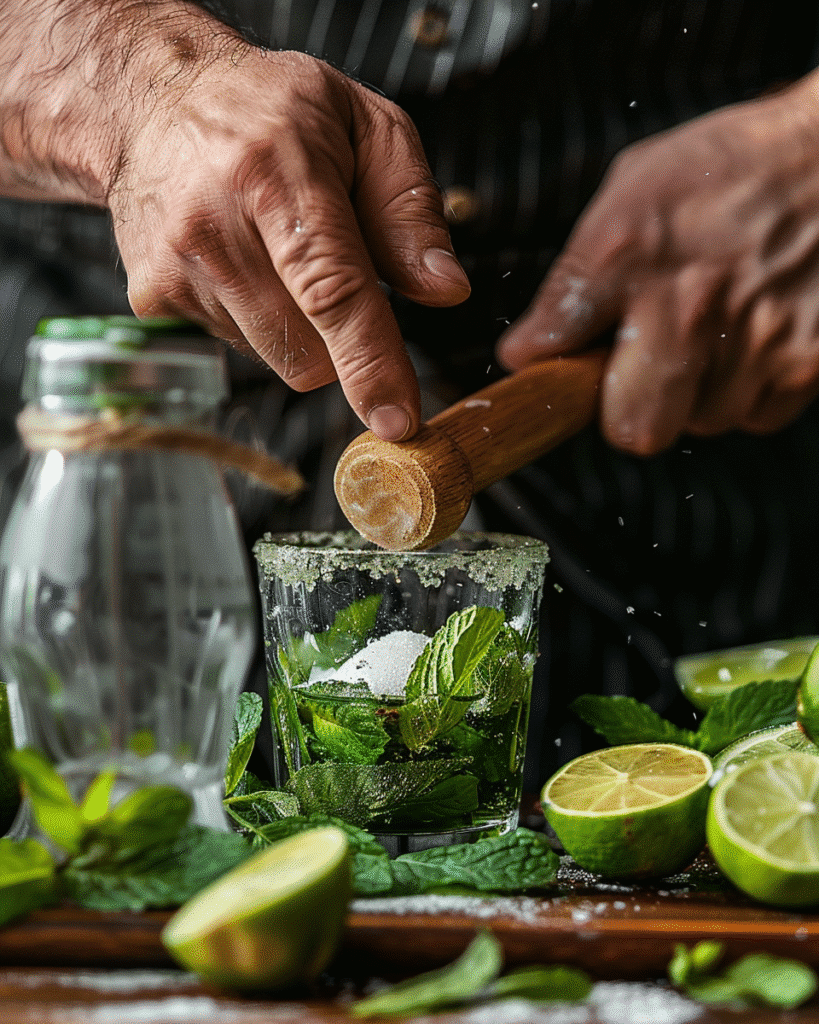
Muddling may sound like a small step, but it makes or breaks your homemade pineapple mojito. The goal is to release mint’s essential oils and lime’s juice and zest without shredding the leaves into bitter fragments. Start by placing fresh mint leaves and lime wedges in the bottom of a sturdy glass or cocktail shaker. Add your sugar or simple syrup at this stage as well, because the grit helps draw out flavor.
Use a muddler or the end of a wooden spoon to press down gently on the mint and lime. Twist slightly, but don’t pound or grind. Over-muddling crushes the mint and releases chlorophyll, which can make your drink taste grassy or bitter. You want the leaves to bruise lightly, becoming darker and more fragrant, and the lime to release its juice and aromatic oils from the peel.
This step also starts to dissolve the sugar in the lime juice. Give yourself 10–15 seconds of careful muddling, enough to smell the mint strongly but still clearly see whole pieces of leaf. Once this mixture smells very aromatic, you’re ready to build the rest of your homemade pineapple mojito.
Building, Shaking, and Serving the homemade pineapple mojito
After muddling mint, lime, and sweetener, add pineapple. You can use fresh pineapple chunks that you gently press once or twice, or you can pour in pineapple juice. Then add ice to the shaker or directly into the glass. Next, pour in your measured amount of white rum. If you’re using a shaker, shake the mixture for about 10–15 seconds until the outside feels cold.
Shaking helps chill the drink quickly, integrate ingredients, and slightly dilute the mixture to balance the flavors. If building directly in the glass, stir vigorously with a long spoon for at least 20–30 seconds. Then top the glass with club soda or sparkling water. The bubbles should gently lift the mint leaves and lime pieces for an appealing look. Garnish with a sprig of mint and a wedge or slice of pineapple on the rim.
For a more dramatic look, you can add a lime wheel or a pineapple spear. Serve immediately with a straw, which helps you sip through the mint and fruit without getting pieces stuck in your teeth. This process gives you a chilled, refreshing homemade pineapple mojito that looks as good as it tastes.
Balancing Flavors in Your Homemade Pineapple Mojito
Getting the Sweet-Tart Balance Just Right
The best homemade pineapple mojito feels balanced: not too sweet, not too sour, and never harsh. Pineapple brings natural sugar, but its tartness can vary by fruit. That’s why you should always taste your pineapple before mixing. If it’s very sweet, cut back on added sugar or simple syrup. If it’s more tart or under-ripe, you may need a little extra sweetener to soften the edges.
Lime juice provides acidity, which you can adjust in small increments. Start with a standard ratio, such as 1 ounce lime juice to 2–3 ounces pineapple juice and 2 ounces rum. Then adjust based on your palate. If your first sip feels too sharp, add a splash more pineapple juice or a tiny amount of syrup. If it tastes flat or cloying, squeeze in more lime. Mint also influences perceived sweetness because its cooling effect makes sugar feel more balanced. Always taste after adding club soda, since dilution and bubbles can soften flavors. With a little practice, you’ll instinctively know how to tweak your mojito so every batch feels perfectly tuned.
Adjusting your homemade pineapple mojito : Strength, Sweetness, and Fizz for Different Guests
Not everyone at your gathering will want the same style of homemade pineapple mojito. Some guests may prefer a lighter drink, while others may enjoy a more spirit-forward cocktail. You can easily adapt the recipe. For a lighter mojito, reduce the rum to 1–1.5 ounces and increase club soda or pineapple juice. The drink will still feel flavorful but have less alcohol content. For a bolder version, keep the same volume of liquid but increase rum slightly and reduce soda, making sure to maintain enough lime and pineapple to keep it balanced.
If you have guests who don’t drink alcohol, you can make a pineapple mojito mocktail by leaving out the rum and increasing pineapple juice and soda water. Adding a touch of extra lime and mint keeps the taste complex. To manage sweetness, place extra simple syrup in a small pitcher so guests can add more to their glass. Similarly, keep chilled soda water nearby to boost fizz as needed. With these adjustments, you can offer a custom experience that suits everyone’s preferences without having to mix completely different drinks each time.
Fun Variations on the Homemade Pineapple Mojito
Fruity Twists: Strawberry, Mango, and Coconut Pineapple Mojitos
Once you master the base homemade pineapple mojito, experiment with fruit variations that keep the drink exciting. A pineapple-strawberry mojito adds juicy red berries, which deepen the color and add a delicate berry sweetness. Muddle a few sliced strawberries with the mint and lime before adding pineapple. This version pairs beautifully with light snacks or fruity sides like a panzanella salad recipe on warm days. For a tropical twist, swap part of the pineapple juice with mango puree.
Mango brings rich, velvety sweetness and a golden color that feels indulgent. Since mango can be very sweet, add extra lime to keep the drink bright. Coconut pineapple mojitos combine pineapple juice with a splash of coconut water or coconut rum. Coconut water lightens the drink and adds electrolytes, while coconut rum increases richness. You may need to reduce added sugar, because coconut-flavored spirits often taste sweet. These fruity variations keep the basic mojito structure but let you follow seasonal produce or your mood, so each gathering can feel unique.
Spicy, Herbal, and Seasonal Pineapple Mojito Ideas
Beyond fruit, you can customize your homemade pineapple mojito with spices and herbs to create more complex layers of flavor. For a spicy pineapple mojito, add a thin slice of fresh jalapeño or serrano pepper to the muddling step. The heat contrasts with the pineapple’s sweetness and makes the drink especially refreshing. Just remember that the spice intensifies over time, so remove the pepper slice if you make a pitcher and don’t plan to serve immediately.
Herbal additions like basil or cilantro can give your mojito a sophisticated edge. Replace part of the mint with fresh basil leaves for a slightly anise-like note that pairs well with pineapple. In cooler months, you can make a “winter” pineapple mojito by adding a small pinch of ground cinnamon or a cinnamon stick as a garnish, plus a bit more lime to keep it bright. This twist pairs nicely with heartier salads such as a warm lentil and roasted vegetable salad, offering a refreshing contrast. With thoughtful tweaks, your pineapple mojito can fit every season and occasion.
Homemade Pineapple Mojito for a Crowd
Scaling Up to a Pitcher or Party Batch
Serving a homemade pineapple mojito at a party becomes much easier if you scale it up into a pitcher. Instead of making each drink individually, you can prepare a base mixture and simply top glasses with ice and soda water. To do this, muddle mint, lime wedges, and sugar in the bottom of a large pitcher.
Use a wooden spoon if you don’t have a large muddler. Then add pineapple juice and rum in larger quantities, following your preferred ratio. For example, for eight servings, you might combine 2 cups pineapple juice, 1 cup fresh lime juice, 2 cups white rum, and ½–¾ cup simple syrup, depending on sweetness. Stir well and chill the mixture for at least 30–60 minutes to allow the flavors to meld.
When ready to serve, fill each glass with ice, pour the pineapple-lime-mint-rum mixture two-thirds full, and top with chilled club soda. Garnish with extra mint and pineapple. This approach keeps the drink fresh and fizzy while letting you enjoy your guests instead of mixing nonstop.
Keeping Big-Batch Mojitos Fresh, Fizzy, and Balanced
The main challenge with a pitcher of homemade pineapple mojito is maintaining freshness. Mint can darken over time, lime can lose brightness, and soda can go flat. To avoid these issues, always add club soda directly to each glass instead of mixing it into the pitcher. This keeps carbonation lively. You can also strain out muddled lime peels and mint stems from the pitcher base after it chills, then add fresh mint leaves right before serving for a vibrant look.
Keep the pitcher refrigerated or in an ice bucket so the drink stays cold. Taste the batch before serving and adjust sweetness or lime as needed, flavors can mellow in the fridge. If your batch tastes dull, a small squeeze of fresh lime or a spoonful of syrup can revive it. For outdoor events, consider keeping extra mint sprigs and pineapple garnishes on a tray so guests can personalize their glass. With these simple strategies, your large-batch mojito will maintain the same punchy, refreshing flavor as an individually made cocktail.
Health, Nutrition, and Lighter Pineapple Mojito Options
Nutritional Profile and Smart Ingredient Swaps
A homemade pineapple mojito, like most cocktails, contains sugar and alcohol, but you can make smarter choices to lighten it without losing flavor. Pineapple juice does provide vitamin C, manganese, and some antioxidants, while mint offers small amounts of phytonutrients. However, most calories come from rum and added sweeteners. To reduce sugar, start with less simple syrup and use very ripe pineapple for natural sweetness. You can also replace some pineapple juice with sparkling water to cut calories.
Choosing a smaller glass size or reducing the rum per serving lowers overall alcohol intake while keeping the same refreshing taste experience. Another idea is to serve mojitos alongside nutrient-dense dishes such as a cranberry apple quinoa winter salad, which offers fiber, protein, and micronutrients that help balance a richer drink. Moderation remains key; enjoying one well-crafted cocktail mindfully often feels more satisfying than several overly sweet ones.
Mocktail and Wellness-Inspired Pineapple Mojito Versions
If you avoid alcohol or simply want a lighter option, you can easily transform a homemade pineapple mojito into a mocktail. Skip the rum and rely on a vibrant mix of pineapple juice, lime juice, mint, and sparkling water. To keep the flavor complex, add a splash of ginger juice or a dash of bitters (alcohol-free, if needed).
You can even incorporate elements from wellness drinks, such as a tiny amount of turmeric or a ginger shot, similar to ideas in wellness shot juice recipes and benefits. Serve the mocktail in the same beautiful glassware, with plenty of ice and garnish, so it feels just as special as the alcoholic version. For a spa-like twist, add cucumber slices or a few crushed blueberries. These ingredients contribute antioxidants and visual appeal. Offering a dedicated mocktail option at gatherings ensures everyone feels included, and it allows you to enjoy the essence of a mojito’s bright, herbal, and citrus flavors even when you’re not drinking alcohol.
Serving, Pairing, and Presentation Tips
Food Pairings: What to Serve with Homemade Pineapple Mojitos
The tropical, citrusy profile of a homemade pineapple mojito makes it a natural companion for a variety of dishes. Light, crisp salads are perfect, since they echo the freshness of the drink. Choices like a kale-based salad or even a bright Brussels sprout salad recipe guide create a crunchy, tangy side that complements the sweetness of pineapple. Grilled seafood such as shrimp skewers, fish tacos, or lime-marinated salmonpairs wonderfully because the acidity in the mojito cuts through the richness of the fish.
If you serve spicy dishes, like tacos or grilled chicken with chili seasoning, the cooling mint and pineapple sweetness help balance the heat. Even classic cookout fare like grilled vegetables, corn on the cob, or simple chicken skewers works well with mojitos. Avoid pairing them with very heavy, creamy dishes that can overwhelm the drink’s delicate flavors. Instead, think of fresh herbs, citrus, and colorful vegetables as your guiding theme. This way, your menu and your cocktail feel harmonious, making the entire meal more enjoyable.
Glassware, Garnishes, and Ice Techniques
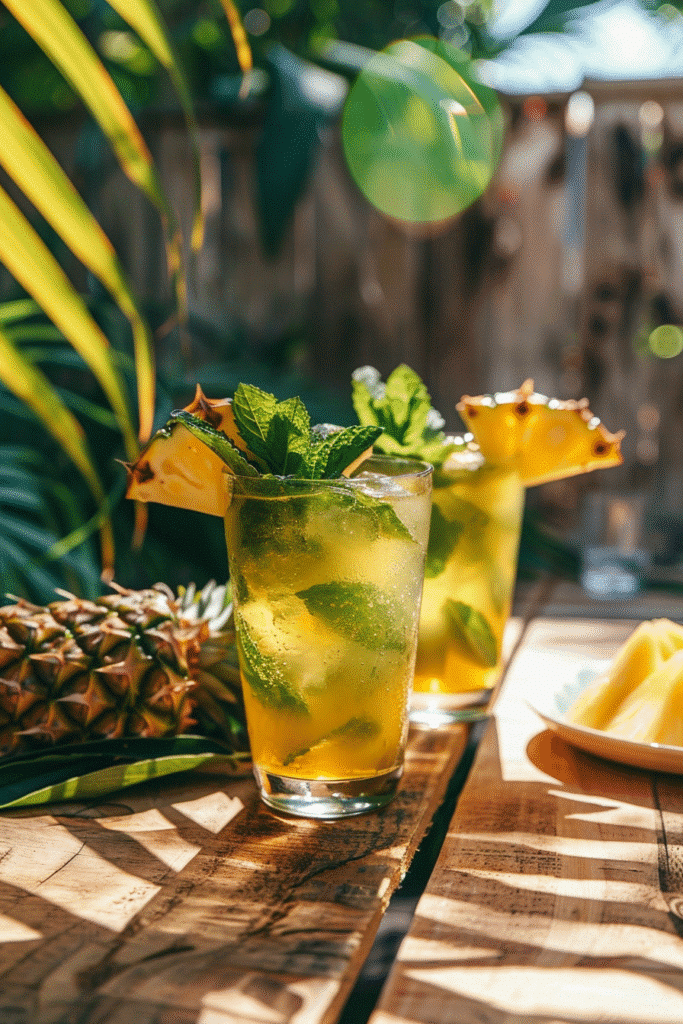
Presentation can transform your homemade pineapple mojito from a basic mixed drink into a memorable experience. Traditionally, mojitos are served in tall highball glasses, which showcase the layers of mint, lime, and pineapple. Clear glass is ideal, since it lets guests see the bright colors and rising bubbles. Fill the glass with plenty of ice, preferably large cubes or even cracked ice.
Smaller cubes melt too quickly and can dilute the drink. For garnish, always include a fresh mint sprig near the rim. Gently slap the mint between your hands before adding it; this releases aromatic oils and intensifies the scent. A lime wheel or wedge plus a pineapple slice or spear on the rim signal the drink’s flavor.
If you want a more festive look, you can rim the glass with sugar flavored with lime zest. Paper straws or reusable metal straws make sipping easier and help pull the aroma from the mint toward your nose. With thoughtful glassware, ice, and garnishes, your mojito feels like a crafted cocktail, even when made at home.
Troubleshooting and Common Mistakes with Pineapple Mojitos
Avoiding Bitterness, Flatness, and Overpowering Sweetness
Even with a simple recipe, a homemade pineapple mojito can go wrong if you overlook a few details. Bitterness usually comes from over-muddling mint or using too much of the white pith from lime peels. To avoid this, muddle gently and avoid scraping the sides of the glass or crushing mint into tiny pieces. Flat flavor often results from poor-quality pineapple juice or bottled lime juice.
Always choose fresh whenever possible, and taste your ingredients individually before mixing. If your mojito ends up too sweet, you can rescue it by adding more lime juice and extra club soda to dilute the sugar. Overly sugary drinks feel heavy and mask the drink’s refreshing qualities, so start with less sweetener and add more if needed. If your mojito tastes weak or watery, you may have used too little rum or too much melting ice. In that case, chill all your ingredients in advance and build the drink quickly, so ice dilutes it more slowly.
Fixing Texture, Appearance, and Batch Consistency
Texture and appearance also matter in a homemade pineapple mojito. Drinks that look murky or overloaded with mint bits feel less appealing. To create a cleaner look, you can double-strain the shaken mixture through a fine mesh strainer into the glass, then add a few fresh mint leaves as a final touch. If you use fresh pineapple chunks, make sure they’re small enough to release juice but not so tiny they create a pulpy mess. In larger batches, consistency can become an issue.
If the first glasses taste stronger than the last, you likely had uneven mixing or melting ice in the pitcher. Always stir the base mixture thoroughly before each pour. Consider measuring each serving into the glass, then topping with soda and ice in a consistent order. Also, remember that as a batch sits, lime and pineapple flavors can mellow. Taste and re-balance with small additions of lime or syrup as needed. By monitoring both flavor and appearance, you can serve a mojito that looks elegant and tastes bright, every single time.
FAQ Section – Homemade Pineapple Mojito
How can I make a homemade pineapple mojito without alcohol?
To make a non-alcoholic homemade pineapple mojito, simply skip the rum and build flavor with fruit, herbs, and fizz. Start by muddling fresh mint leaves, lime wedges, and a small amount of sugar or simple syrup in the bottom of a glass. Add pineapple juice or muddled pineapple chunks, then fill the glass with ice. Top it off with club soda or sparkling water. Taste and adjust sweetness or lime to your liking. For extra complexity, add a splash of ginger juice or a few drops of alcohol-free bitters. The result is a refreshing mocktail that keeps the classic mojito flavor profile—minty, citrusy, and tropical—while remaining suitable for kids, pregnant guests, or anyone avoiding alcohol.
Can I use canned pineapple or bottled juice in a pineapple mojito?
Yes, you can use canned pineapple or bottled pineapple juice in a homemade pineapple mojito, but choose carefully. Look for pineapple packed in 100% juice rather than heavy syrup, since syrup can make the drink overly sweet and artificial-tasting. If using canned pineapple chunks, drain them well and lightly muddle with mint and lime to release flavor. For bottled juice, select a brand with no added sugar or flavorings and a clean, fresh taste. Because canned and bottled products sometimes taste sweeter than fresh fruit, start with less added sugar and adjust after tasting. Fresh pineapple usually offers brighter, more complex flavor, but high-quality juice can still yield a delicious cocktail when fresh fruit is out of season or unavailable.
How do I store leftover pineapple mojito mix?
If you have leftover homemade pineapple mojito mix, store it without the club soda to prevent it from going flat. Strain out most of the muddled mint stems and lime peels, since they can become bitter over time. Transfer the liquid, pineapple juice, lime, rum, and sweetener, into an airtight glass jar or bottle and refrigerate it. The mix usually tastes best within 24–48 hours, though it can last up to three days if properly chilled. Before serving again, taste the mixture; flavors may mellow, so you might need a small squeeze of fresh lime or a touch of syrup to restore balance. When you’re ready to serve, pour the chilled base over ice, add fresh mint if desired, and top with club soda for fresh fizz.
What type of rum is best for homemade pineapple mojito ?
White rum is generally the best choice for a homemade pineapple mojito because it has a clean, light flavor that lets the pineapple, lime, and mint shine. Look for a mid-range white rum from a trusted brand; you don’t need an expensive aged rum, but avoid very cheap options that can taste harsh or overly alcoholic. If you want a stronger tropical note for you homemade pineapple mojito, you can substitute part of the white rum with coconut rum, but reduce added sugar, since flavored rum often comes sweeter. Dark or spiced rums can work for a more robust, dessert-like variation, yet they tend to dominate the drink and change the classic mojito character. For most situations, a smooth white rum delivers the best balance and versatility.
How can I make my pineapple mojito look more professional?
To make your homemade pineapple mojito look professional, focus on glassware, garnish, and clarity. Use a tall highball or Collins glass so the drink’s layers of mint, lime, and pineapple are visible. Fill it nearly to the top with clear ice cubes, which melt more slowly and look clean. After mixing, you can double-strain the mojito through a fine mesh strainer to remove tiny mint fragments, then add a few fresh leaves for visual appeal. Garnish with a tall mint sprig near the rim, a lime wheel, and a pineapple slice or spear. Lightly slap the mint before placing it to release aroma. Optionally, rim the glass with sugar mixed with lime zest. Attention to these details creates a bar-quality presentation without complicated tools.
Conclusion: Enjoying Your Best-Ever Homemade Pineapple Mojito
A homemade pineapple mojito brings together everything people love about a good cocktail: fresh ingredients, bright flavors, and just enough sweetness to feel indulgent without becoming heavy. By choosing quality pineapple, mint, and lime, using a balanced ratio of rum and sweetener, and learning gentle muddling techniques, you can consistently create a drink that tastes like a mini beach vacation in a glass.
Once you master the basics, you can experiment with fruits, herbs, and even mocktail versions, pairing them with fresh, vibrant dishes like a crisp kale salad recipe for a complete, refreshing meal. Remember to adjust sweetness, acidity, and fizz to suit your guests, and don’t hesitate to prepare pitcher batches when hosting. With a bit of practice, you’ll find that making mojitos at home is not only simple but also deeply satisfying, turning everyday moments into something worth savoring.
For more seasonal Mocktails inspirations like homemade pineapple mojito, check out my Pinterest.