
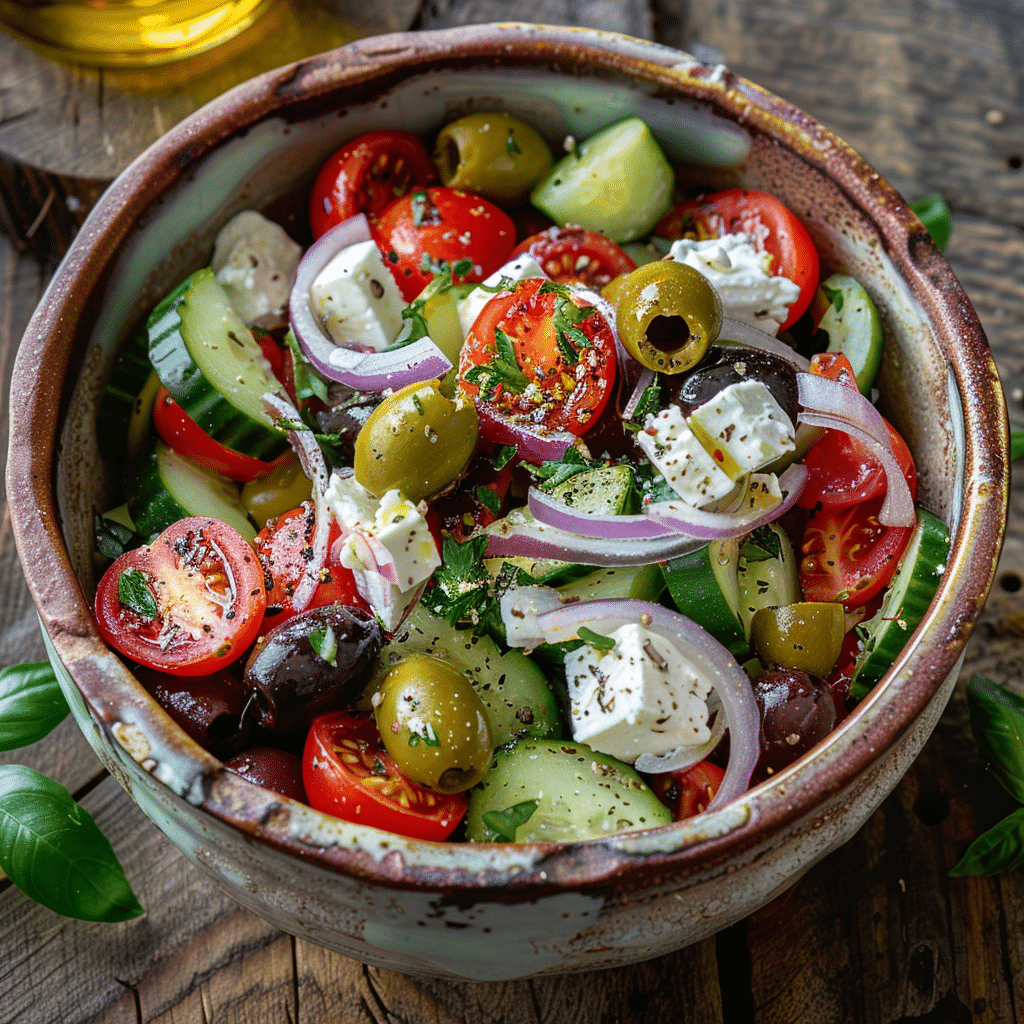
Greek salad is one of the simplest yet most flavorful dishes you can bring to your table. Made with crisp cucumbers, juicy tomatoes, tangy feta cheese, and rich Kalamata olives, it captures the true essence of the Mediterranean diet. This recipe celebrates fresh, seasonal ingredients, dressed in a light, zesty vinaigrette that makes every bite refreshing.
Unlike leafy salads, the traditional Greek salad stands out with bold textures and a harmony of savory, salty, and tangy notes. It’s perfect as a side dish, light lunch, or centerpiece for any summer gathering. Learn how to make an authentic Greek salad at home, understand what makes it healthy, and discover tips to adapt it to your taste.
Don’t miss our refreshing Cucumber Salad for another Mediterranean favorite that pairs perfectly with this dish.
Table of Contents
Table of Contents
The Essence of an Authentic Greek Salad
What Makes a Greek Salad Unique?
Greek salad, or Horiatiki, is a cornerstone of traditional Greek cuisine. It’s a rustic salad born from the country’s coastal and countryside roots, where farmers used what was freshest and most abundant—cucumbers, tomatoes, onions, olives, and feta. Unlike modern variations that include lettuce or other greens, the authentic Greek salad focuses on the natural flavors of vegetables at their peak ripeness.
Each ingredient plays a role. The cucumber brings crunch, the tomato adds juiciness, the red onion offers a mild bite, and the olives provide richness. Feta ties it all together with its creamy, salty balance. This combination makes it not just delicious but also a celebration of simplicity and balance—the essence of Greek cooking.
The Mediterranean Philosophy Behind Greek Salads
The Mediterranean diet, widely recognized for its health benefits, emphasizes whole foods and heart-healthy fats. Greek salad perfectly embodies this philosophy: fresh produce, extra-virgin olive oil, and a handful of herbs form a nutrient-dense, wholesome dish that nourishes both body and soul.
Olive oil provides antioxidants and monounsaturated fats that support heart health, while tomatoes supply lycopene, a powerful anti-aging compound. The feta and olives contribute calcium and beneficial probiotics. Together, these ingredients create one of the healthiest and most satisfying salads you can eat.
How Simplicity Enhances Flavor
What makes the Greek salad stand apart is how few ingredients it uses to achieve so much flavor. There’s no need for complex sauces or heavy dressings—just a drizzle of olive oil, a splash of red wine vinegar, and a sprinkle of oregano. The secret lies in ingredient quality: ripe tomatoes, crisp cucumbers, and feta preserved in brine elevate this simple salad to perfection.
Every forkful bursts with freshness, texture, and balance, proving that sometimes the simplest dishes are the most extraordinary.
Print
Greek Salad,The Ultimate Classic Recipe for Freshness and Flavor
- Total Time: 15 minutes
- Yield: 4 servings 1x
Description
This easy Greek Salad recipe combines juicy tomatoes, crisp cucumbers, tangy feta, and briny olives with a zesty homemade dressing. Perfect for summer meals or light lunches.
Ingredients
Dressing
¼ cup extra-virgin olive oil
3 tablespoons red wine vinegar
1 garlic clove, minced
½ teaspoon dried oregano, more for sprinkling
¼ teaspoon Dijon mustard
¼ teaspoon sea salt
Freshly ground black pepper
For the Salad
1 English cucumber, cut lengthwise, seeded, and sliced ¼-inch thick
1 green bell pepper, chopped into 1-inch pieces
2 cups halved cherry tomatoes
5 ounces feta cheese, cut into ½-inch cubes
⅓ cup thinly sliced red onion
⅓ cup pitted Kalamata olives
⅓ cup fresh mint leaves
Instructions
1. Make the dressing: In a small bowl, whisk together olive oil, vinegar, garlic, oregano, mustard, salt, and pepper.
2. Arrange the cucumber, green pepper, tomatoes, feta, red onions, and olives on a platter.
3. Drizzle with the dressing and gently toss.
4. Sprinkle oregano and top with mint leaves.
5. Serve immediately and enjoy.
Notes
*Use feta in brine for a creamier texture.
This Greek Salad can be prepared ahead, but add dressing right before serving.
Pairs perfectly with grilled seafood or pita bread.
- Prep Time: 15 minutes
- Cook Time: 0 minutes
- Category: Salad
- Method: No-cook
- Cuisine: Greek / Mediterranean
Nutrition
- Serving Size: 1 bowl
- Calories: 180 kcal
- Sugar: 6 g
- Sodium: 470 mg
- Fat: 14 g
- Saturated Fat: 4 g
- Unsaturated Fat: 10 g
- Trans Fat: 0 g
- Carbohydrates: 8 g
- Fiber: 2 g
- Protein: 5 g
- Cholesterol: 25 mg
The Ultimate Guide To Authentic Greek Salad Ingredients
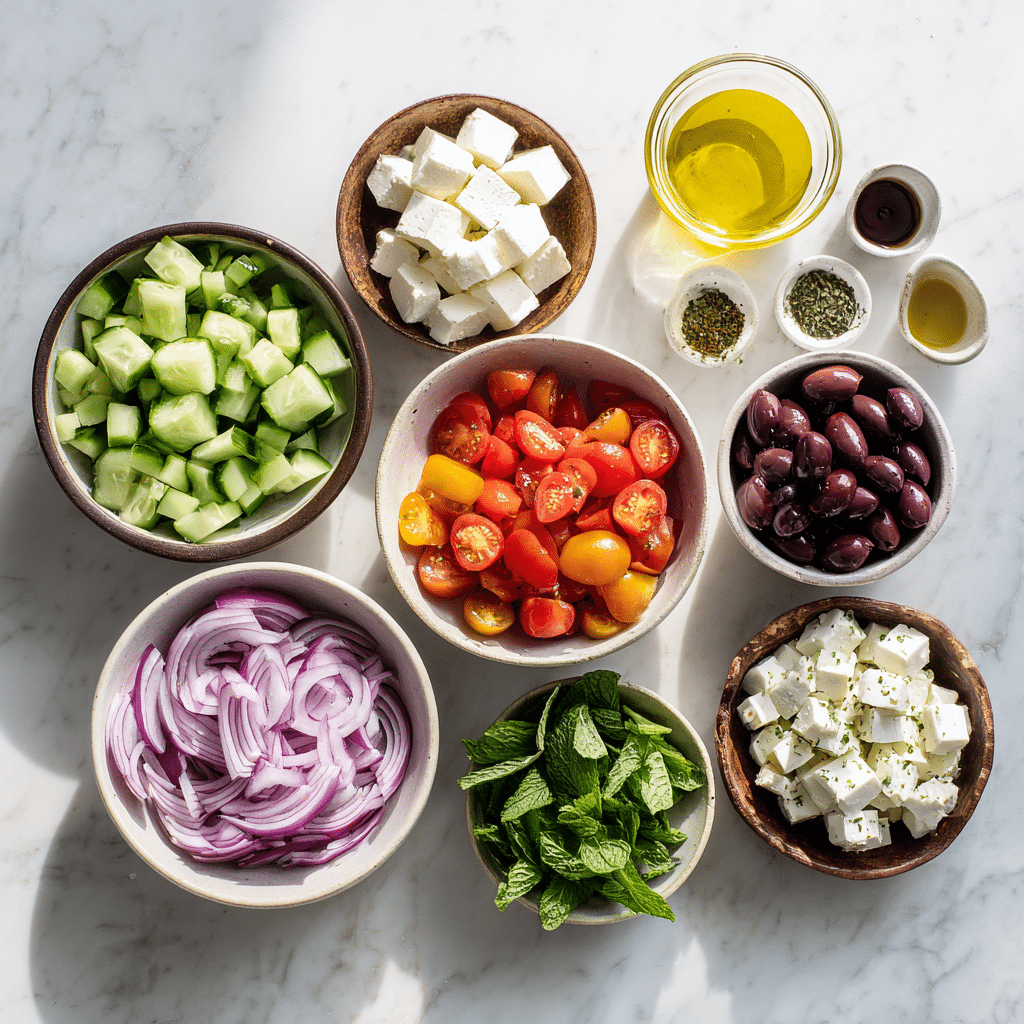
Fresh, Seasonal Vegetables – The Heart of the Salad
A true Greek Salad begins with fresh, seasonal produce. Each vegetable contributes not only to the taste but also to the nutritional richness of the dish. The base includes crisp cucumbers, ripe tomatoes, crunchy green bell peppers, and sharp red onions. These vegetables are naturally hydrating and packed with antioxidants, making the salad refreshing and revitalizing, especially during warm weather.
Tomatoes should be firm yet juicy, bursting with natural sweetness. Cherry tomatoes are often preferred because they release less water than large slicing varieties, keeping the salad crisp. Cucumbers add that satisfying crunch, while green bell peppers bring mild sweetness and a pop of color. Red onions, thinly sliced, balance the flavors with a hint of spice that complements the briny olives and creamy feta.
Feta Cheese – The Creamy, Salty Core
No Greek Salad is complete without feta cheese. Traditionally made from sheep’s milk, feta brings a creamy yet crumbly texture and a salty tang that harmonizes with the other ingredients. For authentic flavor, always choose feta in brine rather than the pre-crumbled variety. The brine preserves moisture and enhances the cheese’s natural tang, giving each bite a smooth, rich finish.
Cut feta into small cubes or thick slices rather than crumbling it entirely. This keeps the cheese from overpowering the other ingredients and allows each forkful to showcase the perfect balance of flavors. Feta is not only delicious but also an excellent source of calcium and protein, contributing to a balanced Mediterranean diet.
Kalamata Olives – The Soul of Mediterranean Flavor
Kalamata olives are the signature ingredient that gives Greek Salad its unmistakable depth. Known for their dark purple color and bold, fruity flavor, these olives are native to the Peloponnese region of Greece. Their slightly bitter, briny taste contrasts beautifully with the sweetness of tomatoes and the creaminess of feta cheese.
Always opt for pitted Kalamata olives for convenience, but avoid canned varieties when possible. Olives preserved in brine or olive oil retain their authentic flavor and texture. Their healthy fats, particularly oleic acid, are linked to heart health and reduced inflammation—key benefits of the Mediterranean way of eating.
The Greek Salad Dressing – Simple Yet Powerful
The dressing for a Greek Salad is refreshingly simple yet profoundly flavorful. It’s a blend of extra-virgin olive oil, red wine vinegar, Dijon mustard, garlic, dried oregano, salt, and pepper. Unlike heavy creamy dressings, this vinaigrette lightly coats the vegetables without overpowering their natural taste.
Here’s a quick breakdown of the classic Greek salad dressing recipe:
| Ingredient | Amount | Purpose |
|---|---|---|
| Extra-Virgin Olive Oil | ¼ cup | Base of the dressing; adds richness and antioxidants |
| Red Wine Vinegar | 3 tablespoons | Adds tang and balances the oil’s richness |
| Minced Garlic | 1 clove | Enhances flavor and adds a subtle spicy note |
| Dried Oregano | ½ teaspoon | Gives the dressing its signature Greek aroma |
| Dijon Mustard | ¼ teaspoon | Acts as an emulsifier, helping oil and vinegar combine smoothly |
| Sea Salt & Black Pepper | To taste | Balances and enhances all other flavors |
Herbs & Finishing Touches
Fresh herbs elevate any salad, and in Greek Salad, mint or oregano play the starring roles. Mint adds a burst of freshness that complements the saltiness of the feta, while oregano adds earthiness and aroma. Sprinkle a little extra oregano over the top just before serving for a truly authentic presentation.
A light drizzle of olive oil before serving adds gloss and flavor. For a gourmet twist, some chefs include a few capers or a squeeze of fresh lemon juice. These minor additions enhance the complexity without straying from the traditional flavor profile.
Proportions and Balance Matter
What makes a Greek Salad memorable is balance. You don’t want any one ingredient to dominate the bowl. A good rule of thumb is to use roughly equal parts of cucumber and tomato, a slightly smaller portion of onions and peppers, and a generous amount of feta and olives to tie it all together. Every forkful should deliver crunch, saltiness, sweetness, and acidity all at once.
Here’s a simple ratio guide for a perfect serving for four people:
| Ingredient | Quantity |
|---|---|
| English Cucumber | 1 (seeded & sliced) |
| Green Bell Pepper | 1 (cut into 1-inch pieces) |
| Cherry Tomatoes | 2 cups (halved) |
| Feta Cheese | 5 ounces (cubed) |
| Red Onion | ⅓ cup (thinly sliced) |
| Kalamata Olives | ⅓ cup (pitted) |
| Fresh Mint Leaves | ⅓ cup (for garnish) |
Don’t miss our Beet Juice recipe—another vibrant Mediterranean favorite packed with antioxidants that pairs beautifully with this salad.
Step-by-Step Instructions, How To Make The Perfect Greek Salad At Home
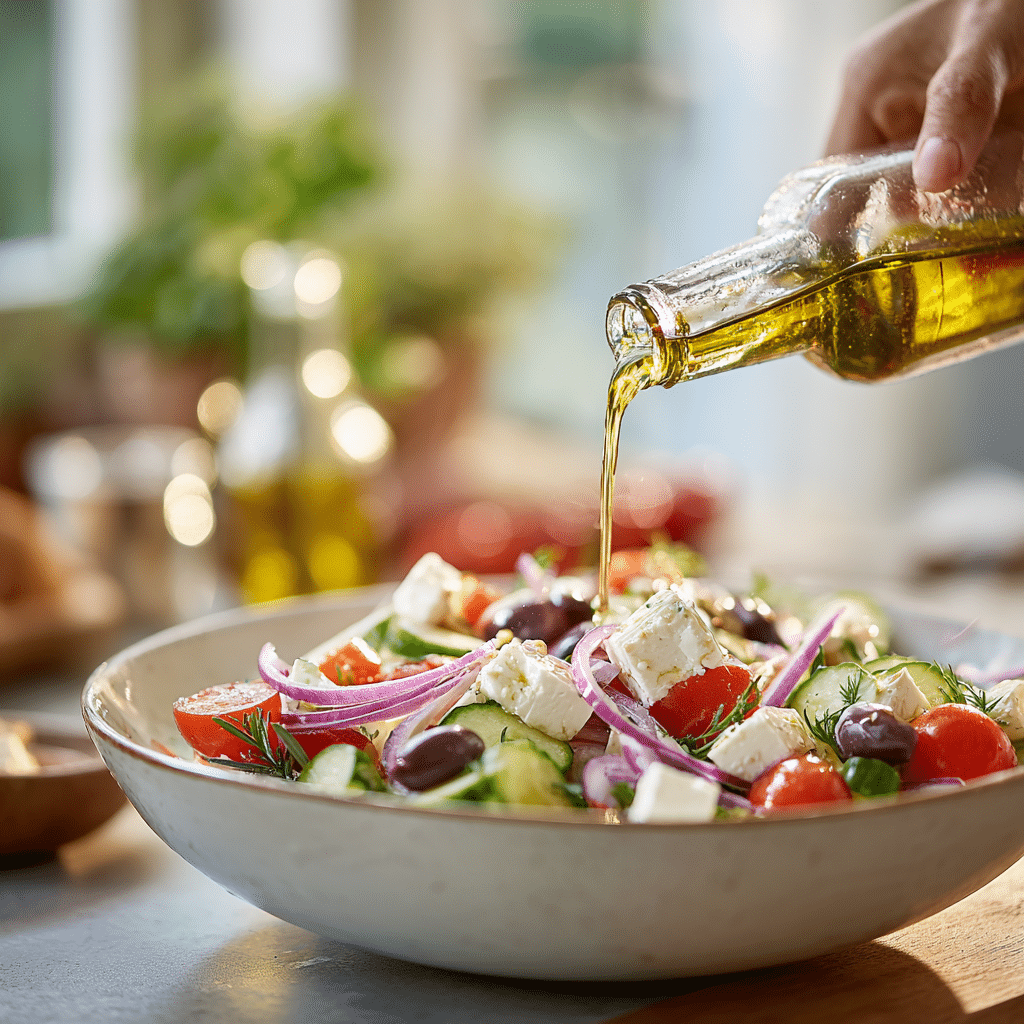
Making a Greek Salad is quick, easy, and incredibly rewarding. You don’t need fancy kitchen tools or hours of prep time, just fresh ingredients, a cutting board, and a few minutes to assemble everything. The beauty of this recipe lies in its simplicity and the quality of the produce you use.
Before you start, chill your serving platter or salad bowl in the refrigerator. A cold bowl helps keep the vegetables crisp and refreshing, especially during warm summer days.
Recipe Overview
| Prep Time | Total Time | Servings | Cuisine | Course |
|---|---|---|---|---|
| 15 minutes | 15 minutes | 4 servings | Greek / Mediterranean | Salad / Side Dish |
Step 1: Prepare the Dressing
In a small bowl, whisk together:
- ¼ cup extra-virgin olive oil
- 3 tablespoons red wine vinegar
- 1 minced garlic clove
- ½ teaspoon dried oregano
- ¼ teaspoon Dijon mustard
- ¼ teaspoon sea salt
- Freshly ground black pepper to taste
Whisk until the dressing is smooth and emulsified. The Dijon mustard helps blend the oil and vinegar, giving you a perfectly balanced vinaigrette that clings beautifully to the vegetables.
Tip: For a more vibrant flavor, let the dressing sit for about five minutes before using it. This allows the garlic and oregano to infuse the olive oil with deeper notes.
Step 2: Chop and Slice the Vegetables
Wash and dry all the vegetables before cutting.
- Slice 1 English cucumber lengthwise, remove the seeds, and cut into ¼-inch thick half-moons.
- Chop 1 green bell pepper into 1-inch pieces for crunch and color.
- Halve 2 cups of cherry tomatoes.
- Thinly slice ⅓ cup of red onion.
Cutting each ingredient into similar sizes ensures that every forkful delivers the perfect mix of flavors and textures.
Step 3: Assemble the Salad
On a large chilled platter or in a wide salad bowl, layer the cucumber, bell pepper, tomatoes, red onion, ⅓ cup pitted Kalamata olives, and 5 ounces of cubed feta cheese.
Drizzle the dressing evenly over the top and gently toss with salad tongs or two spoons. Avoid overmixing—this helps keep the feta cubes intact and the vegetables from bruising.
Step 4: Add the Finishing Touches
Sprinkle a pinch of extra dried oregano on top for a traditional Greek aroma. Add ⅓ cup of fresh mint leaves for brightness and color.
Finally, drizzle a teaspoon of extra olive oil for shine and extra flavor.
The result? A vibrant, refreshing Greek Salad that looks as good as it tastes.
Step 5: Serve and Enjoy
Greek Salad is best served immediately at room temperature or slightly chilled. Serve it as a side to grilled chicken, seafood, or Mediterranean dishes like hummus and pita bread. It also stands perfectly on its own for a light lunch or healthy dinner.
Discover more summer-perfect combinations like our Frutti di Mare Seafood Salad, which pairs beautifully with this Greek classic.
Pro Tips for the Best Greek Salad
- Use Feta in Brine: It stays creamier and saltier than dry crumbled feta.
- Don’t Skip the Vinegar: Red wine vinegar adds brightness that balances the richness of the olive oil and feta.
- Avoid Lettuce: Authentic Greek Salad never includes lettuce—it’s all about crisp, hearty vegetables.
- Chill the Ingredients: Keep everything cold for maximum crunch.
- Let It Marinate (Optional): If you have time, let the salad rest for 10 minutes before serving. The flavors will meld beautifully.
The Amazing Health Benefits Of A Greek Salad — Fresh, Light & Powerful
A Nutrient-Rich Classic You Can Feel Good About
Greek Salad isn’t just delicious—it’s one of the most nutrient-dense dishes you can enjoy. Every bite delivers a balance of vitamins, minerals, and antioxidants that nourish the body. The combination of fresh vegetables, olive oil, feta cheese, and olives makes it a cornerstone of the Mediterranean diet, often celebrated as one of the healthiest in the world.
Unlike creamy salads that rely on heavy dressings, the Greek Salad shines with natural ingredients that promote heart health, digestion, and immunity. It’s low in calories, high in fiber, and packed with beneficial fats—making it an ideal choice for anyone looking to eat cleaner without sacrificing taste.
Greek Salad Nutrition Facts (Per Serving)
| Nutrient | Amount (Approx.) | Health Benefit |
|---|---|---|
| Calories | 180 kcal | Low-calorie, satisfying meal option |
| Protein | 6 g | Supports muscle repair and fullness |
| Fat | 14 g (mostly healthy fats) | Provides omega-3s and heart-healthy monounsaturated fats |
| Carbohydrates | 10 g | Steady energy without spikes in blood sugar |
| Fiber | 4 g | Improves digestion and promotes gut health |
| Sodium | 480 mg | Adds flavor but should be monitored for low-sodium diets |
| Vitamin A | 25% DV | Promotes eye and skin health |
| Vitamin C | 30% DV | Boosts immunity and collagen formation |
The Role of Each Ingredient in Your Health
1. Olive Oil: The Liquid Gold of the Mediterranean
Extra-virgin olive oil is one of the healthiest fats on earth. It’s rich in antioxidants and monounsaturated fatty acids that help lower bad cholesterol while supporting heart health. Olive oil also enhances nutrient absorption from vegetables like tomatoes and cucumbers, making your salad even more beneficial.
2. Feta Cheese: Protein and Calcium Boost
Feta may be salty, but it’s packed with protein, calcium, and probiotics. It supports bone strength and digestive health while adding that creamy texture that makes Greek Salad so satisfying. To reduce sodium, you can rinse feta under water before adding it to the bowl.
3. Tomatoes: Rich in Lycopene
Tomatoes are loaded with lycopene—a powerful antioxidant known for its anti-aging and anti-inflammatory effects. Lycopene has been linked to a lower risk of heart disease and certain cancers, making tomatoes a must-have in your diet.
4. Cucumbers: Hydration and Detox
Cucumbers are 95% water, which helps keep you hydrated and supports kidney function. Their high fiber content also aids digestion and provides a natural detox effect.
5. Olives: Antioxidant Powerhouses
Kalamata olives contribute vitamin E, iron, and polyphenols that combat oxidative stress. These compounds play a key role in preventing inflammation and supporting healthy blood circulation.
Why Greek Salad Fits the Mediterranean Diet Perfectly
The Mediterranean diet emphasizes whole foods, healthy fats, and plant-based ingredients—all of which define the Greek Salad. Studies have shown that this diet can reduce the risk of cardiovascular disease, improve brain function, and promote longevity.
With olive oil, vegetables, and fermented cheese, the Greek Salad captures this dietary philosophy in one bowl. It’s an example of how simple, natural foods can create meals that are both satisfying and nourishing.
Don’t miss our antioxidant-rich Strawberry Spinach Salad for another nutrient-packed dish that complements the Mediterranean lifestyle.
What To Serve With Greek Salad — Easy & Delicious Pairings You’ll Love
Elevate Every Meal with Greek Salad
Greek Salad isn’t just a refreshing side dish—it’s a versatile companion that complements countless meals. Its crisp texture, tangy dressing, and briny feta create a harmony of flavors that pair beautifully with both simple and elaborate dishes. Whether you’re hosting a summer barbecue, preparing a light lunch, or planning a Mediterranean-style dinner, Greek Salad instantly adds balance, color, and nutrition to your table.
Best Mediterranean Pairings
The best part about a Greek Salad is how seamlessly it fits into Mediterranean cuisine. It works perfectly alongside grilled or roasted foods, adding brightness to each bite.
Here are a few pairing ideas that showcase authentic harmony between flavors:
| Dish Type | Perfect Pairing with Greek Salad | Why It Works |
|---|---|---|
| Seafood | Frutti di Mare Seafood Salad | The briny seafood flavors complement the olives and feta beautifully. |
| Grilled Meats | Chicken Souvlaki, Lamb Skewers, or Steak | The acidity of the salad cuts through the richness of grilled proteins. |
| Vegetarian Dishes | Falafel, Hummus, Roasted Vegetables | Keeps the meal fresh while adding essential nutrients and healthy fats. |
| Breads & Dips | Warm Pita Bread with Tzatziki or Hummus | The soft, creamy textures balance the crisp, tangy salad. |
| Drinks | Cucumber Juice or Fresh Lemon Water | Refreshing beverages enhance hydration and amplify Mediterranean flavors. |
Every combination highlights the core strengths of the Greek Salad—freshness, balance, and versatility.
Serving Ideas for Every Occasion
Greek Salad can shine in multiple roles:
- As a Starter: Serve small bowls as a refreshing first course.
- As a Main Course: Add chickpeas, grilled chicken, or shrimp for extra protein and make it a satisfying meal.
- For Entertaining: Present it on a large platter, drizzled with extra olive oil and sprinkled with oregano for a rustic, restaurant-style look.
- In Meal Prep: Store portions in airtight containers for up to 3 days (without dressing) to enjoy throughout the week.
If you’re creating a themed dinner, try pairing this salad with our vibrant Beet Juice for a colorful, antioxidant-rich duo.
Seasonal Twists to Try
The authentic recipe never loses its appeal, but small seasonal tweaks can keep things exciting:
- Summer: Add watermelon cubes or grilled peaches for a sweet contrast.
- Fall: Include roasted chickpeas or pumpkin seeds for crunch.
- Winter: Mix in roasted root vegetables and serve slightly warm.
- Spring: Toss with fresh herbs like dill or basil for an aromatic twist.
Each variation keeps the Greek Salad fresh and adaptable year-round.
Pairing Tips from Chefs
- Contrast Richness: Serve Greek Salad with creamy or heavy entrées to balance textures.
- Keep It Chilled: Cold salad next to warm mains enhances the dining experience.
- Add a Drink Match: Light, citrusy mocktails like Cosmopolitan Cocktail Non-Alcoholic pair beautifully.
- Double the Greens: For a heartier version, layer your salad over a bed of arugula or spinach.
Creative Greek Salad Variations — Fresh Twists You’ll Love
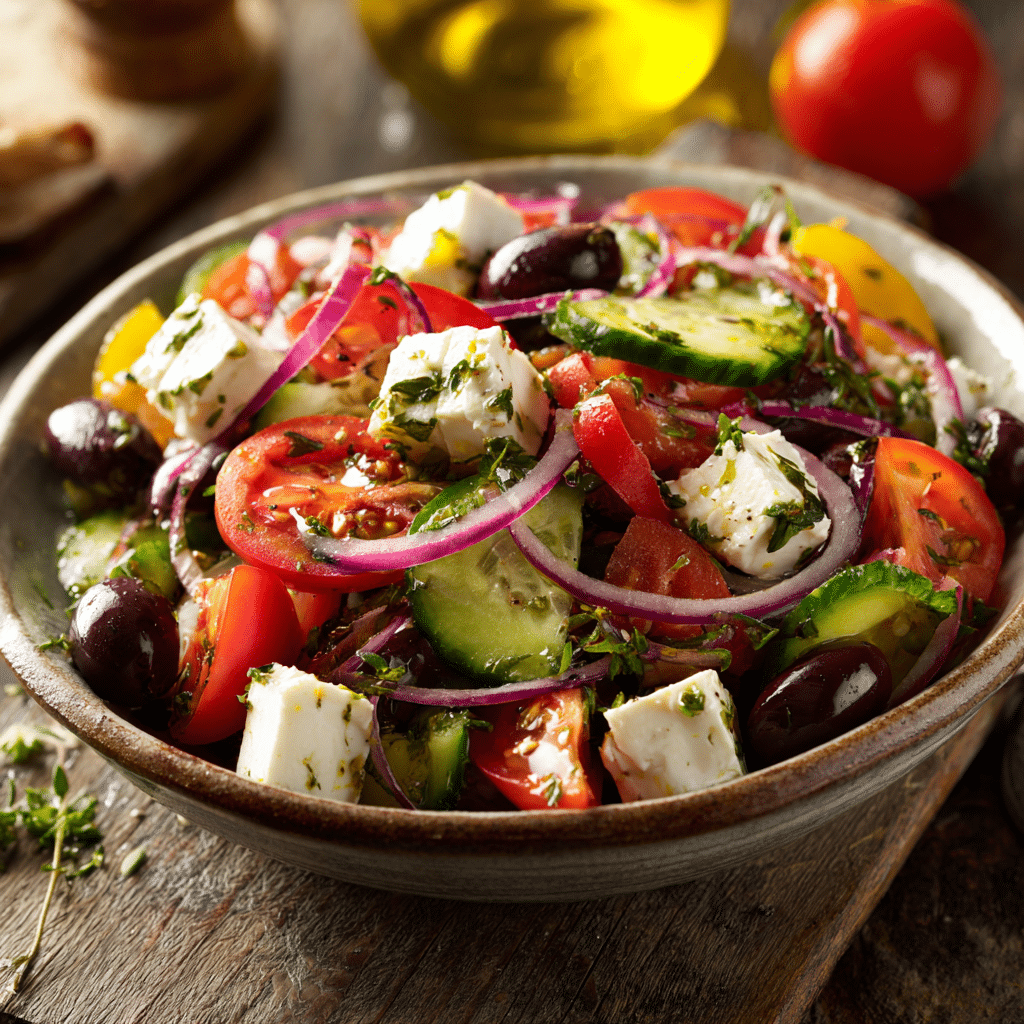
How to Reinvent a Classic Without Losing Its Soul
The beauty of a Greek Salad lies in its adaptability. While the traditional recipe stays true to its Mediterranean roots, it also leaves room for creativity. Whether you’re vegan, looking for extra protein, or simply want to add a modern touch to your menu, you can reinvent this timeless dish without compromising its essence.
Below are some delicious, easy-to-make variations inspired by global flavors and healthy living trends.
1. Vegan Greek Salad – Fresh and Dairy-Free
A vegan Greek Salad delivers all the freshness of the classic version but without the feta cheese. Instead, use vegan feta made from tofu or cashews—it’s creamy, protein-rich, and provides the same tangy kick.
How to make it:
- Replace feta with diced firm tofu marinated in olive oil, lemon juice, and oregano.
- Add capers for a briny note similar to cheese.
- Toss with extra-virgin olive oil and a hint of garlic for depth.
This version keeps the heart of the Greek Salad intact while making it 100% plant-based. It’s perfect for vegan, dairy-free, or Mediterranean diets focused on whole, clean ingredients.
2. Protein-Packed Greek Salad Bowl
Turn your Greek Salad into a full meal by adding lean proteins. The vibrant vegetables and zesty dressing pair beautifully with grilled chicken, shrimp, or chickpeas.
Ideas to boost protein:
- Add grilled chicken strips or shrimp for a satisfying lunch.
- Mix in chickpeas or lentils for a vegetarian protein option.
- Top with a boiled egg for extra creaminess and nutrients.
This hearty version balances flavor and fullness, making it ideal for post-workout meals or light dinners.
Looking for a nutritious pairing? Try serving it with our refreshing Beet Juice to complete your wellness-focused meal.
3. Quinoa Greek Salad – The Ultimate Meal Prep Upgrade
Adding quinoa transforms the salad into a fiber-rich, gluten-free dish that stores beautifully for meal prep. Quinoa absorbs the vinaigrette and keeps the flavors consistent for days.
How to make it:
- Cook 1 cup of quinoa and let it cool.
- Combine it with the traditional salad ingredients.
- Toss everything with your homemade Greek dressing.
Store it in airtight containers, and you’ve got a ready-to-eat, balanced lunch for the week.
4. Mediterranean Fusion Twist
Love to experiment? Try giving your Greek Salad a modern, gourmet flair. You can add roasted red peppers, artichoke hearts, or even avocado for richness.
Chef-inspired ideas:
- Add roasted chickpeas for crunch.
- Toss in avocado slices or sun-dried tomatoes for extra creaminess.
- Sprinkle pomegranate seeds for a sweet, tangy burst.
This fusion approach honors the salad’s simplicity while appealing to modern tastes. Each variation keeps the Greek Salad refreshing, colorful, and nutrient-packed.
5. Warm Greek Salad – A Comforting Winter Option
Yes, you can even serve Greek Salad warm! Slightly sauté the vegetables in olive oil to release their aroma while keeping the signature crunch.
Quick guide:
- Warm your olive oil in a skillet.
- Add bell peppers, onions, and cherry tomatoes for 2–3 minutes.
- Toss with feta and olives before serving.
This version is perfect for cooler months when you crave something hearty yet still light.
Discover more healthy seasonal inspirations with our Cucumber Salad, a refreshing side that complements any variation of Greek Salad.
6. Kid-Friendly Greek Salad
For a fun, family-friendly version, dice the ingredients smaller and use mild feta or mozzarella pearls instead. Add a drizzle of honey to the dressing to balance the tanginess—kids love the sweetness!
You can even turn this salad into skewers by threading cherry tomatoes, cucumber cubes, and cheese onto toothpicks for snackable bites that make healthy eating exciting.
When to Experiment and When to Keep It Classic
The authentic Greek Salad will always have its charm, but modern variations can keep it exciting for every occasion. Whether you’re preparing it for a family meal, brunch, or lunchbox, the salad adapts effortlessly to your taste and season.
So, go ahead—experiment with textures, colors, and add-ins. Just remember: the heart of Greek Salad lies in its simplicity and the quality of its ingredients.
Greek Salad Fails, Common Mistakes Everyone Makes
How to Get Your Greek Salad Right Every Time
Making a Greek Salad may look simple, but achieving that perfect balance of crunch, freshness, and flavor requires attention to detail. Many home cooks unknowingly make small mistakes that affect the salad’s texture or taste. Let’s look at the most frequent errors and how to avoid them for an authentic, vibrant dish every single time.
1. Using Watery or Overripe Tomatoes
Tomatoes are the heart of any Greek Salad, but if they’re overripe or too soft, the salad becomes mushy and watery. Always choose firm, ripe cherry tomatoes or medium-sized ones with rich color and a slight give.
Pro tip: Slice them right before serving to prevent extra moisture from diluting the dressing.
2. Skipping the Step of Seeding Cucumbers
Cucumbers bring crunch and freshness, but their seeds hold excess water that can make your salad soggy. For the best results:
- Cut your cucumber lengthwise and scoop out the seeds.
- Slice into thin half-moons for even texture and bite.
This small step makes a big difference in keeping your Greek Salad crisp and appetizing.
3. Overdressing the Salad
The authentic Greek Salad is lightly dressed — not drenched. Too much olive oil or vinegar can overpower the vegetables and make the feta lose its texture.
Best practice: Start with a small amount of dressing, toss gently, and let the flavors develop naturally. Add more olive oil only if needed.
For extra flavor control, whisk your dressing separately using the authentic Greek blend:
olive oil, red wine vinegar, Dijon mustard, oregano, garlic, and black pepper.
Check out how to balance dressing textures in our Cucumber Juice recipe — a perfect example of flavor harmony in Mediterranean cuisine.
4. Using Crumbled Feta Instead of Cubes
In traditional Greek cuisine, feta is cut into large cubes — not crumbled. Crumbling might seem convenient, but it changes the salad’s texture and presentation.
Here’s why cubed feta works better:
- It holds its shape, maintaining a balance between salty and creamy textures.
- It ensures even distribution with every forkful.
- It looks more authentic and visually appealing.
If you can, always buy feta in brine for a creamier and richer flavor.
5. Forgetting the Olives or Using the Wrong Type
Greek Salad without Kalamata olives isn’t truly Greek. These olives add depth, saltiness, and a hint of smokiness that elevates the dish.
Avoid using canned black olives — they lack the distinctive tang and texture of genuine Kalamata olives.
Pro tip: Buy pitted olives to save time, but make sure they’re stored in brine for authentic taste.
6. Using Poor-Quality Olive Oil
Since olive oil is one of the main ingredients, quality matters. A good extra-virgin olive oil transforms your Greek Salad from good to gourmet. Look for cold-pressed olive oils with fruity notes — they enhance the natural sweetness of tomatoes and bell peppers.
Remember: olive oil isn’t just a dressing; it’s an essential part of the Mediterranean experience.
7. Adding Lettuce or Processed Ingredients
Authentic Greek Salad, or Horiatiki, doesn’t contain lettuce. It’s meant to be rustic — a reflection of Greek countryside simplicity. Adding lettuce, mayonnaise, or processed toppings like bottled dressings dilutes the salad’s original spirit.
Keep it pure, fresh, and minimal. Let the olive oil and vegetables do the talking.
Want more salad inspiration? Don’t miss our colorful Strawberry Spinach Salad, another refreshing take on Mediterranean simplicity.
8. Preparing Too Early
Timing is everything. While Greek Salad can be prepped ahead, it should only be dressed right before serving. Storing it with dressing for too long softens the vegetables and affects flavor.
To meal-prep effectively:
- Store vegetables, dressing, and cheese separately.
- Mix everything just before serving for maximum crunch.
9. Ignoring Seasoning Balance
A pinch of salt and oregano can elevate your Greek Salad — but too much can make it overly salty. Since feta and olives already contain sodium, use seasoning sparingly. Balance it out with fresh herbs like mint or parsley for a bright, clean finish.
10. Neglecting Presentation
A beautiful presentation enhances the dining experience. Serve your salad in a shallow bowl or wide platter to show off the colors of the ingredients. Finish with a drizzle of olive oil and a sprinkle of oregano for that classic Greek restaurant look.
Find even more Mediterranean inspiration on our Pinterest board — packed with fresh salads and healthy recipes
Frequently Asked Questions About Greek Salad
Everything You’ve Ever Wondered About Greek Salad
Even though the Greek Salad is a classic dish, many people still have questions about its ingredients, health benefits, and variations. Below are the most common questions about this Mediterranean favorite — answered clearly so you can make the perfect salad every time.
What ingredients are in a Greek Salad?
A traditional Greek Salad includes cucumbers, tomatoes, red onion, green bell pepper, Kalamata olives, feta cheese, and a simple dressing made from olive oil, red wine vinegar, oregano, and garlic.
Unlike modern versions, authentic Greek Salad doesn’t contain lettuce or creamy dressing. Instead, it celebrates the natural flavors of the Mediterranean — crisp, juicy, and perfectly balanced.
Is a Greek Salad healthy?
Yes — Greek Salad is one of the healthiest salads you can eat. It’s packed with antioxidants, healthy fats, and essential vitamins. Olive oil provides heart-protective monounsaturated fats, while tomatoes and peppers deliver vitamins A and C. Feta cheese adds calcium and protein.
This combination supports heart health, lowers inflammation, and helps regulate blood sugar levels.
What is the difference between Mediterranean and Greek Salad?
While both salads share similar ingredients and philosophies, there’s a slight difference.
Greek Salad (Horiatiki): uses specific ingredients — cucumber, tomato, feta, and olives — without lettuce.
Mediterranean Salad: is a broader category that may include other regional additions such as chickpeas, quinoa, or leafy greens.
In short, all Greek salads are Mediterranean, but not all Mediterranean salads are
Which cheese is closest to feta?
If you can’t find Greek feta, look for Bulgarian sirene or French feta-style cheese. Goat cheese and queso fresco also make excellent substitutes. However, nothing matches the crumbly, briny taste of real feta preserved in brine — it’s what gives Greek Salad its authentic flavor.
What is traditional Greek salad dressing made of?
The dressing for a Greek Salad is simple yet full of flavor. It combines extra-virgin olive oil, red wine vinegar, garlic, oregano, Dijon mustard, salt, and pepper.
The key is to use quality olive oil and fresh ingredients. There’s no need for bottled dressings or additives — the beauty of this salad lies in its simplicity.
Which cheese goes in Greek salad?
Feta cheese is the traditional and only cheese used in a true Greek Salad. Made from sheep’s milk or a blend of sheep and goat milk, it provides the creamy, salty tang that balances the vegetables and vinaigrette. Always use feta in blocks, not pre-crumbled, for the best texture and flavor.
What is the healthiest salad you can eat?
Greek Salad ranks among the top healthiest salads worldwide. It’s nutrient-dense, low in calories, and naturally gluten-free. It provides fiber, antioxidants, and heart-healthy fats without processed ingredients or heavy sauces.
Pair it with other Mediterranean dishes, like our light Cucumber Salad or fresh Beet Juice, for a complete, wholesome meal.
Should Greek Salad have lettuce?
No, authentic Greek Salad never includes lettuce. The original recipe, known as Horiatiki, highlights chunky cuts of vegetables, olives, and feta. The addition of lettuce is a Western adaptation that dilutes the rustic simplicity of the dish.
If you prefer a version with greens, you can add arugula or spinach — but it will be a Mediterranean salad, not a traditional Greek one.
What is the Jennifer Aniston salad, and is it Greek?
The “Jennifer Aniston salad” became viral on social media and is often confused with Greek Salad because it includes similar ingredients like cucumber and feta. However, it’s actually a Mediterranean-inspired quinoa salad with chickpeas, red onion, mint, and lemon dressing.
While not traditionally Greek, it shares the same healthy, refreshing essence that defines the Mediterranean diet.
Quick Comparison Table
| Question | Quick Answer |
|---|---|
| Main Ingredients | Tomatoes, cucumbers, onion, olives, feta, olive oil |
| Healthy? | Yes – nutrient-dense and heart-healthy |
| Cheese Used | Feta only |
| Lettuce Included? | No – never in the traditional version |
| Diet Type | Mediterranean / Low-carb / Gluten-free |
Greek Salad: A Timeless Favorite
Greek Salad remains one of the simplest yet most rewarding dishes you can make at home. Its balance of textures, flavors, and nutrients embodies the very spirit of the Mediterranean diet — clean, vibrant, and nourishing.
Whether you’re enjoying it as a side or main dish, this salad proves that healthy eating can also be satisfying and full of flavor.
Bringing The Greek Salad Home, Fresh, Flavorful & Easy To Make
A Celebration of Simplicity and Freshness
At its heart, the Greek Salad is more than just a dish — it’s a reflection of the Mediterranean way of life: simple, nourishing, and deeply connected to the land. Each ingredient tells a story — from sun-ripened tomatoes and crisp cucumbers to the creamy saltiness of feta and the golden richness of olive oil.
This salad proves that great food doesn’t have to be complicated. It’s about balance, quality, and harmony. Whether you serve it as a refreshing side, a light lunch, or a centerpiece for summer gatherings, the Greek Salad always delivers a burst of flavor and vitality in every bite.
And because it’s naturally gluten-free and packed with antioxidants, healthy fats, and vitamins, it fits effortlessly into nearly every diet — from keto to vegetarian.
How to Enjoy Greek Salad All Year Long
Don’t limit this vibrant dish to summer. The Greek Salad is versatile enough for every season. In warmer months, enjoy it chilled with grilled vegetables or fish. During cooler days, try a warm version with roasted peppers and a drizzle of lemon-infused olive oil.
You can even transform leftovers into a wrap or grain bowl by adding quinoa or brown rice for a hearty, wholesome meal.
Discover more Mediterranean-inspired sides like our Frutti di Mare Seafood Salad for a complete dining experience.
Why Greek Salad Belongs in Your Weekly Menu
- Quick to make: Ready in under 15 minutes.
- Nutrient-rich: Packed with antioxidants, vitamins, and heart-healthy fats.
- Customizable: Easily adapted for vegan, gluten-free, or protein-rich diets.
- Beautifully balanced: Combines crunch, creaminess, and freshness in every bite.
This salad embodies everything the modern kitchen strives for — convenience, nutrition, and flavor.
A Final Word: Keep It Fresh, Keep It Simple
As you prepare your next meal, remember that the key to a perfect Greek Salad lies in its simplicity. Choose the best ingredients you can find, use a generous drizzle of extra-virgin olive oil, and let nature’s flavors shine through.
Once you taste the balance of crisp cucumbers, tangy feta, and juicy tomatoes, you’ll understand why this salad has stood the test of time — and why it continues to be a global favorite.
Ready to Try More Refreshing Mediterranean Recipes?
If you loved this Greek Salad, you’ll enjoy exploring other fresh recipes that celebrate balance and flavor:
- Check out our vibrant Cucumber Salad.
- Try the colorful Strawberry Spinach Salad.
- Refresh your day with a glass of Cucumber Juice.
These recipes pair perfectly with Greek Salad, helping you create a complete Mediterranean-inspired meal at home.