
Italian Chopped Salad That You’ll Crave Every Week
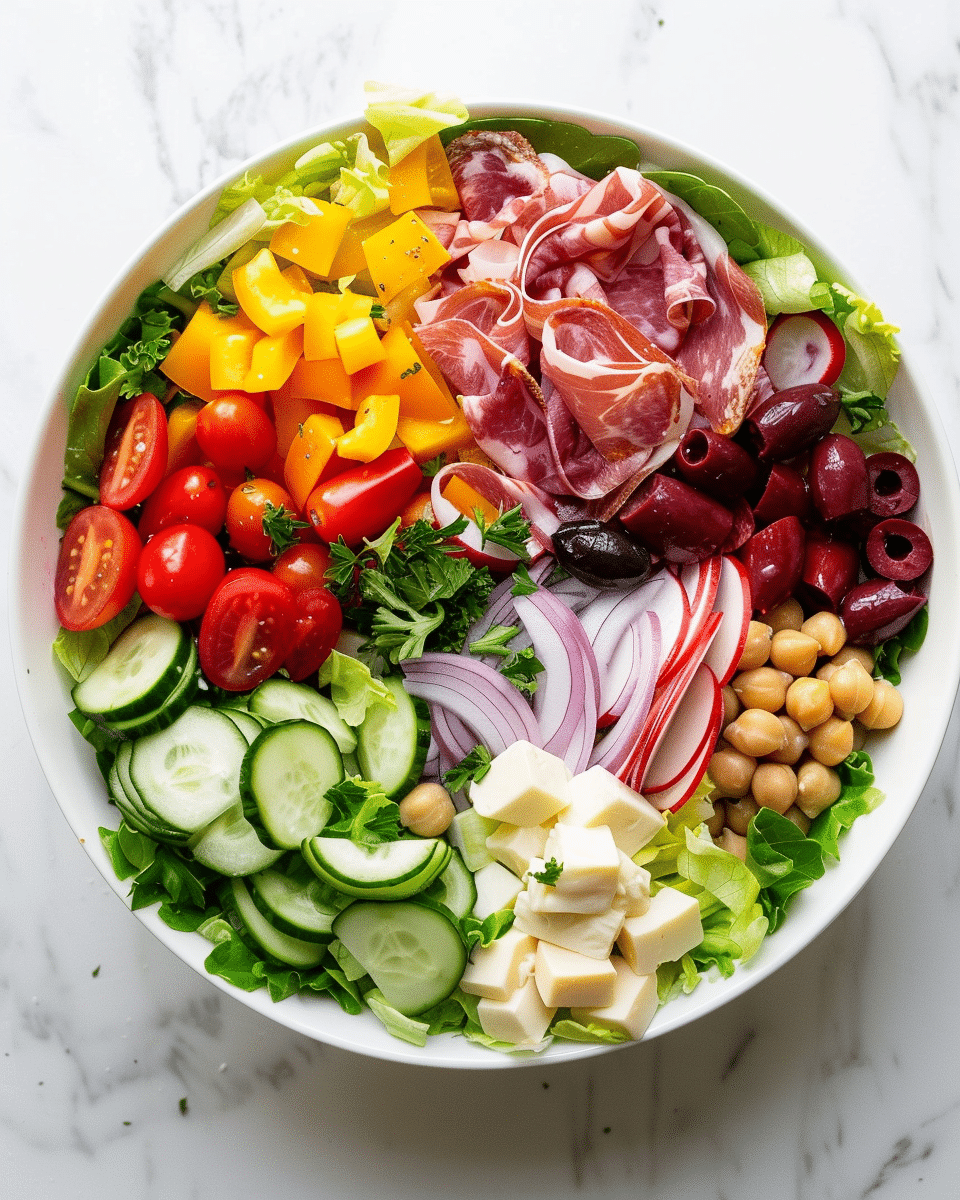
Italian chopped salad is the kind of recipe that turns a basic bowl of greens into a meal you actually get excited about. In the classic Italian-American style, it packs crisp lettuce, crunchy vegetables, tangy pepperoncini, savory salami, chickpeas, cheese, and a bold red wine vinaigrette into every single bite. Because everything is chopped into small, even pieces, you never get a boring forkful. Instead, every mouthful tastes like a perfectly balanced combo of texture, acidity, salt, and freshness. If you love vibrant salads like panzanella or hearty grain bowls, this is going to become a staple alongside favorites like this refreshing citrus fennel avocado winter salad.
Beyond its flavor, an Italian chopped salad is also incredibly practical. It works as a fast weeknight dinner, an easy lunch prep, or a colorful side that can feed a crowd without much effort. You can customize it with seasonal produce, adjust the protein levels, or even make it vegetarian or vegan. And because the dressing clings beautifully to all the chopped ingredients, each part of the salad stays satisfying instead of soggy. In this guide, you’ll learn exactly how to build the best version of this salad at home: from authentic ingredients and knife techniques to nutrition tips, storage tricks, and creative variations.
Table of Contents
What Makes an Italian Chopped Salad Special?
Classic roots of the Italian chopped salad
The Italian chopped salad you see in American kitchens and restaurants has its roots in Italian trattoria culture but evolved strongly in cities like Chicago and Los Angeles. Traditional Italian antipasti plates served cured meats, cheeses, marinated vegetables, and olives on a platter. Over time, Italian-American cooks started combining those same flavors with crisp lettuce and a punchy vinaigrette, then chopping everything into small pieces so each bite captured the full antipasto experience.
That’s why an Italian chopped salad tastes familiar even if you grew up with antipasto boards rather than salads. It brings together romaine or iceberg lettuce for crunch, radicchio for slight bitterness, and ingredients like salami, pepperoni, provolone, mozzarella, red onion, and tomatoes to deliver full flavor. Olive oil, red wine vinegar, oregano, and garlic mimic traditional Italian pantry flavors, while pepperoncini and olives offer the briny, tangy notes you’d expect from a classic Italian spread. This history explains why the salad is so satisfying: it borrows components from a full-course Italian meal and condenses them into one big, generous bowl.
Why the chopped style changes everything
While you can toss Italian ingredients into any salad, the chopped style is what makes an Italian chopped salad stand apart. Instead of leaving lettuce leaves large and toppings big and uneven, every element gets cut into bite-size pieces: think 1/2-inch cubes for cheese, small strips of salami, and thin slices of onion. This matters more than you might expect. Because each bite contains multiple elements, you get balanced flavor: a bit of lettuce crunch, a pop of tomato, a piece of cheese, maybe an olive, all wrapped together with sharp vinaigrette. The fine chopping also helps the dressing cling better.
The increased surface area means the oil and vinegar coat everything, rather than sliding off big leaves and pooling at the bottom of the bowl. This technique turns the salad from a side into a true main course because it feels substantial and cohesive. Chopped salads also store better in the fridge, especially when you keep the dressing separate until serving. That makes this style ideal for meal prep, potlucks, or busy weeks when you want a ready-to-go, nutrient-packed lunch.
Print
Italian Chopped Salad (Classic Italian-American Style)
Description
This Italian chopped salad is crunchy, bold, and crave-worthy—packed with crisp lettuce, chickpeas, pepperoncini, olives, salami, cheese, and a bright red wine vinaigrette that coats every bite.
Ingredients
Salad:
3 cups romaine lettuce, finely chopped
2 cups iceberg lettuce, finely chopped
1 cup radicchio, finely chopped (optional)
1 cup cherry tomatoes, quartered
1 cup cucumber, diced
1/2 cup bell pepper, diced
1/4 cup red onion, thinly sliced
3/4 cup chickpeas, rinsed and well-drained
1/3 cup pepperoncini, sliced
1/3 cup olives (Kalamata or Castelvetrano), sliced
3 oz Genoa salami or pepperoni, cut into strips
1/2 cup provolone cubes
1/2 cup mozzarella pearls (or diced mozzarella)
Optional: Parmesan shavings for serving
Red Wine Vinaigrette:
1/4 cup red wine vinegar
1/2 cup extra-virgin olive oil
1 teaspoon Dijon mustard
1 small garlic clove, finely minced
1 teaspoon dried oregano
1/2 teaspoon honey or sugar (optional)
1/2 teaspoon salt, or to taste
Black pepper, to taste
Instructions
Make the dressing: In a jar, combine red wine vinegar, olive oil, Dijon, garlic, oregano, honey (optional), salt, and pepper. Shake until emulsified.
Prep the salad: Wash and dry greens thoroughly. Chop romaine, iceberg, and radicchio into small even pieces.
Chop tomatoes, cucumber, bell pepper, and slice red onion thinly. Pat chickpeas dry.
Assemble: In a large bowl, add greens, veggies, chickpeas, pepperoncini, olives, salami, and cheese.
Dress + toss: Start with about 2/3 of the dressing and toss gently. Taste and add more dressing if needed.
Finish with extra black pepper and Parmesan shavings if desired. Serve immediately.
Notes
Meal prep tip: Keep dressing separate until serving for best crunch.
Storage: Undressed salad keeps 2–3 days in an airtight container.
Make it vegetarian: Skip salami and add more chickpeas or marinated artichokes.
Make it lighter: Use less salami/cheese and increase veggies.
Essential Ingredients for the Best Italian Chopped Salad
Building the flavorful base: greens, veggies, and beans
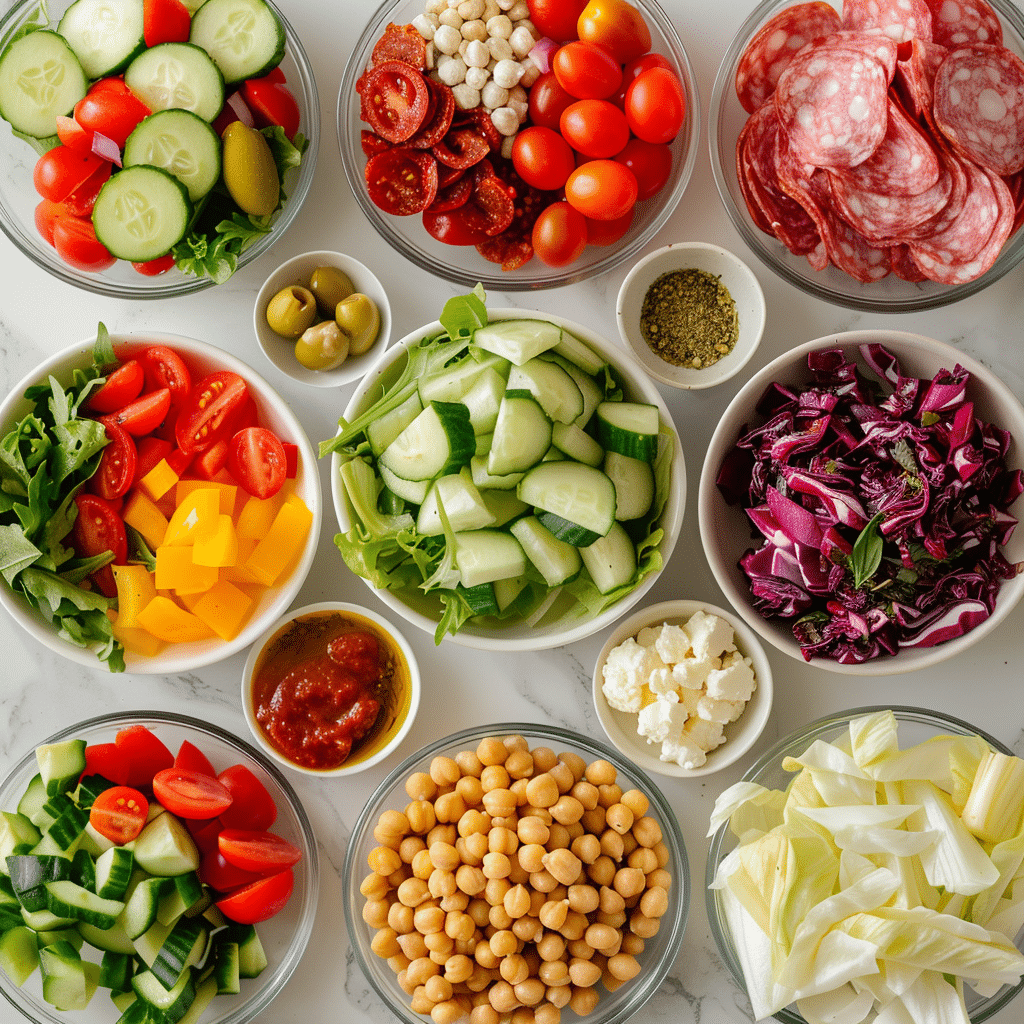
Every great Italian chopped salad starts with greens that hold up well to chopping and tossing. Romaine and iceberg lettuce are the classic duo: romaine brings fiber and a slightly deeper flavor, while iceberg contributes extra crunch and juiciness. Many modern versions also include radicchio for a slight bitterness and beautiful purple color that contrasts with the other ingredients. After greens, you layer on a mix of crunchy and juicy vegetables. Common choices include cherry tomatoes, cucumber, bell pepper, red onion, and sometimes shredded carrots.
Chickpeas or cannellini beans add plant-based protein and fiber, turning the bowl from simple side salad into a meal. Because everything is chopped, aim for uniform pieces so each bite is texturally balanced. In-season produce always tastes better, so in summer, load up on ripe tomatoes and fresh herbs, while in cooler months you can use crunchy fennel, roasted red peppers from a jar, or even marinated artichokes. This flexible base means you can adapt the salad to what you have on hand while still keeping its Italian soul.
Salami, cheese, and briny add-ins that define the flavor
What truly turns a basic chopped salad into an Italian chopped salad are the bold, savory extras. Genoa salami, soppressata, or pepperoni are the most common meats; they bring a rich, slightly spicy, and deeply savory profile. You can stack a few slices and cut them into strips or small squares for easy eating. On the cheese front, provolone, fresh mozzarella, and Parmesan all work beautifully.
Provolone and mozzarella offer creamy, mild richness, while Parmigiano-Reggiano shavings add a nutty, salty punch. To capture the antipasto feel, briny ingredients are essential. Pepperoncini (pickled Italian peppers), Kalamata or Castelvetrano olives, and sometimes capers give the salad its tangy edge. These acidic, salty elements cut through the richness of the meat and cheese, making each bite more interesting and preventing the salad from feeling heavy. Together, these ingredients embody the hallmarks of Italian flavor: umami from cured meats and cheese, brightness from pickles and olives, and savory depth from olive oil and herbs.
The Perfect Dressing for Italian Chopped Salad
Classic red wine vinaigrette: ingredients and science
The dressing is the backbone of any Italian chopped salad, and a classic red wine vinaigrette fits perfectly. At its simplest, you use a 3:1 ratio of extra-virgin olive oil to red wine vinegar, but many people prefer closer to 2:1 or even 1.5:1 for a brighter, tangier punch. To this, you add finely minced garlic, Dijon mustard, dried oregano, a pinch of sugar or honey, salt, and black pepper.
The mustard acts as an emulsifier, helping water-based vinegar and oil blend into a smoother mixture that clings better to chopped ingredients. Garlic and oregano contribute characteristic Italian aroma, while a tiny touch of sweetness balances the acid without making the dressing taste sweet. When you whisk vigorously or shake in a jar, you suspend tiny droplets of vinegar in oil, creating a stable emulsion that doesn’t separate too quickly. This texture not only coats the salad more evenly but also helps every bite carry the same seasoning intensity.
Flavor tweaks and make-ahead tips for your dressing
While the classic dressing is fantastic as is, small adjustments can customize your Italian chopped salad for different tastes or dietary needs. If you want a milder acidity, mix red wine vinegar with a bit of white wine vinegar or add a spoonful of water to soften the tang. For a more complex herbal profile, add dried basil, thyme, or a bit of Italian seasoning blend, but keep oregano as the star.
Some people love adding finely grated Parmesan directly into the dressing, which gives a cheesy, umami flavor and slightly thicker body. If you’re reducing sodium, you can cut back on salt and boost flavor with extra garlic, herbs, or a squeeze of lemon juice. The dressing keeps well in the fridge for up to a week in a sealed jar. Just let it come to room temperature and shake again before using, since olive oil may solidify when chilled. Making the dressing ahead not only saves time but also lets the flavors meld, giving you a more integrated, restaurant-quality taste.
Step-by-Step: How to Make an Italian Chopped Salad
Prepping and chopping ingredients like a pro
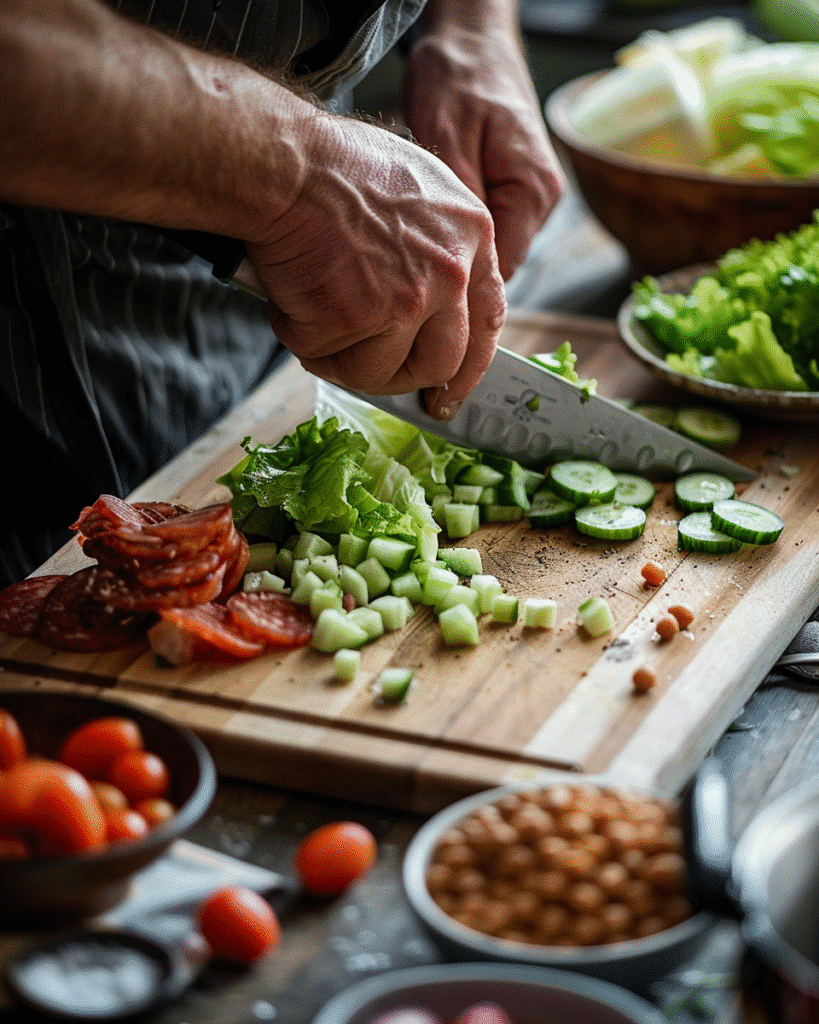
To build an excellent Italian chopped salad, preparation matters almost as much as the ingredients themselves. Start by washing your greens thoroughly and drying them very well—excess water dilutes the dressing and makes the salad soggy. A salad spinner helps, but you can also pat dry with clean kitchen towels. Once dry, stack lettuce leaves, roll them into a tight cylinder, and slice crosswise into ribbons before chopping those ribbons into smaller pieces.
Aim for pieces about 3/4 inch so they stay sturdy but still eat easily. For vegetables, cut tomatoes into quarters or eighths depending on size, dice cucumber and bell pepper into similar small cubes, and slice red onion very thin so it doesn’t overpower each bite. Drain and rinse canned chickpeas to remove excess sodium and any tinny flavor. Pat them dry so they don’t water down the dressing. When you prep all ingredients before assembling, the final tossing becomes quick and seamless.
Assembling, tossing, and seasoning for maximum flavor
Once everything is chopped and ready, choose a large mixing bowl to avoid overcrowding. Add greens first, then layer beans, tomatoes, cucumbers, peppers, onions, olives, pepperoncini, salami, and cheese on top. Instead of dumping all the dressing at once, start with about two-thirds, drizzle it evenly, then toss gently with tongs or clean hands. This step ensures every ingredient gets a light coat without drenching the salad.
Taste a bite and adjust with more dressing, salt, or pepper as needed. If the salad tastes flat, a small splash of extra vinegar or a squeeze of lemon juice can brighten it instantly. Always dress the salad just before serving to keep the greens crisp, especially if using iceberg or romaine. For parties or potlucks, you can layer the chopped ingredients in a serving bowl and keep the dressing in a jar on the side; toss right at the table for peak texture and flavor.
Nutrition Benefits of Italian Chopped Salad
Macro and micronutrients in this hearty salad
An Italian chopped salad offers a surprisingly balanced nutrition profile, especially when you build it thoughtfully. The lettuce, tomatoes, peppers, and cucumbers deliver vitamins A and C, folate, potassium, and hydration thanks to their high water content. Chickpeas or cannellini beans bring plant-based protein and complex carbohydrates, along with fiber that supports digestion and keeps you full longer.
Salami and cheese add protein and fat, which help the meal feel satisfying, but they also contribute sodium and saturated fat, so portions matter. The extra-virgin olive oil in the dressing supplies heart-healthy monounsaturated fats and antioxidant compounds like polyphenols, which research associates with better cardiovascular health. Together, these components create a salad that can serve as a complete meal, especially if you moderate the heavier toppings and emphasize vegetables and beans.
Here’s a rough overview of how one generous serving might look when built with balance:
| Component | Approx. Amount | Key Benefits |
|---|---|---|
| Romaine & veggies | 2–3 cups | Vitamins A, C, K, fiber, hydration |
| Beans (chickpeas) | 1/2 cup | Protein, fiber, iron, complex carbs |
| Salami & cheese | 1–2 oz each | Protein, calcium, flavor |
| Olive oil dressing | 2–3 Tbsp | Healthy fats, antioxidants |
Making it lighter, healthier, or more macro-friendly
If you want your Italian chopped salad to fit specific nutrition goals like weight loss, heart health, or high-protein eating, small tweaks go a long way. To lower saturated fat and sodium, cut the amount of salami in half and choose part-skim mozzarella or a smaller amount of strong-flavored cheese like Parmesan.
You can double the beans to boost fiber and plant protein and add more non-starchy vegetables like shredded carrots or extra peppers. For a lighter dressing, use a slightly higher vinegar-to-oil ratio or mix in a tablespoon of water to reduce calories per serving while keeping the flavor punchy. Those aiming for high protein can add grilled chicken, turkey, or even a scoop of lentils, similar to how you might build a warm lentil and roasted vegetable salad as a full meal. Adjusting ingredients this way keeps the soul of the salad intact while helping it align with your personal wellness targets.
Variations on the Classic Italian Chopped Salad
Vegetarian, vegan, and gluten-free Italian chopped twists
Italian chopped salad is naturally flexible, which makes it easy to adapt for different diets and preferences. For a vegetarian version, simply skip the salami and perhaps add extra beans, marinated artichokes, or roasted red peppers for richness and depth. To make it vegan, you can omit the cheese as well and boost umami by adding olives, capers, sun-dried tomatoes, or a sprinkle of nutritional yeast.
A vegan-friendly Italian vinaigrette is already standard, so no changes are needed there. The salad is inherently gluten-free as long as you avoid croutons and check labels on deli meats and jarred ingredients for hidden gluten, such as certain flavorings or stabilizers. If you enjoy the bready angle of Italian flavors, you might pair this salad with a side of gluten-free bread or explore a bread-based option like a panzanella salad recipe using gluten-free loaf, while keeping the chopped salad itself fully gluten-free.
Protein-packed and seasonal variations
You can also treat Italian chopped salad as a base template and swap elements depending on the season or your protein needs. For a protein-packed version, add grilled chicken, turkey, shrimp, or even seared tofu seasoned with Italian herbs. This transforms the salad into a full, one-bowl dinner similar in heartiness to a chicken taco salad dinner recipe but with Italian seasoning and toppings.
Seasonally, in summer you might emphasize juicy tomatoes, fresh basil, and sweet corn, while in winter you can include roasted vegetables like Brussels sprouts or butternut squash, drawing inspiration from warming dishes such as a Brussels sprout salad recipe guide. You can also experiment with different cheeses try smoked provolone in fall or burrata in peak tomato season. These variations keep the salad exciting year-round, preventing it from becoming a repetitive meal.
Serving Ideas and Pairings for Italian Chopped Salad
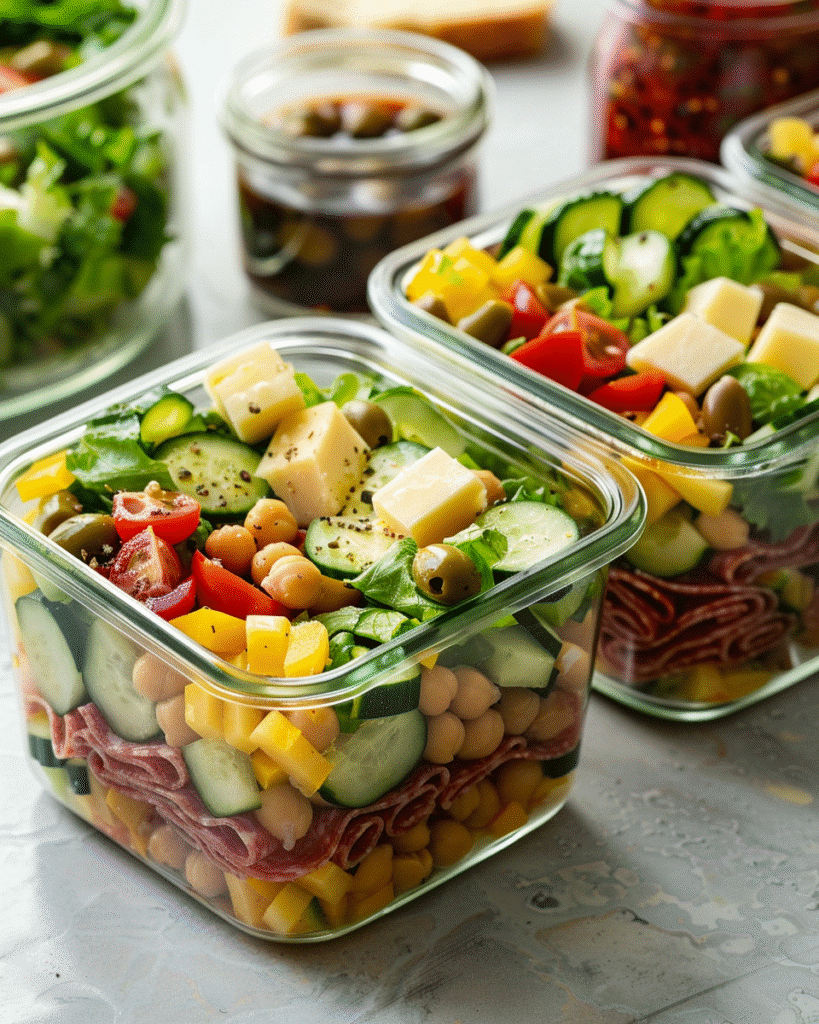
How to serve it: mains, sides, and entertaining tips
Italian chopped salad adapts well to nearly any occasion. As a main course, serve it in large, individual bowls piled high, possibly with a slice of crusty bread on the side. The combination of veggies, beans, cheese, and meat makes it filling enough for lunch or dinner, especially if you slightly increase the protein. As a side, it pairs beautifully with grilled meats, roasted chicken, or pasta dishes, balancing richer foods with freshness and acidity.
For entertaining, assemble the salad in a wide, shallow platter rather than a deep bowl so the colors and ingredients are visible and guests can easily scoop what they like. You can also set it up as a “chopped salad bar,” offering bowls of toppings, olives, pepperoncini, chickpeas, extra cheese so people can customize. For potlucks, keep the dressing separate until you arrive, then toss just before serving to keep the texture crisp.
Beverage, soup, and side pairings that complement flavors
When you plan a full menu around Italian chopped salad, think about complementary flavors and textures. The bright acidity and saltiness in this salad make it an excellent partner for lighter soups like minestrone or tomato basil, as well as simple grilled fish or chicken. Sparkling water with lemon, Italian sodas, or a crisp white wine such as Pinot Grigio or Vermentino match the salad’s freshness.
If you prefer non-alcoholic options with a wellness edge, a nutrient-dense drink like something from a wellness shot juice rotation can round out the meal. For starches, roasted potatoes, polenta, or a simple garlic bread work well, but try not to overload on very creamy sides, since they may compete with the richness of cheese and salami in the salad. By balancing light and rich elements, you create a harmonious, Italian-inspired table that feels complete without being heavy.
Storage, Meal Prep, and Make-Ahead Tips
Storing leftovers without losing crunch
One of the best things about Italian chopped salad is how well it can hold up for next-day lunches, as long as you manage moisture wisely. If you know you’ll have leftovers, dress only the portion you plan to eat immediately and keep the rest undressed in an airtight container.
Store the chopped vegetables and greens together but keep wetter items like tomatoes and cucumbers in a separate small container if possible, especially if you plan to keep the salad for more than 24 hours. This layering helps prevent sogginess. The dressing can stay in a jar in the fridge for up to a week; just shake or whisk before using. When you’re ready to eat, toss the pre-chopped salad with dressing just before serving. If the greens slightly wilt overnight, a handful of fresh lettuce or arugula can revive the texture.
Here’s a simple storage guide:
| Component | Storage Time | Best Practice |
|---|---|---|
| Undressed chopped salad | 2–3 days | Airtight container, keep wetter items separate |
| Dressed salad | 1 day | Store in glass container, add fresh greens before eating |
| Dressing | 5–7 days | Jar with lid, shake before using |
Meal-prep strategies for busy weeks
If you like having healthy lunches ready to grab, Italian chopped salad is ideal for meal prep because you can batch-prep components. On a weekend or weeknight, chop lettuce, cucumbers, peppers, and onions; rinse and dry beans; slice salami and cube cheese. Store each in separate containers or assemble individual “salad kits” in meal-prep boxes, keeping dressing in mini jars.
When it’s time to eat, combine one box of ingredients with a jar of dressing and shake or toss. For best results, avoid pre-cutting tomatoes too far in advance, or use firmer varieties like Roma to minimize wateriness. You can also rotate ingredients throughout the week, swap chickpeas with white beans one day, or add roasted veggies the next, to avoid repetition. This strategy gives you all the convenience of a grab-and-go salad with the flavor and satisfaction of a freshly made Italian chopped bowl.
Common Mistakes and Pro Tips for Italian Chopped Salad
Mistakes that ruin texture or flavor
Even though an Italian chopped salad is straightforward, a few common errors can make it less enjoyable. Overdressing is one of the biggest issues: because everything is chopped, ingredients soak up dressing quickly. Too much can make the salad heavy and soggy and can overpower delicate flavors like fresh mozzarella or mild lettuce. Another mistake is uneven chopping; large chunks of tomato or thick onion slices create imbalanced bites where one ingredient dominates.
Using watery or underripe tomatoes can mute the overall flavor, and skipping salt in the dressing leaves the salad tasting flat, even if the ingredients are good. Low-quality olive oil or harsh vinegar can also ruin the dressing, making it taste bitter rather than bright. Finally, adding ingredients straight from the fridge can dull flavors—letting them sit a few minutes at room temperature before tossing brings out their natural sweetness and aroma.
Pro tips for restaurant-quality Italian chopped salad
To make your Italian chopped salad taste like it came from your favorite Italian restaurant, focus on a few key techniques. First, choose crisp, cold lettuce but let other ingredients like tomatoes and cheese warm slightly before assembling. This temperature contrast keeps the salad refreshing while maximizing flavor. Salt your tomatoes lightly and let them sit for a few minutes; this draws out their juices and intensifies their taste. Toss them with a spoonful of your dressing before adding to the bowl to build an extra layer of flavor.
Use a mix of cheeses, perhaps a bit of sharp Parmesan plus creamy mozzarella, for complexity. Toasted seeds or nuts, like pine nuts or slivered almonds, can add a subtle crunch without straying from Mediterranean vibes. Always taste the salad after the first toss and adjust acid, salt, and pepper. Over time, you’ll learn to read whether the bowl needs more brightness, richness, or seasoning, turning you into your own salad “chef” at home.
FAQ About Italian Chopped Salad
Can I make Italian chopped salad ahead of time?
Yes, you can definitely make Italian chopped salad ahead of time, but you should keep a few guidelines in mind to preserve texture and flavor. The best method is to prep and chop all the ingredients, then store them separately or layered in an airtight container without dressing. Keep wetter ingredients like tomatoes, cucumbers, and pickled items in a separate compartment so they don’t water down the greens. Store the dressing in a jar in the fridge and toss it with the salad just before serving. If you need to transport it for a party, assemble in a large bowl, cover tightly, and add dressing at the last minute. Properly stored, prepped components keep well for 2–3 days, giving you flexibility for lunches and dinners.
How do I make Italian chopped salad vegetarian or vegan?
Turning an Italian chopped salad vegetarian or vegan is simple and still very flavorful. For a vegetarian version, omit the salami and other cured meats, and increase meat-free proteins like chickpeas, white beans, or even marinated tofu. You can also add roasted vegetables, artichoke hearts, and extra olives for richness. For a vegan version, remove both the meat and cheese. Replace cheese with creamy elements like avocado or use a sprinkle of nutritional yeast to mimic cheesy umami notes. The classic Italian red wine vinaigrette is normally vegan, as it relies on olive oil, vinegar, mustard, garlic, and herbs, so you usually don’t need to change the dressing. Just double-check that any store-bought mustard or seasoning blends you use are vegan-friendly. With these simple swaps, you keep the salad’s Italian character while aligning with plant-based eating.
What’s the best lettuce for Italian chopped salad?
The best lettuce for Italian chopped salad is a combination of romaine and iceberg, because together they create the ideal balance of crunch, structure, and mild flavor. Romaine offers more nutrients, fiber, and a slightly robust taste, while iceberg supplies juiciness and that signature crispy bite. Many cooks also like to include a handful of radicchio or escarole for a hint of pleasant bitterness and a colorful contrast. If you prefer a more nutrient-dense base, you can blend in finely chopped kale or use a mix of hearty greens, but make sure to remove tough stems and chop them small so they integrate smoothly. Avoid very delicate greens like spring mix or baby spinach as the primary base, since they wilt quickly and don’t hold up as well to chopping and heavier toppings.
Can I use a different dressing besides red wine vinaigrette?
Yes, you can use different dressings, but red wine vinaigrette pairs best with the Italian chopped salad ingredients. A similar Italian dressing made with white wine vinegar, lemon juice, or a splash of balsamic works too, as long as it remains tangy and herb-forward. Creamy dressings like Caesar or ranch can be tasty but may overshadow the subtleties of olives, pepperoncini, and fresh vegetables, making the salad feel heavier. If you want a slightly creamier feel without going full-on ranch, whisk a spoonful of grated Parmesan or a touch of mayonnaise into your vinaigrette. This gives body and richness while keeping the overall profile distinctly Italian. Whatever dressing you choose, keep it balanced with enough acidity to cut through the salami and cheese.
How do I store leftover Italian chopped salad?
Storing leftover Italian chopped salad depends on whether you’ve already dressed it. If it’s undressed, simply place the chopped ingredients in an airtight container and refrigerate for up to 2–3 days. Keep juicy components like tomatoes and cucumbers separate for best results. If the salad is already dressed, it’s still worth saving, but it’s best eaten within 24 hours. Store it in a sealed container, and when you’re ready to eat, you can revive it with a handful of fresh lettuce or arugula to restore some crunch. Avoid freezing Italian chopped salad, as the texture of vegetables and greens deteriorates after thawing. Always give leftovers a quick stir and taste before serving, adjusting with a bit of fresh pepper, lemon, or extra greens if needed.
Conclusion: Bring Italian Chopped Salad Into Your Regular Rotation
Italian chopped salad delivers a full Italian-antipasto experience in one generous, colorful bowl. With crisp lettuce, protein-rich beans, savory salami, bold cheese, and a bright red wine vinaigrette, it manages to be both comforting and refreshing. Because everything is finely chopped, every forkful tastes balanced, and the salad doubles as a satisfying main course or an impressive side dish.
You can customize it easily, make it lighter, vegetarian, vegan, or high-protein, without losing its essential Italian personality. For more salad inspiration that fits the same fresh-yet-hearty vibe, you might also enjoy experimenting with a nutrient-packed kale salad recipe on busy nights. Once you learn the core formula and techniques, Italian chopped salad becomes less of a recipe and more of a reliable template, adaptable to seasons, guests, and cravings. Keep a jar of homemade dressing in your fridge, a few Italian pantry staples on hand, and you’ll always have the makings of a restaurant-worthy salad at home.
For more amazing salad inspirations, check out my Pinterest.