
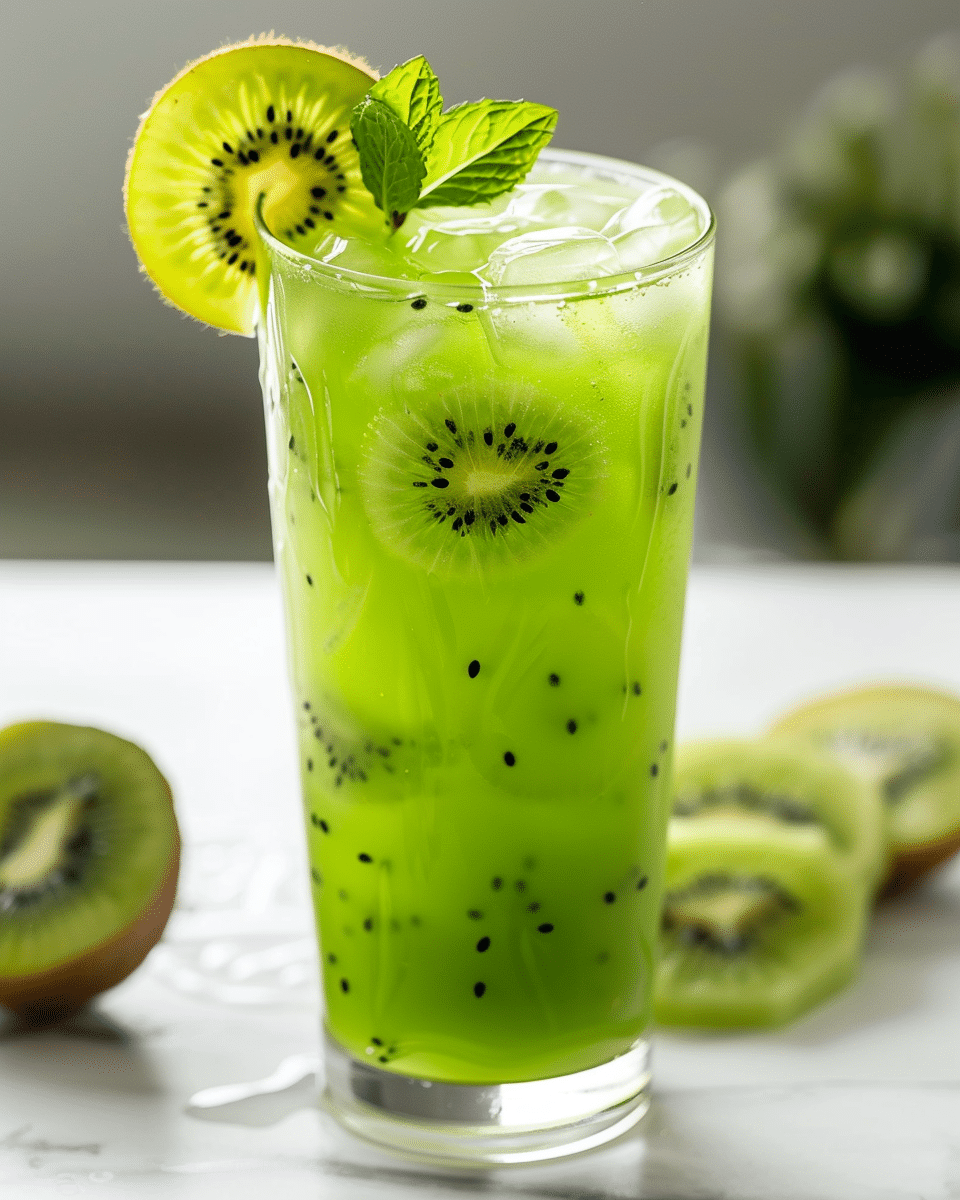
Kiwi Juice Benefits & Recipes: A Fresh, Tangy Boost in Every Glass
Kiwi juice is one of those under-the-radar drinks that instantly wakes up your taste buds and quietly fuels your body with serious nutrition. In a world filled with orange juice and green smoothies, kiwi juice often stays in the background, yet it offers a bright, tangy twist and an impressive list of health perks. From supporting digestion to boosting immunity, this vibrant green juice deserves a regular place in your glass. If you already enjoy fruit-based drinks like a strawberry banana smoothie, you’ll find kiwi juice just as refreshing and perhaps even more exciting in flavor.
In this guide, you’ll learn exactly how to make kiwi juice at home, how to balance its tartness, and how to pair it with other fruits and veggies for maximum benefits. You’ll also discover creative variations, storage tips, common mistakes to avoid, and how kiwi juice can fit naturally into a healthier lifestyle. Whether you’re a beginner with a basic blender or a seasoned home cook who loves experimenting with fresh recipes, this in-depth kiwi drink guide will walk you through everything step by step so you can sip with confidence and pleasure.
Table of Contents
Kiwi Juice (DIY) + Spritzer, Tropical Blend & Wellness Shot
Description
Learn how to make fresh kiwi juice at home (blender or juicer), plus 3 easy ways to use it: a fizzy spritzer, a tropical kiwi blend, and a zesty kiwi-ginger wellness shot.
Ingredients
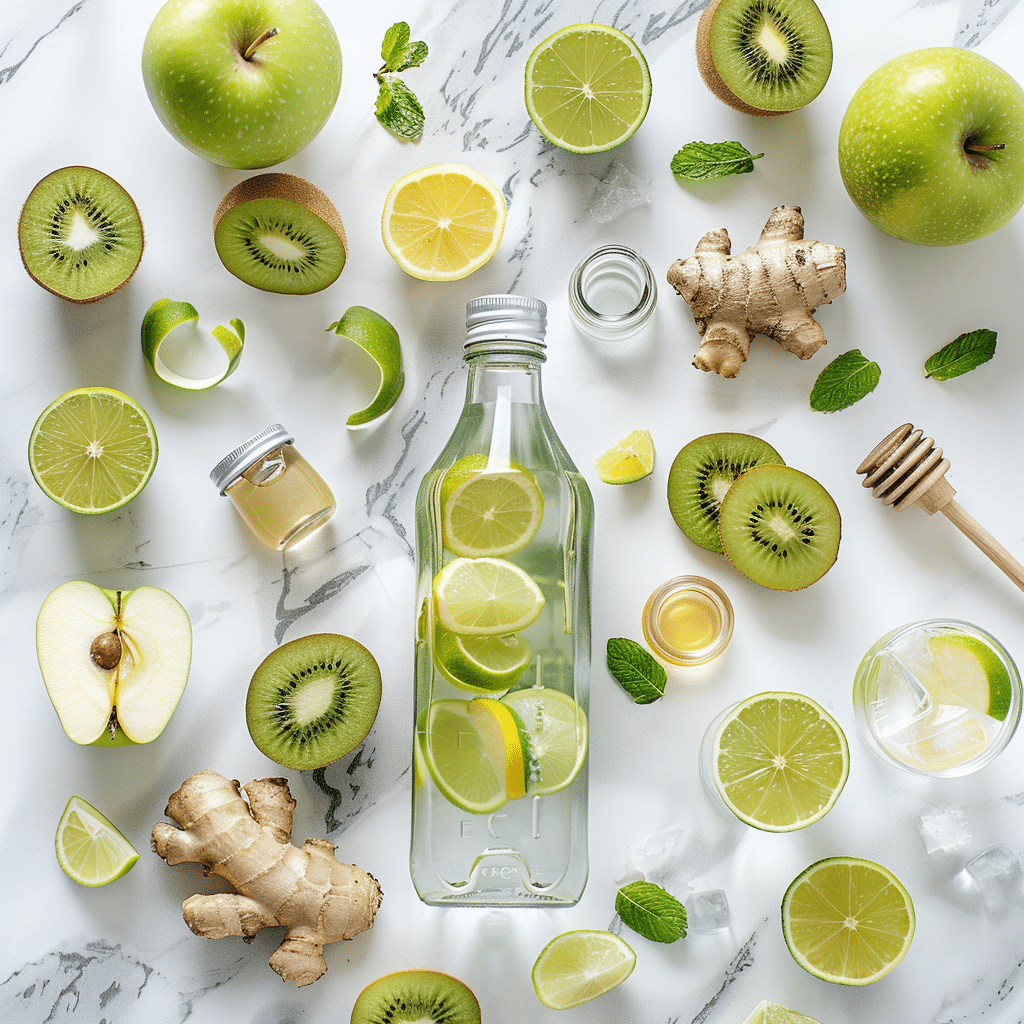
Basic Kiwi Juice (Blender Method):
5–6 ripe kiwis (peeled and sliced)
1 to 1 1/2 cups cold water (adjust for thickness)
1–2 tablespoons lemon or lime juice (optional, for brightness)
1–2 teaspoons honey or maple syrup (optional, to taste)
4–6 mint leaves (optional)
Optional Add-Ins (to mellow tartness):
1 green apple or 1 ripe pear (cored, chopped)
1/2 inch fresh ginger (grated or sliced)
Kiwi Spritzer (1 serving):
1/2 cup kiwi juice
1 cup sparkling water
Ice
Lime wedge + mint
Tropical Kiwi Blend (1 batch):
4 kiwis (peeled)
1 cup pineapple chunks (fresh or frozen)
1/2 cup coconut water (or cold water)
Squeeze of lime
Kiwi Wellness Shot (2 shots):
1 kiwi (peeled)
1 tablespoon lemon juice
1/2 teaspoon grated ginger
Pinch of salt (optional)
2–4 tablespoons water (to blend)
Instructions
Basic Kiwi Juice (Blender):
1) Add peeled kiwi + water to a blender. Blend 30–45 seconds until smooth.
2) Taste. Add citrus juice for brightness and a small touch of honey/maple only if needed.
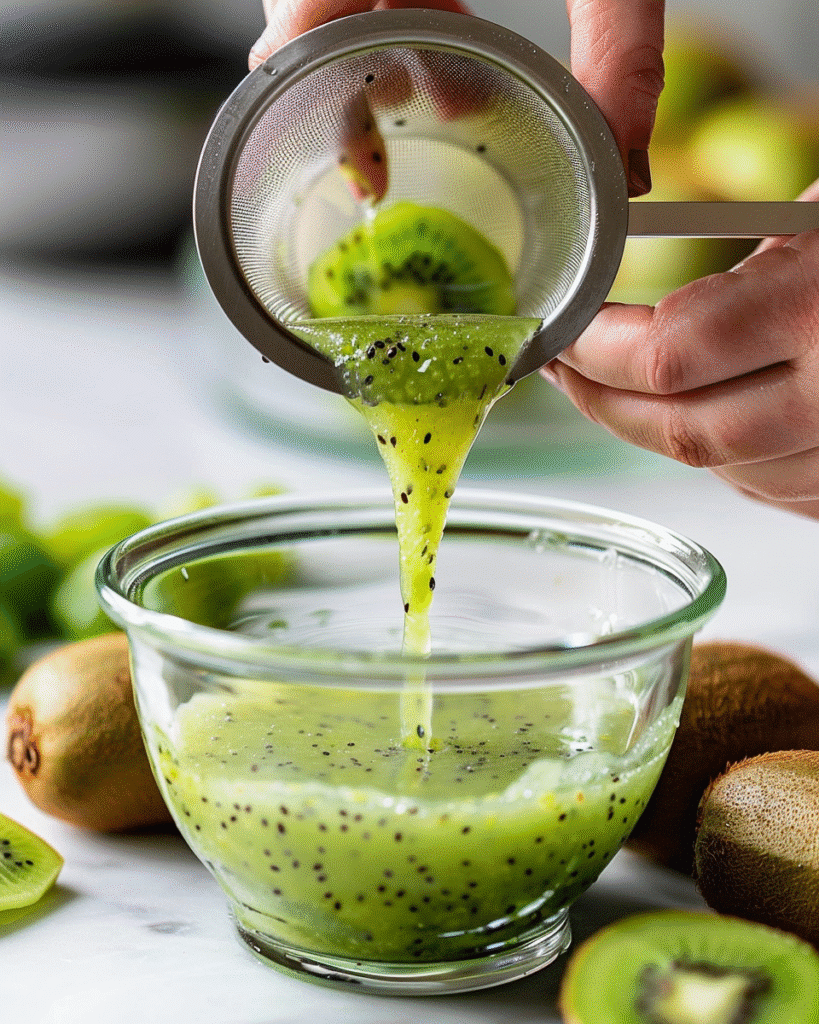
3) Optional: Strain through a fine mesh sieve for a smoother juice (press gently). For more fiber, skip straining.
4) Serve immediately over ice.
Juicer Method:
1) Peel kiwis. Feed through a juicer. Stir in lemon/lime juice to slow oxidation and brighten flavor.
Kiwi Spritzer:
1) Fill a glass with ice. Add kiwi juice and top with sparkling water.
2) Garnish with lime and mint.
Tropical Kiwi Blend:
1) Blend kiwi + pineapple + coconut water + lime until smooth.
2) Serve cold (great as a mocktail base).
Kiwi Wellness Shot:
1) Blend kiwi, lemon juice, ginger, salt (optional), and a splash of water.
2) Strain if desired. Drink immediately.
Notes
Storage: Fresh kiwi juice tastes best the same day. Refrigerate in an airtight glass jar up to 24–48 hours. Shake before serving.
Color tip: Add lemon/lime juice to slow browning and keep it bright green.
Sweetness tip: Use ripe kiwi (gentle give when pressed). Add apple/pear instead of extra sweetener when possible.
Allergy note: Kiwi can trigger allergies (especially in people with latex sensitivity). Introduce cautiously if unsure.
Kiwi Juice Basics: Flavor, Types, and Nutrition
Understanding the Unique Flavor of Kiwi Drink
Kiwi juice stands out because it blends sweet, tart, and slightly floral notes in one bright, green sip. When you juice fresh kiwifruit, you get a flavor that’s more complex than apple or orange juice and often more refreshing than heavier, creamy drinks. The juice tends to be tangy with a natural sweetness that depends on the ripeness of the fruit. Very ripe kiwis produce a smooth, sweeter juice, while firmer ones create a sharper, zesty juice that wakes up your palate. Because of this natural tang, kiwi juice works beautifully as a base for other fruit juices like apple, pineapple, or pear, which round out the acidity.
Another unique aspect of kiwi drink is its texture. When you blend or juice whole kiwis, you pull in tiny seeds and a bit of pulp, which can create a light, pleasant thickness compared with, say, pure lemon juice. Some people strain it for a cleaner, almost translucent drink, while others enjoy the fiber-rich, smoothie-like consistency. You can also control the intensity of flavor by adjusting water, adding sparkling water, or mixing with low-sugar fruits. This versatility means kiwi drink can be a breakfast staple, a pre-workout drink, or part of a more elaborate menu alongside fresh salads and wholesome mains.
Green vs. Gold Kiwis: Which Makes Better Kiwi Juice?
While most people think of the fuzzy brown, green-centered kiwi, there are actually two main types commonly used for kiwi juice: green kiwifruit (Hayward is the most common) and gold kiwifruit. Green kiwis have bright green flesh with black seeds and a signature tart, almost citrusy flavor. They make a bold, tangy kiwi juice that works great in energizing blends or wellness drinks.
Gold kiwis, on the other hand, have smooth, bronze skin and yellow flesh that tastes sweeter, more tropical, and slightly less acidic. Their juice is naturally smoother and more approachable for people who dislike too much tang.
If you love intense, zippy flavors and enjoy drinks similar to a citrus-based juice or a zesty winter salad dressing, green kiwis are your best friend. They pair beautifully with herbs like mint or basil and with other strong flavors like ginger and lime. Gold kiwis shine when you want a milder, sweeter drink, especially for kids or anyone new to tart juices.
They make a luxurious base for mocktails or lighter, fruit-forward blends. Many home cooks actually mix the two: combining green and gold kiwis yields a well-balanced kiwi juice with full-bodied sweetness and bright acidity. Whichever you choose, focus on softness and aroma, fully ripe kiwis produce the best-tasting juice with the most concentrated natural sweetness.
Step-by-Step: How to Make Kiwi Juice at Home
Best Ingredients and Equipment for Kiwi Juice
A great glass of kiwi juice starts with ripe, high-quality fruit. Look for kiwis that yield gently when pressed with your thumb but are not mushy or shriveled. Hard kiwis can ripen at room temperature in a paper bag for a couple of days. You’ll also want a few supporting players: a natural sweetener like honey or maple syrup (optional), a mild companion fruit such as apple or pear if you want to mellow the tang, and perhaps a squeeze of lemon or lime to brighten the flavor and slow oxidation. Fresh mint or basil leaves can add a cooling, aromatic note, while ginger offers a spicy kick and extra wellness benefits.
As for equipment, you can use a juicer or a blender. A slow masticating juicer extracts a clear kiwi drink with less foam and more stable color, while a blender combines the whole fruit (except skin) and gives you a thicker, fiber-rich drink. If you use a blender, you may want a fine mesh strainer or nut milk bag to remove seeds and extra pulp for a smoother texture. Have a sharp knife and cutting board ready, plus a large pitcher or glass bottle for serving or storage. You can also keep some ice cubes or chilled sparkling water on hand to serve kiwi juice cold or as a fizzy spritzer.
Blended vs. Juiced Kiwi: Methods and Texture Differences
To make blended kiwi juice, peel your kiwis, slice them, and add them to a blender with a bit of cold water. Blend until completely smooth. Taste and adjust by adding more water, a touch of sweetener, or another fruit like apple or pineapple for natural sweetness. At this point, you can serve it as is, with its naturally thick, smoothie-like body, or you can strain it.
If you choose to strain, pour the mixture through a fine strainer over a bowl, pressing gently with a spoon to extract the liquid while leaving most seeds and fibrous pulp behind. The result is a silky kiwi juice with a slightly cloudy, fresh look.
If you use a juicer, simply halve or quarter peeled kiwis and feed them through the chute. Some people juice them skin-on, but the skin can contribute a slightly bitter taste and extra fuzz, so peeling is usually best for a clean flavor. Juicers produce a lighter-textured kiwi juice, with less fiber but an incredibly concentrated taste. This method works wonderfully when you plan to mix kiwi drink into wellness shots or combine it with other fresh vegetable juices, like celery or cucumber, for a hydrating, low-calorie drink.
In both methods, serve the juice immediately for the brightest color and flavor or chill it for up to 24–48 hours, stirring before serving because natural separation will occur.
Kiwi Juice Nutrition: Vitamins, Fiber, and Antioxidants
Key Nutrients in Kiwi Drink and Their Benefits
Fresh kiwi juice packs a surprising nutrition punch for such a small fruit. Kiwi is famously rich in vitamin C, often providing more per serving than an orange. A glass of kiwi juice can support your immune system, help your body absorb iron from plant foods, and contribute to healthy skin by promoting collagen production. Besides vitamin C, kiwi contains vitamin K for blood clotting and bone health, vitamin E for antioxidant protection, and folate, which is essential for cell growth and especially important during pregnancy.
You’ll also get a range of minerals like potassium (important for blood pressure control and heart function), magnesium, and trace amounts of calcium and phosphorus.
In addition, kiwi drink contains a variety of plant compounds known as phytonutrients. These include carotenoids and polyphenols that act as antioxidants, helping reduce oxidative stress and supporting overall wellness. The vibrant green color comes from chlorophyll and other pigments that also contribute to its nutritional value. When you drink kiwi juice regularly as part of a balanced diet, you support everything from energy metabolism to recovery after exercise.
Because kiwi is relatively low in calories compared with its nutrient density, it’s a smart choice for those wanting nutrient-rich hydration without excessive sugar, especially when you avoid adding refined sweeteners.
Fiber, Digestion, and Gut Health: What Changes When You Juice?
Whole kiwis are an excellent source of dietary fiber, which supports healthy digestion, regular bowel movements, and a happier gut microbiome. When you make kiwi juice, however, fiber changes depending on your method. Blended kiwi drinks retain most of the fiber because you consume the entire fruit, including tiny seeds and pulp. Even if you thin the blend with water, you still get a decent amount of soluble and insoluble fiber. This can help slow the absorption of sugars, reduce sharp spikes in blood sugar, and keep you feeling fuller longer. It also supports smoother digestion and may ease constipation for some people.
In contrast, using a traditional juicer removes much of the fiber and leaves behind a drier pulp. The resulting kiwi drink is lighter and easier to digest quickly, which can be useful before workouts or when you want a rapid dose of hydration and vitamins. However, the glycemic impact can be higher since the natural fruit sugars enter your bloodstream faster with less fiber to slow them down. To balance this, you can pair kiwi juice with a fiber-rich meal, combine it with high-fiber fruits and vegetables like celery or cucumber, or keep some pulp in the drink.
If you are focusing on gut health, blended kiwi smoothies or minimally strained kiwi juice offer more digestive benefits than completely clarified juices.
Classic Kiwi Juice Recipe & Variations
Basic Kiwi Juice Recipe (Blender or Juicer)
Here is a straightforward, flexible kiwi juice recipe you can tailor to your taste and equipment.
| Ingredient | Amount | Notes |
|---|---|---|
| Ripe kiwis | 5–6 medium | Peeled and sliced |
| Cold water | 1–1½ cups | Adjust for thickness |
| Lemon or lime juice | 1–2 tbsp | Optional, for brightness |
| Honey or maple syrup | 1–2 tsp | Optional, to taste |
| Fresh mint | 4–5 leaves | Optional, for aroma |
For the blender method, add peeled kiwi, cold water, citrus juice, and sweetener (if using) to your blender. Blend on high until smooth, about 30–45 seconds. Taste and adjust sweetness or acidity. If you prefer a smoother kiwi juice, strain through a fine strainer or nut milk bag. For a juicer, run peeled kiwis through the machine, then stir in a little lemon juice and sweetener if desired. Chill before serving or pour over ice for a refreshing drink.
Flavor Variations: Tropical, Citrus, and Herbal Kiwi Juice Blends
Once you master the basic kiwi juice, you can explore endless variations. For a tropical twist, blend kiwi with pineapple, mango, or coconut water. Pineapple balances kiwi’s tartness and adds digestive enzymes, making this combo ideal as a light dessert drink. Mango lends creamy sweetness, creating a juice that tastes almost like a mocktail. If you love citrus-forward drinks, try mixing kiwi juice with orange, grapefruit, or tangerine juices. This creates a bright, vitamin C-packed blend that pairs well with fresh salads like a citrus fennel avocado winter salad for a complete, refreshing meal.
Herbal and spice additions can transform your kiwi juice into a more sophisticated sip. Fresh mint and basil work beautifully with kiwi’s natural tang, while ginger adds warmth and a wellness-boosting edge. You can also add cucumber for extra hydration and a mellow, spa-like feel. For a light green “detox-style” drink, combine kiwi, cucumber, celery, lemon, and a small knob of ginger. Balancing flavor and function like this lets you adapt kiwi juice to your mood: energizing, calming, or simply thirst-quenching. Always taste as you go, since kiwi’s natural sweetness varies, and remember that cold temperatures mute flavors, so slightly bolder flavors in the pitcher often taste perfect over ice.
Try combining cooked grains with roasted vegetables, nuts, herbs, and a kiwi dressing similar to what you might use in a warm lentil and roasted vegetable salad.
Kiwi Juice for Wellness and Immune Support
Kiwi Juice as a Daily Immunity Booster
Thanks to its high vitamin C content and supportive antioxidants, kiwi juice can become a simple daily ritual for immune support. A small glass in the morning delivers a concentrated hit of vitamin C, which helps your body defend against everyday stressors and supports regular immune cell function. Unlike heavily processed store-bought juices, fresh kiwi juice contains no added preservatives and retains delicate compounds like flavonoids that may offer additional benefits. When combined with other vitamin-rich ingredients, such as orange, lemon, or even a splash from your favorite wellness shot blend, kiwi juice can be part of a holistic approach to staying well.
If you’re prone to seasonal sniffles, consider pairing kiwi juice with other nutrient-dense meals for a stronger overall foundation. For example, enjoy a kiwi-based drink alongside a warm lentil and roasted vegetable salad, which delivers plant-based protein, fiber, and minerals. Together, they create a comforting yet nutrient-packed meal that supports both immune and gut health. While no juice can prevent illness on its own, making kiwi juice a consistent part of a balanced diet, quality sleep, and movement routine can contribute to feeling more resilient.
Always moderate portions if you watch your sugar intake, and choose whole-fruit blends over heavily strained juices when you can.
Anti-Inflammatory and Antioxidant Properties of Kiwi Juice
Kiwi juice is more than just vitamin C; it also offers a spectrum of antioxidants and potential anti-inflammatory compounds. These include vitamin E, carotenoids like lutein and beta-carotene, and plant polyphenols. Together, these substances help combat oxidative stress, which can contribute to premature aging and various chronic health issues when unchecked. By including kiwi juice as part of an antioxidant-rich diet, alongside foods like leafy greens, berries, nuts, and seeds, you support your body’s natural defense systems on a cellular level.
Moreover, certain components in kiwi may have mild anti-inflammatory effects, which can be beneficial for overall wellness. While kiwi juice is not a substitute for medical care, it can complement other lifestyle strategies like stress management, regular movement, and quality sleep. Pairing kiwi juice with other anti-inflammatory ingredients, such as turmeric, ginger, and leafy vegetables, can further amplify these benefits. A small kiwi-ginger shot in the morning or a kiwi-cucumber-lime juice in the afternoon provides a refreshing, supportive beverage choice.
If you already like wellness-focused drinks, you can rotate kiwi juice with other wellness shot juice recipes to keep your routine interesting and varied.
Pairing Kiwi Juice with Meals and Snacks
Breakfast, Brunch, and Light Meal Pairings
Kiwi juice shines at breakfast or brunch because its bright acidity cuts through richer foods and complements lighter fare. Serve a chilled glass of kiwi juice with whole-grain toast topped with avocado and eggs, or alongside yogurt with granola and berries. The tangy profile refreshes your palate and balances creamy textures. If you prefer a lighter morning, kiwi juice with a fruit-and-nut bowl or a simple green salad offers hydration and vitamins without feeling heavy. The natural sugars in kiwi provide quick energy, which can be helpful before a morning workout or a busy day.
You can also use kiwi juice in the dishes themselves. Stir kiwi juice into a simple vinaigrette for fruit-forward breakfast salads, or blend it into a smoothie alongside banana or strawberry for extra creaminess. If you enjoy heartier brunch recipes, a glass of kiwi juice alongside a panzanella salad or a chicken taco salad dinner-style brunch adds contrast and color to your spread. The key is balance: pair kiwi’s brightness with foods rich in protein, healthy fats, or complex carbohydrates to create a satisfying, nourishing meal that keeps you energized for hours.
Grain salads that include quinoa, wild rice, or farro gain extra brightness from a splash of kiwi juice in the dressing, much like a cranberry apple quinoa winter salad.
Kiwi Juice as a Refreshing Side to Salads and Savory Dishes
Beyond breakfast, kiwi juice pairs beautifully with savory dishes, especially those that feature fresh herbs, grains, and vegetables. For instance, a chilled kiwi-cucumber-lime juice makes a refreshing side to a kale salad recipe, where sturdy greens and nuts benefit from a tangy, cooling drink. Similarly, kiwi juice cuts through the richness of creamy dishes like green bean casserole, bringing a needed contrast that keeps the meal from feeling too heavy. If your main dish is spiced or grilled, kiwi’s acidity can help cleanse your palate between bites.
You can also use kiwi juice as a component in dressings and marinades. Its acidity and natural sugars make it ideal for bright vinaigrettes over grain salads like cranberry apple quinoa winter salad, where the sweet-tart flavors echo the fruit within the dish. When used in marinades for chicken or fish, kiwi juice can help tenderize the protein thanks to its natural enzymes; just avoid marinating for too long, as those enzymes can break down texture excessively. As a beverage, serve kiwi juice over ice with sparkling water and herbs for a mocktail vibe during dinners or gatherings. This lets guests enjoy something special and nonalcoholic that still feels celebratory and thoughtfully paired with the meal.
Storage, Make-Ahead Tips, and Safety
How to Store Fresh Kiwi Juice and Keep It Green
Fresh kiwi juice tastes best within a few hours of making it, but with proper storage, you can keep it for 24–48 hours. Because kiwi contains delicate vitamin C and other antioxidants, exposure to air, light, and heat can degrade quality. To slow this, pour kiwi juice into a clean, airtight glass container, filling it as close to the top as possible to reduce air space. Adding a small splash of lemon or lime juice not only brightens flavor but also helps slow browning and oxidation, keeping the juice a more vibrant green. Store the container in the back of the refrigerator, where temperature is most stable.
When you’re ready to serve, give the kiwi juice a gentle shake or stir. Separation is normal; heavier particles settle at the bottom. Avoid storing kiwi juice at room temperature for extended periods, especially in warm environments, as this encourages bacterial growth and flavor loss. If you need to keep kiwi juice longer than two days, consider freezing it in ice cube trays. Once frozen, transfer kiwi cubes to a freezer bag and use them within a month. You can drop these cubes into water, iced tea, or smoothies for quick flavor and nutrition without worrying about rapid spoilage.
Food Safety, Allergies, and When to Avoid Kiwi Juice
While kiwi juice is safe and beneficial for most people, it can trigger allergic reactions in some. Symptoms range from mild oral itching and tingling to more significant reactions like hives or swelling. Kiwi belongs to a group of fruits that may cross-react with latex allergies, so individuals with latex sensitivity should introduce kiwi cautiously or consult a healthcare provider. Additionally, kiwi contains actinidin, an enzyme that can irritate the mouth for some people, especially in very concentrated forms like undiluted juice. Diluting kiwi juice with water or mixing it with other fruits can reduce this effect.
Kiwi is also relatively high in natural sugars, which matters for people managing blood sugar or those with certain digestive conditions. While it has a lower glycemic load than many processed drinks, portion control remains important. If you take blood-thinning medications like warfarin, note that kiwi contains vitamin K, which can interact with those drugs. This does not mean you must avoid kiwi juice entirely, but consistent intake and medical guidance are crucial.
For infants and very young children, introduce kiwi and kiwi juice gradually, watching for any signs of sensitivity. By staying mindful of these factors, you can safely enjoy kiwi juice as part of a varied, health-conscious diet.
Common Mistakes and Expert Tips for Perfect Kiwi Juice
Mistakes to Avoid When Making Kiwi Juice
Several common missteps can make kiwi juice less enjoyable than it should be. One of the biggest is using underripe or overripe kiwis. Underripe fruits are hard, sour, and lack aroma, leading to astringent juice that may require a lot of added sweetener. Overripe kiwis, on the other hand, can taste fermented or mushy, which dulls the bright, refreshing qualities you want. Aim for fruits that yield gently but still feel plump and juicy. Another mistake is skipping acid balance. Without a small amount of lemon or lime juice, kiwi juice can taste flat or overly sweet, especially when combined with sweeter fruits like mango or apple.
Overstraining is another issue. While many people prefer a smooth texture, removing all pulp and seeds strips away valuable fiber and some flavor complexity. Try partial straining or use a coarser sieve to keep some texture. Additionally, blending kiwi juice for too long can introduce excess air, causing foam and faster oxidation, which browns the juice and dulls flavor. Blend just until smooth. Finally, avoid storing kiwi juice in reactive metal containers or in direct sunlight, as this accelerates nutrient loss and off-flavors. Proper technique and attention to ingredients make the difference between a forgettable drink and a truly refreshing kiwi juice.
Pro Tips: Enhancing Texture, Sweetness, and Presentation
To elevate your kiwi juice, focus on balance and presentation. For a smoother mouthfeel without losing all the fiber, blend kiwis with a hydrating ingredient like cucumber or coconut water, then strain lightly. This yields a silkier texture than pure kiwi pulp. If you need more sweetness but want to keep sugar low, combine kiwi with naturally sweet fruits like ripe pear, apple, or pineapple instead of adding lots of honey. A small amount of a natural sweetener, 1–2 teaspoons of honey or maple syrup for a full pitcher, usually suffices when fruit is ripe.
Presentation counts, too. Serve kiwi juice very cold, as the crisp temperature complements its tart profile. Rim glasses with a bit of lime juice and coconut sugar, or garnish with a kiwi slice and fresh mint for a café-style look. You can also layer kiwi juice with another fruit juice, such as strawberry or mango, in clear glasses for an eye-catching ombré effect. For brunches or gatherings, pour kiwi juice into a pitcher with citrus slices and herbs, turning it into a green fruit-infused drink that looks as vibrant as it tastes. These small touches turn simple kiwi juice into an impressive, memorable part of your table.
Advanced Kiwi Juice Ideas: Cocktails, Mocktails, and Meal Prep
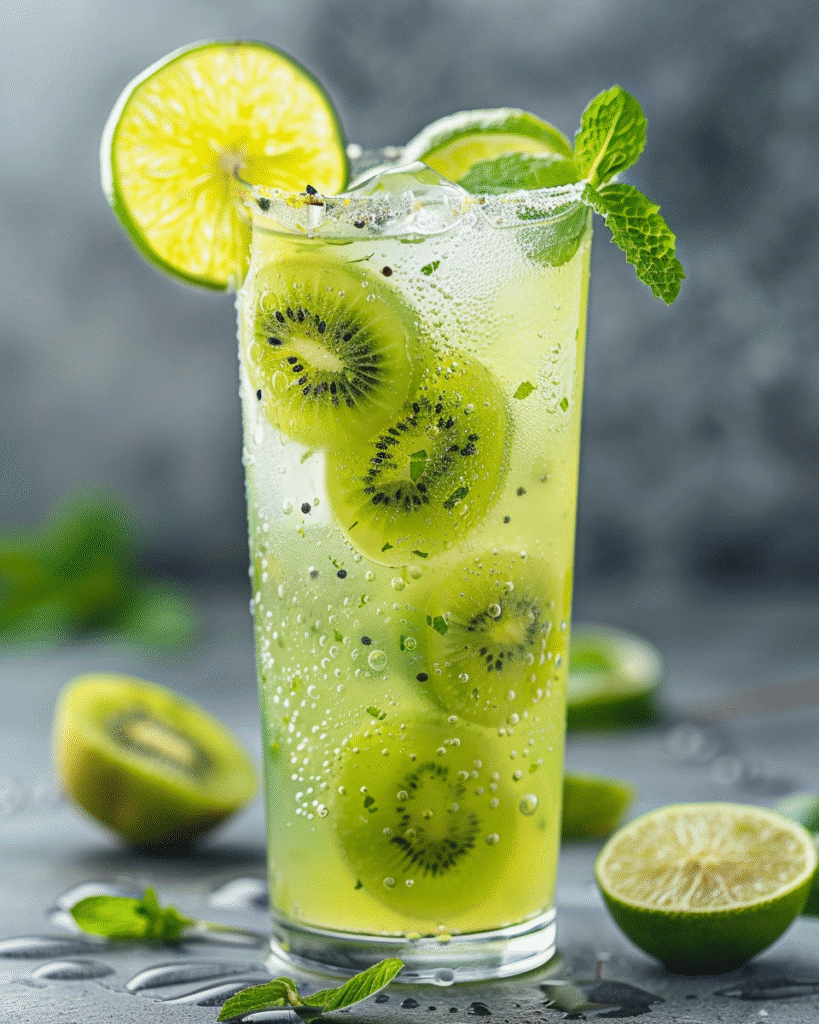
Kiwi Juice Mocktails, Cocktails, and Special-Occasion Drinks
Kiwi juice’s bold color and tangy flavor make it a natural star in mocktails and cocktails. For a simple kiwi spritz, mix kiwi juice with sparkling water, a squeeze of lime, and a few crushed mint leaves. Serve over ice in a tall glass for a refreshing, alcohol-free drink. You can also create a kiwi mojito mocktail by muddling mint and lime, adding kiwi juice and a bit of sugar or honey, then topping with soda water. The result is an ultra-refreshing beverage perfect for warm days or parties where you want a sophisticated option without alcohol.
If you enjoy cocktails, kiwi drink pairs well with spirits like vodka, gin, or light rum. A kiwi gin fizz, for example, combines kiwi juice, gin, simple syrup (or honey), and club soda shaken with ice. Garnish with a kiwi wheel and a sprig of rosemary for an herbal twist. Because kiwi juice is naturally assertive, it holds up well in layered drinks and punches. Always taste as you build cocktails; it’s easy to overpower more delicate ingredients. For a visually striking party drink, freeze kiwi drink into ice cubes and add them to sparkling water or a punch bowl. As the cubes melt, they gradually tint the drink green and infuse flavor.
Meal Prep and Integrating Kiwi Juice into a Healthy Routine
Incorporating kiwi drink into weekly meal prep helps you stay consistent without extra daily effort. One practical approach is to designate one or two juice-prep days per week. On those days, wash, peel, and chop kiwis, then store them in airtight containers in the refrigerator for 2–3 days. When you’re ready for a drink, you can quickly blend the prepped kiwi with water and optional ingredients.
Alternatively, blend a larger batch of kiwi juice and refrigerate it for up to 48 hours in tightly sealed bottles, shaking before each serving. Frozen kiwi juice cubes also streamline smoothie-making; drop a few into your blender with banana and yogurt for a creamy, tangy smoothie similar in ease to a strawberry banana smoothie recipe.
Think of kiwi drink not just as a standalone beverage, but as a component of your overall wellness pattern. Rotate it with other nutrient-dense drinks like green smoothies or wellness shots so you benefit from varied nutrients and flavors. Pair kiwi juice with high-fiber salads, lean proteins, and whole grains to build balanced meals that keep you satisfied. For example, you might enjoy kiwi juice at lunch with a Brussels sprout salad recipe or a quinoa-based dish, creating a combination rich in vitamins, minerals, and fiber. Over time, these small, enjoyable habits add up, supporting better energy, digestion, and overall health.
Explore dishes like this versatile kale salad recipe and adapt them with a kiwi twist.
Frequently Asked Questions About Kiwi Juice
Is kiwi juice good for you every day?
Drinking kiwi drink daily can be beneficial for many people, as long as portion sizes stay reasonable and it fits within a balanced diet. Kiwi is rich in vitamin C, vitamin K, potassium, and antioxidants, which support immune function, heart health, and skin health. If you choose a blended version that retains fiber, you also promote better digestion and more stable blood sugar compared with highly filtered juices. However, kiwi juice still contains natural sugars, so one small glass per day, especially alongside fiber-rich foods and proteins, is usually a smarter choice than large, frequent servings. People with kiwi allergies, latex allergies, or specific medical conditions should consult a healthcare provider before making kiwi juice a daily habit.
Can I make kiwi juice without a juicer?
You can absolutely make it without a juicer; a regular blender works very well. Simply peel and slice ripe kiwis, then blend them with cold water until completely smooth. You can add a splash of lemon or lime juice and a small amount of sweetener if needed. Once blended, you have two options: drink it as a thicker, smoothie-like beverage with the pulp and seeds, or strain it through a fine mesh sieve or nut milk bag to remove most solids. The strained liquid becomes a smooth kiwi juice very similar to what a juicer produces. This approach is budget-friendly and lets you control texture, thickness, and flavor with simple tools available in most kitchens.
How do I make kiwi juice less sour or tart?
If your juice tastes too sour or tart, you can mellow it in several ways. First, check the ripeness of your kiwis, under-ripe fruits are naturally more acidic and less sweet. Next, add a naturally sweet fruit like ripe pear, apple, mango, or pineapple to the blend; this boosts sweetness without relying heavily on added sugar. You can also dilute the juice with more water or coconut water, which softens sharp acidity. A small amount of honey or maple syrup, often just 1–2 teaspoons per glass, can round out the flavors. Finally, serving kiwi juice very cold over ice tends to soften perceived tartness, making the drink taste smoother and more refreshing.
Can I mix kiwi juice with other fruit or vegetable juices?
Yes, kiwi juice mixes beautifully with many fruit and vegetable juices, and blending them often improves both flavor and nutrition. Popular fruit partners include apple, pear, pineapple, orange, and mango, which balance kiwi’s tartness with natural sweetness. On the vegetable side, cucumber, celery, spinach, and lettuce work well because they have mild flavors and high water content, enhancing hydration while keeping calories low. Ginger and lemon can add complexity and a wellness-focused edge. When mixing, start with moderate amounts of kiwi, then adjust to taste, since kiwi can dominate more delicate flavors. Combining multiple produce types also broadens the nutrient spectrum in your glass, making your juice more satisfying and nutritionally robust.
How long does fresh kiwi juice last in the fridge?
Fresh kiwi juice is best consumed within 24 hours for maximum flavor and nutrient retention, but it can typically last up to 48 hours in the refrigerator if stored properly. Pour the juice into an airtight glass container, filling it almost to the top to limit contact with air. Adding a little lemon or lime juice helps slow oxidation and keep the color bright. Store the container toward the back of the fridge, where the temperature is more stable. Before drinking, give the juice a good shake or stir, as separation is normal. If you notice off smells, unusual fizzing, or discoloration beyond mild browning, discard the juice. For longer storage, freeze kiwi juice in ice cube trays and use within a month.
Does kiwi juice help with digestion or constipation?
Kiwi can support digestion, but how much help you get from kiwi juice depends on how you prepare it. Whole kiwis contain both soluble and insoluble fiber, which promote regular bowel movements and feed beneficial gut bacteria. When you blend kiwis into a thick drink and keep the pulp, you retain much of that fiber, which can be helpful for mild constipation when paired with adequate water intake and exercise. However, if you juice kiwis in a traditional juicer and discard the pulp, you lose most of the fiber and primarily consume vitamins, minerals, and natural sugars. That still benefits general health, but offers less direct support for bowel regularity. For digestive benefits, choose blended kiwi drinks with minimal straining and enjoy them alongside other high-fiber foods.
Can people with diabetes drink kiwi juice?
People with diabetes can sometimes include this juice in their diet, but it requires thoughtful portion control and timing. Kiwi has a moderate glycemic index and is relatively low in calories compared with many fruits, but removing fiber during juicing can increase how quickly its natural sugars impact blood glucose. To minimize spikes, opt for blended kiwi drinks that keep the pulp, limit serving size to a small glass, and pair the drink with a meal that includes protein, healthy fats, and additional fiber. Avoid adding large amounts of sweeteners and consider combining kiwi with lower-sugar vegetables like cucumber or celery. Most importantly, individuals with diabetes should monitor their blood sugar response and consult their healthcare team to determine whether and how kiwi juice fits into their personalized meal plan.
Conclusion: Bringing Kiwi Juice into Your Everyday Kitchen
Kiwi juice offers a rare combination of bright, refreshing flavor and dense nutrition, making it a smart addition to almost any home kitchen. With just a few ripe kiwis and basic equipment, you can create everything from simple daily sippers to special-occasion mocktails and cocktail mixers. By mastering core techniques, choosing ripe fruit, balancing sweetness and acidity, and storing your juice properly, you turn kiwi from a snack into a versatile ingredient that supports your wellness goals.
Pair kiwi juice with fresh salads, hearty grain dishes, or even wellness-focused recipes to build meals that nourish and satisfy. If you already enjoy nutrient-rich drinks and salads, adding kiwi juice to your rotation keeps your routine interesting and flavorful. For more inspiration on integrating vibrant, wholesome recipes into your day, explore wellness shot juice recipes and other fresh ideas that complement your new favorite green drink.
For more seasonal juices inspirations, check out my Pinterest.