
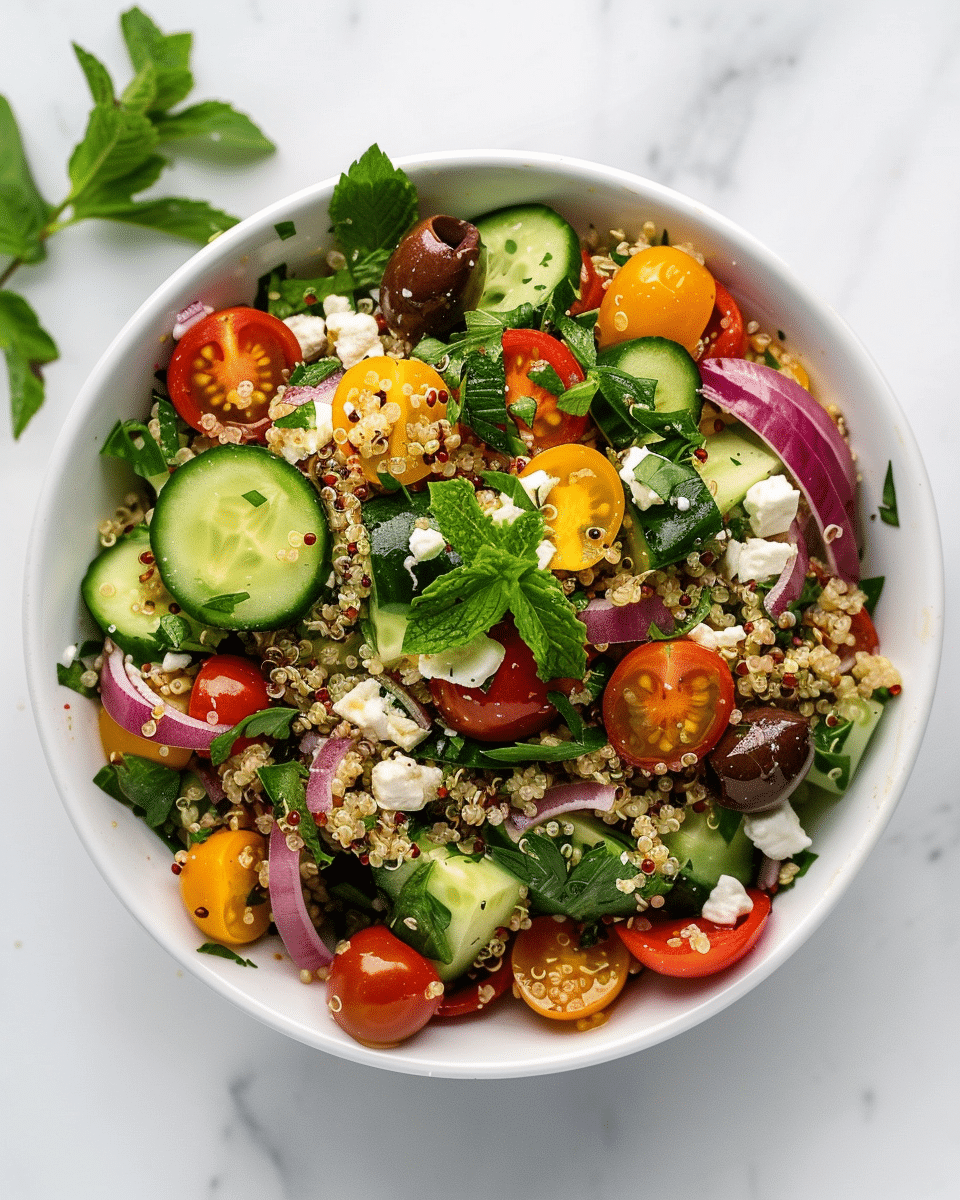
Mediterranean Quinoa Salad: Fresh, Flavorful, and Feel-Good
Mediterranean quinoa salad is the kind of recipe that instantly makes healthy eating feel exciting instead of restrictive. In just one bowl, you get crisp vegetables, bright herbs, creamy cheese, a tangy lemon dressing, and protein-packed quinoa that keeps you full for hours.
Because this salad takes its inspiration from classic Mediterranean flavors, it tastes vibrant and layered, not bland or “diet” at all. You can serve it as a light lunch, a colorful side dish, or a make-ahead meal prep option that holds up beautifully in the fridge. It even works as a potluck favorite, right next to other refreshing dishes like this Greek salad.
What makes Mediterranean quinoa salad so special is the combination of textures and nutrients. The quinoa delivers complete plant-based protein and fiber, while cucumbers, tomatoes, red onions, and bell peppers add crunch and juiciness. Olives and feta bring a salty punch, and a simple extra virgin olive oil and lemon dressing ties everything together.
You can easily adapt it with your favorite vegetables, fresh herbs, or even grilled chicken or shrimp. In the sections below, you’ll learn how to cook perfect quinoa, build a balanced salad, customize flavors, and store it safely so you can enjoy it all week long.
Table of Contents
What Is Mediterranean Quinoa Salad?
Mediterranean quinoa salad basics and flavor profile
Mediterranean quinoa salad is a modern twist on traditional Mediterranean salads that usually rely on leafy greens or pasta. Instead of lettuce or pasta, quinoa becomes the hearty base. It absorbs the lemony dressing, carries the flavors of herbs and spices, and adds a pleasant, slightly nutty taste.
Typically, this type of salad includes ingredients that appear frequently in Greek, Italian, and Middle Eastern kitchens: ripe tomatoes, crisp cucumbers, Kalamata olives, red onion, parsley, mint, and crumbly feta cheese. The overall flavor profile leans tangy, fresh, and herbaceous, with just enough richness from the olive oil and cheese.
Because quinoa is naturally gluten-free and packs all nine essential amino acids, Mediterranean quinoa salad works well for many eating styles, from vegetarian and gluten-free to high-protein meal plans. When you toss warm or room-temperature quinoa with raw vegetables and bright dressing, it soaks up flavor without losing its structure. That gives you a salad that tastes better as it rests.
This makes it ideal for meal prep or serving at gatherings, since you can prepare it a few hours in advance and let the flavors marry. The result is a colorful bowl that feels both satisfying and light, a perfect staple for anyone who loves Mediterranean diet recipes.
How Mediterranean quinoa salad differs from traditional salads
Most traditional salads rely on leafy greens like romaine, spinach, or arugula as the base. While those greens are nutritious, they wilt quickly, especially once dressed. Mediterranean quinoa salad uses cooked quinoa instead, which stays firm and fluffy for days.
That swap turns what could be a side salad into a complete, balanced meal. Because quinoa contains protein, complex carbohydrates, and fiber, you don’t need to add bread or another grain on the side to feel satisfied. The salad itself becomes the main event.
Another key difference is how the ingredients interact with time. Leafy salads usually need to be eaten right away, but Mediterranean quinoa salad actually improves in flavor as it sits in the refrigerator.
The grains absorb the lemon juice, garlic, and olive oil, while the vegetables release a small amount of juice that blends into the dressing. This creates a more cohesive taste with no soggy greens. In addition, classic Mediterranean sides like tabbouleh rely heavily on bulgur, while this version swaps in quinoa, making it more accessible to people who avoid gluten or prefer a higher-protein grain.
In many ways, it sits between a grain bowl and a chopped salad, offering the best of both worlds: texture, stability, and tons of bright Mediterranean flavor.
Print
Best Mediterranean Quinoa Salad Recipe: Easy and Delicious
- Total Time: 35 min
- Yield: 4 servings 1x
Description
A vibrant, refreshing Mediterranean Quinoa Salad made with fluffy quinoa, crisp vegetables, olives, feta, and a bright lemon-olive oil dressing. Perfect for healthy lunches, potlucks, and weekly meal prep.
Ingredients
1 cup dry quinoa (rinsed)
2 cups water or broth
1 English cucumber (diced)
1 cup cherry tomatoes (halved)
1 red bell pepper (diced)
1 small red onion (finely chopped)
1/2 cup Kalamata olives (sliced)
1/2 cup crumbled feta cheese
1/2 cup chopped fresh parsley
Dressing:
1/3 cup extra virgin olive oil
1/4 cup fresh lemon juice
1–2 cloves garlic (minced)
1 tsp Dijon mustard
1 tsp dried oregano
1/2 tsp salt
1/4 tsp black pepper
Instructions
1. Rinse quinoa under cold water and drain well.
2. Bring 2 cups of water/broth to a boil, add quinoa, cover, and simmer 15 minutes.
3. Turn off heat, rest 5 minutes, then fluff with a fork and cool completely.
4. Chop cucumber, tomatoes, bell pepper, onion, olives, and parsley.
5. Whisk together olive oil, lemon juice, garlic, Dijon, oregano, salt, and pepper.
6. Combine cooled quinoa with vegetables and olives.
7. Add most of the dressing and toss gently to coat.
8. Fold in feta cheese last for intact crumbles.
9. Let rest 15–30 minutes before serving for best flavor.
Notes
For meal prep, store 3–4 days refrigerated.
Make it vegan by removing feta or using plant-based cheese.
Add chickpeas or grilled chicken for extra protein.
Use fresh mint or basil for a more aromatic Mediterranean flavor.
Tricolor quinoa adds extra color and texture.
- Prep Time: 20 min
- Cook Time: 15 min
- Category: Mediterranean Salad
- Method: Mixed / No-Cook
- Cuisine: Mediterranean
Nutrition
- Serving Size: 1 bowl
- Calories: 320
- Sugar: 4g
- Sodium: 480mg
- Fat: 18g
- Saturated Fat: 5g
- Unsaturated Fat: 12g
- Trans Fat: 0g
- Carbohydrates: 32g
- Fiber: 4g
- Protein: 10g
- Cholesterol: 15mg
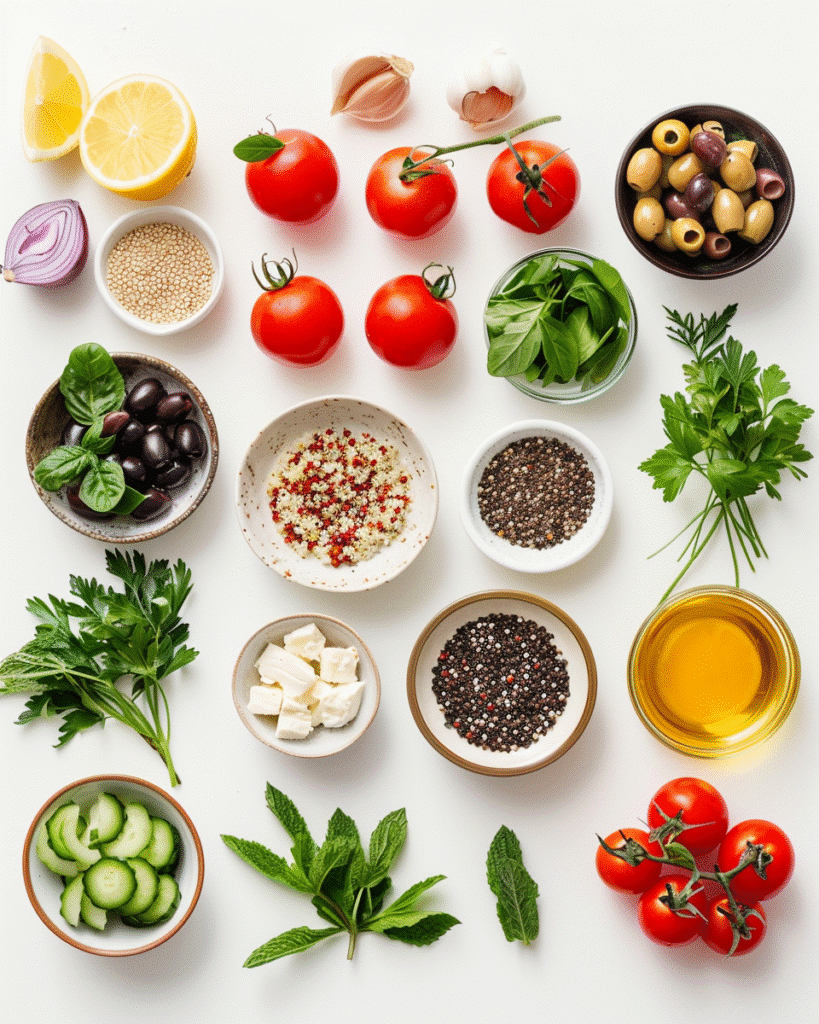
Key Ingredients for Mediterranean Quinoa Salad
Choosing the best quinoa, vegetables, and add-ins
The quality of your Mediterranean quinoa salad starts with fresh, vibrant ingredients. For the base, use white (also called golden) quinoa for a mild flavor and fluffy texture. Tricolor quinoa also works and adds visual appeal, but it can be slightly firmer. Always look for quinoa that is pre-rinsed, but even then, rinsing it under cold water for a minute helps remove any lingering bitterness from the natural coating called saponin.
For vegetables, choose firm cucumbers, sweet grape or cherry tomatoes, crisp bell peppers, and a fresh, tight red onion. If your cucumbers have thick seeds or very tough skin, you can peel and deseed them for a cleaner texture.
Olives and cheese give the salad its signature Mediterranean identity. Kalamata olives bring briny depth, while green olives add a different kind of savory note.
Feta cheese is classic, but you can also use goat cheese or a dairy-free feta-style cheese if you prefer. Fresh herbs such as parsley, mint, basil, or dill brighten every bite and keep the salad from feeling heavy. Extras like chickpeas, artichoke hearts, or roasted red peppers turn the dish into an even more substantial meal. If you like a bit of heat, a pinch of red pepper flakes or a sprinkle of sumac can add complexity without overwhelming the salad.
Building a bright Mediterranean dressing
The dressing is what ties Mediterranean quinoa salad together, and it’s wonderfully simple. A classic version combines extra virgin olive oil, fresh lemon juice, minced garlic, Dijon mustard, salt, and black pepper. The olive oil should be good quality since you will taste it directly in the finished dish, not hidden by cooking.
Freshly squeezed lemon juice offers far better flavor than bottled; it gives the salad that clean, zesty brightness you expect in Mediterranean cooking. Garlic adds a pungent warmth, and Dijon mustard helps emulsify the dressing so it coats the quinoa and vegetables evenly.
You can adjust the dressing to match your preferences. For extra tang, add a splash of red wine vinegar. For sweetness, a teaspoon of honey or maple syrup balances the acidity without turning the salad sugary. If you enjoy bold herbs, whisk in dried oregano or thyme to echo flavors used in Greek and Italian recipes.
The key is to taste the dressing before you pour it over the quinoa. It should taste slightly more intense than you think you want because the grains and vegetables will mellow it. Once you toss everything together, let the salad sit for at least 15–20 minutes so the quinoa can absorb some of the dressing and every spoonful tastes fully seasoned.
How to Cook Quinoa Perfectly for Salad
Rinsing, simmering, and cooling quinoa
Perfect Mediterranean quinoa salad starts with quinoa that is fluffy, not mushy, and well seasoned. Begin by measuring your quinoa, then place it in a fine-mesh strainer and rinse under cold water for 30–60 seconds, rubbing the grains gently with your fingers. This step removes saponin, which can make quinoa taste bitter or soapy.
For most salads, a 1:2 ratio of quinoa to water works well: for 1 cup of dry quinoa, use 2 cups of water or broth. You can lightly toast the rinsed quinoa in a dry saucepan over medium heat for a few minutes to bring out a nutty aroma before adding the liquid.
Bring the water and quinoa to a boil, then immediately reduce the heat to low, cover, and simmer for about 15 minutes, or until the water is absorbed and the grains show little “tails” or spirals.
Turn off the heat and let the covered pot sit for another 5 minutes to finish steaming. Then fluff the quinoa gently with a fork to separate the grains. Spread the cooked quinoa on a large baking sheet or in a wide bowl to help it cool quickly and prevent clumping. Cool it to room temperature before mixing with the vegetables and dressing. This step keeps the salad from becoming overly soft and ensures the vegetables stay crisp.
Common quinoa mistakes and how to avoid them
A few common mistakes can easily ruin quinoa for salad, but they are simple to avoid once you know what to look for. One major issue is using too much water. If you add more than the recommended ratio, the quinoa can turn mushy and waterlogged. That soggy texture makes Mediterranean quinoa salad heavy and unpleasant. Stick to the 1:2 ratio and resist the urge to stir constantly, which can break the grains.
Another frequent mistake is skipping the resting and cooling period. Mixing hot quinoa with fresh vegetables will wilt them and may even partially cook delicate herbs, dulling their flavor and color.
Seasoning also plays a big role. If you cook quinoa in plain water with no salt or aromatics, the base of your salad will taste flat. Instead, add a pinch of salt to the cooking water or use low-sodium vegetable or chicken broth. You can even toss a bay leaf or a smashed garlic clove into the pot for gentle flavor. Just remove them before fluffing the quinoa.
Finally, some people store cooked quinoa in a tight ball in a small container, which leads to clumping. To avoid this, fluff it well and let it cool spread out, then store it in an airtight container. When ready to use, break up any clumps with a fork before combining it with your Mediterranean ingredients and dressing.
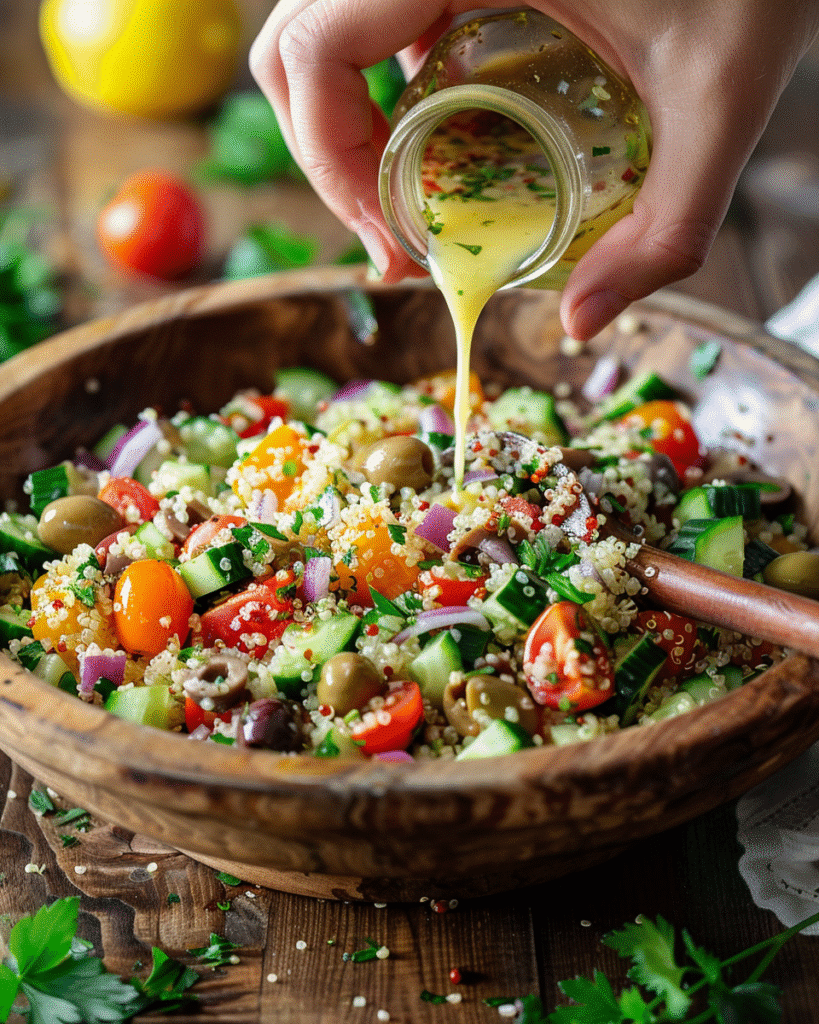
Classic Mediterranean Quinoa Salad Recipe
Step-by-step method and ingredient quantities
To make a classic Mediterranean quinoa salad, start with the following ingredients for about 4 generous servings: 1 cup dry quinoa, 2 cups water or broth, 1 medium English cucumber (diced), 1 cup halved cherry tomatoes, 1 small red onion (finely chopped), 1 red bell pepper (diced), 1/2 cup pitted Kalamata olives (sliced), 1/2 cup crumbled feta cheese, and about 1/2 cup chopped fresh parsley.
For the dressing, you’ll need 1/3 cup extra virgin olive oil, 1/4 cup fresh lemon juice, 1–2 cloves garlic (minced), 1 teaspoon Dijon mustard, 1 teaspoon dried oregano, 1/2 teaspoon salt, and 1/4 teaspoon black pepper.
Cook and cool the quinoa as described earlier. While it cools, prepare the vegetables: dice the cucumber and bell pepper, halve the tomatoes, slice the olives, and finely chop the onion and parsley. In a small bowl or jar, whisk together the olive oil, lemon juice, garlic, Dijon, oregano, salt, and pepper until emulsified.
Place the cooled quinoa in a large mixing bowl, add all the chopped vegetables and olives, then pour in most of the dressing. Toss gently until everything is evenly coated. Fold in the feta last to keep some larger crumbles intact. Taste and adjust seasoning with more salt, pepper, or lemon juice if needed.
Serving, pairing, and timing tips
Once your Mediterranean quinoa salad is assembled, let it rest for at least 15–30 minutes before serving so the flavors can blend. You can serve this salad chilled or at room temperature, depending on preference. Room temperature often allows the flavors to shine more clearly, while chilling makes it especially refreshing on hot days.
This dish pairs beautifully with grilled chicken, fish, or shrimp, and works perfectly alongside other Mediterranean-inspired sides like a simple cucumber salad or a seafood salad such as this Frutti di Mare seafood salad.
Because it’s sturdy, Mediterranean quinoa salad is ideal for picnics, potlucks, or lunchboxes.
If you plan to transport it, keep it in a well-sealed container and store it in a cooler or fridge until serving to maintain freshness and food safety. For meal prep, you can portion the salad into individual containers for quick grab-and-go lunches. Just note that the vegetables will release a bit of moisture over time, so if you plan to keep it for several days, you might hold back a little dressing and add it right before eating. Garnish with extra parsley, a sprinkle of feta, or a drizzle of olive oil for a polished presentation.
Nutritional Benefits of Mediterranean Quinoa Salad
Protein, fiber, and heart-healthy fats
Mediterranean quinoa salad offers an impressive nutritional profile in every serving. Quinoa itself is a complete plant protein, which means it provides all nine essential amino acids that your body cannot produce on its own. This makes the salad particularly valuable for vegetarians and anyone reducing meat intake.
A typical serving delivers a satisfying amount of protein along with complex carbohydrates that digest more slowly than refined grains, helping to stabilize blood sugar and provide steady energy. Additionally, quinoa contains a good amount of dietary fiber, which supports digestion and helps keep you full.
The salad also benefits from heart-healthy fats found in extra virgin olive oil and olives. These monounsaturated fats have been associated in research with improved cardiovascular health and reduced inflammation when consumed as part of a balanced diet. Feta cheese contributes some saturated fat and protein, but usually in moderate amounts since you use it as a topping rather than the main ingredient.
The combination of fiber, protein, and healthy fats creates a dish that keeps hunger at bay, reducing the urge to snack on less nutritious options. When paired with plenty of colorful vegetables, Mediterranean quinoa salad becomes a powerhouse of beneficial nutrients that fit comfortably within many wellness-focused eating plans.
Vitamins, minerals, and Mediterranean diet benefits
Beyond macronutrients, Mediterranean quinoa salad provides a wide variety of vitamins and minerals. Tomatoes offer vitamin C and lycopene, an antioxidant linked to heart health. Cucumbers help with hydration and add small amounts of vitamin K. Red bell peppers are rich in vitamin C and carotenoids, while red onions bring flavonoids like quercetin.
Fresh parsley adds vitamin K, vitamin C, and antioxidants, and lemon juice contributes additional vitamin C and a refreshing tang. Quinoa itself supplies magnesium, manganese, phosphorus, and folate, making it a nutrient-dense grain alternative.
This salad also aligns strongly with the principles of the Mediterranean diet, which emphasizes vegetables, whole grains, legumes, olive oil, and moderate amounts of fish and dairy. Studies have associated this way of eating with lower risks of heart disease, certain cancers, and metabolic disorders.
Mediterranean quinoa salad fits naturally into this pattern by combining a whole grain with vegetables, olive oil, and moderate cheese. Because the ingredients are so flexible, you can easily boost nutrients even further by adding chickpeas for extra fiber and protein or spinach for iron and folate.
When eaten regularly alongside other Mediterranean-style dishes, such as refreshing salads and vegetable-forward plates, this quinoa salad can help support long-term health while still tasting indulgent and satisfying.
Variations and Customizations
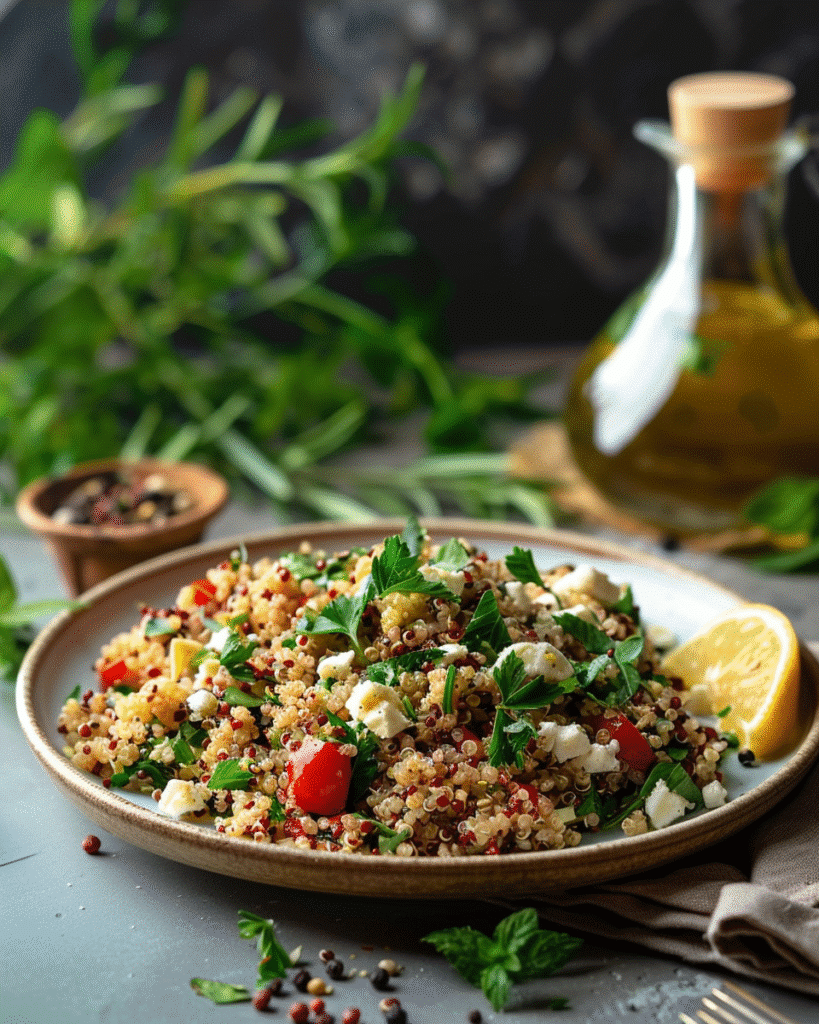
High-protein, vegan, and gluten-free variations
Mediterranean quinoa salad is naturally gluten-free as long as you verify that your quinoa is processed in a gluten-free facility and you avoid any wheat-based add-ins like couscous or croutons.
For a vegan version, simply omit the feta cheese or swap it with a dairy-free feta-style cheese made from tofu, almonds, or coconut. You can also boost plant-based protein by adding chickpeas, lentils, or white beans. These legumes blend beautifully with the Mediterranean flavors and add creaminess without needing extra dairy.
If you want an even higher-protein meal, you can top the salad with grilled chicken breast, turkey, shrimp, or salmon. Just season the protein with olive oil, garlic, lemon, salt, and herbs like oregano or thyme so it complements the existing flavors.
For a vegetarian protein boost, add grilled halloumi cheese or baked tofu cubes tossed in olive oil and herbs. Because the base salad is so flexible, you can easily create multiple variations for different dietary needs in the same meal-prep session, changing only the toppings you add at serving time.
Seasonal veggies and flavor twists
One of the best aspects of Mediterranean quinoa salad is how easily it adapts to the seasons. In the summer, you can lean heavily on juicy tomatoes, cucumbers, and fresh herbs, along with grilled zucchini or eggplant. During spring, add tender asparagus tips, peas, or radishes for crunch and color. In cooler months, roasted vegetables like butternut squash, sweet potatoes, or Brussels sprouts lend a cozy twist while still pairing nicely with the lemony dressing.
Just roast them with olive oil, salt, pepper, and perhaps a little smoked paprika before folding them into the cooled quinoa.
You can also experiment with flavor profiles while staying rooted in Mediterranean traditions. Add sun-dried tomatoes and marinated artichoke hearts for an Italian-inspired variation. Try a sprinkle of sumac or za’atar, common in Middle Eastern cooking, for a tangy, herby boost.
If you enjoy heat, stir in finely chopped fresh chili or a pinch of Aleppo pepper. For a sweet-savory contrast, toss in a handful of raisins, dried cranberries, or chopped dates along with toasted pine nuts or almonds. Each of these tweaks keeps the core concept of Mediterranean quinoa salad intact while offering something new and exciting every time you make it.
Meal Prep, Storage, and Food Safety
How to store Mediterranean quinoa salad for freshness
Mediterranean quinoa salad keeps very well in the refrigerator, which makes it a great candidate for weekly meal prep. After assembling the salad, transfer it to an airtight container and refrigerate it promptly. Generally, it stays fresh for about 3–4 days. During that time, the quinoa may continue to absorb dressing, and the vegetables can release a bit of liquid.
To maintain the best texture, some people prefer to store the dressing separately and toss it with the quinoa and vegetables right before eating. If you do mix everything together in advance, you can refresh the salad with a drizzle of olive oil and a squeeze of lemon just before serving.
If you plan to pack Mediterranean quinoa salad for work lunches, divide it into individual containers. This helps control portion sizes and keeps you from repeatedly opening one big container, which can introduce more air and moisture. Store the salad in the coldest part of your fridge, not the door, where temperatures fluctuate more.
Avoid freezing this salad, as raw vegetables and feta do not thaw well; they tend to become watery and lose their crispness. Instead, you can freeze cooked plain quinoa in portions, then defrost and combine it with fresh vegetables and dressing when you’re ready to make a new batch.
Food safety tips for picnics and potlucks
When you bring Mediterranean quinoa salad to picnics or potlucks, pay extra attention to food safety. Because the salad contains cooked grains and cheese, it should not sit at room temperature for more than about 2 hours, or 1 hour if the outdoor temperature is very warm (above 90°F / 32°C).
To keep it safe, transport the salad in an insulated cooler with ice packs and keep it chilled until serving time. You can set the serving bowl inside a larger bowl filled with ice to help it stay cool on the buffet table.
Use clean utensils and avoid double-dipping, especially if people serve themselves. If a large portion remains after the event and it has been out for several hours, it’s safer to discard it rather than risk foodborne illness.
For smaller gatherings, consider bringing part of the salad out at a time and keeping the rest chilled until needed. This strategy reduces the amount exposed to warm temperatures. If you want to pair this salad with refreshing beverages, non-alcoholic drinks like a Shirley Temple or a fruit-forward mocktail can add a festive touch while keeping the meal light and family-friendly.
Serving Ideas, Pairings, and Menus
Turning Mediterranean quinoa salad into a full meal
Mediterranean quinoa salad can easily become the centerpiece of a complete meal when you pair it with complementary dishes and beverages. Because it already contains grains, vegetables, and some protein, you only need a little extra to round it out. Grilled lemon-herb chicken skewers, baked salmon, or simply seasoned shrimp add lean protein and match the salad’s bright flavors.
For a vegetarian plate, pair the salad with grilled halloumi, falafel, or a side of hummus and pita bread. A small side of fresh fruit, such as melon or berries, brings a refreshing sweetness that keeps the meal balanced.
You can also create a Mediterranean-style mezze spread by surrounding the quinoa salad with small plates: olives, marinated artichokes, roasted red peppers, baba ganoush, and wedges of warm flatbread.
This approach lets everyone help themselves and customize their plates. When you want a lighter lunch, serve a generous scoop of Mediterranean quinoa salad over a bed of leafy greens or alongside a simple cucumber salad. Add sparkling water with lemon slices or iced herbal tea to complete the experience without making it feel heavy.
Drinks and desserts that complement the salad
The fresh, tangy profile of Mediterranean quinoa salad pairs especially well with light, fruity drinks and simple desserts. For beverages, consider citrus-infused water, iced mint tea, or a non-alcoholic mocktail with berries and citrus.
If you enjoy fun, colorful drinks, a nonalcoholic strawberry margarita or a berry mocktail such as the site’s cosmopolitan-style non-alcoholic cocktail can bring a festive flair without overpowering the salad. The key is to keep drinks refreshing and not too sweet, so they enhance the meal rather than dominate it.
For dessert, something light and fruit-based works best. A simple bowl of mixed berries, sliced peaches, or citrus segments with a drizzle of honey keeps the Mediterranean theme and offers natural sweetness. You might also serve a small portion of yogurt with chopped nuts and a little honey.
If you prefer a more structured dessert, a fruit-forward salad like strawberry and spinach or fresh fruit skewers make excellent choices. The idea is to let the clean, vivid flavors of the Mediterranean quinoa salad lead, and choose drinks and sweets that echo its brightness instead of competing with it.
Sample Recipe Table and Customization Guide
Ingredient and nutrition overview
To help you plan and customize your Mediterranean quinoa salad, it can be useful to see the core ingredients and their roles in a simple table. Keep in mind that exact nutrition values vary based on brand and portion size, but this overview gives you a general idea of how balanced the salad is.
| Component | Main Ingredient | Primary Role |
|---|---|---|
| Grain Base | Quinoa | Protein, complex carbs, fiber |
| Vegetables | Cucumber, tomato, bell pepper, red onion | Vitamins, crunch, color |
| Healthy Fats | Olive oil, olives | Heart-healthy fats, flavor |
| Protein Boost | Feta, chickpeas (optional) | Extra protein, creaminess |
| Herbs & Acid | Parsley, lemon, garlic | Freshness, tang, aroma |
This simple structure helps you see where you can swap ingredients while keeping the salad balanced. For instance, if you remove feta for a dairy-free version, consider adding chickpeas or extra nuts to maintain protein and richness.
Customization ideas and quick variations table
Once you master the base recipe, it becomes easy to create quick variations for different occasions. You can think in terms of themes extra protein, more greens, or a roasted vegetable focus and tweak ingredients accordingly. Here’s a handy customization table for inspiration:
| Variation Type | What to Add | Flavor Notes |
|---|---|---|
| High-Protein | Grilled chicken, shrimp, chickpeas | Hearty, filling, still light |
| Vegan | Omit feta, add beans, extra olives | Plant-based, briny, robust |
| Roasted Veg | Roasted zucchini, eggplant, peppers | Smoky, sweet, cozy |
| Herb Lover’s | Extra parsley, mint, basil | Very fresh, aromatic |
| Fruit Accent | Raisins, dried cranberries, orange segments | Sweet-tart contrast |
You can also adjust the dressing to suit each variation by changing the acid (try lime instead of lemon), adding spices like cumin or paprika, or stirring in a little tahini for creaminess. With these ideas, your Mediterranean quinoa salad never needs to taste exactly the same twice, yet it always stays wholesome, colorful, and deeply satisfying.
FAQ About Mediterranean Quinoa Salad
How long does Mediterranean quinoa salad last in the fridge?
Mediterranean quinoa salad typically lasts about 3–4 days in the refrigerator when stored properly. Place the salad in an airtight container as soon as it cools to room temperature, then refrigerate it promptly.
Over time, the quinoa will continue to absorb some of the dressing while the vegetables release a bit of moisture, which can slightly soften the texture.
If you want the crispiest vegetables, you can store the dressing separately and toss it with the quinoa and chopped veggies just before serving. Always use clean utensils when scooping out portions, and if the salad ever smells off, looks slimy, or tastes sour in an unusual way, discard it for safety.
Can I make Mediterranean quinoa salad the night before?
Yes, making Mediterranean quinoa salad the night before can actually improve its flavor.
The quinoa needs time to absorb the dressing and mingle with the vegetables, herbs, and olives. After you assemble the salad, cover it tightly and refrigerate it. By the next day, the flavors will taste more cohesive and full.
If you worry about the vegetables softening too much, you can hold back delicate ingredients like fresh herbs and feta and add them shortly before serving. Before you bring the salad to the table, give it a quick toss and taste. You might want to refresh it with a squeeze of lemon juice, a drizzle of olive oil, or a pinch of salt to brighten the flavors after chilling.
Is Mediterranean quinoa salad good for weight loss?
Mediterranean quinoa salad can support weight loss when you enjoy it as part of an overall balanced, calorie-conscious eating pattern. It contains fiber-rich quinoa and vegetables, which help you feel full and satisfied without an excessive number of calories.
The protein in quinoa, feta, and any added legumes or lean meats also promotes satiety, reducing the urge to overeat later.
However, the salad does include olive oil and cheese, which are calorie-dense, so portion control matters.
You can lighten it slightly by using a bit less oil or feta and adding extra vegetables or herbs to increase volume. When combined with regular physical activity and mindful eating, this salad can be a delicious, nutrient-dense option that fits well into weight-management goals.
Can I freeze Mediterranean quinoa salad?
Freezing complete Mediterranean quinoa salad is not recommended because many of its components do not freeze and thaw well.
Raw vegetables like cucumber, tomato, and bell pepper tend to become watery and mushy after freezing, and feta cheese can change texture in an unappealing way.
However, you can freeze cooked plain quinoa on its own. After cooking and cooling the quinoa, portion it into freezer-safe containers or bags and freeze for up to 2–3 months.
When you’re ready to make a fresh salad, thaw the quinoa in the refrigerator or at room temperature, fluff it with a fork, and then combine it with freshly chopped vegetables, herbs, olives, feta, and dressing.
This approach saves time without compromising texture and flavor.
What can I serve with Mediterranean quinoa salad?
Mediterranean quinoa salad pairs well with a wide range of mains and sides. For protein, consider grilled chicken, baked salmon, shrimp skewers, or lamb kebabs seasoned with lemon, garlic, and herbs.
Vegetarian options like falafel, grilled halloumi, or hummus with pita bread also complement the salad beautifully.
You can create a Mediterranean-style platter with olives, roasted vegetables, and dips, using the quinoa salad as the centerpiece.
For a refreshing contrast, serve it alongside a light fruit salad, or pair it with another veggie-based dish like a strawberry and spinach salad. To round out the meal, add a simple beverage such as infused water, herbal iced tea, or a non-alcoholic cocktail for a bright, balanced menu.
Conclusion: Enjoying Mediterranean Quinoa Salad Every Week
Mediterranean quinoa salad brings together everything people love about the Mediterranean diet: fresh vegetables, aromatic herbs, healthy fats, and a satisfying whole grain that keeps you energized. It offers flexibility for different lifestyles, from vegan and gluten-free to high-protein and family-friendly.
With just a few basic techniques like cooking quinoa properly, using a zesty lemon and olive oil dressing, and balancing textures—you can make this dish a regular feature in your meal rotation. You can even pair it with other vibrant salads and drinks from the same culinary family, such as a sweet-tart strawberry spinach salad, to build a colorful, nutrient-dense table.
Whether you prepare it for busy workdays, relaxed weekend lunches, or gatherings with friends, Mediterranean quinoa salad always feels fresh and satisfying. Once you understand the core formula, you can endlessly customize it with seasonal produce, extra protein, and bold spices, ensuring that it never becomes boring. Make a batch, let the flavors meld, and enjoy how one simple bowl can deliver such a powerful combination of taste, nutrition, and convenience.
Discover more seasonal Salad inspirations, check out Pinterest.