
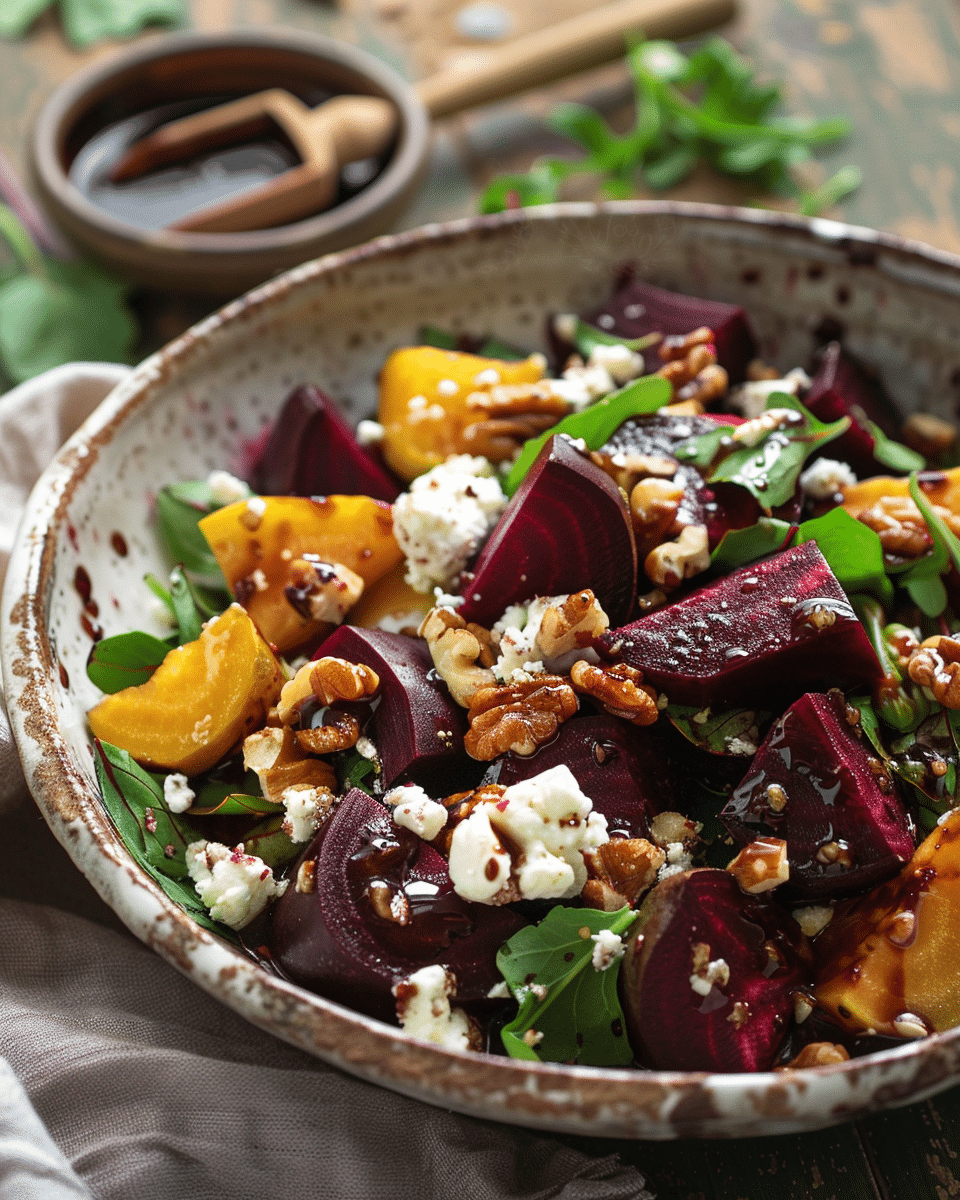
Roasted Beet & Goat Cheese Salad with Greens: A Colorful, Elegant Favorite
A Roasted Beet & Goat Cheese Salad with Greens is one of those dishes that feels restaurant-fancy yet stays surprisingly simple to prepare at home. In just a few steps, you get sweet, tender roasted beets, creamy tangy goat cheese, crisp mixed greens, and a bright vinaigrette that ties everything together.
Because the flavor is so balanced and satisfying, this salad can easily stand alone as a light meal, yet it also shines as a starter for a special dinner. If you love fresh, vibrant salads like a Greek salad or a strawberry spinach salad, this beet and goat cheese version will fit perfectly into your rotation.
From the nutrition side, Roasted Beet & Goat Cheese Salad with Greens delivers a powerhouse combination: earthy beets loaded with antioxidants, heart-healthy greens, plus protein and calcium from goat cheese and nuts. At the same time, it offers endless ways to customize, swap greens, change the nuts, experiment with dressings, so you never get bored. In this complete guide,
you’ll learn everything you need to make the best Roasted Beet & Goat Cheese Salad with Greens, from choosing ingredients to roasting methods, plating ideas, and smart prep-ahead tips that make this recipe ideal for busy weeknights or effortless entertaining.
You can also pair Roasted Beet & Goat Cheese Salad with Greens beautifully with fresh juices such as a bright, cleansing beet juice recipe to create a colorful, nourishing meal.
Table of Contents
Why Roasted Beet & Goat Cheese Salad with Greens Works So Well
The Flavor Magic Behind Beets, Goat Cheese, and Greens
The classic Roasted Beet & Goat Cheese Salad with Greens works because every component balances the others. Roasting beets concentrates their natural sugar, turning them from slightly earthy and firm into tender, caramelized gems.
That sweetness pairs perfectly with creamy, tangy goat cheese, which cuts through the earthiness and brings a luxurious mouthfeel. Meanwhile, a bed of fresh greens, like arugula, baby spinach, or spring mix, adds crunch, freshness, and a touch of bitterness, rounding out the flavors.
Another key element is the vinaigrette. A simple mixture of olive oil, vinegar, mustard, and a touch of sweetness (like honey or maple syrup) acts as the bridge between each ingredient. The acidity brightens the beets, the fat softens the bite of the greens, and the sweetness complements the goat cheese. Add toasted nuts for crunch and some fruit like orange segments or strawberries for brightness, and you get contrasting textures in every bite.
This interplay of sweet, creamy, tangy, crisp, and earthy keeps every forkful interesting and deeply satisfying.
Nutritional Benefits of a Beet and Goat Cheese Green Salad
Besides taste, a Roasted Beet & Goat Cheese Salad with Greens is a nutritional win. Beets are rich in folate, manganese, potassium, and fiber. They contain betalain pigments, which act as antioxidants and support anti-inflammatory processes in the body.
Additionally, naturally occurring nitrates in beets can help support healthy blood flow and may aid in exercise performance and cardiovascular health. Add in dark leafy greens like spinach or arugula, and you boost your intake of vitamin K, vitamin A, vitamin C, and iron.
Goat cheese brings protein and calcium while often being easier to digest than some cow’s milk cheeses for certain people.
When you include heart-healthy fats from extra-virgin olive oil and nuts like walnuts, pistachios, or almonds, you transform a simple salad into a balanced dish that offers protein, healthy fats, fiber, and micronutrients. This mix can help keep you full longer, stabilize energy, and support healthy blood sugar levels.
Because Roasted Beet & Goat Cheese Salad with Greens is customizable, you can further adjust it to your nutritional needs, adding grilled chicken for extra protein or reducing cheese for a lighter version, without losing the basic flavor harmony.
Print
How to Make the Best Roasted Beet & Goat Cheese Salad with Greens
- Total Time: 60 minutes
- Yield: 4 servings 1x
Description
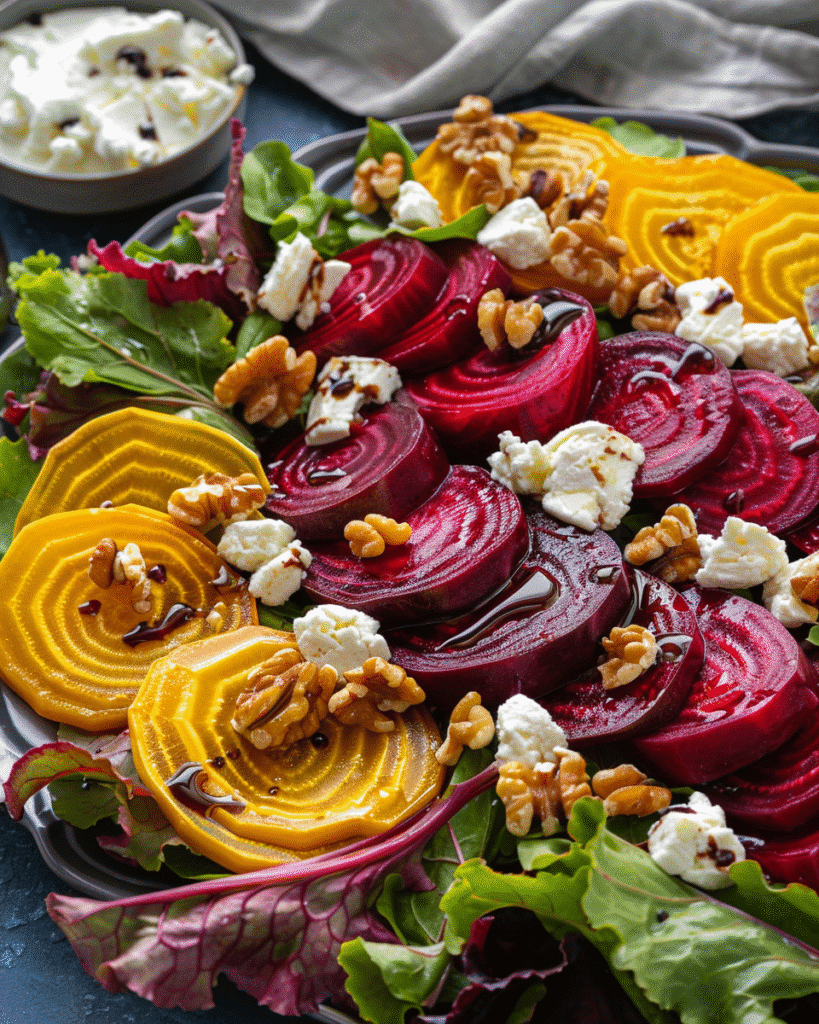
A restaurant-style Roasted Beet & Goat Cheese Salad with tender sweet beets, creamy tangy goat cheese, crisp mixed greens, toasted walnuts, and a bright balsamic vinaigrette. Fresh, colorful, and perfect as a light meal or elegant starter.
Ingredients
3–4 medium beets (red or golden)
4 cups mixed greens (arugula, spinach, or spring mix)
1/3 cup goat cheese, crumbled
1/4 cup toasted walnuts or pecans
1 small shallot (optional)
Salt + black pepper to taste
Balsamic Vinaigrette:
3 tbsp extra virgin olive oil
1 tbsp balsamic vinegar
1 tsp Dijon mustard
1 tsp honey or maple syrup
Salt + pepper to taste
Instructions
1. Preheat oven to 400°F (200°C)
2. Trim beet greens and scrub beets clean
3. Wrap each beet in foil or place in covered dish with splash of water
4. Roast 35–60 minutes depending on size
5. Peel warm beets and slice or cube
6. Whisk vinaigrette ingredients in a small bowl
7. Toss greens lightly with dressing
8. Layer roasted beets over greens
9. Add crumbled goat cheese and toasted walnuts
10. Finish with extra vinaigrette before serving
Notes
Roast beets ahead for quick salads
Use golden beets for a milder, sweeter flavor
Swap walnuts for pistachios or pecans
Add orange segments or strawberries for brightness
Make vegan by using almond-based cheese
- Prep Time: 15 minutes
- Cook Time: 45 minutes
- Category: Salad / Healthy
- Method: Roasted / Tossed
- Cuisine: Mediterranean / American
Nutrition
- Serving Size: 1 plate
- Calories: approx. 380
- Sugar: 16g
- Sodium: 220mg
- Fat: 24g
- Saturated Fat: 5g
- Unsaturated Fat: 17g
- Trans Fat: 0g
- Carbohydrates: 32g
- Fiber: 6g
- Protein: 8g
- Cholesterol: 10mg
Choosing and Preparing Beets for Roasting
How to Select the Best Beets for Your Salad
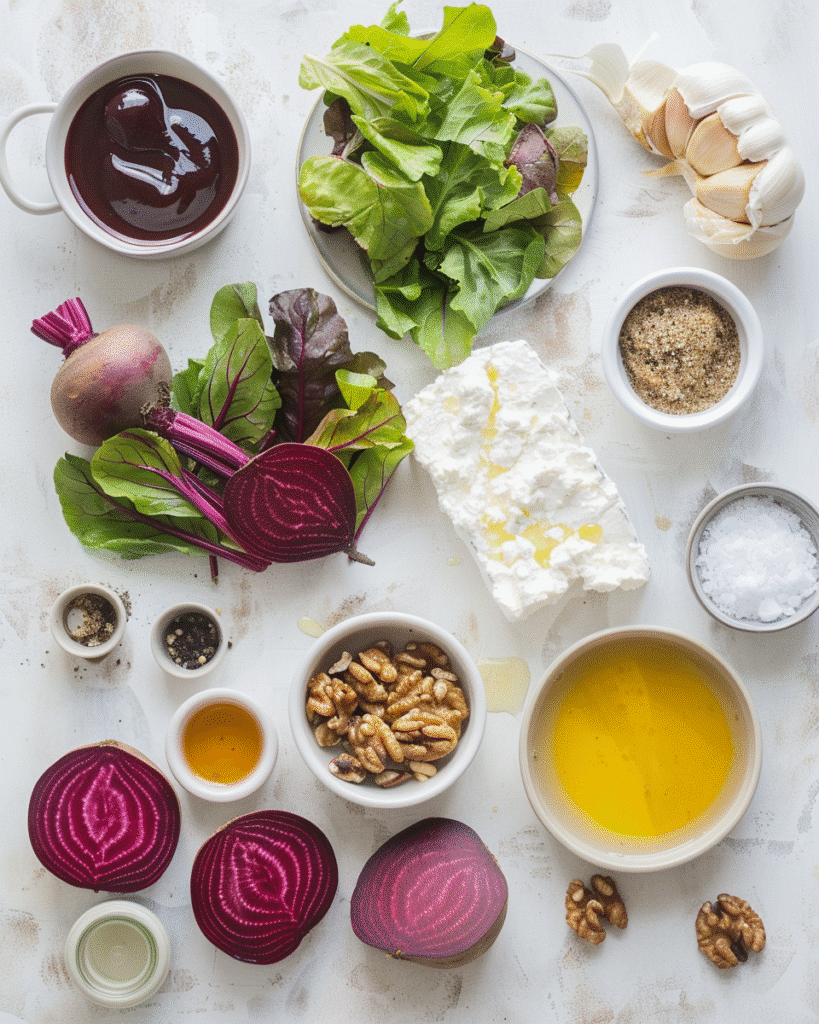
For the best Roasted Beet & Goat Cheese Salad with Greens, start with good-quality beets. Look for firm, heavy beets with smooth skins and no soft spots or deep cuts. The root end should be intact, and if the greens are still attached, they should look fresh and vibrant, not wilted or slimy.
Smaller to medium beets usually have a more tender texture and slightly sweeter flavor compared with very large beets, which can be more fibrous. You can use red beets, golden beets, or even candy-striped (Chioggia) beets for a stunning, multi-colored presentation.
Color choice also affects flavor balance. Red beets tend to be more intensely earthy, while golden beets have a milder, slightly sweeter profile that some people prefer in salads.
If you plan to mix varieties, roast them separately because red beets can bleed color and turn everything pink. Store fresh beets in the refrigerator, ideally in a breathable bag in the crisper drawer, and use them within 1–2 weeks for best flavor. When you handle beets, remember that red varieties stain, so consider wearing gloves and using a cutting board that you don’t mind tinting bright magenta.
Step-by-Step Guide to Roasting Beets Perfectly
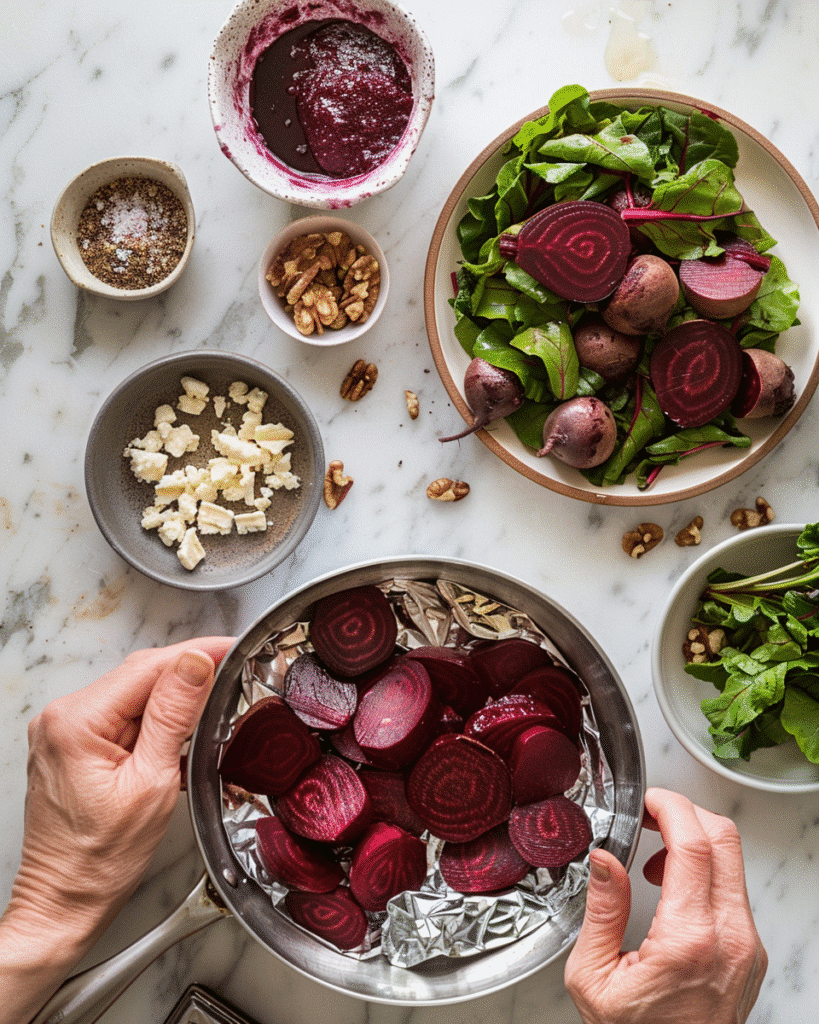
Perfectly roasted beets are the heart of a great Roasted Beet & Goat Cheese Salad with Greens. First, preheat your oven to 400°F (200°C). Trim the beet greens, leaving about an inch of stem, and gently scrub the beets under running water to remove dirt.
Do not peel them yet; roasting with the skins on helps retain moisture, flavor, and nutrients. Pat them dry, then either wrap each beet individually in foil or place them in a covered, oven-safe dish with a splash of water to keep them from drying out.
Roasting time depends on size. Small beets may take 35–40 minutes, while larger ones can require up to 60 minutes. They’re done when a knife or skewer slides into the center with little resistance, similar to testing a potato. After roasting, let them cool just enough to handle.
Slip off the skins with your fingers or a paper towel; they should peel easily. Then slice, dice, or wedge the beets depending on your salad style. For more flavor, you can toss the warm beets with a spoonful of vinaigrette right after peeling. This step allows them to absorb extra seasoning and helps them stay tender and juicy in the salad.
Greens That Elevate Your Roasted Beet & Goat Cheese Salad
Best Greens to Use: Arugula, Spinach, and Mixed Greens
The greens you choose can transform the character of your Roasted Beet & Goat Cheese Salad with Greens. Arugula, with its peppery bite, is a favorite because it contrasts beautifully with sweet beets and creamy goat cheese.
Baby spinach offers a more mild, slightly sweet flavor and a tender texture that works well if you prefer a softer bite. Spring mix or mesclun blends bring variety in both flavor and texture, often combining baby lettuces, radicchio, frisée, and sometimes herbs. This mix can add subtle bitterness and visual interest.
If you enjoy hearty salads, consider baby kale or a mix of kale and spinach. Baby kale leaves are tender enough to eat raw, especially when lightly massaged with a bit of olive oil and salt, which softens the fibers and reduces bitterness.
Romaine or butter lettuce can also play a supporting role, adding crunch and a neutral background that lets the beets and goat cheese shine. The key is freshness: greens should look crisp and vibrant, without yellowing or slimy spots. Wash and thoroughly dry them, ideally with a salad spinner, since excess water can dilute your dressing and make the greens soggy.
How to Prep and Store Greens for Maximum Freshness
Proper preparation and storage of your greens ensure that every Roasted Beet & Goat Cheese Salad with Greens tastes bright and crisp. Start by filling a large bowl with cold water and submerging the greens. Swish gently to dislodge dirt or sand. Lift the leaves out, pour out the dirty water, and repeat if needed. Next, dry the greens completely.
A salad spinner is ideal because it removes surface moisture quickly and evenly. If you do not have one, lay the greens out on a clean kitchen towel and gently pat dry, then air dry for a few minutes.
To store, line a container or large resealable bag with paper towels to absorb moisture, then loosely pack in the dried greens. They need a bit of airflow, so avoid compressing them too tightly. Keep the container sealed and store it in the refrigerator’s crisper drawer. With this method, most greens stay fresh for 3–5 days.
If you want to prep ahead for several salads during the week, wash and dry the greens once, then assemble bowls quickly whenever you roast beets. Always wait to dress the greens until just before serving to avoid wilting. This approach makes it much easier to enjoy a fresh, restaurant-style salad on busy days.
Goat Cheese and Toppings That Complete the Salad
Choosing the Right Goat Cheese for Your Salad
Goat cheese is the creamy, tangy star of a Roasted Beet & Goat Cheese Salad with Greens. When selecting it, you can choose between a soft fresh chèvre log or a firmer, aged goat cheese.
Fresh chèvre works best for most salads because it crumbles beautifully and blends with the dressing, coating the greens lightly. Look for goat cheese that feels soft but not runny, with a clean, slightly tangy aroma rather than a strong, barnyard smell. Many brands also offer flavored chèvre with herbs or honey, which can add another layer of complexity.
Flavor intensity increases as goat cheese ages, so if you prefer a mild taste, choose a younger, fresher variety. For stronger, more assertive flavor, try an aged goat cheese that you shave thinly over the salad with a vegetable peeler or microplane. Always crumble or slice goat cheese straight from the fridge; it handles more neatly when cold.
Then let it warm slightly at room temperature on the salad plate, which enhances its creaminess. Because goat cheese is rich, a little goes a long way. You can adjust the amount depending on whether the salad is a light starter or the main course.
Nuts, Seeds, and Extras: Building Texture and Crunch
To make a Roasted Beet & Goat Cheese Salad with Greens unforgettable, you need layers of texture. Toasted nuts and seeds add crunch, richness, and additional nutrients. Walnuts are a classic pairing with beets and goat cheese thanks to their slightly bitter, buttery flavor.
Toasting them in a dry skillet or in the oven for a few minutes intensifies their taste and gives them a satisfying snap. Pecans, pistachios, almonds, and hazelnuts all work well, too. Chop them coarsely so every bite has some crunch without overwhelming the other ingredients.
Seeds provide another dimension. Pumpkin seeds (pepitas), sunflower seeds, or even sesame seeds can add interest while keeping the salad friendly to those who avoid tree nuts. Dried fruits like cranberries, cherries, or golden raisins introduce chewiness and a burst of sweetness that contrasts nicely with the tangy goat cheese. Fresh fruit such as orange segments, sliced pears, or strawberries can brighten the plate even more, similar to the way fruit lifts a strawberry spinach salad.
Finally, consider a sprinkle of fresh herbs, parsley, dill, basil, or chives, for a fresh aromatic finish that makes the salad feel more gourmet without adding much work.
Dressing Your Roasted Beet & Goat Cheese Salad with Greens
Classic Balsamic Vinaigrette for Beet and Goat Cheese
A well-balanced dressing is essential to bring a Roasted Beet & Goat Cheese Salad with Greens together. A classic balsamic vinaigrette is a natural choice because its sweetness and acidity complement the beets and goat cheese perfectly.
To make a simple version, whisk together 3 parts extra-virgin olive oil with 1 part balsamic vinegar. Add 1 teaspoon Dijon mustard for emulsification, a pinch of salt, freshly ground black pepper, and a teaspoon of honey or maple syrup for sweetness. Taste and adjust until it’s bright but not overly sharp.
The mustard helps bind the oil and vinegar, giving the dressing a silky texture that clings nicely to the greens. Balsamic also deepens the salad’s color, giving the beets an attractive glaze. For extra complexity, you can add a crushed garlic clove, a few thyme leaves, or a small splash of orange juice.
Make the vinaigrette in a jar with a tight lid and shake vigorously; this method makes it easy to store leftover dressing. Let the dressing sit for at least 10 minutes before using so the flavors meld and mellow, resulting in a more cohesive taste.
Alternative Dressings and Flavor Twists
Although balsamic vinaigrette is classic, your Roasted Beet & Goat Cheese Salad with Greens can adapt beautifully to other dressings and flavor profiles.
A citrus vinaigrette made with fresh orange or lemon juice, olive oil, and a touch of honey brings a bright, refreshing note that highlights the salad’s natural sweetness. A red wine vinegar-based dressing offers a sharper, more tangy profile and pairs especially well if you include olives or Mediterranean-inspired ingredients, similar to a Greek salad.
For a creamier twist, you can whisk goat cheese or Greek yogurt into the dressing with olive oil, lemon juice, and herbs. This creates a light, tangy coating that clings to every leaf without feeling heavy. If you enjoy a bit of heat, add a pinch of crushed red pepper flakes or a small drizzle of hot honey.
Flavor infusions, such as using garlic-infused oil or herb-infused vinegar, are another subtle way to customize. Just keep the basic balance in mind: fat for richness, acid for brightness, sweetness to round edges, and salt to sharpen flavors. When you keep these principles in view, you can confidently create your own “house” dressing for this salad.
Step-by-Step Assembly of the Perfect Roasted Beet & Goat Cheese Salad with Greens
Building a Balanced Plate: Layering Technique
The way you assemble a Roasted Beet & Goat Cheese Salad with Greens affects both presentation and eating experience. Start with a generous bed of dried, chilled greens in a wide, shallow bowl or on a large plate.
This gives plenty of room to distribute toppings evenly. Lightly drizzle some dressing over the greens and toss gently with clean hands or salad tongs until each leaf has a thin, even coating. This step prevents over-dressing later and keeps the salad light.
Next, add the roasted beet slices or wedges in an even layer on top.
If you previously tossed the beets with a spoonful of vinaigrette, they will already taste seasoned and juicy. Crumble goat cheese over the beets and greens, aiming for small, irregular pieces rather than large chunks. These smaller bits melt slightly against the warm beets and blend beautifully into each bite.
Finally, sprinkle on your toasted nuts, seeds, and any fruit or herbs. Finish with a light extra drizzle of dressing on top just before serving. This layered approach ensures that every forkful offers a little of everything, rather than leaving all the good stuff at the bottom of the bowl.
Presentation Tips for Everyday Meals and Entertaining
While flavor comes first, presentation makes your Roasted Beet & Goat Cheese Salad with Greens feel truly special, especially when you entertain. Consider using contrasting plates or bowls, white dishes make the red and golden beets pop, while dark stoneware creates a dramatic backdrop for bright greens and goat cheese.
Arrange beet slices in a circular pattern or fan them out along one side of the plate, then nestle a mound of greens alongside. This restaurant-style plating elevates even a simple weeknight dinner.
When serving family-style, use a large, shallow platter. Build a base of greens, then “rainbow” stripes of toppings: one stripe of beets, one of goat cheese, one of nuts, and one of fruit. This approach makes the salad look abundant and inviting.
If you serve other salads at the same time, such as a simple cucumber salad or a seafood salad, this bold Roasted Beet & Goat Cheese Salad with Greens becomes the colorful centerpiece. For more formal gatherings, plate individual portions in advance, adding a final sprinkle of herbs and a twist of black pepper right before they hit the table. Your guests will feel like they’re enjoying a dish from a fine bistro, but you’ll know how simple it really was.
Variations, Add-Ins, and Meal Prep Ideas
Turning the Roasted Beet & Goat Cheese Salad with Greens into a Complete Meal
A Roasted Beet & Goat Cheese Salad with Greens can easily become a complete meal with a few smart additions. For extra protein, top the salad with grilled chicken, seared salmon, roasted shrimp, or even sliced steak.
The sweetness of the beets and tanginess of the goat cheese pair especially well with simply seasoned grilled chicken or salmon. You can also use plant-based proteins like chickpeas, lentils, or grilled tofu, which absorb flavor from the dressing and add satisfying texture.
Whole grains are another excellent way to convert Roasted Beet & Goat Cheese Salad with Greens into a full meal. Toss in cooked and cooled quinoa, farro, barley, or brown rice for added fiber and staying power. These grains soak up the vinaigrette and turn each serving into a hearty bowl.
If you love pasta-based salads, you might enjoy serving this salad alongside a tortellini salad for additional carbs and flavors. To keep the salad balanced, aim for a plate that includes about half vegetables, a quarter protein, and a quarter whole grains. This structure ensures you enjoy the vibrant flavors of the salad while staying comfortably full for hours.
Seasonal Spins: From Summer to Winter
One of the best things about a Roasted Beet & Goat Cheese Salad with Greens is its flexibility across seasons. In spring and summer, emphasize freshness by using baby greens, fresh herbs, and juicy fruits like strawberries, peaches, or cherries. Lighter citrus dressings or herb vinaigrettes shine during warmer months, and you can serve the salad slightly chilled. Pair it with refreshing drinks such as non-alcoholic cocktails or fruit juices to create a bright, seasonal spread.
In fall and winter, lean into earthier flavors. Add roasted root vegetables like carrots, parsnips, or sweet potatoes, and switch to heartier greens such as baby kale or a mix of spinach and romaine. Toasted walnuts or pecans and dried cranberries complement cold-weather meals beautifully.
A slightly thicker balsamic or maple-mustard dressing feels more comforting during cooler months. You can also serve the beets warm and the goat cheese just beginning to soften, making the salad feel cozy and substantial. With these seasonal tweaks, this salad can anchor your menu any time of year, making it a reliable favorite for both light lunches and holiday tables.
Common Mistakes and Troubleshooting Tips
Avoiding Soggy Greens and Overdressed Salads
Even a well-planned Roasted Beet & Goat Cheese Salad with Greens can disappoint if the greens turn soggy or the dressing overwhelms the flavors. The first key is to dry your greens thoroughly after washing. Any remaining water dilutes the dressing and causes wilting.
Use a salad spinner or gently pat dry with towels, then let them air dry briefly. Next, dress the greens lightly, start with less dressing than you think you need. You can always add more, but you cannot remove excess.
Another tip is to keep the beets and greens separate until just before serving, especially if your beets are still slightly warm. Warm beets on cold, crisp greens are delicious, but if they sit together for too long, the greens wilt and stain.
Finally, avoid adding salt directly to the greens too early. Salt draws out moisture, which can lead to limp leaves. Instead, season the dressing well and toss everything together at the last moment. Following these steps helps preserve the salad’s refreshing crunch and vibrant appearance.
Fixing Bland Flavors and Imbalanced Textures
If your Roasted Beet & Goat Cheese Salad with Greens tastes bland or feels one-dimensional, a few adjustments can transform it. First, check your seasoning. Many home cooks under-salt their vinaigrette, which leads to flat flavors. Taste the dressing before adding it to the salad; it should taste bright, slightly tangy, and fully seasoned on its own. If it feels dull, add a pinch of salt, an extra splash of acid, or a drop of honey to round it out.
Texture balance is equally important. If your Roasted Beet & Goat Cheese Salad with Greens feels mushy, you may have too many soft ingredients like beets and cheese without enough crunch. Add more toasted nuts, seeds, or crisp raw vegetables such as thinly sliced cucumbers or radishes. If everything tastes too sweet, incorporate peppery arugula, a sharper vinegar, or a savory element like olives or roasted chickpeas.
When the Roasted Beet & Goat Cheese Salad with Greens feels too heavy, reduce the cheese slightly and increase the greens. Because ingredients like beets and goat cheese are rich and flavorful, small tweaks in quantity and seasoning often make a big difference in the final result.
Serving Ideas, Pairings, and Storage
What to Serve with Roasted Beet & Goat Cheese Salad with Greens
This Roasted Beet & Goat Cheese Salad with Greens makes a versatile side or main dish, so it pairs well with many recipes. For a light, elegant meal, serve it alongside grilled fish, roasted chicken, or a simple pasta with olive oil and garlic.
If you enjoy seafood, you can pair the Roasted Beet & Goat Cheese Salad with Greens with a chilled seafood salad, allowing the sweet beets and tangy cheese to complement briny flavors. Crusty bread or warm flatbread is also a wonderful companion, perfect for scooping up stray beets and goat cheese from the plate.
In a larger menu, Roasted Beet & Goat Cheese Salad with Greens sits beautifully next to other fresh, colorful dishes like cucumber salads, fruit-forward salads, or vegetable-driven grain bowls.
For beverages, consider pairing with sparkling water infused with citrus or herbs, a non-alcoholic mocktail, or fresh fruit juices like beet juice or carrot juice for a cohesive, vibrant meal. Because the salad has strong flavors, keep sides and drinks simple and refreshing so they support rather than compete with the beets and goat cheese.
Storing Leftovers and Make-Ahead Tips
With smart planning, you can enjoy Roasted Beet & Goat Cheese Salad with Greens throughout the week. The key is to store components separately. Keep roasted beets in an airtight container in the refrigerator for up to 4–5 days. You can even roast a larger batch and use them in multiple dishes, such as salads, grain bowls, or wraps.
Store washed and dried greens in a container lined with paper towels, and keep your dressing in a jar. When ready to eat, assemble only the portion you need, adding goat cheese, nuts, and fruit at the last minute.
If you end up with a fully dressed leftover salad, it’s best eaten within a day. The greens will soften, but the flavors remain pleasant. For better leftover results, use sturdier greens like kale or romaine, which stand up better to dressing. Leftover roasted beets also combine well with other recipes like quick juices or smoothies if you want to mix things up.
For example, you can blend them into a beet juice with apples or carrots for a quick, nutrient-packed drink. With these make-ahead strategies, you can keep Roasted Beet & Goat Cheese Salad with Greens in your regular meal prep rotation without sacrificing freshness or texture.
FAQ Section
Can I use canned or pre-cooked beets instead of roasting fresh ones?
You can use canned or pre-cooked beets in a Roasted Beet & Goat Cheese Salad with Greens, and they work well when you need to save time. Look for plain, unsweetened beets without added vinegar or heavy seasonings, because those can clash with your dressing.
Drain and rinse canned beets to remove excess brine, then pat them dry before slicing or dicing. While pre-cooked beets will not have the same caramelized, concentrated sweetness as oven-roasted beets, they still offer good color, texture, and nutrition.
To boost flavor, toss them with a bit of vinaigrette and a pinch of salt before adding to the Roasted Beet & Goat Cheese Salad with Greens. If you have the option, lightly warm them to mimic that just-roasted quality and help the goat cheese soften slightly.
How do I keep goat cheese from clumping in the salad?
To keep goat cheese from clumping in your Roasted Beet & Goat Cheese Salad with Greens, start by chilling the cheese thoroughly. Cold goat cheese crumbles more cleanly into small, even pieces. Use a fork or your fingers to crumble it directly over the salad at the very end of assembly, rather than mixing it with the greens in a big bowl.
If you toss the salad too vigorously after adding cheese, it tends to stick together and form larger clumps. Another trick is to sprinkle goat cheese over individual plates instead of the entire serving bowl, which helps distribute it more evenly.
You can also toss a few crumbles with the warm beets only, letting them soften slightly while leaving the majority as distinct, creamy bites throughout the Roasted Beet & Goat Cheese Salad with Greens.
Is this Roasted Beet & Goat Cheese Salad with Greens good for meal prep?
Yes, this Roasted Beet & Goat Cheese Salad with Greens is excellent for meal prep if you store components separately. Roast a batch of beets in advance and keep them refrigerated for up to several days. Wash, dry, and store greens in a container lined with paper towels so they remain crisp.
Prepare your dressing and keep Roasted Beet & Goat Cheese Salad with Greens in a jar in the fridge. When you are ready to eat, assemble your salad by combining greens, beets, and dressing, then add goat cheese, nuts, and any fresh fruit. This method prevents the greens from wilting and keeps textures distinct. You can portion everything into separate containers for lunches, then quickly put them together at work or on the go for a fresh, colorful meal.
What other cheeses can I use if I do not like goat cheese?
If you do not enjoy goat cheese, you can still make a delicious Roasted Beet & Goat Cheese Salad with Greens by substituting another creamy or tangy cheese. Feta is a popular alternative; it has a salty, briny flavor that pairs beautifully with sweet beets and crisp greens. You can also try blue cheese or gorgonzola for a bolder, sharper profile, though these are more intense and work best in smaller quantities.
For a milder option, crumbled ricotta salata or a soft, mild cow’s milk cheese can provide creaminess without strong tang. Even shaved Parmesan or aged Manchego can work, offering nutty, savory notes. Choose a cheese that contrasts with the beets and complements your dressing so the Roasted Beet & Goat Cheese Salad with Greens stays balanced.
How can I make this salad vegan or dairy-free?
To make a vegan version of Roasted Beet & Goat Cheese Salad with Greens, replace goat cheese with a plant-based alternative and ensure your dressing contains no honey or dairy. Many stores now carry vegan goat-style cheeses or soft cashew-based cheeses that crumble nicely and offer a tangy, creamy texture.
You can also use creamy avocado slices for richness if you prefer more whole-food ingredients. For the Roasted Beet & Goat Cheese Salad with Greens dressing, swap honey for maple syrup or agave, and double-check that any pre-made vinaigrettes are dairy-free. Make sure any added components, such as croutons or flavored nuts, do not contain butter or cheese coatings. With these small changes, you preserve the salad’s beautiful color, texture, and flavor contrast while keeping it fully plant-based.
Conclusion: Bringing Roasted Beet & Goat Cheese Salad with Greens to Your Table
A Roasted Beet & Goat Cheese Salad with Greens delivers everything you want in a memorable dish: bold color, contrasting textures, balanced flavors, and impressive nutrition. With just a few core techniques, properly roasting beets, drying greens well, choosing the right goat cheese, and mixing a bright, well-seasoned dressing, you can turn simple ingredients into a restaurant-worthy salad at home. Because the recipe is so adaptable, you can enjoy it as a light starter, a full main dish with added proteins and grains, or a standout side in a larger spread.
When you’re ready to build a complete, colorful meal, pair Roasted Beet & Goat Cheese Salad with Greens with other fresh recipes, like a bright beet juice recipe or complementary seasonal salads, to create an inviting, wholesome table that feels both special and achievable any night of the week.
For more seasonal salad inspirations, check out my Pinterest.