
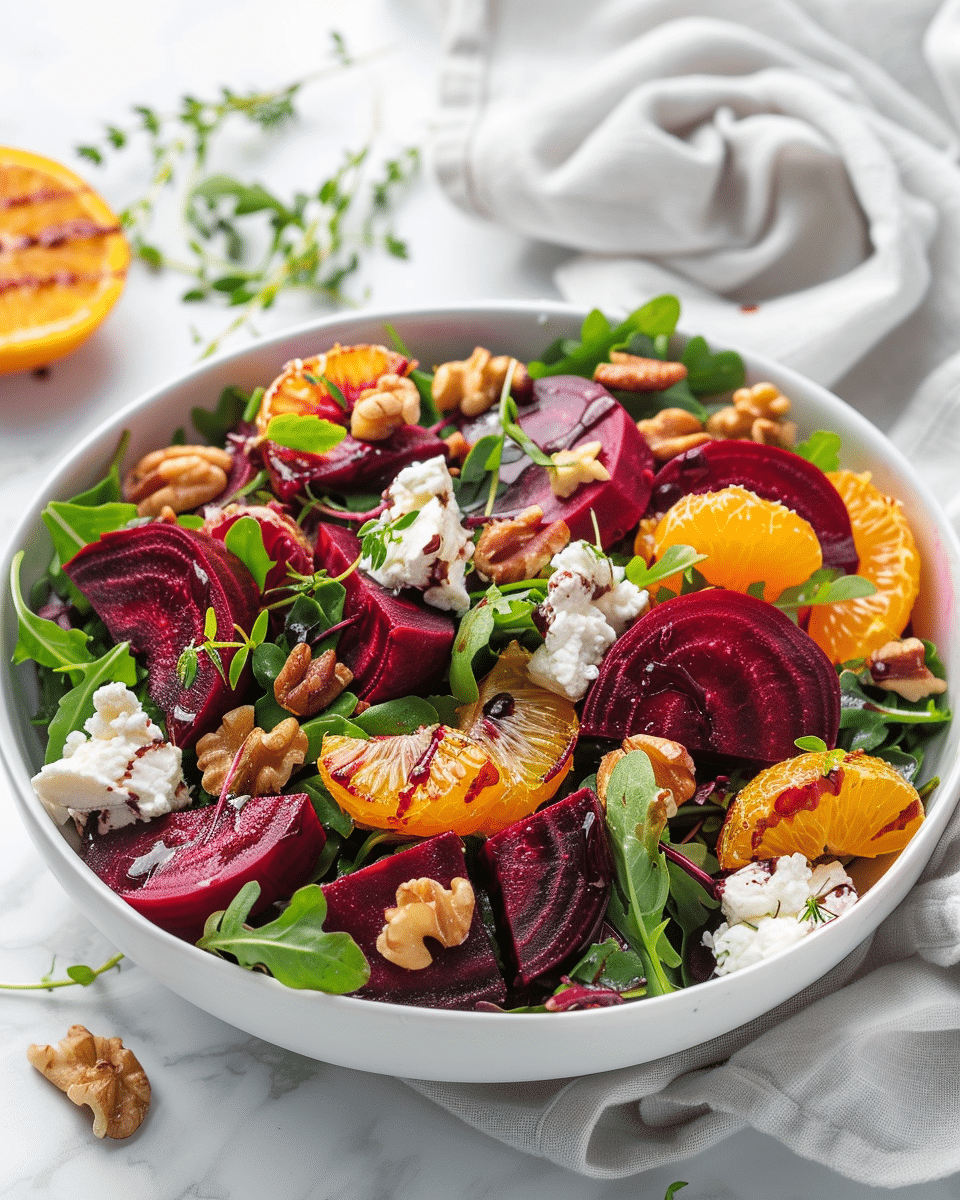
Roasted Beet Salad Recipe: Colorful, Flavor-Packed & Nourishing
A roasted beet salad is one of those dishes that feels effortlessly elegant but is incredibly simple to make. In the time it takes you to roast a tray of beets, you can prep a few toppings, whisk together a bright vinaigrette, and end up with a restaurant-worthy salad on your table. Roasting beets transforms their earthy flavor into something sweet, caramelized, and deeply satisfying, which is why a well-made roasted beet salad works beautifully for weeknight dinners, holidays, and meal prep all at once.
If you already love veggie-forward meals like this warm lentil and roasted vegetable salad, this beet salad will quickly become a favorite.
In this guide, you’ll learn how to pick the best beets, roast them for maximum flavor, build balanced textures, and mix and match toppings for any season. We’ll walk through ingredient science, nutrition benefits, variations, storage tips, and common mistakes so your salad turns out vibrant and delicious every time. By the end, you’ll have a master formula you can customize endlessly, whether you prefer it with creamy goat cheese, crunchy nuts, citrus, grains, or plenty of fresh herbs.
Table of Contents
Why Roasted Beet Salad Belongs in Your Weekly Rotation
The Appeal of Roasted Beet Salad: Flavor, Texture, and Ease
A great roasted beet salad offers three things at once: deep flavor, layered textures, and surprising ease. Once you understand how roasting works, you’ll see why it’s worth turning on the oven. Beets begin quite earthy and firm, but during roasting, their natural sugars concentrate and caramelize.
This Maillard reaction and gentle dehydration create the sweet, intense flavor that makes roasted beets so different from their boiled or canned counterparts. At the same time, the flesh softens into a tender, almost buttery texture that slices or cubes beautifully and absorbs dressing well.
Because you can roast beets in a big batch, this salad is also incredibly convenient. You can roast once, then build multiple different salads around them across the week, pairing them with grains one night, leafy greens another, or even layering them into a composed salad platter for guests. When you combine the beets’ richness with crisp greens, crunchy toppings, and a bright vinaigrette, the result feels gourmet but uses affordable, accessible ingredients.
This makes a roasted beet salad ideal for meal prep, date-night dinners at home, or simple lunches that still feel special.
Seasonal Versatility and How Beet Salad Fits Your Menu
Another reason to love roasted beet salad is its ability to adapt to any season or menu. In fall and winter, beets shine alongside robust flavors like toasted walnuts, pecans, or hazelnuts; creamy goat cheese or feta; and cool-weather fruits like apples, pears, and oranges.
In warmer months, you can lighten things up with peppery arugula, thinly sliced radishes, and fresh herbs like mint and basil for a garden-fresh twist. Because roasted beets store well, you can roast them whenever you have time and then quickly assemble salads as needed, much like prepping for a panzanella salad or hearty grain bowl.
On your weekly menu, roasted beet salad can play several roles. It can be a vegetarian main when paired with lentils, quinoa, or chickpeas, a colorful side dish next to grilled chicken or fish, or a make-ahead option for potlucks and holiday buffets. The salad presents beautifully on a platter, so it often becomes the star of the table even when you originally intended it as a side. Because it straddles that line between comfort food and fresh produce-forward eating, it helps gently nudge your meal planning toward more vegetables without feeling restrictive or repetitive.
Print
Roasted Beet Salad (Colorful, Flavor-Packed & Nourishing)
Description
This roasted beet salad is sweet, tender, and restaurant-worthy—made with peppery greens, creamy goat cheese, crunchy walnuts, citrus, and a bright balsamic vinaigrette. Includes roasting tips, make-ahead storage, and easy variations.
Ingredients
For the Roasted Beets:
4 medium beets (red, golden, or mixed), scrubbed and trimmed
1 tbsp olive oil
1/2 tsp salt (or to taste)
Salad Base + Toppings:
5–6 cups arugula or mixed greens (or baby kale)
1 orange, segmented (or 1 apple/pear, sliced)
3–4 oz goat cheese, crumbled (or feta)
1/3 cup walnuts, toasted (or pecans/pistachios)
Fresh herbs (parsley, dill, or mint), chopped
Optional: 1/2 cup cooked quinoa or lentils (for a meal salad)
Balsamic Vinaigrette:
3 tbsp extra-virgin olive oil
1 tbsp balsamic vinegar (or red wine vinegar for sharper tang)
1 tsp Dijon mustard
1 small garlic clove or 1 tsp minced shallot (optional)
1 tsp honey or maple syrup (optional, to balance)
Salt + black pepper to taste
Instructions
1) Roast the beets:
Preheat oven to 400°F (200°C).
Place beets on foil, drizzle with olive oil, sprinkle with salt, and wrap tightly.
Roast 45–60 minutes (size dependent) until a knife slides in easily.
2) Cool + peel:
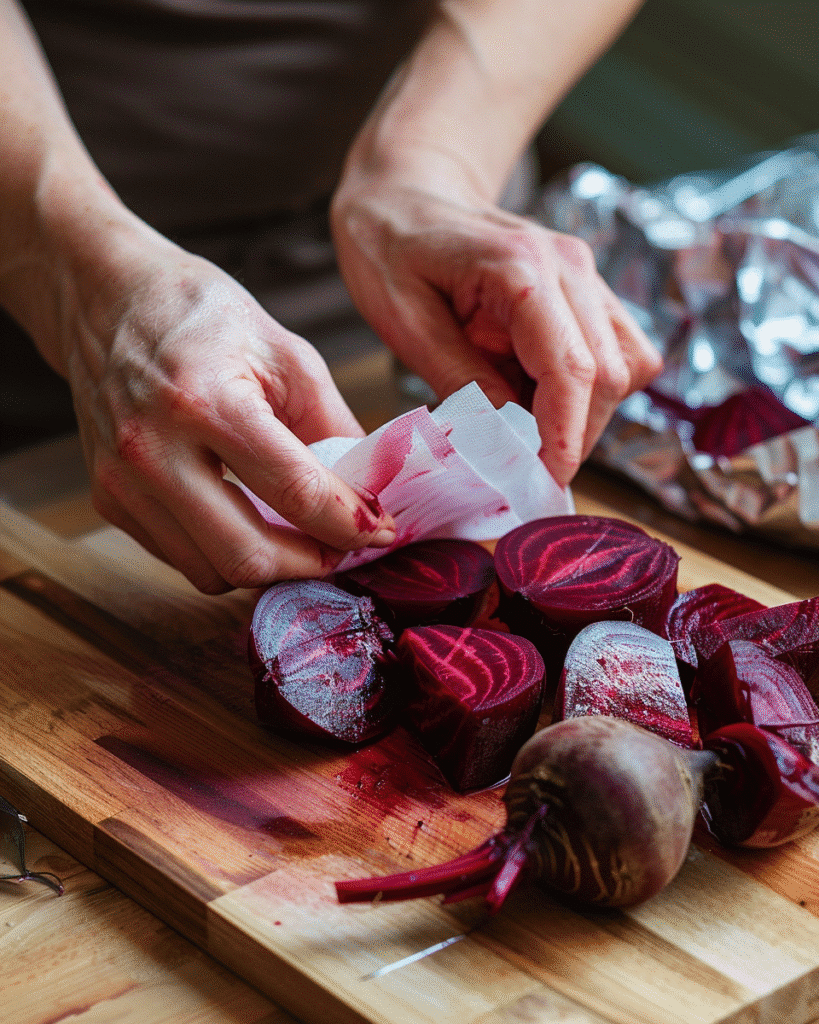
Let beets cool until safe to handle. Slip skins off with fingers or a paper towel.
3) Slice:
Cut into wedges, cubes, or thin slices.
Tip: Toss warm beets with 1–2 tsp vinegar or lemon juice for extra brightness.
4) Toast walnuts:
Toast in a dry skillet 3–5 minutes, stirring, until fragrant. Cool.
5) Make vinaigrette:
Whisk olive oil, balsamic, Dijon, honey (optional), garlic/shallot (optional), salt, pepper.
6) Assemble:
Lightly dress greens in a bowl. Arrange on a platter or plates.
Add beets on top, then orange segments, goat cheese, walnuts, and herbs.
7) Finish:
Drizzle more dressing to taste. Add flaky salt + pepper if desired. Serve immediately.
Meal prep:
Store beets, greens, toppings, and dressing separately. Assemble right before eating to keep everything crisp.
Notes
Best beet tips:
– Choose beets that feel heavy for size (sweeter, less woody).
– Roast whole with skins on for maximum sweetness and easy peeling.
– Use mixed colors (red + golden) for a stunning plate.
Variations:
– Grain bowl: add quinoa, farro, or lentils.
– Citrus-herb: use orange/lemon juice + zest in dressing.
– Dairy-free: swap goat cheese for avocado or a tahini-lemon drizzle.
– Crunch swap: pistachios, pecans, pumpkin seeds, sunflower seeds.
Storage:
Roasted, peeled beets keep 4–5 days refrigerated. Dressing keeps up to 7 days in a jar.
Choosing and Preparing Beets for Roasting
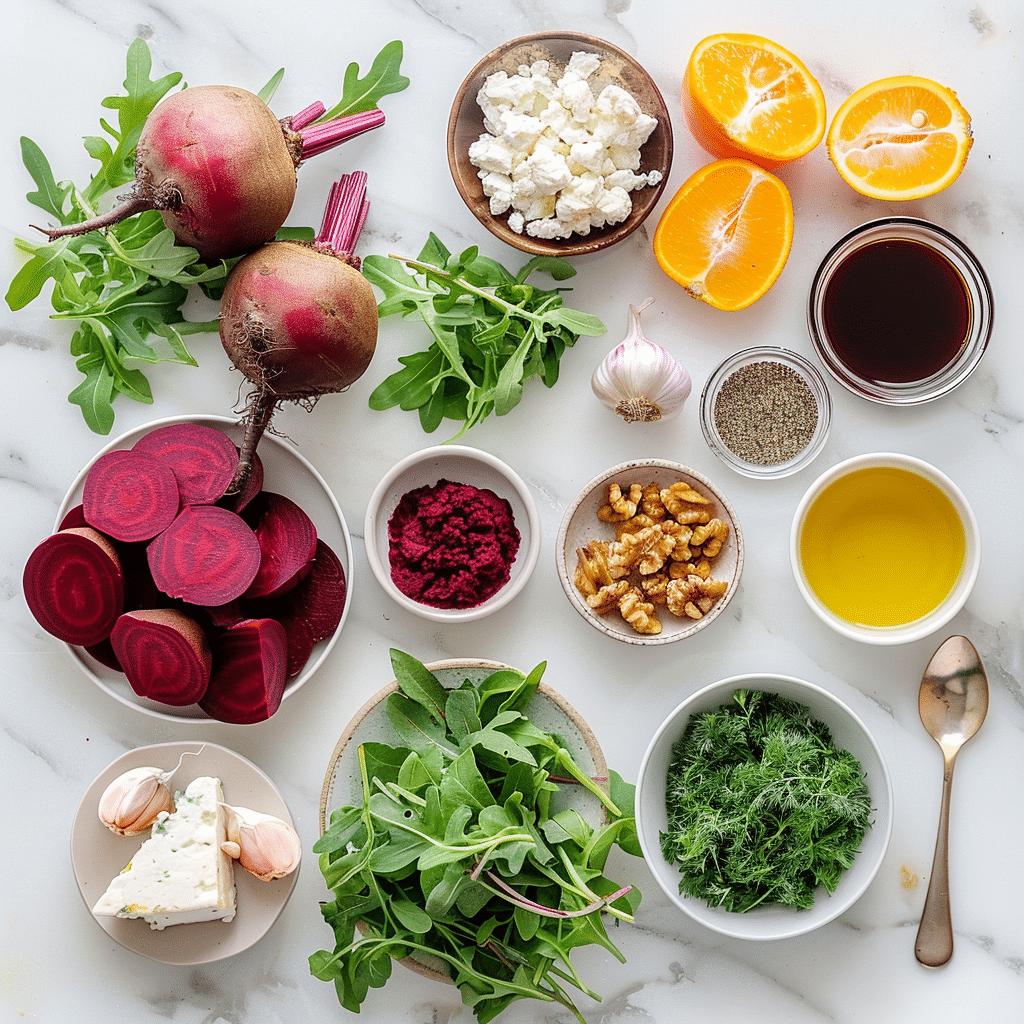
How to Select the Best Beets for roasted beet salad
Selecting quality beets is the first step in a standout roasted beet salad. Look for beets that feel heavy for their size, with smooth, firm skin and no mushy spots or deep cuts. Beets that are wrinkled or very lightweight may be old and shriveled, which can lead to a woody texture after roasting.
Small to medium beets usually taste sweeter and more tender than very large ones, which sometimes develop fibrous centers. If the greens are still attached, they should look bright and perky, not slimy or wilted; these beet greens are edible and delicious sautéed or tossed into other salads.
You can make roasted beet salad with red, golden, or striped (Chioggia) beets, or a mixture. Red beets have the deepest earthy flavor and the most dramatic color, which can stain cutting boards and hands, while golden beets are milder, slightly less sweet, and don’t bleed as much. Chioggia beets have beautiful pink and white rings that soften during roasting but still add visual flair.
For a visually stunning plate, use a combination of colors. Whatever variety you choose, buy beets that are roughly similar in size so they roast at the same rate and cook evenly.
Washing, Trimming, and Prepping Beets Before the Oven
Proper prep ensures even roasting and better flavor absorption in your roasted beet salad. Start by trimming the greens, leaving about 1 inch of stem attached to prevent too much bleeding during cooking. Rinse the beets thoroughly under running water, scrubbing away any dirt, since beets often come with soil clinging to their skin. You can roast beets whole with the skin on or peel them first; many people prefer to roast with the skin intact, then slip the skins off afterward, because it helps preserve moisture and sweetness.
To roast, you have two main methods. You can wrap each beet individually in foil with a drizzle of olive oil and a pinch of salt, or place them in a covered baking dish with a splash of water. Both methods create a steaming effect within the oven, softening the beets while still allowing caramelization. If you choose to peel and cube the beets before roasting, you’ll get more surface area for browning and a slightly more intense roasted flavor, but you must toss them generously with oil and season well to prevent dryness.
Either way, prepping the beets into uniform shapes or sizes helps ensure that all pieces become tender at roughly the same time, which sets you up for a salad with consistent, pleasing texture in every bite.
Perfectly Roasting Beets: Time, Temperature, and Technique
Oven-Roasted Beets: Step-by-Step Method and Timing
For classic oven-roasted beets that anchor a flavorful roasted beet salad, preheat your oven to 400°F (200°C). This temperature strikes a balance between gentle cooking and effective caramelization. Place scrubbed whole beets (with trimmed stems and tails) on a sheet of foil, drizzle with a bit of olive oil, sprinkle lightly with salt, then wrap tightly. Arrange the packets on a baking sheet to catch drips.
Alternatively, you can place beets in a covered, oven-safe dish, again adding oil and a small splash of water to create steam. Roast for about 45–60 minutes, depending on size.
To test doneness, insert a skewer or tip of a knife into the largest beet. It should slide in with little resistance, similar to testing a baked potato. If the beets still feel firm in the center, continue roasting in 10-minute increments. Once tender, let them cool enough to handle. Slip off the skins with your fingers or a paper towel; they should peel away easily. At this point, you can slice them into rounds, wedges, or cubes. Wedges and cubes tend to absorb dressing more fully and give a rustic, hearty feel to the salad, while thin slices create a more elegant, layered presentation ideal for entertaining.
Enhancing Flavor: Seasoning, Acid, and Make-Ahead Tips
While simple salt and olive oil are enough for roasting, adding subtle flavor layers will elevate your roasted beet salad. Before roasting, you can toss beets with whole garlic cloves, thyme sprigs, or a bay leaf in the dish to infuse gentle aromatics. After roasting and peeling, season the warm beets with a splash of vinegar, such as red wine vinegar or sherry vinegar, or a squeeze of lemon juice. Warm vegetables absorb flavors more readily, so this step helps brighter notes travel into the beet’s interior rather than just sitting on the surface.
Because roasted beets keep well, they are perfect for make-ahead meal prep. Store cooked, peeled beets in an airtight container in the refrigerator for up to 4–5 days. For best texture, avoid dressing them until just before serving. You can, however, store them lightly marinated in vinegar and oil for added flavor, which works especially well when building grain salads or bistro-style lunch bowls. If you plan to use them across multiple recipes, keep them plain and season later.
For an even more complex flavor profile, finish your roasted beets with a pinch of flaky sea salt and freshly ground black pepper just before tossing them into the salad, ensuring every bite tastes vivid and well-seasoned.
Building the Base: Greens, Grains, and Crunch for Roasted Beet Salad
Choosing Greens and Grains to Complement Roasted Beets
The base of your roasted beet salad shapes whether it feels light and refreshing or hearty and meal-worthy. For a leafy salad, start with sturdy greens that can stand up to warm beets and robust dressings. Arugula, baby kale, spinach, or a spring mix all work well. Arugula contributes peppery bite that cuts through sweetness, while baby kale offers a mild earthiness that echoes the beets without overwhelming them.
If you love kale, you can also use the techniques from a classic kale salad recipe massaging the leaves with a bit of olive oil and salt to soften them before adding the beets.
For added substance, incorporate grains or legumes. Quinoa, farro, barley, brown rice, or lentils transform roasted beet salad into a satisfying main course. Quinoa brings a nutty flavor and complete protein, making the dish more filling without feeling heavy. Farro adds chew and a toasty depth that sits nicely alongside roasted vegetables, similar to the elements in a winter quinoa or lentil salad. You can either toss the grains directly with the beets and greens or layer them as a base, topping with beets and garnishes for a composed presentation.
Keep the overall proportion balanced: roughly 40% greens, 30% beets, 20% grains, and 10% toppings is a good guideline for a one-bowl dinner salad.
Adding Crunch, Creaminess, and Sweetness for Balance
The magic of a memorable roasted beet salad lies in contrast. Because roasted beets are soft and sweet, you need crunchy, creamy, and bright elements to keep each forkful interesting. Nuts and seeds deliver essential texture; toasted walnuts, almonds, pistachios, pecans, pumpkin seeds, or sunflower seeds all pair beautifully. Toasting intensifies their nutty flavor and makes them stay crisp longer, even after contact with dressing.
Cheese adds creaminess and tang: goat cheese, feta, blue cheese, burrata, or shaved Parmesan all work in different ways. Goat cheese and feta are most common, since their saltiness and acidity beautifully offset beet sweetness.
For touches of sweetness and freshness, consider fruit. Orange segments, grapefruit, apples, pears, dried cranberries, raisins, or pomegranate arils add pops of brightness. This fruity addition echoes the flavor profile of a citrus fennel avocado winter salad, where juicy segments lift heartier ingredients. Herbs like parsley, dill, mint, or chives provide a final fresh layer, adding fragrance and color.
As you assemble the salad, think of flavor in terms of sweet, salty, tangy, and bitter, making sure each is represented. That balance transforms a simple bowl of beets and greens into something that tastes fully rounded and genuinely craveable.
Dressings for Roasted Beet Salad: Vinaigrettes That Shine
Classic Balsamic and Red Wine Vinaigrettes
For many people, the phrase “roasted beet salad” almost automatically suggests balsamic vinaigrette, and for good reason. Balsamic vinegar’s mellow sweetness and gentle acidity mirror and highlight the natural sugars in beets.
A basic balsamic dressing might include three parts extra-virgin olive oil to one part balsamic vinegar, plus Dijon mustard, salt, and pepper. Whisk until emulsified or shake in a jar, then taste and adjust for acidity by adding more vinegar if needed. The mustard helps the dressing cling to beets and greens, ensuring an even coating.
Red wine vinegar also makes a fantastic option when you want a sharper, more linear tang. Mix red wine vinegar with olive oil, minced shallot, Dijon mustard, and perhaps a touch of honey or maple syrup for balance. Shallots soften the dressing’s edges while adding a subtle allium aroma, and a hint of sweetness keeps the vinegar from tasting harsh. Either vinaigrette can be made ahead and stored in the fridge for up to a week. Just bring to room temperature and shake before using.
These simple dressings also cross over well for other salads, like grain-based or vegetable-forward dishes, so you can batch-prep one dressing for multiple recipes.
Citrus, Herb, and Creamy Dressing Variations
If you want to give your roasted beet salad a brighter, more refreshing character, turn to citrus-based dressings. Fresh orange or lemon juice, whisked with olive oil, a bit of zest, honey, and Dijon, creates a lively vinaigrette that pairs beautifully with beets, nuts, and soft cheese. Citrus dressings are especially compelling in winter when oranges and grapefruits are at their peak and echo the flavors found in salads built around citrus and fennel.
You can also stir in finely chopped herbs like dill, parsley, or tarragon to give the dressing a garden-inspired flavor that complements roasted vegetables and leafy greens alike.
Creamier options can also work well, as long as you keep them balanced. A yogurt-based dressing with lemon juice, garlic, and herbs offers tangy richness without becoming heavy. Alternatively, a tahini-lemon sauce thinned with warm water creates a nutty, dairy-free drizzle that plays beautifully with Middle Eastern–inspired beet salads featuring chickpeas, parsley, and toasted seeds. When using creamy dressings, dress greens lightly and reserve some to drizzle over the beets on top. This helps prevent the salad from becoming weighed down and keeps textures distinct.
Regardless of style, always taste your dressing with a small beet wedge first; this real-time tasting ensures the final salad lands exactly where you want it on the sweet-tart spectrum.
Nutritional Benefits of Roasted Beet Salad
Why Beets Are a Nutrient Powerhouse
Beyond their gorgeous color and unique flavor, beets bring significant nutritional benefits to your roasted beet salad. They are rich in folate (vitamin B9), which supports cell growth and heart health, as well as manganese, potassium, and vitamin C. Beets also contain dietary fiber, which supports digestion and helps keep you full. Their most striking feature, though, is betalain pigments, the compounds responsible for their red and golden hues. These pigments have antioxidant and anti-inflammatory properties that may help protect cells from oxidative stress.
Beets are also a natural source of dietary nitrates. When you eat them, your body converts these nitrates into nitric oxide, which helps relax blood vessels and may support healthy blood pressure and circulation. Some studies suggest beet consumption may enhance endurance in athletes due to these effects. While you should always talk with your healthcare provider about specific health conditions, adding a roasted beet salad to your routine offers an easy, enjoyable way to increase plant-based nutrients. Pairing beets with greens, nuts, seeds, and healthy fats from olive oil further enriches the salad’s nutritional profile, making it a true powerhouse meal or side.
Overall Salad Nutrition: Fiber, Healthy Fats, and Protein
The beauty of a well-composed roasted beet salad is that it can cover multiple nutritional bases in a single bowl. Greens like kale, arugula, or spinach add additional vitamins A, C, and K, plus more fiber and phytonutrients. Nuts and seeds contribute healthy monounsaturated and polyunsaturated fats, which support heart health and help your body absorb fat-soluble vitamins. If you include cheese, you gain extra protein and calcium, while plant-based proteins like quinoa, lentils, or chickpeas enhance the salad’s staying power without relying on meat.
Here is a rough example of how a single serving might break down, depending on toppings:
| Ingredient | Approx. Amount | Key Nutrients |
|---|---|---|
| Roasted beets | 1 cup | Folate, fiber, potassium, antioxidants |
| Mixed greens | 2 cups | Vitamins A, C, K, fiber |
| Goat cheese | 1 oz | Protein, calcium |
| Walnuts | 2 Tbsp | Healthy fats, omega-3s |
| Quinoa (optional) | 1/2 cup cooked | Protein, fiber, minerals |
With a simple olive oil–based vinaigrette, you get a balanced combination of complex carbs, quality fats, and moderate protein. This balance helps prevent energy crashes and supports sustained fullness, making roasted beet salad a smart choice for lunch, dinner, or a nourishing post-workout meal alongside something like a recovery-focused wellness shot juice.
Flavor Variations and Global Twists on Roasted Beet Salad
Mediterranean and Middle Eastern-Inspired Beet Salads
Once you master a basic roasted beet salad, you can borrow ideas from different cuisines to keep things exciting. A Mediterranean-inspired version might feature roasted beets over a bed of arugula with crumbled feta, kalamata olives, cucumbers, cherry tomatoes, and toasted pine nuts, dressed with a lemon-oregano vinaigrette.
This style brings briny, salty components that contrast beautifully with beet sweetness while keeping the dish light and refreshing. You can even add cooked farro or bulgur to give it a tabbouleh-like grainy base, making it a full meal.
For a Middle Eastern twist, pair roasted beets with chickpeas, chopped parsley, mint, and red onion, then drizzle with a tahini-lemon dressing. Sprinkle with sumac for citrusy brightness or za’atar for an herby, sesame-forward flair. Pomegranate seeds add juicy pops and color, echoing the style of many Levantine salads that celebrate both texture and vibrant flavor. Serving this variation with warm pita bread and a spoonful of hummus turns your roasted beet salad into a satisfying mezze-style meal.
These global inspirations show how flexible beets can be when paired with different herbs, spices, and pantry staples.
Cozy Winter, Fresh Summer, and Grain Bowl Approaches
You can also adapt roasted beet salad to fit the seasons more directly. In winter, lean into hearty, warming elements: roasted beets with sliced roasted Brussels sprouts, toasted pecans, apple slices, and a maple-Dijon vinaigrette feel comforting and substantial, similar in spirit to a cranberry apple quinoa winter salad. You could even add warm lentils or roasted root vegetables like carrots and parsnips, turning the dish into a main-course salad perfect for cold evenings.
In summer, keep it light and crisp. Pair beets with cucumber, radish, fresh berries, and a handful of herbs, then dress with a lemon or orange vinaigrette. This version sits nicely beside grilled chicken, fish, or plant-based burgers. Grain bowl adaptations are another smart way to use roasted beets. Start with a base of quinoa or brown rice, add roasted beets, steamed or roasted vegetables, leafy greens, and a protein source like grilled halloumi, tofu, or shredded chicken.
Finish with your favorite dressing and a sprinkling of seeds. This approach makes meal prep efficient and ensures you have nourishing, grab-and-go lunches ready for busy days.
Common Mistakes and Expert Tips for the Best Roasted Beet Salad
Mistakes to Avoid When Roasting and Assembling
Several common missteps can hold your roasted beet salad back from its full potential. The first is under-seasoning the beets. Because beets are naturally sweet, they need enough salt and acid to taste lively rather than flat. Season at multiple stages: a pinch of salt during roasting, and a bit more along with vinegar or lemon juice while they’re still warm.
Another mistake is overcrowding the roasting pan when beets are cubed; too many pieces packed tightly will steam instead of roast, leading to softer but less caramelized chunks. Use a large sheet pan and give them space.
People also often overdress the greens or let the assembled salad sit too long, causing wilting and color bleeding. Beets can stain everything a deep pink, so if you want to maintain clear contrasts between ingredients, dress the greens separately and place beets on top just before serving. Avoid combining very delicate ingredients like avocado or soft berries too far in advance, as they can break down or turn mushy.
Finally, be cautious with very pungent cheeses or excessive garlic in the dressing, which can overpower the subtle sweetness of the beets. Aim for balance, not dominance, from any single ingredient.
Expert Hacks: Batch Prep, Plating, and Stain Management
With a few expert tricks, you can streamline the process and present your roasted beet salad beautifully every time. Roast a large batch of beets at once, enough for several meals, then store them uncut in the fridge.
Cutting them only when needed helps preserve moisture. If you’re hosting, you can pre-slice the beets and store them in a light vinaigrette that includes vinegar or citrus; the acid helps stabilize color and enhances flavor. When it’s time to serve, arrange the beets and toppings over freshly dressed greens for the best texture.
For eye-catching plating, alternate slices of red and golden beets in overlapping layers, or mound cubes in the center of a platter and scatter nuts, cheese, and herbs over the top. To manage beet stains, wear disposable gloves while peeling and slicing, and use a cutting board you don’t mind tinting slightly pink. Lemon juice or baking soda can help lift stains on your hands or surfaces if they occur.
If you want to avoid discoloring lighter ingredients like goat cheese crumbles, add them at the very end, sprinkling them on top rather than tossing them through the whole salad. These small techniques keep your dish looking as vibrant and polished as it tastes.
Sample Roasted Beet Salad Recipe (Step-by-Step)
Ingredients and Preparation Overview
To put all this into practice, here is a flexible roasted beet salad blueprint you can adapt to your own pantry. Quantities are for about 4 servings as a side or 2–3 as a main.
| Component | Ingredient | Amount |
|---|---|---|
| Beets | Red or golden beets, trimmed | 4 medium |
| Greens | Arugula or mixed greens | 5–6 cups |
| Crunch | Toasted walnuts or pecans | 1/3 cup |
| Creaminess | Goat cheese, crumbled | 3–4 oz |
| Sweetness | Orange segments or apple slices | 1 cup |
| Herbs | Fresh parsley or dill, chopped | 1/4 cup |
| Dressing | Olive oil, balsamic or red wine vinegar, Dijon, honey, salt, pepper | To taste |
Roast the beets at 400°F (200°C) as described earlier until tender, 45–60 minutes. Let cool slightly, peel, and cut into wedges or cubes. While beets roast, toast the nuts in a dry skillet over medium heat for 3–5 minutes, stirring frequently, until fragrant and lightly browned. Prepare the greens, slice fruit, and crumble the cheese. Whisk together about 1/4 cup olive oil, 2–3 tablespoons vinegar, 1 teaspoon Dijon, and 1–2 teaspoons honey with salt and pepper until smooth.
Assembling, Serving, and Pairing Suggestions
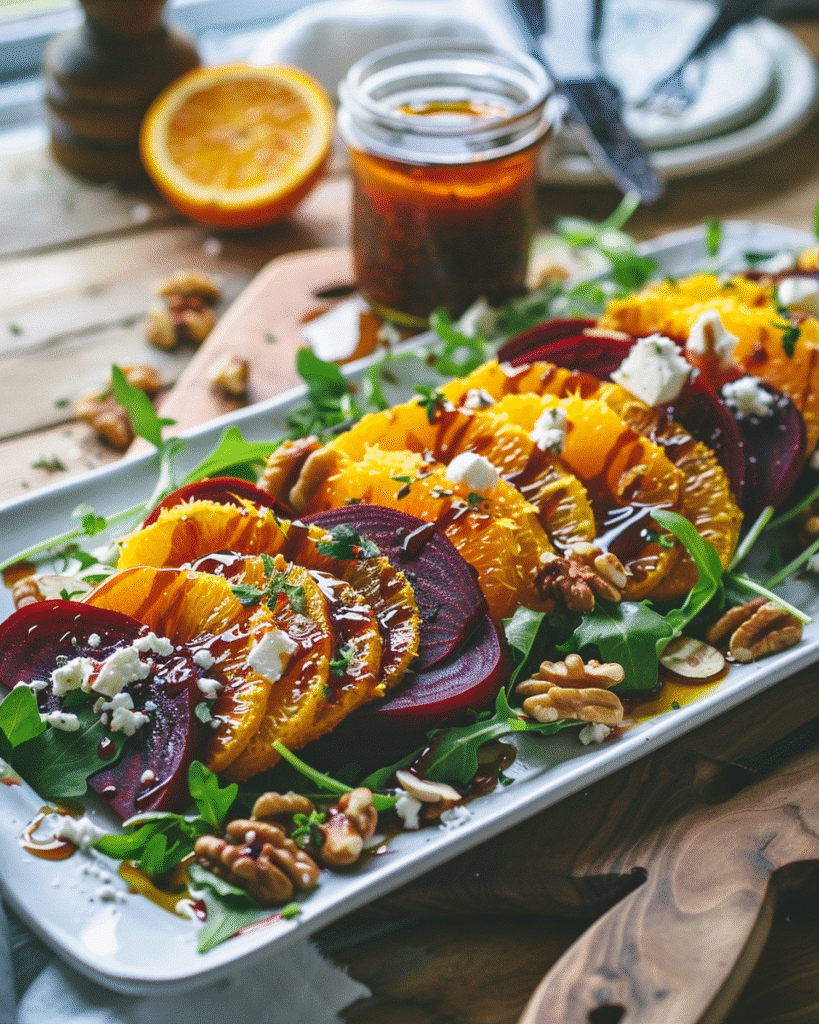
To assemble, lightly dress the greens with some of the vinaigrette in a large bowl, tossing just until coated. Spread the greens on a serving platter or divide among plates. In a separate bowl, gently toss the warm beet wedges with a spoonful or two of dressing so they glisten but don’t swim. Arrange the beets over the greens, then scatter toasted nuts, cheese crumbles, fruit, and herbs over the top.
Drizzle with a little more dressing if needed and finish with a pinch of flaky sea salt and freshly ground pepper. Serve immediately so the greens stay crisp and the textures remain distinct.
This roasted beet salad pairs well with grilled chicken, roasted salmon, or a hearty vegetarian main like a lentil loaf or stuffed squash. For a complete meal, you can add cooked quinoa or lentils directly to the salad to mimic the heartiness of a grain-based salad. It also makes a colorful addition to a holiday table beside casseroles and roasted meats, think of it as a fresher counterpoint to richer dishes like a classic green bean casserole.
If you enjoy light, fresh starters, you might serve a small portion of beet salad before a main course and finish the meal with something fruity and simple, such as a strawberry banana smoothie as a dessert-style drink.
FAQ About Roasted Beet Salad
How do I store leftover roasted beet salad?
Store leftover roasted beet salad in an airtight container in the refrigerator. If possible, keep the components separate: roasted beets in one container, dressing in a jar, and greens and toppings in another.
This approach helps prevent the greens from becoming soggy and the entire salad from turning one uniform beet-pink color. Roasted beets on their own keep well for about 4–5 days, while pre-dressed greens are best within 1–2 days. If you’ve already mixed everything together, eat the leftovers within 24–48 hours for the best texture. Before serving again, you can freshen the salad by adding a handful of new greens, a few extra nuts, and a small splash of vinaigrette.
Can I make roasted beet salad ahead of time for a party?
Yes, roasted beet salad works very well for make-ahead entertaining with a little planning. Roast, peel, and slice the beets a day or two in advance, then store them in the refrigerator, lightly tossed with a bit of vinaigrette to keep them flavorful and moist. You can also toast nuts, crumble cheese, and whisk the dressing ahead of time.
Keep your greens washed and dried, wrapped in a paper towel inside a container so they stay crisp. When it’s time for the party, dress the greens just before serving, arrange on a platter, then top with the prepped beets, nuts, cheese, fruit, and herbs. This method preserves freshness and texture while still giving you the convenience of advance prep.
What protein can I add to roasted beet salad to make it a full meal?
You have plenty of options to turn roasted beet salad into a protein-rich main course. For animal-based proteins, grilled chicken, seared salmon, shrimp, or sliced steak all work beautifully and complement the sweetness of the beets.
You can marinate the protein in similar flavors to your dressing, lemon, garlic, and herbs, to create harmony on the plate. For vegetarian or vegan options, add cooked lentils, chickpeas, quinoa, or marinated tofu. Goat cheese or feta contribute some protein as well, but pairing them with legumes or grains creates better balance. Aim for at least 15–20 grams of protein per serving by adding a generous scoop of beans or about 4–6 ounces of meat or fish, depending on your dietary needs.
Can I use canned or pre-cooked beets instead of roasting fresh ones?
You can use canned or pre-cooked beets for convenience, but the flavor and texture will differ from freshly roasted beets. Canned beets tend to be softer and lack the deep caramelized notes that oven roasting produces. If you choose this route, drain them well and pat them dry with paper towels to remove excess liquid, which can water down your salad and dressing.
You might also want to toss them in a skillet with a little olive oil, salt, and pepper to warm and slightly sear them, which helps build more flavor. Pre-cooked vacuum-packed beets often have a better texture than canned. While fresh roasted beets are ideal, these shortcuts still work when time is tight and can yield a tasty, colorful roasted beet salad .
How can I stop beets from staining everything in my roasted beet salad?
To minimize staining, manage when and how you add the beets. Dress your greens separately in a large bowl, then arrange them on a platter. Toss the beets in a small amount of dressing in a separate bowl, and gently place them on top of the greens rather than mixing everything together.
Add light-colored ingredients like goat cheese or feta last, sprinkling them over the beets so they stay mostly white rather than turning pink. You can also use golden or Chioggia beets, which bleed far less than deep red varieties. Finally, serving the salad soon after assembly helps keep colors distinct, since the longer the ingredients sit together, the more the beet pigments will migrate.
Conclusion: Making Roasted Beet Salad Part of Your Cooking Routine
A well-made roasted beet salad delivers gorgeous color, layered textures, and balanced flavor in every bite. By choosing good-quality beets, roasting them until tender and caramelized, and pairing them with crisp greens, crunchy nuts, tangy cheese, and a bright vinaigrette, you create a dish that feels both comforting and refreshing.
With variations ranging from Mediterranean to wintery grain bowls, this salad adapts easily to your tastes, dietary needs, and the seasons. It also fits seamlessly alongside other vibrant salads and veggie-focused dishes, like a citrus-forward winter salad or wholesome grain-based recipes.
As you experiment, keep an eye on contrast, sweet versus tangy, soft versus crunchy, rich versus fresh. With these principles and techniques, roasted beet salad can move from an occasional side to a regular feature in your weekly menu, bringing more vegetables, color, and satisfaction to your plate, whether it’s a simple dinner at home or a festive gathering with friends. For more inspiration on building a varied salad repertoire, explore hearty options like this Brussels sprout salad guide and start mixing and matching ideas to keep your table exciting.
For more seasonal salad inspirations, check out my Pinterest.