
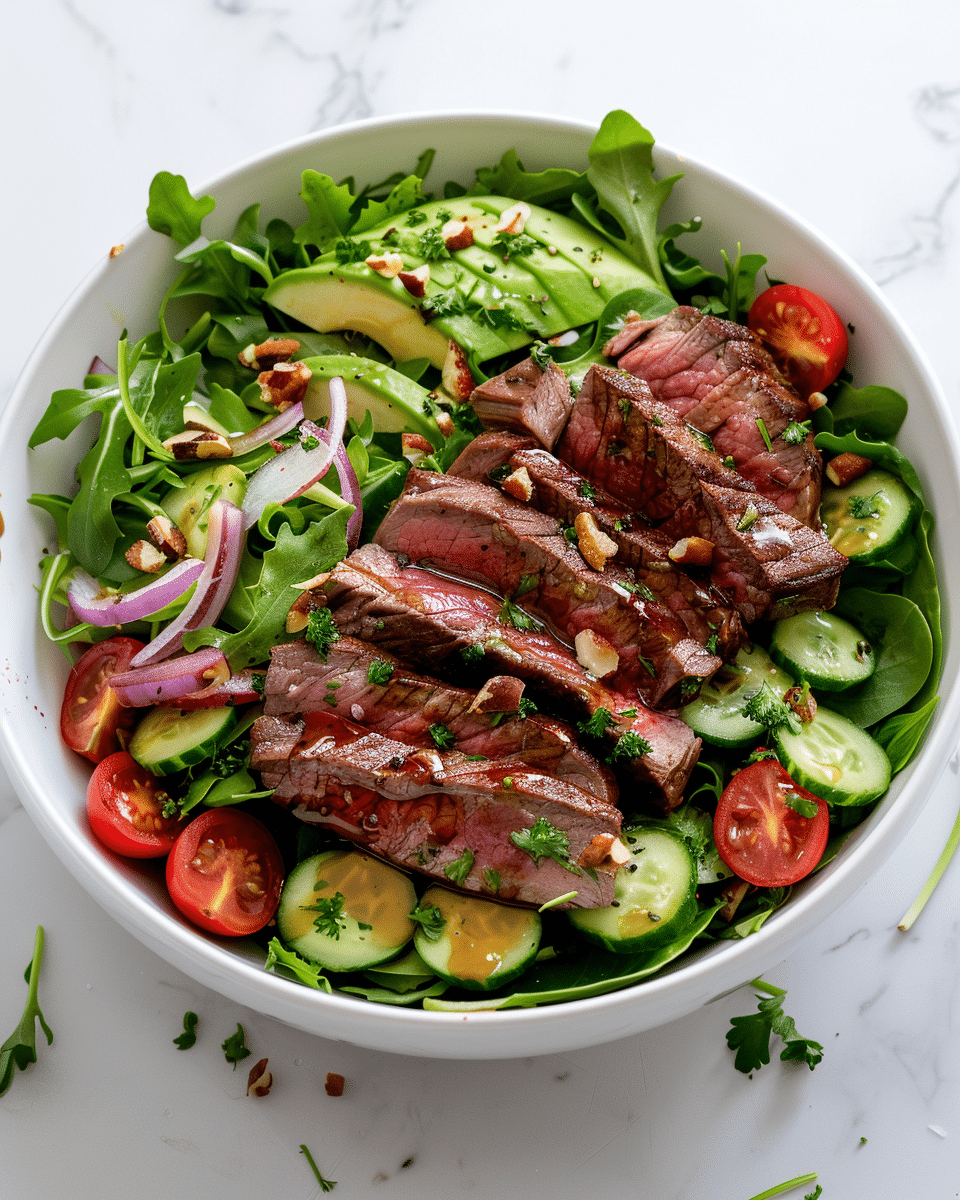
Steak Salad Magic: How to Build the Ultimate Satisfying Bowl
A perfectly built steak salad can transform how you think about “eating light.” Instead of a sad plate of lettuce, a great steak salad delivers juicy, seared meat, crisp greens, bright herbs, crunchy toppings, and a punchy dressing that ties everything together. Because steak salad combines protein, fiber, and healthy fats in one bowl, it works beautifully for meal prep, weeknight dinners, or impressive entertaining. When you understand a few simple techniques, how to cook steak so it stays tender and how to layer flavors and textures, this dish quickly becomes a staple in your rotation.
If you already love creative salads like a vibrant citrus fennel avocado winter salad, steak salad will feel like the hearty, satisfying cousin that keeps you full for hours. In this guide, you’ll learn how to choose the right cut of steak, prep perfect greens, build balanced flavors, and customize components for different diets and seasons. You’ll also get ideas for sides, storage, and meal prep strategies so you can turn a simple steak salad into an easy go-to dinner any night of the week.
Table of Contents
Steak Salad Basics: What Makes It So Good?
Why Steak Salad Works for Everyday Dinners
A steak salad hits that sweet spot between comfort food and clean eating. It gives you the savory satisfaction of a steak dinner while still feeling fresh and light. Because you serve the steak over a substantial base of greens and vegetables, you get plenty of fiber, vitamins, and minerals along with your protein. This makes steak salad ideal when you want a filling meal that won’t leave you sluggish.
The dish is also incredibly adaptable: you can keep it simple with mixed greens, tomatoes, and a vinaigrette, or build a more complex bowl with roasted vegetables, grains, or fruit. Unlike many heavy steakhouse meals, steak salad supports balanced blood sugar and long-lasting energy thanks to the mix of protein, complex carbs, and healthy fats. For busy home cooks, steak salad is also efficient. You cook one main component, the steak, while the rest relies on quick chopping and smart assembly. With a few pantry staples and fridge basics, you can assemble a restaurant-worthy bowl in under 30 minutes.
Key Elements of a Great Steak Salad
Every memorable steak salad has the same core elements: a flavorful cut of steak, fresh greens, contrasting textures, and a bold dressing. The steak provides richness and umami, so you can keep the rest of the salad clean and bright. Greens supply crunch and freshness; they also carry the dressing and meat juices, infusing every bite with flavor. Textural contrast matters just as much as taste.
For example, creamy avocado, crisp cucumbers, juicy cherry tomatoes, toasty nuts, and maybe even some crunchy croutons all play unique roles. Finally, the dressing ties everything together with acidity and seasoning. A vinaigrette made with olive oil, vinegar or citrus, mustard, and herbs cuts through the richness of the beef and balances the plate. Once you understand how these elements interact, you can riff endlessly, just like with a classic panzanella salad recipe where bread, tomatoes, and dressing work in harmony. The magic lies in balance: rich vs. fresh, soft vs. crunchy, savory vs. bright.
Print
Steak Salad (Ultimate Satisfying Bowl) + 3 Easy Dressings
Description
A restaurant-style steak salad that’s fresh, hearty, and satisfying. Learn how to sear or grill tender steak, build the perfect greens base, and choose from 3 bold dressings: Classic Dijon Vinaigrette, Sesame-Ginger, or Lime-Cilantro.
Ingredients
For the Steak Salad:
1 lb steak (sirloin, NY strip, ribeye, flank, or skirt; ~1 inch thick)
1 tbsp high-heat oil (avocado oil recommended)
1 tsp kosher salt (or to taste)
1/2 tsp black pepper (or to taste)
Greens + Toppings:
6 cups mixed greens (spring mix / romaine) + optional arugula
1 cup cherry tomatoes (halved)
1 cup cucumber (sliced or ribbons)
1/4 cup red onion (thinly sliced)
1 avocado (sliced)
1/4 cup toasted nuts (almonds, walnuts, or pecans)
Optional: 1/4 cup crumbled feta, goat cheese, or blue cheese
Fresh herbs (parsley, cilantro, or basil)
Dressing Option 1 — Classic Dijon Vinaigrette:
3 tbsp extra-virgin olive oil
1 tbsp red wine vinegar (or balsamic)
1 tsp Dijon mustard
1 small garlic clove (minced) or 1 tsp shallot (minced)
Salt + pepper to taste
Dressing Option 2 — Sesame-Ginger (Asian):
2 tbsp olive oil or neutral oil
1 tbsp rice vinegar (unsweetened)
1 tbsp soy sauce (or tamari)
1 tsp toasted sesame oil
1 tsp fresh ginger (grated)
1/2 tsp honey (optional; omit for low sugar)
Dressing Option 3 — Lime-Cilantro (Southwest):
3 tbsp olive oil
1 tbsp lime juice
1 tsp Dijon (or pinch of cumin)
1/4 tsp cumin + pinch chili powder
2 tbsp chopped cilantro
Salt + pepper to taste
Instructions
1) Bring steak closer to room temp: Rest 20–30 minutes. Pat very dry.
2) Season: Salt + pepper both sides.
3) Sear (or grill):
– Pan-sear: Heat cast iron until very hot. Add oil. Sear 3–5 min per side (thickness dependent).
– Grill: Preheat high. Grill 3–5 min per side.
Pull at 130–135°F for medium-rare (steak rises a few degrees while resting).
4) Rest: Tent 5–10 minutes (important for juicy slices).
5) Slice: Cut thinly against the grain.
6) Build salad: Add greens to a big bowl. Layer tomatoes, cucumber, onion, avocado, nuts, and herbs.
7) Dress + serve: Drizzle dressing, toss lightly, then fan steak slices on top. Finish with flaky salt and pepper if desired.
Meal prep tip:
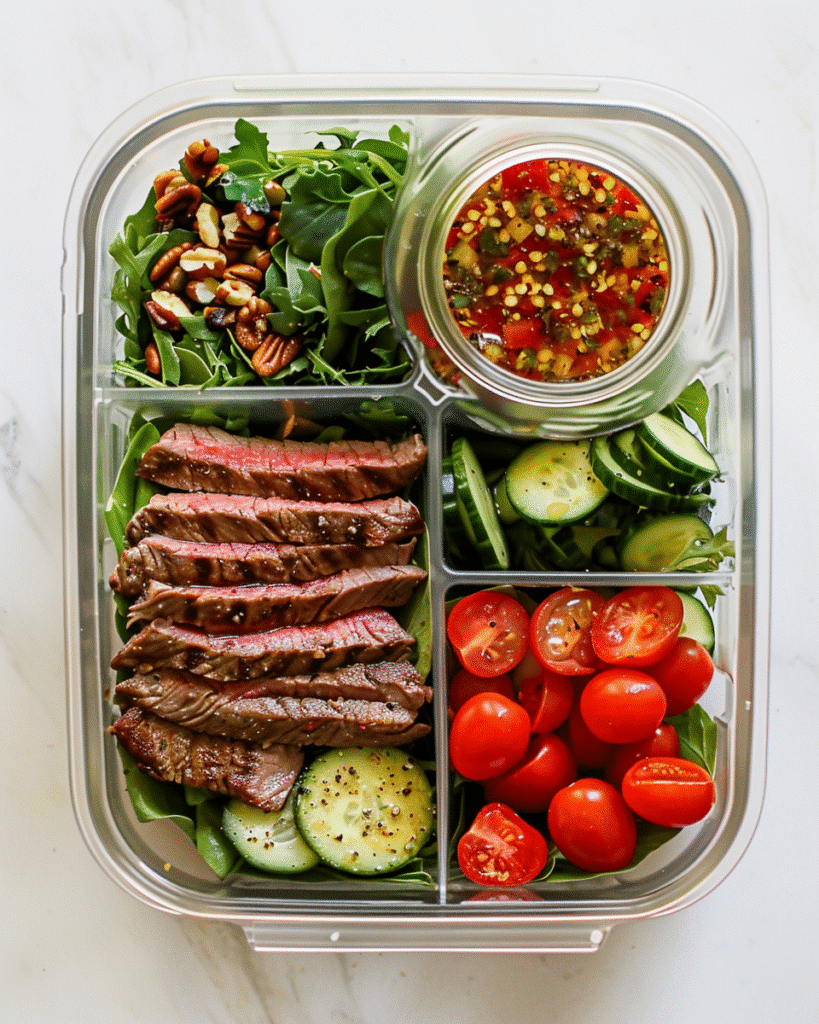
Store steak, greens, toppings, and dressing separately. Assemble right before eating to keep greens crisp.
Notes
Best steak cuts:
– Ribeye: richest and juiciest
– NY strip: flavorful, balanced
– Sirloin: budget-friendly, great sliced thin
– Flank/skirt: marinate + slice against grain for tenderness
Doneness guide (pull temps):
– Rare: 125°F
– Medium-rare: 130–135°F (best for salads)
– Medium: 140°F
Keep salads from getting soggy:
Dry greens well, cool hot components slightly, and add dressing right before serving.
Storage:
Cooked steak keeps 3–4 days refrigerated. Greens last longer when stored with a paper towel in the container.
Choosing the Best Steak for Salad
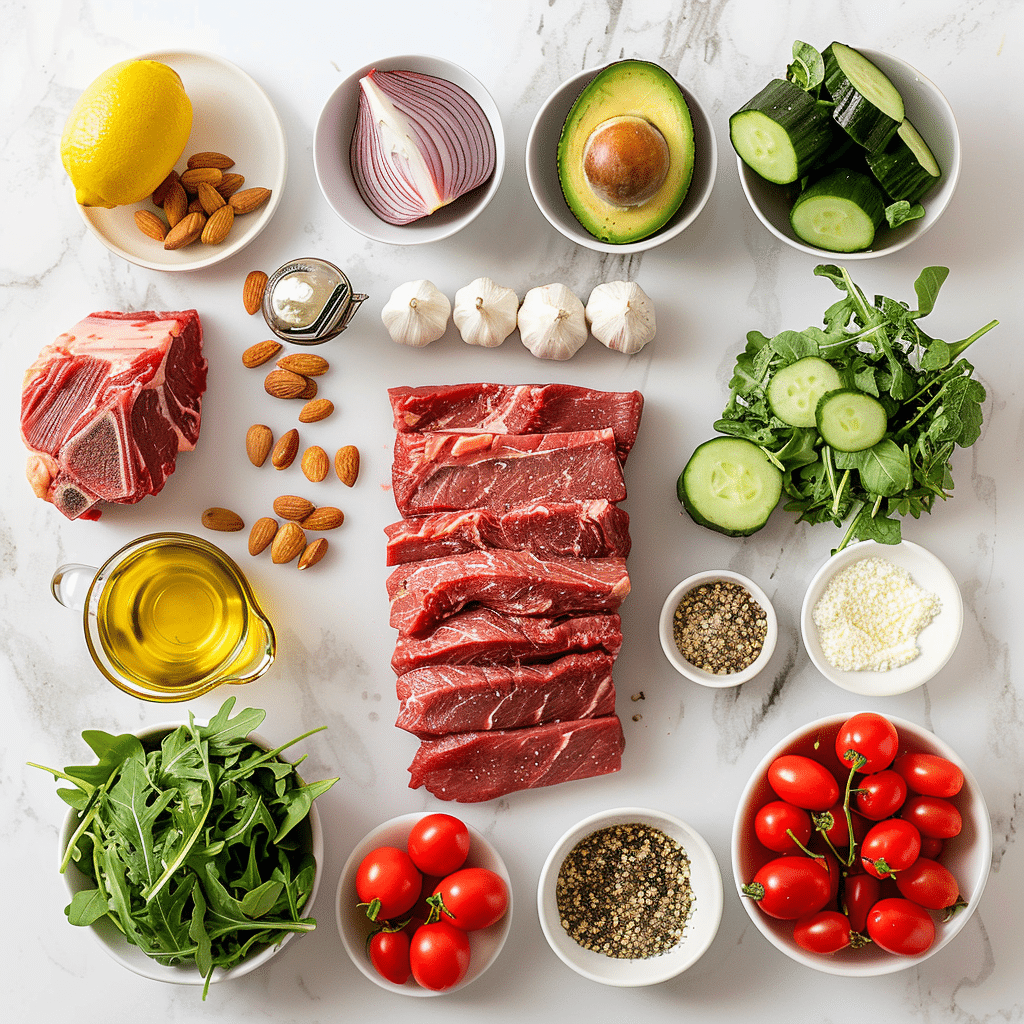
Top Cuts for Tender, Juicy Steak Salad
The cut of beef you choose will shape the character of your steak salad. For maximum tenderness and quick cooking, many home cooks choose ribeye, strip steak (New York strip), or sirloin. Ribeye offers the most marbling and flavor, making it ideal when you want a decadent salad with ultra-juicy slices. New York strip is a bit leaner but still tender and flavorful; it’s a nice middle ground if you want richness without too much fat. Sirloin is more budget-friendly and still works beautifully when cooked to medium-rare and sliced thinly against the grain.
Flank steak and skirt steak are also popular, especially if you love a more robust, beefy flavor. These cuts need a good marinade and careful slicing, but they deliver big taste for less money. No matter which cut you choose, aim for about 4–6 ounces of cooked steak per serving, enough to feel satisfying without overpowering the greens and vegetables.
How to Select, Prep, and Season Steak
When shopping for steak, look for bright, cherry-red meat with fine, even marbling. Avoid pieces with grayish patches or excessive liquid in the packaging, which can indicate older meat. Thicker steaks, at least 1 inch, are easier to cook to a perfect medium-rare while developing a good sear. Before cooking, take the steak out of the fridge and let it sit at room temperature for about 20–30 minutes.
This helps it cook more evenly. Pat it very dry, then season generously with kosher salt and freshly ground black pepper on both sides. For extra flavor, rub on a little olive oil, garlic powder, or a steak seasoning blend. If you use a marinade, especially for flank or skirt steak, include acid (like vinegar or citrus), oil, and aromatics such as garlic, herbs, and soy sauce. Marinate at least 30–60 minutes and up to 12 hours. Proper seasoning and prep ensure that even a simple steak salad tastes restaurant-level.
Cooking Methods for Perfect Steak Salad
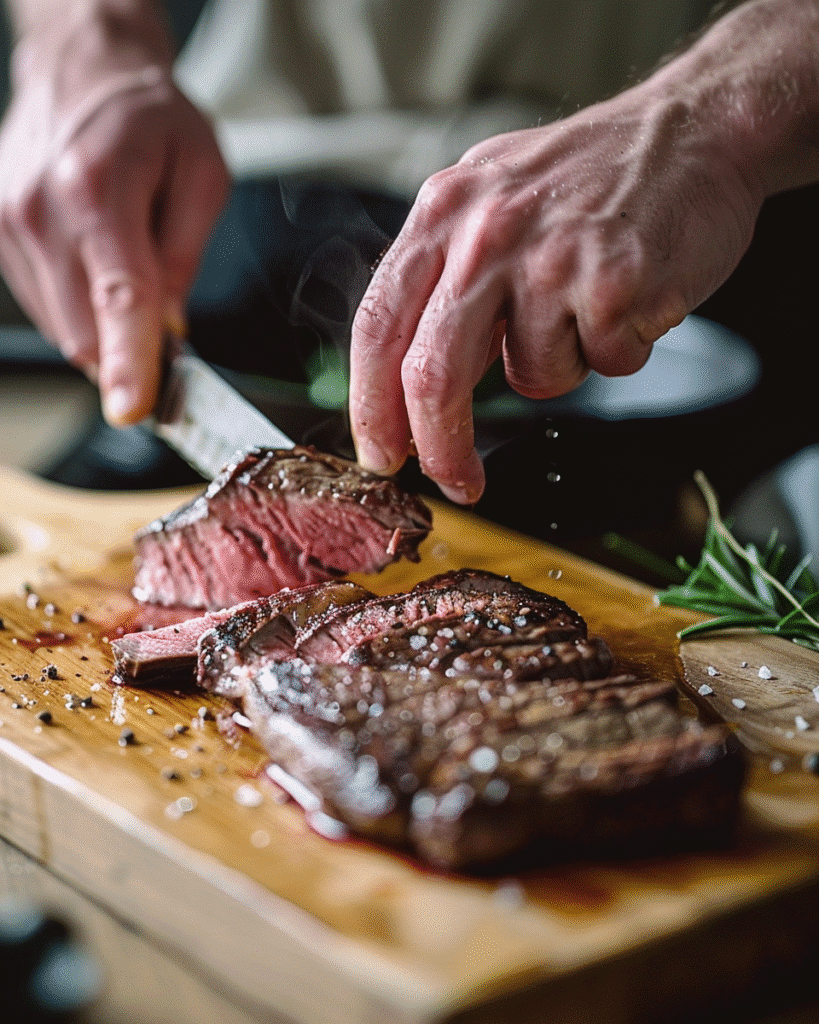
Pan-Searing and Grilling Techniques
Pan-searing is one of the best methods for steak salad because it gives you a deep, brown crust and flavorful pan juices that can enrich your dressing. Use a heavy skillet (cast iron is ideal) and heat it until almost smoking. Add a thin film of high-heat oil, then lay the steak down away from you. Resist the urge to move it; let it sear undisturbed until a crust forms. Flip once, then continue cooking until it reaches your desired doneness, about 125–130°F for medium-rare.
Grilling is equally good, especially in warmer months. Preheat your grill to high heat, oil the grates, and sear the steak 3–5 minutes per side, depending on thickness. Direct high heat builds flavor fast, which complements the freshness of the salad ingredients. Both methods work well; choose based on your equipment and the flavor profile you want.
Resting, Slicing, and Temperature Guidelines
After cooking, resting the steak is non-negotiable, especially for steak salad. Place the steak on a cutting board and tent loosely with foil for 5–10 minutes. This rest period allows the juices to redistribute, so they stay in the meat instead of running all over your cutting board. For temperature, a digital instant-read thermometer is your best friend. Aim for these pull temperatures, knowing the steak will rise a few degrees as it rests: 125°F (rare), 130–135°F (medium-rare), 140°F (medium).
For salad, medium-rare to medium keeps the slices tender and juicy. When it’s time to slice, always cut against the grain. Look for the direction of the muscle fibers and slice perpendicular in thin, even strips. This shortens the fibers and results in more tender bites. Arrange the slices over the salad just before serving so the warm steak gently wilts the greens and melds with the dressing.
Building the Green Base for Steak Salad
Choosing the Right Greens and Mix-Ins
The greens you pick for your steak salad create the foundation of flavor and texture. Tender greens like baby spinach, spring mix, butter lettuce, and arugula offer a delicate, silky base that contrasts nicely with hearty steak. Arugula brings a peppery kick, which many people love with rich beef.
On the other hand, sturdier greens like romaine, kale, and little gem lettuce add more crunch and structure. You can also blend greens for complexity, try half romaine for crunch and half arugula for spice. Wash and thoroughly dry your greens so the dressing adheres well rather than turning watery. Beyond the leafy base, think about mix-ins that add color and nutrients: shredded red cabbage, grated carrots, radishes, cucumbers, and cherry tomatoes. This variety mirrors the approach in dishes like a vibrant kale salad recipe, where multiple textures keep every bite interesting.
Balancing Textures: Crunch, Creaminess, and Juiciness
A memorable steak salad needs contrast. If every component is soft or crisp, the dish feels flat. So, consciously add ingredients that supply crunch, creaminess, and juiciness. Crunch can come from toasted nuts (almonds, walnuts, pecans), seeds (pumpkin or sunflower), crispy chickpeas, or homemade croutons. For creaminess, turn to avocado slices, crumbled feta, goat cheese, or blue cheese.
Juiciness comes from fresh tomatoes, orange segments, pomegranate arils, or sliced strawberries. Layering these thoughtfully means each forkful feels complete. As you build, sprinkle crunchy elements over the top so they stay crisp, nestle creamy items near the steak to catch its warm juices, and scatter juicy ingredients throughout to brighten the bowl. This approach mirrors how you might design a composed salad like a warm lentil and roasted vegetable salad: each component plays a defined textural role that makes the whole more satisfying.
Dressing and Flavor Profiles for Steak Salad
Classic Vinaigrettes and Creamy Dressings
The dressing can make or break your steak salad because it determines how all the ingredients taste together. A classic vinaigrette is the most versatile choice. Start with a 3:1 ratio of extra-virgin olive oil to acid, such as red wine vinegar, balsamic, sherry vinegar, or lemon juice. Whisk in a spoonful of Dijon mustard, minced garlic or shallot, salt, and pepper. This type of vinaigrette cuts through the richness of the steak and enhances the greens. If you prefer a creamier profile, try a yogurt-based dressing, a light blue cheese dressing, or a garlicky ranch-style sauce.
Use these sparingly so they don’t overwhelm the salad. You can also include the steak pan drippings in your dressing for added flavor, just whisk a teaspoon or two into the vinaigrette while it’s still warm. This technique creates a cohesive flavor that feels restaurant-worthy without extra effort.
Flavor Variations: Mediterranean, Asian, and Southwest
Changing the dressing immediately transforms your steak salad’s personality. For a Mediterranean spin, use extra-virgin olive oil, lemon juice, garlic, oregano, and a pinch of crushed red pepper. Add olives, cherry tomatoes, cucumber, and feta to match. An Asian-inspired steak salad might feature a soy sauce–sesame vinaigrette with rice vinegar, ginger, and a touch of honey, then pair with shredded cabbage, carrots, cilantro, and maybe some crunchy wonton strips.
For a Southwest-style bowl, build a lime-cilantro dressing with olive oil, lime juice, cumin, and a bit of chili powder, then add black beans, corn, avocado, and crispy tortilla strips. These shifts in flavor show how versatile steak salad can be, very much like swapping dressings and toppings in a chicken taco salad dinner recipe. Once you learn a few basic dressings, you can match them to your cravings and pantry supplies, turning the same core idea into a dozen different meals.
Nutritional Benefits of Steak Salad
Macro Balance: Protein, Carbs, and Fats
One reason steak salad has become popular among home cooks and nutrition-conscious eaters is its balance of macronutrients. Steak offers high-quality protein and, depending on the cut, some healthy fats. The greens and vegetables provide complex carbohydrates and fiber. If you add whole grains like quinoa, farro, or brown rice, you boost the slow-digesting carbs that keep you satisfied longer. Nuts, seeds, avocado, and olive-oil-based dressings supply heart-healthy monounsaturated and polyunsaturated fats.
This combination helps stabilize blood sugar and energy levels, which is especially useful for busy days or workouts. Unlike a plain steak and potato dinner, steak salad naturally supports a more even macro spread, so you get the enjoyment of a steakhouse flavor profile in a more balanced, everyday format.
Micronutrients and Phytochemicals from Veggies and Greens
Beyond macros, steak salad delivers a wide range of micronutrients. Dark, leafy greens like spinach, kale, and arugula are rich in vitamins A, C, K, and folate, plus minerals like iron and magnesium. Colorful vegetables, red bell peppers, carrots, tomatoes, and beets, add antioxidants such as beta-carotene, lycopene, and vitamin C, which support immune health and reduce oxidative stress. If you include herbs like parsley, cilantro, and basil, you gain additional phytonutrients that have anti-inflammatory properties. Nuts and seeds contribute vitamin E, magnesium, and zinc, while citrus segments or berries bring more vitamin C and flavonoids.
The variety in a well-built steak salad resembles nutrient-dense combinations found in dishes like a cranberry apple quinoa winter salad. When you put it all together, you’re not just eating a tasty meal, you’re supporting overall wellness with every bite.
Seasonal Steak Salad Variations
Spring and Summer Steak Salad Ideas
In spring and summer, steak salad shines with vibrant produce. Take advantage of tender baby greens, radishes, snap peas, cucumbers, and ripe tomatoes. A simple version might feature grilled steak over a bed of arugula and mixed greens with cherry tomatoes, shaved Parmesan, and a lemony vinaigrette. You can also highlight seasonal fruit: think strawberries or peaches with goat cheese and toasted almonds. Grilling your steak outdoors adds a smoky flavor that pairs well with fresh, raw vegetables and herbs.
You might even add grilled vegetables like zucchini or bell peppers for extra dimension. When it’s hot out, keep the dressing light, citrus and vinegar-based dressings feel refreshing and help balance the richness of the meat without weighing you down.
Fall and Winter Steak Salad Comfort Bowls
In cooler months, steak salad naturally leans heartier. Swap delicate greens for sturdier bases like kale, shredded Brussels sprouts, or a mix of romaine and cabbage. Roasted vegetables become key players: think roasted sweet potatoes, butternut squash, carrots, or beets. These ingredients echo the cozy vibes found in dishes like a Brussels sprout salad recipe guide. Add warm components directly to the greens so they wilt slightly, then layer your sliced steak on top.
Seasonal fruits such as apples, pears, and pomegranate seeds bring sweetness and color. Toasted walnuts or pecans add warmth and crunch. For dressing, consider balsamic vinaigrette, maple-Dijon, or a creamy tahini-lemon sauce. These deeper flavors match the season and turn your steak salad into a true cold-weather comfort bowl with all the nutrition of a big salad and the coziness of a roast dinner.
Meal Prep, Storage, and Leftover Strategies
How to Prep Steak Salad Ahead
Steak salad works surprisingly well for meal prep if you organize the components strategically. Start by cooking the steak slightly under your ideal doneness, since reheating can push it further. Chill it promptly, then slice only when cold for clean, thin pieces. Store the steak in an airtight container separate from the greens and toppings. Wash and thoroughly dry your salad greens, then store them in a container lined with paper towels to absorb moisture and keep them crisp for several days.
Chop sturdy vegetables like carrots, cucumbers, bell peppers, and cabbage ahead of time. Keep dressing in a small jar or container. When it’s time to eat, assemble your bowl with cold or gently warmed steak, add veggies, then dress just before serving. This separation method keeps everything fresh instead of soggy, which is key if you rely on salads for weekday lunches or fast dinners.
Using Leftover Steak for Next-Day Salads
Leftover steak from a weekend dinner can turn into a fantastic steak salad the next day. Cold steak slices work well, especially if you cut them thinly against the grain. If the steak feels a bit firm from refrigeration, let it sit at room temperature for 10–15 minutes before serving, or briefly warm it in a low oven just until the chill is off. Build your salad with extra crunch and moisture, juicy tomatoes, cucumbers, or even a spoonful of leftover salsa can help revive drier meat.
You can also dice leftover steak and use it like a protein “topping,” similar to how you might treat chicken in a taco salad. Turn it into a grain-based bowl with quinoa or farro, roasted vegetables, and a bright dressing for a twist on classic steak salad. With the right add-ins, what started as yesterday’s entrée becomes an entirely new meal, reducing food waste and saving you time.
Serving Steak Salad: Pairings and Presentation
Side Dishes and Drinks That Complement Steak Salad
While a hearty steak salad can stand alone, thoughtful side dishes and drinks can elevate the meal. If your salad leans light, consider adding a side of crusty bread, garlic toast, or whole-grain rolls for extra carbohydrates. A simple vegetable side like roasted green beans, a small serving of green bean casserole, or a cup of soup pairs well in colder weather. For drinks, crisp white wines like Sauvignon Blanc or a light red such as Pinot Noir complement both steak and fresh vegetables.
Non-alcoholic options like sparkling water with lemon, unsweetened iced tea, or a small wellness-focused drink, similar to a wellness shot juice, refresh the palate between bites. Aim for sides and beverages that support the salad’s theme: bright and citrusy pairings for summer, deeper and more robust options for fall and winter bowls.
Plating, Garnishing, and Entertaining Tips
Presentation turns a simple steak salad into something special, especially when entertaining. Use a wide, shallow bowl or platter so you can showcase each component. Start with a base of greens, then arrange vegetables and toppings in distinct sections rather than mixing everything at once. Fan the sliced steak over the top, slightly overlapping each piece for a restaurant-style look. Drizzle the dressing just before serving and finish with a flourish of fresh herbs, a sprinkle of flaky sea salt, and a grind of black pepper.
For gatherings, consider a “build-your-own” steak salad bar: set out bowls of greens, veggies, grains, cheeses, and toppings so guests can customize. Offer two or three dressings, such as a classic vinaigrette, creamy option, and a bolder flavor like sesame-ginger, to suit different tastes. This flexible setup feels interactive and makes dinners more memorable with very little extra work.
Sample Steak Salad Blueprint (Ingredient & Flavor Guide)
You can adapt this basic framework to almost any style of steak salad:
| Component | Options |
|---|---|
| Steak | Ribeye, NY strip, sirloin, flank, skirt |
| Greens | Arugula, spinach, romaine, kale, spring mix |
| Crunch | Nuts, seeds, croutons, crispy chickpeas |
| Creamy | Avocado, feta, goat cheese, blue cheese |
| Juicy | Tomatoes, citrus, berries, cucumber |
| Dressing | Vinaigrette, creamy, sesame-ginger, lime-cilantro |
FAQ: Steak Salad Questions Answered
How do I keep my steak salad from getting soggy?
To keep steak salad from getting soggy, manage moisture and timing carefully. First, dry greens thoroughly after washing; excess water dilutes dressing and softens leaves. Use a salad spinner, then pat gently with paper towels. Second, store components separately if you prep ahead. Keep greens, chopped vegetables, steak, and dressing in individual containers. Dress the salad only right before serving, and start with less dressing than you think you need, adding more as you toss. Finally, cool hot ingredients briefly before adding them to delicate greens. Warm steak is fine and can slightly wilt sturdier greens, but very hot meat or just-roasted vegetables will release steam and water, which quickly leads to soggy, limp salads.
What is the best dressing for steak salad?
The best dressing for steak salad depends on your flavor goals, but a bold vinaigrette is usually the most versatile. Steak is rich and savory, so it benefits from acidity that cuts through the fat. A red wine or balsamic vinaigrette with olive oil, Dijon mustard, garlic or shallot, salt, and pepper works with almost any combination of greens and toppings. If you enjoy creamier flavors, a light blue cheese or yogurt-based dressing can also be excellent—just use it sparingly so it doesn’t overpower the vegetables. For more global twists, try sesame-ginger with soy sauce and rice vinegar, or a lime-cilantro vinaigrette with cumin and chili. Whichever dressing you choose, taste it on a leaf of your greens first to ensure the flavors match.
Which steak is best for a healthy salad?
For a healthier steak salad, choose leaner cuts that still offer good flavor and tenderness. Top sirloin, flank steak, and flat iron are excellent options. They have less marbling than ribeye but still cook up juicy when prepared correctly. Trim visible fat from the edges, and cook to medium-rare or medium to preserve tenderness. Balance the plate with a generous portion of greens and colorful vegetables, plus healthy fats from olive oil, avocado, nuts, or seeds. You can also use grass-fed beef, which tends to have a slightly different fatty acid profile, including more omega-3s. Keep your serving size around 4–6 ounces of cooked steak per person to maintain a healthier overall meal without sacrificing satisfaction.
Can steak salad be made ahead for meal prep?
Yes, steak salad can be very meal-prep friendly if you store components separately. Cook the steak slightly under your preferred doneness, cool it, and slice when cold. Store it in an airtight container for up to 3–4 days. Wash and dry your greens thoroughly, then keep them in a container lined with paper towels to absorb moisture. Prep sturdy vegetables like carrots, cabbage, bell peppers, and cucumbers ahead; avoid slicing delicate items like avocado or tomatoes until the day you’ll eat them. Portion greens and veggies into containers, add steak in a separate compartment if possible, and pack dressing in a small jar. At mealtime, combine and dress. This strategy keeps everything fresh and prevents soggy salads.
How can I make steak salad more filling?
To make steak salad more filling, increase fiber, volume, and healthy fats while keeping steak portions reasonable. Add a base of sturdy greens plus extra vegetables like roasted sweet potatoes, beets, or squash for complex carbs. Mix in a scoop of whole grains such as quinoa, farro, or brown rice to build a more substantial bowl. Include a source of healthy fats—sliced avocado, toasted nuts, seeds, or a generous drizzle of olive-oil-based dressing—to improve satiety. Protein also matters: aim for 4–6 ounces of steak and consider adding a second protein like beans, lentils, or a sprinkle of cheese. These additions turn a light salad into a satisfying, complete meal that holds you over for hours.
Conclusion: Bringing Steak Salad into Your Regular Rotation
Steak salad combines the best of both worlds: the flavor and comfort of a steak dinner with the freshness and nutrition of a big, colorful salad. By choosing the right cut of steak, cooking it to a juicy medium-rare, and pairing it with crisp greens, crunchy toppings, and a bold dressing, you can create endless variations that suit any season or craving. Once you master the basic framework, it becomes as adaptable as your favorite smoothie or grain bowl.
You might even pair your steak salad nights with a bright breakfast like a strawberry banana smoothie to keep the theme of balanced, vibrant eating going all day. With a little planning, steak salad fits beautifully into meal prep routines, weeknight dinners, and even entertaining menus. Keep experimenting with different greens, vegetables, dressings, and global flavor profiles, and you’ll never get bored of this satisfying, nutrient-dense meal-in-a-bowl.
For more seasonal salad inspirations, check out my Pinterest.