
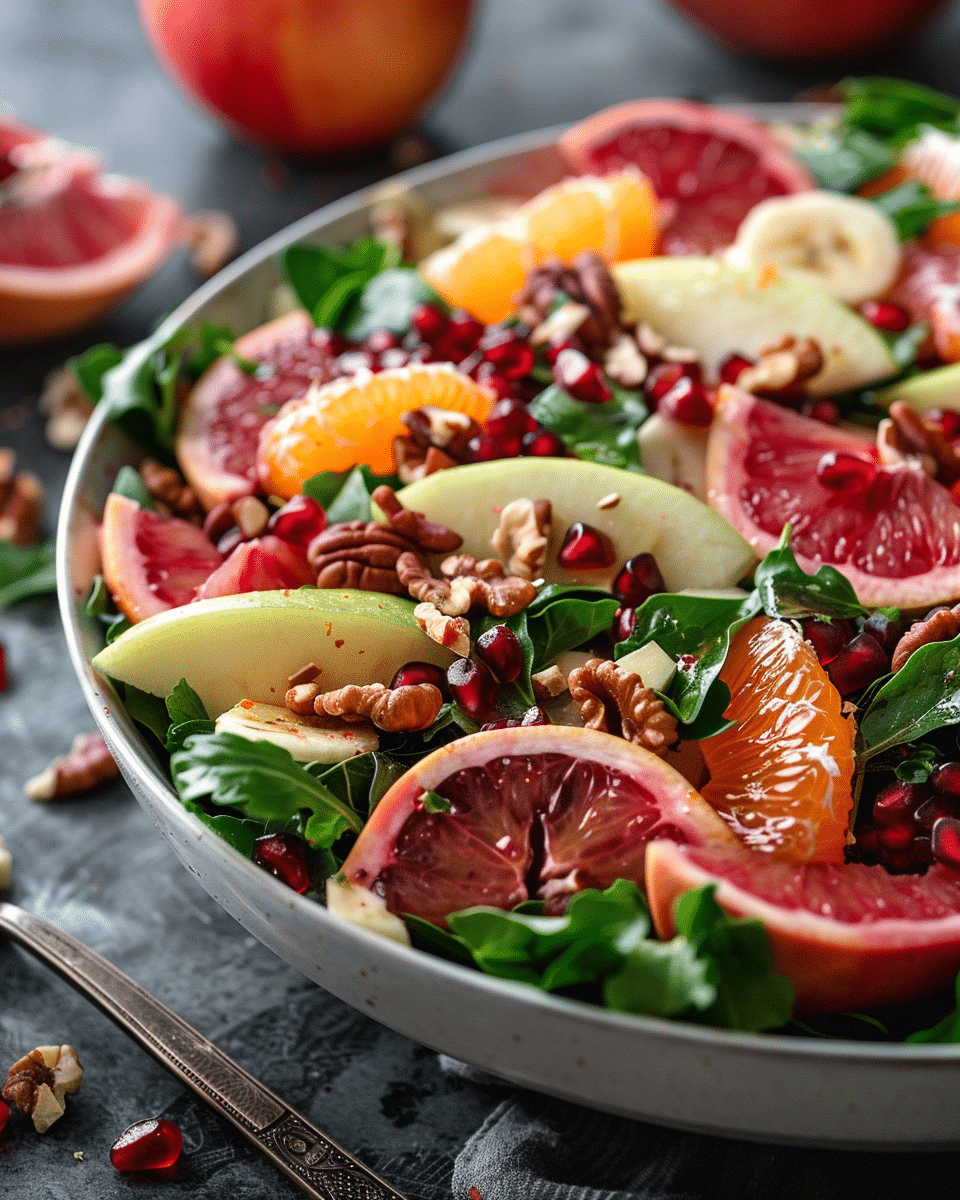
Winter Fruit & Nut Salad (Seasonal Fruits + Nuts + Light Vinaigrette) That Brightens Cold Days
A Winter Fruit & Nut Salad (Seasonal Fruits + Nuts + Light Vinaigrette) is one of the easiest ways to bring color, crunch, and freshness to the darkest months of the year. While winter comfort food often means heavy casseroles and stews, your table feels more balanced and exciting when you add a bright, crisp salad filled with juicy citrus, sweet apples or pears, crunchy nuts, and a zesty dressing.
This kind of salad celebrates what winter does best: oranges, grapefruit, pomegranate arils, persimmons, and hardy greens that stay crisp even when the temperature drops.
Instead of relying on summer tomatoes or berries, you can lean into deeply flavored seasonal produce and create a salad that feels special enough for holidays yet simple enough for weeknights.
Many home cooks already enjoy cold-weather salads like a citrus and fennel combo or quinoa winter bowls; if you love those, you will also appreciate this fresh twist. For more winter salad inspiration, you might also enjoy the vibrant flavors in this Citrus Fennel Avocado Winter Salad, which pairs beautifully with a fruit and nut side salad. In this guide, you will learn how to build the perfect winter fruit and nut salad, choose the best ingredients, adjust textures, and master a light vinaigrette that ties everything together.
Table of Contents
Why a Winter Fruit & Nut Salad Belongs on Every Cold-Weather Table
Winter Fruit & Nut Salad (Seasonal Fruits + Nuts + Light Vinaigrette) as a Seasonal Hero
A Winter Fruit & Nut Salad (Seasonal Fruits + Nuts + Light Vinaigrette) works so well in cold months because it balances what winter meals often lack: brightness, acidity, and crunch. Heavy mains like roasts, mashed potatoes, and creamy casseroles can feel monotonous without something crisp on the side.
When you serve a colorful Winter Fruit & Nut Salad loaded with citrus wedges, apple slices, and toasted nuts, every plate looks more inviting and each bite feels lighter. This contrast helps prevent palate fatigue, so guests keep enjoying every course instead of feeling weighed down after a few bites.
Seasonal eating also supports better flavor and nutrition. Winter fruits like oranges, blood oranges, grapefruit, pomegranate, and kiwi reach peak sweetness and juiciness in cooler weather.
At the same time, hearty salad greens such as kale, radicchio, escarole, and baby spinach stay firm and hold up to a tangy vinaigrette without becoming soggy. Nuts such as walnuts, pecans, pistachios, and almonds add satisfying healthy fats and plant-based protein, which help turn a simple salad into a filling side or light meal. When you combine all of these elements with a balanced dressing, you get a dish that feels nourishing, elegant, and surprisingly simple to prepare.
How This Winter Fruit & Nut Salad Compares to Other Winter Favorites
Many people think of winter salads as either all-green or all-grain, but a winter fruit and nut salad lands somewhere in between. Unlike a warm lentil or roasted vegetable salad, this one stays completely fresh and uncooked, which preserves the crispness of the ingredients.
You could pair Winter Fruit & Nut Salad with more robust salads like a Warm Lentil and Roasted Vegetable Salad for a balanced buffet that offers both comforting and refreshing options. While a panzanella salad or classic kale salad relies heavily on bread or greens, this fruit-forward approach highlights sweetness and tartness while still providing crunch and fiber.
Because the base of the recipe is flexible, you can customize it easily for everyday meals or special occasions. For weeknight dinners, you might keep it simple with mixed greens, sliced apples, and a handful of toasted walnuts. For holiday dinners, you can transform it into a showstopper by layering ruby-red pomegranate arils, jewel-toned citrus segments, candied pecans, and maybe a sprinkle of crumbled cheese.
Unlike many complex main dishes that demand precise timing, this salad actually benefits from being assembled in advance, especially if you choose hardy greens and store the vinaigrette separately. That ease makes it a smart addition to your rotation, whether you cook for one or for a crowd.
Print
Winter Fruit & Nut Salad (Seasonal Delights + Light Vinaigrette)
- Total Time: 20 minutes
- Yield: 4 servings 1x
Description
A fresh and colorful Winter Fruit & Nut Salad made with seasonal fruits, crunchy toasted nuts, hearty greens, and a light citrus vinaigrette. Perfect as a bright winter side dish or a light, refreshing meal.
Ingredients
2 oranges or mandarins, segmented
1 grapefruit, segmented
1 apple or pear, thinly sliced
1/2 cup pomegranate arils
4 cups mixed winter greens (kale, spinach, arugula)
1/3 cup toasted walnuts or almonds
Light Vinaigrette:
3 tbsp olive oil
1 tbsp lemon or orange juice
1 tsp apple cider vinegar
1 tsp honey or maple syrup
Salt and black pepper
Instructions
1. Toast nuts until fragrant and let cool
2. Wash and dry greens thoroughly
3. Segment citrus and slice apples or pears
4. Whisk vinaigrette ingredients until emulsified
5. Combine greens, fruits, and nuts in a large bowl
6. Drizzle with vinaigrette and toss gently
7. Serve immediately or chill briefly before serving
Notes
Use seasonal fruits for best flavor
Toss apples with lemon juice to prevent browning
Swap nuts with seeds for nut-free version
Add goat cheese or feta if desired
Serve as a holiday side or light lunch
- Prep Time: 20 minutes
- Cook Time: 0 minutes
- Category: Salad / Winter Side
- Method: No-cook
- Cuisine: Seasonal / Mediterranean
Nutrition
- Serving Size: 1 bowl
- Calories: approx. 280
- Sugar: 18g
- Sodium: 120mg
- Fat: 15g
- Saturated Fat: 2g
- Unsaturated Fat: 12g
- Trans Fat: 0g
- Carbohydrates: 30g
- Fiber: 6g
- Protein: 5g
- Cholesterol: 0mg
Building the Perfect Winter Fruit Base
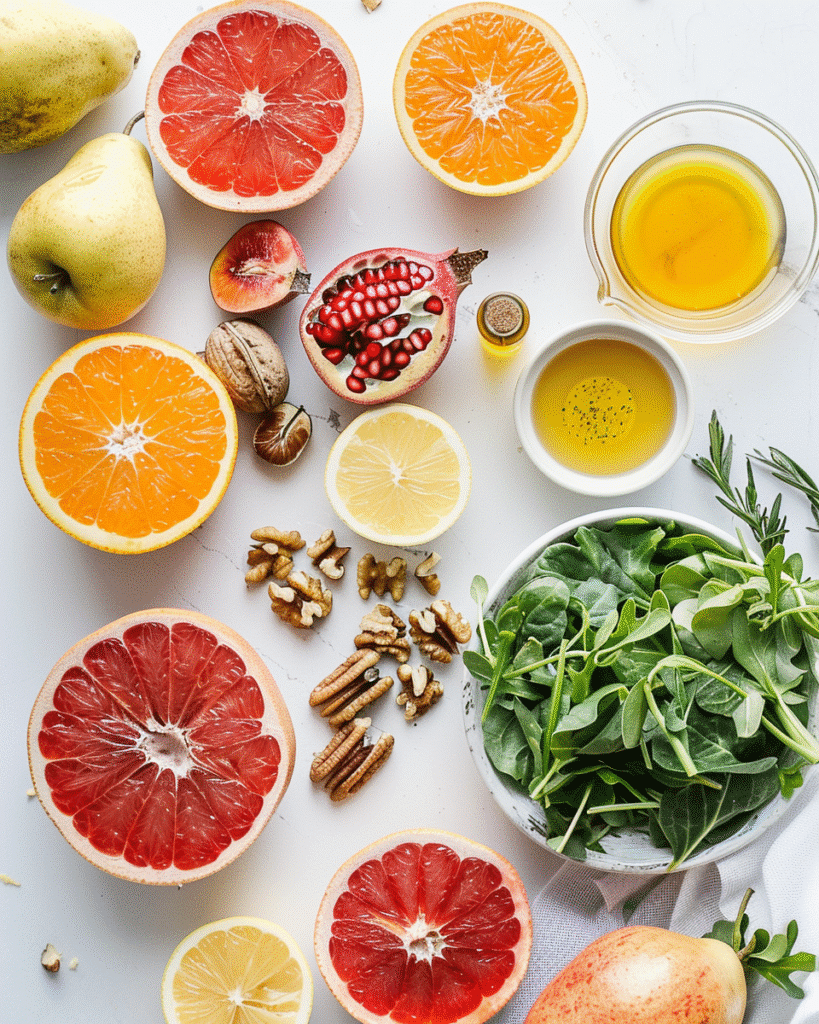
Choosing the Best Seasonal Fruits for Winter Salads
The heart of any Winter Fruit & Nut Salad (Seasonal Fruits + Nuts + Light Vinaigrette) is the fruit selection. You want a mix of sweet, tart, juicy, and crisp textures to keep each forkful interesting.
Citrus fruits form the backbone: navel oranges, blood oranges, mandarins, and grapefruit all bring vibrant color and acidity. When you segment citrus (also called supreming), you remove the bitter pith and membranes, leaving tender wedges that release just enough juice to mingle with the dressing. This technique gives the salad a refined feel you might associate with restaurant plates.
Firm fruits provide structure. Apples and pears stay crisp if you cut them shortly before serving or toss them in a little lemon juice to prevent browning. Choose varieties that do not turn mushy, such as Honeycrisp, Pink Lady, or Bosc pears.
Pomegranate arils add gemstone-like pops of sweetness and crunch, while kiwi slices introduce a softer, tangy note. If you can find persimmons, especially Fuyu, they make a beautifully sweet, almost honeyed addition. The key is to mix at least three or four different fruits for complexity. This variety not only tastes better, but also looks stunning in the bowl.
Balancing Flavors and Textures in Your Fruit Mix
While it is tempting to throw in every fruit you have, a thoughtful balance yields the best salad. Think in terms of categories: juicy citrus, crisp apples or pears, seedy crunch like pomegranate, and perhaps a softer fruit like persimmon.
Aim for a ratio where no single element dominates. Too much citrus can flood the bowl with juice and dilute the vinaigrette, while too many sweet fruits can make the salad cloying. You want a refreshing finish that prepares your palate for the next bite of your main course.
To keep textures interesting, vary the shapes and sizes of your cuts. Slice apples into thin wedges, segment citrus into neat supremes, cut kiwi into rounds, and leave pomegranate arils whole. This variety gives the salad a more artful appearance and makes each serving feel abundant. As you build your bowl, taste as you go and adjust.
If Winter Fruit & Nut Salad seems too sweet, add more grapefruit or a splash of lemon in the dressing. If it feels too tart, add a few extra apple slices or a drizzle of honey in the vinaigrette. This simple habit of tasting and tweaking turns a good salad into an excellent one.
The Role of Nuts: Crunch, Flavor, and Nutrition
Choosing Nuts for a Winter Fruit & Nut Salad
Nuts transform a Winter Fruit & Nut Salad (Seasonal Fruits + Nuts + Light Vinaigrette) from a simple fruit bowl into a satisfying dish with real substance. Walnuts and pecans are classic choices because their rich, buttery flavor pairs well with both citrus and apples.
Toasting them lightly in a dry skillet or low oven brings out their natural oils and deepens their flavor, making each bite more aromatic. Almonds, especially sliced or slivered, add a delicate crunch and look beautiful scattered over the top. Pistachios introduce a lovely green color that contrasts with the reds and oranges of winter fruit.
Each nut offers slightly different nutritional benefits. Walnuts deliver omega-3 fatty acids; almonds provide vitamin E; pistachios add lutein and fiber. Because nuts are calorically dense yet nutrient-rich, they help the salad feel more filling without making it heavy.
You can also use a mix of nuts to create layers of texture: for example, combine chopped toasted walnuts for hearty crunch and a sprinkling of sliced almonds for light crispness. Always taste the nuts before adding them; stale or rancid nuts can ruin the salad’s fresh profile. Store nuts in an airtight container in the fridge or freezer during winter to protect their flavor and healthy fats.
Toasted, Candied, or Raw: Which Nut Texture Is Best?
The way you prepare nuts changes the personality of your salad. Raw nuts taste mild and softly crunchy, which works in very light salads but can feel flat next to bold fruit. Toasted nuts, on the other hand, bring out nutty aromas and a more assertive crunch that stands up well to juicy citrus and vinaigrette.
To toast, simply spread nuts on a baking sheet and bake at 325°F for 6–10 minutes, shaking once, until fragrant and lightly golden. Watch closely; nuts can burn quickly at the edges.
Candied nuts introduce a sweet, brittle coating that some diners love, especially in holiday versions of a Winter Fruit & Nut Salad. Toss nuts with a bit of sugar or maple syrup and a pinch of salt, then toast until caramelized. This creates addictive clusters that contrast against tart grapefruit or lemony dressing.
However, candied nuts also increase the sweetness and calories of the dish, so you may want to reduce other sweet components like dried fruit or honey in the vinaigrette. A useful compromise is to candy just part of the nuts and keep the rest simply toasted. That way you enjoy textural variety and flavor without overwhelming the salad.
Greens and Bases That Can Handle Winter
Best Greens to Support Seasonal Fruits and Nuts
While some Winter Fruit & Nut Salad (Seasonal Fruits + Nuts + Light Vinaigrette) versions skip greens entirely, a leafy base adds fiber, volume, and a beautiful backdrop for colorful fruit. Not all greens perform equally well in winter salads, though. Delicate lettuces like butter lettuce or spring mix can wilt quickly under juicy citrus and vinaigrette.
Instead, choose sturdy greens that keep their shape. Tuscan kale, curly kale, baby spinach, arugula, and even shaved Brussels sprouts all work wonderfully. They can stand up to dressing and remain appealing even if the salad sits for a short while on a buffet.
Kale-based salads in particular complement winter fruit because their slight bitterness balances sweetness. If you enjoy hearty greens, you may already love recipes like classic kale salads or Brussels sprout slaws.
For even more ideas on using these robust greens, check out this detailed Brussels Sprout Salad Recipe Guide, which shows how to tame sturdy vegetables into tender, flavorful bites. In a fruit and nut salad, you can also blend multiple greens, such as a mix of kale and baby spinach, to soften texture while maintaining structure. Always wash, dry, and chill your greens well; crisp, cold leaves hold dressing better and feel more refreshing on the tongue.
Massaging, Chopping, and Layering Your Base
Preparation technique matters as much as the type of greens you choose. If you use kale, remove thick stems and slice the leaves into thin ribbons. Then, massage them with a tiny drizzle of olive oil and a pinch of salt for 30–60 seconds.
This simple step breaks down some of the tough fibers, making the leaves darker, more tender, and less bitter while still maintaining structure. For spinach or arugula, gentle tossing is enough; you do not need to massage these softer greens. Shaved Brussels sprouts benefit from very fine slicing and a longer marinating time in the vinaigrette.
Layering also influences both flavor and presentation.
Instead of dumping everything into the bowl at once, spread a layer of greens, then arrange some of the fruit and nuts on top, repeating if needed. This ensures every serving includes all components, rather than leaving the nuts at the bottom and fruits on top. You can toss lightly with half of the dressing and reserve the rest for drizzling at the table.
This approach keeps ingredients from drowning in vinaigrette and allows guests to control their level of acidity. Thoughtful layering makes theWinter Fruit & Nut Salad look intentional, almost like a composed restaurant dish, even though the preparation remains simple and approachable .
Crafting the Light Vinaigrette
Essential Components of a Bright Winter Vinaigrette
The light vinaigrette is what unites every ingredient in a Winter Fruit & Nut Salad (Seasonal Fruits + Nuts + Light Vinaigrette). It should taste bright and tangy but not harsh, and it should complement rather than compete with the natural sweetness of the fruit.
A classic formula uses three parts oil to one part acid, yet you can adjust slightly toward more acidity when using very sweet fruits. For the acid, mix citrus juice (orange, lemon, or grapefruit) with a bit of apple cider or white wine vinegar for complexity. For the fat, choose a mild olive oil or a neutral oil like grapeseed if you want the fruit to shine more clearly.
Add a touch of sweetness to round out sharp edges. A teaspoon or two of honey or maple syrup works beautifully in winter vinaigrettes, especially with nuts. Mustard, particularly Dijon, acts as an emulsifier and brings gentle heat as well as body to the dressing. Season generously with salt and a few grinds of black pepper.
If you want a herbal note, add finely chopped fresh thyme, rosemary, or mint, but keep it restrained so the herbs do not overshadow the primary flavors. Whisk the vinaigrette until it looks slightly thickened; you should see the oil and acid blend into a unified, glossy mixture.
Citrus, Herb, and Spice Variations
Winter is the perfect season to play with citrus-heavy vinaigrettes. You might create an orange-shallot dressing by combining freshly squeezed orange juice, minced shallot, white wine vinegar, Dijon mustard, olive oil, salt, and pepper. The shallots mellow in the acid, adding a gentle onion flavor without harshness.
For something more tangy, use grapefruit juice and a splash of lemon, then soften with honey. A blood orange vinaigrette offers a brilliant rosy color that looks stunning when drizzled over pale green kale and bright fruit segments.
Spices can also bring complexity. A pinch of ground cinnamon or cardamom complements apples and pears, while a tiny amount of ground ginger or fresh grated ginger perks up citrus. You can even include a dash of smoked paprika for a subtle savory edge that contrasts nicely with sweet fruit and toasted nuts.
Herbs like mint and basil lend a fresher, almost springlike character; thyme and rosemary feel more wintery and cozy. Always remember that your salad already has a lot of flavor from the fruit and nuts, so treat the vinaigrette as a supporting actor, not the star. Start with less seasoning, taste, and adjust until the dressing feels balanced and bright.
Step-by-Step: Assembling Your Winter Fruit & Nut Salad
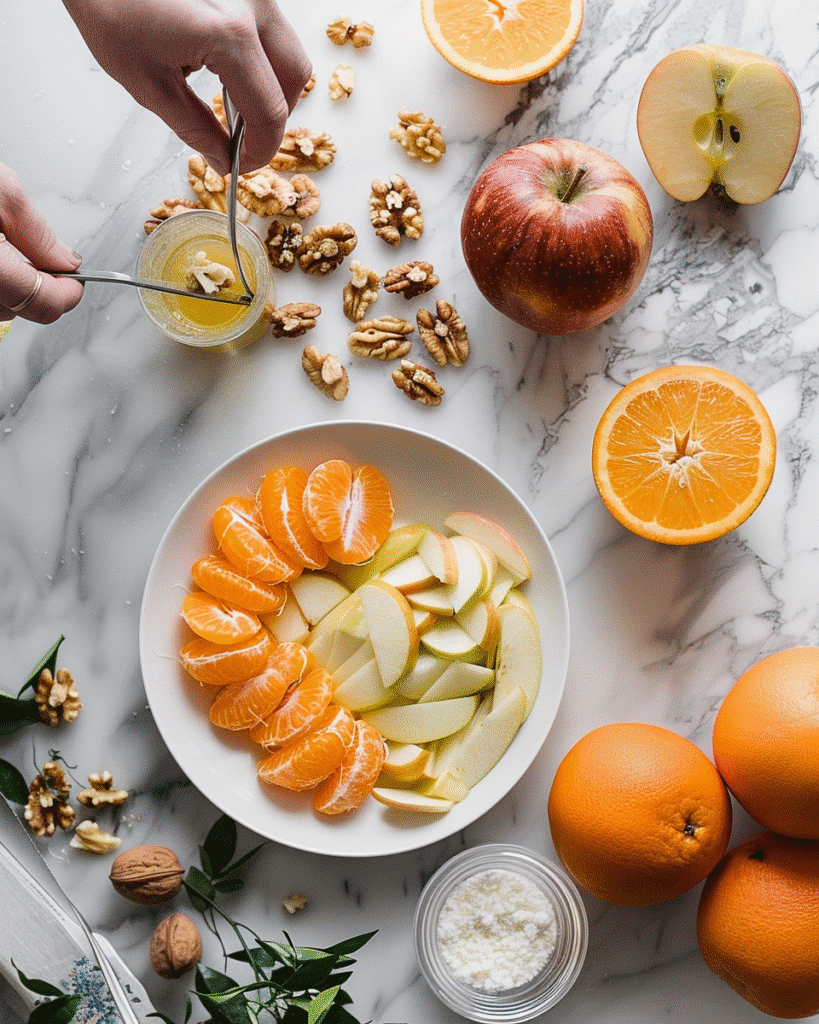
Preparation Timeline and Ingredient Handling
Assembling a Winter Fruit & Nut Salad (Seasonal Fruits + Nuts + Light Vinaigrette) becomes easy when you follow a simple timeline. Begin by toasting your nuts and letting them cool, since warm nuts can wilt greens and soften fruit prematurely.
Next, prepare your vinaigrette in a small jar and refrigerate it, allowing flavors to blend. You can wash, dry, and chill your greens a few hours ahead; store them in a covered container lined with a paper towel to absorb excess moisture. This prep ensures everything is crisp and ready when you are.
Closer to serving time, focus on the fruit. Cut citrus into segments or rounds, slice apples and pears, and prepare any kiwi or persimmons you plan to use. If you worry about browning, toss apple and pear slices with a bit of lemon juice or some of the vinaigrette.
Keep these fruits in separate bowls until final assembly to prevent too much juice from pooling at the bottom. Right before you serve, place greens in your largest salad bowl, scatter fruit and nuts on top, and drizzle with a portion of the dressing. Toss gently from the bottom with clean hands or salad tongs, adding more vinaigrette only if needed.
Sample Ingredient Ratios and Serving Guide
You can scale this Winter Fruit & Nut Salad easily for small families or larger gatherings. The table below shows basic ratios that work well as a starting point:
| Servings | Greens | Fresh Fruit | Nuts | Vinaigrette |
|---|---|---|---|---|
| 2–3 | 4 cups loosely packed | 2–3 cups mixed | 1/3 cup | 1/4 cup |
| 4–6 | 8 cups loosely packed | 4–5 cups mixed | 2/3–3/4 cup | 1/2 cup |
| 8–10 | 12–14 cups | 7–8 cups mixed | 1–1 1/4 cups | 3/4–1 cup |
These quantities create generous side portions. If you plan to serve the Winter Fruit & Nut Salad as a light main dish, increase the nuts slightly and consider adding a protein source or grain such as quinoa, chicken, or lentils. Pairing this salad with a hearty dish like a Green Bean Casserole gives a holiday menu both indulgence and freshness. Always dress the salad lightly at first; guests can add more vinaigrette at the table if they desire stronger flavor.
Variations, Add-Ins, and Protein Upgrades
Creative Add-Ins to Keep the Winter Fruit & Nut Salad Interesting
A Winter Fruit & Nut Salad (Seasonal Fruits + Nuts + Light Vinaigrette) is highly adaptable, so you can tweak it based on what you have in your pantry and your guests’ preferences. Dried fruits like cranberries, cherries, or golden raisins can boost sweetness and chewiness, although you should use them sparingly since fresh fruit already supplies natural sugars.
Soft cheeses such as goat cheese, feta, or blue cheese add creamy contrast and a savory edge that plays well with fruit. Sprinkle them on top right before serving to prevent them from dissolving into the dressing.
You can also incorporate grains or seeds for extra nutrition and texture. Cooked and cooled quinoa, farro, or wild rice tuck neatly among the greens and fruit, turning the salad into a heartier side or vegetarian main. Pumpkin seeds, sunflower seeds, or chia seeds layer in additional crunch and healthy fats.
If you enjoy the nutty flavor of quinoa with seasonal produce, consider exploring a dedicated winter grain bowl like this Cranberry Apple Quinoa Winter Salad, which pairs beautifully alongside or as a base for a fruit and nut topping. Spices and fresh herbs, from mint to parsley to tarragon, can change the Winter Fruit & Nut Salad’s personality with just a small handful.
Turning the Winter Fruit & Nut Salad into a Main Course
With a few simple upgrades, your Winter Fruit & Nut Salad shifts from side dish to a complete meal. Protein is the main addition. Grilled or roasted chicken slices make a natural partner for citrus and nuts, especially if you season them simply with salt, pepper, and a touch of garlic.
Shredded rotisserie chicken can be a convenient shortcut. For a more Tex-Mex twist, you might borrow ideas from a hearty Chicken Taco Salad Dinner Recipe and add seasoned chicken along with black beans or corn, while still keeping the fruit and nut elements.
Vegetarian or vegan diners can rely on chickpeas, marinated tofu, or lentils for protein.
Toasted chickpeas provide an appealing crunch that echoes the nuts, while lentils add earthiness. If you already have cooked lentils from a warm salad recipe, you can cool them and scatter them into your fruit and nut salad for extra body.
To keep the vinaigrette light but satisfying, increase the olive oil slightly and consider adding a spoonful of tahini or nut butter for creaminess. These additions make the Winter Fruit & Nut Salad more filling without losing its refreshing character, so you can enjoy it for lunch or a lighter dinner and still feel satisfied.
Storage, Make-Ahead Tips, and Leftover Ideas
Making the Winter Fruit & Nut Salad Ahead Without Losing Freshness
A Winter Fruit & Nut Salad (Seasonal Fruits + Nuts + Light Vinaigrette) works beautifully for busy days and entertaining because many components can be prepared in advance. The key is to store them separately and combine close to serving time.
You can toast nuts a few days ahead and keep them in an airtight container at room temperature. Vinaigrette keeps well in the refrigerator for up to a week; just shake or whisk it before using because natural separation occurs. Wash and dry greens a day ahead, then chill them in a covered container lined with a paper towel.
For fruit, you can segment citrus and seed pomegranates up to two days in advance and refrigerate them in separate containers. Wait until the day you plan to serve the salad to slice apples, pears, or persimmons, since these fruits brown more quickly.
If you must cut them earlier, coat them thinly with lemon juice and store them in an airtight container. Just before serving, assemble greens, layer on prepared fruit and nuts, and drizzle with dressing. This method keeps each component at its best while still saving you time on the day of your event or meal.
Handling Leftovers and Repurposing Them Creatively
Even with careful planning, you might end up with leftover Winter Fruit & Nut Salad, especially after large holiday meals. While greens dressed with vinaigrette will soften over time, they still offer delicious flavor and can be repurposed.
One option is to treat leftovers as a base for a smoothie bowl: blend soft greens and fruit with yogurt or a banana, then top with the remaining nuts. You can also chop everything finely and fold it into cooked grains for a quick grain salad, adding extra vinaigrette if needed.
If you stored components separately, you have even more flexibility. Extra fruit can top morning oatmeal, yogurt, or pancakes; leftover nuts make a perfect snack or garnish for other salads and desserts. Any remaining vinaigrette can dress a simple green salad or roasted vegetables later in the week.
For an immunity-boosting pairing, enjoy leftover citrus segments alongside a wellness drink; recipes like these Wellness Shot Juice Recipes & Benefits show how to turn fresh ingredients into potent little sips. With a bit of creativity, leftovers never feel repetitive, and you reduce food waste while continuing to enjoy winter’s best flavors.
Winter Fruit & Nut Salad : Serving, Pairing, and Presentation
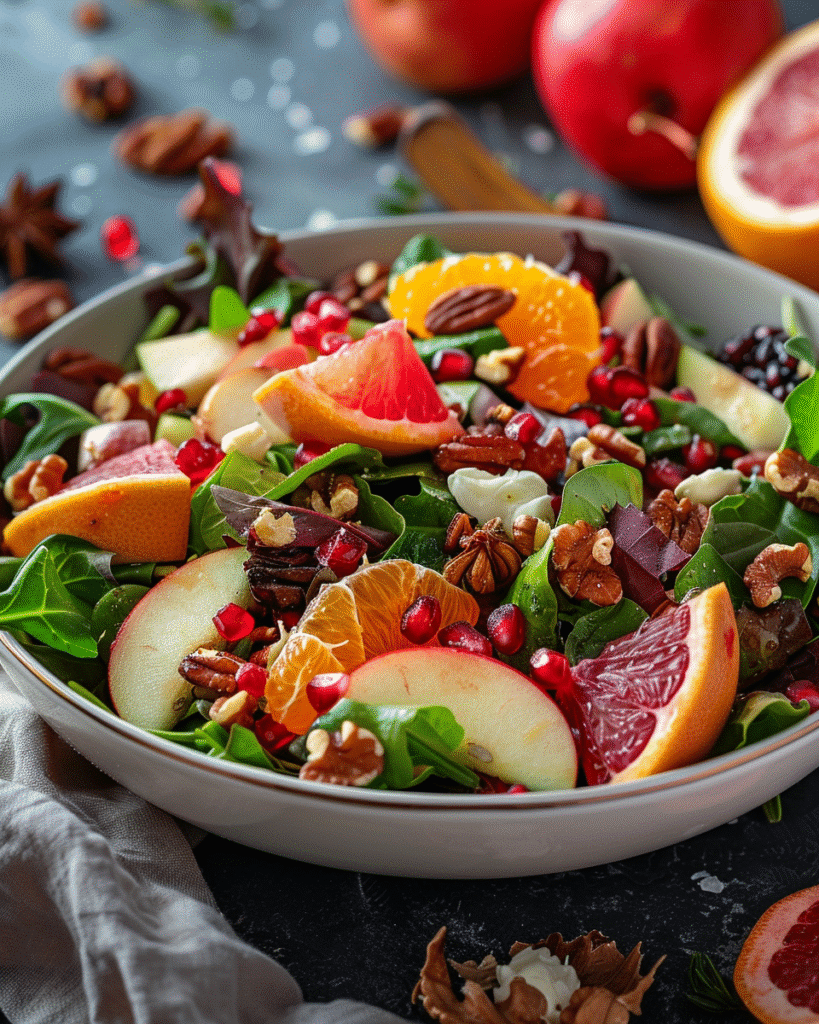
How to Plate and Present a Winter Fruit & Nut Salad
Presentation influences how people experience your Winter Fruit & Nut Salad (Seasonal Fruits + Nuts + Light Vinaigrette). Because this salad already contains vivid colors, you can highlight them with thoughtful plating.
Use a wide, shallow serving bowl or platter rather than a deep bowl; this allows fruit and nuts to spread out rather than sink. Start with a layer of greens, then arrange citrus slices, apple wedges, and other fruits in loose sections or overlapping circles. Scatter nuts over the top, focusing on the center for visual height. A final drizzle of vinaigrette and a tiny pinch of flaky salt complete the picture.
For a more formal dinner, consider individual plates. Place a small mound of greens on each plate, then tuck fruit segments and nuts around and on top. This method ensures every guest receives a balanced serving and avoids the clutter that sometimes happens with buffet-style serving.
You might garnish with a few extra pomegranate arils, microgreens, or edible flowers for special occasions. Remember that good lighting makes colors pop, so bring the salad to the table just before eating rather than letting it sit in dim corners of the kitchen. With minimal extra effort, your Winter Fruit & Nut Salad looks like the star of the show.
Pairing With Mains, Sides, and Other Salads
This salad’s fresh, lightly sweet profile pairs well with a wide variety of dishes. It cuts through the richness of roasted meats like turkey, chicken, pork, or beef, making it an excellent companion on holiday menus. It also balances creamy sides such as scalloped potatoes, mac and cheese, or classic green bean casseroles.
You can create a vibrant, salad-focused meal by pairing this fruit and nut bowl with heartier options like kale-based salads or bread-forward dishes such as panzanella. If you enjoy rustic, bread-and-vegetable combinations, a recipe like this Panzanella Salad gives you a savory contrast to the sweetness of fruit.
To design a winter salad bar, offer your fruit and nut salad alongside a grain-heavy option like quinoa or lentil salad and a simple green salad. This setup suits guests with different tastes and dietary needs while keeping your prep streamlined.
Because the vinaigrette is light, it does not overwhelm more delicately seasoned mains, yet it still offers enough character to stand next to boldly spiced dishes. Whether you serve it at a casual weekday dinner or a festive celebration, this salad brings harmony, color, and brightness to the entire meal.
FAQ Section
How do I keep apples and pears from browning in a Winter Fruit & Nut Salad ?
To keep apples and pears from browning, you need to limit their exposure to oxygen. The easiest method is to toss freshly sliced fruit with an acidic ingredient, such as lemon juice or a bit of your salad vinaigrette.
Aim for a light coating rather than soaking, so you do not alter the fruit’s flavor dramatically. You can also dilute lemon juice with water, using about 1 tablespoon lemon juice per cup of cold water, then briefly dip the slices and dry them gently.
Store prepared fruit in an airtight container in the refrigerator until you assemble the Winter Fruit & Nut Salad. Use crisp varieties,
like Honeycrisp, Pink Lady, or Bosc pears, which hold texture and color better than softer types.
Can I make a Winter Fruit & Nut Salad ahead of time for a party?
Yes, you can absolutely prepare Winter Fruit & Nut Salad in advance, but you should keep components separate until just before serving.
Toast nuts and make the light vinaigrette up to several days ahead, storing the nuts in an airtight container and the dressing in the fridge. Segment citrus and remove pomegranate arils a day or two ahead; refrigerate them separately.
Wash and dry greens, then chill them in a container lined with paper towels. Wait until the day of the party to slice apples and pears, tossing them with lemon juice to prevent browning. Shortly before your guests arrive, combine greens, fruits, and nuts in a large bowl, then drizzle lightly with vinaigrette and toss. This strategy keeps everything crisp and vibrant.
What nuts work best, and how do I toast them properly?
Walnuts, pecans, almonds, and pistachios work especially well in winter fruit and nut salads because they complement both citrus and crisp apples.
To toast them properly, spread nuts in a single layer on a dry baking sheet. Place in a preheated 325°F oven and bake for 6–10 minutes, shaking the pan halfway. They are ready when they smell fragrant and look slightly darker, with just a hint of gloss from released oils.
Alternatively, you can toast them in a dry skillet over medium heat, stirring frequently for 4–7 minutes. Always watch carefully; nuts can burn rapidly. Let them cool completely before adding to the salad so they maintain crunch and do not wilt the greens.
Is this Winter Fruit & Nut Salad healthy, and can it fit into a balanced diet?
A Winter Fruit & Nut Salad (Seasonal Fruits + Nuts + Light Vinaigrette) fits easily into a balanced diet and can be very nutrient-dense.
Seasonal fruits provide vitamins C and A, antioxidants, and fiber. Nuts contribute healthy unsaturated fats, plant-based protein, and minerals such as magnesium and potassium. If you use a light vinaigrette with high-quality olive oil and citrus juice, you add heart-healthy fats and minimal added sugar.
Portion control matters, mainly because nuts and dressing are calorie-dense. You can moderate the amount of nuts or use a smaller drizzle of vinaigrette if you monitor calorie intake. For those following vegetarian or Mediterranean-style eating patterns, this Winter Fruit & Nut Salad aligns beautifully with their guidelines and makes an excellent side or light main.
Can I make this Winter Fruit & Nut Salad without greens, just using fruit and nuts?
Yes, you can omit greens and create a purely Winter Fruit & Nut Salad. In that case, treat it somewhat like a composed fruit platter with a savory twist. Combine segmented citrus, sliced apples and pears, pomegranate arils, and toasted nuts in a shallow bowl.
Use a lighter hand with vinaigrette, since the fruit will release juice and can become watery if overdressed. You might even thicken the dressing slightly with a bit of honey or Greek yogurt to help it cling to the fruit.
Without greens, the salad feels more like a side dish or dessert, but you can still serve it alongside savory mains to provide contrast. Just remember to balance sweet and tart fruits so the dish does not lean too sugary.
How can I adapt Winter Fruit & Nut Salad for vegans or people with dietary restrictions?
Winter Fruit & Nut Salad adapts easily to vegan and gluten-free diets. Most components, fruits, nuts, greens, and a basic vinaigrette, are naturally gluten-free and plant-based. To keep it vegan, avoid honey and use maple syrup or agave in the dressing instead.
If you typically add cheese, choose a dairy-free alternative or skip it; toasted nuts and seeds provide plenty of richness. For nut allergies, replace nuts with roasted seeds like pumpkin or sunflower for crunch. When preparing the vinaigrette, ensure your mustard and vinegar are gluten-free if needed.
Because the recipe relies on whole, fresh ingredients, you can modify a few elements while still maintaining the Winter Fruit & Nut Salad’s vibrant flavor and satisfying texture.
Conclusion: Bringing Winter Brightness to Your Table
A thoughtfully made Winter Fruit & Nut Salad (Seasonal Fruits + Nuts + Light Vinaigrette) proves that cold-weather cooking can be both comforting and refreshingly light. By combining juicy seasonal fruits, crunchy toasted nuts, sturdy greens, and a zesty vinaigrette, you create a dish that looks stunning and tastes even better.
Winter Fruit & Nut Salad balances rich mains, offers a rainbow of nutrients, and invites endless customization, from adding grains to experimenting with citrus-based dressings. Even if you usually rely on heavier winter recipes, adding this Winter Fruit & Nut Salad to your rotation can transform everyday dinners and special gatherings alike.
For more ways to weave fresh produce into your cold-season menus, you might also explore a hearty yet bright option like this versatile Kale Salad Recipe, which pairs wonderfully with fruit-forward dishes. With a few basic techniques and some seasonal creativity, your winter table can feel vibrant and alive all season long.
For more amazing juice inspirations, check out Pinterest.