

There’s a reason chimichurri sauce has become the go-to condiment for grill season in kitchens across America. This vibrant, herb-packed sauce hails from Argentina, but it’s found its way onto burgers, steaks, and even roasted vegetables from coast to coast. If you’ve ever wondered what that bright green sauce is that keeps showing up next to a perfectly seared steak, you’re in the right place. Making chimichurri sauce at home takes just minutes, requires no cooking, and uses ingredients you likely already have on hand: parsley, garlic, vinegar, and good olive oil.
Once you taste homemade chimichurri sauce, you’ll understand why so many home cooks keep a jar of it in the fridge at all times. Whether you’re drizzling it over grilled chicken, tucking it into a warm pita, or spooning it over a slow-roasted brisket, this sauce turns simple proteins into something memorable. In this guide, we’ll walk through everything you need to know about chimichurri sauce, from its history and flavor profile to storage tips, common mistakes, and regional variations you may not have tried yet.

Chimichurri Sauce: The Ultimate Guide to Argentina’s Boldest Green Sauce
Course: Dinner4
servings30
minutes40
minutes300
kcalIngredients
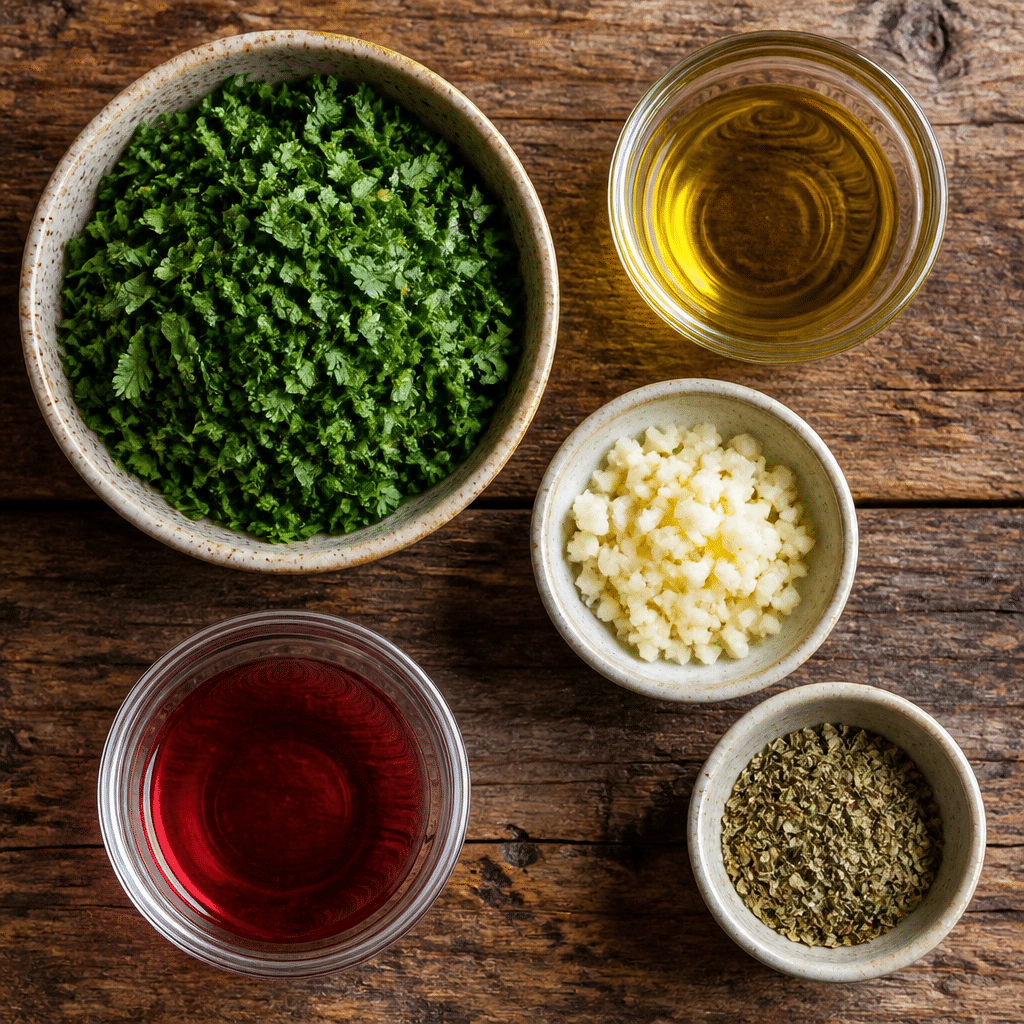
1 cup fresh flat-leaf parsley, finely chopped
4 garlic cloves, minced
1/2 cup extra virgin olive oil
3 tablespoons red wine vinegar
1 teaspoon dried oregano
1/2 teaspoon red pepper flakes
1/2 teaspoon salt
1/4 teaspoon black pepper, optional
Directions
- Finely chop the parsley and mince the garlic, either by hand or with a few quick pulses in a food processor.
- Combine the parsley, garlic, oregano, red pepper flakes, and salt in a medium bowl.
- Add the red wine vinegar and stir to combine with the herbs and aromatics.
- Slowly pour in the olive oil while stirring, until the mixture is well combined and slightly emulsified.
- Taste and adjust seasoning with more salt, vinegar, or red pepper flakes as desired.
- Let the chimichurri sauce rest at room temperature for at least 20 minutes before serving to let the flavors meld.
- Store in an airtight container in the refrigerator, stirring before each use.
What Is Chimichurri Sauce?
Chimichurri sauce is an uncooked, herb-based condiment that originated in Argentina, where it’s traditionally served alongside grilled meats like asado. At its core, it’s a simple mixture of finely chopped parsley, garlic, olive oil, red wine vinegar, and a touch of dried oregano. Some versions include red pepper flakes for a gentle kick, while others keep things mild and herbaceous.
Unlike a marinade, chimichurri sauce is usually added after cooking, either brushed onto the meat right off the grill or served on the side as a dipping sauce. This timing matters because it preserves the bright, fresh flavor of the parsley and garlic rather than mellowing them with heat.
The name itself has murky origins, with several folk stories claiming to explain where ‘chimichurri’ comes from. Regardless of the etymology, what matters most is the taste: tangy, garlicky, herbaceous, and just a little spicy, all wrapped up in glossy olive oil.
Chimichurri Sauce Vs. Other Green Sauces
If you’ve spent time in the condiment aisle or scrolled through food blogs, you’ve probably noticed chimichurri sauce gets compared to a few other green sauces. Pesto, salsa verde, and chimichurri all share a leafy, herb-forward base, but they couldn’t be more different in flavor and use.
Pesto relies on basil, pine nuts, and Parmesan cheese blended into a creamy paste, making it rich and nutty. Chimichurri sauce, on the other hand, skips the cheese and nuts entirely, leaning instead on vinegar and olive oil for its bright, acidic punch.
Salsa verde, depending on whether you mean the Mexican or Italian version, might include tomatillos or capers and anchovies. Chimichurri stays simpler and rawer in texture, with visible flecks of parsley and garlic rather than a smooth puree. That coarser, chunkier texture is actually part of the appeal — it clings to grilled meat without hiding the char and smoke underneath.
Key Ingredients For Chimichurri Sauce
Great chimichurri sauce comes down to a handful of quality ingredients rather than a long list. Fresh flat-leaf parsley forms the backbone, providing that grassy, slightly peppery flavor that makes the sauce so distinctive. Curly parsley works in a pinch, but flat-leaf holds its flavor and texture better.
Garlic cloves, minced fine or pressed, bring the pungent bite that balances the acidity. Red wine vinegar supplies the tang, while extra virgin olive oil rounds everything out and carries the flavors. Dried oregano adds an earthy note, and a pinch of red pepper flakes brings gentle heat without overwhelming the herbs.
Choosing The Right Olive Oil
Since chimichurri sauce relies so heavily on olive oil, quality really does matter here. A good extra virgin olive oil brings its own fruity, peppery notes that support the parsley and garlic rather than fading into the background. Save the budget bottles for everyday cooking and reach for something a bit more flavorful when making this sauce.
How To Make Chimichurri Sauce
Making chimichurri sauce at home is refreshingly low-effort. There’s no cooking involved, just chopping, mixing, and a short rest so the flavors can meld. Start by finely chopping the parsley and garlic, either by hand or with a quick pulse in a food processor, though many purists prefer the rustic texture that comes from a knife.
Once the herbs and garlic are ready, whisk them together with the vinegar, oregano, salt, and red pepper flakes in a bowl. Slowly stream in the olive oil while stirring, which helps the sauce come together without turning it into a thick paste.
The final step is the easiest and most important: let the chimichurri sauce sit at room temperature for at least twenty minutes before serving. This resting period allows the garlic and vinegar to mellow slightly and the flavors to fully combine, giving you a more balanced sauce than one served immediately after mixing.
Regional Variations: Argentina, Uruguay, And Beyond
Chimichurri sauce is often labeled as strictly Argentine, but its roots and popularity spread across other South American countries too. In Uruguay, chimichurri sauce tends to be slightly milder, with less garlic and a heavier reliance on parsley and oil, often served alongside asado just like in Argentina.
Some Argentine regions add a touch of smoked paprika or a splash of lemon juice in place of some of the vinegar, creating a slightly different tang. Home cooks in the United States have also put their own spin on things, sometimes adding cilantro, a hint of lime, or extra red pepper flakes to give the sauce more heat.
There’s also ‘chimichurri rojo,’ a red version made with additional chili peppers or tomato paste, popular in some Argentine steakhouses as an alternative to the classic green sauce. No matter which version you try, the core idea stays the same: bright, herby, and built to complement grilled meat.
Serving Suggestions: What To Pair With Chimichurri Sauce
Chimichurri sauce shines brightest alongside grilled or roasted meats, but its uses go well beyond steak night. Spoon it over a Best Beef Brisket Recipe: How to Perfectly Cook a Juicy Brisket Every Time for a fresh, tangy contrast to the rich, smoky meat. The acidity in the sauce cuts through the fattiness beautifully, brightening every bite.
It’s just as delicious drizzled over Gyro Meat Recipes: How to Make Juicy, Flavorful Gyro Meat at Home, adding a herby, garlicky punch that pairs surprisingly well with warm pita and creamy tzatziki. If poultry is more your speed, try spooning chimichurri sauce over Best Chicken Thighs Recipes: 10 Delicious Ways to Cook Them right after they come off the grill.
Beyond meat, chimichurri sauce works wonderfully on roasted potatoes, grilled vegetables, scrambled eggs, or even as a zesty topping for a simple green salad. A spoonful stirred into rice or mixed with mayonnaise for a quick sandwich spread are both great ways to use up extra sauce.
How To Store It
Chimichurri sauce keeps well, which makes it a fantastic make-ahead condiment for busy weeks or weekend cookouts. A little planning means you’ll always have a jar ready to brighten up whatever you’re cooking.
Refrigerator Storage
Store chimichurri sauce in an airtight container or jar in the refrigerator, where it will stay fresh for up to one week. The olive oil may solidify slightly when chilled, so let the sauce sit at room temperature for about ten minutes and give it a good stir before serving.
Can You Freeze Chimichurri Sauce?
Yes, chimichurri sauce freezes surprisingly well thanks to its high oil content. Pour it into an ice cube tray, freeze until solid, then transfer the cubes to a freezer bag for up to three months. Thaw a cube or two whenever you need a quick burst of flavor for a weeknight dinner.
Common Mistakes To Avoid When Making Chimichurri Sauce
Even a simple recipe like chimichurri sauce has a few pitfalls worth avoiding. One common mistake is using a food processor to puree the ingredients into a smooth paste, this destroys the rustic texture that makes the sauce so appealing and can also make it taste bitter from over-processed garlic.
Another mistake is skipping the resting time. Chimichurri sauce needs at least twenty minutes for the flavors to meld together properly; serving it immediately after mixing often results in a sauce that tastes sharp and disjointed rather than balanced.
Using bottled lemon juice instead of good vinegar, skimping on fresh parsley, or adding too much salt too early are other easy missteps. Finally, don’t serve chimichurri sauce straight from the fridge — cold olive oil turns cloudy and dulls the vibrant flavor that makes this sauce so special.
Nutrition And Health Benefits
Beyond its bold flavor, chimichurri sauce brings some genuine nutritional perks to the table. Parsley is rich in vitamin K and vitamin C, while garlic has long been praised for its potential heart health benefits. The extra virgin olive oil used as the base is a source of heart-healthy monounsaturated fats.
Because chimichurri sauce is naturally dairy-free, gluten-free, and low in carbohydrates, it fits easily into a wide range of eating styles, from Mediterranean-inspired diets to low-carb meal plans. A single serving is relatively low in calories, especially compared to creamy sauces or dressings.
That said, moderation still matters since the sauce is oil-based and calorie-dense per tablespoon. Using chimichurri sauce as a flavorful finishing touch rather than a heavy pour keeps things balanced while still delivering big, bright flavor.
FAQ
What Is Chimichurri Sauce Made Of?
Chimichurri sauce is made with fresh parsley, garlic, olive oil, red wine vinegar, oregano, salt, and red pepper flakes.
How Long Does Chimichurri Sauce Last In The Fridge?
Stored in an airtight container, chimichurri sauce stays fresh in the refrigerator for up to one week.
Can You Freeze Chimichurri Sauce?
Yes, freeze chimichurri sauce in ice cube trays, then transfer the cubes to a freezer bag for up to three months.
What Is The Difference Between Chimichurri And Pesto?
Chimichurri sauce uses parsley, garlic, oil, and vinegar, while pesto includes basil, pine nuts, and cheese for a creamier texture.
What Does Chimichurri Sauce Taste Like?
Chimichurri sauce tastes tangy, garlicky, and herbaceous, with bright acidity and a gentle hint of heat.
Loved this recipe? Follow along and save your favorites on Pinterest for more delicious ideas!