
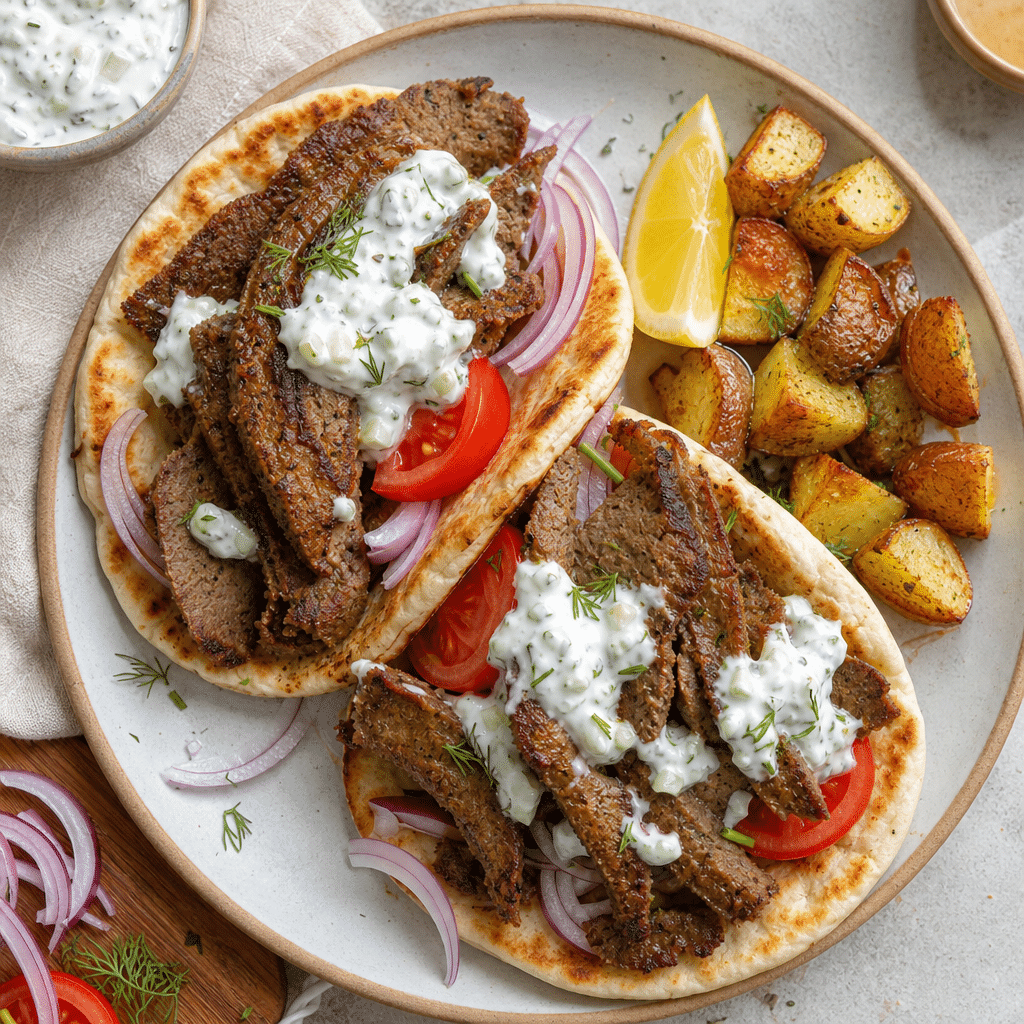
If there’s one dish that turns a weeknight dinner into a mini vacation, it’s a plate piled high with warm pita, crisp veggies, and thin slices of seasoned meat carved straight off the spit. That’s the magic behind gyro meat recipes, and the good news is you don’t need a rotisserie or a Greek restaurant down the street to enjoy it.
With a food processor, a loaf pan, and a handful of pantry spices, you can recreate that same juicy, herb-packed flavor right in your own kitchen. This guide walks you through everything from the history of gyro meat to a foolproof homemade recipe, plus tips on cooking methods, storage, and serving. Whether you’re meal prepping for the week or hosting a casual dinner party, these gyro meat recipes will become a regular part of your rotation.
4
servings30
minutes40
minutes300
kcalIngredients
1 lb ground lamb
1 lb ground beef (80/20 blend)
1 small yellow onion, grated and squeezed dry
4 cloves garlic, minced
1 tablespoon dried oregano
1 teaspoon dried marjoram
1 teaspoon ground cumin
1 teaspoon dried thyme
2 teaspoons kosher salt
1 teaspoon black pepper
1/2 teaspoon smoked paprika (optional)
Directions
- Preheat oven to 325°F. Line a 9×5-inch loaf pan with parchment paper and set a larger roasting pan on the rack below to hold a water bath.
- Grate the onion, then wrap it in a paper towel or cheesecloth and squeeze out as much liquid as possible.
- In a food processor, combine the grated onion, garlic, oregano, marjoram, cumin, thyme, salt, pepper, and smoked paprika. Pulse until it forms a rough paste.
- Add the ground lamb and beef to the food processor in two batches, pulsing after each addition until the mixture becomes smooth, dense, and slightly sticky, about 1 to 2 minutes total.
- Press the meat mixture firmly into the prepared loaf pan, smoothing the top with a spatula and tapping the pan on the counter to remove air pockets.
- Place the loaf pan inside the larger roasting pan and carefully pour hot water into the roasting pan until it reaches halfway up the sides of the loaf pan.
- Bake for 60 to 75 minutes, or until an instant-read thermometer inserted in the center reads 165°F.
- Remove the loaf pan from the water bath and let it rest for 10 minutes, then broil for 3 to 5 minutes until the top is browned.
- Let the meat cool slightly, then slice thinly with a sharp knife. For extra crispy edges, sear the slices in a hot skillet for 1 to 2 minutes per side before serving.
The Story Behind Gyro Meat: A Bite Of History
Gyro meat traces its roots back to the rotating spit cooking traditions of the Eastern Mediterranean, where seasoned meat was stacked in layers and slow-roasted on a vertical rotisserie. The word ‘gyro’ comes from the Greek word for ‘turn,’ a nod to how the meat rotates as it cooks. While the technique shares DNA with Turkish döner kebab and Middle Eastern shawarma, Greek immigrants popularized the gyro sandwich in American cities during the mid-20th century, especially in Chicago and New York. Today, gyro meat recipes have become a staple of American comfort food, showing up everywhere from food trucks to family dinner tables.
Part of the appeal is how well the dish fits into a broader pattern of Mediterranean-style eating, which emphasizes lean proteins, fresh herbs, and vegetables. If you’re curious about that bigger picture, The Mediterranean Diet: A Complete Guide to Eating Well the American Way is a great place to start. Traditional gyro meat is made from a blend of lamb and beef, pressed onto a spit and shaved thin as it cooks. Since most home kitchens don’t have a vertical rotisserie, this recipe uses a clever workaround: a food processor and a loaf pan baked in a water bath, which mimics that same dense, sliceable texture without any special equipment.
Key Ingredients For Homemade Gyro Meat Recipes
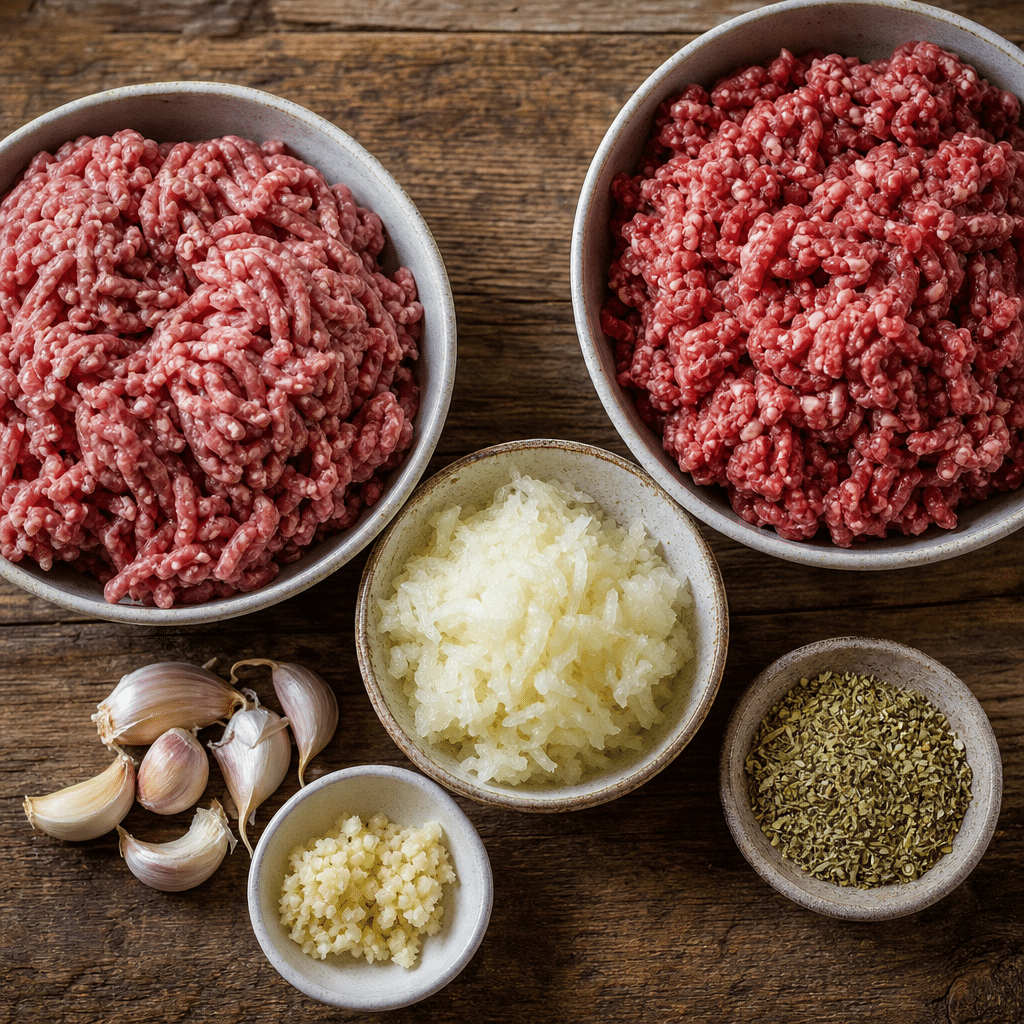
The beauty of good gyro meat recipes lies in a short ingredient list that packs a serious flavor punch. You likely already have most of these spices in your pantry, and the meat is easy to find at any grocery store.
Choosing The Right Meat
Classic gyro meat recipes call for a mix of ground lamb and ground beef, usually in equal parts. Lamb brings richness and that distinct savory flavor associated with Mediterranean cooking, while beef adds structure and a milder taste that balances things out. If you’re not a fan of lamb, you can swap in all ground beef, though the flavor will be less traditional. Look for beef with at least 15 to 20 percent fat content, since lean meat tends to dry out during the long, low bake required to hold everything together.
Whichever meat you choose, buy the freshest ground meat you can find, and consider asking your butcher to grind it fresh that day. Freshly ground meat holds moisture better and produces a smoother, more cohesive texture once it’s processed.
The Signature Spice Blend
What makes gyro meat recipes taste unmistakably Mediterranean is the spice blend: dried oregano, marjoram, ground cumin, and thyme, along with plenty of garlic and onion. Oregano and marjoram provide that earthy, slightly sweet herbal backbone, while cumin adds warmth and depth. Kosher salt and black pepper round things out, and a small amount of grated onion does double duty, adding moisture and helping bind the meat mixture together. Some cooks also add a pinch of smoked paprika for extra color and a subtle smoky note.
How To Make Gyro Meat At Home
Making gyro meat at home might sound intimidating, but the process is actually quite simple once you understand the goal: creating a smooth, tightly bound meat mixture that slices cleanly, just like the meat you’d find shaved off a rotisserie. Start by grating an onion and squeezing out as much liquid as possible, since excess moisture can make the mixture too loose. From there, everything goes into a food processor: garlic, spices, and the grated onion first, followed by the ground meat in small batches.
The key step that sets gyro meat recipes apart from a typical meatloaf is processing the meat until it becomes almost paste-like and slightly sticky to the touch. This emulsifying process is what gives the finished product its dense, deli-style texture instead of a crumbly, ground-beef texture. Once processed, the mixture is pressed firmly into a loaf pan and baked low and slow in a water bath, which helps it cook evenly without drying out or cracking. A quick broil at the end creates that beautifully browned, slightly crisp exterior that mimics the char you’d get from a vertical rotisserie.
Oven Vs. Stovetop Vs. Air Fryer: Which Method Wins?
While the oven and water-bath method produces the most authentic texture, it’s not the only way to approach gyro meat recipes. Depending on your schedule and equipment, you might prefer a faster or simpler technique.
Oven-Baked Gyro Meat
Baking gyro meat in a loaf pan set inside a water bath is the most traditional home method, and it produces the closest texture to what you’d find at a Greek restaurant. It takes longer, roughly 60 to 75 minutes, but the payoff is a firm, sliceable loaf that holds together beautifully.
Stovetop Skillet Method
If you’re short on time, you can skip the loaf pan entirely and cook the spiced meat mixture as thin patties or crumbles in a hot skillet. This stovetop version won’t slice into neat rounds, but it delivers the same bold, herby flavor in under 15 minutes, which is perfect for a quick weeknight dinner.
Air Fryer Gyro Meat
An air fryer is a fantastic middle ground between speed and texture. Shape the meat mixture into a small loaf or thick patties, then air fry at 375°F for about 18 to 22 minutes, flipping halfway through for even browning. The circulating hot air crisps the exterior nicely while keeping the inside juicy, and cleanup is a breeze. If you love experimenting with this appliance, you’ll find plenty of inspiration in 50+ Best Air Fryer Recipes to Make Tonight (Easy, Healthy, and Crispy) for other quick dinners.
Tips For The Best Gyro Meat Every Time
A few small details make a big difference between good and great gyro meat recipes. First, don’t skip squeezing the liquid out of the grated onion. Too much moisture leads to a loaf that falls apart when sliced. Second, resist the urge to overprocess the meat once you’ve reached that sticky, paste-like consistency. Overworking it further can make the texture rubbery instead of pleasantly dense. Third, always use an instant-read thermometer rather than guessing on cook time.
Gyro meat is done at an internal temperature of 165°F, and pulling it too early results in a mushy center. Finally, let the loaf rest for at least 10 minutes before slicing. This allows the juices to redistribute, so your slices stay moist instead of leaking liquid all over the cutting board.
Troubleshooting Common Gyro Meat Problems
If your gyro meat crumbles when sliced, it likely wasn’t processed long enough to become cohesive, or it was sliced while still too warm. Let it cool for a few extra minutes and use a sharp knife or electric knife for cleaner cuts. If the flavor tastes flat, it may need more salt than you’d use in a typical recipe. Because the loaf is sliced thin, seasoning needs to be slightly more assertive than usual to come through in every bite. And if the top cracks while baking, your oven temperature might be running too hot. Lowering it slightly and relying on the water bath will help the meat cook more gently and evenly.
Serving Suggestions And Variations
Once you’ve mastered the base recipe, the fun part is figuring out how to serve it. Traditional gyro meat recipes are piled into warm pita, but there are plenty of other delicious directions to take things.
Classic Toppings And Sauces
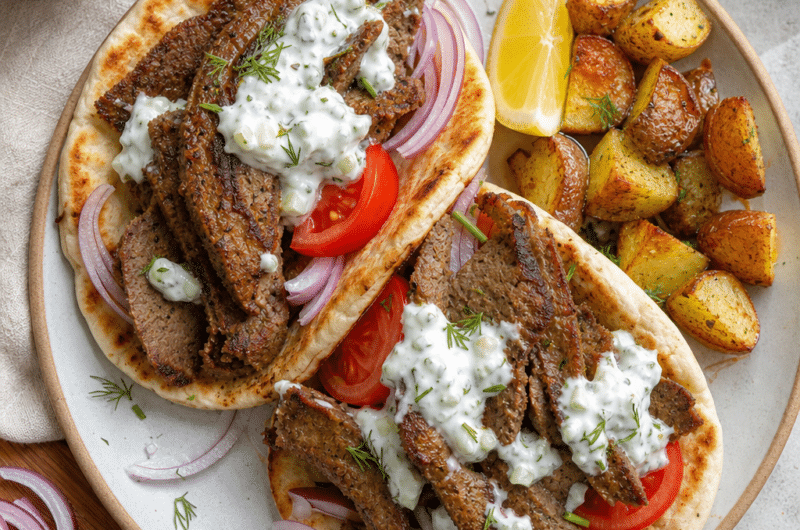
The classic combination is sliced gyro meat, tomatoes, red onion, and shredded lettuce, all wrapped in warm pita bread and drizzled generously with tzatziki sauce. That cool, garlicky yogurt sauce is the perfect contrast to the warm, well-seasoned meat. Feel free to add crumbled feta, sliced cucumbers, or a handful of Kalamata olives for extra Mediterranean flair. A squeeze of fresh lemon juice right before serving brightens up every bite.
Bowl-Style And Low-Carb Options
If you’re skipping bread, gyro meat also makes a fantastic bowl base over rice, quinoa, or a simple green salad. Layer it with cucumber, tomato, red onion, and a dollop of tzatziki for a meal that’s just as satisfying without the pita. This bowl-style approach isn’t so different from other grain bowl favorites. If you enjoy building meals this way, The Best Chicken Rice Bowl Recipe for a Delicious Meal at Home offers another easy formula you can adapt with gyro meat instead of chicken.
Vegetarian And Vegan Alternatives
For a plant-based take on gyro flavor, the same spice blend works beautifully on a mixture of mashed chickpeas, lentils, or plant-based ground meat substitutes. Press the mixture into a loaf pan just like the traditional version and bake until firm. Mushrooms are another great option, since their meaty texture holds up well when marinated in the same oregano, cumin, and garlic blend and roasted until caramelized. Either swap lets you enjoy the same familiar flavors of classic gyro meat recipes without any meat at all.
Storage, Freezing, And Meal Prep Tips
Gyro meat recipes are ideal for meal prep since the flavor actually improves after a day in the fridge. Once cooled, store sliced or whole gyro meat in an airtight container for up to 4 days. For longer storage, wrap individual portions tightly in plastic wrap, then place them in a freezer-safe bag or container. Frozen gyro meat keeps well for up to 3 months without losing much flavor or texture.
To reheat, a hot skillet works best for restoring that slightly crispy edge, though a quick pass in the microwave also works in a pinch. Avoid reheating in the oven for too long, since gyro meat can dry out if warmed at a low temperature for an extended period. If you’re planning ahead for the week, consider making a double batch and freezing half before cooking. Raw, shaped loaves freeze just as well as cooked ones, so you can bake a fresh batch of gyro meat whenever the craving hits without starting from scratch.
Nutritional Breakdown Of Gyro Meat
Homemade gyro meat recipes give you far more control over nutrition than takeout versions, which are often loaded with extra sodium and preservatives. A typical serving made from a lamb and beef blend comes in around 300 to 350 calories, depending on portion size and fat content. Each serving also delivers a solid dose of protein, generally between 20 and 25 grams, which makes it a satisfying option for a main meal.
Using leaner beef or trimming visible fat before grinding can lower the calorie count further if that’s a priority. Pairing your gyro meat with vegetable-forward sides, like a simple cucumber salad or a big pile of lettuce and tomato, helps balance the richness of the meat while adding fiber and micronutrients. This kind of balanced plate fits neatly into a broader Mediterranean-style eating pattern, which research consistently links to heart health and long-term wellness.
FAQ
What Cuts Of Meat Work Best In Gyro Meat Recipes?
A blend of ground lamb and ground beef with at least 15 to 20 percent fat gives the most authentic flavor and texture. Leaner meat can dry out during baking.
Can I Make Gyro Meat Without A Rotisserie?
Yes. Process seasoned meat into a smooth paste and bake it in a loaf pan with a water bath to recreate the dense, sliceable texture without special equipment.
Why Does My Homemade Gyro Meat Fall Apart When I Slice It?
The meat wasn’t processed long enough to become fully cohesive, or it was sliced while too warm. Let it cool slightly before slicing with a sharp or electric knife.
Is Gyro Meat Gluten-free?
The seasoned meat itself is naturally gluten-free since it’s made from ground meat, onion, garlic, and dried spices. Check pita bread and sauces for gluten.
How Long Does Homemade Gyro Meat Last In The Fridge?
Stored in an airtight container, homemade gyro meat stays fresh for up to 4 days in the refrigerator, or up to 3 months in the freezer.
Loved this recipe? Follow along and save your favorites on Pinterest for more delicious ideas!