
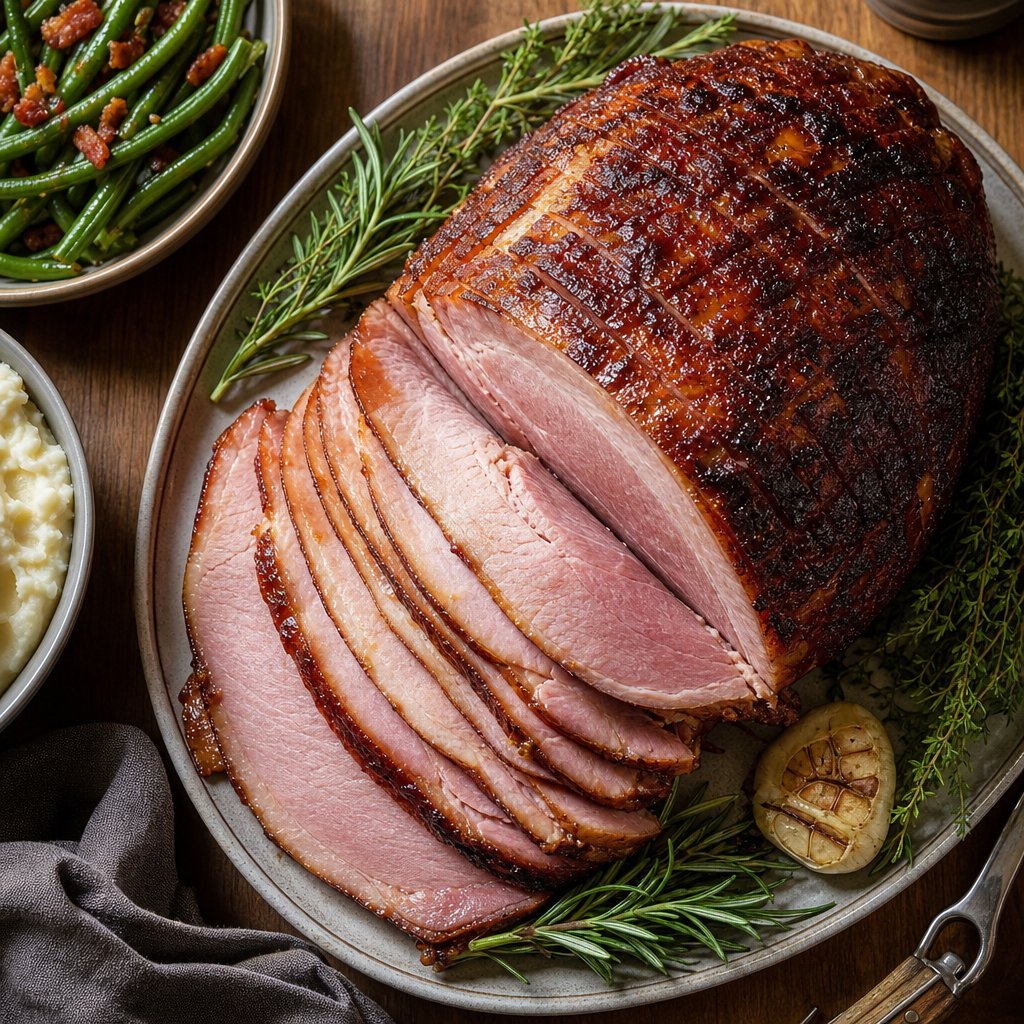
Texas style smoked ham takes the holiday centerpiece most cooks already know and gives it a bolder backbone: a coarse black pepper bark, real post oak smoke, and a glaze that leans spicy instead of purely sweet. This version uses a bone-in, spiral-cut fully cooked ham, smokes it low and slow at 225°F, and finishes with a chipotle-orange glaze brushed on in the last hour so it caramelizes without burning. The whole process, from rub to rest, takes about 3 hours and 20 minutes and serves 12 people, making it a realistic option for a holiday table without tying up your oven. If you are mapping out a full holiday spread, this ham fits naturally into the plan laid out in our Christmas Dinner Menu Ideas: A Stress-Free Plan From Appetizers to Dessert, where it can anchor the main course while sides and dessert come together around it. What makes this recipe specifically Texas style is the wood and the pepper, not just the state name attached to it.
Texas Style Smoked Ham: A Spicy, Post Oak-Smoked Centerpiece Ready in 3 Hours
Course: DinnerCuisine: Texas-style AmericanDifficulty: Medium12
servings20
minutes3
hours320
kcalIngredients
1 (8 to 9-pound) bone-in, spiral-cut fully cooked ham
1/4 cup coarse black pepper
2 tablespoons kosher salt
1 tablespoon garlic powder
1 tablespoon smoked paprika
1/2 cup apple cider, for spritzing
1/2 cup packed brown sugar
1/4 cup honey
2 tablespoons Dijon mustard
1 tablespoon apple cider vinegar
2 chipotle peppers in adobo sauce, minced
1 tablespoon adobo sauce (from the chipotle can)
1/4 cup orange juice
2 tablespoons unsalted butter
Directions
- Remove the ham from the fridge 45 minutes before smoking so it comes closer to room temperature, which helps it heat more evenly.
- Preheat a smoker to 225°F using post oak or a mix of post oak and pecan wood for a bold, slightly sweet smoke flavor.
- Pat the ham dry, then mix the black pepper, kosher salt, garlic powder, and smoked paprika in a small bowl. Rub this mixture generously over the entire surface, pressing it into the gaps between the spiral slices.
- Place the ham cut-side down in a disposable foil pan or directly on the smoker grate, fat side up. Insert a probe thermometer into the thickest part of the ham, away from the bone.
- Smoke for about 2 hours, spritzing with apple cider every 30 minutes to keep the surface moist and help the bark form.
- While the ham smokes, make the glaze: combine brown sugar, honey, Dijon mustard, apple cider vinegar, chipotle peppers, adobo sauce, orange juice, and butter in a small saucepan over medium-low heat. Simmer 5 minutes, stirring, until glossy and slightly thickened.
- Once the ham reaches an internal temperature of 130°F (roughly after 2 hours), begin brushing it generously with glaze every 15 to 20 minutes.
- Continue smoking until the internal temperature reaches 140°F, about 45 minutes to 1 hour more, brushing with the remaining glaze during the last two applications so it caramelizes rather than burns.
- Remove the ham from the smoker, tent loosely with foil, and rest for 15 minutes before carving along the spiral cuts.
- Serve warm with any extra glaze on the side for drizzling.
Notes
- Use a probe thermometer rather than timing alone; precooked hams only need to reach 140°F internally, so overshooting leads to dryness. If your smoker runs hot, move the ham to the cooler side of the grate once the glaze starts to darken. Leftover glaze keeps in the fridge for up to a week and works well on grilled chicken too.
Why This Texas Style Smoked Ham Works
This recipe works because it treats a fully cooked ham as a smoking project, not just a reheating job, so you get real bark and real smoke flavor instead of a glazed oven ham with a hint of smokiness. Starting with a precooked ham means you are only smoking to an internal temperature of 140°F, which keeps the total cook time to about 2 hours and 45 minutes of active smoking instead of the 5 to 6 hours a raw fresh ham would need.
What Makes This Ham Texas Style
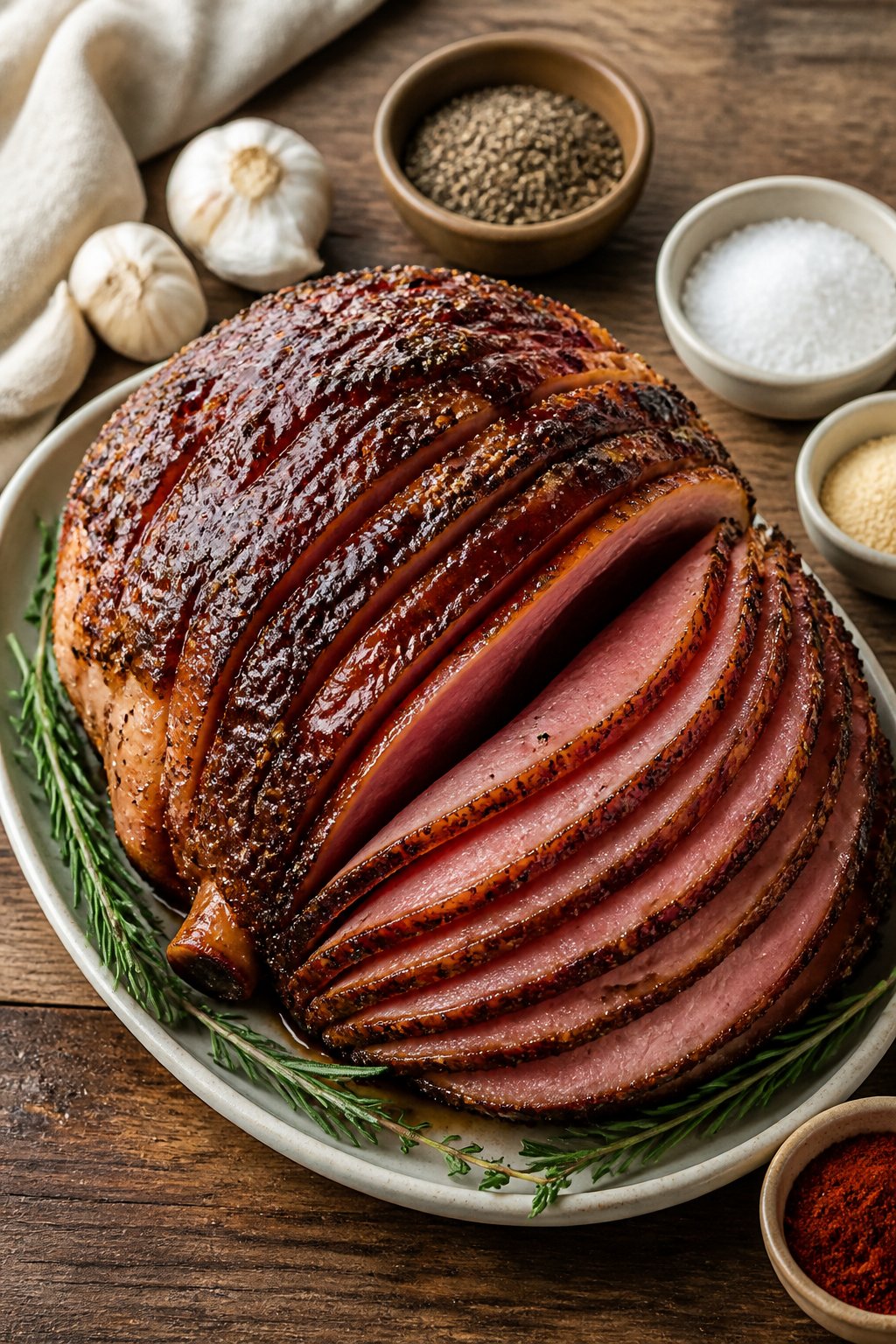
The Texas identity here comes from the wood and the rub, not from any single ingredient unique to the state. Post oak is the backbone wood of Central Texas barbecue, and using it here, instead of the fruitwoods many ham recipes call for, gives the meat a cleaner, more savory smoke flavor that pairs with the coarse black pepper bark the way Texas brisket does. A heavy hand with black pepper, matched with a smaller amount of salt, is the other signature: it builds a dark, slightly spicy crust instead of the sweet, sticky bark you get from sugar-forward rubs alone.
Loved this recipe? Follow along and save your favorites on Pinterest for more delicious ideas!