
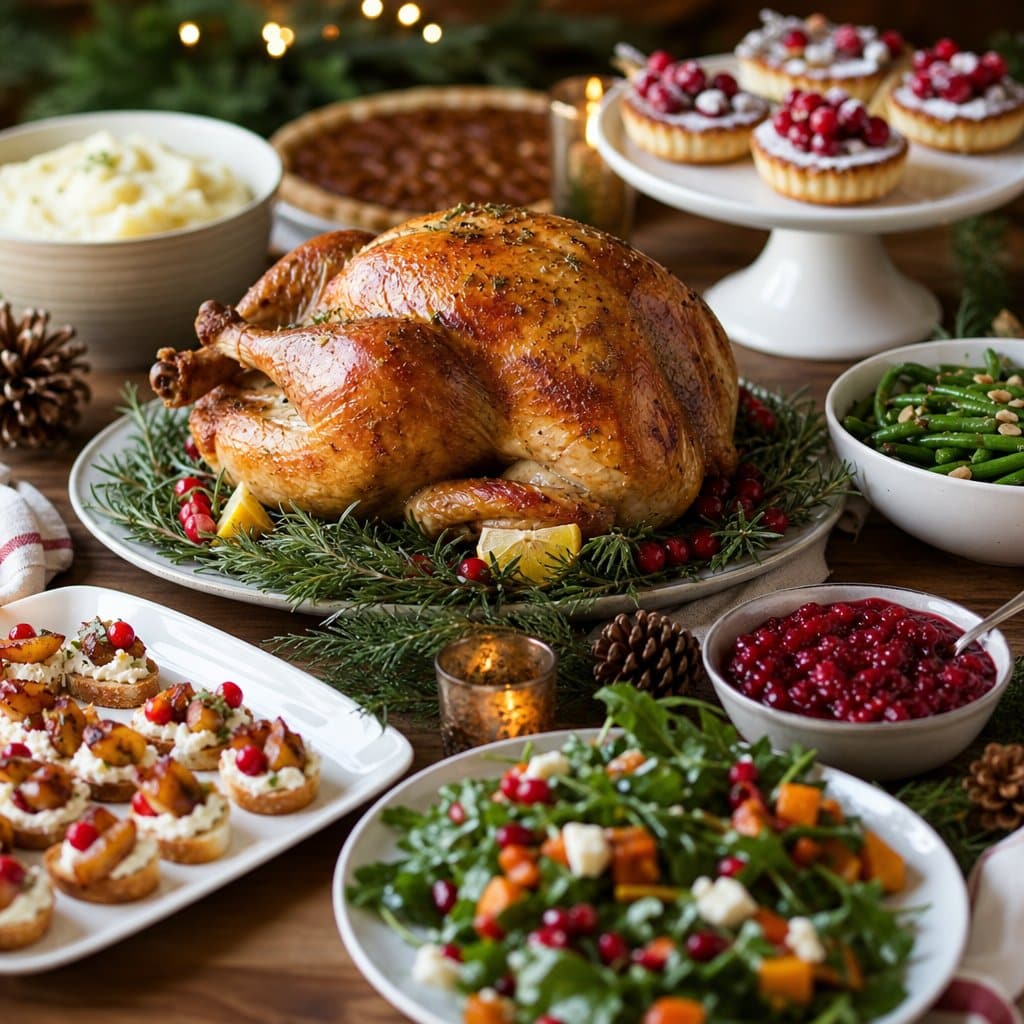
Good christmas dinner menu ideas do more than list pretty dishes, they map out what cooks when, what can wait in the fridge, and what actually belongs on the same table. A balanced holiday menu usually needs one main, two to three sides, a starter, bread, and dessert, scaled to the number of guests at the table. This guide walks through a full menu built for 8 to 10 people, plus notes on scaling down for a small table of 2 to 4 or up for a crowd of 12 or more.
You will also get an hour-by-hour cooking timeline so the turkey, the sides, and the bread all land hot at the same time, along with make-ahead steps, common mistakes, and drink pairings. Whether you are hosting your first Christmas dinner or just tired of a kitchen pileup at 4 p.m., these christmas dinner menu ideas are built to keep the oven, the stovetop, and your schedule in sync.
Why These Christmas Dinner Menu Ideas Work
This menu works because every dish is chosen for oven or stovetop compatibility, not just flavor. A roast main that rests for 20 to 30 minutes frees up oven space for casseroles and rolls, so nothing fights for heat at the same time. Sides are split between stovetop skillets, make-ahead casseroles, and one oven dish, which keeps a single oven from becoming a bottleneck. Portions are planned at roughly 1 pound of main protein per 2 to 3 guests, 1 cup of starch side per person, and 1/2 cup of vegetable side per person, which covers typical appetites with modest leftovers.
Building christmas dinner menu ideas around these ratios, rather than around a Pinterest board, is what actually keeps the day calm.
Key Dishes And Smart Swaps For The Main Course And Sides
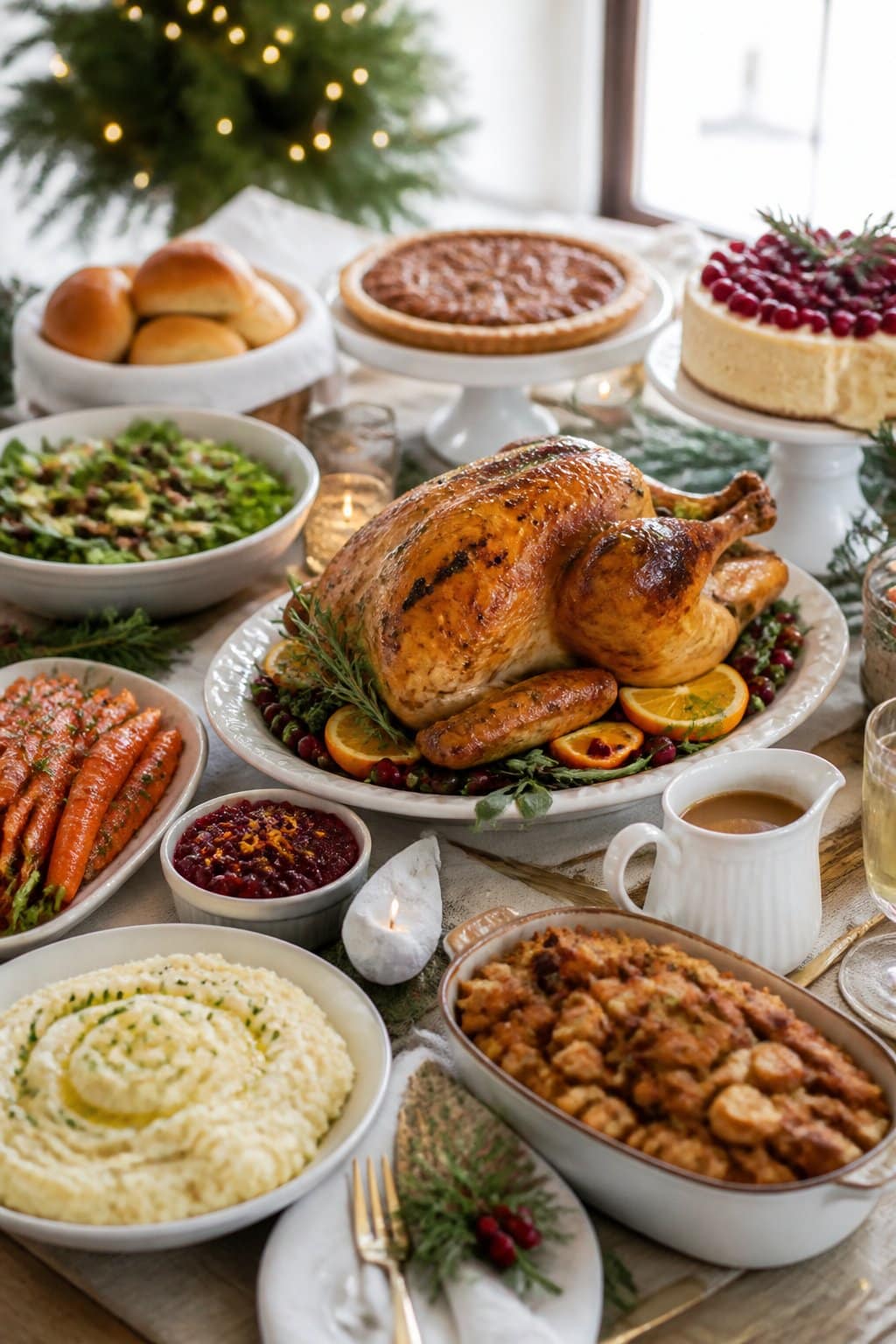
The main course drives the whole timeline, so pick one centerpiece and build everything else around its cook time. A bone-in spiral ham (10 to 12 pounds) needs about 15 to 18 minutes per pound at 325°F until it reaches 140°F internally, since it is already fully cooked and just needs warming. A whole turkey (12 to 14 pounds) needs roughly 3 to 3.5 hours at 325°F until the thigh reads 165°F, while a beef tenderloin (4 to 5 pounds) roasts in 45 to 60 minutes at 425°F to a medium-rare 130 to 135°F.
Swap ham for turkey if you want more servings per dollar, or swap either for a rack of lamb if your table prefers a richer, gamier flavor. For sides, a sweet potato casserole and a cornbread dressing both hold heat well after baking, which makes them ideal make-ahead partners for a busy oven; try the Texas Pecan Sweet Potato Casserole or Candied Yams with Pecans for a sweet side, and keep at least one green vegetable, like roasted Brussels sprouts or green beans, to balance the richer dishes on the table.
Step-by-step: An Hour-by-hour Cooking Timeline For Christmas Day
A realistic timeline starts the morning of, assuming dinner is served at 4 p.m. and most sides were prepped the day before. At 9 a.m., take the main protein out of the fridge to come closer to room temperature for 30 to 45 minutes before roasting, which helps it cook more evenly. By 10 a.m., the main goes into the oven; a turkey or ham needs that early start given its multi-hour cook time, while a tenderloin can go in later since it only needs about an hour.
Around 1:30 p.m., start reheating make-ahead casseroles at 350°F for 25 to 30 minutes while the main rests, and use the stovetop for any skillet sides in the last 30 minutes before serving. At 3:30 p.m., pull the main, tent it with foil, and let it rest 20 to 30 minutes so the juices redistribute; this resting window is exactly when rolls get a final warm-through at 300°F for 8 to 10 minutes. Serving at 4 p.m. means everything, from the roast to the bread, lands on the table within the same 10-minute window instead of in staggered batches.
Variations On The Classic Christmas Menu
The right variation depends on your table size, dietary needs, or regional taste, and each one changes quantities or dishes without changing the overall timeline logic above.
Small Menu For 2 To 4 People
Scale down to a 3 to 4 pound ham or a 2-pound pork loin, two sides instead of four, and skip the extra bread course to avoid excess leftovers. A smaller main also cooks faster, so shift the whole timeline back by 2 to 3 hours.
Big Crowd Menu For 12 Or More
Plan on two mains, such as a turkey plus a ham, so guests can choose, and double at least one starchy side and one green side. Rent or borrow a second oven or a slow cooker for one casserole to free up oven space during peak cooking hours.
Regional And Dietary Swaps
A Texas-style Christmas swaps classic stuffing for a smoky cornbread dressing like the Texas Cornbread Dressing, while a vegetarian menu centers on a stuffed squash or mushroom Wellington with the same side dishes minus any bacon-based recipes. For gluten-free tables, swap traditional stuffing for a rice or cornbread-based dressing and double-check that gravy is thickened with cornstarch instead of flour.
Make-ahead, Storage And Leftover Plan
Most casseroles and the cranberry sauce can be made 2 to 3 days ahead and reheated at 350°F for 20 to 30 minutes, which is the single biggest timesaver on Christmas Day. Store cooked meat, sides, and gravy in separate airtight containers in the fridge for up to 4 days, or freeze cooked meat and casseroles for up to 3 months. On December 26, repurpose turkey or ham into sandwiches, a pot pie, or a soup base; for more ideas on stretching leftovers without waste, see Leftover Recipe Transformations: The Ultimate Guide to Zero-Waste Cooking. Reheat sliced meat gently, covered, at 325°F with a splash of broth to keep it from drying out.
Common Mistakes And How To Fix Them
The most common mistake in planning christmas dinner menu ideas is choosing too many oven dishes for one oven window, which forces reheating and cold food. Fix this by limiting oven dishes to two at a time and shifting at least one side to the stovetop or a slow cooker. Another frequent error is undercooking the main past its target temperature out of fear of overcooking; always check with a meat thermometer rather than guessing by time alone, since oven variance can shift cook time by 20 minutes either direction.
Finally, skipping the rest period on roasted meat causes juices to run out onto the cutting board instead of staying in the meat, so always build in the full 20 to 30 minutes before carving.
What To Serve With Your Christmas Dinner Menu
Round out the table with a festive non-alcoholic option so every guest has something warm or fizzy to sip; the Holiday Mocktail Punch for Your Christmas Table: A Make-Ahead Cranberry Base Ready in 10 Minutes pairs especially well with ham or turkey since its cranberry base echoes the classic cranberry sauce on the plate. For dessert, keep it simple with one showstopper rather than three competing pies, since guests are usually full by the time dessert arrives. A light salad before the main, such as a shaved Brussels sprout dish, also helps balance a menu that leans heavy on starches and butter.
FAQ
How many dishes should a Christmas dinner menu include?
Plan for one main, two to three sides, a bread, and one dessert; more than that tends to overload the oven and the table without adding much enjoyment.
Can I make my whole Christmas menu ahead of time?
Casseroles, dressing, cranberry sauce, and desserts can be made 2 to 3 days ahead and reheated at 350°F; only the main protein and any skillet vegetables are best cooked the same day.
What is a good budget-friendly Christmas dinner menu?
A whole roasted chicken or a bone-in ham instead of a turkey or prime rib, paired with potatoes and one vegetable side, keeps cost per serving low while still feeling festive.
How much food do I need per guest for Christmas dinner?
Plan roughly 1/2 to 3/4 pound of main protein per guest, 1 cup of starchy side, and 1/2 cup of vegetable side, which allows for modest leftovers without overbuying.
What should I serve for a vegetarian Christmas dinner menu?
A stuffed squash, mushroom Wellington, or lentil roast works well as the centerpiece, paired with the same classic sides minus bacon or meat-based stock.
How far in advance should I start planning the Christmas menu?
Start a shopping list and timeline about one week ahead, and shop for the main protein and fresh produce 2 to 3 days before, since those have the shortest safe storage window.
Loved this recipe? Follow along and save your favorites on Pinterest for more delicious ideas!