
Vegan Caesar Salad That Actually Tastes Like the Classic
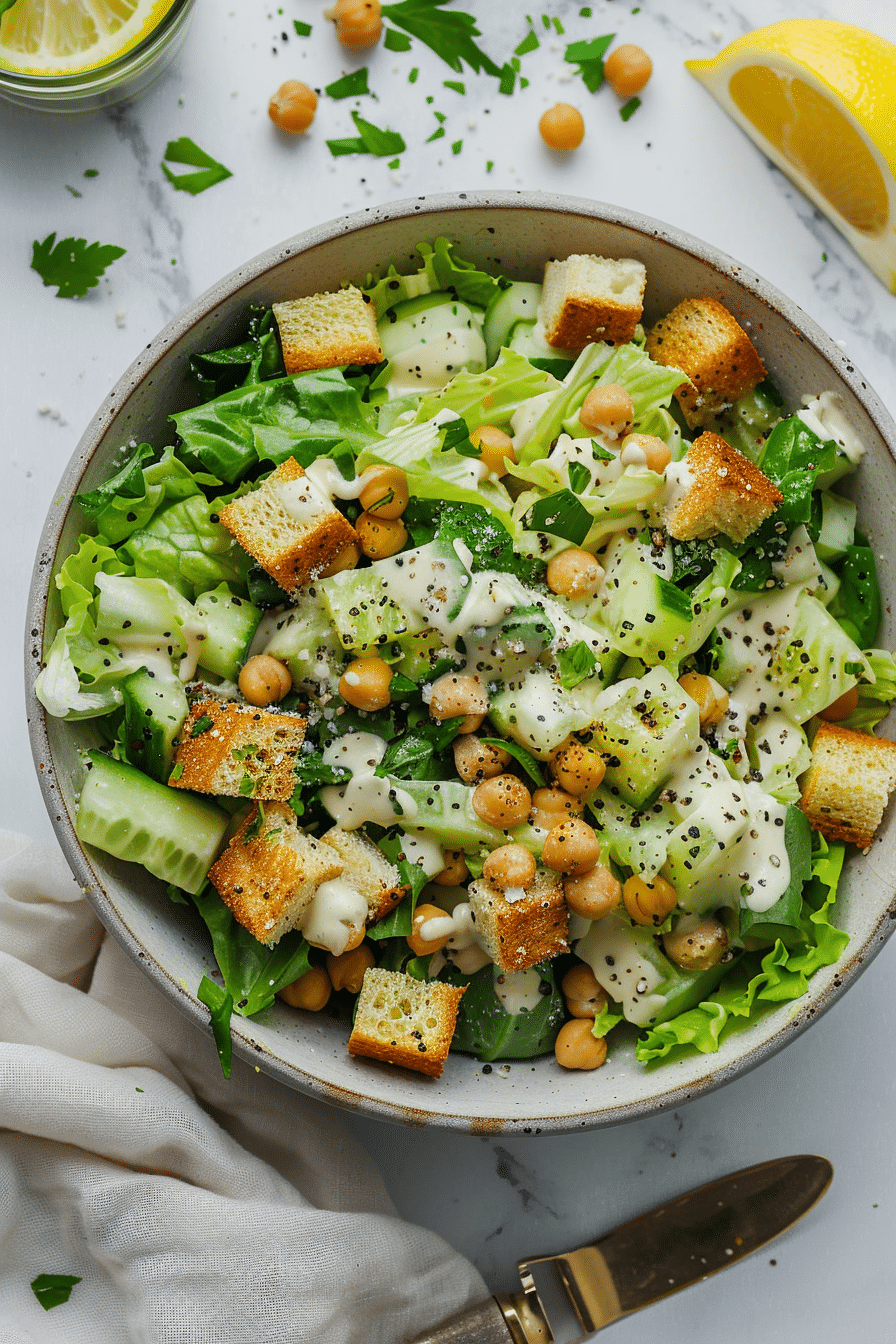
A great vegan Caesar salad should be crisp, creamy, tangy, and deeply satisfying, without feeling like a compromise. This vegan Caesar salad delivers exactly that: crunchy romaine, garlicky dairy-free dressing, and salty “Parmesan” with a savory kick that rivals the original. Because the base is so versatile, you can enjoy it as a light lunch, hearty dinner, or fresh side dish to balance richer mains. If you love fresh and vibrant meals, it pairs beautifully with other produce-forward recipes like this citrus fennel avocado winter salad.
In this guide, you’ll learn how to build a vegan Caesar salad from the lettuce up. We’ll cover how to choose and prep ingredients, craft a restaurant-quality vegan Caesar dressing, and layer in toppings that add protein, crunch, and flavor. You’ll also get tips for making it gluten-free, nut-free, and oil-free, plus meal-prep strategies, storage pointers, and creative variations. By the end, you’ll have a reliable go-to Caesar recipe that fits a plant-based lifestyle but still satisfies anyone who just wants a bold, classic-tasting salad.
Table of Contents
What Makes a Vegan Caesar Salad Work?
Recreating the Classic Caesar Flavor, Vegan-Style
Traditional Caesar relies on anchovies, egg yolks, and Parmesan cheese for its signature taste and richness. To create a vegan Caesar salad that truly hits the spot, you need to replicate those salty, umami, and creamy notes using plant-based ingredients. The key is to build layers of flavor rather than expecting one ingredient to do all the work. For saltiness and “sea” flavor, many recipes use capers, nori flakes, or miso. These add a briny depth that mimics anchovies without any fish.
Nutritional yeast and ground sunflower seeds or cashews can imitate the nutty, aged notes of Parmesan while also thickening the dressing. Meanwhile, plant-based mayonnaise or blended silken tofu provides the creamy body that eggs normally give. Because Caesar is all about balance, acidity from lemon juice and sometimes a splash of apple cider vinegar brightens the richness. Garlic and Dijon mustard add a spicy backbone, while freshly cracked black pepper ties everything together. When you combine these pieces carefully, your vegan Caesar dressing tastes familiar and indulgent, even for non-vegans.
The Anatomy of a Great Vegan Caesar Salad
A properly constructed vegan Caesar salad is far more than lettuce and dressing. It has contrasting textures, savory components, and optional protein to make it satisfying enough for a full meal. Start with super crisp, cold romaine hearts as the foundation. Their sturdy leaves hold up under creamy dressing without going limp. Then consider your crunch: homemade croutons using rustic sourdough or whole-grain bread add chew and texture, while roasted chickpeas or toasted seeds can replace or complement them for extra nutrition.
A sprinkle of vegan Parmesan, made from ground nuts or seeds, nutritional yeast, garlic powder, and salt, adds that sharp, savory hit with minimal effort. The dressing should cling slightly to the leaves without pooling at the bottom of the bowl, so you’ll want a fairly thick consistency. To turn a simple salad into a complete meal, add roasted tofu, tempeh “bacon,” or marinated white beans for protein. Finally, finish with fresh lemon, extra black pepper, and perhaps a drizzle of high-quality olive oil if it fits your diet. Every element should earn its place, contributing flavor, contrast, and satisfaction.
Print
Vegan Caesar Salad
Description
This vegan Caesar salad is crisp, creamy, tangy, and packed with classic Caesar flavor without dairy, eggs, or anchovies. Perfect as a healthy lunch, light dinner, or plant-based side dish.
Ingredients
2 romaine hearts, chopped
1 cup sourdough bread, cubed
1 cup chickpeas, drained and dried
1 tablespoon olive oil
1/2 teaspoon garlic powder
1/4 teaspoon smoked paprika
1/4 teaspoon salt
Freshly cracked black pepper
Lemon wedges for serving
For the vegan Caesar dressing
1/2 cup vegan mayonnaise or soaked cashews
2 tablespoons nutritional yeast
1 tablespoon Dijon mustard
1 tablespoon capers
2 tablespoons fresh lemon juice
1 garlic clove
1 teaspoon white miso or tamari
2 to 4 tablespoons water
1 tablespoon olive oil
1/4 teaspoon salt
1/4 teaspoon black pepper
For the vegan parmesan
1/4 cup cashews or sunflower seeds
1 tablespoon nutritional yeast
1/4 teaspoon garlic powder
1/4 teaspoon salt
Instructions
Preheat oven to 400°F (200°C).
Toss chickpeas with olive oil, garlic powder, smoked paprika, and salt.
Spread on a baking sheet and roast 20–25 minutes until crispy.
Toss bread cubes with a little olive oil and bake 10–12 minutes until golden and crunchy.
Blend dressing ingredients until smooth and creamy.
Pulse vegan parmesan ingredients in a food processor until crumbly.
Wash and dry romaine thoroughly and chop into bite-sized pieces.
Add romaine to a large bowl and toss lightly with vegan Caesar dressing.
Top with roasted chickpeas, croutons, vegan parmesan, and cracked black pepper.
Serve immediately with lemon wedges.
Notes
Use very cold and very dry romaine for the best crunch.
Add dressing gradually to avoid soggy lettuce.
For gluten-free Caesar salad use gluten-free bread or extra roasted chickpeas.
For nut-free dressing replace cashews with sunflower seeds.
Add roasted tofu or white beans for extra protein.
Choosing the Best Ingredients for Vegan Caesar Salad
Lettuce, Add-Ins, and Produce That Elevate the Salad
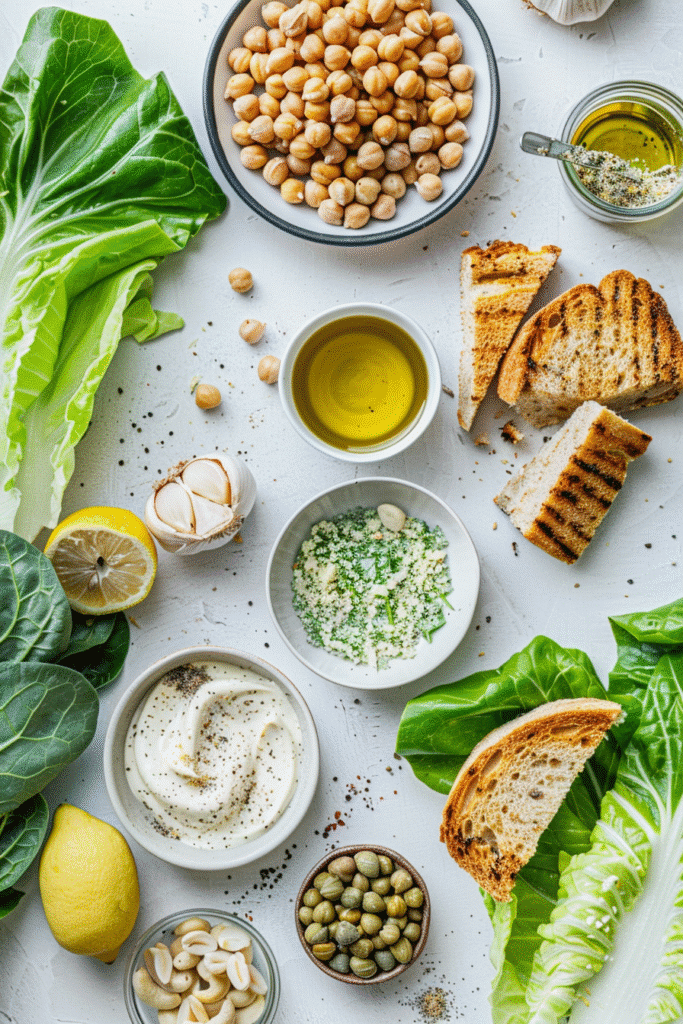
The foundation of a vegan Caesar salad begins with the right lettuce. Romaine hearts are classic because they stay crisp under dressing and offer plenty of crunch. Look for heads with tight, pale green centers and no slimy spots. Wash thoroughly, dry very well, and chill in the refrigerator before assembling the salad; cold lettuce creates a more refreshing bite and holds dressing better. If you want to mix textures, you can blend romaine with thinly sliced kale or shredded Brussels sprouts for extra nutrition and chew. For inspiration, you can also explore combinations like the greens used in this vibrant Brussels sprout salad recipe guide.
Beyond lettuce, consider what produce you want to incorporate. Cherry tomatoes, shaved fennel, and ribbons of carrot can lighten the salad and add color without overpowering the Caesar flavor. Avocado slices contribute creaminess and healthy fats that complement the dressing. For a more gourmet feel, try adding roasted asparagus, grilled artichokes, or charred corn kernels. While these additions aren’t traditional, they make the salad feel like a full, satisfying meal rather than just a side. Always keep the core flavor profile in mind; the vegetables should harmonize with, not overshadow, the Caesar notes.
Pantry Staples That Create Flavorful Vegan Caesar Dressing
The magic of a vegan Caesar salad lives in the dressing, and most of what you need probably sits in your pantry. Nutritional yeast is the star for cheesy flavor. It’s rich in B vitamins and gives a savory, nutty taste that echoes Parmesan. For umami depth, miso paste, soy sauce, or tamari work beautifully; white or chickpea miso offers a milder taste, while darker miso adds more intensity. Garlic is non-negotiable; fresh minced garlic or roasted garlic both work, depending on whether you want a sharp or mellow character. Dijon mustard helps emulsify the dressing and adds complexity.
For acidity, freshly squeezed lemon juice is essential, and a small dash of apple cider vinegar can sharpen the tang if needed. As your creamy base, you can choose vegan mayonnaise, soaked cashews, sunflower seeds, or silken tofu. Each brings a slightly different texture and nutritional profile. Cashews and sunflower seeds create a rich, slightly sweet creaminess; tofu adds protein with a lighter feel; vegan mayo offers convenience and a classic taste. Finish with extra-virgin olive oil (if using oil), a pinch of salt, and plenty of black pepper. When combined in the right ratios, these staples transform into a robust, restaurant-worthy vegan Caesar dressing.
Crafting the Perfect Vegan Caesar Dressing
Classic-Style Creamy Vegan Caesar Dressing
To make a classic-style creamy vegan Caesar dressing, you’ll blend a few core ingredients into a smooth, thick sauce. Start with a base of either ½ cup vegan mayonnaise or ½ cup soaked cashews blended with 2–3 tablespoons of water until silky. Add 2–3 tablespoons of nutritional yeast, 2 cloves of minced garlic, 1 teaspoon Dijon mustard, and 1–2 teaspoons of capers or 1 teaspoon miso paste for umami. Squeeze in the juice of one fresh lemon, then taste before adding more to adjust brightness.
A tablespoon of extra-virgin olive oil deepens the richness and helps the dressing cling to leaves, but you can omit it if you prefer a lighter salad. Season with ½ teaspoon salt and generous cracked black pepper, then blend everything until velvety. If it feels too thick, add water or plant-based milk 1 tablespoon at a time until it reaches a pourable but still substantial consistency. Let the dressing rest in the refrigerator for at least 30 minutes; this allows flavors to meld and the garlic to soften. When you finally toss it with crisp romaine, the dressing should coat each leaf evenly, delivering a garlicky, tangy, and deeply satisfying bite that rivals the traditional egg-and-anchovy version.
Oil-Free, Nut-Free, or High-Protein Dressing Variations
If you have dietary restrictions, you can still enjoy a rich vegan Caesar salad by tweaking the dressing structure. For an oil-free version, swap the oil and mayo for silken tofu or white beans. Blend ½ cup silken tofu or cannellini beans with lemon juice, garlic, nutritional yeast, Dijon, and a bit of miso or tamari. The tofu or beans provide creaminess and protein, while the remaining ingredients reproduce the classic Caesar flavor. Adjust with water until it hits your desired texture.
For nut-free dressing, choose sunflower seeds instead of cashews or rely on vegan mayo without nut-derived components. Soak ⅓ cup sunflower seeds in hot water for 20 minutes, then blend with the usual garlic, lemon, and nutritional yeast until smooth. High-protein variations often combine silken tofu with a modest amount of nutritional yeast and miso. This style works especially well if you’re using the salad as a post-workout meal or main dish. No matter which variant you choose, always taste and adjust. Add more lemon for brightness, extra nutritional yeast for cheesiness, or a pinch of smoked salt for depth. The goal is to meet your nutritional needs while still delivering the unmistakable Caesar character in every bite.
Building Crunch with Croutons and Toppings
Homemade Croutons and Crispy Chickpeas
Crunchy toppings can make or break a vegan Caesar salad. While store-bought croutons work in a pinch, homemade versions are easy and far more flavorful. Use day-old bread, sourdough, baguette, or a hearty whole-grain loaf all work well. Cut into cubes, toss with olive oil or avocado oil, then season simply with salt, pepper, and garlic powder. Bake at 375°F (190°C) for 10–15 minutes, shaking the pan halfway through, until golden and crisp.
If you need a gluten-free Caesar salad, choose sturdy gluten-free bread and follow the same process. As an alternative or complement, roasted chickpeas add both crunch and plant-based protein. To make them, rinse and dry a can of chickpeas, toss with oil or aquafaba (for an oil-free option), and season with salt, garlic powder, and a pinch of smoked paprika. Roast at 400°F (200°C) for 20–30 minutes, stirring a few times until they become crunchy. These chickpeas hold up well in the salad and lend a nutty texture that contrasts beautifully with tender lettuce. Whether you use croutons, chickpeas, or both, the objective remains the same: provide that satisfying crunch that makes every forkful more interesting and comforting.
Vegan Parmesan, Seeds, and Extra Texture
A great vegan Caesar salad needs more than just croutons. Vegan Parmesan is a quick addition that adds savory depth and a familiar “cheese” finish. You can make a simple version in a food processor by pulsing ½ cup raw cashews or sunflower seeds with 2–3 tablespoons nutritional yeast, ½ teaspoon garlic powder, and ½ teaspoon salt until it reaches a sandy texture. Sprinkle this over the salad right before serving. It keeps for weeks in an airtight jar and works on pasta and roasted vegetables too.
If you prefer a lighter, seed-based topping, toasted pumpkin seeds or sunflower seeds add both crunch and nutrition, especially healthy fats, minerals, and protein. For those who enjoy extra layers of texture, consider adding thinly shaved red onion, slivered almonds, or even crisped tempeh “bacon.” These additions create a more complex bite and can turn your vegan Caesar salad into a substantial main course. Just be careful to keep the dominant flavor profile clearly Caesar-like; toppings should enhance, not compete with, the dressing.
A final touch of freshly cracked black pepper and a squeeze of lemon right at the table brightens every component. When you build toppings thoughtfully, each forkful has a perfect blend of creamy, crunchy, and savory elements that feels luxurious yet still wholesome.
Adding Plant-Based Protein to Vegan Caesar Salad
Tofu, Tempeh, and Seitan for a Hearty Main Dish
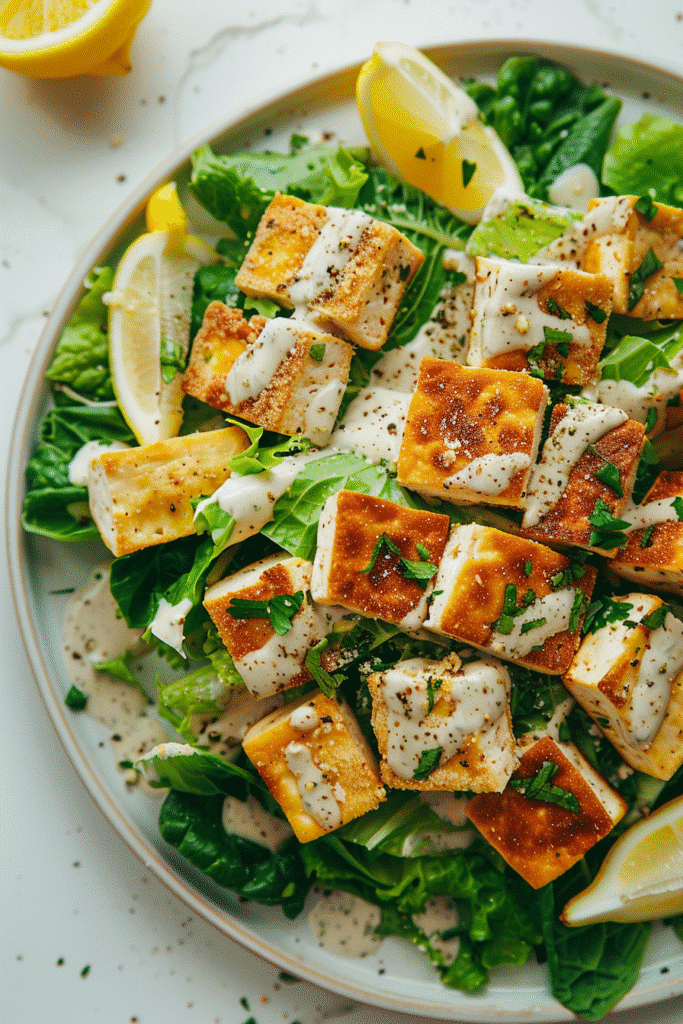
To turn a vegan Caesar salad into a full, satisfying meal, adding plant-based protein is crucial. Tofu is a versatile option that easily absorbs flavors. For a “chicken-style” tofu, press extra-firm tofu to remove moisture, then marinate it in a mixture of lemon juice, soy sauce or tamari, garlic, and a touch of olive oil. Either pan-sear or bake at 400°F (200°C) until golden and slightly crisp, then slice or cube and scatter over your salad.
Tempeh is another excellent choice; its nutty flavor stands up to the bold Caesar dressing. Marinate thin tempeh strips in tamari, smoked paprika, and maple syrup, then bake or pan-fry until crisp for a “bacon” effect. Seitan provides a particularly meaty texture, ideal for those transitioning from traditional chicken Caesar salads. Season seitan strips with garlic, pepper, and Italian herbs, then quickly sear in a hot pan until browned on the edges.
Because Caesar dressing is rich, you can keep the seasoning on plant proteins relatively simple, allowing the dressing to tie everything together. With these additions, your vegan Caesar salad becomes a protein-packed main course that feels as substantial as steak or chicken salads, similar in spirit to the robust plates you’d see in a steak salad ultimate guide, but fully plant-based.
Legume and Grain Add-Ins for Everyday Nutrition
If you prefer less processed ingredients, simple legumes and whole grains make excellent protein boosters for vegan Caesar salad. Chickpeas, white beans, or lentils add hearty texture and fiber. You can use them plain, rinsed from a can, or lightly marinated with lemon, garlic, and herbs for extra flavor. Roasted lentils or crispy lentil “crumbles” provide a crunchy contrast and can stand in for bacon bits. Cooked quinoa, farro, or barley bring both chewiness and a dose of complex carbohydrates that keep you full longer.
For a winter-friendly variation, combine your Caesar with components from warm dishes, taking inspiration from meals like a warm lentil and roasted vegetable salad. When adding grains and legumes, consider texture and balance. You want enough to make the salad substantial, but not so much that it turns soggy or heavy. About ½–1 cup of beans or grains per serving usually strikes the right ratio. These additions also make meal prep easier, since you can cook a batch of beans or grains in advance and use them in several dishes throughout the week. With legumes and whole grains, you boost the salad’s protein, fiber, and mineral content without sacrificing the clean, bright flavors that make Caesar so appealing.
Nutritional Benefits of Vegan Caesar Salad
How Vegan Caesar Compares to Traditional Caesar
A vegan Caesar salad often delivers similar satisfaction to the classic version while offering notable nutritional advantages. Traditional Caesar dressing typically contains egg yolks, Parmesan cheese, and sometimes large amounts of refined oil, which raise cholesterol and saturated fat content. In contrast, a plant-based Caesar relies on ingredients like nutritional yeast, seeds or nuts, tofu, and olive oil, which generally provide healthier fats and zero dietary cholesterol.
These swaps can support heart health and better align with many wellness-focused eating patterns. Additionally, because vegan Caesar tends to include more whole-food components, such as chickpeas, seeds, or whole-grain croutons, it often has more fiber and micronutrients. Romaine lettuce itself provides vitamin A, vitamin K, folate, and small amounts of vitamin C. When you mix in kale, Brussels sprouts, or other dark leafy greens, you increase the salad’s antioxidant and mineral profile. By choosing protein additions like lentils, tofu, or tempeh, you introduce iron, magnesium, and complete plant proteins. Vegan Caesar dressings made from tahini, cashews, or sunflower seeds also contribute calcium, zinc, and B vitamins.
When you compare the two, a well-built vegan Caesar salad tends to be more nutrient-dense and lighter on saturated fats, while still offering the creamy, indulgent texture that makes Caesar such a beloved dish.
Balancing Macronutrients and Micronutrients
A thoughtfully designed vegan Caesar salad can function as a standalone balanced meal rather than just a side dish. To achieve this, consider your macronutrients: carbohydrates, protein, and fat. The lettuce and other vegetables provide low-calorie bulk and complex carbs, while croutons or added grains such as quinoa contribute more substantial carbohydrates for energy.
Plant proteins from tofu, tempeh, beans, or lentils ensure satiety and support muscle repair. Healthy fats from olive oil, avocado, nuts, or seeds enhance mouthfeel and help your body absorb fat-soluble vitamins like A, D, E, and K. On the micronutrient side, ingredients such as nutritional yeast are often fortified with vitamin B12, a critical nutrient for those on a vegan diet. Dark leafy greens supply calcium, iron, and folate, while lemon juice delivers vitamin C, which in turn boosts iron absorption from plant sources. To illustrate how the components stack up, here’s a simple overview:
| Component | Main Contribution | Examples in Vegan Caesar |
|---|---|---|
| Protein | Satiety, muscle support | Tofu, tempeh, chickpeas, lentils |
| Healthy Fats | Vitamin absorption, hormones | Olive oil, avocado, nuts, seeds |
| Fiber | Digestive health, fullness | Lettuce, grains, legumes |
With a little planning, your vegan Caesar becomes not just delicious but also a nutrient-rich staple that supports everyday wellness.
Step-by-Step Instructions for the Best Vegan Caesar Salad
Prepping Components in Advance
Preparing components ahead of time makes assembling a vegan Caesar salad quick and stress-free, especially on busy days. Start by washing and drying your romaine or mixed greens thoroughly. Use a salad spinner and then lay the leaves on a clean kitchen towel to remove as much moisture as possible. Once dry, chop or tear into bite-sized pieces and store them in an airtight container lined with paper towels to absorb excess moisture. Keep this container in the fridge for up to 3–4 days for crisp, ready-to-use greens.
Next, make a batch of vegan Caesar dressing. It typically keeps well in the refrigerator for up to 5–7 days. You can also prep crunchy elements like croutons and roasted chickpeas in advance. Store homemade croutons at room temperature in an airtight jar for several days, ensuring they stay crisp. Roasted chickpeas, however, are best within a day or two; after that, they may soften slightly but will still taste delicious. For protein additions, bake tofu, tempeh, or cook a pot of lentils or beans at the start of the week. Store them separately and add right before serving to maintain texture.
This kind of batching approach turns building a vegan Caesar salad into a five-minute task: toss greens with dressing, add toppings and protein, and enjoy a restaurant-level meal at home.
Assembling and Serving Like a Restaurant
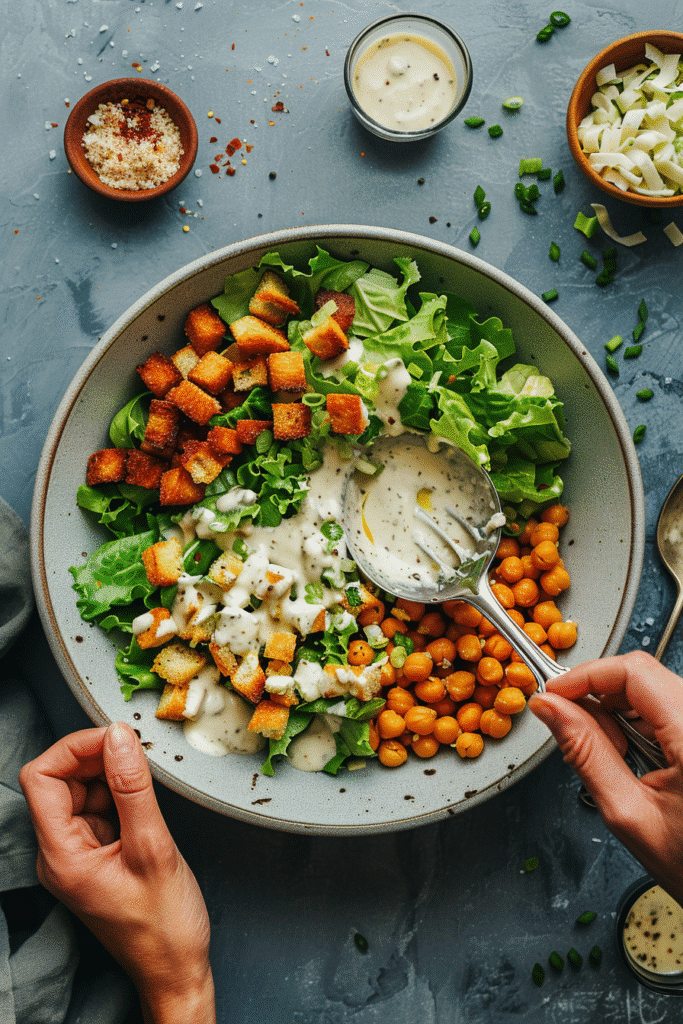
When you’re ready to serve your vegan Caesar salad, bring all components together strategically to maximize flavor and texture. Start with a large mixing bowl to give yourself room to toss without bruising the lettuce. Add the chilled romaine or mixed greens first. Drizzle on a modest amount of dressing, about 2 tablespoons per serving to start—then use clean hands or salad tongs to gently toss until each leaf is lightly coated. Add more dressing only if needed; overdressing is a common mistake that weighs the salad down.
Next, sprinkle in your croutons or roasted chickpeas, vegan Parmesan, and any additional vegetables or protein. Toss again very briefly to distribute these components without losing their crispness. Plate the salad immediately on chilled plates or shallow bowls, which helps keep everything cool and crunchy. Finish with a final grind of black pepper, a squeeze of lemon over the top, and a light dusting of vegan Parmesan. If you’re serving guests, consider garnishing with a few whole romaine leaves, lemon wedges, and a small heap of extra croutons on the side for restaurant-style presentation.
For a full meal, pair the salad with something refreshing like a strawberry banana smoothie or a wellness-focused drink to create a balanced, satisfying spread.
Variations, Seasonal Twists, and Menu Ideas
Seasonal Vegan Caesar Salad Twists
One of the advantages of a vegan Caesar salad is how easily it adapts to the seasons. In the summer, you can add grilled vegetables like zucchini, eggplant, or corn to create a smoky, charred sweetness that pairs well with the tangy dressing. Cherry tomatoes and cucumbers lend a juicy freshness that lightens the salad on hot days. In cooler months, consider roasting root vegetables, such as sweet potatoes, parsnips, or beets, and folding them into the salad while slightly warm. For example, roasted beets give a sweet, earthy contrast similar to what you’d find in a dedicated roasted beet salad recipe.
You can also integrate seasonal fruits for a unique sweet-savory balance. Sliced apples or pears are lovely in autumn, while citrus segments shine in winter. When using fruit, keep the rest of the salad relatively simple so that the Caesar flavor remains central. Seasonal herbs may also enhance your salad; chopped parsley, chives, or dill add a fresh, aromatic note. Adjust the dressing slightly, perhaps with a bit more lemon or a touch of maple syrup, to harmonize with these different additions. The goal is to keep the recognizable Caesar backbone but allow the produce of each season to shine alongside it.
Creating a Vegan Caesar-Centered Menu
A vegan Caesar salad can be the star of a larger menu, whether for a casual weeknight dinner or a special occasion. For a light but satisfying spread, serve it alongside hearty grain-based salads such as a panzanella salad recipe or a quinoa dish to offer different textures and flavors. A crusty bread basket and a simple plant-based soup, like tomato or roasted garlic, complement the creamy Caesar without competing. For a more elaborate dinner, use the vegan Caesar salad as the first course, followed by a warm entrée like roasted vegetables over polenta, stuffed peppers, or a savory lentil loaf.
You can also design themed menus: for example, an Italian-inspired night with vegan Caesar, marinated olives, and a pasta main course, or a meal-prep-friendly menu where Caesar is one of several salads prepped ahead for the week. On more indulgent days, pair your salad with plant-based comfort foods such as baked casseroles or savory pies. The salad’s bright acidity and freshness help cut through richness, much like traditional Caesar does next to heavier dishes. By planning a menu around your vegan Caesar salad, you create meals that feel intentional, balanced, and restaurant-worthy, all while staying fully plant-based.
Storage, Meal Prep, and Common Mistakes
How to Store Vegan Caesar Components Safely
Proper storage keeps your vegan Caesar salad tasting fresh and prevents soggy textures. The most important rule is to store components separately whenever possible. Keep washed, dried, and chopped lettuce in an airtight container lined with paper towels to absorb moisture. Replace the towel if it becomes damp, and try to use the greens within 3–4 days. Store vegan Caesar dressing in a jar or bottle in the refrigerator; many versions last up to a week, though those with fresh garlic and no vinegar are best used within 4–5 days.
Shake or stir the dressing before each use, as some separation is natural. Croutons should live at room temperature in a sealed container so they stay crisp. If they soften, a quick toast in a low oven can revive them. Roasted chickpeas maintain their crunch for 1–2 days; after that, they remain tasty but lose some of their crispness. Plant proteins like tofu, tempeh, and beans should be refrigerated and eaten within 3–4 days. If you want true grab-and-go salads, assemble them in jars by layering dressing at the bottom, then grains and beans, then sturdier vegetables, and finally lettuce on top.
This method prevents the greens from getting drenched prematurely while keeping everything handy for fast meals.
Mistakes to Avoid and Troubleshooting Tips
Even experienced cooks can run into issues with vegan Caesar salad, but most problems have simple fixes. Overdressing the salad is one of the most common mistakes, leading to limp, soggy lettuce. Always start with less dressing than you think you need, toss thoroughly, and then add more if necessary. Another frequent issue is blandness. If your salad tastes flat, adjust the dressing with more lemon juice for brightness, extra nutritional yeast for cheesiness, or a pinch more salt to wake up the flavors. If the dressing tastes too harsh or garlicky, let it rest in the fridge for a few hours or overnight; the flavors mellow and integrate over time.
Texture problems often come from wet lettuce or stale toppings. Make sure greens are fully dry before tossing, and add croutons or crispy chickpeas right before serving. If your dressing is too thin, blend in a few more cashews, sunflower seeds, or a spoonful of tahini to thicken. If it’s too thick, gradually whisk in water or plant milk. Also, avoid using overly bitter greens without balancing them; for instance, if adding a lot of kale, massage it with a bit of lemon and olive oil first to soften flavor and texture. By watching for these common pitfalls and adjusting thoughtfully, you’ll consistently produce vegan Caesar salads that taste polished and satisfying.
FAQ Section
Is vegan Caesar salad healthy?
Vegan Caesar salad can be very healthy, especially when you build it around whole foods and balanced macronutrients. Traditional Caesar dishes are often high in saturated fat and cholesterol due to eggs, cheese, and heavy oil-based dressings. In contrast, vegan Caesar dressings use ingredients like cashews, sunflower seeds, tofu, or olive oil, which supply unsaturated fats and no dietary cholesterol. When you add beans, lentils, or tofu, you increase fiber, plant-based protein, and important minerals such as iron and magnesium. Dark leafy greens, lemon juice, and nutritional yeast contribute vitamins A, C, K, and B vitamins. As with any dish, portion sizes and ingredients matter, but overall, a thoughtfully made vegan Caesar salad tends to be nutrient-dense and supportive of heart and digestive health.
How do you make a vegan Caesar salad gluten-free?
Making a vegan Caesar salad gluten-free is simple with a few swaps. The main sources of gluten are typically the croutons and sometimes soy sauce or certain commercial dressings. To keep the classic texture, use gluten-free bread for homemade croutons or substitute them with roasted potatoes or extra-crispy chickpeas. When choosing soy sauce or tamari, opt for a certified gluten-free tamari brand. Many vegan Worcestershire or miso products are naturally gluten-free, but always double-check labels. The core ingredients—romaine lettuce, vegetables, beans, tofu, nuts, seeds, and basic seasonings—are naturally free of gluten. By focusing on whole foods and verifying condiments, you can enjoy all the creamy, garlicky Caesar flavor without compromising a gluten-free lifestyle.
Can I meal prep vegan Caesar salad for the week?
You can absolutely meal prep vegan Caesar salad for the week if you store components separately and assemble right before eating. Start by washing, drying, and chopping romaine or other greens, then refrigerate them in a sealed container lined with paper towels. Prepare a jar of vegan Caesar dressing, which usually lasts up to a week when refrigerated. Bake a batch of croutons and roast chickpeas, storing them in airtight containers. Cook your chosen protein—such as tofu, tempeh, or beans—and refrigerate in meal-prep containers. For grab-and-go options, assemble salads in jars with dressing at the bottom, followed by grains and beans, then vegetables, and greens on top. This layering prevents soggy lettuce and ensures a fresh, crisp salad whenever you’re ready.
What can I use instead of nuts in vegan Caesar dressing?
If you’re allergic to nuts or avoid them, you can still create a creamy, satisfying vegan Caesar dressing. Sunflower seeds are a popular nut-free substitute; when soaked and blended, they deliver a rich texture similar to cashews. You can also use silken tofu or white beans as bases; both blend into a smooth, luscious sauce and add protein. Combine these with nutritional yeast, garlic, lemon juice, Dijon mustard, and miso or tamari for umami depth. Another option is to use a high-quality nut-free vegan mayonnaise as the primary base, thinning it with lemon juice and water to achieve the right consistency. These swaps keep the flavor profile close to traditional Caesar while accommodating nut-free needs.
How long does vegan Caesar dressing last in the fridge?
Most homemade vegan Caesar dressings last about 5–7 days in the refrigerator when stored in an airtight container. The exact shelf life depends on the ingredients. Dressings made with vegan mayonnaise or silken tofu, plus acidic components like lemon juice and vinegar, tend to keep well for a week. Those using fresh garlic and no vinegar might have a slightly shorter window, closer to 4–5 days, before the flavor changes. Always store the dressing in a sealed jar, and give it a good shake or stir before each use, since natural separation can occur. If you notice an off smell, discoloration, or mold, discard it. For the best flavor, many people find the dressing tastes even better after resting 12–24 hours as the flavors meld.
Conclusion: Bringing Vegan Caesar Salad into Your Regular Rotation
A well-executed vegan Caesar salad proves that plant-based eating can be both comforting and bold in flavor. With crisp romaine, a deeply savory dairy-free dressing, crunchy toppings, and smart protein additions, it easily stands alongside more traditional salads like a hearty kale salad recipe or a classic grain bowl. When you master the dressing and understand how to balance textures, you unlock a base recipe that adapts to seasons, dietary needs, and different meal contexts.
By prepping components ahead of time and avoiding common mistakes like overdressing or under-seasoning, you ensure every bowl tastes restaurant-worthy. Whether you keep it simple with romaine and croutons or expand into full-meal territory with beans, grains, and roasted vegetables, vegan Caesar salad offers a flexible, nutrient-dense staple you can rely on week after week.
For more seasonal Salads inspirations, check out my Pinterest.