
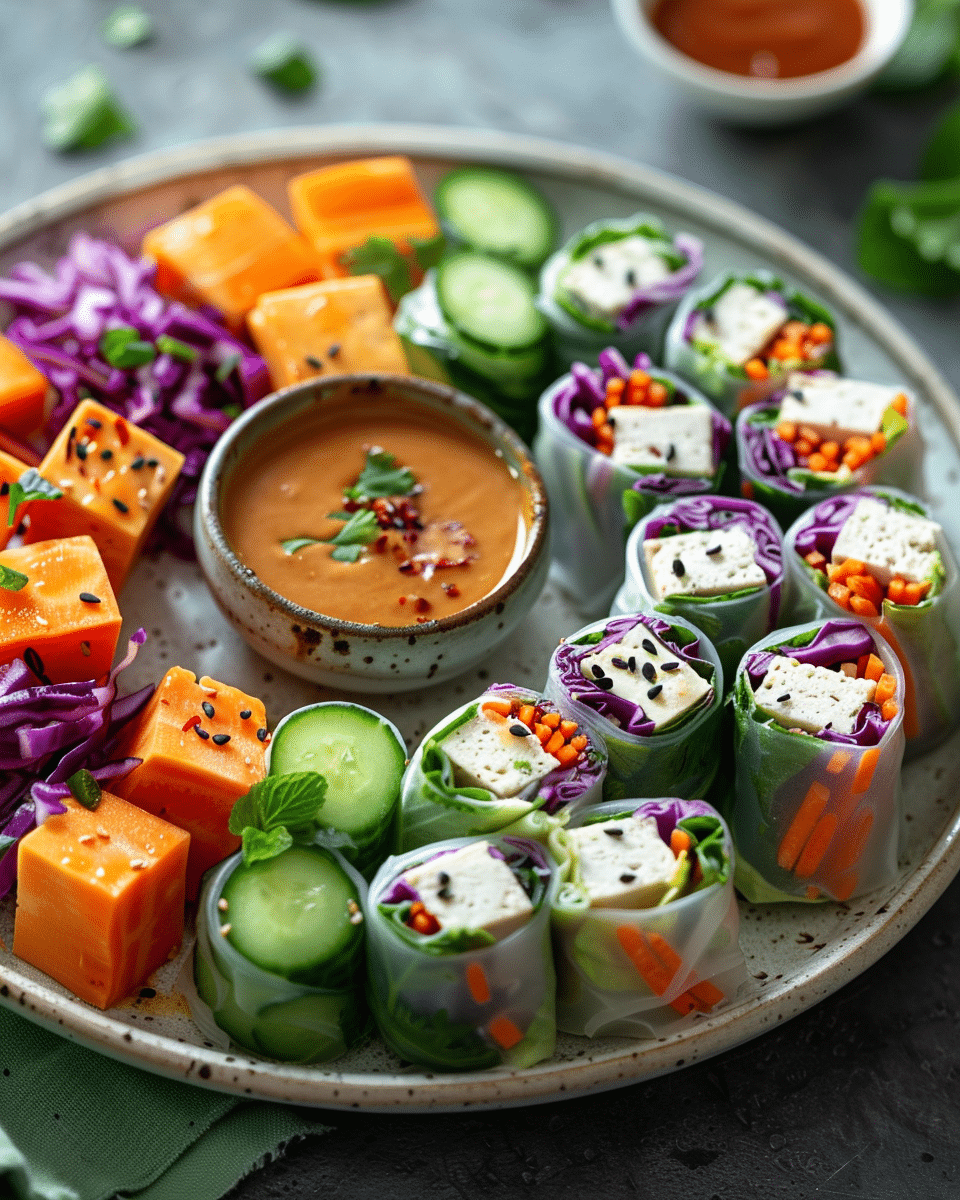
Vegetarian Spring Rolls: Fresh, Crunchy, and Surprisingly Easy
Vegetarian spring rolls are one of those dishes that feel restaurant‑special yet are absolutely achievable at home. In fact, once you learn a reliable method, vegetarian spring rolls quickly become a go‑to option for light lunches, colorful appetizers, and party platters. They showcase crisp vegetables, fresh herbs, and satisfying textures inside delicate rice paper wrappers. Because they rely on raw or lightly cooked produce, they fit beautifully into a wholesome lifestyle alongside recipes like a bright citrus fennel avocado winter salad.
In this guide, you’ll learn everything from ingredient selection to wrapping technique, dipping sauces, storage, and creative variations. You’ll see how easy it is to adapt vegetarian spring rolls to vegan, gluten‑free, or high‑protein diets, and you’ll discover helpful troubleshooting tips so your rolls stay tight and never tear. Whether you’re cooking for one, feeding a family, or planning a party platter, these fresh rolls can become a customizable canvas for seasonal vegetables and global flavors. By the end, you’ll feel confident enough to improvise fillings, balance flavors, and build a satisfying meal around this simple but impressive dish.
Table of Contents
Understanding Vegetarian Spring Rolls and Their Appeal
What Are Vegetarian Spring Rolls?
Vegetarian spring rolls are fresh or lightly fried rolls filled with vegetables, herbs, and sometimes plant‑based proteins, all wrapped in thin rice paper or wheat‑based wrappers. Unlike heavier fried snacks, many modern recipes focus on fresh, uncooked fillings, sometimes called “summer rolls” or “fresh spring rolls.” These versions highlight crisp textures and bright, clean flavors with ingredients such as shredded carrots, bell peppers, lettuce, cucumbers, cabbage, bean sprouts, and fragrant herbs like cilantro, basil, and mint.
Because vegetarian spring rolls skip meat, they naturally skew lighter while still feeling satisfying when you add tofu, avocado, or quinoa. You can serve them as appetizers, party snacks, or even a main course if you pair them with sides like a substantial warm lentil and roasted vegetable salad. Their versatility is one reason they remain popular across cuisines; the same basic technique works with Southeast Asian flavors, fusion fillings, or simple farmers market vegetables. As a result, they appeal to vegetarians, vegans, omnivores, and even picky eaters who enjoy finger foods.
Fresh vs. Fried Vegetarian Spring Rolls
When people talk about vegetarian spring rolls, they usually picture one of two styles: fresh (non‑fried) rolls or crispy fried rolls. Fresh vegetarian spring rolls use thin rice paper wrappers that you briefly dip in water, then roll around raw or lightly cooked fillings. They deliver a cool, crisp bite and feel refreshing, especially in warm weather or as a starter before a richer main course. In contrast, fried vegetarian spring rolls typically use wheat‑based wrappers, which turn golden and crunchy in hot oil.
These taste more indulgent and pair wonderfully with tangy dipping sauces, but they require more cooking time and careful oil temperature control. Many home cooks choose the fresh style because it requires no deep‑frying and lets you highlight colorful vegetables in a visually appealing way. Still, you can easily adapt a filling for both styles by adjusting how you cut and pre‑cook ingredients. If you’re building a full menu, consider mixing both types: fresh rolls alongside a heartier option such as a green bean casserole for a satisfying contrast of textures.
Print
Vegetarian Spring Rolls
Description
These vegetarian spring rolls are fresh, colorful, and easy to make with crisp vegetables, herbs, tofu, and rice paper wrappers. Perfect for a light lunch, party platter, or healthy appetizer with flavorful dipping sauces.
Ingredients
8 rice paper wrappers
1 cup cooked rice noodles
1 cup carrots, julienned
1 cup cucumber, julienned
1 cup red cabbage, thinly sliced
1 cup lettuce or spinach
1/2 cup fresh mint leaves
1/2 cup fresh cilantro
1/2 cup fresh basil leaves
8 ounces firm tofu, cooked and sliced into strips
1 avocado, sliced (optional)
Peanut Dipping Sauce:
1/4 cup peanut butter
1 tablespoon soy sauce or tamari
1 tablespoon lime juice
1 teaspoon maple syrup or honey
1 clove garlic, minced
2 to 4 tablespoons warm water, as needed
Instructions
Cook the rice noodles according to package directions, then rinse under cold water and drain well.
Wash, dry, and prep all vegetables and herbs into thin strips or bite-size pieces.
If using tofu, cook it ahead of time until lightly golden and slice into strips.
Fill a shallow bowl or skillet with warm water.
Dip one rice paper wrapper into the water for 5 to 10 seconds until just softened.
Lay the wrapper flat on a clean surface.
Place a small amount of noodles, vegetables, herbs, tofu, and avocado in the center.
Fold the bottom edge over the filling, fold in the sides, and roll tightly.
Repeat with the remaining wrappers and filling.
Whisk together the peanut dipping sauce ingredients until smooth, adding warm water until desired consistency is reached.
Serve the spring rolls immediately with dipping sauce.
Notes
Do not over-soak the rice paper or it may tear.
Store rolls separated so they do not stick together.
Use tamari for a gluten-free version.
Add edamame, quinoa, or extra tofu for more protein.
Best enjoyed the same day for the freshest texture.
Essential Ingredients for Vegetarian Spring Rolls
Choosing the Best Vegetables and Herbs
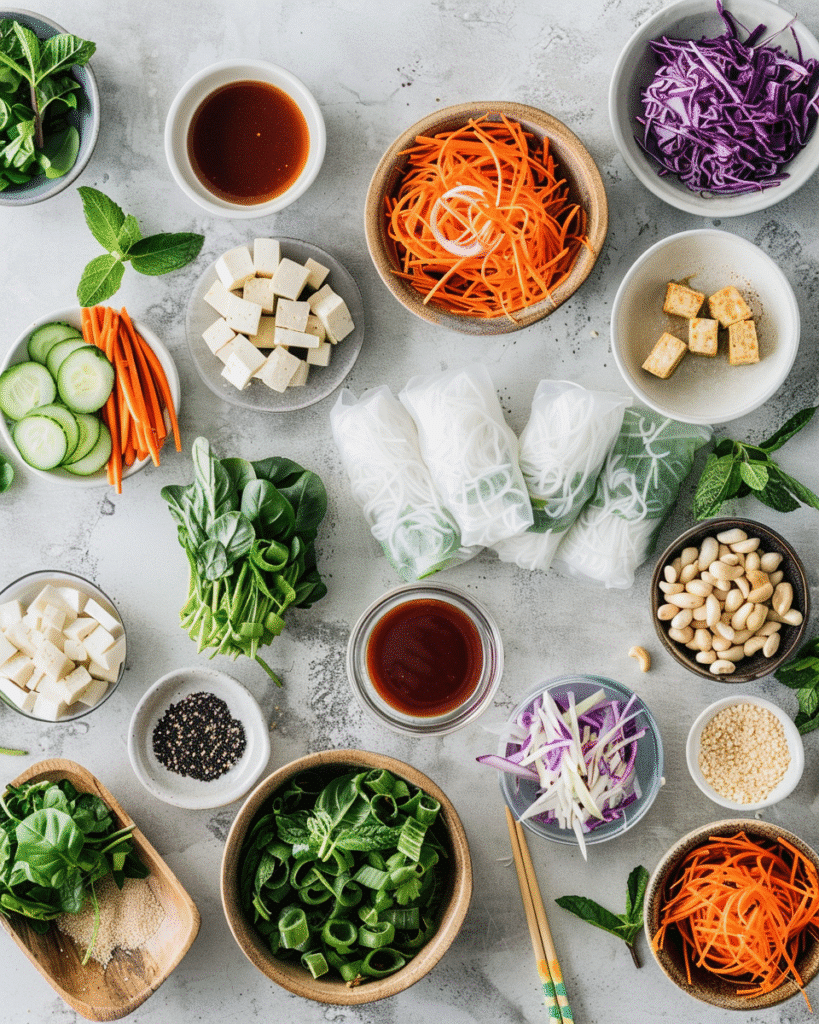
The star of vegetarian spring rolls is the vegetable and herb combination, so ingredient quality really matters. You typically want a balance of crunchy and tender textures plus a mix of colors to make the rolls visually appealing. Common choices include shredded carrots for sweetness and crunch, thinly sliced bell peppers for color, cucumber batons for refreshing bite, and shredded cabbage or lettuce for bulk.
For extra nutrition, you can add baby spinach, kale ribbons, or finely sliced red cabbage, which add antioxidants and deeper flavor. Fresh herbs transform simple vegetables into something special; cilantro adds brightness, mint brings a cooling sensation, and basil (Thai or Italian) adds a slightly spicy, aromatic note. Since these herbs are uncooked, you should choose the freshest bunches you can find and store them properly in the fridge before rolling.
It helps to think of your rolls like a layered salad you can hold in your hand, similar in spirit to a composed panzanella salad where every element contributes a specific flavor and texture.
Wrappers, Noodles, and Plant‑Based Proteins
After vegetables, the most important component is the wrapper. For fresh vegetarian spring rolls, use round rice paper sheets, usually sold in 8–9‑inch sizes. They start brittle but soften quickly when dipped in warm water. For fried variations, you’ll want square spring roll or egg roll wrappers made from wheat flour; these withstand high heat and gain a crisp exterior. Inside your rolls, you can add rice noodles or glass noodles for body and a pleasant chew.
Cook them according to package directions, then drain and rinse with cold water so they don’t stick together. To increase satiety and protein, include tofu (baked or pan‑seared), tempeh, edamame, or even quinoa. Avocado adds creaminess and healthy fats that help the rolls feel more substantial. The table below shows some common options and their roles inside vegetarian spring rolls:
| Ingredient | Texture | Main Role |
|---|---|---|
| Rice paper wrappers | Soft, chewy | Encases fresh fillings |
| Rice noodles | Light, springy | Adds bulk and chew |
| Firm tofu | Meaty, dense | Boosts protein |
| Avocado | Creamy | Adds richness and healthy fats |
| Fresh herbs | Delicate | Provides aroma and flavor |
When you combine these elements thoughtfully, you create vegetarian spring rolls that are not only beautiful but also nutritionally balanced and satisfying enough for a light meal.
Step‑by‑Step Method for Perfect Fresh Vegetarian Spring Rolls
Prepping Fillings for Easy Rolling
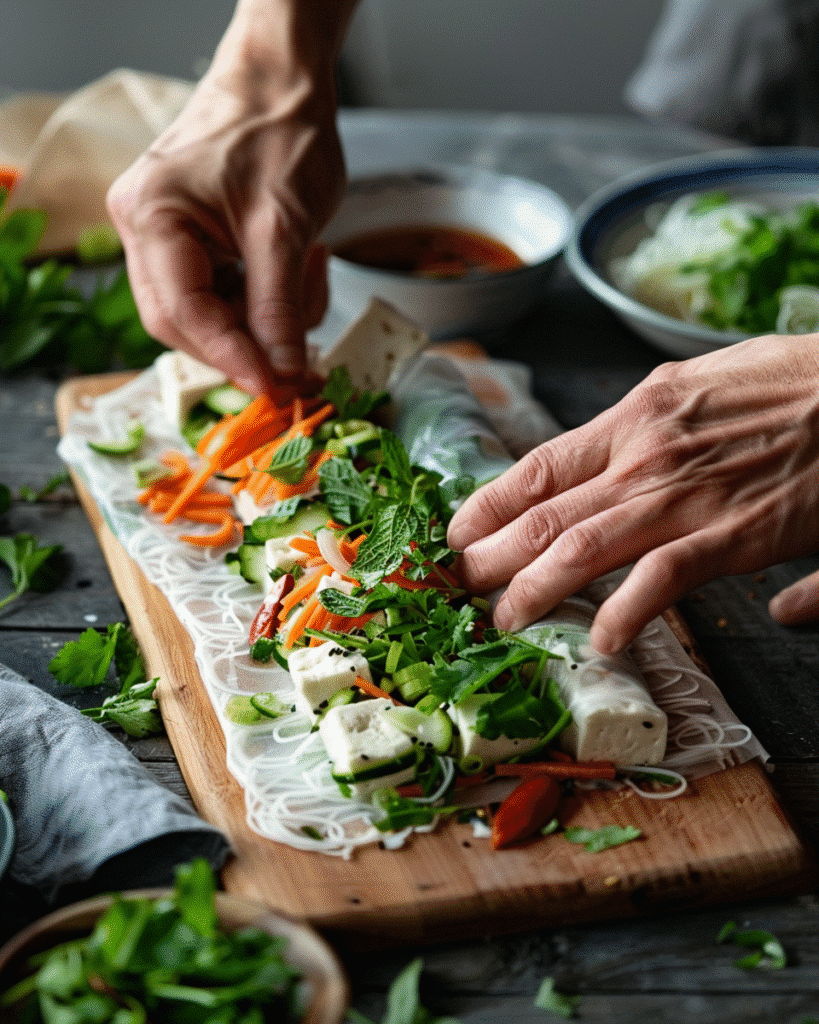
Preparation sets you up for smooth rolling and attractive vegetarian spring rolls. Start by washing and thoroughly drying all vegetables and herbs; excess moisture inside the rolls can cause sogginess and tearing. Next, cut produce into uniform shapes: thin matchsticks for carrots and peppers, long batons for cucumber, and fine shreds for cabbage or lettuce. This consistent size helps the rolls pack neatly and prevents sharp chunks from poking through the rice paper.
If using tofu, press it briefly to remove excess moisture, then slice into strips and pan‑sear or bake with a light seasoning of soy sauce, garlic, and a touch of oil. Cook noodles until just tender, drain, and rinse under cold water, then toss with a tiny bit of oil to prevent clumping. Arrange all components in separate bowls on your workspace, like a mini assembly line. This mise en place approach may feel like extra work, but it speeds up the rolling process and leads to neater, more compact rolls that hold their shape.
Hydrating Rice Paper and Rolling Tightly
Once your fillings sit ready, it’s time to hydrate the rice paper wrappers and assemble the vegetarian spring rolls. Fill a large, shallow dish or skillet with warm water—not hot, or the wrappers will become too soft too quickly. Dip one sheet of rice paper into the water and rotate it for just 5–10 seconds until it softens but still feels slightly firm. Lay it flat on a clean, slightly damp cutting board or a nonstick surface. Place a small bundle of noodles in the center, then add vegetables, herbs, and protein in a horizontal line, leaving space at both ends.
Begin rolling by folding the bottom edge up over the filling, then fold in the sides like a burrito. Continue rolling tightly toward the top, using your fingers to keep everything snug. The rice paper will continue to soften and seal itself. If your first few attempts feel loose or lumpy, keep practicing; muscle memory builds quickly. To prevent sticking, you can lightly oil the plate or board where you place finished rolls, or keep them separated so they don’t cling together as they rest.
Dipping Sauces to Elevate Vegetarian Spring Rolls
Classic Peanut and Almond Butter Sauces
The dipping sauce can transform simple vegetarian spring rolls into a crave‑worthy dish. A classic choice is a creamy peanut sauce that combines nut butter with soy sauce, rice vinegar, a touch of sweetener, garlic, and sometimes chili for heat. For people with peanut allergies or those who prefer a different flavor, almond butter or cashew butter works beautifully.
Start by whisking a few tablespoons of nut butter with warm water until smooth, then add soy sauce or tamari, lime juice, minced garlic, and a bit of brown sugar or maple syrup. Taste and adjust the salt, acidity, and sweetness until balanced. You can garnish the sauce with crushed peanuts, sesame seeds, or sliced scallions for extra texture. Rich nut‑based sauces match well with crisp vegetables, offering a contrast similar to how creamy dressings lift the flavors in hearty salads like a kale salad recipe. Because these sauces keep well in the fridge for several days, you can make a larger batch for multiple meals.
Light Soy, Lime, and Sweet Chili Dips
If you prefer something lighter, soy‑based or vinegar‑forward sauces bring brightness to vegetarian spring rolls without adding much richness. A simple yet deeply flavorful dip might combine soy sauce, rice vinegar, lime juice, a little sugar, minced garlic, and fresh chili or chili flakes. This style of sauce highlights tart, salty, and spicy notes that cut through the natural sweetness of carrots and bell peppers. Another popular option is bottled or homemade sweet chili sauce, either served alone or mixed with a splash of soy sauce and lime.
For a refreshing twist, you can stir in finely grated ginger or a dash of toasted sesame oil, which adds depth without heavy calories. When serving a crowd, offer multiple sauces, perhaps a peanut‑based dip, a tangy soy‑lime version, and a mild sweet chili bowl, so guests can sample and compare. This simple variety makes vegetarian spring rolls feel like a customizable tasting experience, encouraging everyone to experiment with flavor combinations and discover their favorite pairings.
Nutritional Benefits of Vegetarian Spring Rolls
Vitamins, Minerals, and Fiber from Fresh Produce
Vegetarian spring rolls deliver an impressive mix of nutrients because they rely heavily on raw or lightly cooked vegetables and herbs. Carrots supply beta‑carotene, which converts to vitamin A and supports vision and immune function. Bell peppers offer vitamin C, especially red and yellow varieties, which help with collagen formation and antioxidant protection. Leafy greens such as lettuce, spinach, or kale bring folate, vitamin K, and additional fiber to support digestive health.
Herbs like cilantro and basil contribute small amounts of vitamins and beneficial plant compounds, while purple cabbage adds anthocyanins, pigments linked to antioxidant activity. Since the vegetables stay mostly raw, they retain more heat‑sensitive nutrients than cooked dishes do. The high fiber content helps you feel full and supports a healthy gut microbiome, similar to how fiber‑rich dishes like a cranberry apple quinoa winter salad keep you satisfied.
Overall, these rolls let you consume a rainbow of vegetables in a portable, enjoyable format rather than feeling like you must eat a plain side salad.
Balancing Macros and Customizing for Different Diets
Beyond vitamins and minerals, vegetarian spring rolls can fit a wide range of nutrition goals, from weight management to heart health. The baseline recipe tends to be low in saturated fat and relatively low in calories, especially if you keep sauces light and avoid deep frying. For more staying power, include plant‑based proteins such as tofu, tempeh, edamame, or chickpeas, which provide amino acids plus additional fiber.
Avocado or a drizzle of sesame oil adds healthy monounsaturated and polyunsaturated fats that support satiety and nutrient absorption. By adjusting amounts, you can create higher‑protein rolls for athletes, lower‑carb versions by skipping noodles, or fully gluten‑free rolls by using tamari and checking labels on sauces. The table below outlines how simple changes can tailor vegetarian spring rolls to specific dietary preferences:
| Diet Type | Adjustments |
|---|---|
| Vegan | Use plant proteins, avoid fish sauce, choose vegan sweeteners |
| Gluten‑free | Use tamari instead of soy sauce, check chili sauces for wheat |
| High‑protein | Add extra tofu, tempeh, edamame, or quinoa |
| Low‑carb | Skip noodles, emphasize non‑starchy vegetables and avocado |
These small tweaks make vegetarian spring rolls one of the most flexible dishes you can adapt for individual health needs.
Creative Flavor Variations and Global Twists
Asian‑Inspired and Fusion Filling Ideas
Once you master the basic technique, you can treat vegetarian spring rolls as a blank canvas for flavors from across Asia and beyond. For a Vietnamese‑style profile, pair rice noodles with lettuce, cucumber, carrots, herbs, and marinated tofu seasoned with soy, garlic, and a touch of lemongrass. Serve with a nuoc cham‑inspired dip using lime, chili, and vegan fish sauce substitutes if needed. Thai‑inspired rolls may include shredded cabbage, bell peppers, basil, mint, and crunchy peanuts or cashews, paired with a lime‑chili peanut sauce.
You can even go fusion by filling rolls with roasted sweet potato, black beans, corn, and avocado, then serving them with a smoky chipotle‑lime dip. Another idea uses sesame‑ginger marinated tofu, julienned snap peas, and red cabbage, finished with a drizzle of sesame seeds for crunch. Because you add flavors mostly through marinades and sauces, you maintain the lightness of vegetarian spring rolls while keeping your menu exciting and varied.
Seasonal and Salad‑Inspired Rolls
Another creative approach is to build vegetarian spring rolls around seasonal produce or even your favorite salads. In the summer, rely on juicy cucumbers, ripe tomatoes (patted dry to avoid moisture issues), basil, and grilled zucchini, combined with a light balsamic‑soy dip. In cooler months, you can still enjoy fresh rolls by incorporating shredded Brussels sprouts, carrots, and thinly sliced roasted beets, echoing flavors from a roasted beet salad recipe.
You could also recreate the flavor profile of a kale and apple salad inside rice paper, using finely chopped kale, matchstick apples, walnuts, and a tangy mustard‑maple dipping sauce. Think about your go‑to salads, maybe a crunchy grain salad or even something inspired by a steak salad minus the meat, and translate those elements into roll form. This strategy helps you avoid flavor fatigue because each season brings new combinations.
It also makes vegetarian spring rolls a clever way to use up small amounts of leftover roasted vegetables, grains, or herbs that might not be enough for a full salad but shine when combined into a hand‑held wrap.
Common Mistakes and Troubleshooting Tips
Preventing Tearing, Sticking, and Soggy Rolls
Even experienced cooks occasionally run into issues when making vegetarian spring rolls, but most common problems have simple fixes. Tearing often happens when rice paper becomes too soft before rolling or when fillings have sharp edges. To avoid this, dip the wrapper in warm water for just a few seconds, remember it continues to soften while you work. Cut vegetables into slim, rounded shapes and avoid overstuffing. If you notice frequent tearing, double‑wrap a few rolls by using two rice papers together until you refine your technique.
Sticking can occur if rolls touch each other on the plate or if they sit on a dry surface. Prevent this by lightly oiling your serving platter or placing rolls on lettuce leaves. Sogginess usually comes from very wet fillings or letting rolls sit too long with juicy ingredients like tomatoes. Dry vegetables thoroughly and remove excess moisture from tofu or noodles. If you plan to hold vegetarian spring rolls for several hours, avoid particularly watery items and keep dipping sauces separate until serving.
Adjusting Flavor Balance and Texture
Another challenge involves flavor or texture imbalances, which can make vegetarian spring rolls feel bland or overly heavy. If your rolls taste flat, the issue often lies in the seasoning of your protein or noodles and the punchiness of your dipping sauce. Marinate tofu or tempeh in a mix of soy, garlic, ginger, and a little sweetener before cooking to add depth. Toss noodles with a few drops of sesame oil and rice vinegar, plus a pinch of salt, so they taste good on their own.
For brightness, don’t skimp on fresh herbs; they act like the “dressing” inside the roll. If the texture seems one‑note, add contrast through crunchy elements such as shredded cabbage, bean sprouts, or chopped nuts. You can also vary thickness by combining very thinly shredded vegetables with a few slightly thicker pieces for interest. By paying attention to these details, you transform vegetarian spring rolls from simple vegetable wraps into complex, restaurant‑quality bites with layered textures and nuanced flavor.
Serving, Pairing, and Presentation Ideas
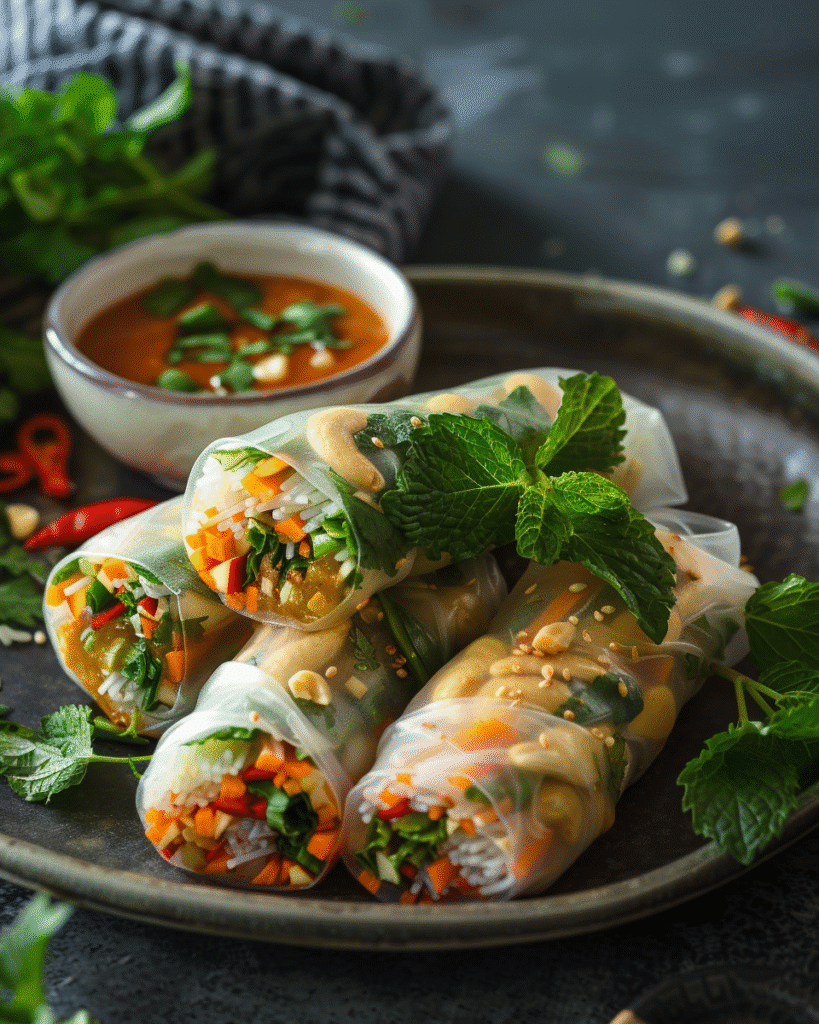
Building a Balanced Meal Around Vegetarian Spring Rolls
While vegetarian spring rolls can function as a light snack, they also integrate easily into a complete meal. To create a satisfying lunch or dinner, pair them with a hearty salad, a warm grain dish, or a simple soup. For example, you might serve fresh rolls alongside a protein‑rich lentil salad or a quinoa‑based winter salad, letting the crisp rolls contrast with the earthy grains.
On warmer days, combine them with chilled drinks like smoothies or wellness shots for a refreshing yet nourishing spread similar in spirit to a strawberry banana smoothie breakfast. If you want more variety, offer a trio of vegetarian appetizers: spring rolls, a small green salad, and roasted vegetables, each with its own dressing or dip. Think about macronutrient balance as you plan, protein from tofu or legumes, complex carbs from noodles or grains, and healthy fats from avocado or nuts, so everyone leaves the table feeling energized instead of hungry.
Plating, Garnishes, and Party Platters
Presentation plays a big role in the appeal of vegetarian spring rolls because the translucent wrappers showcase all the colors inside. To make them look their best, arrange slices of bright ingredients like herbs, avocado, or bell peppers right against the rice paper so they show through. When slicing finished rolls, use a very sharp knife and wipe the blade between cuts to maintain clean edges. On a platter, alternate rolls with different fillings to create a rainbow effect, and scatter fresh herb sprigs or edible flowers around for visual interest.
Offer small bowls of multiple dipping sauces and label them so guests know what to expect. For large gatherings, consider rolling half‑sized pieces that are easier to pick up, more like finger‑food bites. You can also create themed platters, for example, an “Asian‑inspired” section with soy‑lime dips and a “fusion” section with chipotle or balsamic drizzles. Thoughtful plating proves that vegetarian spring rolls are not just nutritious; they can be the centerpiece of an elegant appetizer spread.
Storage, Make‑Ahead Strategies, and Food Safety
Short‑Term Storage and Packing for Lunch
Vegetarian spring rolls taste best freshly made, but with a few tricks you can prepare them ahead for busy days. For short‑term storage of up to 24 hours, roll them a bit tighter than usual and avoid overly wet ingredients. Wrap each roll individually in plastic wrap or place them in a single layer in an airtight container lined with slightly damp paper towels. This approach prevents drying and sticking while keeping them from becoming waterlogged.
Store in the coldest part of your fridge and always keep dipping sauces on the side in separate containers. When packing vegetarian spring rolls for lunch, tuck them snugly in the container so they don’t unfold in transit. Insulated lunch bags and ice packs help maintain safe temperatures. Keep in mind that rice paper firms up in the fridge; allow the rolls to sit at room temperature for 10–15 minutes before eating so the texture returns to soft and pliable instead of stiff.
Freezing, Reheating, and When to Choose Fried Rolls
Fresh vegetarian spring rolls do not freeze well because rice paper turns tough and loses its pleasant texture after thawing. However, if you enjoy the fried variety, you can assemble uncooked rolls, freeze them in a single layer on a baking sheet, then transfer to freezer bags once solid. When ready to serve, fry them directly from frozen, adjusting cooking time so the interior heats through.
This strategy is helpful for parties or meal prep, especially if you want a mix of fresh and hot crispy options on the table. In terms of food safety, treat vegetarian spring rolls with the same care as other perishable dishes: refrigerate within two hours of assembling, and discard any leftovers that have been left at room temperature for longer periods. For maximum flavor and optimal texture, plan to enjoy fresh rolls the same day and view them as a quick, made‑to‑order item, while using frozen fried rolls as your convenient backup for evenings when you want something crunchy and satisfying without starting from scratch.
FAQ About Vegetarian Spring Rolls
Are vegetarian spring rolls healthy?
Vegetarian spring rolls can be very healthy, especially when you emphasize fresh vegetables, herbs, and light dipping sauces. The rice paper wrappers themselves are relatively low in calories and fat, serving mainly as a vehicle for nutrient‑dense fillings. When you pack them with colorful vegetables, you get a mix of vitamins, minerals, antioxidants, and plenty of fiber, which supports digestion and helps you feel full. Adding tofu, tempeh, or edamame boosts plant‑based protein, while avocado or nuts provide healthy fats. The main factors that impact healthfulness are portion size, how much oil you use (especially for fried versions), and the richness of your sauces. If you favor fresh rolls with moderate amounts of peanut or soy‑based dips, they can easily fit into a balanced, everyday eating pattern.
What vegetables are best for vegetarian spring rolls?
The best vegetables for vegetarian spring rolls combine crunch, color, and moisture control. Carrots, cucumbers, bell peppers, and cabbage are classics because they stay crisp and add vibrant shades of orange, green, red, and purple. Lettuce, butterhead, or romaine works well as a base layer, giving structure and mild flavor. You can also include bean sprouts, snap peas, and thinly sliced radishes for extra crunch. Leafy greens like spinach or finely chopped kale contribute nutrients and subtle bitterness to balance sweetness from carrots or sauces. For a touch of sweetness, mango or apple slices work if patted dry. The key is to cut everything into uniform matchsticks or shreds so the roll stays compact and easy to bite. Avoid overly watery vegetables like large tomato chunks unless you remove seeds and excess juice to prevent soggy wrappers.
Can vegetarian spring rolls be made gluten‑free?
Yes, vegetarian spring rolls are naturally easy to adapt to a gluten‑free diet. Most rice paper wrappers contain only rice flour, water, and salt, so they’re typically gluten‑free by default. The main area to watch is your sauces and any seasoned ingredients. Traditional soy sauce contains wheat, so you must use gluten‑free tamari or a certified gluten‑free soy alternative in marinades and dipping sauces. Some store‑bought sweet chili sauces, hoisin sauces, or marinades may contain wheat‑derived thickeners, so read ingredient labels carefully. As long as you choose gluten‑free condiments and avoid wheat‑based fried wrappers, your vegetarian spring rolls will remain safe for people who are gluten‑sensitive or have celiac disease. Many home cooks find them one of the easiest party foods to offer when hosting guests with mixed dietary needs.
How do I keep vegetarian spring rolls from drying out?
To prevent vegetarian spring rolls from drying out, you need to maintain just the right level of moisture around the rice paper. After rolling, place them in a single layer in an airtight container, ideally on a base of slightly damp (not wet) paper towels. You can also wrap each roll individually in plastic wrap to lock in humidity. Store them in the refrigerator, but not directly in front of the fan where air circulates strongly, as that can accelerate drying. When serving later, let rolls sit at room temperature for 10–15 minutes so the wrappers soften again. Avoid stacking them directly on top of each other without some barrier, because friction can tear the surface, causing exposed areas to dry. Finally, don’t refrigerate for more than about 24 hours; rice paper is delicate, and even with good storage, the texture degrades if kept too long.
What proteins can I add to vegetarian spring rolls?
You have many plant‑based protein options for vegetarian spring rolls, allowing you to tailor them for satiety and nutrition. Firm or extra‑firm tofu is the most classic choice; press it briefly, then marinate with soy sauce, garlic, and ginger before baking or pan‑searing and cutting into strips. Tempeh brings a nutty flavor and denser texture, particularly nice in heartier rolls. Shelled edamame adds bright color and bite‑sized protein, while chickpeas or black beans work well in fusion‑style fillings. You can also incorporate quinoa, which provides a complete protein source and fits nicely alongside vegetables if you keep portions modest. Some people add thin strips of plant‑based meat alternatives, but they are optional. By combining one or two protein sources with fiber‑rich vegetables, you create vegetarian spring rolls that function as a complete meal rather than just a light snack.
Conclusion: Making Vegetarian Spring Rolls Part of Your Routine
Vegetarian spring rolls can easily move from “restaurant treat” to an everyday favorite once you understand the method and options. With a bit of prep, you can transform simple vegetables, herbs, and plant‑based proteins into colorful, portable packages that showcase freshness and flavor. Because they adapt so well to different dietary preferences, they pair naturally with a variety of sides and salads, from grain‑based dishes to creative green salads reminiscent of a vibrant Brussels sprout salad.
As you experiment with fillings, sauces, and global flavor profiles, you’ll discover combinations that fit your taste, budget, and schedule. The more often you roll, the easier the technique becomes, and what once felt intricate starts to feel as simple as tossing a salad. Keep rice paper in your pantry, stock up on seasonal vegetables, and you’ll always have the foundation for a nourishing meal or impressive appetizer ready to assemble.
For more healthy seasonal salad inspirations, check out my Pinterest.