
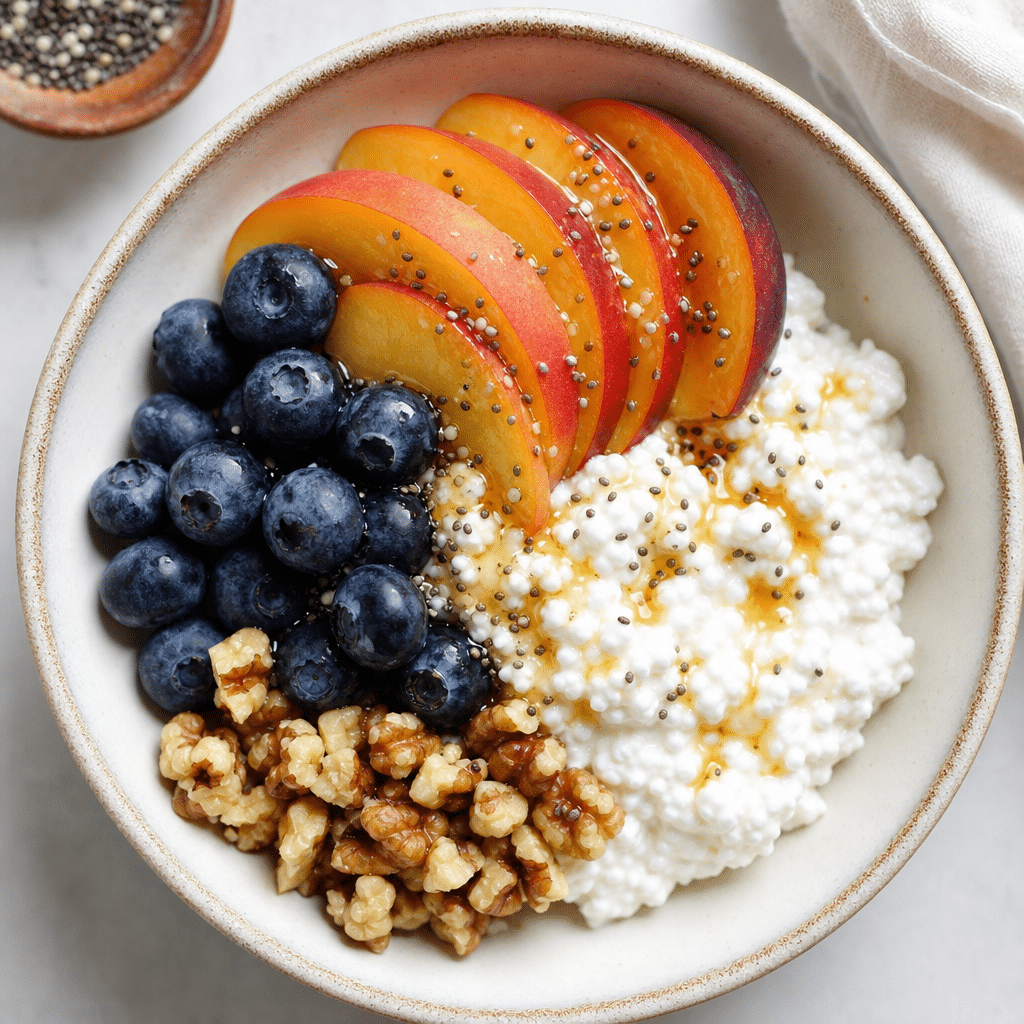
There is a reason cottage cheese bowls have quietly taken over breakfast tables, lunch boxes, and post-workout routines across the country. They are simple, endlessly customizable, and come together in minutes without turning on the stove. If you already love the creamy, protein-packed appeal of cottage cheese in dishes like our Creamy Cottage Cheese Pasta: The High-Protein Comfort Dish You’ll Crave, these bowls take that same ingredient and turn it into something even faster and more flexible.
Whether you like yours sweet with berries and honey or savory with cucumbers and cracked black pepper, a good cottage cheese bowl bends to whatever mood you are in that day. This guide walks through everything you need to build one, store it properly, and keep your weekly rotation interesting.
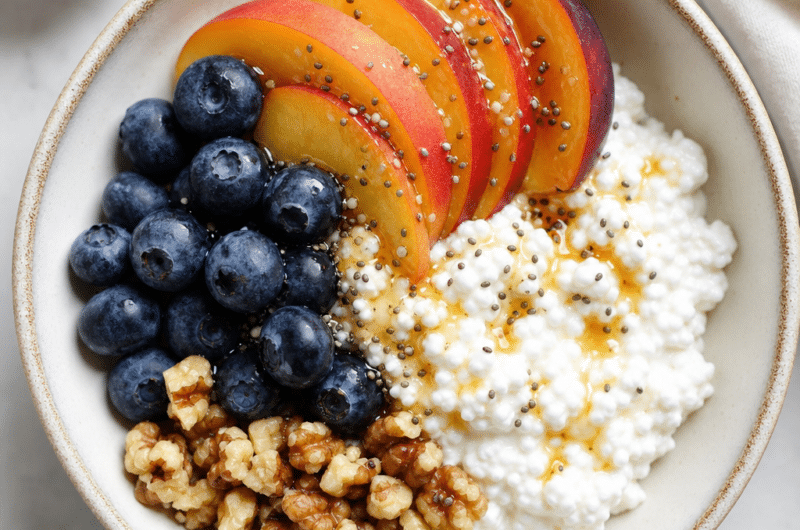
Cottage Cheese Bowls: The Easiest High-Protein Meal You’ll Make on Repeat
Course: Uncategorized4
servings30
minutes40
minutes300
kcalIngredients
2 cups cottage cheese (low-fat, full-fat, or fat-free, your choice)
1 cup mixed berries (strawberries, blueberries, or blackberries)
1/2 cup granola
2 tablespoons honey
1/2 teaspoon ground cinnamon
1 small cucumber, diced (for savory version)
1 cup cherry tomatoes, halved (for savory version)
1/2 avocado, sliced (for savory version)
1 tablespoon olive oil (for savory version)
1 tablespoon fresh chives, chopped (for savory version)
Black pepper, to taste
Directions
- Give the cottage cheese a quick stir in its container to smooth out the curds and remove excess liquid.
- Divide the cottage cheese evenly among four serving bowls.
- For a sweet bowl, top each portion with mixed berries, a drizzle of honey, a light dusting of cinnamon, and a handful of granola just before serving.
- For a savory bowl, top each portion with diced cucumber, halved cherry tomatoes, sliced avocado, a drizzle of olive oil, chopped chives, and a crack of black pepper.
- Serve immediately for the best texture, or store components separately for meal prep and assemble within one to two days.
Why Cottage Cheese Bowls Are Worth The Hype
Cottage cheese has been a pantry staple for decades, but it has recently found new life as the star of quick, protein-forward bowls. Part of the appeal is how little effort they require. There is no cooking involved for most versions, which makes cottage cheese bowls a favorite for busy mornings or fast lunches between meetings.
Health Benefits Of Cottage Cheese
Cottage cheese is naturally high in casein protein, which digests slowly and helps keep you full for hours. It also delivers a solid dose of calcium, B vitamins, and phosphorus without a lot of added sugar or unnecessary fillers. For anyone building a higher-protein lifestyle, cottage cheese bowls offer an easy way to hit daily protein goals without relying on powders or supplements. If you want a deeper dive into how versatile this ingredient can be, our Cottage Cheese Recipes: The Ultimate Guide to Creamy, Protein-Packed Meals covers dozens of ways to use it beyond the bowl format.
Cottage cheese also tends to be lower in fat than many other cheeses, especially if you choose a low-fat or 2% variety. That makes it a smart base for anyone watching calories while still wanting something creamy and satisfying.
Why Bowls Work So Well
The bowl format is popular for a reason: it lets you layer textures and flavors without any real cooking skill required. A scoop of cottage cheese acts as a neutral, creamy canvas, so you can go sweet with fruit and granola or savory with vegetables and olive oil. Because everything sits in one bowl, cleanup is minimal, and portioning for meal prep is straightforward.
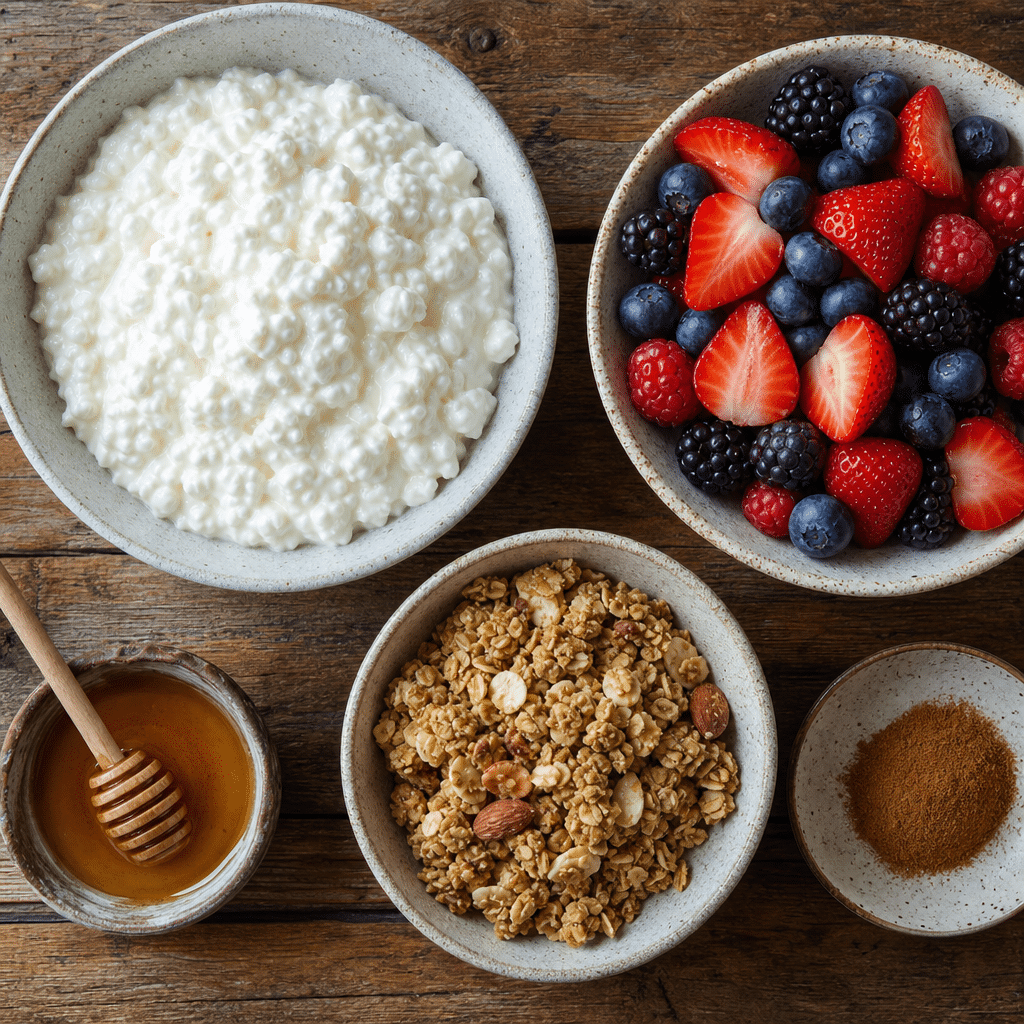
Ingredients For Cottage Cheese Bowls
One of the best things about cottage cheese bowls is that the ingredient list is short and forgiving. You likely already have most of what you need in your fridge right now.
The Creamy Base
Full-fat, low-fat, or fat-free cottage cheese all work well here, so choose whichever fits your goals. Small curd cottage cheese tends to blend more smoothly into a bowl, while large curd gives a chunkier, more textured bite. Either way, give it a quick stir before serving to loosen it up and make it easier to top.
Sweet Toppings
For a dessert-like or breakfast-style bowl, reach for strawberries, blueberries, or blackberries. A drizzle of honey, a sprinkle of cinnamon, and a handful of granola turn a simple scoop of cottage cheese into something that feels indulgent. Sliced peaches or bananas work nicely too when berries are out of season.
Savory Toppings
On the savory side, diced cucumbers, cherry tomatoes, and sliced avocado bring freshness and healthy fats. A pinch of black pepper, a light drizzle of good olive oil, and a scattering of fresh chives round out the flavor without overpowering the mild cottage cheese underneath. Everything bagel seasoning is another popular add-in if you want a little crunch and salt.
How To Build The Perfect Bowl
There is no complicated technique here, but a few small habits make a noticeable difference in the final result.
Equipment You’ll Need
You really only need a mixing bowl, a spoon, a small strainer if your cottage cheese is watery, and whatever serving bowls you like to eat from. A small whisk or fork is helpful if you want to smooth out the curds slightly before adding toppings.
Step-by-Step Assembly
Start with a generous scoop of cottage cheese as your base layer in each bowl. Add your chosen produce next, arranging it so every bite gets a mix of textures. Finish with your finishing touches, whether that is honey and granola or olive oil and pepper, then serve immediately for the best texture.
Delicious Variations To Try
Once you have the basic formula down, cottage cheese bowls become a blank slate for whatever you are craving that week.
Sweet & Fruity Bowls
Try a tropical version with pineapple, mango, and a little shredded coconut, or keep it classic with mixed berries and a touch of maple syrup. Adding a spoonful of nut butter gives extra richness and staying power for busy mornings.
Savory & Veggie-Packed Bowls
For lunch, layer in roasted vegetables, a handful of arugula, and a squeeze of lemon juice for brightness. If you enjoy grain bowls, a small scoop of quinoa or farro underneath the cottage cheese adds bulk and turns it into a full meal, similar in spirit to our High Protein Chicken Bowl: The Best Recipe for a Protein-Packed Meal, just built around cottage cheese instead of chicken.
Budget-Friendly & Seasonal Swaps
When berries are pricey, frozen fruit works just as well once thawed slightly, and it is often cheaper year-round. In late summer, garden tomatoes and cucumbers make the savory version nearly free if you grow your own. Canned peaches in juice, drained well, are another budget-friendly stand-in during colder months.
Tips, Troubleshooting & Common Mistakes
A few small missteps can keep your cottage cheese bowls from tasting their best, but they are easy to avoid once you know what to watch for.
Common Mistakes To Avoid
One frequent issue is using cottage cheese straight from the fridge without stirring, which leaves it clumpy and watery on top. Another mistake is adding delicate toppings like granola too early, which causes them to go soggy before you even sit down to eat. Overloading the bowl with too many competing flavors can also mute the pleasant tang of the cottage cheese itself, so it is worth keeping toppings to three or four thoughtful choices per bowl.
Meal Prep, Storage & Shelf Life
Cottage cheese bowls are great for meal prep, but a little planning keeps them fresh and appetizing throughout the week. The key is to store wet and dry components separately whenever possible.
How Long Do Cottage Cheese Bowls Last
Plain cottage cheese on its own typically stays fresh for five to seven days after opening, as long as it is kept well sealed and cold. Once you add fresh fruit or vegetables, plan to eat the assembled bowl within one to two days for the best texture and flavor. Crunchy toppings like granola or nuts should always be added right before eating, not stored inside the bowl itself.
Best Storage Containers
Glass containers with tight-fitting lids work best for keeping cottage cheese bowls fresh in the fridge without absorbing odors. For meal prep, portion the cottage cheese into individual containers and keep toppings in small separate containers or bags. This way, you can quickly assemble a fresh-tasting bowl each morning without any sogginess.
Nutrition Facts & Macros
One of the biggest reasons people love cottage cheese bowls is the impressive protein-to-calorie ratio. A typical bowl built with one cup of low-fat cottage cheese, a half cup of berries, and a small drizzle of honey lands around 250 to 300 calories while delivering roughly 24 to 28 grams of protein. That balance makes it an easy way to support muscle recovery, keep hunger in check between meals, and add more protein to your day without much added fat or sugar. Savory versions with olive oil and avocado shift the macros slightly, adding healthy fats while keeping protein numbers similarly high.
What To Pair With Your Bowl
Cottage cheese bowls are satisfying enough to stand alone, but the right pairing can round out the meal even further. For breakfast, a warm cup of coffee or a simple herbal tea complements the cool, creamy texture nicely. At lunch, a side of whole grain crackers or a slice of crusty bread adds welcome crunch alongside a savory bowl. If you are building a full spread for brunch, cottage cheese bowls also sit well next to lighter dishes, and pairing them with something like our High Protein Chicken Bowl: The Best Recipe for a Protein-Packed Meal makes for a well-rounded, protein-focused table when feeding a crowd.
FAQ
Is Cottage Cheese Good For Weight Loss?
Yes. Cottage cheese is high in protein and low in calories, helping you feel full longer and supporting weight management as part of a balanced diet.
Can I Make Cottage Cheese Bowls Ahead Of Time?
Yes, but store cottage cheese and toppings separately. Combine right before eating to keep fruits fresh and prevent crunchy toppings like granola from getting soggy.
What Is The Best Cottage Cheese To Use For Bowls?
Small curd cottage cheese blends smoothly for both sweet and savory bowls. Large curd works too if you prefer a chunkier texture.
How Long Do Cottage Cheese Bowls Last In The Fridge?
Assembled bowls with fresh produce last one to two days. Plain cottage cheese lasts five to seven days when sealed and refrigerated.
Can I Eat Cottage Cheese Bowls Every Day?
Yes. Many people enjoy cottage cheese bowls daily as part of a varied diet since they’re nutrient-dense and highly customizable.
Loved this recipe? Follow along and save your favorites on Pinterest for more delicious ideas!