
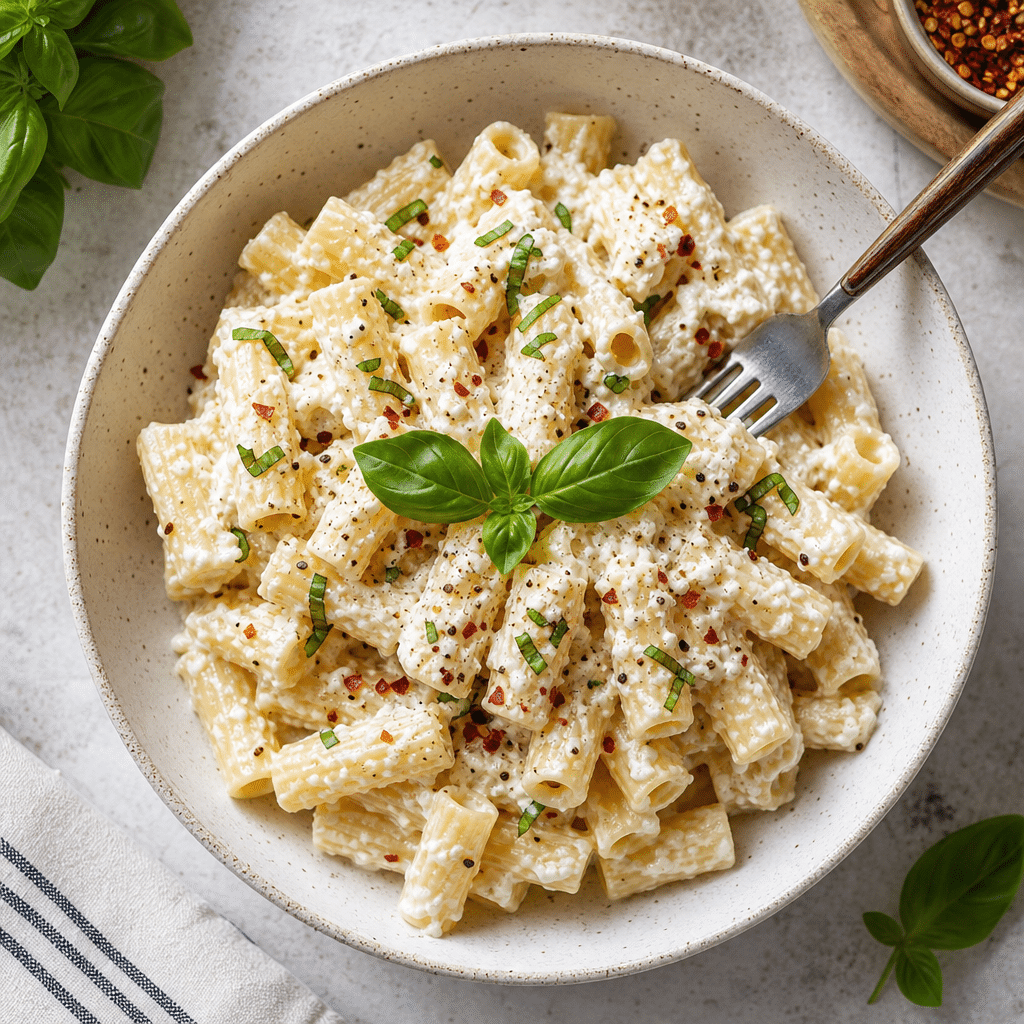
There is something wonderfully comforting about twirling a fork through a bowl of pasta that tastes indulgent but still leaves you feeling good afterward. That is exactly what cottage cheese pasta delivers, and it is quickly becoming one of the most searched dinner ideas in American kitchens right now.
Instead of relying on heavy cream or a jar of alfredo sauce, this dish blends cottage cheese into a silky, protein-packed base that clings to every noodle. It tastes rich and cheesy, but you are getting a serious protein boost with far less fat than traditional cream sauces.
If you have already fallen in love with cottage cheese in other forms, you will want to check out our Cottage Cheese Recipes: The Ultimate Guide to Creamy, Protein-Packed Meals for even more ways to use this humble ingredient. But today, we are focusing entirely on turning it into a cozy, weeknight-friendly pasta dinner that comes together in under thirty minutes.
Whether you are meal prepping for the week, feeding picky eaters, or just craving something creamy without the guilt, this cottage cheese pasta recipe is about to become a regular on your dinner rotation.
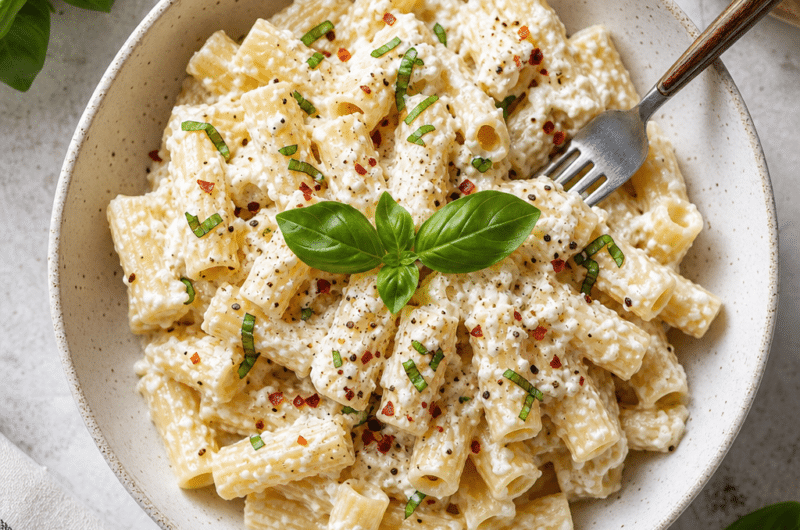
Creamy Cottage Cheese Pasta: The High-Protein Comfort Dish You’ll Crave
Course: Dinner4
servings30
minutes40
minutes300
kcalIngredients
12 oz short pasta (penne, rotini, or shells)
1 1/2 cups cottage cheese (whole milk, small curd)
2 tablespoons olive oil
3 cloves garlic, minced
1 cup marinara or pasta sauce
1/2 cup grated parmesan cheese, plus more for serving
2 cups fresh spinach, roughly chopped
1/4 teaspoon red pepper flakes
1/4 cup fresh basil, chopped
Salt and black pepper, to taste
1 cup reserved pasta cooking water
Directions
- Bring a large pot of generously salted water to a boil and cook the pasta until just al dente, according to package directions.
- Before draining, scoop out and reserve about 1 cup of the starchy pasta cooking water, then drain the pasta.
- Add the cottage cheese to a blender with a splash of the reserved pasta water and blend until completely smooth and creamy.
- Heat the olive oil in a large skillet over medium heat, then add the garlic and red pepper flakes, cooking for about 1 minute until fragrant.
- Pour in the marinara sauce and let it simmer for 2 to 3 minutes to warm through and meld the flavors.
- Stir in the blended cottage cheese mixture, mixing until the sauce turns smooth, creamy, and uniform.
- Add the spinach to the skillet and cook just until wilted, about 2 minutes.
- Add the drained pasta to the skillet, tossing to coat, and add reserved pasta water as needed to reach a silky consistency.
- Season with salt and black pepper to taste, then finish with grated parmesan and fresh basil before serving immediately.
What Is Cottage Cheese Pasta, Anyway?
Cottage cheese pasta is exactly what it sounds like: pasta tossed in a sauce built around blended or whole-curd cottage cheese instead of heavy cream, ricotta, or a jarred alfredo base. The result is a dish that feels indulgent but is packed with protein and noticeably lighter than its traditional counterparts.
This trend did not appear out of nowhere. Cottage cheese has been a pantry staple in American homes since the early twentieth century, prized for being affordable, high in protein, and endlessly adaptable. Home cooks have quietly stirred it into casseroles, lasagna, and baked ziti for decades.
What changed is that social media rediscovered cottage cheese as a health-forward ingredient, and food creators started blending it smooth to mimic the texture of ricotta or cream sauce. Suddenly, cottage cheese pasta became a viral way to sneak extra protein into a comfort food classic.
The beauty of this dish is that it borrows from familiar Italian-American pasta traditions while updating the nutrition profile. It is proof that a humble, old-fashioned ingredient can feel brand new with the right technique.
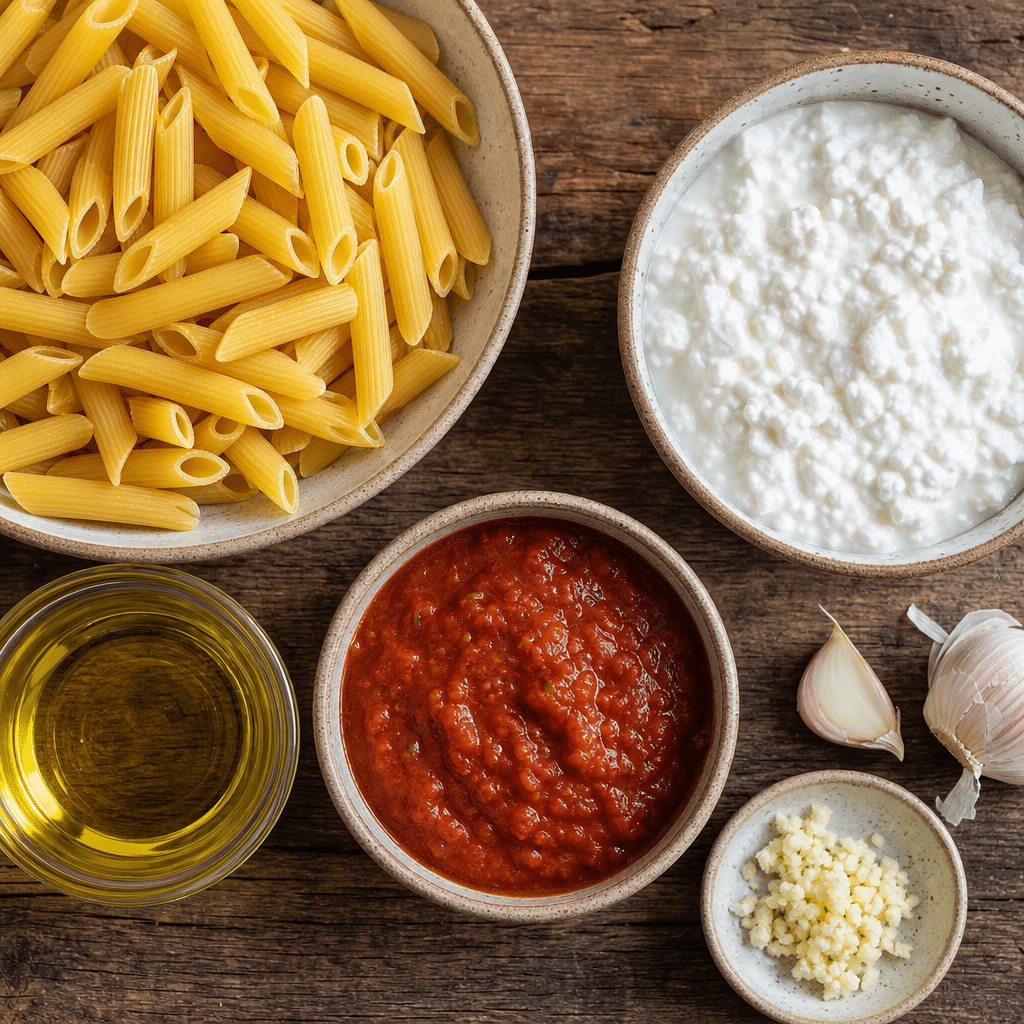
Ingredients You Will Need
The ingredient list for cottage cheese pasta is short, budget-friendly, and likely already sitting in your kitchen. Most of these items are pantry staples, which is part of why this recipe has become such a weeknight favorite.
You will need pasta, cottage cheese, olive oil, garlic, a good marinara or pasta sauce, parmesan cheese, fresh spinach, red pepper flakes, and fresh basil. A splash of reserved pasta water helps everything come together into a glossy, clingy sauce.
Because the sauce relies so heavily on cottage cheese for creaminess, the quality and type you choose really does matter here.
Choosing The Right Cottage Cheese
Not all cottage cheese is created equal, and the brand or fat content you choose will change the texture of your final dish. Whole milk, small curd cottage cheese blends the smoothest and produces the creamiest sauce, so it is generally the best starting point.
Low-fat and fat-free versions will work in a pinch, but they tend to blend up slightly thinner and less rich, so you may need less pasta water to loosen the sauce. Full-fat, higher-protein brands marketed specifically for their smooth texture tend to purée into an almost cream-cheese-like consistency, which many home cooks prefer for cottage cheese pasta.
If you are comparing labels, look for options with around 11 to 14 grams of protein per half-cup serving and minimal added gums or stabilizers, since those can sometimes affect how smoothly the cheese blends in a food processor or blender.
Swaps And Substitutions
If you are dairy-sensitive but still want that same creamy pasta experience, there are workable substitutions. Lactose-free cottage cheese is widely available now and blends just as smoothly as the regular version.
For a fully dairy-free adaptation, a soft silken tofu blended with a splash of plant milk and nutritional yeast can mimic a similar texture, though the flavor will be milder. It will not be identical, but it is a solid option for anyone avoiding dairy entirely while still craving cottage cheese pasta.
Equipment And Tools You Will Need
One of the best things about this recipe is that it does not require any specialty equipment. A large pot for boiling pasta and a wide skillet for finishing the sauce are the two essentials.
You will also want a blender or food processor to purée the cottage cheese into a smooth, sauce-like consistency. If you do not own either, a stick immersion blender works surprisingly well and saves on dishwashing.
A fine-mesh strainer or colander is useful for draining the pasta, and a heatproof measuring cup will help you reserve some starchy pasta water before draining, which is key for building a silky sauce.
How To Make Cottage Cheese Pasta
This recipe comes together in one pot plus a blender, making cleanup refreshingly simple. Here is exactly how to build creamy, restaurant-worthy cottage cheese pasta at home.
Start by bringing a large pot of generously salted water to a boil. Cook the pasta according to the package instructions until just al dente, then reserve about a cup of the starchy cooking water before draining.
While the pasta cooks, add the cottage cheese to a blender along with a splash of the reserved pasta water. Blend until completely smooth, scraping down the sides as needed, until it resembles a thick, pourable cream sauce.
Warm the olive oil in a large skillet over medium heat, then add the minced garlic and red pepper flakes. Cook for about a minute, just until fragrant, being careful not to let the garlic burn.
Stir in the marinara sauce and let it simmer gently for a few minutes to meld the flavors. Add the blended cottage cheese mixture and stir until the sauce turns creamy and uniform.
Fold in the fresh spinach and cook just until wilted, about two minutes. Add the drained pasta directly into the skillet and toss everything together, adding splashes of reserved pasta water as needed to loosen the sauce.
Finish with grated parmesan, fresh basil, and a final crack of black pepper. Serve immediately while the sauce is at its silkiest.
Storage And Meal Prep Tips
Cottage cheese pasta is an excellent candidate for meal prep, since it reheats well and holds its creamy texture better than many traditional cream sauces. Store leftovers in an airtight container in the refrigerator for up to four days.
When reheating, add a small splash of water or milk before microwaving to help revive the sauce, since it will thicken slightly as it chills. Stirring halfway through reheating helps distribute the moisture evenly.
If you are prepping for the week, consider keeping the sauce and pasta separate until you are ready to eat, which prevents the noodles from soaking up too much sauce and turning mushy.
Freezing And Long-Term Storage
Freezing cottage cheese pasta is possible, though the texture will shift slightly upon thawing because dairy-based sauces can separate. To freeze, portion cooled pasta into freezer-safe containers and store for up to two months.
Thaw overnight in the refrigerator, then reheat gently on the stovetop with a splash of milk or reserved pasta water, stirring frequently to help the sauce re-emulsify. It will not be quite as glossy as fresh, but the flavor holds up beautifully, making it a smart option for busy weeks ahead.
Delicious Variations To Try
One of the reasons cottage cheese pasta has taken off is how easily it adapts to whatever you have on hand. Once you understand the basic formula of blended cottage cheese plus sauce plus pasta, the variations are nearly endless.
Try swapping the marinara for a garlicky white sauce base by omitting the tomato sauce entirely and relying on extra garlic, lemon zest, and parmesan for flavor. Roasted cherry tomatoes or sun-dried tomatoes also add a lovely sweetness against the tangy cottage cheese.
For a heartier meal, stir in shredded rotisserie chicken, crispy pancetta, or sautéed mushrooms. If you love a bit of crunch, top the finished dish with toasted breadcrumbs or extra parmesan broiled until golden.
This dish also pairs beautifully alongside other creamy pasta favorites. If you enjoy exploring rich, cheesy pasta dinners, our Best 10 Chicken Alfredo Recipes for a Delicious Dinner roundup is worth bookmarking for another comfort food night.
Lactose-Free And Dairy-Free Adaptations
As mentioned earlier, lactose-free cottage cheese works as a near-seamless substitute and blends identically to regular cottage cheese. It is widely stocked in most grocery stores now, right alongside the standard tubs.
For a plant-based version, blended silken tofu with a bit of miso paste and nutritional yeast creates a savory, cheesy flavor that stands in nicely for the dairy version. It will not replicate the tang of cottage cheese exactly, but it delivers a comparably creamy result for anyone avoiding dairy.
Troubleshooting Common Mistakes
The most common issue home cooks run into is a grainy sauce, which almost always comes down to not blending the cottage cheese long enough or skipping the pasta water entirely. Blend for a full minute or two, and always reserve extra starchy water before draining your pasta.
Another frequent mistake is adding the cottage cheese sauce to a pan that is too hot. High heat can cause the proteins in cottage cheese to seize and separate, resulting in a curdled texture rather than a smooth one. Keep the heat at medium or lower once the cheese sauce goes in.
If your finished cottage cheese pasta seems too thick, simply stir in more reserved pasta water a tablespoon at a time until it loosens to the right consistency. If it tastes flat, a pinch more salt or a squeeze of lemon juice can brighten the entire dish immediately.
Cost Analysis And Budget-Friendly Tips
Part of why cottage cheese pasta has become so popular is that it is genuinely inexpensive to make. A full batch feeding four people typically costs less than a store-bought jar of premium alfredo sauce, especially when you already have pantry staples like pasta and olive oil on hand.
Cottage cheese itself is one of the more affordable protein sources at the grocery store, often costing less per ounce than heavy cream, ricotta, or cream cheese. Buying a larger tub instead of single-serve cups also stretches your dollar further, since you can portion out exactly what a recipe calls for.
To keep costs even lower, buy pasta and canned or jarred marinara sauce during sales and stock up, since both have a long shelf life. Fresh spinach and basil can be swapped for frozen spinach or dried basil without sacrificing much flavor, which helps if fresh herbs are not in your weekly budget.
What To Serve With Cottage Cheese Pasta
A simple green salad with a light vinaigrette is the easiest way to round out this meal, since it balances the richness of the sauce. Garlic bread or a crusty baguette is also a natural pairing for soaking up any extra sauce left in the bowl.
For beverages, a crisp, dry white wine like Pinot Grigio or Sauvignon Blanc complements the tangy, creamy notes of the cottage cheese beautifully. If you prefer something non-alcoholic, sparkling water with a splash of lemon offers a refreshing contrast to the rich pasta.
If you are curious about eating patterns that emphasize dishes like this one, our The Mediterranean Diet: A Complete Guide to Eating Well the American Way article explores how simple, protein-forward meals fit into a balanced way of eating.
FAQ
Does Cottage Cheese Pasta Actually Taste Like Cottage Cheese?
No. When blended with garlic, marinara, and parmesan, the cottage cheese mellows into a creamy, cheesy sauce that doesn’t taste distinctly like cottage cheese.
Can I Make Cottage Cheese Pasta Without A Blender?
Yes. Vigorously whisk cottage cheese with a fork and warm pasta water for a slightly less smooth but still creamy texture.
Is Cottage Cheese Pasta Good For Meal Prep?
Yes, it reheats well with water or milk. Store sauce and pasta separately if prepping more than a day or two in advance for best texture.
What Type Of Pasta Works Best For This Recipe?
Short, sturdy shapes like penne, rotini, or shells work best because their ridges help the sauce cling. Any pasta shape works though.
Can I Make This Dish Lactose-free Or Dairy-free?
Yes. Use lactose-free cottage cheese as a one-to-one swap, or substitute blended silken tofu with nutritional yeast for a fully dairy-free version.
Loved this recipe? Follow along and save your favorites on Pinterest for more delicious ideas!