

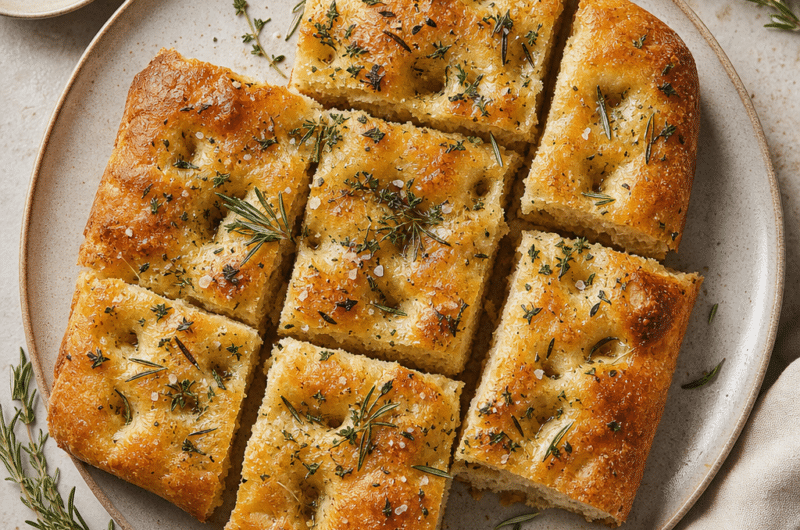
There is something wonderfully comforting about pulling a golden, dimpled loaf of focaccia with herbs out of the oven and watching the steam curl up as rosemary and olive oil fill the kitchen with their scent. This is the kind of bread that turns an ordinary weeknight dinner into something special, yet it asks so little of you in return. No fancy equipment, no complicated shaping, just a few pantry staples and a little patience while the dough rises. Whether you are new to bread baking or you have made a dozen loaves before, this focaccia with herbs recipe is designed to be foolproof, forgiving, and endlessly satisfying.
We will walk through the ingredients, the step-by-step method, common mistakes to avoid, and even a few regional twists on this beloved Italian classic. By the end, you will have a loaf with a crackly crust, a soft and airy interior, and that unmistakable herby, olive-oil richness that makes focaccia with herbs so irresistible.
4
servings30
minutes40
minutes300
kcalIngredients
4 cups (500g) all-purpose flour, plus more for dusting
2 1/4 teaspoons active dry yeast (one standard packet)
1 teaspoon granulated sugar
1 3/4 cups warm water (about 105°F)
2 teaspoons fine salt, plus more for topping
5 tablespoons olive oil, divided, plus more for drizzling
2 tablespoons fresh rosemary, chopped
1 tablespoon fresh thyme leaves
1 teaspoon fresh oregano leaves (optional)
1 tablespoon flaky sea salt, for topping
Cherry tomatoes or olives, for garnish (optional)
Directions
- In a small bowl, whisk the warm water, sugar, and yeast together. Let it sit for 5 to 10 minutes until foamy on top.
- In a large mixing bowl, combine the flour and salt. Pour in the yeast mixture and 2 tablespoons of olive oil, then mix until a sticky, rough dough forms.
- Cover the bowl with plastic wrap or a damp towel and let the dough rise in a warm spot for about 90 minutes, or until doubled in size.
- Coat a rimmed 9×13-inch baking sheet generously with 2 tablespoons of olive oil, spreading it all the way to the edges.
- Turn the dough out onto the oiled pan and gently stretch it with your fingertips toward the corners, without deflating it too much.
- Cover loosely and let the dough rest for 30 to 40 minutes for a second rise, until puffy.
- Preheat the oven to 425°F (220°C). Use your fingers to press deep dimples all across the surface of the dough.
- Drizzle the remaining olive oil over the top, then sprinkle evenly with the chopped rosemary, thyme, oregano, and flaky sea salt.
- Bake for 22 to 28 minutes, until the top is deeply golden and the edges are crisp and pulling away from the pan.
- Let the focaccia cool in the pan for 10 minutes, then transfer to a wire rack, slice, and serve warm.
Key Ingredients For The Best Focaccia With Herbs
Great focaccia with herbs starts with just a handful of ingredients, but the quality and ratio of each one matters more than you might think. Bread flour or all-purpose flour both work, though bread flour gives a slightly chewier crumb thanks to its higher protein content. Water needs to be warm, not hot, so it activates the yeast without killing it. Salt controls fermentation and flavor, while a touch of sugar helps the yeast wake up quickly.
Flour, Water, And Yeast: The Foundation
The dough for focaccia with herbs is essentially a wet, sticky dough, much wetter than a typical sandwich bread. This higher hydration is exactly what creates those big, airy holes and that light, almost cloud-like texture once baked. Active dry yeast or instant yeast both work well, though instant yeast can be mixed directly into the flour without proofing first. Do not rush this step; a slow, steady rise builds better flavor and structure.
Olive Oil And Fresh Herbs
Good olive oil is not optional here, it is the backbone of the entire dish. It goes into the dough, it coats the pan, and it gets drizzled generously over the top before baking. Fresh rosemary is the classic herb choice, but thyme, oregano, and even a little basil can be added for a more complex, layered flavor. Dried herbs work in a pinch, but fresh herbs give focaccia with herbs its signature fragrance and bright, slightly peppery bite.

How To Make Focaccia With Herbs Step By Step
Making focaccia with herbs at home is simpler than most people expect, even though the process does take a few hours from start to finish. Most of that time is hands-off, so you can start the dough in the morning and bake it fresh in time for dinner. The key is understanding the rhythm of mixing, resting, and shaping rather than rushing through each stage.
Mixing And The First Rise
Start by dissolving the yeast and sugar in warm water and letting it sit for five to ten minutes until it looks foamy. In a large bowl, whisk together the flour and salt, then pour in the yeast mixture along with a few tablespoons of olive oil. Mix until a rough, sticky dough forms, then cover the bowl and let it rise in a warm spot for about ninety minutes, or until it has roughly doubled in size.
Shaping, Second Rise, And Baking
Generously oil a rimmed baking sheet, then turn the dough out onto it. Instead of kneading, use your fingertips to gently stretch and press the dough toward the edges of the pan. Let it rest again for thirty to forty minutes, then use your fingers to press deep dimples all across the surface, which is the trademark look of any good focaccia with herbs. Drizzle with more olive oil, scatter the chopped herbs and flaky salt over the top, and bake in a hot oven until the top is deeply golden and the edges are crisp.
Tips For Making The Best Focaccia With Herbs
A few small adjustments can make the difference between a good loaf and a truly memorable one. First, resist the urge to add too much flour while shaping; the dough is meant to be sticky and wet. Second, use a metal or heavy-duty baking sheet rather than a thin one, since it conducts heat more evenly and helps the bottom crust crisp up properly.
Common Mistakes And Troubleshooting
If your focaccia with herbs turns out dense or flat, the most likely culprit is old or inactive yeast, so always check the expiration date and proof it first if you are unsure. A dough that never rises properly may also mean your kitchen is too cold; try placing the bowl near a warm oven or inside a turned-off microwave. If the top browns too quickly while the inside stays raw, lower the oven rack position and check the bread a few minutes earlier next time. And if the herbs burn before the bread finishes baking, try adding half of them before baking and scattering the rest on right after it comes out of the oven.
What To Serve With Focaccia With Herbs
One of the best things about focaccia with herbs is how versatile it is at the table. Slice it thick and serve it warm alongside a bowl of something cozy, like White Chicken Chili Recipe: Creamy, Cozy Comfort in Under an Hour, where the bread is perfect for soaking up every last spoonful. It also pairs beautifully with seafood-forward dishes; try tearing off a piece to dunk into a warm bowl of Clam Chowder 101: The Complete Guide to America’s Favorite Seafood Soup for a truly satisfying meal.
Because the recipe leans so heavily on olive oil, fresh herbs, and simple whole ingredients, it also fits naturally into the kind of everyday eating described in The Mediterranean Diet: A Complete Guide to Eating Well the American Way, making it a lovely bread to keep on hand for lighter, herb-forward meals throughout the week.
Storage And Make-Ahead Strategies
Focaccia with herbs is best enjoyed the day it is baked, when the crust is at its crispest, but it stores surprisingly well if you plan ahead. Once fully cooled, wrap the loaf tightly in plastic wrap or place it in an airtight container at room temperature for up to two days. For longer storage, slice the bread and freeze it in a zip-top bag for up to three months, then reheat individual pieces directly in a toaster oven or a hot skillet.
Preparing The Dough Ahead Of Time
If your schedule is tight, you can make the dough for focaccia with herbs a day in advance and let it rise slowly in the refrigerator overnight instead of at room temperature. This cold, slow fermentation actually deepens the flavor and makes the bread even more aromatic once baked. Simply pull the dough out about an hour before shaping to let it come back to room temperature before pressing it into the pan.
Regional Variations And A Bit Of History
Focaccia has roots stretching back to ancient Rome, where flatbreads baked directly on the hearth were a daily staple long before yeast breads as we know them existed. Over centuries, different Italian regions developed their own spin on the loaf. In Liguria, especially around Genoa, focaccia is famously soft, dimpled, and glossy with olive oil, which is the style most American home bakers now recognize as classic focaccia with herbs.
In Puglia, the dough often includes mashed potato for extra softness, while focaccia barese is typically topped with tomatoes and olives rather than just herbs. Understanding this history helps explain why there is no single “correct” way to make focaccia with herbs; it has always been a bread shaped by whatever a region, and a home cook, had on hand.
Gluten-Free And Alternative Flour Options
While traditional focaccia with herbs relies on wheat flour for its stretch and structure, it is entirely possible to adapt the recipe for gluten-free diets. A high-quality gluten-free all-purpose blend that includes xanthan gum will give the best texture, since it mimics the elasticity that gluten normally provides. The dough will be even stickier and slightly less airy, but the herbs, olive oil, and salty crust still shine through beautifully. For a heartier, more rustic version, some bakers substitute up to a third of the flour with whole wheat, which adds a nutty flavor without sacrificing the bread’s signature light crumb.
FAQ
What Makes Focaccia With Herbs Different From Regular Bread?
It uses a wetter dough and generous olive oil, giving it a crispier crust, airier crumb, and richer flavor than most sandwich breads.
Can I Use Dried Herbs Instead Of Fresh In Focaccia With Herbs?
Yes, though fresh herbs give brighter flavor. Use about one-third the amount of dried herbs since they are more concentrated.
Why Didn’t My Focaccia Rise Properly?
This usually means the yeast was inactive or the kitchen was too cold. Proof yeast first and let the dough rise in a warm spot.
How Do I Store Leftover Focaccia With Herbs?
Wrap it tightly and keep at room temperature up to 2 days, or freeze slices up to 3 months and reheat in a toaster oven.
Can I Make Gluten-free Focaccia With Herbs?
Yes, use a gluten-free all-purpose blend with xanthan gum. The texture will be denser but still flavorful and satisfying.
Loved this recipe? Follow along and save your favorites on Pinterest for more delicious ideas!